In short
Misfits Market’s brand strategy for turning “ugly” produce into a premium, accessible grocery business while reducing food waste.
Guest backgrounds
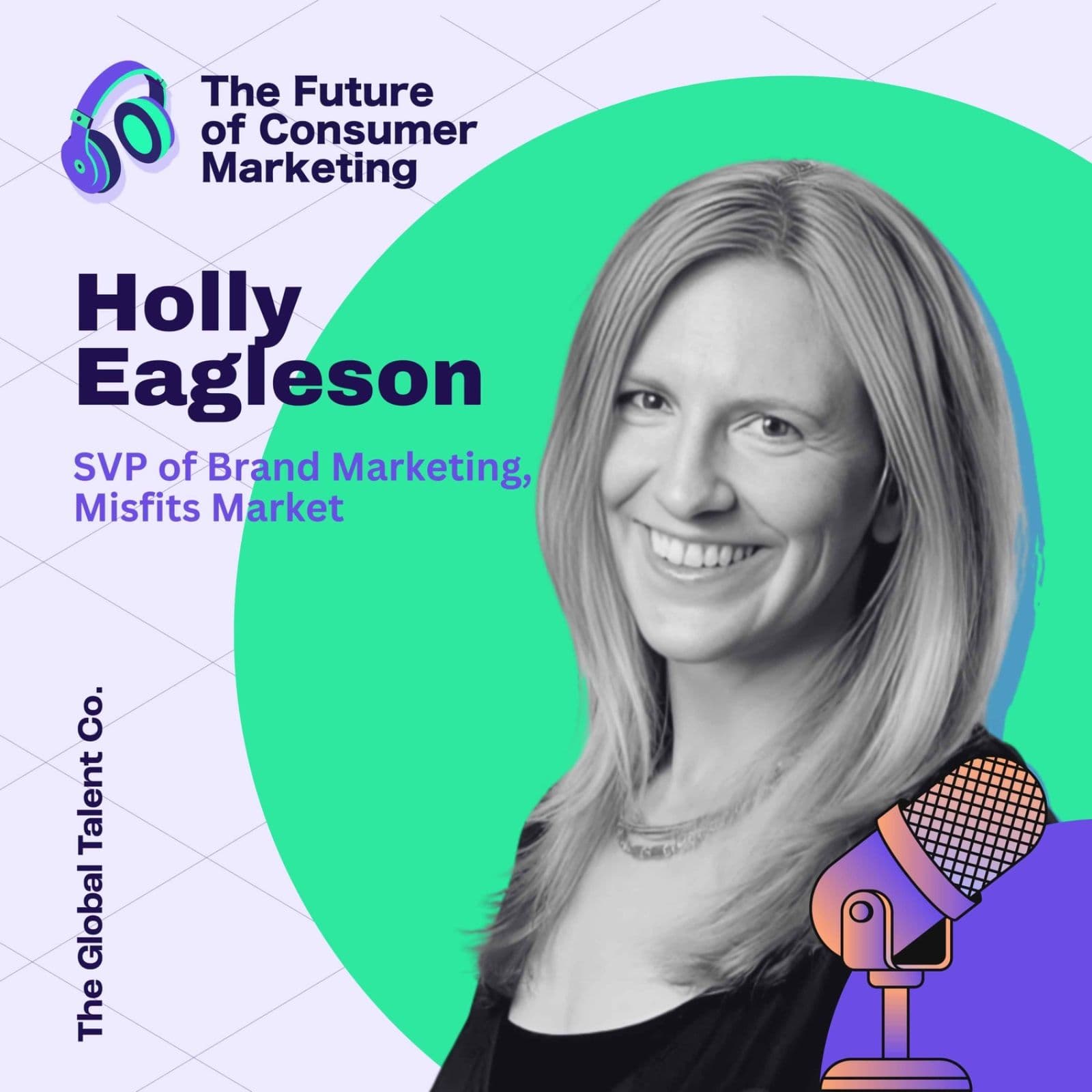
Holly Eagleson is Senior Vice President of Brand Marketing at Misfits Market. She describes the company’s founder, Avi Ramesh (logistics/finance), who started in 2018 after seeing apples on the ground destined for cold storage.
Key claims
Up to ~30% of produce is never harvested due to grocery appearance standards; Misfits redirects that food via direct sourcing, discounts, and “rescue” deals. Misfits keeps the name to redefine “misfit” as quality food outside norms. Marketing avoids preachiness by emphasizing premium taste, education, and value (membership, private label “Oz and Ends,” and rescue discounts).
Notable examples
Apple orchard “fallen apples”; “celery root” mystery-box education; Bobby Flay partnership (2020); zucchini/bumper-crop urgency; “Misfit of the Week” via SMS; weather/logistics algorithm for packaging and liners.
Written by AI. May contain mistakes. Listen to the episode to check what was said.
Chapters
Tap a time to open that second in VOThe Origin Story of Misfits Market
0:46 to 1:49
Discover how Misfits Market started and the vision behind it.
“Yeah, thanks so much for having me, Andres.”
The Problem with Food Waste
1:49 to 3:51
Understanding food waste and how Misfits Market addresses it.
“tons and tons of all these apples on the ground that look perfectly delicious.”
Redefining Misfits: Branding and Perception
3:51 to 5:26
Exploring the brand's mission to change perceptions around 'misfit' food.
“grocery and big egg don't really want you to have, or they kind of gatekeep.”
The Emotional Connection to Food
5:26 to 7:01
Discussing the emotional ties to food and its presentation in Misfits Market.
“And we want to make that difference, you know, something better in the way that everyone should shop.”
Growth and Supplier Relationships
7:01 to 9:08
Insights into Misfits Market's journey, supplier relationships, and logistics.
“Like your grandfather would have known that, farmers known that, but it's sort of like in this interceding kind of post-war decade where grocery stores tried to push these artificial standards on us.”
Marketing Sustainable Products
9:08 to 10:37
Strategies for marketing sustainable products without sounding preachy.
“So it is a lot of logistics kind of like figuring out when the best place at the right time.”
Combining Customer Bases Post-Acquisition
10:37 to 14:01
Challenges and strategies for merging Misfits Market and Imperfect Foods.
“like a holistic value is really strong, though it may not be like the very cheapest because we are not having the very cheapest product.”
Understanding Misfits Market's Customer Base
14:01 to 15:30
Learn how Misfits Market differentiates its customers and strategies for engagement.
“The Imperfect Foods customer cared a little more.”
The Evolution of the Mystery Box Concept
15:31 to 19:00
Discover how Misfits Market's mystery box evolved to accommodate customer preferences.
“and what we're focused on going forward.”
Urgency in Marketing and Seasonal Produce
19:01 to 24:32
Explore strategies Misfits Market uses to create urgency in buying seasonal products.
“But what we do do is we have this like kind of pre-filled cart.”
Show all 14 chapters
Leveraging AI for Customer Experience
24:33 to 28:00
Understand how Misfits Market utilizes AI to enhance customer interaction and operational efficiency.
“And I've heard you mention several times now that we've spoken, you've mentioned algorithms, preferences, quizzes.”
The Emotional Connection of Food
28:00 to 29:42
Explore how food connects people emotionally and the importance of trust in branding.
“And food is a really powerful way, I think, for humans to connect one on one, like you have dinner with your friend, you cook it for your kid, your parents, you made you a home or grandparents, a homemade meal.”
Advice for Sustainable Brands
29:42 to 31:41
Learn key marketing advice for brands in the sustainable consumer space.
“I hear how you speak about the brand and it just sounds so wholesome.”
Building Community and Human Connection
31:41 to 32:25
Discuss the importance of community and human connection in marketing.
“So, yeah, it's all about transparency and just being honest with the brand that you are and actually wanting to connect with your public.”
Transcript
Automatic transcript. May contain errors.0:00This show is brought to you by the Global Talent Co, a marketing leader's best friend in these times of budget cuts and efficient growth. We help marketing leaders find, hire, vet, and manage amazing marketing talent for 50 to 70 % less than their U.S. and European counterparts. To book a free consultation, visit globaltalent.co. Hey, everybody. Thank you for tuning in. My name is Andres Figueira, and I'll be your host for the day. I'm currently located in Buenos Aires, Argentina, and this show is brought to you by The Global Talent Company, a company that is connecting top remote professionals from Argentina, South Africa, and beyond with leading tech companies worldwide.
0:38So if your team is looking to hire world-class South African or South American talent, head on over to theglobaltalent.co and see how we can help. And also today I have with me Holly Eagleson, the Senior Vice President of Brand Marketing at Misfits Market, which is a company that will help you get organic produce, high quality meat, seafood and other sustainably sourced groceries delivered to your door for up to 30 % less than the grocery store prices. So how's it going, Holly? It's a pleasure to have you here. Yeah, thanks so much for having me, Andres. So we have been looking into Misfits Market.
1:12I have seen your website. I see what you guys do. But in order to give the audience a bit more context, Holly, would you be able to tell us a bit more about yourself, what Misfit Market is, how it's started? Absolutely. So Misfits Market is an online grocery store that delivers a better way to shop for better groceries. And this is an evolution of our brand from the early days when we were known as Ugly Produce Subscription Box. We were founded in 2018 and our founder, amazing guy, Avi Ramesh, who had a lot of background in sort of transportation logistics and finance and, you know, kind of finding opportunities and value where other people don't look, where there might be loss.
1:47He visited an apple orchard and saw, you know, tons and tons of all these apples on the ground that look perfectly delicious. But the farmer who came by told him they were just going to go to cold storage or go to waste. He was like, how can that be possible? All this stuff looks really nutritious and perfectly fine and high quality. And so it got him to look at like, what does this waste look like at a national scale. And it turns out on farms, you know, everywhere up to almost 30 % of what's grown is never harvested because of grocery store standards. So you think about buying a new grocery store, you see all these perfectly uniform apples, produce, everything like that out, shiny in display.
2:19But what people don't see is all the kind of produce that didn't make it to the store because it looks a little different. It might be misshapen, oversized, undersized, a little discolored. And there are a lot of good reasons for that. They have nothing to do with deliciousness and, you know, nutrition and quality, but they just, these kind of like very outdated in our estimation. Grocery standards really lead a lot of waste to the tune of, you know, billions of pounds per year. And it's also like cuts out basically the consumer's ability to get this high quality stuff more affordably. So what we did was started working with farmers and in getting that product directly to us, it was all organic to start.
2:51Still have very, a ton of organic, but initially was just a mystery box of this produce that we sourced from local farms in the Northeast. And we put in a box and delivered to you at a huge discount. out. And we really focus on access from the beginning, trying to get to all zip codes in a state when we open them, any state. And that still has remained true to our DNA. We are every state we serve, although we're 48 states. We have, you know, we serve every zip code. We're much more than just produce now. We've expanded this entire full grocery store. We still have this waste element where we find these inefficiencies in the food system and shelf life arbitrage, you might call it.
3:22Things like if there's a packaging change for brand, they don't want to, you know, as everyone from your listeners know, branding is so important. But if you have a different packaging, you want that on short shelves right away. And so what happens to all this perfectly delicious food that is so fresh, it doesn't have the right packaging. So we can take that in and offer it at a discount. A lot of different opportunities in the food system from meat and seafood to find how you use a whole purpose of an animal. A lot of really cool things about the food system where we help cut waste. But even more than that, we're expanding beyond that to bigger ways you can fix the food system and deliver more nutritious food that sort of big grocery and big egg don't really want you to have, or they kind of gatekeep.
3:58And so we curate that and offer it all in one place. So it's a really simple process and fun app to use on a weekly basis to get all your essentials, plus discover something new every week. It's kind of like a treasure hunt. Okay. No, it's so funny because before our call, I started to look at the Misfits Market. And my first question after we began speaking was, where did the name Misfits Market come from? Like, is there a story there? But I'm loving how you guys like saw this opportunity. And due to the fact that if 30 % goes to waste, that's crazy. And has there been any difficulties in trying to market this?
4:33I don't want to say it's substandard food because it's the standard of the supermarket and the grocery stores. But have there been like pushback from the consumer or from the public that you guys sell to? That's a great question. It's something we day one and still deal with. You know, I think we're trying to redefine the idea of a misfit. So a misfit is something that, you know, is outside the like standard norm, but that doesn't mean it's less than or, you know, imperfections don't mean something is not good. And so we are actually operating as misfits in the system, like as a team to kind of find these opportunities to get great food to you from producers who care about what is happening in the food system, doing the things the right way that are more sustainable and better set us up for, you know, a more stable system long term, not just now.
5:12And we deliver that to you and work with these kind of the people who are doing the right things. So that's kind of how we like to see ourselves as misfits. So there have been times, though, throughout our journey, like, should we change our name? You know, we're trying to become more high quality and really position ourselves. We've got a lot of premium products, for example, but we're sticking with Misfits because, again, we just operate, I think, differently. And we want to make that difference, you know, something better in the way that everyone should shop. If you think about it, it's kind of like, you know, your grandparents probably had gardens.
5:35And if they pulled up a carrot and it was a little funny looking, they weren't going to throw it away. Like, why would you possibly do that? It's still delicious. And so we're trying to look back to this like inherent, you know, value of food and what, you know, the kind of integrity of food that as we've known it for decades and decades until Big Grocery and Big Eye got involved, we're still delivering that to you and direct from farmers and producers. So hopefully there's the connection, the emotional connection also is really, I think, is something that like catches people's eye. You still have to do a ton of education after the fact about what a misfit is.
6:04But I think we've done a great job in kind of like changing that perception, I think, and helping people be more expansive in their view of what good food is. Okay. No, I don't really understand that. And let me say, when I got into the Misfits website, I really liked the branding, the logo, how you guys have it all set up. I think it just looks super cool. And it's a fresh and different way that I've seen groceries online because I feel it's a lot more, I don't even know how to describe it, but it's a lot colder. It seems that everything's a lot neater. And this, it actually felt kind of like home.
6:33I'm seeing the little vegetables and how everything is not like the usual size or the shapes that we're used to. But I completely agree with that because my grandparents, they had this, let's say farm. I'm originally from Venezuela. And over there, they had this space where my grandpa used to, I remember he used to cultivate lemons and he would grow lemons all the time. And it would be exactly that. Like weird lemons would appear every now and then, but that doesn't go to waste. That is still used. Yeah. I think it speaks to like how disconnected we are from where food comes from. Like your grandfather would have known that, farmers known that, but it's sort of like in this interceding kind of post-war decade where grocery stores tried to push these artificial standards on us.
7:09That's when we all became a little bit brainwashed about what food should look like. But we're just really going back to basics in many ways. And to point, I think it's very intentional the way we brand it too. We got organic colors and shapes there to be in touch with kind of how things are naturally. We have some beautiful catalog photography we're rolling out that's very much like in situ of seeing it would be like in your home. And you're right, like the cucumber will probably have a little curve to it or be a little bit different than what you would find from a stock photo if you're shopping any other online grocery.
7:35That's really intentional. Yeah, no. And like even nowadays, with all the GMOs and how these fruits and vegetables are all getting bigger and bigger and juicier and stuff, it's like it gets a little weird. So seeing normal vegetables and fruits on a website, it's cool. It's nice. Totally. And Holly, regarding the expansion that you mentioned that you guys are already in 48 states, so like you ship everywhere in the United States. How has it been in the journey of getting these different suppliers, farmers in different places? Are they super happy to get on board? Has there been difficulties with that?
8:06Or how have you managed that? Yeah. So I'll speak a little bit about the evolution of business at the same time in our growth. Like that'll help illustrate it a little bit. So when we started in 2018, it was literally our founder and CEO going to farms with a U-Haul and getting himself and packing his own apartment. And we had like a 3 ,000 foot, you know, operation, like warehouse. And then we expanded like a 13 ,000 foot one. Eventually, you know, as you scale, you have to have operations and logistics that meets that. But we used initially third party like FedEx to ship all of our boxes out.
8:33And it was really local because that was like sort of what we're physically able to get from. But as we grew, we built relationships with kind of a midsize, I would say, farms. And if you're aware of like how farming goes in the U.S., a bulk of it is in California. That's like the salad basket of where a lot of it is grown, but not just there. Like there's a lot of U.S. operations in Mexico. And then, of course, East Coast, South, you know, all over the country. As we scale, we aggregate the supply. But as we had more customers, we had to figure out like, how do we do this a little bit more streamlined?
8:59and, you know, cost-effective manner. So we still source from all over the place and it's very seasonally dependent. We're going to source for peaches in Georgia when they're ripest. But in April, you got a source from California. So it is a lot of logistics kind of like figuring out when the best place at the right time. But our team members go to these farms. We've got great content out there right now about how they're tasting it themselves and, you know, taste testing, which are the very best stone fruits from family tree farms at any given time. And we want to source those at that specific week so that we can offer the very most delicious and tastiest food, not to mention like nutritious and high quality.
9:29But yeah, it does involve like a lot of coordination logistics. And sometimes, you know, what people don't really understand is that like people say like, why don't you just donate this product that it's like a little funny looking? Farmers, first of all, we don't believe should take a loss on this product. They put the hard work with the inputs of like, you know, buying the crops and everything you need and fertilizing it, you know, usually non-organic methods, but in the cost of labor, as you might imagine, especially now are like incredibly high. So like, why should they take a loss on this hard work?
9:53The same time, food insecurity is like, you know, two sides of the same coin. I mean, food waste exists. If we could actually harness all of our food, we could feed everyone, but there's tremendous need and it only continues to grow. So we do have like actually, you know, philanthropic partners, Feeding America, Sharing Access, some really big ones, plus 60 around our FCs where we donate everything. But even if you were to aggregate all that supply, that's still not going to get, you know, to everyone that needs it. And more importantly, like farmers really can't sustain that sort of loss all the time.
10:20So we're giving a fair return to farmers for their hardware. Consumers get a discount when they save food, but they also get a discount through a private label we have called Oz and Ends. It's a really great staples and mission-driven products at incredible prices. And we also have a membership program we launched last year that also saves a ton of money on when you're buying these kind of staple items. So, you know, overall value, like a holistic value is really strong, though it may not be like the very cheapest because we are not having the very cheapest product. We are working to source the very best product, but it's really great value overall.
10:47Okay, wow. And how has it been in the creation of Misfits Markets and how you guys are around now? Like, how do you manage to keep marketing the sustainable products and mentioning how it's a way to avoid having these things go to waste without sounding preachy and like making it? I don't know. I want to say something that the customer actually wants and wants to participate in because I feel it must be also on the consumer side. It must be like, hey, I prefer to buy this and avoid having to go to waste and go to the supermarket and then just whatever. We've learned a lot about that along the way.
11:19We started initially by having very thumb stopping content, like in your face, very funny looking. And people are like, I can't. This looks like my Uncle Steve or whatever. They think those. And this is like this, you know, crazy, like maybe it's a really suggestive pepper or something we found. But like it really had to like stop people in their tracks. So this is like, think about when we launched was 2018, the height of D2C kind of, you know, calmer e-com. We had a lot of tailwinds, I guess, with us. We were in the right place at the right time that a lot of people were kind of considering more of like, how could I get something shipped to me that I might otherwise have another process of doing it, you know.
11:48So we were lucky that like we were able to just buy on the merits of the food itself and some beautiful photography and good taglines got in people's faces. And then we were able to show them like, hey, here's what we're going to get. You know, even though the studio photography of the thing might look one way, people just have to see the real thing. So unboxings, like seeing flat lays of what it looks like was really important to people. Like, what do I actually get? Because we all shop with our eyes. If you go to a grocery store, you also want to touch and feel it. So we're at the disadvantage that we can't have that kind of like multi-sensory experience with people.
12:14And so a lot of it is this education of like, it's perfectly delicious. And at the time when it was a mystery box, you could get things that you've never seen before. Like, do you know what a celery act is? It's celery root and it's like the actual root of a celery plant. It's delicious. I happen to love it. It's very nutty. But a lot of people are like, what is this like ridiculous malformed, like rude vegetable thing? So early emphasis was like a ton on education, how to use this. We partnered back in 2020 with Bobby Flay for a partnership for several years because half of the battle was just like, how do you validate the quality of this product?
12:43And then what do you even do with it? So I think that was helpful of like getting the education out there. But to your point, like food waste is kind of preachy and not everyone cares about it. And some people just care about saving money on organic produce and getting it where they might have live in a food desert and they have no other options. And there's a lot of budget constraints. We think everyone should deserve access to healthy, quality food and we're making it more accessible. But, you know, the food waste thing may not resonate with everyone. So I'll kind of segue into 2022 here because that's when we joined forces with Imperfect Foods, which was our primary competitor, kind of a frenemy, if you will.
13:15And they've been doing this even longer than we have. We'll focus on the West Coast where they launched. But it does kind of like bring up two different brand approaches to it, because when they Imperfect Foods launched, they did a lot of studies about how people fit their kind of customer base felt really bad about wasting food, like a shame and guilt. And as a result or kind of the strategic decision was to position their brand with like a lot more levity in odds with that. So they have like the Imperfect style was like putting googly eyes on produce and making everything kind of fun and playful and, you know, kind of childlike.
13:44I'm not a pejorative way, but that's kind of like what their approach was. and Misfits is really more like stylized and cool D to C kind of thing. And so when we joined forces, we're like, okay, how do we combine these two customer bases that might have a little bit of a different, you know, a need for shopping with us, but they do care about food waste to some degree. The Imperfect Foods customer cared a little more. They're, you know, more about, I think, like the greater good and being part of a movement. Whereas the Misfits customer was more about like, you know, what is its self-interest in for them?
14:10And because we had offered great prices on that. So it's been a challenge for us the past two years to combine these customer bases and have Misfits be the dominant brand, but one of it is not preachy. And so I think what we're doing now is going back to our roots of, you know, being a little bit more bold, amping up hopefully like the kind of provocative nature of the message we're trying to get across to get people's attention. But then when you get there, like there's a lot of feel good aspect to things. And inherently, I think when you figure out the people that you're helping, in addition to you getting a great product, that's a really powerful message to kind of package together this idea that there are great people doing great things in the food system and you feel more connected to other humans via food by shopping with us.
14:47So I think that's something that we've been experimenting with a lot more, having our farmers really forward in the content, even our buying team that are like experts and know so much about food and have very specifically picked XYZ, you know, pistachio brand for a specific reason, because there's great sustainability aspects to the way this, you know, the company that we're sourcing from operates, but they also happen to have an amazing like pickle flavored pistachio, for example. So it's a lot of like, you know, it's yes and, it can't be one thing, it can't be only waste. And we're trying to be like a little more expansive in the message.
15:15which is challenging because it's a lot to say. Like we don't have this like really crisp and clear, like one line or two word value proposition that we used to, which was like save money when you save food, which was really, that was it. But because we're a lot more than that now. So that's been like the big challenge of the past year, I'd say, as we evolve this value proposition and what we're focused on going forward. Okay. Yeah, no, because like, that was also one of my questions, which was like, how do you balance when marketing this brand between mentioning that the price is low or the value that the food provides?
15:44Like, is there a winner there? Do you feel that the audience reacts better to a certain type of marketing in that sense? Or now that you're becoming like a more wholesome brand, are the people being more connected with you guys? Yeah. So as we become a more holistic value and in fact, like being able to shop your values, it becomes, I think, the value cheapest, you know, bottom dollar budget thing becomes less important to our brand. And frankly, you can't win on that. Like we don't have the, you know, scale and capability to compete with a Walmart, Amazon, that sort of thing. And that's OK, because we serve a very different segment, a different conscious consumer who doesn't want to get, you know, organic produce with batteries and like, you know, lighter fluid in the same order.
16:22They're not looking for that. They're looking to make an impact when they purchase, but also get a lot of value out of it for themselves. So I think that's like, you know, a best practice is like, you know, money wins and the cheapest one wins. I disagree with. And I think we've proven that out because like when you have this kind of huge basket saving or the cheapest, it's harder to retain those customers. And I think it's just, you know, a promise that because of the world events, COVID and like the Black Swan event, and now it's just harder to supply chains that disrupted. It's harder to source product at that very bottom dollar price, unless you're kind of doing something wrong.
16:52You're sacrificing quality, you're sacrificing nutrition, all those sort of things. So we're trying to maintain the integrity of how we source, deliver high quality product to people, but then use really clever ways to save them money where they can. Like I mentioned before, this membership program, our private label, and then when we do rescue food. and about like half of our produce is rescued. So you'll get, you know, 15, 20 % off of produce there, but it still allows us to give the farmers back a fair price. So yeah, I'm not sure if that answered your question, but I think that's like the big, you know, learning for us that it's, if you can't win a race, you've got to have more holistic value.
17:23So we're really building that up now. And I think we're at the right place at the right time. You know, we were there for COVID when people could not access food at all. Like a hundred thousand person waiting list. We're here now, we're like in this kind of jumbled economy, post inflation, but actually still very much in inflation where people are thinking about where they spend their dollars and very intentional about that and want to support the right things. And I think you can feel really good about doing that with Misfits. But a lot of our still DNA is still there. Okay, now, and I love how the fact that you guys started with an essence that you haven't lost for your understanding that you need to change a bit in order to stay afloat and to make it in this market and in this economy.
17:56However, I do want to know, Holly, that you've mentioned it several times. What's up with the mystery box that you guys started with? Is one of the mystery box that you sent people with random vegetables and fruits just so that they would see what you guys had to offer. I just want to look more because it sounds so interesting. I hadn't heard of that. It was really whatever was like in season and available that week from Fargerton producers. So it could be like, you know, quite frankly, a lot of onions and potatoes that you're like, it's going to take me a month or so to get through these, but it could be like also really fresh greens.
18:22And so I think it's like, you know, not unlike a CSA, a community supported agriculture box that here in the U.S. you would get, but it just, you don't have to go pick it up somewhere as we ship to you directly. And so So it was a really convenient way for people to try new foods, but get this like regular kind of on repeat producing. So it wasn't a big deal for us when we switched to the ability to customize it because like people have allergies or like I want three things of broccoli because that's the only thing my kid will eat. But you only sent me one thing or maybe not at all. So I had to figure out how to blend choice with this still core product that provided a lot of value to people.
18:52So, you know, became more of an a la carte service over time. And, you know, we didn't have like two options, like big box, little box initially. And now we have a thousand plus SKUs. So you're putting it together every week. But what we do do is we have this like kind of pre-filled cart. So we're going to suggest for you based on the quiz that you took, when your preferences you set, when you signed up for us. And then as we learn our algorithm over time, what you like and what we'll suggest to you. So we'll kind of get you started with this cart. So if you do nothing and don't shop a week, we'll send you what we think is like best in season and not really fit what you love.
19:21But everyone can make changes at any time in their cart and go in and pick what they like. And it's still like we do have the mystery element. We have mystery kind of produce bundles together. but it's not the right word. I know we have a different word for it, but basically we work with farms. What's so nice about our relationship with farms is that we're very flexible in digital retailer. We can move fast and rescue things and get them in with just like a moment's notice, but we can also be a really consistent partner to them. So let's say we have an eggplant farmer and they have graffiti eggplant and, you know, the regular standard kind of like big purple aubergines.
19:53We can take any mix of them as like a group of three eggplants in any given week based on what they have to offer and for the season and these mixed sizes. We've trained our customer to be open to different sizes and kind of formats within the same SKU so that we can offer it a really good price, but be this like partner to eggplant, you know, farmer who might be told by the grocery store, no, we don't want this variety this week, or they have a bumper crop. What are they going to do with all this stuff that's going to be flooded in the market? They won't get any return for it. Maybe no one will take it at all.
Read the full transcript
20:19We're able to take that. And because we can take that. And the same thing is true of like mixed, you know, stone fruit, nectarines, like people might really want a white nectarine or a yellow nectarine, but our customer is like, hey, nectarine is a nectarine. I will take it. I will eat it. I'll put it in a galette, whatever. And I want to save money on it. And I don't think what they really understand is like they win, but also the farmer does because we're willing to be really flexible and meet where they're at. And, you know, as climate change and extreme weather become more prevalent, this is a really, really big deal for farmers.
20:44Like they've got something that is a hail frosted or like hail kissed. We call it like a peach that got scarred from, you know, hail that wasn't expected in a huge extreme storm. No grocery store is going to take that, but we will take it for them. But then we'll also be there next week for their like pretty good size, you know, hail. It has like no imperfections, but we can still have this, be this like really great pipeline where it benefits the farmers and is a great discovery for our customers too. They can try things they might not have before. No, the mystery box just sounds so fun because I imagined in my house of the little box arriving, knowing that it's from Misfits Markets and like, hey, what soup am I making today?
21:16Because I don't even know what might be in there. But from the sound of it, I also imagine you guys must have like a super nice relationship with all your suppliers and the farmers, because if they have times with supermarkets that they don't accept a certain thing that they grew or that they just cultivated and you guys are there to actually take it in and have an audience and a public that does consume that. That's amazing. That really is super cool. And Holly, have you ever felt like the need or have you seen yourself in a position where you've needed to create urgency in the marketing that you've done to get, I don't know, the consumers to buy more of this vegetable, which is about to go over season or something like that?
21:50Could you walk us through a strategy? Yeah. So we have like pretty traditional channels. We're very social first. That's kind of like, you know, how we made our bones. Our biggest industry of our portfolio spend is on Meta. So that's like where you're going to see ads for us most likely to talk and, you know, YouTube and Google and search as well. But yeah, certainly like there's an excess of bumper crop of like zucchini and we decided we would take it in. So we're going to do with all zucchini because we don't want it to go to waste. Obviously, our mission is to reduce food waste. We don't want it happening in our house or your house.
22:15So we're going to try to move it and give you a good reason to buy it too, whether it's a discount or whatever it looks like. So we've got our channels like social telling the story about how it came in in a video, you know, straight from the farm. We've got our newsletter that goes out to everyone from leads and, you know, prospects to, you know, our existing customers every week. So they're trained to kind of come back and see them what's different every week. And we have this feature that we send out via SMS called the Misfit of the Week. So that could be anything from this, like, you know, we've got like all the zucchini.
22:39and basically it's really fun to story tell too because like there might be too much zucchini because it was a really great weather condition or maybe like zucchini was really hot last year and every farmer planted because they're like, we're gonna get a ton of money and interest. So what like, you know, people are fickle. You see TikTok, food trends change all the time. So like kale was a big, like whatever, eight, 10 years ago and then maybe they get burned because no one wants it the next year or, you know, whatever the case may be. They can't, they just have too much. So we're able to, yeah, let them know like, this is a great deal this week only.
23:06You've got to get in there and get that. And it's proved like incredibly, almost too successful. Sometimes we sell out too fast, but it's great because like we're able to kind of really inspire action based, you know, really much rooted in our value proposition and our mission. So yeah, and we have a weekly cadence because we have a weekly shopping window. So you log in on Wednesdays and after you can see everything there and we do have things sell out and that's okay. The other thing that, you know, in addition to just produce, we have buys for things like I told you about that might have excess packaging or just like maybe they're just about to be out of season and the retailer needs or the vendor needs to move them.
23:36so we'll have great prices on something. We have a limited quantity of them, something like a Brightland olive oil. It's a really premium, delicious, like incredible, gorgeous packaging, but they might've had like a packaging change or they just had too much of one skew. And we have to be mindful of like Best Buy dates too. So you may not know this, but grocery stores essentially will not take anything that has a sell-by, Best Buy, you know, consumed-by date of six weeks or less. And that's a while from now. It's like it's, you know, it's September now. That's like mid-October. You would have to get something.
24:05most people when they're buying stuff at the grocery store they're not keeping things around that long anyway so we're able to take in some things that might have a best buy date which by the way is like kind of bs that doesn't really mean much it just means like in terms of kind of like a lesser quality maybe a year from now but that's a lot of our education is actually like letting people know what do these dates even mean so we can take in things that have like a little bit shorter shelf time but you're still going to eat it and it's still perfectly good and you can save on that so that'd be another reason we might have like urgency of like trying to push something sooner than later.
24:32But yeah. Wow. And I've heard you mention several times now that we've spoken, you've mentioned algorithms, preferences, quizzes. That leads me to the topic of the moment and the trending number one thing like nowadays. And it's AI. Are you guys leveraging AI and how are you using it? Yeah, a few different ways. So from like the tech side, we've been had actually a human created algorithm for a couple of years now that will take your preferences and get your past purchase behavior and put it into kind of this algorithm together and spit out these products that we think among our assortment you should try next and that will put them in that pre-filled card I spoke about and we all have really other cool algorithms too we have by the way almost all of our tech is homegrown like very much custom build so we have a weather algorithm for example that also will look at so like I'm in Nashville they ship to me from you know another city they will look at en route what is the weather going to be like how much exactly packaging should they put in should they put a thick liner should they put a thin liner how much will we fill how many ice packs and a silver liner do we need to make sure it's fresh on route to you?
25:29And that, you know, if it sits for a couple of hours, if I don't get the door right away, that it'll still be fresh. So we've definitely used tech in that way before. Going forward for like large language models, I think there's a lot of opportunity we've done with like AI search within our actual UI for, you know, customers to be able to use in the app to find items better. I'm sure we'll see us expand that to like beyond like searching for lemons, be like, what kind of lemon sauce do you have? Or like, what should I make with lemons? You know, there's a lot of opportunity there. For us also, So I think, you know, we're looking at like how can enhance our customer care?
25:57Of course, like there's a lot of questions with people the first time with a box with us that we can answer very quickly with AI. But it just, you know, this is the same sort of stuff over and over again that we've seen. It just really takes a lot of manpower to do that. How can we shift that manpower to have a white glove experience and surprise and delight for our customers and really utilize the humans in the very best way possible? And on the brand side, you know, like everyone, you know, ChatGPT, LM is really helpful with sort of like ideation and research and copy. but we are really, really, at least I am, and unfortunately on the team, insisting upon not having like AI totally created, you know, creatives and campaigns and that sort of thing.
26:31Like by virtue of like what we're trying to do here, real humans raising real food and giving it to real people, we want also the content to be real too. So like maybe we can use AI to help us do a scratch read for a video just because it like saved time for, you know, videographer to not have to do that herself. Of course. But we're never going to, you know, we really want like real people and telling these real stories. And I think that's what's going to continue to distinguish us because you see other people out there doing it. Just like it's so uniform now. You can tell it's like use of em dashes or like word period, word period, word period construction.
26:59And you're like, there's not a human doing that. And I never want that for our brand. And I think that's what, you know, we'll use it as a tool, certainly. But we will not use it to replace what we're doing here because what we do is so different and distinct from the way other people operate. No, it really is. And when I'm hearing you tell me the story about Misfits Market, I just feel it goes aligned with what I'm seeing also. in like normal marketing for brands, like regular products. And it's just like user generated content is doing so much better than very polished and perfectly created ad that a company made.
27:30And I feel that Misfits Market is tapping into that feeling by being imperfect in a perfectly good way. And that way I feel people are going to like empathize with your brand and feel that it's real and it doesn't feel as fake as other things. So I think that's really cool if that's the sentiment that is trying to be conveyed. Yeah, I appreciate it. I hope that's coming through. And I appreciate that those kind words, because it's something that I think, you know, consumers want, like if you think about the future of consumers, like everyone is feeling, you know, so disconnected. So this misinformation is everywhere.
27:59You don't know what to believe. And food is a really powerful way, I think, for humans to connect one on one, like you have dinner with your friend, you cook it for your kid, your parents, you made you a home or grandparents, a homemade meal. It's a very emotional thing. It's an emotional choice. You make three times a day, of what you're going to even eat. And we can leverage that to become a brand that is, you know, real and sustaining. But a lot of it has to do just like getting in front of people, spending that, you know, the capital to make sure our ads show up. And video is a really powerful medium for us now, to your point, like it's very not unproduced.
28:28We've certainly tried TV spots that are gorgeous, like incredible agencies working with us, and they felt still very misfity. But, you know, I think that's kind of like, we still need to really embed this trust. And that means like seeing the farmer talking to you directly. It means an influencer, a real person who's used this and can be a, you know, a surrogate for quality. For me to tell you, Misfits is a quality product. It's much better for you to hear from a friend. So our referral program is obviously very popular and important in terms of our customer acquisition. But yeah, like any content that feels like it's a real person using it, that's who you're going to listen to.
28:59Exactly. It feels like home, for example. So it's like, oh, I feel comfortable here. I can ask you questions. I can say if something is not good, if it displeases me, I feel I'll be heard, which is the most important thing nowadays, because sometimes you feel companies are so big, you don't even want to write them or just say anything because you feel you don't even have time to acknowledge it. So yeah, I mean, we have someone dedicated to all of our comments, good or bad. And believe me, there's plenty of bad ones. But there's, you know, we really value that sort of like a response to say, like, there's someone on the other line of that that is human and responding to that.
29:27And we care. And we will do everything to make it right if people have an issue with our service. And that's sort of like we took a lot of pride in and we inherited a lot of ways of operating from the Imperfect Foods team, which is really excellent that. So it's a journey, but it's a lot of fun too. Cause then you can like actually like here in real time being a digital product. Like what are you thinking about this? No, no. And I really love it. Like I hear the whole story. I hear how you speak about the brand and it just sounds so wholesome. It just warms my heart. Like after our call right now, I'm going to go make my grandma's chicken soup and I'll buy all the vegetables that hopefully are sourcefully grown here.
29:58Yeah. When you come to the U.S., you got to get you a box in here. I would talk for that. at the moment. It would be so cool just finding weird vegetables. Yeah. Okay. And Holly, I have one final question because we're almost at time and I know it's Friday, so I'll let you go after this one. But if you could give one piece of marketing advice, this one's for the audience. Yeah. For a brand that's launching today in the sustainable consumer space, what would you suggest to them? Like something you would have liked to know when you started out or something like that? Yeah. So sustainability, saying that word is very interesting because right now, I think it has less power or just a different meaning that it did seven years ago when we started.
30:34It can be, you know, kind of a catch-all and greenwashing. So for us, like actually leaning on sustainability is just this brand, you know, buzzword is not effective. It's really walking the walk and saying exactly how you're sustainable. So for us, it is these low waste, you know, sourcing methods and even in our facilities having zero waste practices and lower emissions. But just being that specificity, I think is really important. But then I think as an overall guide, even if you're not a sustainable brand, be human, like authenticity matters. That is what works. Like that's when, you know, our best converting influencers are people who can like speak very genuinely and delightedly about what we do.
31:07And, you know, we're talking before about UGC. Like that's what when people like actually care about it. That's what matters. And so, you know, take your product, your mission seriously. Make sure there's the right product market fit. Ideally, it is sort of like tied with some sort of mission. But like don't take yourself too seriously. I think at times when we are, you know, trying to be this beautiful, like abstracted studio driven content, like it is gorgeous. But like then people evolve and they just wanted like the nitty gritty of like, you know, show me the real with an iPhone, like what this looks like, who you are, what you're doing.
31:34So, you know, be ready to evolve, but always make sure it's human, like especially in the age of AI, that's going to be more important than ever. But I think, yeah, that's mostly it. I totally agree with that. So, yeah, it's all about transparency and just being honest with the brand that you are and actually wanting to connect with your public. I feel that's what's moving me as a consumer most nowadays. It's feeling heard and feeling acknowledged because if it's too big, I'm probably going to just look the other way and find something that has a community or that I feel has people around it because everybody's all about community now.
32:04So that's a great point. Yeah. And we've had like very big like fan groups that have cropped up not in our doing on Facebook. But now I think the challenge is like, how do we become that like homegrown source of community? Because people have so many options, like there are grocery stores everywhere for at least someone who lives in a city like I was like, why choose us? So it has to be a very compelling reason, I think, is that human connection and that we are doing things differently than these kind of faceless stores. Hopefully we'll really resonate and continue to be a powerful, you know, attractor.
32:28Now, I'm sure you guys will. I'm so sure you guys will. And I just wanted to give a small space at the end of this episode to let everyone know that if you liked what you heard and if Misfits Market sounds like something you'd be into, then just go right to their website, which is and I is MisfitsMarket.com. So just make sure you just check that out and see what they have. And if anybody does ask for a mystery box, I can't order it because I'm in Argentina. But if you do, just let me know because I'm so curious about what we can help you put together. We don't offer anywhere. We can help you put together a perfect box for you, though, for sure.
33:02You know, tag us on social. We will help customize exactly the way you want it. But we'd love to have you. No more than we are in this part of a community. We're doing something really great. We rescue a half a million pounds of food every single week. And you can be part of that just by shopping for groceries and doing something good. That is so cool. and so noble. So amazing. Thank you so much, Holly, for your time and for having this episode. It was amazing. Awesome. Bye. Bye-bye.
From the publisher
In this episode of The Future of Consumer Marketing, host Andres Figueira interviews Holly Eagleson, Senior Vice President of Brand Marketing at Misfits Market. Misfits Market has evolved from an "ugly produce subscription box" in 2018 to a full-service online grocery platform serving all lower 48 states. The company rescues food that doesn't meet traditional grocery store aesthetic standards - up to 30% of what's grown never reaches shelves due to size, shape, or cosmetic imperfections. Holly shares how they've navigated the challenge of marketing "imperfect" food while building a premium brand, including their 2022 merger with competitor Imperfect Foods and the strategic evolution from mystery boxes to customizable grocery delivery.
Topics Discussed:- Evolving from mystery box subscriptions to full grocery customization
- Managing brand perception around "imperfect" food quality
- Merging two competing brands with different customer bases and messaging approaches
- Building urgency and seasonal marketing around surplus crops and limited inventory
- Leveraging AI for logistics, personalization, and customer service while maintaining authentic content
- Balancing price competition with holistic value propositions
- Creating educational content around food waste and shelf-life misconceptions