In short
How The Bouqs Company disrupted the $9B floral industry with direct-to-consumer, farm-to-door delivery, flat pricing, and a brand story (“volcano flowers”) to replace a multi-layer supply chain.
Guests
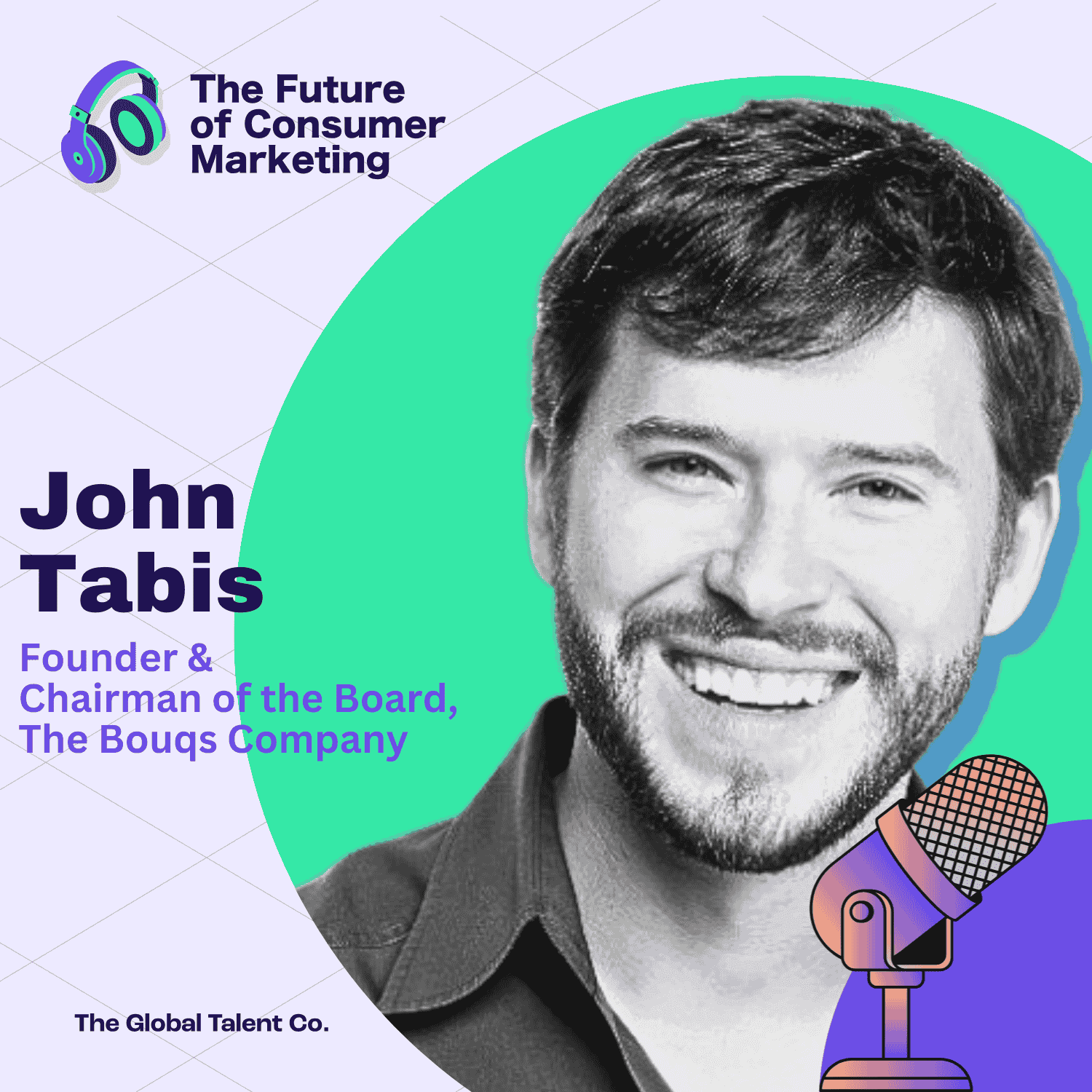
John Tabis, founder and chairman of The Bouqs Company. Background: strategy career at Bain & Company and Disney Corporate Strategy; later entrepreneurship after leaving Disney in 2012. Co-founder Juan Pablo Montufar Arroyo (Ecuador; dairy farm upbringing; worked on rose farm).
Key claims
The industry ignores both producers and consumers; farmers’ sustainable roses get mixed and lose brand/economic value. The solution: ship directly from farms to end customers using technology to cut layers, offer limited bouquet options (40 initially), flat pricing (no bait-and-switch), and premium storytelling.
Notable examples
“Active volcano” origin from Cayambe, Ecuador; volcanic ash photos boosted authenticity/social media. Subscription evolution: added flexible gifting (pause/skip, choose recipient monthly) and one upsell (vase). Media: early Oprah coverage; Shark Tank rejection followed by Robert Herjavec investing after a wedding order.
Written by AI. May contain mistakes. Listen to the episode to check what was said.
Chapters
Tap a time to open that second in VOIdentifying Gaps in the Floral Industry
0:00 to 0:45
Learn about the overlooked roles of producers and consumers in the floral market.
“He saw the problems in the floral industry from the farmer side, and I saw it really from the consumer side.”
Background of John Tabis
1:19 to 1:54
Discover the professional journey of John Tabis and his path to entrepreneurship.
“a company that delivers flowers and plants fresh from eco-friendly sustainable farms to doorsteps all around the United States.”
The Founding of The Books Company
1:54 to 3:56
Learn about the inspiration behind starting The Books Company and addressing industry gaps.
“I worked at places like Bain & Company and then in the Walt Disney Company's Corporate Strategy Group for almost a decade.”
Innovative Business Model and Strategy
3:56 to 7:24
Exploration of the innovative strategies adopted to differentiate from competitors.
“Because in that value chain, the most important two players are the producer of the product and the consumer of the product.”
The Power of a Unique Brand Story
7:24 to 7:40
The importance of a memorable brand story in capturing consumer interest.
“really the way a brand should exist in a very emotional category.”
Creating the 'HSM' Moment
7:40 to 9:56
Understand how to create a compelling moment in your brand story that resonates with consumers.
“At the beginning of this journey, I would run around and tell people about freshness and sustainability.”
Evolving the Brand and Subscription Model
9:56 to 14:00
Examining how The Books Company adapted its subscription model to enhance customer retention.
“I had no idea where the story was going to and where it ended up.”
Subscription Model Benefits
14:00 to 15:00
Learn how a flexible subscription model increases customer loyalty.
“We're at like two dozen roses for 58 bucks free delivery, including Valentine's Day and Mother's day, no one else touches that pricing because we're direct from the farm.”
Evolving Product Offerings
15:00 to 17:10
Discover how customer feedback shaped the product offerings of Bukes.
“Instead of 25 upsells like our competitors, we have one.”
The Value of Gifting Vases
17:10 to 18:00
Understand why offering vases enhances the gifting experience.
“Daily Candy at the time was like the largest newsletter to primarily mom shoppers.”
Show all 17 chapters
Media Exposure and Sales Growth
18:00 to 20:20
Explore how media appearances significantly boosted sales for Bukes.
“this gravy train, we, at one point we're doing all the flowers for access Hollywood, which meant I was on access Hollywood twice a year.”
Lessons from Shark Tank
20:20 to 23:00
Hear about the challenges faced on Shark Tank and unexpected outcomes.
“Like I'm fat girl and you're all around the different names you're dropping because it's just so cool how many people you've been able to meet and the journey that Leboop's company has had.”
Kindness as a Business Asset
23:00 to 23:20
Learn how kindness can play a crucial role in business success.
“I'm really good at founder stuff, storytelling, selling strategy, et cetera.”
Company Growth and Structure
23:20 to 26:50
Understand the growth of Bukes and the structure of its workforce.
“And I believe very strongly that people do what they love and then they get good at those things and then they get rewarded for it.”
Leveraging Technology for Efficiency
26:50 to 28:00
Discover how Bukes uses technology to streamline operations.
“They have to work with the farms down there.”
Leveraging AI for Efficiency
28:06 to 28:32
Learn how AI is layered on existing systems to enhance efficiency and accuracy.
“Yeah, I mean, we built all of it from scratch in like 2017, 2018.”
Closing Thoughts and Farewell
29:14 to 29:56
Reflect on the episode's insights and encourage audience engagement with flower sending.
“And then you can find me on LinkedIn, John Tabas, T-A-B-I-S or on Instagram at JTLivesForThis, L-I-V-E-S, the number four, T-H-I-S.”
Transcript
Automatic transcript. May contain errors.0:00He saw the problems in the floral industry from the farmer side, and I saw it really from the consumer side. The most important two players are the producer of the product and the consumer of the product, yet both of those two are the ones that are most ignored in this supply chain, so let's go try to fix that. After you noticed this gap in how the consumer and the producer were being ignored in this whole flower industry, what made you then decide, like, hey, this is what I want to tackle? You're born, your parents get flowers. You achieve something, flowers. You go to prom, flowers. You get engaged, flowers.
0:30You get married, flowers. You have a baby, flowers. You die, flowers. Flowers are at the most meaningful moments of your lives, yet the brands out there don't stand for anything but cheap.
0:45Hey, everybody. Thank you so much for tuning in. My name is Andres Figueira, and I'm going to be your host for the day. This show is brought to you by the Global Talent Company, helping fast-growing teams hire exceptional remote talent from Argentina, South Africa, and beyond. We connect companies with world-class professionals who bring skill, reliability, and a global perspective to every role. And just for our listeners, we're offering an exclusive 10 % discount on your first hire. All you need to do is visit GlobalTalent.co, click on Start Hiring, and mention the podcast listener discount when we get in touch.
1:18And today with me here, I am speaking with John Tabis, founder and chairman of the board at The Books Company, a company that delivers flowers and plants fresh from eco-friendly sustainable farms to doorsteps all around the United States. So how's it going, John? It's a pleasure to have you on the show. Really good, man. Thanks for having me. Appreciate it. No, no, we really are excited to learn about everything you guys are doing, because I must admit, this is the first flower company that I'm going to be learning about and hearing from. So just so that we can get the audience a bit more in context, John, and we can learn and start from somewhere, would you be able to give us a bit more of your background and how everything with the books company started?
1:58Yeah, for sure. For sure. Again, happy to be here. So I started my career off in strategy. I was a strategist for about a decade. I worked at places like Bain & Company and then in the Walt Disney Company's Corporate Strategy Group for almost a decade. and that was, you know, super long-term, 100 ,000 foot planning. So at Disney, we were looking at, you know, what's the world going to be like in 2020 when it was 2005? What's the world going to look like in 2025 when it was 2010, right? So like very long horizon, sort of trying to predict the future and primarily around technology. What technology is coming out?
2:33What's that going to change in consumer behavior? So as a result, what do we as the Corpus Strategy team recommend that we do? I did that, again, for about a decade in total, and then really got excited about technology's impact on consumers. We had one of the first iPads in the world because Steve Jobs was on the board at the time. So you give an iPad to a two-year-old in 2008, and your mind explodes about what's going to happen to the way that we all behave with technology, right? We were doing this every day. And so I was thinking, hey, we should really be building our own businesses that take advantage of this technology here inside of Disney.
3:06and that work eventually led to an innovation group that led to the Disney Accelerator, but I really wanted to be building businesses and that was sort of the beginnings of me becoming more on the entrepreneurial path. I left Disney in 2012 and started talking to my co-founder. His name is Juan Pablo Montufar Arroyo, born and raised in Ecuador. He had grown up on a dairy farm and then his uncle down the road had a rose farm and we met in college. We were in a band together. And he had moved back to Ecuador after about a decade in the States. And he saw the problems in the floral industry from the farmer side, because he was literally working for one of the largest rose farms in Ecuador.
3:46And I saw it really from the consumer side. And we decided, hey, let's put our brains together here and try to figure out how can we fix both sides of this equation? Because in that value chain, the most important two players are the producer of the product and the consumer of the product. Yet both of those two are the ones that are most ignored in this supply chain. So let's go try to fix that. After you noticed this, what's it called, like this gap and how the consumer and the producer were not, were being ignored in this whole flower industry, what made you then decide like, hey, this is what I want to tackle?
4:21And what was the aha moment when you, when you felt that you actually had a proper solution to these, to this ignoring situation that you were feeling? Yeah. So, so the, the, the farmers were sort of stuck in this world of the world viewing the product as a commodity because it sort of gets lumped in with broccoli and any other crop, right? Because it's grown in the ground. And then there was this daisy chain of players that sort of just happened to grow up to move the product from Ecuador and Colombia, the two primary providers of the product, to the US. You have exporters and importers and wholesalers and then florists, and then you have online order gatherers that take quarters and give them the florists.
5:00And so his whole thing was, man, my flowers, which I do things the right way as a farmer, I'm sustainable. I'm not cutting down the rainforest. I'm not using red label chemicals. And from a labor perspective, I'm treating my labor really well. We have living wages. We have ESL, English as a second language training. We're doing all these things the right way. But my red roses, when they enter the value chain, get mixed up with everyone else's red roses. and we never see any economic value or even brand value for doing more for the people on the planet. And so on that side, we said, well, let's just ship it directly from your farm to the end customer.
5:36And then we can tell the story of how it was propagated and educate people along the way. But that matters. And here's why it matters. And so that was sort of the solution on the supply chain side. Let's figure out how we can use technology to replace all these five or six layers and deliver directly to the end consumer. And then on the consumer side, what I said was, let's just do everything the opposite of the way it's done today. Everyone else had a thousand options. Let's have 40 options, just 40 bouquets. Everyone else had a million upsells. Let's have no upsells. You just get fresh flowers straight from the farm.
6:10Instead of having bait and switch pricing, they'll advertise like$19.99, but then when you get to check out, it's like$78. And you're like, what happened? I didn't add anything to my order. Let's just have flat pricing. It'll be at one price. That'll be the price you pay, right? And so we just sort of said, let's take the opposite. Let's build a really premium brand. Let's tell the story of the farms, the sustainable product, and let's see how that goes. We launched that business with about$13 ,000 total in the bank. We had no real backing. And we did$2 million of revenue in our first year, five in the second, 15 in the third, and$32 million of revenue in the fourth year.
6:47Like that, boom. all on the back of customers in this category want to feel like the brand they're buying from honors the moment that they're sending the flowers for, right? People send flowers for the most important moments in people's lives. You're born, your parents get flowers. You achieve something, flowers. You go to prom, flowers. You get engaged, flowers. You get married, flowers. You have a baby, flowers. You die, flowers, right? If you take it for a second and think about it, flowers are at the most meaningful moments of your lives, yet the brands out there selling the product don't stand for anything but cheap.
7:23And we just didn't think that that was really the way a brand should exist in a very emotional category. And so we just stripped out all the noise and really focused in on the quality of the product, the freshness of the product. And that's really what let us go up and to the right. Now, the way we told that story was key as well. At the beginning of this journey, I would run around and tell people about freshness and sustainability. And, you know, they'd give me like, oh, that's nice. You know, and I knew if that's all we had, we were toast. Like whenever someone pats you on the head and says, your brand's nice, you're toast, right?
8:00Because there's so many brands, there's so many stories being told, there's so much noise. Like you can't be sort of just normal in the world today with a consumer brand, you have to stand out. And so we were searching for what is that, that story, that angle that's going to get people excited about this. And I happened to be, this is 2012 before we launched in a meeting with a guy and we were telling the story about my co-founder was on the phone at the time. Skype didn't exist. Um, was like, Hey, I'm down here on in Cayambe. It's an active volcano range in Ecuador. And the guy stopped us and he was like, Whoa, Whoa, Whoa.
8:36the flowers come from a volcano and we were like yeah you know but it's just it's just that that's where the farms are he's like that's the coolest part and we were like oh there it is that's the thing and from that moment forward we our tagline was we drop ship flowers from an active volcano to 40 for 40 flat to your loved ones nationwide and boom up into the right everything oh my it's all about volcano flowers now. And nowadays it's actually not. Now we have farms, Ecuador, Colombia, Chile, Peru, United States, Canada. We can't really rely on that story. But when I coach entrepreneurs about selling your brand, selling your business early, I tell them all the time, and you can bleep this out if you need to, but you need an HSM, a holy shit moment.
9:22If you don't have that in your brand story, you will never break through the noise. No one will care. And people are like, but wait, my product doesn't have that because it's this. And I'm like, dude, I found an HSM for flowers. You can find an HSM for anything. There's a story in there somewhere that's going to get people to lean in and say, no way, I got to hear some more about this product. And if you don't have it, it's not going to work out. It doesn't matter how much money you raise, how much money you spend on marketing. You need that magical moment where people go, oh, wow, this is different.
9:53And so that was our HSM. That's how we told our story. Man, that is so cool. I had no idea where the story was going to and where it ended up. It's just amazing because volcano flowers does sound like something that would actually perk up your ear. You'd be like, wait, what's that? Where are they from? And it's just something that makes it all the more interesting. People's brains go to like, oh, they're picturing Indiana Jones swooping into liquid hot magma and like saving the bouquet. Right. It becomes romanticized. But then people wouldn't believe it. They would just think it's marketing. But then they would see the custom stamp from Ecuador.
10:26and then they would be like wow they're not it's not made up a store this isn't a marketing thing this is actually and then not great for a lot of reasons but great from a authenticity of brand perspective kayambe erupted it doesn't erupt very often and all of a sudden we had volcanic ash over all of our flower fields that is that was gold in social media because now you're out there just showing pictures of all your tulips your roses your daisies all these things covered in a volcanic Like, gosh, again, it brings that story to life and really wraps people in. And so that was how we got the company off the ground.
11:01Dude, no, and I totally understand the fact that with these HSM moments, I'm taking that home. I'll keep that in my mind forever. That's such a nice punchline to remember it by. With that HSM moment, you actually provide an intangible value to the customer that will make the flowers being more expensive just worth it because of where they come from and what they represent. And not just for the sustainability that right now could be, I feel it's something that can be very, what's it called? It can be understood as greenwashing. And some companies are just trying to say they're sustainable or eco-friendly to match a certain profile or benchmark nowadays when it's actually not true.
11:43So that is so crazy. And John, after you guys got that moment with the volcano flowers and actually raise your sales with the consumers, how did you make sure to keep that momentum? And what happened with the marketing after you weren't able to leverage the fact that they were from a volcano or when it turns into like a more older story? Yeah, so that probably was our core pitch for the first maybe like three years, right? But at some point in any brand's evolution, the thing that gets the first group of people in is not what gets the next group of people in. And then eventually whatever gets those people in, Right.
12:20Brands have to evolve. You have to change over time. And so probably in like year four or five, we started looking at our subscription program. We said, hey, there's value here. When we get people to sign up, they spend a lot of money with us, hundreds of hundreds of dollars. So people love the product once they get it. But a very small percentage of our customers were trying the subscription program. And so what we said then was like, why? Like, what is it about this thing that limits the amount that people are interested in it? Part of it was, it wasn't front and center in our shopping experience.
12:54It was just sort of off to the side. You could shop for flowers or you could subscribe to flowers, very separate funnels. And so what we did at the time is we said, let's just put it in every funnel. Anytime you're checking out, you have an option to subscribe and you're gonna save about 50 % off today's order if you become a subscriber. So just pure offer sort of funnel marketing 101. So we did that. But that wasn't all of it. The second insight we got from people was it was restrictive. You couldn't choose your flowers. It was whatever we chose. It was effectively grower's choice. And then once you set it up, like let's say it was Mother's Day and you set up your mom for a year, like instead of mom will give you flowers on Mother's Day, I'm going to give you flowers every month on the 15th for a full year.
13:36You get to experience this love from me all year round. Great gift. But some people are like, but I don't want to just gift my mom. I want to have the ability to gift whomever I want using this subscription. So then we made it very flexible. You can sign up for once a month. But now if you say, hey, it's my mom's birthday this month, it goes to mom. The next month, it's my sister's birthday, goes to sis. The next month, it's my wife's birthday, comes home. Now you're locking in the price, which is way cheaper than anyone else. We're at like two dozen roses for 58 bucks free delivery, including Valentine's Day and Mother's day, no one else touches that pricing because we're direct from the farm.
14:12So this flexibility of use allowed a whole new segment of people to become subscribers because it's not just you have to gift one person. You can just lock in a price. And if you're busy one month or you don't have a birthday, you just skip the month. If you need to pause it for three months because of economics, because you're traveling or whatever, you hit pause for three months and then it'll restart back up and keep that price locked in. And for us, that was just a way to keep people from going back to Google and searching for flowers again. Now they're locked in as a long-term subscriber.
14:42They know they're getting the best price. They've checked it out. We are the best price. And so we keep them inside the Bukes family as a subscriber. So really it's sort of as the brand evolves, your story has to change. We no longer only have 40 options. We probably have 120, not quite as many as our competitors, but not the purity of the beginning because we learned that people wanted more choice. Instead of 25 upsells like our competitors, we have one. You can add a vase. I always, at the beginning of my thesis was who needs a vase, right? Everybody has 10 vases in your house. You never use them.
15:14They take up space. But what I learned along the way was the sender wants to send a vase because then it's a permanent part of the gift. The flowers, we know, you know, our competitors, sometimes they die in two or three days. With us, they're going to die in one to two weeks, but they're going to die. This is a permanent part of the gift that the giver wants to buy. And so you say, well, then you got to offer vases. So pieces of the theory at the beginning, we learned over time from customer feedback, this doesn't work, let's change them. But the parts that really are the core of our experience straight from the farm, sustainably grown, et cetera, et cetera, that's all still there, just under a different packaging.
15:50Wow. Like, I love the fact that you mentioned, and I had not understood that either, is the fact that the giver wants to gift the vase to the receiver. And it's true because then you can use database for another flower or as a whatever ornament in your house. But it really is a very neat thing to notice because that way you're actually providing more value, as you mentioned you are. And that is so cool. John, I also noticed when I looked at the books company, like your website on LinkedIn, that you guys were shown on Shark Tank, Oprah and other types of shows. Is that correct? Yeah, I was in Shark Tank back in the day.
16:26Been a decade now, but Yep, I was on Shark Tank. Wow. And then after that media exposure, how was the increase in sales? Did you notice a big difference after appearing in those shows? Because I feel that is huge. It's a game changer. Yeah, so Oprah was really early. We were like three months into this thing. And we started getting crazy press because we had a couple tactics that really raised the story. One is just that story I mentioned, Straight from the Volcano. know, that caught writers, journalists, imaginations. And they're like, wow, that's very different. I want to write about that thing.
17:02Right. And then, you know, PR begets PR. Once you're in one thing, then it's like, oh, someone else can write about it. So we were in Daily Candy, probably like two months into our journey. Daily Candy at the time was like the largest newsletter to primarily mom shoppers. Eventually got bought by, I think, NBC Universal and that no longer exists, but it was very influential. And then, yeah, Oprah Magazine, Oprah's Favorite Things was like two, three months later. And so that was working, just the storytelling. But then we were also running around Los Angeles. We're based here in LA. We had a PR agent who was very, very aggressive and starting her own firm and was willing to do crazy things, literally finding celebrities' homes, dropping our flowers at their doorstep with a note and walking away.
17:49And that led to than that. Courtney Cox, Courtney Cox tweets about us when we're like two months in people see Courtney Cox tweets about it and then other people want to write about it. And so this gravy train, we, at one point we're doing all the flowers for access Hollywood, which meant I was on access Hollywood twice a year. Like this machine of just getting interest in the category and our approach just started to work all based on that story from, from the volcano. Shark Tank was a little bit of a different thing where they were really directly looking for companies that weren't sort of out of a garage and were more than a product, right?
18:27Most things that were on Shark Tank, especially up till that year, 2014, were like a mom and a son create a new beeswax lip balm and it's a product. It's not a company. And they wanted folks who were raising venture capital and building businesses, not products. And so they were actively like looking for those types of companies. And I had heard about that from friends of friends. I applied, went through the whole process. They brought me on the show. I got completely crushed in the tank. I mean, it was it was not great. All of them puked all over it. They didn't like it. The name Barbara hated the name.
19:04And Mark thought that it wasn't cool that I had already raised money and all these things. But I honestly think the real reason was we were expensive. I'd already raised$1.2 million at a$5 million valuation. We were doing about a million dollars in run rate. And 5X sales is not where the sharks invest. They invest at 0.5 times sales. They get really good deals on that show. I did not fit that mold. But really cool is about three years later, I was waiting for a three o 'clock meeting. I'll remember it forever. At 2.59, my phone rang with a number I didn't recognize. I assumed it was my three o 'clock call.
19:41And when I pick it up, he goes, hey, John, it's Robert from Shark Tank. And Robert Herjavec randomly called me. And he was like, I'm getting married to Kim Johnson from Dancing with the Stars. I'm getting quotes for flowers. It's insane. I remembered your pitch and thought, maybe you guys could help us out with our wedding. And I said, let's talk, Robert. So Robert came down with Kim. I got all this time with him. We did his wedding. We saved him a ton of money. And then at the end of it, I said, but here's the deal, Robert. The amount that I saved, now you've got to invest in books. And he said, sure thing.
20:12And so Robert ended up becoming an investor alongside of our$24 million Series C raise. So I believe to this day we're the only company to ever get rejected in the tank and then raise money afterwards. That is amazing, John. Like I'm fat girl and you're all around the different names you're dropping because it's just so cool how many people you've been able to meet and the journey that Leboop's company has had. Wow. There's two things we did really well that I do really well. I make a lot of friends. I help them when they need help. And then when I need help, I get help. Right. And I say this to entrepreneurs and to people all the time.
20:49Being kind is selfish in some ways. If you're kind to the world, the world will be kind right back. And so it is good to be kind. It is good to be altruistic. That's great. But in business, it's an asset. You can leverage that asset to make everything work better for you. So whether you love your job or you don't like your job, whether you're going to stay forever or you're on your way out the door, treat everybody with just amazing levels of kindness because you do not know who and when someone's going to make your career work or not. And also, isn't it just a more fun way to go through life?
21:22Like being curmudgeonly is just not fun. Right. And so that part. Would you just mention it takes me back to like those elementary school days. Like it's a it's a saying as old as time is like treat others as you want to be treated. It's not that hard. But nowadays when I'm older, I'm like, I'm just going to treat everybody super nicely because I hate when I'm treated badly. So like I'll kill them with kindness if it if it comes to that. And then the other part, especially for entrepreneurship, is there has to be no shame in your game. You have to be willing to sell to everyone all day, nonstop, no matter who they are.
21:55There's no door you have to be afraid to unlock. You have to ask for favors, be willing to push. And like, yeah, you're going to get rejected 99 % of the time, but it's the 1 % that works. And like, you know, I say it to founders all the time. Like if your mom hasn't bought your product and they always say like, oh, but my mom's not interested in insert category. And I'm like, it doesn't matter, dude. She gave birth to you. Like she should be buying your stuff. And who cares if she sticks it in a closet and never uses it? Like it's a sale. Revenue is revenue. And so if you're not willing to ask mom to buy your stuff, then you're just not selling.
22:29You got to be selling all the time. You got to have that mentality of a seller because you got to go for them all. It's completely right. It's completely right. And John, I heard you that now that you like, I know you guys have been a while with the books company active and stuff, but how many people compose the whole workforce and the team you guys have to make all this function accordingly? Yeah. So we're about 55 people today. It's a nine figure business. It's a nice sized company. I've not been CEO now for about five years. I stepped back into the chairman role. I'm really good at founder stuff, storytelling, selling strategy, et cetera.
23:09I'm not really good at day-to-day execution, prioritization, roadmap being, you know, all the things that are very tactical as you get from a startup to more of a mid-sized company. It's not where my passion lies. And I believe very strongly that people do what they love and then they get good at those things and then they get rewarded for it. And you do more of it. And the founder role is much more of strategy and vision, selling and creativity. And the CEO's role is coming against larger is a lot about blocking and tackling. Right. And so CEO Kim, Kim and I are really good partners. She runs the show day to day and I'm like the angel and devil on her shoulder, helping her make calls and try crazy things, but within the scope and the comfort level that she has.
Read the full transcript
23:51And so, yeah, we're 13 years in at this point. Our 13 year birthday was three weeks ago. And congratulations. Thanks. Thanks. It's a really great company with a lot of big things on the horizon. We are about to launch 70 stores. We have five stores right now. We have a deal with a very large national retailer to bring our stores nationwide. And that's really important for customers because then we can deliver same-day delivery, which we can't do from the farm. so we maintain the whole same supply chain freshness sustainability etc but now in five markets la san francisco san diego manhattan you can get the flowers in as little as an hour um and that that really is a game changer for customers because we just weren't able to provide that sort of speed and nimbleness before and so we're hoping that within you know a year 24 months we are in every every major city in the u.s and then growing from there well that's beautiful because if I think about it, flowers, they are bought preemptively with time because you know that an event is coming or they're also bought last minute because you forgot you had this.
24:55And if you're able to provide one hour delivery service, that would be another hook for the consumers as well. Especially dudes. Like not to be too genderous here, but dudes are really last minute on it. You know, the number of people at Valentine's, I mean, Valentine's Day, the same day every year, bros, like it's the 14th of February. You could order right now. You'd save yourself a ton of money. And even better than that, you can just put it on a subscription. And you won't. You're going to wait the day of. You're going to text me and be like, hey, bro, I need some flowers. And I'm like, come on.
25:22Objectively, as a consumer, the one hour delivery, I was like, that would really work for me. That would be amazing because I always forget. And it's super cool, too, because we can do really cool things in retail. We have classes in our retail shops where if you're like a bridesmaid, you want to have a cool bridal shower party thing or baby shower. We can modulately move the space around. People love to come in for prom because we do really high quality design. but at a much cheaper price than you would get at like a typical florist. And so the retail really opens up the experience. We can do subscriptions for it.
25:54We do a ton of like Bel Air and Hollywood Hills and Beverly Hills homes, really high quality arrangements. So it really opens up the market for us as well. But for that last minute order, it's absolutely crucial because we just haven't been able to help those customers out when they need it. So look forward to that in 2026 and beyond. Wow. And John, you guys, I know you're planning, as you mentioned to open these retailers i think you mentioned even 70 stores around the states um and the thing is are you also planning to expand the team you guys have because i'm trying to wrap my head around the fact that you're in so many places and you're bringing flowers from so many other countries like are you guys a remote first company or do you have the different headquarters in the cities you mentioned yeah so we have we're fully remote at this point you know enjoying covid we had before covid we had space we thought we were going to move back into it and then time happened and people moved to Austin and Seattle and all around the country.
26:47So we're fully remote at this point. Plus, we have folks in Ecuador and Colombia. They have to work with the farms down there. We won't need to add a lot of people outside of the folks working the actual shops. So as you get to 70 shops, you're going to add workforce for sure. But on the corporate side, the beauty of what we built is that we built the technology in such a way that the supply chain is largely managed by the tech. And so it's going to look at how many flowers we have in these different places, how fast are they moving, and automatically replenish at each of the nodes. And then sort of load a node balance across those nodes based on where you are as a buyer and where your recipient is, how fast we can get it there from that place, the costs and how fresh the product is.
27:30And so it's constantly looking at this puzzle and moving orders around. And so we don't need a ton of people to manage that because the technology is handling a lot of it. So yeah, we'll certainly grow in terms of people from the 55 that we are today, but I would never imagine that we need to be north of like 65 people. From this point forward, the tech and the ecosystem that we've built can be leveraged without having to add a ton of human power. And I'm imagining that the tech you're mentioning is heavily based on AI and leveraging the efficiency and optimization of processes that these new LLMs can bring, right?
28:05It's like training it to help you be more efficient. Yeah, I mean, we built all of it from scratch in like 2017, 2018. So it's not sort of AI native, but certainly a lot of the data decisions, we're now layering AI on top of those to make them more efficient, more accurate learning over time. And so it's a great opportunity to keep things lean to mean. okay okay no i love that i love that and john i'm noticing that we're almost at time for the end of the episode but before we we finish up the show i did want to give you the chance to let anybody in the audience who's listening to us know how they can go about if they're in the states how they can go about um searching for the books company asking for a flower arrangement or anything like that how would they be able to do that yeah for sure you can find us at books.com B-O-U-Q-S dot com.
28:54Take advantage of that subscription first order discount. Get your 45, 50 % off and then just use it as you want. Right. It's going to be pretty affordable on that subscription program. And we deliver to all 50 states, including Alaska and Hawaii with flat shipping rates. We don't sort of jack up the shipping fees depending on where it's going, which is really great. And then you can find me on LinkedIn, John Tabas, T-A-B-I-S or on Instagram at JTLivesForThis, L-I-V-E-S, the number four, T-H-I-S. Okay, amazing. Thank you so much, John. And to anybody who has been listening, you have just heard it here first.
29:31Make sure to subscribe to The Boots Company. And people, please send flowers to everybody every month. If you don't know who to send them to, then just send them to me. But, John, just to not take away any more of your time, thank you so much, man, for hopping on the episode. It really has been super interesting. And I love the whole journey that the books company that you mentioned has had, because I just keep you guys, I hope you guys keep on growing. Really appreciate it, man. Thanks for having me.
From the publisher
In this episode of The Future of Consumer Marketing, host Andres Figueira interviews John Tabis, Founder and Chairman of The Bouqs Company. The Bouqs Company transformed the floral industry by eliminating the traditional five-to-six layer supply chain and shipping flowers directly from eco-friendly farms in Ecuador, Colombia, and beyond to consumers across the United States. Starting with just $13,000, Tabis and his co-founder grew the company from $2 million in year one to $32 million by year four—all by rejecting commodity positioning and building a premium brand in one of the most emotionally charged but underserved consumer categories. Through strategic storytelling, aggressive PR tactics, and ruthless focus on customer experience optimization, The Bouqs Company carved out a new position in a market dominated by players competing solely on price.
Topics Discussed:- Disrupting traditional supply chains by shipping directly from farms to consumers
- Finding the "Holy Shit Moment" (HSM) in brand storytelling to break through noise
- Leveraging guerrilla PR tactics to secure celebrity endorsements and media coverage
- Evolving brand narrative and product offerings based on customer feedback
- Transitioning from growth-focused founder to strategic chairman role
- Building subscription models that balance flexibility with customer lock-in
- Expanding from pure e-commerce to omnichannel retail strategy