In short
How Juniper (bed linen and towels “portable luxury”) scaled to about €25M D2C without burnout, focusing on performance marketing, inventory/working-capital realities, retention, and data measurement.
Guests
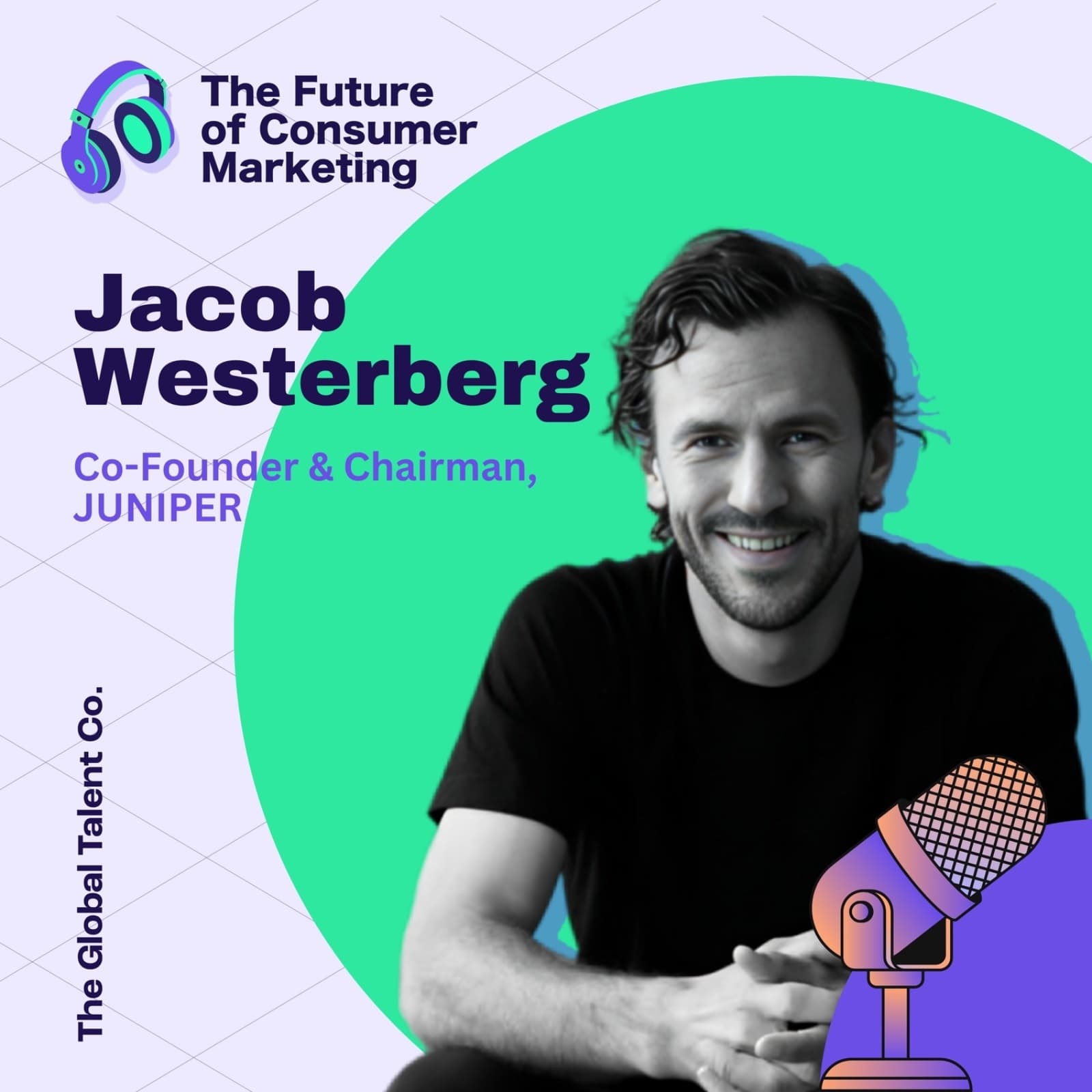
Jacob Westerberg, founder of Juniper (with his wife), previously management consultant (8 years) and retail/consumer work including Business Sweden helping Swedish companies enter the US; also runs e-commerce agency Orange Shoes. Co-creator/partner: his wife (branding/content lead).
Key claims
Paid social “founder ad” narrative drove early breakout; inventory funding (not marketing) was the biggest strategic hurdle; marketing should be measured with incrementality/MMM and correct KPIs (avoid misleading “cost of sale”); retention matters even for low-frequency categories, so expand into towels and consumables (soap/hand lotion/candles).
Notable examples
Hotel-in-Mallorca inspiration; 30-day try-at-home with ~2% returns; Finland launched first due to bed-size overlap; Norway/Denmark planned for Q4.
Written by AI. May contain mistakes. Listen to the episode to check what was said.
Chapters
Tap a time to open that second in VOJacob's Journey into E-commerce
0:45 to 1:41
Discover Jacob's unconventional path into e-commerce and consumer products.
“I started out probably wanting to be an investment banker at some point.”
Working with a Partner
1:41 to 3:00
Insights on running a business with a spouse and maintaining balance.
“We have three kids and we spend a lot of time together like most of the day and it's working out pretty well.”
The Founding of Juniper
3:00 to 4:52
Learn about the inspiration and story behind Juniper's creation.
“So tell me a bit more about how you landed with Juniper, The unique insight that you felt so strongly that you had to start the business with UI.”
Juniper's Aesthetic and Design
4:52 to 6:15
Explore Juniper's unique design approach compared to traditional brands.
“Yeah, I think we sort of set the roots for Juniper more in a Southern European context, even though we're like, we're not hiding the fact that we're from Sweden.”
Business Evolution and Challenges
6:15 to 9:24
Understand the challenges and adaptations Juniper faced since its inception.
“And then walk me through kind of the journey because the company has been around for the last years, as you mentioned.”
Navigating Marketing Strategies
9:24 to 12:09
Insights into Juniper's evolving marketing strategies and channel effectiveness.
“So let's double click on your marketing journey, right?”
The Role of Content Creators
12:09 to 14:00
Discussion on the effectiveness of content creators in the home decor market.
“And doing those types of ads leans into the fact that people actually want to buy from other people and it builds trust.”
Challenges in Content Creation for Home Decor
14:00 to 16:40
Learn about the effectiveness of UGC ads versus collaborations in home decor marketing.
“I think there are sort of nuances to content creation.”
Importance of Customer Retention Metrics
16:40 to 19:50
Explore the significance of customer lifetime value and retention in marketing strategy.
“And naturally, it's your marketing game to be in because you can just be much more aggressive in your performance marketing.”
Innovating Product Strategy for Better Retention
19:50 to 22:40
Discover strategies for improving product offerings to enhance customer retention.
“be able to create that universe that you want to from a brand perspective as well.”
Show all 14 chapters
Navigating Premium Brand Positioning Digitally
22:40 to 26:35
Understand the challenges and strategies for conveying premium quality online.
“Walk through your organization versus internationalization strategy.”
Trends and Data Utilization in Consumer Marketing
26:35 to 28:00
Learn about emerging trends in marketing and the importance of data-driven decision making.
“Coming to trends on the future of consumer marketing, what are some of the trends on the marketing set that you feel are very much undervalued and that you'd urge marketeers, founders to focus on?”
Understanding Marketing Efficiency and KPIs
28:00 to 30:23
Learn about common pitfalls in marketing efficiency and key performance indicators for brands.
“Then I think that probably the area where most smaller brands, the type of brands that we support with Orange Shoes, let's say they're sort of 2 million euros, 25 million euros or in that span.”
Exploring Ideal Business Opportunities
30:23 to 31:54
Discover the types of brands and companies that could thrive today, with a focus on retention.
“So I think sort of reframing that a little bit, I think is probably also something that a lot of brands could benefit from looking forward.”
Transcript
Automatic transcript. May contain errors.0:00This show is brought to you by the Global Talent Co, a marketing leader's best friend in these times of budget cuts and efficient growth. We help marketing leaders find, hire, vet and manage amazing marketing talent for 50 to 70 percent less than their U.S. and European counterparts. To book a free consultation, visit globaltalent.co. Hi, everyone, and welcome to the Future of Consumer Marketing podcast with Jacob Westerberg, one of the founders of Jennifer, an advisor to a lot of other consumer brands. Jacob, it's a pleasure to have you. Yeah, it's great to be on the podcast. So tell me, how did you end up in the world of e-commerce and consumer?
0:39And what was the triggering point for you to get into that space? I think I had a sort of not maybe the regular path that people take into e-commerce. I started out probably wanting to be an investment banker at some point. Ended up in management consulting. I was a management consultant for about eight years and the later half of that, I spent a lot of time in retail, consumer products, online ideas, and helped more and more in transaction advisory when private equity companies buy sort of different assets. And a lot of time that was retail assets in my case. So I sort of skewed towards consumer products.
1:13And then I worked at an organization called Business Sweden, where I helped Swedish companies enter the US market. Also there, I helped a lot of consumer product companies. And then I sort of ended up working in e-commerce specifically after that. Set up my own e-commerce agency called Orange Shoes. And my wife and I started Juniper about six years ago now. And Juniper is a bed linen and towels, sort of a portable luxury company. Okay. Amazing. I mean, there's probably a lot of couples thinking about if they want to start a business together and I've seen it work but also not work what would you definitely need to keep in mind to make it work yeah I mean I think it is one of those bets I think when we started out people told us that it wasn't going to work out like I think that was the most like common thing for people to say when we told them but it's been working I think surprisingly well I mean my wife we do a lot of things together we work together we work out together.
2:08We have three kids and we spend a lot of time together like most of the day and it's working out pretty well. Like naturally, sometimes you have to sort of jump in and out of being in a professional and a personal relationship. At work, when you have colleagues around you, naturally, you have to sort of tend to each other in a slightly different way. But I think now we've been doing it for a few years and it's working pretty well. So I think just think through if you're okay to spend like 24 hours a day with your other half before you do it, probably, because you do end up like blending personal and professional time a lot.
2:43There isn't really like that work-life balance aspect because even if we're like on a Friday night having less of wine, we usually end up spending half an hour on talking about Juniper, the next product launch. So I think there's that aspect. But if you're okay with that, I would recommend it to anyone actually. Okay, amazing. So tell me a bit more about how you landed with Juniper, The unique insight that you felt so strongly that you had to start the business with UI. Yeah, so it isn't actually part of our sort of founding story, but I think the founding story should actually start probably even before we even started talking about the business in particular.
3:22Because I was helping one of the biggest Swedish retail companies in bed linens and home textiles called Hemtex. And that was about half a year probably before we came up with the idea for Juniper. So I think that sort of primed my mind and probably my wife's mind to think much more about bed linens and towels you normally do, because normally that's sort of not something you spend a lot of time thinking about. So I had that experience. I really liked that project. It was probably one of my most like fun projects as a management consultant. It was a relatively small company that had about 100 million euros in revenue, which relative to the vast majority of companies I worked with at that time was much, much smaller.
4:03and I kind of liked the smallness of that organization. So I ended up like spending probably more time on the project than I would have needed to, but I just love working in the business. And then we went on a honeymoon actually at a hotel in Mallorca. Yeah, we got married obviously and then we went on honeymoon. And during that time, we just noticed how soft and how nice the sheets were at the hotel. We started talking about it and my wife had been looking for quite some time to start her own company. She had a bunch of different ideas. and then we just felt that this was probably like a viable idea.
4:35We started researching a little bit. We saw the success that Brooklyn and I had in the US, really big company today, but we felt that, yeah, okay, if they can do it, and that also happens to be a married couple that started Brooklyn, and then we just felt that, okay, if they could do it, then probably we can do it as well. Okay, amazing. So, I mean, we these brands have like a specific aesthetic when it comes to home decor, right, and interior design, at least in the 90s, 2000s, Is there sort of an essence, you would say, or how do you maybe also do things differently in terms of aesthetics and in terms of design than, you know, people would be familiar with go shopping at Ikea or H &M?
5:13Yeah, I think we sort of set the roots for Juniper more in a Southern European context, even though we're like, we're not hiding the fact that we're from Sweden. It's very clearly articulated on webpage and everything. But I think aesthetically, we still probably have more imagery that's connected to Southern Europe. And it's a bit more of that vibe and sort of building on that experience that we had at the Boutique Hotel. We want to bring that Boutique Hotel experience home. And I think more people sort of can relate to that experience in a vacation type setting. Then if you're in sort of this more traditional sort of Scandinavian, very like minimalistic, white type of environment.
5:54So I think that we differ a little bit on that end. But then if you actually just take out the products and look at them like outside our universe, then they're fairly Scandinavian. Like we have solid colors of all the bed linens and so on. So, I mean, there's definitely a little bit of a blend between Scandinavian design and sort of that Southern European flyer. Okay, cool. And then walk me through kind of the journey because the company has been around for the last years, as you mentioned. What are some things where you say the initial thesis got totally validated? What are maybe some of the tweaks and iterations that you've done both on the product, on the marketing strategy side?
6:34Oh, there's a lot, I think. I think that one of the things, and this is probably a little bit embarrassing just on the account that I should have been able to see this before we started, but I think that we've sort of noticed that capital and actually having capital on the balance sheet in order to fund inventory. That has been one of the sort of biggest hurdles that we didn't quite like think through strategically before we started. I think if we would have had more capital when we started the company, we probably could have grown. For the working capital side, for just purchasing inventory or the scaling on the market side?
7:08Yeah, no, not necessarily for the marketing side. I think that principally, at least from a philosophical perspective, I think that you shouldn't really use like outside capital to fund marketing because marketing should be on itself. Like there could definitely be a little bit of a time delay where you sort of say that, okay, we acquire customers unprofitably and then they sort of pay themselves back after three to six months or something like that. There's definitely sort of that. You can go down that route. But from sort of philosophical perspective, I think that marketing should probably fund itself.
7:39But you can't really say the same thing about inventory. And I think inventory and sort of expanding SKUs, having a bigger assortment is one of those things that will make your brand bigger. It will sort of make you able to attract more customers. And I think we didn't really like fully think that through when we started business. So I think that's really one, like rather than thinking too much about starting a business with your wife or your husband, I think thinking through how much capital you'll need to fund inventory is a much bigger and more complex question probably to solve for. So I think that's been one of the hurdles where we sort of had to rethink a little bit.
8:16And we brought in outside capital after we started the business, not a lot, but just a little bit to sort of make that work better. And on the marketing side, I think it probably wasn't as clear to us like geographically where we wanted to root Juniper in the beginning. And it's become increasingly clear like what Juniper is, what the brand should stand for as the business has progressed. I think if you come from more of like a branding type background, like which normally or my wife did, I think you're probably going to be clearer on the brand aspect of the company from the beginning. I think for us, it's been more like an organic journey.
8:52Now it's very clear to us, but it wasn't as clear like six years ago. And that's something that has evolved over time. I think on the marketing side, if you think about performance marketing, I think more of the evolvement around performance marketing is probably just on at sort of the macro level or on basically the changes in the macro landscape in terms of performance marketing. So, so much has happened on meta. And I think we've basically rolled with the punches and learned along the way. So I think we're doing a fairly good job on performance marketing, but you can always improve. Yeah, I mean, those are some of the things at least.
9:24Cool. So let's double click on your marketing journey, right? So how do you think about the difference that work for you? How has that also evolved over time? I mean, you said you're very strong on social media, you know is that something you know you feel dependable or do you also want to kind of diversify on the marketing channel side so walk us through finding perfect marketing channel mix for you for your brand and for your product yeah i mean i think for us it wasn't necessarily super clear for us that paid social would be such a strong channel when we started jennifer but about three months after we started the company probably we sort of hit this really good ad which basically a founder ad with a narrative around with my wife sort of pictured was a still image her picture quite long copy that explains sort of the idea behind the brand and this ad just like basically caught fire and i think that was the first time when we sort of realized that this could actually work and it was also the first time we realized that paid social probably would have such an outsized impact on our journey.
10:31And that was also actually like the fact that that brand caught on was also probably the first time we sort of realized how important it was in capital because we had a difficult time funding inventory because at that time we had really bad payment terms with our factories. So we were selling much faster than we expected during that first year. And then we sort of ended up almost going bankrupt after about 10 months. We were sort of trying to negotiate with both the bank and the factory and trying to make up work and it sort of ended up working out. So I think that was probably the first time I realized that paid social was so important.
11:00And then I think most other things have happened organically to some extent. Like we've tried out most things. We've tried out podcast. Hasn't really worked that well for us. We've tried out a lot of like in-magazine type traditional marketing. It's a bit difficult to measure. You can definitely try like, and we've tried a lot. We've tried QR codes and discount codes and And we've tried to sort of do some light MMM modeling to try to figure out if that has an impact or not. But I think a lot of that type of advertising is also not about sales today. It might be about building brand, building trust, credibility to sort of get more back for your performance marketing dollars like a year later or two years later, because people feel familiar with the brand.
11:43So it's a little bit difficult to assess what value that it has over time. And yeah, and then naturally we're doing Google as well. We would do a little bit of Pinterest. requests so yeah we're definitely not sort of trying to disregard any channel but i think performance marketing is totally where we have the most reliably been able to produce results over time and naturally then you sort of gravitate towards spending more of your time in that so now we have a full-time employee that's basically spending her entire time on working with performance marketing and then naturally it sort of just gets a lot of attention okay cool and then one thing that was sticking out for me is that you mentioned that environmentally was this founder that this is something that you all see quite a lot is that something that you are very much leaning in still now a few years you know would you say that you know that trend has evaporated and there's other things that work no i think we're still leaning into that i don't think it's quite as strong a trend anymore but still there is something human about it right that sort of people prefer buying from people, or at least I think that's probably the main strength of a small direct consumer online type business that you want to buy from someone rather than buying from this big conglomerate.
12:58And doing those types of ads leans into the fact that people actually want to buy from other people and it builds trust. So I think that we definitely do a lot of that still. We've also expanded a lot on working employees in our marketing, but it's sort of the same kind of idea, right? That then you use another person, but that person is saying something and it comes from someone, not just like a random spokesperson or like a paid actor. It actually comes from someone that you'll meet if you go into the store or if you write into customer service. And I think that builds trust. And I think it's actually sort of a very important part of our employee proposition as well, that people can speak their mind and they get to speak about products and they get to be part of the marketing and the company.
13:42And so I think, yeah, we're still leaning into it, but not quite as heavily maybe as those first few couple of years or like a couple of years. And one thing that, you know, which will be interesting for me to understand that that also works in the home decor space is all things content creator on the content creator side, marketing, doing call-ups. Is that something that works for that particular category or has it not worked so well for you guys? I think there are sort of nuances to content creation. So I think something you see in the home decor space that's working well for a lot of brands is doing the sign collabs of various forms.
14:15So that still works really well, I think. And it probably works better than ever, in a sense, because it's easier now to get sort of those collabs out there and actually get impressions. But I think that generally speaking, just pure sort of UGC ads haven't been working that well for Juniper in particular. I think that's probably true for other Home Depot brands. I'm trying to think through other Home Depot brands that I'm supporting as well, but I think that's true to some extent. I think that regular UGC creator type content works really well in skincare and the beauty space, probably in the supplement space to some extent as well, but maybe doesn't work quite as well in the Home Depot space.
14:57But we're still utilizing that to some extent. It's just not like with some brands, you could see that that type of content is like 50 to 75 % of all content they do. For us, it may be like 20 % of the content they do. So it's just a much smaller share of the total volume. Okay. And how important the retention side is? Obviously, you mentioned a few categories which are very high retention, right? D &D or supplements. I would guess, you know, home decor is probably less of a high retention, high frequency in a product. So how important is the whole CRM side of things for your marketing mix? Yeah, I mean, it's a very important aspect, I think, for our business.
15:36I think that a metric I like to look at for businesses is your customer lifetime value in one year relative to your customer lifetime value, basically the first day of that customer. So whether you sort of define customer lifetime value in gross profit too, or in net revenue, it doesn't honestly really matter that much. But if we assume that it's a net revenue and sort of for Juniper, we have a roughly, say, 200 euros in average order value in your first purchase. And after a year that has expanded to about 300 euros. So we have sort of a 50 % expansion during those first year and last days, which is like not great, but it's also not super bad.
16:16Like I work with some companies that have maybe 30 % expansion during those first 365 days. And that's more problematic. then you really need to find profitability on the first order. In Juniper's case, you maybe can sort of accept that you basically break even on first purchase. And then if you work with brands, sort of have maybe 100 % expansion or 150 % expansion in extreme cases on sort of the positive side, then you can sort of buy customers unprofitably and you can capture the profits later. And naturally, it's your marketing game to be in because you can just be much more aggressive in your performance marketing.
16:48So there's definitely an aspect to that. I think retention is extremely important to Juniper. We have a lot of happy customers, but even if they're happy, it might still take them 18 months to come back because you don't buy bed linens that often. I think we are leaning more and more into categories with Juniper that aren't like wives, which have more favorable, I guess, retention patterns. So we're selling soap and hand lotion and scented candles now. And it's taken about three years or so for Juniper to sort of get that going. Like we launched it three years ago, but it sold very poorly in the beginning.
17:18And I think 2025 is probably the first year when we see that sales have really accelerated when it comes to soap and hand lotion. And naturally, those are categories that where you will see a more favorable retention pattern. So, yeah, I mean, it's something you need to manage and think about quite a lot. But even though it's lower than in other categories, it's still very important. okay very interesting and coming kind of back to this retention side of things do you then on purpose kind of create those high frequency and high usage categories so that your customers have more reason to come back is that kind of having your product strategy there yeah i think that's definitely part of it like we're trying to think through all of our products naturally so if we start with the bed linens which is our core product and it probably accounts for like 75 5 % or 70 % maybe of sales at this time.
18:07We're still trying to think through like, how can we actually improve retention on bedlines in particular? So naturally you can add patterns and colors. You can add sort of different weaves. For example, we have two different weaves at the moment. We'll introduce a third weave this fall. This third weave will be priced at a lower price point. And it also costs us less to do or less to make rather. And naturally that can expand. Maybe if you buy our signature collection, like a regular Supima setting collection for your home where you stay most of the time, let's say you're a parkland in a city, maybe you have a countryside house where you don't feel like you would need or want to spend quite as much on bed linens, then we'll now be able to offer lower price point bed linen for the countryside house.
18:51So that could be a way of expanding sort of retention or improving the retention pattern just within bed linens. But then we introduced towels. That was quite soon after introducing bed linens. And naturally that then gets us into the bathroom and it offers people another time to come back. You have a guest bathroom where you could buy for as well. And then when you start going into consumables, so hand lotion, hand soap, you can imagine other consumables within the same space. That also has a different pattern, but also much, much lower AOV. So sure, yeah, we're thinking about that probably all the time when we introduced in products.
19:26Part of the product strategy should be, I think, about your vision for what the brand should be. We want to sort of give people that a hotel experience at a home. But at the same time, you have to be very conscious about metrics. And in the end, like any business, you want the business to succeed. You want it to be a financial success. And if you can create a profitable business and grow that business, then you will eventually be able to create that universe that you want to from a brand perspective as well. So I think I am probably more of a person that leans into ensuring that we're financially viable first and then maybe building the exact brand or the exact product universe that we want to rather than the other way you are interesting you talked already a lot about the positioning from the brand side and that you're more on the premium side of things right one big challenge is of course kind of conveying the premium quality just digitally right especially if you have marketplaces you know from you know with xi and tamu from china that probably have also good imagery but not that kind of a quality so how do you solve for that challenge i think that is a big challenge i work with quite a lot of premium brands across categories so i think that's consistently a problem i think it's a lot about working with really good photography is certainly one of them working with good coffee and trying to be very open with the detail very transparent about production process like juniper produces in portugal we could definitely have cut prices by producing in India, for example, instead we're using a cotton that's one of the most expensive cottons you can buy in the world.
20:59It's a prima cotton that's grown mostly in California and a little bit in the neighboring states. So being very clear in terms of messaging on what it is you're producing and the value that offers to the end customer, I think is something that's important. But then even with that, you can talk about tech specs for a long time, but people don't necessarily care so much about the tech specs. Like they want to understand what the benefit is to them and their life. And then you get into that whole idea of trying to like figure out like, okay, what's most important to people? Is it like feeling like they're in a luxury hotel when they go to bed?
21:34Or are people more interested about the fact that it's actually better for your skin if you sleep in better bed linens? It might actually like to some extent stop wrinkling so that you appear younger at an older age. There are many benefits that you can talk about, but probably not all at once. and then you just need to figure out like what benefits are we talking about at which points and with who i'm trying to convey that and the value it creates and then we also offer 30-day sort of try at home so if you're not happy you can send it back and get your entire money back we pay for the return and everything so there's very very little risk for a consumer to try ginger products and even though we offer that we have about a two percent return rate so naturally there's no like sizing problem or anything with the linens or a very small sizing problem like if there's a problem with size, it's the consumer mismeasured or didn't have the details for their own bed, which happens.
22:26So normally you don't have that problem. And the vast majority of times, people are extremely happy with the product and then they keep the product. So that's also a way of just getting people to dare to make that purchase, even if they feel that it costs a little bit more than they're maybe usually spending on bed limits. Okay, cool. Walk through your organization versus internationalization strategy. So how do you think about going into new market? How do you kind of adjust the whole organization to kind of the marketing efforts there? Yeah, so we've been very much Sweden first for some time.
22:58So Sweden is still like our core market. And it feels like forever, but maybe not forever, but it's definitely our home markets. We're going to expand into Finland and Norway and Denmark, which are neighboring countries, Sweden, of course. We've started with Finland, and that's actually not necessarily from sort of the normal ways you would qualify market, but rather the fact that bed linens have peculiar sizes. And Finland and Sweden are the only two countries in Europe that heavily overlap in terms of the sizes of bed linens. So the pillowcase in Sweden is the same as a pillowcase in Finland.
23:32If I try to sell a 50, 60 pillowcase in Norway, they can't use it because it doesn't fit their pillows. So if you're going to go into Norway or Denmark, then you need to buy a new inventory to be able to sell in those countries. But Norway and Denmark actually have the same. So basically our thinking is that we start out with Finland because they have the same sizes. And we started Finland at the end of last year, basically. And then we're adding Norway and Denmark during the fall now. So we just got inventory very recently. So that theoretically we could start right now, but we're probably going to start in September to get a Q4 in Norway and Denmark as well.
24:08How do you think about your organization also now as you scale, especially with folks on marketing talent? Do you then have people that are experts in certain fields or more generalists? How do you think about scaling and putting together the marketing team? I think that generally when you build a team inside a consumer product organization, I think that it's very important that you don't think... If you ask people if they have a lot to do in any consumer product organization, probably in any organization actually, they always say that they have a lot to do. Everyone works all the time. And if you add another person and you don't necessarily like add new tasks, that person will very soon, like within two months, that person will also work like nine hours a day and feel like they have a lot to do.
24:55So asking people whether they have a lot to do is usually a very bad proxy, I think, for hiring more people into an organization. So I think what you need to do inside is that you basically need to hire and build your organization from a cost perspective and think about like, how much are we willing to spend relative to our top line on new people? I mean, it has to be a blend. Naturally, you have to sort of look at what needs to be done. And then is it feasible that we do that with the existing organization? But I think that looking at organization from a cost perspective is actually really, really, really important.
25:28So when your organization or when your company scales up, then you're able to hire more people and then you can prioritize where that new person needs to go. So I think that's probably the first thing. I think that Juniper is a little bit of an edge case when it comes to building out the marketing organization, since I also run sort of a marketing focused agency on the side. And I am sort of a free resource for Juniper to some extent. So it's a little bit peculiar. We only have one person working full-time with marketing at Juniper at the moment. And my wife also spends a lot of time doing content and so on for marketing.
26:07I spend a bit of time in marketing as well for Juniper. So I think it's a very tight-knit, small-type marketing organization. We could easily have another full-time person working with marketing, and that entire person's time would easily be spent on doing more marketing. but I'm not entirely sure that we would actually be able to sort of pay that back fully. So we'll see when we extend the marketing organization, but probably next year, I think, before we build out the team further. Cool. Coming to trends on the future of consumer marketing, what are some of the trends on the marketing set that you feel are very much undervalued and that you'd urge marketeers, founders to focus on?
26:46I think that they're probably, like, maybe I'm biased because I like data, but I think that there's a lot on the data side that gets missed. I think basically anyone working in e-commerce, they would claim that they are data-driven in their decision-making, but I would probably claim that they're not. And most of the time, people just say that they're data-driven, and then they're sort of data-informed in the sense that you can ask them some data questions, and then they might know those questions, but it doesn't necessarily mean that the way they interpret the data is actually statistically sound.
Read the full transcript
27:19And I think that one big trend we're seeing on the marketing side within that space is basically the rise of MMM modeling. I think that's getting much more popular. Again, I probably should say, but it's getting to be a very big thing. And we have more and more digital players focused on offering MMM services to e-commerce players. So that's one. I think there's also a bit on incrementality, both sort of with external incrementality testing providers. that's a big thing on trying to be more informed as a marketer and then you also see meta for example now rolling out incremental attribution which i think is actually super helpful yeah i think in the first few weeks when it rolled out i was a little bit hesitant to rely on incremental attribution but at least in my mind now about sort of three months after rollout i think that I rely much more on the incremental attribution than I do on any other in-platform ROAS metrics.
28:18So I think that's also quite helpful. So that's one part of it. Then I think that probably the area where most smaller brands, the type of brands that we support with Orange Shoes, let's say they're sort of 2 million euros, 25 million euros or in that span. The most common mistakes I see is probably that people don't have a good understanding of how efficient their marketing is. They're using things like costs or cost of sale, which basically just relates marketing costs to your entire net revenue to figure out if you're being efficient or not. And I think that particular KPI has become very popular because it's so easy to understand.
28:57And it's sort of very easy for a CFO to control how much marketing is spent relative to revenue. But you end up a lot of the time just measuring the wrong things. And I think any CMO and probably actually any CFO would agree that if I tell them that I can double the number of new customers next month at the exact same customer acquisition cost, then everyone would be like, yeah, that's great. But if you're not also doubling the number of returning customers, then by definition, your cost of sale will look much worse because you spend much more money relative to your entire revenue. So if your cost of sale is a fixed target, then you'll never go for actually doubling that new customer intake.
29:37And I think a lot of companies just end up in that pitfall. And there are many like it. I think that one is probably one of the easiest ones to explain, but there are many other mistakes that people do from like a marketing, financial planning perspective that makes them end up in the wrong place. And I think at first set is probably just changing to looking at sort of gross margin three in nominal numbers and saying that, okay, we need 10 million of this and whatever currency you're working with in order to pay for office and salaries and be profitable. And if we can get to 10 million and actually have a higher top line, that's much better than getting to 10 million with a lower top line, regardless if that's a lower percentage, because then you'll have more returning customers later.
30:20As you get more returning customers, you're building more capability for the future. So I think sort of reframing that a little bit, I think is probably also something that a lot of brands could benefit from looking forward. So I think those might be the two biggest leaders, sort of actually being more efficient in terms of how you measure marketing, what you do with your marketing money, and then understanding financially how the marketing is impacting the organization and how you steer that from a budget perspective. I think that, yeah, the bridge between those two is probably a very high leverage point for a lot of brands.
30:50Amazing. And good insight. Last question for you. If you were about to start a new brand today, new company, what kind of company or brand would that be? I think I would probably lean into something that has a stronger retention pattern. So either supplements, beauty or skincare. Now, I work with brands in all those categories. And I think that my own interest probably is more in the supplements space. So I do a lot of work now and running and that is sort of just maybe I think focus a lot more on how I can get an edge to sort of various supplements. So I think that would be probably a very natural category for me to lean into when it comes to content creation.
31:37I think I could understand at least part of the user group and so on. And while I don't think you should sort of blindly follow what you like to work with when it comes to what company you should start. I think it definitely helps. So I think probably something in the supplements days, probably either around longevity or something around sports performance, enhancing those sort of supplements would be a natural space for me to go in. I'm not necessarily going to do this, but I think that's probably where I would go. Amazing. Jacob, it's been a pleasure. A lot of amazing insights. Thank you for coming.
32:12Of course. Thanks a lot. It's been a pleasure.
32:20Thank you.
From the publisher
In this episode of The Future of Consumer Marketing, host Roman Kirsch interviews Jacob Westerberg, Co-Founder of JUNIPER, a Swedish direct-to-consumer bedding and home goods brand. Jacob and his wife built JUNIPER from a honeymoon hotel experience into a profitable business that's expanded from bed linens into towels, soaps, and consumables. Their journey reveals crucial insights about working capital management, founder-led marketing, and the evolution from single-product focus to category expansion. Through strategic product development and performance marketing optimization, they've maintained profitability while building a premium brand that commands €200+ average order values in a commoditized market.
Topics Discussed:- Working capital challenges in inventory-heavy D2C businesses
- Founder-led marketing and authentic brand storytelling
- Performance marketing evolution through iOS changes and platform shifts
- Product expansion strategy for improving customer lifetime value
- Premium positioning in commoditized categories
- International expansion considerations for product-specific sizing
- Marketing measurement and attribution in the post-iOS 14 era