In short
How Three Wishes Cereal competes in declining cereal by balancing nostalgia with health, building an emotional brand from functional claims, and growing profitably without overspending.
Guest
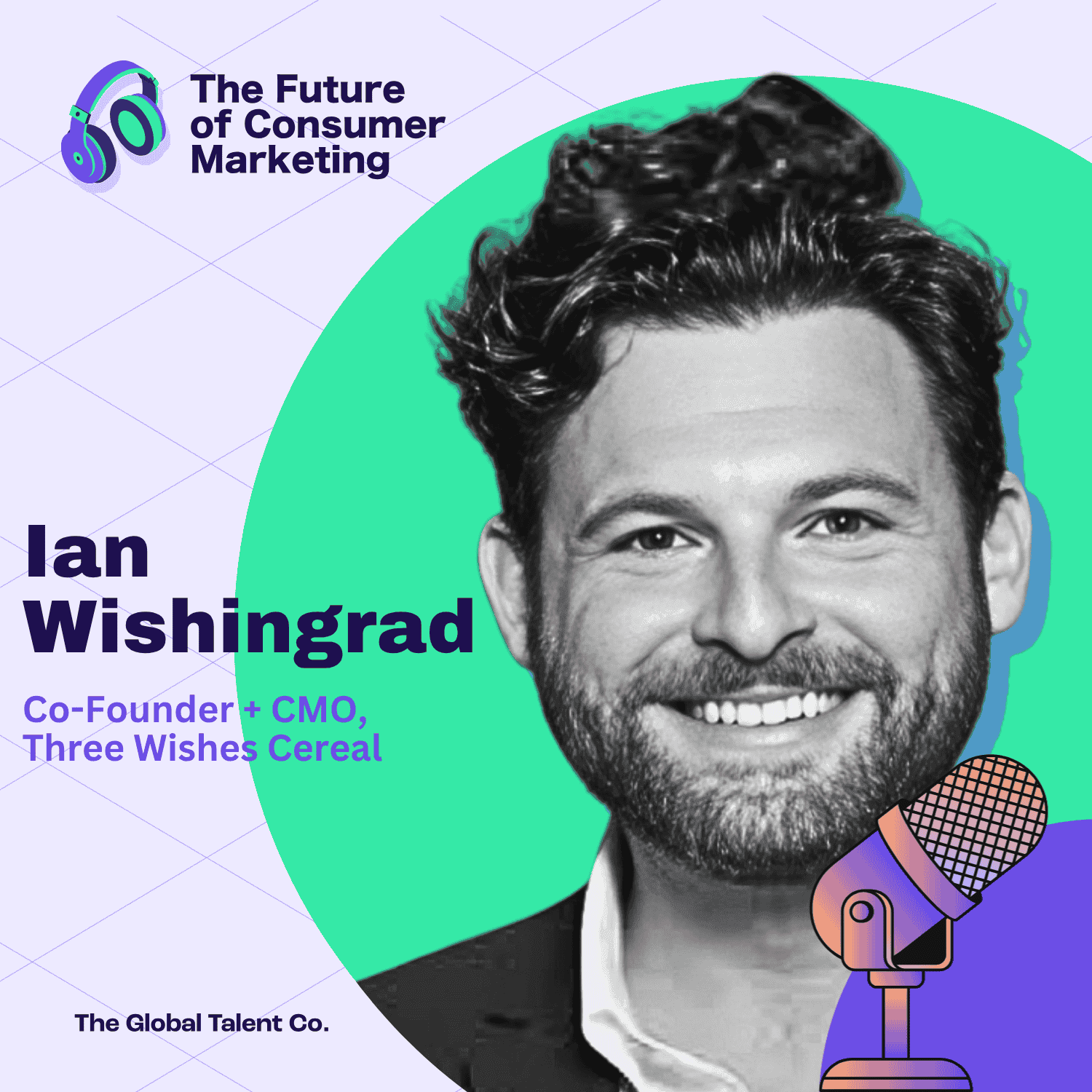
Ian Wishingrad, co-founder and Chief Marketing Officer at Three Wishes Cereal. Background: 11 years ago started his own marketing agency (still runs a creative agency) and previously built brands for entrepreneurs from naming/packaging/launch.
Key claims
Cereal can’t just be “dessert for breakfast”; Three Wishes straddles the middle (more protein than conventional, not zero sugar; one unsweetened SKU). They don’t “disrupt” retail—product is disruptive, brand threads “novel vs familiar.” Profitability comes from gradual distribution expansion and avoiding cash-burning marketing.
Notable examples
First brand to put a college athlete on a cereal box after athletes could earn endorsements; AI used for packaging ideation (e.g., “pumpkin spice” concept prompts). Available in ~15,000 U.S. grocery stores; marketing focuses on Instagram/YouTube/TikTok and influencer deals with minimal scripting.
Written by AI. May contain mistakes. Listen to the episode to check what was said.
Chapters
Tap a time to open that second in VOThe Challenge of Competing with Legacy Brands
0:00 to 1:07
Learn how newer brands can effectively compete against established, resource-rich competitors.
“How do you compete against other legacy brands that have been more time in the market and have bigger marketing budgets?”
The Genesis of Three Wishes Cereal
1:30 to 2:46
Learn about the inspiration behind Three Wishes and the journey of its creation.
“But it seems that this is a healthier alternative.”
Balancing Taste and Health in Cereal
2:46 to 4:32
Explore how Three Wishes Cereal balances taste and health in a declining market.
“And what do you think is, Ian, the biggest difference between building someone else's brand versus your own?”
Market Trends and Consumer Awareness
4:32 to 5:03
Understand the broader trends affecting the cereal market and consumer awareness of health.
“Even before we jumped into it, it's been in decline for a reason because people really understood that cereal was just dessert parading around as breakfast.”
Creating Emotional Connections with Functional Products
5:03 to 10:24
Discover how to turn product functionality into emotional brand connections.
“And then even there's been a newer moment when like President Trump came in and Robert F.”
The Role of Technology and Innovation in Marketing
10:24 to 12:01
Examine how technology and innovative marketing strategies can enhance brand visibility.
“So Ian, if you had to bet on something that would fundamentally change how consumer brands connect with customers in the next five years?”
The Impact of AI on Marketing and Branding
12:01 to 12:52
Discuss the benefits of AI in marketing and how it assists in creative processes.
“It's like, you want to, it's, I find it to be a Microsoft name.”
The Dynamics of Risk in Entrepreneurship
12:52 to 14:00
Learn about the balance of risk and careful planning in building a brand.
“And talking about your everyday life, Ian, and with the work, like what excites you the most about the work you get to do every day?”
Risk-Taking Versus Risk Aversion in Entrepreneurship
14:00 to 15:10
Explore the balance between appearing risk-taking and the reality of risk aversion in business decisions.
“you want to attempt do you have a specific approach to testing and experimenting those those ideas you have?”
Influencer Marketing Strategies
15:10 to 17:46
Learn about the thoughtful strategies behind utilizing influencers for marketing consumer goods.
“I think that's riskier for me because it's not my strength.”
Show all 12 chapters
Advice for Aspiring CPG Entrepreneurs
17:46 to 18:22
Discover valuable insights and lessons for new consumer product goods entrepreneurs.
“Like we've really part of like the risk averse stuff.”
Three Wishes Cereal Availability
18:22 to 19:06
Find out where to purchase Three Wishes cereal and its availability in grocery stores.
“lot of money being raised and you're burning a lot of cash and you have a path to profitability.”
Transcript
Automatic transcript. May contain errors.0:00How do you compete against other legacy brands that have been more time in the market and have bigger marketing budgets? We compete with them because we're on the same shelf, but if you are just going for maximum taste and you don't care about health, we're not competing. Then you will just stick with the legacy brands. We try to balance being the best tasting, better for you cereal. That's sort of the world that I think we play in. How do you turn a functional product benefit into an emotional brand connection? It's all about how it kind of coalesces in the design. The functioning are the words.
0:31And then we tried to have the visuals create sort of serial fun and then the communication to be functional. How do you manage being disruptive while still fitting into existing retail categories? The product is disruptive, but our job is not to disrupt. A brand needs to thread the needle between being novel and familiar. So novel is what's new and interesting. Familiar, it's in a box. it's a shape of a loop like an O if you're too unfamiliar people don't want to touch you and if you're not special enough then why would I try you and so it's that fine marriage we're trying to do
1:07Hey everybody thanks for listening today I'm speaking with Ian Wishingrad co-founder and chief marketing officer at Three Wishes Cereal a high protein low sugar grain free breakfast cereal that tastes just like the cereals of your childhood but made with modern day ingredients. So without further ado, how's it going, Ian? It's a pleasure to have you here. Thanks so much. Yeah, I'm doing great. Thank you for having me. I'm very glad. Yeah, Ian, before we started, we were very excited to have Three Wishes cereal on the show because it really took me back when reading what you guys were about, about like the nostalgia of the cereals we tried when we were younger.
1:43But it seems that this is a healthier alternative. So if you want, could you please tell us a little bit about how Three Wishes came to be and what you've done in that journey with? Yeah, sure. Well, first, it's called Three Wishes because my last name is Wishingrad. And at the time when we came up with this, our first son was sort of the inspiration. So we were the Three Wishes, the Three Wishinggrads. And the other three wishes were more protein, less sugar, grain-free. So it was a double entendre on the wishes. But basically 11 years ago, I started my own marketing agency. I still have a creative agency and I really do enjoy building brands for other people, and clients.
2:23But sometimes we would have these entrepreneurs come to us and we would get an opportunity to build a brand from scratch through the naming, do the packaging, help them launch. And it was really exciting to see a brand go from nothing to something quite substantial. And then my wife and I thought it would be really cool if we could build a brand for ourselves, not just be an advertising agency. So that was sort of, you know, the genesis and the inspiration of it. Okay, cool. And what do you think is, Ian, the biggest difference between building someone else's brand versus your own? Oh, I mean, it's entirely different because you're, you know, it's your own money.
2:57It's your own control. It's your own everything. I mean, you do the best you can, but you're given a remit by someone to do something. And it's just the level of connection and attachment and ownership is irreplicable. Wow. No, yeah, I can only imagine. And when the brand is yours and under your name and you choose the direction it goes into, it really is a different responsibility. and Ian tell me more about mainly focused on your competitors like what do you think they get wrong when they're trying to recreate that nostalgia that I think you guys have been able to do so I don't know if anyone did anything wrong I think everyone did what they set out to do some of them set out to decarb like to take the carbs out of cereal and to go sort of keto and that was one thesis we didn't go that way then some other people try to go extremely just, I don't know, the healthiest, the healthiest you can be.
3:52And I think you try to straddle the middle. We try to be functional and have, you know, we have much more protein than conventional cereal, but not the most protein. We don't have zero sugar. We have one skew that's unsweetened, but for the most part, we have a couple grams of sugar and we try to balance, we try to balance being the best tasting better for you cereal. That's sort of the world that I think we play in. Okay. And, and how do you compete against other legacy brands that have been more time in the market and have bigger marketing budgets and that type of thing. We compete with them because we're on the same shelf.
4:24But if you are just going for maximum taste and you don't care about health, we're not competing, then you will just stick with the legacy brands. But the category has been in huge decline. Even before we jumped into it, it's been in decline for a reason because people really understood that cereal was just dessert parading around as breakfast. It's just commodity government subsidized grains with sugar on top. So I think people are getting educated and seeing, oh, there's some real innovation and now have the convenience of cereal. And it's not so naughty. So I think that's sort of what's happening.
4:57So the broader narrative, people being aware about health, everything's just accelerating and helping us grow. And then even there's been a newer moment when like President Trump came in and Robert F. Kennedy came in and they're trying to make America healthy again and they talk about food dyes. All this stuff plays in our favor because we set, you know, we conceived of this eight years ago, launched it six years ago, and have been the same formula doing this since then. And how do you turn a functional product benefit into an emotional brand connection? I don't think, I think they're, it's all about how it kind of coalesces in the design.
5:32the functioning are the words the the the more protein and calling out grain free and low sugar and then we tried the we tried to have the visuals create sort of serial fun and then the communication to be functional and then hope that your your mind marries the two and speaking of how you used to work for or you used to do the marketing for other brands before you had your own if you were if you had to think from the top of your head do you know of something you use to recommend clients that you'd never do for your own brand nowadays yeah but i'd say it's different because it's just a matter of when you want to bring in sort of traditional marketing so we did when you're and it also depends your approach some people raise a ton of money to go spend ahead of the business.
6:24So there's a lot of brands in America that are not profitable, that get a ton of market share and spend and spend and spend and get brand awareness, and then later hope that the sales will repeat and the customers will stay. We've taken a very sort of like, I wouldn't say slow and steady because we've done quite a lot in five and a half, six years, but we've tried our best to move as fast as possible, not being irresponsible. And say for other clients that they came in the past. It just depends because some of them, they would, I don't know if anything's really changed. It's some clients I've had, we're just going to launch the brand and immediately go into like every pet go and pet smart and huge distribution.
7:05Well, you need a lot of support there. So you have to do a lot of marketing. We slowly kind of worked our way to large distribution intentionally not to force our hand to start going crazy on marketing. Okay. Okay. Yeah, Yeah, no, it's best to cover your back and not overspend on that. And now that you mentioned that you've been growing and your distribution got larger, how have you managed expanding your team? And like, how have you managed knowing what roles you needed or what you needed to hire for? They sort of become apparent. I mean, early on, someone told us your first hire is going to be supply chain.
7:41They were right. As we operate the business, you start to realize, okay, we're dropping some balls here. We're overworked. We need to add something here. So we're constantly evaluating, figuring out, okay, where do we need to invest in people and grow the team to be able to keep growing? But you never want to be bloated. We're very small and scrappy. We want to stay that way. But we just hire someone. We're just, we are hiring another handful of people right now, but it's all part of growth. I know you're the chief marketing officer. So I imagine most of the marketing you do for the brand is in-house.
8:12But do you ever feel the need to look for external partners? Yeah, at times. Absolutely. for really for specialty things like media buying we don't do in-house um but we're even going to go outside this time we're going to update our packaging and this is the first time we've done everything ourselves i feel like i'm a little too close to it sometimes that happens a lot of times designers will have another designer design their portfolio because they're too close to it so i do think i'm a little too close to it so we're going to bring out someone to help with packaging but if you ever needed to like write a commercial or shoot a commercial or that sort of stuff no we would do that in-house.
8:46But then we always go outside for photography or some other stuff. We don't need those positions full-time per se. And in terms of, I feel Three Wishes Cereal is kind of disruptive in the cereal industries, seeing that it's providing all these low grain, no grain, low sugar, all that. How do you manage being disruptive while still fitting into existing retail categories. I'm not really sure. I mean, we're not being disruptive. It's like we are, the product is disruptive, but our job is not to disrupt. You want someone, this is a really good thing I've heard before. And this is sort of what you want to do with a brand.
9:26A brand needs to thread the needle between being novel and familiar. That's not the rule all the time. Sometimes it's really cool to be really out there. So novel is what's new and interesting. so oh grain free high protein low sugar interesting familiar it's in a box it's a shape of a loop like an o so we are trying to the by nature of the ingredients we're using we're disruptive and i've always done disruptive marketing stuff but like that's just part of that's just good marketing it's a cheerios could do cheerios doesn't do that like they have a wonderful brand and they don't need to do much but if they want a good marketing would be disruptive honestly um it doesn't mean bad.
10:06But really trying to balance the if you're too unfamiliar, people don't want to touch you. And if you're not and if you're not special enough, then why would I try you? And so it's that it's that fine marriage we're trying to do. Okay, no, I totally get that. There is a balance. And I love threading the needle between novelty and familiarity. Okay, I'll take that. I'll take that home. So Ian, if you had to bet on something that would fundamentally change how consumer brands connect with customers in the next five years? What do you think that could be? I don't know. Honestly, I'm not that kind of guy.
10:41I'm a creative problem solver at heart. So the minute there's something new out, I want to be the first one to play around with it, see how it works, and try to kind of hack the platform in a way. So when a couple years ago, they started to allow college athletes to get actual official money from brands. Used to be, if you were a college athlete, you were only able to get a free education. You cannot get paid. Only the universities can make money off your jerseys and off the television rights of your sports. So once college athletes were able to get endorsements, we were the first brand to put an athlete, a college athlete on a box of cereal.
11:19So I try to do a lot of like clever marketing things that are disruptive with new technology. But I'm not the guy that knows how to predict what the heck's going to happen but if it's going to be if we're going to be texting customers then i'm going to think of a funny clever way to text customers but i'm not i'm not a uh i'm not a see around the corner guy like okay okay no no i respect that i respect that and now that you're speaking about um technology and what the future might hold um what are your views especially regarding your brand around ai are you like actively using that day to day yeah it's great I think AI is, listen, I think there's a whole, a whole, I've, I've read, there's a whole bunch of like crazy dangers that could happen, but I don't, not in a marketing sense, but for us, great.
12:04It's like, you want to, it's, I find it to be a Microsoft name. There's co-pilot. I think, I think that's a brilliant name because as a creative, I find it to be really helpful. You're like, I have an idea, help me storyboard this out. Help me. I have this concept. Like it's, I think it's great. Um, it, it, and even when we were playing around with packaging, we're like chat gpt generate a your version of a pumpkin spice version of three wishes and it brought in an element that we thought was cool and that our designer actually did it so i think it's a really fun like creative sidekick yeah now it is i i use it every day and i'm not even in marketing for say like my proper job and i love having it make illustrations or just bringing things from my mind down to earth the ai has been the best asset and sidekick to do that so that really is super functional.
12:53And talking about your everyday life, Ian, and with the work, like what excites you the most about the work you get to do every day? I don't know. I just like love. I've been very fortunate to sort of create the work I want to do and create the work I don't want to do. So ultimately, there's like hierarchy of freedom. And so, okay, being my own boss is fun. But when you have clients, you do work for clients and the client leaves, that's not good. So that was fun building up that business. And I hope that stays healthy. And we've got, you know, lovely clients and a good set of teammates on my agency business.
13:29And then the cereal, it was exciting to get to a point where it's becoming a substantial business. That's really exciting to feel like you've done that. And then you just get to focus on different things. So for me, every day is sort of different. I've got different calls, different interviews, different. This is like, I need to be constantly stimulated i can't really do the same thing day in day in and day out and every day every day is a fun new thing for me to do so i just i enjoy the i enjoy the that it all that it's always so dynamic okay nah i like that and is there any way when you guys have a new strategy or something that you want to attempt do you have a specific approach to testing and experimenting those those ideas you have?
14:13No, no, no. We know, no. I feel like that's something I'm, I share them with the team. That's the testing. I get on the team and if the team likes it, cool. And if everyone shits on my idea, then I realize it's not a good one and I move on, but I'm not precious with my ideas. So if they hate it, I move on and come up with another one. Okay. Okay. And do you consider yourself, Ian, more of a risk taker or a risk averse type of person? I would say risk averse, but to the outside world, I look like a risk taker. And that's, and that I've heard some entrepreneur, I never remember who it was, but it was a really great quote because it felt like it's exactly how I feel.
14:49I feel like I'm trying so hard to mitigate risk all the time. And ever since day one, even when I started on my own, like, yes, going out was risky, but it also felt like the thing I needed to do, like I was meant to do this. I felt like it was riskier. Honestly, it feels riskier for me to try to stay employed and try to me to stay at a company and work your way up a corporate ladder. I think that's riskier for me because it's not my strength. So and then once I went on my own, I don't think I've done many things that are particularly risky. I've tried to be very conservative about how I grow my wealth and my family and my businesses.
15:22And I try to take really the fewest risks possible. But to the outside world, look, entrepreneur started two businesses and he just takes risks but it doesn't it doesn't really feel like that and uh ian i i've also seen that now that you're talking to me for example what you said of the college basketball players that you placed on your um on your box do you use any other marketing channels like and i imagine you do such as social media influencers or stuff like that do you have like influencer based marketing who doesn't now like you can't even that is that is marketing so of course we have a whole person that just does influencer we brought on another marketing person yes tons of trying to we're trying to crack the nut on it we don't have it all solved but yes that is we are trying to it's it's a huge part of what we do and trying to figure out the best way to go about it is what we're working on and with influencers is is the basis of that type of marketing getting them on social media to do testimonies of how good the cereal is?
16:27Or do you have like another approach of how you want them to promote the product? I think what we find is we set a strategy on the types of people we think we need to reach. We figure out the right size, the right engagement, and we always want to make sure ultimately you could burn so much cash doing this the wrong way. So we have some algorithms and ways to evaluate whether we think it's a good deal or a bad deal. and then we do a lot of negotiation. Ultimately, once you cast the right person, we give absolutely no guidelines because we're going to people that we feel know how to do it in their way.
16:59Anytime it feels like it's sort of scripted or pushed, unless they're an account that does that, he's like, this is what I do. We really want it to feel as natural as possible. So do you feel that there are channels that are no longer relevant? Like if so, everybody's doing social media, influencers, what channels do you think are not a viable option anymore? I mean, everything's viable. If you're trying to reach them, I would say broadcast television reaches old people. That might be interesting for us, but that's not our first thing we're going to do. Ultimately, when you scale up to a certain size, you should be probably activating all different channels.
17:40But right now, we slowly work our way up and we're focusing on Instagram, YouTube, TikTok. That's it for the moment. and ian for anybody that is trying to start a consumer product goods brand and and they're just in the beginning what would be a piece of advice that would that you would have loved to have told yourself when you were starting i think i got all the advice i don't think i don't have any sort of i i i got really good advice we've stuck to the advice i don't think i would have done anything really differently to be honest so we've really not made any of some people have those stories where they're like oh my god i shouldn't have done this or i shouldn't have done this.
18:15Like we've really part of like the risk averse stuff. We've we've been profitable and growing. That's really atypical in our business. In our business, usually there's a lot of money being raised and you're burning a lot of cash and you have a path to profitability. We've been really we've been profitable and growing. So I'd say we've done it really conservatively and deliberately and surgically. And that's been really helpful for us. And Ian, before we finish this episode, would you be able to tell our listeners how they can find you how they can know further about Three Wishes cereal and the best ways to contact or even get your product?
18:49Sure. Well, we're in about 15 ,000 grocery stores and throughout the United States. I'm sure we are available in some random places around the world, but pretty much we focus on North America and pretty much any grocery store or, you know, our website or Amazon, that's usually the best way to get it. Okay. Amazing. Now I'm located in Argentina and I can say for a fact I haven't seen it here, but it would be an interesting option to have in the shelves of the supermarkets because there is no healthy option for the time being in Argentina for cereal. But yeah, I don't want to keep on taking any more of your time, Ian.
19:23I know you got your family there and that you can have a bunch of stuff you need to do. So I just wanted to thank our listeners for their time and please ask them to try out Three Wishes cereal. I'm sure that they won't regret it and it'll be good for their health as well. So any last words, Ian, that you want to leave the listeners with no thanks for having me i appreciate it sounds good sounds good thank you everyone and we'll see you for the next episode
From the publisher
In this episode, host Andrés Figueira interviews Ian Wishingrad, Co-Founder and Chief Marketing Officer of Three Wishes Cereal, a high-protein, low-sugar, grain-free breakfast cereal brand. Unlike typical CPG startups that burn venture capital pursuing rapid market share, Three Wishes has built a profitable, growing brand now in 15,000 stores across North America through disciplined expansion and creative marketing. Ian shares how his background running a creative agency informed his approach to brand building, why he treats AI as a "creative sidekick," and how the brand capitalizes on cultural moments—like being the first to put a college athlete on a cereal box when NIL rules changed. The conversation reveals a methodical approach to growth that prioritizes profitability over vanity metrics while still executing disruptive marketing tactics.
Topics Discussed:- Building a CPG brand while maintaining profitability and avoiding the typical VC-funded burn model
- Threading the needle between novel ingredients and familiar formats in legacy categories
- Leveraging cultural and regulatory shifts for marketing opportunities (NIL rules, MAHA movement)
- Using AI as a creative collaboration tool rather than replacement
- Managing influencer marketing with algorithmic evaluation and creative freedom
- Scaling from zero to 15,000 retail doors while staying operationally lean
- Balancing in-house creative capabilities with strategic external partnerships
- Testing marketing ideas through internal team validation rather than expensive external research