In short
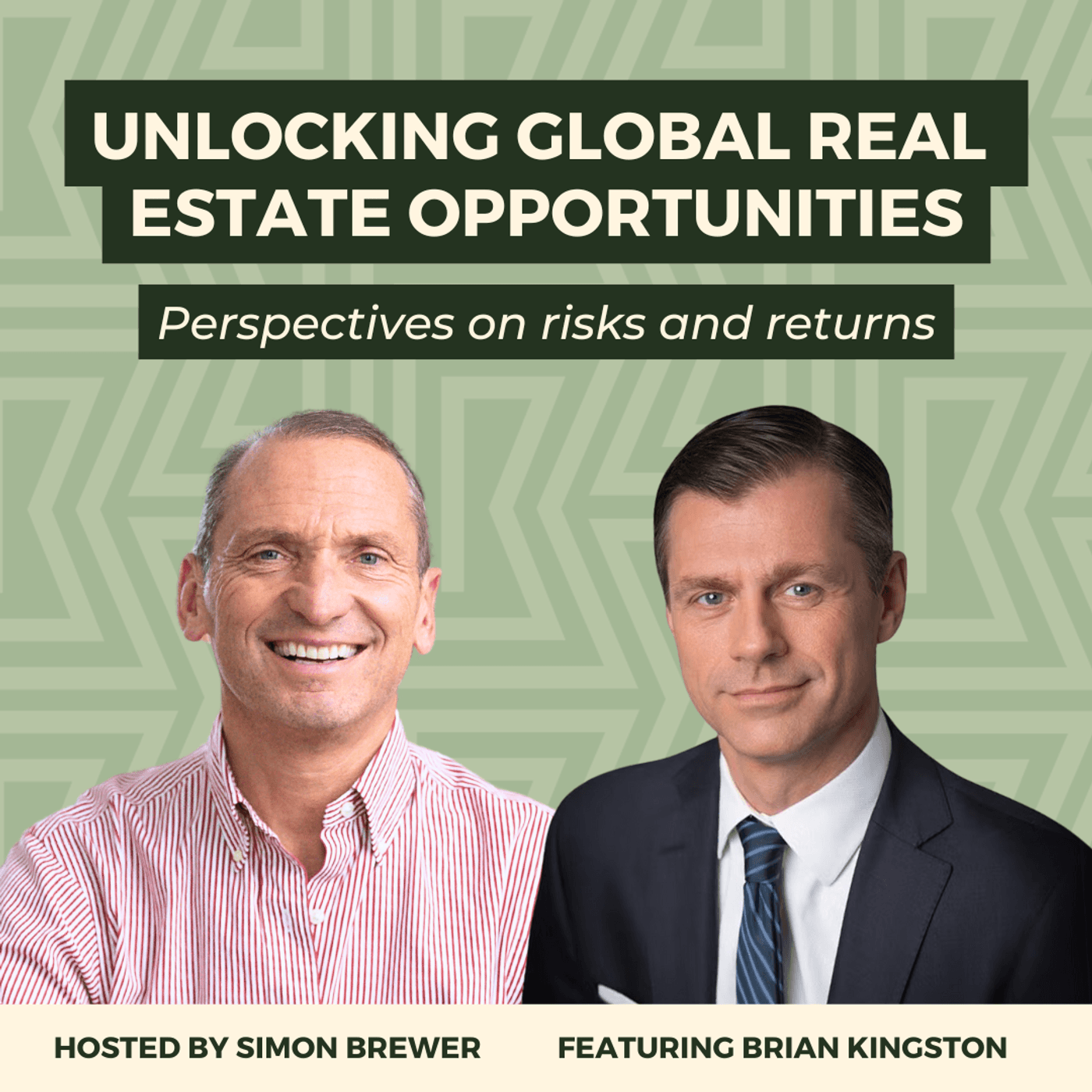
Global real estate and “real assets” investing—how Brookfield Real Estate (CEO Brian Kingston) evaluates risk/returns across cycles, geographies, and sectors (housing, logistics, hospitality), and why sustainability and energy transition are integral.
Guest background
Brian Kingston is Canadian, lives in New York, joined Brookfield ~25–26 years ago after Ernst & Young (audit/accounting). He leads Brookfield Property Partners’ real estate business; Brookfield is a major alternative asset manager (AUM ~$1T+).
Key claims
Real estate is cyclical; returns depend on buying resilient “best assets,” correct entry price, and avoiding over-leverage. Distress is lower than expected because there’s less speculative overbuilding than 2008–09 and banks are financially stronger, enabling restructurings. Real estate and infrastructure share similar drivers: large upfront capital, long-term contracted cash flows, inflation-linked growth. Housing is globally undersupplied; deglobalization/“just-in-case” boosts logistics/manufacturing demand.
Notable examples
Olympia York/Canary Wharf—fault was wrong capital structure during early-1990s downturn; today’s better capital structure improved outcomes. Manhattan West (NYC) shows evolving tenant amenity expectations. Brookfield sold multifamily in 2021–22 (~$10B at ~3.7% yields) and bought in 2025 (~$5B at ~5.7% yields). Westinghouse nuclear acquisition framed as energy transition.
Written by AI. May contain mistakes. Listen to the episode to check what was said.
Chapters
Tap a time to open that second in VOBrookfield’s Historical Context
0:45 to 1:31
A brief history of Brookfield's evolution from a utility to a real estate giant.
“supplying two-thirds of Brazil's electricity by 1940, Brookfield then pivoted to investment in the 1950s under Peter Bronfman.”
Introducing Brian Kingston
1:31 to 2:25
Introduction of Brian Kingston, CEO of Brookfield Property Partners, and his background.
“I don't want to flatter you at the outset, but in doing my research, one ex-Goldman Sachs partner observed that you are one of the sharpest real estate minds to have emerged over the last 20 years.”
Brian Kingston’s Journey into Real Estate
2:25 to 4:05
Brian discusses his unconventional path into real estate and his long tenure at Brookfield.
“And before working at Brookfield, I was actually at Ernst & Young.”
Brookfield Asset Management Overview
4:05 to 6:21
Overview of Brookfield’s asset management strategy and its global reach.
“largely through funds where we're the largest investor.”
Investment Philosophy in Real Estate
6:21 to 8:16
Discussion on the cyclical nature of real estate investments and the importance of asset resilience.
“And that is true really throughout the 30 countries that we're investing in.”
The Right Asset Dilemma
8:16 to 10:02
Brian explains the critical factors in selecting the right real estate assets.
“If you can hold on to great assets and ride it through a downturn, then the great thing with real estate and real assets generally is they're broadly correlated to inflation.”
Case Study: Olympia & York
10:02 to 11:18
Examination of Olympia & York's challenges and lessons learned in real estate.
“Now, I mentioned earlier on that you had acquired back some time ago some of the assets for Olympia in New York.”
Case Study: Olympia & York
12:03 to 12:36
Examination of Olympia & York's challenges and lessons learned in real estate.
“facilitating capital flows, empowering businesses, and connecting investors to opportunities.”
Blurring Lines: Real Estate and Infrastructure
12:36 to 14:00
Discussion on the merging of real estate and infrastructure investment perspectives.
“building Intel's fab, you are in the manufacturing facilities for pharmaceutical industry.”
Understanding Real Assets
14:00 to 15:30
Explore the similarities between real estate and infrastructure as investment assets.
“It's built form, and it's not that different than constructing warehouses.”
Show all 29 chapters
Trends in Global Housing Markets
15:30 to 17:40
Analyze common themes across global housing markets, such as chronic undersupply.
“Oftentimes, the customers are paying for availability as opposed to usage.”
The Impact of Deglobalization
17:40 to 22:30
Discuss the implications of deglobalization on supply chains and real estate demands.
“So just tell me a little bit about what you're seeing.”
Distress in Real Estate Markets
22:30 to 24:40
Understand why current levels of distressed real estate are lower than expected.
“And so in 2008, when the overall economy slowed down dramatically, you were left with this huge supply overhang.”
Distress in Real Estate Markets
24:48 to 25:51
Understand why current levels of distressed real estate are lower than expected.
“equities they believe healthy returns depend on healthy economic environmental and social systems and these are evolving on a scale never experienced before.”
Opportunities in Rental Housing
25:51 to 28:00
Explore the growth potential in various sectors of rental housing worldwide.
“And it's really the same demand drivers as multifamily, other than as houses purchasing a home becomes more and more unaffordable.”
E-commerce and European Logistics Demand
28:00 to 28:40
Explore how e-commerce is driving logistics demand, particularly in Europe.
“Obviously, the change in the manufacturing supply chain is going to change demand for logistics.”
Tourism Trends in Spain Post-COVID
28:40 to 29:20
Understand the factors boosting tourism in Spain, including currency exchange and pandemic shifts.
“So where the euro has been relative to the US dollar has driven a tremendous amount of tourism activity from the US into Europe.”
Growth Dynamics in European Markets
29:20 to 30:30
Learn about the differing growth rates and investment strategies across various European markets.
“But Europe has been particularly a standout.”
Investment Strategies in Emerging Markets
30:30 to 31:50
Analyze the risk-adjusted returns when investing in emerging markets like Brazil and India.
“I think we're always careful not to, just like we don't paint every city in the United States with the same brush.”
The UK Market Perspective
31:50 to 32:30
Gain insights into the investment landscape of the UK amid its economic challenges.
“If you're investing in a place like Brazil and like India, the liquidity picture is different.”
Sustainability in Real Estate Investments
32:30 to 34:50
Discover how sustainability considerations are reshaping investment strategies in real estate.
“But you have the virtue, not because you sit in the US today, but you do have the virtue of having that lens on the world.”
The Future of Real Estate Development
34:50 to 36:30
Explore how technology is changing real estate development and building usage.
“And so investing in that and making sure that our buildings are best in class and that we are known as being far out front on that is important.”
Learning from Past Real Estate Mistakes
36:30 to 38:20
Reflect on important lessons from mistakes made in real estate investing and market cycles.
“But if you look out 10 years, are there some important changes in the world of real estate development that you think are already underway?”
Client Relationships and Fund Structures
38:20 to 42:00
Understand the dynamics of client partnerships and effective fund structures in real estate.
“Just, you know, talk us through where you've gone wrong and what maybe very important lessons it's armed you with.”
Building a Scalable Company Culture
42:04 to 43:55
Learn how Brookfield Real Estate maintains a strong culture across global offices.
“If that business continues to grow, we've already talked about the number of employees in the organization as a whole.”
The Importance of Mentorship
43:56 to 45:04
Discover how mentorship shapes leadership and collaboration at Brookfield.
“Brian, now I put you under the spotlight with some non-real estate related questions, which is, first of all, tell me, how do you unwind?”
Career Insights in Real Estate
45:05 to 45:56
Gain advice for young professionals considering a career in real estate.
“What advice would you offer to some of the young listeners that we have who might be thinking about real estate as a career?”
Sports, Holidays, and Travel Preferences
45:57 to 47:26
Explore personal preferences in sports, travel, and food from different countries.
“The Stanley Cup final, no question, with the Toronto Maple Leafs playing in it.”
Key Takeaways on Real Estate Investment
47:27 to 47:55
Understand critical considerations in real estate investment strategies.
“We've got a lot of big property companies trading at big discounts through NAV, et cetera.”
Transcript
Automatic transcript. May contain errors.0:02Welcome to the Money Maze podcast. If this is your first time joining us, I'm the host, Simon Brewer. And in this show, we talk to proven leaders and thinkers from the worlds of business, investing and beyond.
0:16Brian Kingston:To stay up to date with every episode, please do sign Sign up to our newsletter via moneymayspodcast.com. Episodes are also published on our YouTube channel, and we're active on all major social media platforms. Thank you for listening.
0:40Adaptability underpins corporate survival. Founded in 1899 as Sao Paulo Tramway Power Company, supplying two-thirds of Brazil's electricity by 1940, Brookfield then pivoted to investment in the 1950s under Peter Bronfman. By the 1990s, it was acquiring marquee properties, including assets from distressed developer Olympian York, before shaping iconic hubs like New York's World Financial Center, Canary Wharf and beyond. And it reminded us of that partially correct statement by the great economist John Stuart Mill that landlords grow rich in their sleep. But of course, you need to add, that's highly dependent upon entry price, debt levels and execution.
1:23We thought it was time to turn our attention to the world of real estate, where opportunities do seem to be appearing. And whilst acknowledging that New York, Mumbai and London have very different dynamics and help us understand more, we're delighted to welcome the CEO of Brookfield Property Partners, Brian Kingston. Brian, welcome today. Thank you, Simon. I don't want to flatter you at the outset, but in doing my research, one ex-Goldman Sachs partner observed that you are one of the sharpest real estate minds to have emerged over the last 20 years. is. And separately, another person commented that a particular hallmark of yours was that you ask great questions.
2:01Well, we're going to judge you on the first at the end of the show. And as far as the second is concerned, you're not going to have a chance to demonstrate that because I'm asking the questions. So fair enough. Let me start. Did property feature around the family table when you were growing up? Unlike a lot of people that I work with, I don't really have a real estate background. I came into it later in my career or as part of my career. I grew up in Canada. I'm Canadian. I live in New York now. And before working at Brookfield, I was actually at Ernst & Young. So I worked in an accounting and audit and joined Brookfield about 25, 26 years ago and just began working on a number of different things at Brookfield.
2:39But over time, really evolved to being heavily involved in the real estate business and have spent most of the last 25 years focused on real estate, but it did not come to it with much of a background. We maybe talk too much about due diligence. And when you're a young person, that's a bit difficult. But what was your thought process when you considered Brookfield? Brookfield was a very different business 25 years ago when I joined it. And as you sort of outlined in your introduction, we've really spent a lot of the 100 years prior to that as an owner and operator of assets and different businesses around the world.
3:12And so when I joined, it was still very much a, you know, you would think of as a typical 90s conglomerate, you know, with a wide range of operating businesses that were sort of held under one large umbrella. But at the time that I was joining, that was really the beginnings of the development of our asset management business. And the idea there was to leverage the skills, knowledge, know-how that we had from owning these great businesses and provide that almost as a service to, at the time, a lot of Canadian pension plans were looking at investing around the world. and sort of expanding their own investment activities.
3:45And so we really felt like we had a great internal knowledge base of how to invest in these types of assets. And we had some capital on our balance sheet, but if we could leverage capital from other investment sources to do that, that was really sort of what we evolved. So that's really where Brookfield Asset Management began its evolution 25 years ago, was doing 100 % on our own balance sheet to now, largely through funds where we're the largest investor. We're typically the largest LP in all of our funds. But we have some of the largest, most successful sovereign wealth funds around the world that are investing alongside of us because they liked our strategy.
4:19Well, for those who aren't familiar with Brookfield, you are one of the largest alternative investment management companies there is. I think your assets under management have surpassed$1 trillion. And even in devalued dollars, that's still a lot of money. And you're in power infrastructure, PE, real estate, credit. And Brookfield itself has a market cap of nearly$100 billion. I believe nearly a quarter of a million employees. I had to tell me if I'm wrong on that, but it's slightly staggering. And you also own 75 % of Oak Tree, and we were lucky enough to have Howard Marks only two months ago, who really was a sensational guest.
4:52So no pressure, Brian, by the way. Right. It's a lot to live up to. High level, Brookfield Property Partners, you've given us a flavor of the organization. Just summarize your business. As you mentioned, in total, Brookfield has about a trillion dollars of assets under management. And we describe ourselves as a real asset manager, which means we're not investing in everything, but really it's focused in a few key areas, real estate, infrastructure, renewable, power, and transition investing, and private equity. And then credit, as you mentioned, with the Oak Tree acquisition. I look after the real estate part of the business.
5:28So of the trillion dollars, that's just shy of$300 billion of it. It's a global business. Like all of our businesses, we're in 30 countries around the world. And importantly, of those 250 ,000 or so employees, about 30 ,000 of them are in the real estate business. And I think this is really what makes our asset management business a little bit unique in that we're not just capital allocators, or we obviously have a lot of people who are very good investors, but alongside of them, we have these 30 ,000 operating people that are doing everything from maintaining our properties to arranging financings to developing new properties.
6:02And so that gives us a tremendous insight into what's happening in markets. It makes us better investors because we have that real-time intelligence on the ground. We're not relying on outside advisors to give us their views on where rents are going or where the opportunities are. We have 30 ,000 people out there looking for things for us to invest in every day. And that is true really throughout the 30 countries that we're investing in. So we have a large business in India, as an example. All of the employees in that business in India are Brookfield employees. They carry Brookfield cards. We're able to tap into their knowledge.
6:34They source transactions for us. They manage assets for us. It makes us better owners. So we're going to talk about those geographies and the themes, but staying high level, I mean, everybody's interested in property, be it residential or commercial. And I think the English have a particular obsession with it, but that may not be unique. How do you buy well? Well, look, I think it's important to remember with all of these asset classes that I touched on and real estate in particular, that ultimately it's a cyclical business. And so you need to make sure, A, that you're buying assets that even if the market is good right now or the economy is good, assets that will be resilient through a downturn.
7:12Because typically we're buying and holding these assets for five to 10 and sometimes much longer years. And so therefore you're going to ride through different types of cycles. And so I think owning the very best assets we have learned over time, they hold their value the best through downturns. They stay occupied the longest. They're the first ones to lease back up again when the markets recover and they tend to hold their value and grow over time. And so we're very focused on a buying the right assets, not just the ones that are for sale or the ones that look cheapest in the moment. However, timing your acquisitions right and getting a good entry point is very important.
7:47So understanding not only that markets are cyclical, but where you are in those cycles is very important. And you can invest throughout the cycle, but it's important to understand where you are in the cycle when you're making those investments so that you do get the buy right. And then when you do acquire the assets, financing them correctly and having the right capital structure around them, which again goes to resiliency. If you encounter a market downturn or a slowdown, you don't want to find yourself over levered at a situation like that and losing your assets at the bottom of the market. If you can hold on to great assets and ride it through a downturn, then the great thing with real estate and real assets generally is they're broadly correlated to inflation.
8:25And so over time, eventually you will get back on side. the key is being able to hold on to those assets and keep them full. You used three critical words earlier in that paragraph, which was by the right assets. Sounds so obvious, but it's back to the whole investing challenge. So just take us through that right asset dilemma. People always talk about the key to real estate is location, location, location. And so obviously that is where it starts. I think making sure that you're in dynamic growing markets. And ultimately, real estate is just a business of supply and demand. And so what you're looking for are markets that are supply constrained that have lots of good demand drivers.
9:07And so if I use Manhattan as an example, it's an island. There's only so much space for form to be built on. And so there's a natural governor to that. And there's lots of different diverse demand drivers, whether it's financial services or tech and IT or media or fashion or any number of industries that typically are driving demand. So a market like this is an excellent one. And then within this market, you want to look at physical locations that are close to transportation, obviously, because it's important to get people in and out of your properties each day. And whether that's residential properties, people want to live close to transportation so they can get where they're going, or commercial properties where it's easy for people to get to your location.
9:49And so it is location, but it's not a single answer where I could tell you this is a good location, this is a good market. And if we got back together 25 years from now, that would necessarily be true. It can change and evolve over time. I get it. It can be dynamic. Now, I mentioned earlier on that you had acquired back some time ago some of the assets for Olympia in New York. And I was at Canary Wharf, which I'm right in saying I think was the owner. I do remember at the time, I think Moody's had a double A rating on them, which proved to be illusory. When it goes wrong, let's use Olympia York as an example, where were the fault lines?
10:25It's a great example of exactly what I was talking about earlier, which is fantastic assets with the wrong capital structure at the wrong time. When it was initially conceived, it was the early 90s. Obviously, real estate was quite strong for a period of time and then went through a financing and capital drought. And so many of the tenants that it was targeted at were downsizing or not looking to expand. There was transportation issues out there. And at the same time, the company had too much debt. And so it couldn't ride through that downturn and come out the other side. And ultimately, ownership changed.
10:59And today, it's with ourselves and a large sovereign wealth fund as our partner, where the capital structure is much better suited to to withstanding the ups and downs of the real estate cycle. The key really to this is the estate is worth significantly more than it was when it went through its bankruptcy in the 1990s. And if you were able to hold onto it from then until now, you'd be very happy with the investment returns. But it's a matter of getting that capital structure right and being resilient through downturns. So before we continue this conversation, we're going to take a short break to have a note from our sponsors.
11:33I'm thrilled to share that the Money Maze podcast is sponsored by the World Gold Council. They champion the role gold plays as a strategic asset through expert research, commentary, and insights. And it's not just your portfolio that may benefit from gold. Learn how gold mining is supporting female economic empowerment and small businesses via their new documentary series called Gold, The Journey Continues. Tap the link in the show notes to start watching. The Moneymates podcast is proudly sponsored by the London Stock Exchange Group, a global leader in financial markets infrastructure, LSEG has a rich history of facilitating capital flows, empowering businesses, and connecting investors to opportunities.
12:14Today, they provide world-class technology, data, and analytics, playing a critical role in shaping modern finance. From their role in sustainable investing to their contributions to financial innovation, LSEG is helping to build more connected and efficient markets. Visit lseg.com via the link in the show notes to see how they're driving the future of finance. We might come back to some of these geographies in a minute, but you know, you're involved in building Intel's fab, you are in the manufacturing facilities for pharmaceutical industry. High level question, because it has mattered to allocators.
12:51There's a blurring of the lines between real estate and infrastructure. How do you think about it? And how are the big pools of capital with whom you engage thinking about that? So I mentioned earlier that, and when I described our business, it sounded as though there were several silos, whether it's real estate and infrastructure and renewable powers. But in fact, they're all real assets. And we run and think about each of these businesses very similarly because the investment drivers or returns are very similar between them, right? Ultimately, what we're doing is making a very large upfront capital investment.
13:23We're then contracting out the use of that asset over a very long period of time with very predictable, stable cash flows and putting appropriate financing on it and generating income and growth that is tied to inflation over a long period of time. And I could be describing real estate. I could be describing infrastructure. I could be describing our renewable power business. It's the same concept for each of those businesses. And so you're right. The lines are beginning to blur a little bit between these, both from an asset class perspective. So if you Think about something like data centers. You know, there's lots of investors who treat that as infrastructure, and it is critical infrastructure for an AI company, but it's also real estate.
14:03It's built form, and it's not that different than constructing warehouses. And so many of our clients, when they're thinking about investing, they too are starting to blend those two concepts really under one umbrella of real assets. And in fact, some have gone as far as to combine, you know, their real estate and their infrastructure businesses under one banner called real assets. And so I do think the concepts between them are quite similar. Ultimately, the tenants may be a little bit different, but the investment merits really between the two are very similar. So it is interesting. We have Mark Delaney, who's CEO of the Australian Superfund, and he referred to infrastructure as the ballast in the boat.
14:40And am I right in saying that historically, one might have thought of infrastructure as being less cyclical than real estate? In the past, typically, infrastructure has tended to have much longer contractual cash flows associated with it than real estate. So within real estate, obviously, a wide range of asset classes. And we have office buildings where we would do 25-year leases. And that's very similar to an infrastructure asset in that you sort of know what that cash flow is for a long period of time. We also have hotels where our cash flows are mark-to-market on a daily basis. And so a hotel, obviously, is a much more volatile set of cash flows than a long-term office building.
15:17And I think infrastructure just tends to be on that longer term spectrum, whether it's a port facility where you have take or pay contracts, where the users of that are reserving space. So whether there's a lot of containers or fewer containers going through there, as the owner of the infrastructure, it doesn't make a large difference to your cash flows in the short term. Or pipelines, same thing. Oftentimes, the customers are paying for availability as opposed to usage. And so that feels a lot more like a 25-year office lease where it doesn't matter how many people go up and down the elevator every day, the rent stays the same.
15:51Got it. And as we think about this geographies and sectors, I was wondering, are there some big consistent trends or forces that are almost common to all geographies in which you operate, which sort of almost are an illustration of the world in which we live? Certainly one of the reasons that we are diversified and invested in so many markets around the world is because oftentimes they are decoupled. And so you may have a certain geography where returns become less attractive. Maybe there's a lot of capital that is chasing deals and so returns are compressed. And so being able to allocate capital to places where you see better value is really an important part.
16:29And that's diversification geographically and also by asset class. And that's the reason why we do that. But you are correct. But increasingly, as the world has become more globalized, those cycles, or at least some of the broader impacts of them, become more common really across all of the markets. And so a good example of a theme like that is housing. We're very bullish, and we'll talk about sectors, I'm sure, at some point later on, but we're very bullish on that sector because we do think that it is chronically undersupplied, that there is a housing shortage. And in most of the major markets where we're operating, whether it's Canada, United States, the UK, Australia, Korea, all of these places, housing is at a shortage.
17:10And so a real issue that many local governments and frankly people are dealing with is the cost of housing relative to other things. So that's a very common theme that we're seeing around the world. And oftentimes we can take things that are working well in one part of the world and export them into other parts of the world where it may not be as common. And so I think, you know, again, having that global perspective where we can see all of these things, even if they're common themes around the world, you can start to see common solutions to them as well. Whilst that might be a common theme, the interesting other perspective is that after 40 years of globalization, we have lots of conversations about deglobalization, which clearly has implications for supply chains, but also for where stuff is being made and centered.
17:53So just tell me a little bit about what you're seeing. Is it noise or is it boots on the ground being moved? Both. In the short term, there's a great deal of uncertainty. And so in some cases, that's leading to indecision or at least delaying of making decisions because it's not exactly clear where some of this is going to come out. But I do think the broader theme, which you described as deglobalization, but I think that was starting long before the last couple of months. And we've really been seeing that as a theme over the last couple of years. And frankly, the COVID pandemic really accelerated a lot of thinking around this prior to that.
18:28And obviously, when I went to school, the predominant manufacturing theory that was just-in-time delivery was the answer to everything. And you want to have all of your materials showing up in a very timely fashion for manufacturing. And COVID sort of showed us that you can't always necessarily count on that. And so many manufacturers were already thinking about shifting from just-in-time to just-in-case. and what that meant was they would hold a little bit more inventory just in case there was a disruption. It also meant they would locate manufacturing in multiple locations around the world just in case there was any sort of disruption.
19:02So that was already happening and I think we're seeing an acceleration of some of that. In this case, what we're talking about here is logistics but also manufacturing facilities and whether that's for advanced drugs or the therapeutics or you touched on chip manufacturing, obviously auto manufacturing, other things, electric batteries, et cetera. And all of those things just drive more demand for real estate, logistics, real estate, housing for people to live in, in these markets, et cetera. And so we really view that as one of the key long-term trends that is going to drive changes in demand for real estate in a lot of markets around the world.
19:37Let's stay with the sectors because you've already said that there's a chronic housing shortage, which I'm sitting here in the UK and that's manifest, but it's interesting that it's such a global phenomenon right now. I mean, there's lots of capital sloshing around the world. And whilst you and, you know, you are one of the largest players, you're certainly competing with lots of other pools of capital. How do you distinguish yourselves when it comes to these projects? Let's just talk about housing for now. Where we have been very focused is, as I say, it's always on supply and demand. And so I think, you know, markets that have been seeing increasing migration into them became very popular destinations for capital over the last five to 10 years.
20:15And so notwithstanding that we have both just said that there's a chronic housing shortage, there are certain markets that actually experience quite an influx of new supply. And so I'm thinking of places like Texas and the US Southeast, where a lot of supply went into that. And I think having our teams on the ground and being able to see what's happening day to day on leasing, we were able to anticipate some of that. And so really over the last five years or so, we were less active in markets like that and more active in markets where we saw undersupply. So for example, New York City, there was really not a lot of new supply getting built here.
20:47Certain markets in California similarly had good population growth, but just no real new supply happening. And so we were able to focus our efforts there. We've now seen somewhat of a reversal of that where, in fact, if anything, over the last two or three years, new construction starts in the United States have fallen to 20, 25-year lows. And so we anticipate over the next couple of years, it's going to become even more acute. And so we're focusing on investing in those markets now where supply has begun to dry up again, and we still see good demand drivers. So I think two things, having people on the ground in all of these markets and understanding what's really happening and not just looking at headlines helps us.
21:25And two, being able to move in large scale. So if we can buy very large portfolios or help recapitalize them at a time when capital is more scarce, back to sort of the original tenants we were talking about earlier, that oftentimes creates a really attractive entry point from a price perspective. That actually sparks a question from Rob Rooney, who's the CEO of Hyperlayer. And he said, why has the level of distressed real estate coming to the market been so far below expectations given post-COVID implications for modern real estate? As interest rates went up and signs of financial distress were starting to show, I think a lot of people anticipated a replay of what we saw in 2009, 2010 following the financial crisis.
22:09There's two things that are different this time around versus that prior cycle. And so it's always dangerous to assume that a downturn is going to look exactly like the last one did. The two big differences are, one, in 2008, 2009, we had excess supply. So in the run-up to that 2005, 2006, 2007, speculative development was rampant in a lot of different asset classes, most notably housing, obviously, here in the US, but also commercial construction, etc. And so in 2008, when the overall economy slowed down dramatically, you were left with this huge supply overhang. And so that really magnified the financial distress of people who owned real estate, because not only did you own real estate, but suddenly your tenants had disappeared and there was no demand.
22:53Number two, that the overall economy itself was in financial distress. And in particular, the banks who are the largest funding source for real estate were themselves experiencing various levels of stress or distress themselves. And so that led to some irrational behavior necessarily where they were pulling back significantly on lending because they were not in a position themselves to provide more time. And ultimately, as I said earlier, really what you need for real estate in a downturn is just the ability to ride through it. And so the banks were not in a position to provide that flexibility.
23:25Fast forward to today, both of those things are different. We did not have a lot of, other than as I touched on earlier, a little bit of housing in a couple of places. For the most part, we did not have rampant speculative development. And so we don't have a huge supply overhang. Number two, the economy itself is in very good shape. We have virtually full employment. We're still in positive GDP growth in most major markets around the world, even if it's slowing down a little bit. And most importantly, the banks themselves are in excellent financial shape. And so what that means is when you have an owner of real estate or a borrower, a real estate borrower, who's run into trouble on financing because perhaps they're over levered or they've seen a bit of a slowdown, the banks are better able to work with them and restructure and extend out the credit as opposed to them forcing a reckoning.
Read the full transcript
24:15And so that's why this distress has not manifest the way that a lot of people thought, which was that you were going to see debt going up for sale at 50 cents on the dollar. Well, the banks are looking at it saying, well, actually, I may be better to just provide a bit more time and my recovery may be better and my balance sheet will allow me to do that. And so I think that's why it's been different. so before we continue this conversation we're going to take a short break to have a note from our sponsors ifm investors is a global asset manager founded and owned by pension funds with capabilities in infrastructure equity and debt private equity private credit and listed equities they believe healthy returns depend on healthy economic environmental and social systems and these are evolving on a scale never experienced before.
25:03To find opportunity, build value and meet the needs of future generations, you need scale, skill and expertise. That's what IFM Investors has built up over 30 years. Schroder's is a$950 billion public-private global asset management business. Built to deliver long-term client value, Schroder's focuses their business on growing into areas where there is greater demand, private markets, bespoke solutions, and wealth management, and where they can better serve clients. Schroeders take a long-term perspective and a leadership position in sustainability. With a 220-year history of successful adaptation and innovation, Schroeders have always focused on serving clients.
25:46Remember, capital is at risk when investing. Staying with sectors, which are the sectors that you would say have the biggest runway for growth ahead. We've touched on housing. And a lot of times when I say that, people automatically think of multifamily high-rise apartments, which obviously is true, but there's really a wide swath of forms of rental housing that are benefiting from this undersupply, including single-family rentals, particularly in the US, but also starting to develop in a lot of places. And it's really the same demand drivers as multifamily, other than as houses purchasing a home becomes more and more unaffordable.
26:23And with where interest rates are and the cost of new construction, et cetera, the difference between rental cost and home ownership has actually never been wider. In the last 30 or so years that we've looked back at this, this is the widest spread between the two. People still want to live in a home and have a yard and have their pets and children running around in the backyard. And so single family rental provides an excellent alternative to home ownership and has become increasingly popular. Student housing, senior housing, manufactured housing. So really anything that is shelter related, We think the demand drivers for that are very good, particularly in places like the UK and the US where supply is constrained.
27:01And we think the opportunity set right now is ripe because there were a lot of transactions, as I mentioned, when interest rates were at virtually 0%, where people acquired assets. This was a very in-favor asset class during that period of time with very low interest rates. And so now with the increase that we've seen in rates, there are a number of owners who have capital structures that are no longer well suited to owning those assets. And so they're being forced to bring assets to market at a time when there's less capital available. So the entry point today is much more attractive. So we, for example, in 2021 and 2022, we sold a little over$10 billion of multifamily assets at an average initial yield of about 3.7%.
27:42This year in 2025, we've acquired about$5 billion of multifamily average yield of 5.7%. So almost 200 basis points higher starting yield. And so it's a much better environment to be investing in today. So we like housing a lot. Logistics, again, we touched on some of the drivers for that. Obviously, the change in the manufacturing supply chain is going to change demand for logistics. But we also have e-commerce. and this has sort of been well established in the last decade or so here in the US, but in many other markets, that supply chain is still getting built out and is underdeveloped. And so European logistics in particular, we think is quite an attractive place from a demand perspective, largely driven by e-commerce and increasing activity that's happening there.
28:28And I had a research call with your colleague, Richard Powers, who's been doing real estate obviously for a long time, and he mentioned the hospitality in Spain. And I thought, I must ask you, what's driving that? I think a number of things. I think the exchange rate has been a large driver of that over the last couple of years. So where the euro has been relative to the US dollar has driven a tremendous amount of tourism activity from the US into Europe. I think the unlocking after the COVID pandemic where a lot of people shifted their spending patterns, frankly, from wanting to acquire goods to wanting to acquire experiences, beautiful places like Spanish beaches really have benefited from that demand where people are spending more on travel and on experiences.
29:10They're less price sensitive to it. And I think Europe is obviously quite a popular travel destination. We've seen it across a number of other markets as well that are attractive from a tourism perspective. But Europe has been particularly a standout. So let me stay with Europe. Europe's been characterized by much lower growth than anybody would have imagined and wished for and all the sort of the eurosclerosis discussion. And now we have this potential pivot where the recognition that Europe needs to go and protect itself and needs to do some things that it hasn't been doing is galvanizing action.
29:45high level maybe it's a bit difficult but high level what might that mean for the portfolio of opportunities i think you've sort of characterized it right which is that over the past little while if you looked at relative growth rates or expectations around relative growth rates you know what we would have said was the u.s there's there's a strong underpinning for economic growth and for europe it's probably a little slower growth and therefore values need to reflect that so it doesn't mean that you don't invest in europe it just means the underwriting the forecasting that you're doing looks different.
30:16And so you may have less growth, which means you just need a higher initial yield going in. The advantage it had obviously was lower interest rates. So it was still quite an investable market, but you're right. It is now, you know, with some of the changes, certain markets are becoming a little more dynamic than they may have been in the past where you could see some growth. I think we're always careful not to, just like we don't paint every city in the United States with the same brush. I mean, Europe is a series of different markets and different economies. And so some of them are going to benefit differentially.
30:44But we do think overall, there is a shift happening in how we're looking at growth in Europe as a result of all this. And I note, in India, you have very significant investments in telecom towers in Brazil, in gas pipelines. As it relates to real estate, you sit there, big jigsaw of opportunities and different dynamics. How do you go through the prioritization? It's some art and some science. Obviously, it's simplest. We are just trying to look for the best risk-adjusted returns around the world. And as I mentioned earlier, having the ability to shift our investment focus out of markets where we see either risks become too high or returns have become too compressed or both into markets where we see better returns or less risk has really been a hallmark of it.
31:36So I think when we think about a place like Brazil or like India, we think they are attractive places to invest. But the risk profile is very different than, say, investing in a core market in the United States where there is excellent transparency and lots of depth of liquidity. If you're investing in a place like Brazil and like India, the liquidity picture is different. The transparency around other transactions and the information that you're able to gather is oftentimes more challenging. And so that just means you need higher returns. And so when we're investing in markets like that for the same asset or for the same risk, the returns would be significantly higher.
32:10And that provides some outsized returns for our investors. And I do want to come back to the UK because there's a danger that any of us suffer from sort of a myopia. And the UK has been swamped by bad news where some of that is justified for all sorts of reasons. But maybe the economic picture isn't quite so bleak. And some of us on our travels and some of our guests and people that we interact with, there's reasons for quite a lot of optimism. But you have the virtue, not because you sit in the US today, but you do have the virtue of having that lens on the world. How would you characterize the UK's investment and opportunity landscape?
32:46We try to, and this is true for all markets and not just the UK, but oftentimes headlines and short-termism in forecasting creates really exciting or interesting opportunities if you understand a market well and understand its sort of long-term capacity. And so if you take a market like the UK, there is always the capacity in the short term for certain policy decisions or other short term economic impacts to have a short term impact on the market. But it is a market that is, you know, it's a very large population base. It is the financial epicenter for Europe and in some cases for the world. And so a place like London in particular is not going anywhere.
33:25And so we often see these periods of volatility or doubts around the future, et cetera, as creating really interesting opportunities or entry points for assets. So we've been in the UK for my whole career, 25 years. We're a significant investor there. We know that market very well. And yes, there are short-term challenges and things that need to be worked through. But ultimately, just like I described the United States, this is a very deep, very liquid, very transparent real estate market. Okay, deep. I've written that deep, liquid and transparent dam because those are key variables. Let's talk about sustainability.
34:01You've committed billions to climate focused investments. Any sense of pause or review? It's important to highlight why, why we thought that was an investment. And because ultimately our view is that it is not necessary to sacrifice investment returns for these types of investments. And in fact, if you look at where the world is going and whether it's government policy or just general desirability of how people want to live in the future, resiliency and sustainability is critical to maintaining the value of your assets. And in fact, it's an investment positive. So which means our approach or our reason for doing this is not we're not on a mission to save the world.
34:42We're investing in our assets and making them more sustainable because we believe that is what's actually going to help them hold their value in the future. So if I think about an office building as an example, there will come a time in the future where you will not be able to attract tenants to a building that doesn't meet a certain environmental standard. And so investing in that and making sure that our buildings are best in class and that we are known as being far out front on that is important. Similarly, our transition investing, energy transition investing, we do think that over time, government policy and just general direction is moving toward less carbon being created.
35:16And so if you can be investing in either the technologies or the companies that are developing the technologies that help with that transition, it's just going to be excellent investment returns going forward. So your question is, have we changed our approach or pulled back from it? No, because yes, there are, again, like we said with the UK, sometimes there's policy two steps forwards, one step back on policy. But the general direction, and we're investing for the next 25, 50, 100 years, is still marching toward the same thing, which is less carbon being created. And so I think we think they're still excellent.
35:51In fact, this volatility may create even better opportunities, frankly. And would that be behind? And I note, because I'm a personal shareholder in Cameco and been quite sort of constructive on the uranium sector for a while, I see that you partnered with Cameco on the purchase of Westinghouse's nuclear assets. And would that fall into that category? Or was that motivated by something else? Absolutely. Absolutely. That Westinghouse acquisition is within our energy transition business. We have been very large investors in wind and hydro and solar over the last 25 years. But really, we think nuclear is going to be a significant part of any carbon-free future around energy.
36:25And Westinghouse is the foremost developer of that technology. I'm going to ask you quite a high-level question. Well, hopefully, you can answer it. But if you look out 10 years, are there some important changes in the world of real estate development that you think are already underway? If we were having this conversation in 10 years, we would have gone, wow, that definitely was different from the way things were done in 2000 period. I think like everything, technology is having an impact on the way we're doing some of these things. And so whether it's new construction technology or design or the types of buildings and amenities or service delivery that is coming out of these buildings, that is really changing.
37:11So I'll give you one example. Here in New York City, we developed a seven and a half million square foot complex called Manhattan West, which is near Hudson Yards. We built the first two million square foot tower in 2017. And on there, we had really no tenant amenity fit outs behind the wall. and sort of behind the gates. We had for a couple of our tenants, they built out their own cafeterias and things like that. Three years later, we built the second tower. We have an entire floor that is dedicated to tenant amenities inside of that building. And so I think the way these buildings are getting used and what makes it an attractive building is continuing to evolve.
37:49And I think being on development, I think you're gonna see a lot of those changes. I think on the housing front, we talked a little bit about the issue being affordability. I think finding ways to use modular technology, et cetera, is sort of high on the list of priorities in terms of finding ways that you can deliver more housing at a more reasonable cost. There's a lot of, not just with us, but just generally in the industry, a lot of time and effort being put into that. And I think if we look out 10 years from now, the way an apartment building or a home is built is going to be quite different than it is today.
38:19And although in aggregate, it's clearly been very successful, this real estate division, you will have made mistakes. Just, you know, talk us through where you've gone wrong and what maybe very important lessons it's armed you with. Well, you know, I keep coming back to the sort of the three things we talked about. The reason that I know those three things are important is because we've gotten all of them wrong at different points in time. And so, you know, I think having a healthy respect for the cyclicality of markets and remembering that interest rates go down and also go up, you know, is an important lesson.
38:50I think interest rates going from 0 % to 5 % in 18 months was not something that anyone was underwriting two or three years ago, including ourselves. And so I think having a healthy respect for what the downside can look like has always been an important part of our ethos. I think what has gotten us through all of those times is the first tenant I mentioned, which is owning really high-quality assets. And so if we look at our – we're obviously a very large office landlord, which has been one of the more challenged sectors over the last couple of years. But if I look at our portfolio here in New York City, we're full.
39:22Record rents for a space that is leasing up and we have zero vacancy in our portfolio. So notwithstanding the overall market has a significant amount of vacancy in it for the high quality office buildings in the city, they have stayed very full, which is exactly how it should behave. As I mentioned that those assets hold their value, hold their occupancy, hold their rents better than the overall market. Let's talk a little bit about your clients and the fund structures. You mentioned early on in In a case like Canary Wharf, you've partnered with one of the sovereign wealth funds. I mean, these are vast amounts of capital that you're raising and deploying.
39:53Who works best sort of, you know, in terms of your partnering? That's question A. And B, typically, what's the fund vehicle that works well for both investor and for Brookfield? If I look at our LP base today across all of our funds, and whether this is real estate, infrastructure, et cetera, we have a relatively small number of very large LP relationships. relationships and we do a lot of different. So we have most of those large relationships do more than just one thing with us. So they might be an investor in our global opportunistic real estate fund, but the odds are that they're also invested with us in infrastructure and in private equity and across, you know, maybe credit with, with Oak tree.
40:33And so we find that certainly for us, we much prefer those deeper relationships and for our clients, they do as well, right? Because they go through a lot of time and effort to underwrite a GP, to understand how our investment thinking works, et cetera. And so they don't, rather than having to do that four different times, they can just invest in four different vehicles with Brookfield once they've sort of done that hard work. So we're finding over time what those investors want increasingly is to do more with a smaller number of managers. And so we've been adapting our business to help address that.
41:04So within real estate, 15 years ago, we really just had our global opportunistic fund strategy. But if you fast forward to today, we have fund vehicles that are open-ended, that are targeting more core plus type returns in a particular geography here in the United States. And so those investors are investing with us there. We're widening our credit offerings. And so we have a number of different real estate credit strategies, infrastructure credit strategies. I mentioned some of the other things around sustainability, et cetera. And so having a – and I think if you – again, if you ask me what will the business look like 10 years from now, it will be wider.
41:37We will have a wider offering of products. And so there really isn't one type of product or one fund structure that works for all investors or even for any individual investor. They actually have a variety of investment needs. Sometimes they want high-returning, short-term, closed-end funds that will get all of their capital back to them in five to seven years. And in other times, they want long-term, compounding, core plus, even within the same client. So I think having that grocery store list of items or products available to our clients is just going to make us more and more relevant to them in the future.
42:11If that business continues to grow, we've already talked about the number of employees in the organization as a whole. You have, you know, a large chunk of them, you know, managing the culture gets tougher in large firms. How do you think about that challenge? It is a challenge, but I, you know, I think we have built the business to be scalable for exactly that reason. And so, you know, there's a number of practices, I suppose, that we have that really helps with that culture. It is a very strong and distinct culture. And so if you go to our office in Mumbai, for example, you could be walking through our New York office.
42:43If you look and speak to anyone there in terms of how they're thinking or if they were to describe Brookfield's strategy, it's very consistent. And the way we do that is we move senior executives around the world. So I mentioned that I started out with a company in Toronto. I spent some time. We made a large acquisition, our first one in Australia about 20 years ago. I moved down as part of that and spent some time in Australia. And 50 % of my job was my job. And 50 % of my job was culture. And in terms of telling the stories, in terms of building culture. And the same is true if you go to our office in India.
43:18if you go to our office in Dubai, if you go to our office in London, they are primarily staffed with local professionals, but there is always a few people that are sprinkled into to help carry that culture. And I think the other way that we do that is I spend, I and my other partners spend a lot of time on airplanes, visiting all of these offices and making sure that the people in those places understand culture, expectations, strategy, and why we're doing things. So you're right, it's not easy and the bigger it gets, the more frequent flyer miles you end up with. But it is a really important part of how I and the other leaders of Brookfield view our role is it's not just reviewing spreadsheets, but it's also carrying that flag.
43:59Brian, now I put you under the spotlight with some non-real estate related questions, which is, first of all, tell me, how do you unwind? Well, I don't find that I'm wound, so I'm not sure I need to unwind. And but look, you know, I think I'm like most people. I spend time with my family on the weekends and like to play a bit of golf. But otherwise, it's work is my fun. Have you had a particular mentor who has been really important in your life? And if so, what did he or she give you? As I mentioned earlier, our culture, we very deliberately refer to ourselves as partners and managing partners.
44:33And I think I've been fortunate over the years to have a number of mentors that are partners of mine, including Bruce Flatt, who's the CEO, and Sam Pollack, who runs our infrastructure business, and Cyrus Madden, who ran our private equity business. And I think it's a very collaborative, as I mentioned earlier, as opposed to being different siloed businesses. We all work very closely together and have learned a lot from one another over the years. And so I really think a lot of that mentorship, and hopefully this is true for the rest of the organization as well, a lot of that mentorship comes internally from working around great people.
45:07What advice would you offer to some of the young listeners that we have who might be thinking about real estate as a career? Well, look, it's a very rewarding career. I think not the least of which your friends and family have a pretty good understanding of what you do. So oftentimes, you know, in more esoteric industries, it's hard to describe what you do. It's very easy to point out an office building and say, we own that. It also is the opportunity to work with different industries to understand And how these various companies, and obviously as tenants, we spend a lot of time thinking about a lot of different industries and what's happening in them.
45:41And so while real estate is sort of one dimension of it, I really think to be good at it and to be successful in it, you really have to take an interest in the broader economy. And therefore, it's a fantastic window into finance generally. To close us, what sporting event above all, if you could attend, would you want to attend? The Stanley Cup final, no question, with the Toronto Maple Leafs playing in it. Okay, well, you've revealed your colours, of course, there. And you've brought up in Canada, you live in America, you've worked in Australia. If you could only take one holiday, drink one of those countries' wine and eat one of their food, how would you rank them?
46:23I would say wine Australia, no question. holiday America because there is such a wide variety of holidays that you could take, whether it's beaches or mountains or desert, frankly. So I think that the options are probably the broadest here. That leaves the Canadians with the food. Well, I'm not sure how many people will be rushing for that. Well, poutine. We'll put poutine on the list. You know, we've been saying for a while we need to cover real estate. And, you know, so it's been super to have this conversation. We had a conversation just after COVID with, the CEO of Savills back, and that was now four and a half years ago, that was Mark Ridley.
46:56So it's long overdue. And I think what you've done is point out a number of key tenets in the investment proposition, which sometimes get forgotten is cyclicality, is just sort of, with us and beware. If you've got the wrong capital structure, like Olympia and York had, don't be prepared to be surprised, is that owning good property is never wrong as long as you can have that long-term timeframe. And I think that just-in-time manufacturing that's moving to just in case is nicely said, and that's presenting opportunities. And finally, because you say it so unequivocally, and I think that maybe we again look at our own domestic markets and don't realise that when you say housing is chronically undersupplied in a lot of those geographies, and you mentioned everything from Australia to Korea, I think that that maybe needs to be absorbed and processed for the investment community who maybe have shunned some of the real estate universe, even have listed equities here in the UK.
47:51We've got a lot of big property companies trading at big discounts through NAV, et cetera. So I have no more questions for you, Brian. This has been great. And so thank you very much. Okay. Well, thank you, Simon. It's great to talk to you.
48:18of advice, recommendation, representation, endorsement, or arrangement, and is not intended to be relied upon by users in making, or refraining from making, any specific investment or other decisions. We try to provide content that is true and accurate as of the date of publishing, however we give no assurance or warranty regarding the accuracy, timeliness, or applicability of any of the content. Guests, presenters, and other individuals involved in the production of this podcast may have positions in any of the investments discussed. Thank you.
From the publisher
Brookfield, based in Toronto, has developed over 120 years into one of the world’s largest alternative investment management companies, with over $1 trillion of assets under management.
It is also one of the world’s largest real estate operators, and in this conversation, Brian starts by tackling the questions of “how you buy well” and “what goes wrong”?
He then discusses the most significant geographical opportunities, from hospitality in Spain to student accommodation in the UK.
He elaborates on the themes that unify the world of real estate, the blurring of lines between real estate and infrastructure and the “chronic shortage of housing” that is common to the US, Australia, the UK and Korea.
The Money Maze Podcast is kindly sponsored by Schroders, IFM Investors, World Gold Council and LSEG.
Sign up to our Newsletter | Follow us on LinkedIn | Watch on YouTube