In short
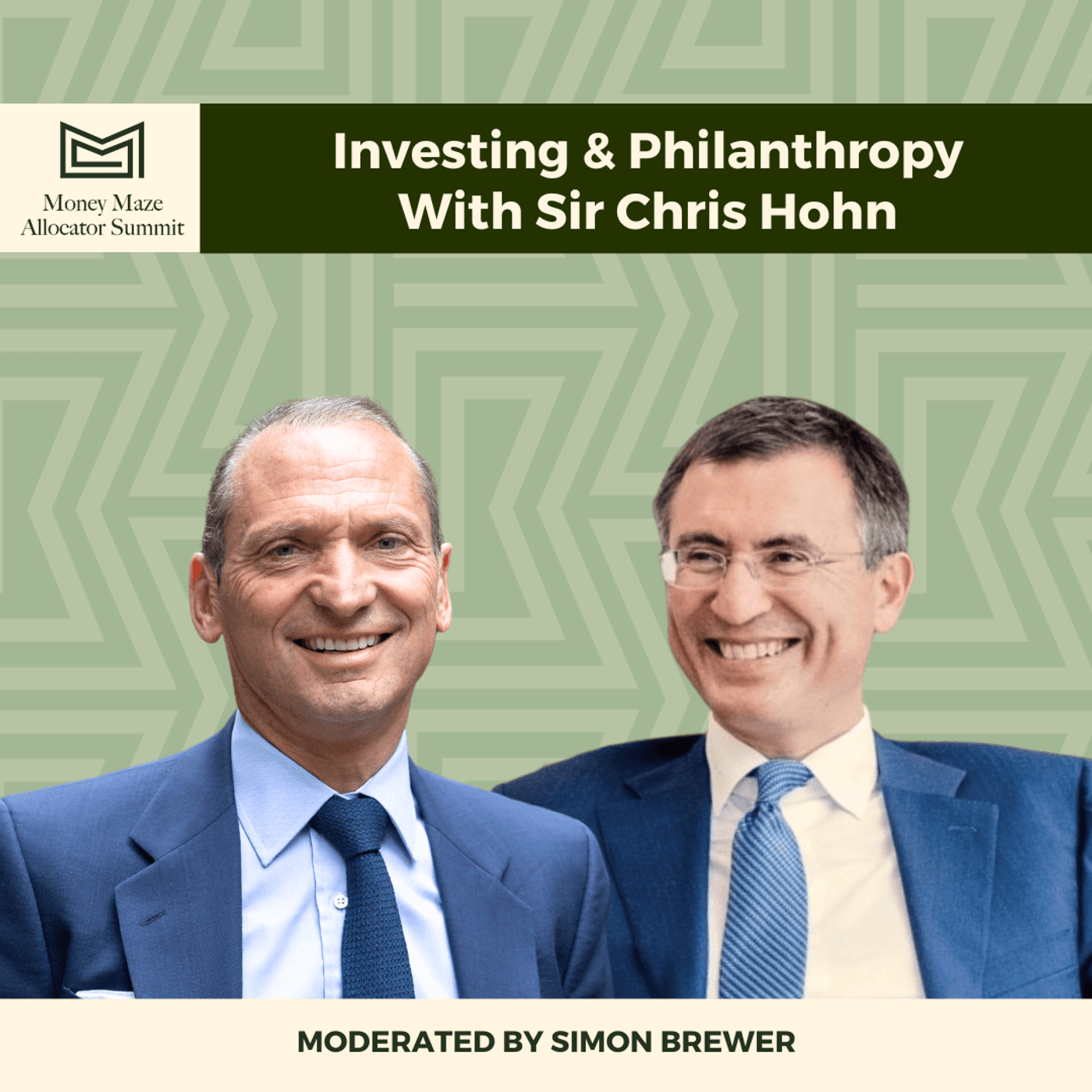
Investing and philanthropy with Sir Chris Hohn (TCI Fund Management; CIFF), focusing on risk-first investing, long-term “moats,” engagement with management, limits of shorting, and how he prioritizes high-leverage giving.
Guest background
Sir Chris Hohn is founder of TCI Fund Management and CIFF. He previously interviewed on the Money Maze podcast. He built his wealth in hedge funds and later created a foundation after receiving a $10M bonus.
Key claims
In investing, define risk as not knowing what you’re doing; prioritize sustainable barriers to entry and long-term holding (average ~8 years). Great companies persist; competition/disruption and complexity are underestimated. Shorting is often too unpredictable due to investor psychology and funding risk (Wirecard example). In philanthropy, start with “why,” combining intuition and analysis; fund root causes, not just KPIs.
Notable examples
Airports/toll roads; Visa network effects; aircraft engines with multiple moats; Wirecard fraud short. Philanthropy examples include contraception messaging in Ethiopia (70% uptake sustained), adolescent contraception failure in a rape context, HIV prevention via $300 tests/treatment, and Nutriset/Manor Nutrition to expand therapeutic food access.
Written by AI. May contain mistakes. Listen to the episode to check what was said.
Chapters
Tap a time to open that second in VOUnderstanding Risk in Investing
0:45 to 4:16
Sir Chris Hohn discusses the importance of risk over return in investment.
“really appreciative of you being here today.”
Long-Term Investment Strategies
4:16 to 7:48
Hohn shares insights on long-term investment strategies and company selection.
“And so we really try to get, focus all our time on barriers to entry and disruption.”
Identifying Barriers to Entry
7:48 to 12:30
Hohn elaborates on how to identify barriers to entry in various industries.
“But then beyond hard assets infrastructure, we found other barriers to entry, such as network effects.”
Evaluating Sustainable Investments
12:30 to 14:01
Discussion on the principles of sustainable investments and essential needs.
“so you've probably got a pretty good visibility on 25 years.”
Evolution of Investment Philosophy
14:01 to 17:53
Learn about the importance of management relationships in investment decisions.
“what are you thinking about that conversation?”
Short Selling Challenges
19:00 to 22:24
Understand the complexities and risks associated with short selling in investing.
“Given that there are stretched valuations in all sorts of parts of the world, you have been very comfortable shorting in the past.”
Long-Term Investment Strategy
22:24 to 25:09
Explore the benefits of focusing on sustainable, long-term investments over trends.
“So, you know, things that I feel confident will be around in 30 years in a dominant position excite me because it's just predictable.”
Philanthropy and Personal Calling
25:09 to 28:00
Delve into the motivations behind philanthropy and the importance of prioritizing causes.
“Yeah, so Simon and I talked before and you had a lot of questions on how.”
Prioritizing Philanthropy: Insights from Sir Chris Hohn
28:00 to 32:57
Learn how Sir Chris Hohn prioritizes his philanthropic efforts and the factors influencing his decisions.
“so that's the answer to the question and also yeah it's a knowing if you like so there'll be people in the room small, large, donated to charity regularly how do you prioritise?”
Partnerships in Philanthropy
32:57 to 37:57
Explore the types of partnerships Sir Chris Hohn engages in to enhance the effectiveness of his philanthropy.
“we have three types of partners, governments, NGOs and companies.”
Show all 13 chapters
Partnerships in Philanthropy
39:58 to 40:08
Explore the types of partnerships Sir Chris Hohn engages in to enhance the effectiveness of his philanthropy.
Understanding the Root Causes of Social Issues
40:08 to 42:01
Hear Sir Chris Hohn discuss the importance of comprehending the root causes behind social issues rather than just symptoms.
“you can make a big mistake and by measuring the wrong thing now especially back to the point if you don't know what you're doing.”
Philanthropy and Consciousness in Action
42:01 to 48:21
Learn how understanding root causes can transform philanthropy and human connection.
“These girls had to find a way out of their situation.”
Transcript
Automatic transcript. May contain errors.0:02I'm particularly delighted to release today's episode. In October, we held the inaugural Money Maze Allocated Summit. And over the two days, there was fantastic discussion, debate, insights, disagreement, and a lot of learning. But of all the conversations, one that particularly resonated with me was the chance to interview Sir Chris Hohn about those two topics with which he is fantastically acquainted, investing and philanthropy. be. And I think that you will discover in a minute that he perhaps stands above most mortals with the clarity of his thinking and the extraordinary generosity and effectiveness in both disciplines.
0:39Thank you. I have had the pleasure of interviewing Chris Hurt twice before and we are really, really appreciative of you being here today. Thank you so much. I think your investment success is probably only matched by your philanthropic generosity. And we're going to talk about both of those today, investing and philanthropy. And I'm conscious a little bit like an earlier panel with Tor Burney, I would really like a couple of hours, but unfortunately that isn't possible. So will you come back next year? Chris, what's made you successful? Well,
1:21Sir Chris Hohn:thanks for inviting me, Simon. Well, investing is all about risk and return. And the vast majority of investors focus on return. That's what you see in any asset allocator, what's your returns. That's the only thing. But I focused actually in my career on risk firstly. you know return does matter but to me risk was always the first thing that mattered and a lot of people have their own definitions of risk I love George Soros's definition which was not knowing what you're doing
2:12Sir Chris Hohn:so what does that mean you know for me that's understanding what matters in investing and there was a spiritual master once he said very few things matter and most things don't matter at all and that could also apply to investing so what does matter competition matters because too much competition erodes your profits and maybe you don't make any money at all so I hate competition and makes
3:00Sir Chris Hohn:predictability and valuation impossible and the interesting thing so to me in a sense competition and disruption are the whole thing it's not about growth because you can have a first move advantage, growth for a period and then a new technology or a new competitor kills you off and the fact of the matter is that most investors underestimate the forces of competition and disruption because they underestimate complexity they look short term and so we do two things really. We're looking for such companies and with such high barriers to entry over the long term that we think we can have a reasonable idea that they'll be around.
4:02Sir Chris Hohn:Can't be precise about exactly what they'll be worth but they'll be there not in one, two or three years which is a normal time horizon of an investor but in 20 or 30 years, which is the time horizon where the value, if you do an MPV model, really is. And so we really try to get, focus all our time on barriers to entry and disruption. and so and the second component of the philosophy if you like is long termism now that's fundamental our average holding period of a stock in our portfolio is 8 years we've held stocks for 13 years and 12 and 10 but the average is eight years, which is like starting to get into private equity land of duration of investment.
5:09Sir Chris Hohn:And it's counting, eight years and counting. Now, you may, but it's an interesting question. You know, a lot of people make money with high frequency trading. The shorter the trading horizon, the better. The average stock holding period is under a year of a stock in the U.S. So it's all very well to say you're long term, but that's only a good thing. It's not necessarily a good thing unless it works. And it only works if you're right on the first point about the quality of the company and the barriers to entry. But if you're right, that you find a company that is going to be a good company long term, then you should hold on to it.
6:02Sir Chris Hohn:Because there's a persistency of these barriers to entry and the things that make it good. So in simple terms, good companies stay good and bad companies stay bad. And I guess there's another point. There aren't that many great companies. the super companies of the world and if you find them you should hold on to them so that's and then there's related concepts like engagement and concentration but those are secondary to to the first points so let me ask you about those barriers to entry because How has your thinking in identifying them changed in the last two decades? We've enlarged the universe over time of things that we have found that are more companies, more industries, as we've learned.
6:58Sir Chris Hohn:Like everyone, we're always learning. if you're... And the... So I always liked hard assets, infrastructure. The... What came within that, you know, could expand beyond... We've owned a lot of airports and toll roads, but, you know, we found toll roads in Europe, Then we went to loads in Canada and the U.S. through Ferrovial and cell phone towers and railroads.
7:50But then beyond hard assets infrastructure, we found other barriers to entry, such as network effects.
8:01Sir Chris Hohn:And there's certain industries. Payments is one. We've been a shareholder visa a long time where there's this huge, ever-growing network connecting every customer and every bank. to the world. And as the network grows, it becomes just ever harder to replicate.
8:28Sir Chris Hohn:Aerospace is a sector that we've come to learn about and understand and where the barriers to entry are multiple. Often you would like not just one barrier to entry, but maybe five. Intellectual property, you could have its brands, hard assets, contracts, network effects. We have big shelters and aircraft engines where you have many of those IP, contracts, installed base is another barrier to entry where customers can't switch regulatory switching costs. and so
9:19Sir Chris Hohn:we've expanded rating agencies there's another one and
9:28Sir Chris Hohn:one of the key points if you really do find one of these super companies that can dominate their industries they have something special which is pricing power which is a rare thing so most companies don't like to talk about it and it's a special thing because it means you can grow more than your volume and it's got a leveraged effect because if it's above inflation so pricing power means you can price above inflation then there's no cost to that and if you have a 10 % margin, it might give a huge, every one point of real pricing is massive. It's super leveraged and potent and so the
10:26so
10:28Sir Chris Hohn:the but I think the world is changing so much that that some of these moats, apparent moats, are being just beaten down by AI and other disruption forces. So the forces of disruption, I would say, are actually rising. So that was what I wanted to get to. Disruption is around us. You've got access to all sorts of great global people, great conversations, but how do you think about identifying those underlying weaknesses that may derail the thesis? Well, you really want something that's obvious. Warren Buffett used to talk about this, if you can't put it on. And when it's not obvious, you probably just leave it alone because it's probably not sustainable.
11:21Sir Chris Hohn:So it's sustainable barriers to entry. So if we own an airport, it's pretty obvious. We own a company that owns all the airports in Spain. We've owned it for a decade. I was on the board. No one's ever going to rebuild those and overbuild you, and 75 % is unregulated. So when you look at it, the shops and – so the infrastructure piece is – especially if you're in it unregulated, all roads where you have 100-year duration or 60 years like for OVL, those are – people – we don't know whether people are going to drive electric cars or which brand of electric car. but it's pretty clear they're going to need these roads and so those are obvious things.
12:13Sir Chris Hohn:I'd say when you have multiple of these barriers to entry there's no alternative option. So we like aircraft engines but will there be an alternative technology? Will they become electric? The science doesn't really permit that and it's too expensive to replace the existing fleet so you've probably got a pretty good visibility on 25 years. And so we think technologies that change quickly aren't good for us. Can't predict them. So I would say some principles would be multiple barriers to entry and essential need, something that is essential. So you've got to be confident of the need. So are people still going to want to fly?
13:11Sir Chris Hohn:We believe that's a durable need. So we don't like discretionary things. I've never been an investor in the handbag business. Lots of people have and they've made lots of money in it, but I've never understood what makes one handbag better than another.
13:35Sir Chris Hohn:But it's why it's essential. So anyway. It may well be. I don't need to understand everything. Yeah, just stay within your sphere of competence. That's what Buffett said. But we have this, what is fabulous about the investing business is it's the quantitative meets the qualitative. And you've written a lot about engaging with management. And I wonder when you go to meet managements today, you've done this for a long time, what are you thinking about that conversation? People think, read about us and they say, you're an activist. Well, we've done that. It's sort of a tool, but we prefer always to have constructive, long-term relationships with management.
14:33Sir Chris Hohn:And we hold an Investor Day in New York every year for our investors, and this year we had the CEO of G Aerospace, the CEO of Airbus came to speak to our investors on the stage at the same time, never been done before. CEO of Moody's, CEO of Vinci, top executive from Visa. And every year we have the same thing. and these people come because they think we can add value to them.
15:16Sir Chris Hohn:Our aerospace analyst was invited by GCO to speak to their top 300 managers about the company. So that's not normal. Why do they do that? Because they think we understand the company and we can add sometimes some value. They find it a value-added conversation. So, because we do so much research on a company and we follow the industry, so we want it to be a relationship, okay? And that means, and it to be a conversation. Now, of course, we weren't always like that, but we've evolved. And so I'd say it really is engagement. Through engagement, you can learn something. If it's a one-way conversation, you're just speaking at someone, you don't learn anything.
16:10Sir Chris Hohn:We have to learn. But along your way, there will have been some investments that didn't work as well. And I wonder when you reflected on those, was there something in those conversations that maybe you weren't as sensitive to that maybe you are today? Ultimately, the quality of the business trumps everything. And so, you know, I'd say it does management matter, you know, somewhat. Yep. It's not the key thing. and a great manager in a bad business, they can't really necessarily do much. And so I think focusing on trying to assess management through conversation may miss the point. Okay. So I think you may overstate the value of the management and sometimes management won't even necessarily understand their own pricing power and latent pricing power or, you know.
17:26Sir Chris Hohn:So, but I think, I don't think the, I think it's, if I would say something on the question, you've got to listen and see if you can learn and be humble if you've become arrogant. That's a killer in the investing business. Yeah. I'm trying not to say anything.
17:53So before we continue this conversation, we're going to take a short break to have a note from our sponsors. IFM Investors is a global asset manager founded and owned by pension funds with capabilities in infrastructure, equity and debt, private equity, private credit and listed equities. They believe healthy returns depend on healthy economic, environmental and social systems. And these are evolving on a scale never experienced before. To find opportunity, build value and meet the needs of future generations, you need scale, skill and expertise. That's what IFM Investors has built up over 30 years.
18:33In times of economic and geopolitical volatility, investors will look to gold. Today, as the world navigates uncertainty and heightened risk, investors of all sorts will look to safeguard their wealth. We're thrilled to welcome the World Gold Council as one of our sponsors. Tap the link in the show notes to learn more or visit goldhub.org on your browser for comprehensive research, insights and analysis on the global gold market.
19:03Given that there are stretched valuations in all sorts of parts of the world, you have been very comfortable shorting in the past. Sort of under what circumstances might you have more shorts than you've had of late?
19:15Sir Chris Hohn:You know, I've never really been a significant short seller. I don't think I've cumulatively made absolute money in it. And I sort of agree with what Warren Buffett told me one night I had a dinner with him and I asked him about shorting. and he said he didn't do it because he and Charlie Munger concluded it was just too hard, too unpredictable. He thought long and hard about it because in shorting you need to also understand investor psychology because when a short goes against you, you have to fund the losses. People think that's like a costless thing, but you have to sell longs to fund the losses on shorts.
20:06Sir Chris Hohn:And you can eventually be right, but can you hold your position? You know, we were, we did have a short a couple of years ago in Wirecard, where we thought it was a fraud, which is, we have a very high bar. and actually I I I propel timing I filed a public criminal complaint against the company in the Munich Prosecutor's Office the company wasn't too happy the chairman used to be the CFO Deutsche Borsi said I was a liar but within two weeks it was bankrupt now and then the media got involved and they went to Australia to meet a guy at Bronte Capital who was one of the very first short sellers of Wirecard 20 years ago.
21:02And they said, the journalist said, congratulations.
21:05Sir Chris Hohn:Yeah, this must be a big day for you. But the stock could have gone up 20x. And he said, I had to cover it after a year. I couldn't fund the losses. Yeah. So I wasn't here to see the day it went bankrupt. Yeah, I lost. So it's a very hard thing. And you could be squeezed if you watch the movie Dumb Money. It's a great movie. You'll see the difficulties of short selling, of being short squeezed. So there's so many technical issues that sometimes you just have to experience tells you. It's just too unpredictable. And because of the investor psychology point. Yeah. So it's interesting. I see the front row is Chris Dale of Kintbury Cabin, who also successfully shorted Wirecard for a while.
22:12And well, right to the end, actually, as it happens. And I'm an investor with him, which is why I know. What are you most excited about when you think about the investing landscape?
22:23Sir Chris Hohn:I like things that will just compound long term. I don't change year to year very much. So, you know, things that I feel confident will be around in 30 years in a dominant position excite me because it's just predictable. I value predictability. Yeah, it's and sometimes people, you know, your very question illustrates what most investors are looking for, the next hot thing. Yeah, the new thing. And sometimes I'll say a little bit sarcastically, Will, you want to say what's new? I say, do you need to change your wife every year? Yeah. It can be a difficult conversation. Robin always says don't ask that question.
23:23Sir Chris Hohn:Because people might give them ideas. what do you know by the way that I don't know
23:35Sir Chris Hohn:you wouldn't ask that question because you're happy with it you're happy with what you've got and so
23:45Sir Chris Hohn:it's not that easy to find there's some truth in some of these funny examples it's not that easy to find the right partner it's not that easy to find the right investment so why do you want to change them immediately if you find something good it's going to be good long term stick with it and don't um think that newer is always better this is what investors think they don't think about sustainability they want the next hot thing they think growth is the thing but new is the thing but that you know we want to be because so many people think in terms of what John Keynes or actually Benjamin Franklin, not Benjamin Franklin, but Benjamin Graham said that in the short term, the market is a voting machine.
24:39Sir Chris Hohn:What's hot? Yeah, it's new. But in the long term, it's a weighing machine. Yeah. So in the COVID Peloton was hot. Yeah. Went to$50 billion valuation. Everyone was on their Peloton machine, but they don't, you know, virtually went to zero.
24:58And so,
25:01Sir Chris Hohn:yeah, I think that's the most important question. We're more interested in the question what's going to be around rather than what's new. Very clearly expressed. Let's switch to philanthropy. Why? Yeah, so Simon and I talked before and you had a lot of questions on how. I said, there's a book. The title of the book is Let's Start With Why. Yep. That's a better question to start with.
25:40Sir Chris Hohn:It was
Read the full transcript
25:46Sir Chris Hohn:when
25:50Sir Chris Hohn:when I was 20 I went to the Philippines and saw people in poverty and I thought living on a garbage heap and I thought this isn't right if I could do something one day that would be a good thing to do but then obviously I didn't have any resources and found my way to a hedge fund in New York and after some years I had a good year and they paid me a bonus of$10 million. I had a couple of million dollars. I don't remember exactly, not lots of money and I immediately gave it away to charity. I didn't want it. I gave myself a foundation and put it into it. I didn't. And I couldn't tell you the reasoning.
26:44Sir Chris Hohn:I just thought this isn't really something I should have. And then I started doing more and more, but I didn't understand it. For 20 years I was doing philanthropy. Sounds strange to say. I remember sitting down with Bill Gates and asking me the same question. And it was only in recent years I sort of figured it out that why.
27:18And that actually there's something within all of us, we'll call it consciousness.
27:25Sir Chris Hohn:Some people call it the soul. My son tried to explain this to him. He said to me, Dad, the soul is a myth.
27:37and actually I don't think so,
27:38Sir Chris Hohn:but it's this that drew me. It's the basic urge of the soul is to do service, and so that's a soul-driven thing, and it's not of the intellect. It's of, I'll call it, high mind or intuition. so that's the answer to the question and also yeah it's a knowing if you like so there'll be people in the room small, large, donated to charity regularly how do you prioritise? yeah I think there's two answers to it one is what is it what do you feel passionate about? And then there's another more analytical answer, the intellectual. There's intuition and intellect, two different ways of thinking. In the intellect, I look for high leverage and fundamental things.
28:48Sir Chris Hohn:They are things that are back to what's most important. So one of the things I'm really passionate about is contraception in poor countries.
29:06Sir Chris Hohn:Now, in Africa, I do most of my work. The women on average will have nearly seven children. Now, they don't want seven children, just to be clear. It's not their choice. They don't own their bodies often. And for various reasons, usually economic. And so, but it's foundational because if a woman, let's say, wants two children, not seven children, and she's so poor she can't feed or have health for those seven children. if she has the two children instead of the seven, you see everything is much easier. It's sort of obvious stuff. And the other thing I look at is where it's unfunded or underfunded.
30:04So, you know, contraception is sort of seen as a controversial thing
30:15Sir Chris Hohn:for some reason. in the Millennium Development Goals, nobody put a fertility target. That was deemed too controversial. They conflated it with coercion, which is stupid. And so I'm also interested in, so for$10, looking back to value for money, you can avoid an unwanted pregnancy. so the value for money is incredible other areas that you know I'm passionate about are very involved in climate change is foundational it will undermine all of development as soils dry out, drought people will have less to eat hunger, malnutrition and it impacts the poorest first. The country is already hot, getting hotter, and so climate is really also foundational and urgent.
31:27Sir Chris Hohn:I'm also, there are other areas. I love neglected tropical diseases because the impact is enormous. About seven diseases impacting two billion people, many of which people never heard about like trachoma and river blindness and lymphatic volarosis and schistosomiasis. Anyway these things can be eliminated. The drug companies have actually funded for free the drugs. It just needs someone to do mass drug administration which is very cheap and so it's really a crime not to do this and trachoma surgeries people go permanently blind for a$50 surgery. Yeah, isn't that crazy? So, but I also, there are other big things that are, I care about that are foundational as well, like child marriage.
32:25Sir Chris Hohn:That's a big thing. So go ahead. So it's a little bit like the top down and bottom up of our business. So when you identify that theme, terrific, but you have to choose a partner. How do you think about that? Yeah, because we, what do I have this money? Yeah, money's a commodity and so I have to work through people and the, so we, I guess we have three types of partners, governments, NGOs and companies. and
33:08Sir Chris Hohn:if you can find if you can do this through governments it's perfect, it's more sustainable and so sometimes we'll do both, we'll fund NGOs to work through governments because the so So what's an example? Messaging to women in Ethiopia, and to married couples in Ethiopia through community health workers funded by government there about the benefits of contraception is actually free. They already fund the community health worker. We found that 70 % of the women who were, couples who were messaged to about the financial cost, would you believe, of having lots of children started taking contraceptives who weren't and sustained it.
34:17Sir Chris Hohn:So it's an incredible program. They've rolled it out through the country. And so we love, if we can, to work through governments. NGOs why NGOs well where sometimes governments don't have the innovation they don't have the
34:41Sir Chris Hohn:and the so or the interest okay so child marriage in India got is something where it's not something requires if there's going to be... And often an NGO has to... Why do you need an NGO? It's an interesting question. Why can't you just tell government the idea? Well, sometimes governments don't care. Okay? Why do we... and until the NGO tried to stop child marriages you could end up being killed in some of these places it's not for the faint hearted so they don't care they're not willing to put their life in danger and so you often find NGOs care more and so So especially if you can pick the right leadership.
35:58Sir Chris Hohn:And so I do a lot with grassroots NGOs, but we're always trying to prove a concept and then get governments to scale it. So we did...
36:11And companies... I'll give you a couple of examples.
36:16Sir Chris Hohn:Sometimes there's market failure. so a few years ago 10 years ago there was a company that patented therapeutic food for severe acute malnourished kids company called Nutriset which was a bogus patent as it wasn't novel but they prevented other companies producing it to make money and I funded a company to break that monopoly and in fact I put in the contract that they were sued to cease and desist they had to continue had to fund the litigation but they couldn't stop and a company was called Manor Nutrition and I put$200 million into it and now they have a capacity of$500 million of this, they've saved over 10 million lives and
37:18But they're a non-profit, so they never made any money. The CEO calls it an upside-down company where their performance is measured in live save, not money.
37:31Sir Chris Hohn:But why would other people? They say there's not enough money in it. Or there was someone trying to patent it. So there are all sorts of reasons. But the social payoff is enormous. Yeah. So sometimes there's stuff that philanthropy can be catalytic in a way which. So we'll use any partner that's intelligent, but you really want to find people who care. See, this is a strange thing to say, but in my early days I would ask, well, can you hire mercenaries? People who just care about money. And I came to realise that it doesn't work. You need people who, it's from the heart. Schroders is an international active asset manager.
38:33working with institutions, intermediaries and individuals around the world to create prosperity for them and their customers. Over two centuries, Schroeder's has given their clients the edge by seeing things differently. Schroeder's active perspective combines rigorous research, innovative thinking and deep market insight to help you see opportunities and risks in a new light. Whether building portfolio resilience, seeking return opportunities, generating income or decarbonizing your portfolio, Schroeder's offers a heightened perspective to help you stay ahead, leveraging their expert capabilities across public and private markets to help clients achieve investment goals.
39:13With Schroeder's, you get the active edge. Discover the active edge at schroeder's.com. Remember, capital is at risk with investing. The Money Maze podcast is proudly sponsored by the London Stock Exchange Group, a global leader in financial markets and infrastructure. future. LSEG has a rich history of facilitating capital flows, empowering businesses and connecting investors to opportunities. Today, they provide world-class technology, data and analytics, playing a critical role in shaping modern finance. From their role in sustainable investing to their contributions to financial innovation, LSEG is helping to build more connected and efficient markets.
39:52Visit lseg.com via the link in the show notes to see how they're driving the future of finance and so therefore performance measurement takes on a different perspective yeah no performance is an interesting question okay and um because if you don't understand the theory of change and the
40:17Sir Chris Hohn:you can make a big mistake and by measuring the wrong thing now
40:28Sir Chris Hohn:especially back to the point if you don't know what you're doing. So here's an example. For 10 years I funded this company that did contraception for adolescents. Now what's an adolescent? In some cases they were children. And I was brought into a slum a couple of years ago to meet these girls and I knew immediately something was very wrong because they were so depressed. And if you looked into their eyes, there was nothing behind the eyes. Psychologists would say that they were dissociated. I would say it's soul disconnected. And I asked them, why do you need the contraceptives? They wouldn't answer the question.
41:16Sir Chris Hohn:I said, so the KPI was, did they get the contraceptive? On paper, it was all great. they all got these contraceptives, very low cost I said I asked the question do you have boyfriends? they said no I said do you have husbands? they said no when they were 15, 16, 17 I said then why the hell do you need these contraceptives? and they said because we're being raped all the time since we're aged 8 and then other girls told me they were having to prostitute themselves to eat so suddenly the performance indicator of did they get the contraceptive and what was the unit cost of the contraceptive was missing the point.
42:02Sir Chris Hohn:These girls had to find a way out of their
42:11Sir Chris Hohn:situation.
42:15Sir Chris Hohn:So you've got to understand the root cause and rather than just working on symptoms
42:25Sir Chris Hohn:because the KPI may not capture the quality of life. Life isn't about just years. Those girls, as is the case for many women in these poor countries, they're living in hell. and so but if you were just looking at numbers you don't see it and the only reason I saw it is through looking at them as human beings and saying something's wrong here so of course we look at cost benefit but sometimes the and another key point is prevention versus cure, you know, if you can prevent, you know, there are just so many no-brainers, I call them. You can test someone with a saliva test or rapid blood test for HIV and find a positive person, put them on treatment for$300.
43:31Sir Chris Hohn:We've done 11 million tests with the Global Fund. So simple. So you stop that person spreading it to multiple other people for$300. Yeah. So, but you've got to try to get to root cause. Why, you know, why are, you know, and it's not always obvious or simple. Why are children being married off? Is it economics? Is it consciousness? It's actually you do need to change consciousness. which of course leads to my last question which is you give an example your former example I can't think how AI could help the latter is that AI might help how are you allowing it to help? You know one thinks AI is the be all and end all of humanity well there is one problem with AI it doesn't have consciousness or conscience a friend of mine told me last week that a friend of hers, her daughter was very depressed and she was using chat GPT to talk to she was very isolated and
44:53without
44:56Sir Chris Hohn:going into the detail she ended up committing suicide and the AI didn't obviously do anything Yeah. So we're, as a species, we've confused intelligence, you know, and knowledge and consciousness. and so without we think information and intelligence is the way all and end all but there's something more powerful which is love and heart and consciousness and without that connection and actually people are becoming more disconnected from that, always on their phones always thinking that chat GPT or the latest AI can give them the answer well the becoming more and more an intellect. And so I think we have to actually...
46:03Sir Chris Hohn:We're sort of entering a more and more dangerous point for humanity because we sort of have lost the plot where we think that AI will solve all humanity's problems. Couldn't be clearer. The problems are getting worse. No solution for climate change, no solution for poverty, wars, you name it. And inequality, divisiveness, hatred, it's all rising. and I think you know the so I think there needs to be a new paradigm in consciousness and it's not about AI it's it's it's about love if you and and there are foundational principles you know that are rather disruptive such as ownership do we owe this concept that we own things and that it's as and I've always thought I actually don't own anything I'm just a custodian what is that which is it's money mine it's to be given away in service to humanity and if you go out of the intellect into intuition which is why maybe give away that money.
47:36You know, when we're on our deathbed,
47:39Sir Chris Hohn:I don't think we think we own things, yeah? And why would we? Because ultimately everything is a gift. It's not as it's, you know, I didn't make all this money because I was smart or lucky. It was, you know, I think because I'm willing to give it away. And so I think, you know, the most important thing, back to what matters, is consciousness and love. And if we connect to that, then we'll find purpose. And so I think for me, in a nutshell, philanthropy has given me purpose. What a great place to stop. Chris, you have given so much to the world. And thank you for your time today. Thank you.
48:30All content on the Money Maze podcast is for your general information and use only and is not intended to address your particular requirements. In particular, the content does not constitute any form of advice, recommendation, representation, endorsement or arrangement and is not intended to be relied upon by users in making or refraining from making any specific investment or other decisions. We try to provide content that is true and accurate as of the date of publishing. However, we give no assurance or warranty regarding the accuracy, timeliness, or applicability of any of the content. Guests, presenters, and other individuals involved in the production of this podcast may have positions in any of the investments discussed.
From the publisher
It proved incredibly popular & much of that was a result of the quality of panels, moderators & topics.
Of all the conversations, one that particularly resonated with us was the chance to interview Sir Chris Hohn about two topics with which he is fantastically acquainted: investing and philanthropy.
As you will discover in this episode, he perhaps stands above most mortals with the clarity of his thinking and the extraordinary generosity and effectiveness in both disciplines.
The Money Maze Podcast is kindly sponsored by Schroders, IFM Investors, World Gold Council and LSEG.
Sign up to our Newsletter | Follow us on LinkedIn | Watch on YouTube