In short
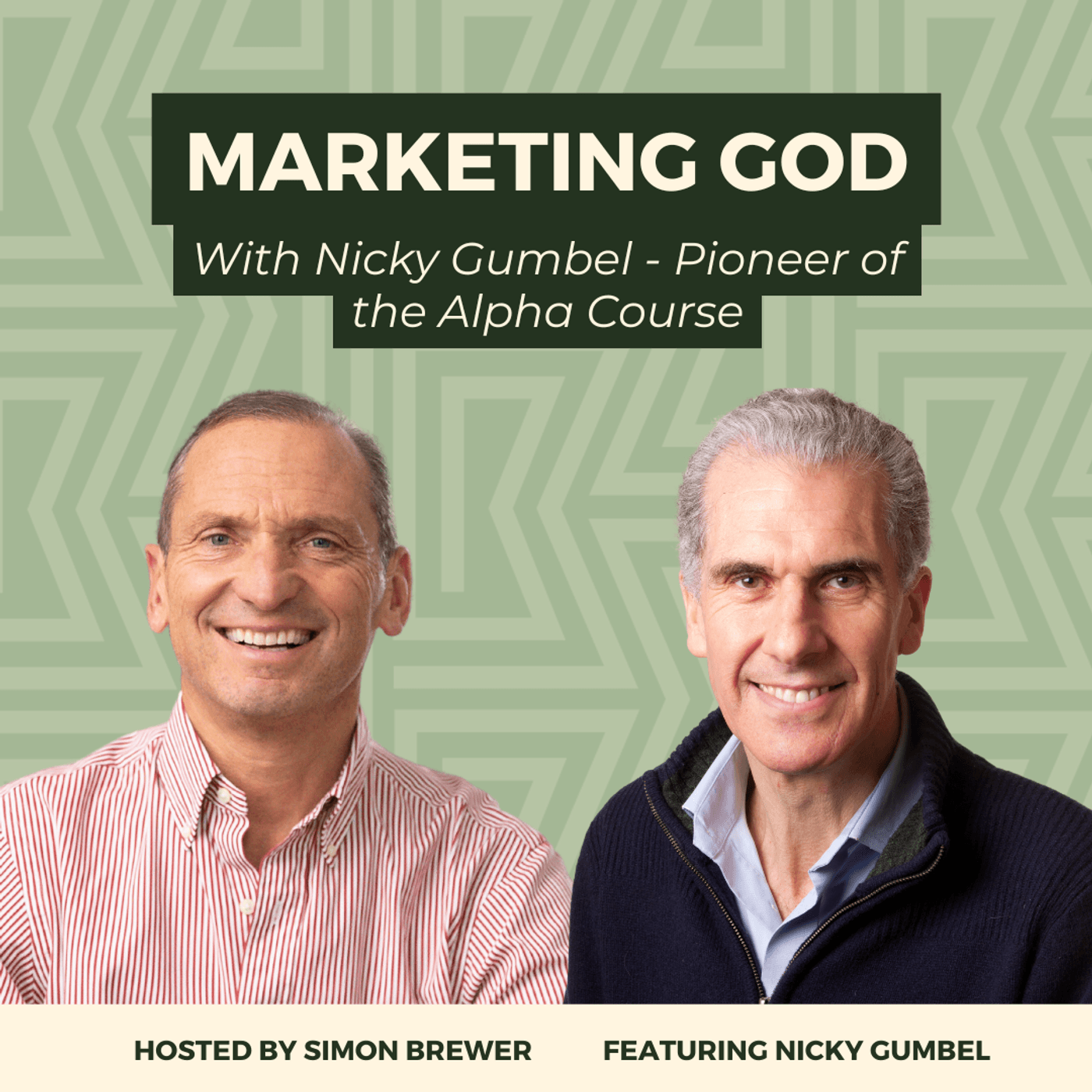
Nicky Gumbel (Reverend, Holy Trinity Brompton) explains his faith journey and how he helped scale Christianity’s Alpha course into a global brand, arguing it builds belonging and addresses secularism, morality, and money.
Guest backgrounds
Nicky Gumbel is a Church of England clergyman and pioneer of Alpha. He was educated at Eton and Trinity College, Cambridge (law training) and became a barrister before ordination. He describes his family’s Jewish-German history and WWII escape from Nazi persecution. Interviewer Simon Salter (Money Maze host) is a finance-focused interviewer.
Key claims
Alpha is designed for exploration, not preaching; it uses meals, talks, and confidential small-group discussion to draw out people’s “deep well.” Its growth is driven by word-of-mouth across denominations. Christianity’s center is shifting from Europe/America toward Africa and Asia. Generosity breaks money’s “addiction,” and leadership should follow Jesus through integrity and example.
Notable examples
“Matthew” joined Alpha through curiosity about young women, later became Gumbel’s brother-in-law. “Tando” did Alpha in Polsmoor Prison after gang violence and murder, later earned a finance degree and became an underwriter. Gumbel also cites the “Peter stream” for people “trapped underground” by racism/elitism, leading to ordination and a packed church.
Written by AI. May contain mistakes. Listen to the episode to check what was said.
Chapters
Tap a time to open that second in VOThe Impact of One Individual
0:34 to 2:30
Discussion on the transformative impact of individuals, particularly Nicky Gumbel.
“Very occasionally, one individual can have a disproportionately powerful impact on a group or collection of people.”
Roots, Religion, and Escape
2:30 to 7:04
Nicky discusses his family history, including his Jewish heritage and experiences during WWII.
“As I prepared for this, I wrote my own chapter headings as if it was a book, and I'm going to turn to chapter one, which is Roots, Religion, and Escape.”
Law, University, and Faith
7:04 to 12:44
Nicky shares his journey through law and his eventual conversion to Christianity.
“You go to Eton and then follow that with Trinity College, Cambridge, where you study law.”
A Leap of Faith
13:42 to 14:00
Nicky reflects on his decision to leave law and pursue a path in faith.
Episode Discussion
14:00 to 28:00
“I think the moment that I had this encounter with Jesus, looking back on it, consciously or unconsciously, I realized just how important it was.”
The Beauty of Church Variety
28:00 to 29:50
Explore the diversity and beauty within different church traditions.
“All these things are common to all the different parts of the church.”
Leadership Insights from Jesus
31:20 to 32:08
Discuss the nature of leadership and the price it demands.
“So chapter six, I headed leadership, inspiration, and charisma.”
Qualities of Great Leaders
32:08 to 34:20
Identify the traits that define exceptional leaders through examples.
“because leadership is the price you pay for doing something.”
The Importance of Brand in Faith
34:20 to 36:40
Examine the significance of the brand name Alpha and its impact.
“I would say integrity, total integrity, humility, just total humility, graciousness, kindness, encouragement, goodness, faithfulness.”
Understanding the Alpha Generation
36:40 to 39:11
Insights into the characteristics and desires of the Alpha generation.
“Millennials have grown up, and Generation Z or Z has grown up, and now 14 and under is Alpha.”
Show all 18 chapters
Navigating Morality and Money
39:11 to 41:01
Explore the relationship between money, faith, and generosity.
“So they're a curious generation, but I think they're a little bit lost as well.”
The Nature of Generosity
41:01 to 42:03
Understand the true essence of generosity beyond wealth.
“So it's one of those things that when people think that when they've made a million, they'll be satisfied, but then they want 10 million.”
The Essence of Generosity
42:03 to 44:42
Learn how true generosity is defined by heart and attitude, not wealth.
“And I think generosity is a beautiful characteristic.”
Reflections on Marriage
44:42 to 46:21
Discover the importance of partnership and advice for a happy marriage.
“So Chapter 9, as we move towards the close of this journey, is The Power of Pippa, who is your wife.”
Transformation Through Alpha: Tando's Story
46:21 to 50:41
Hear the inspiring story of Tando, who transformed his life through the Alpha Course.
“So we'd just come back from South Africa.”
The Economic Model of Alpha
50:41 to 55:22
Understand how the Alpha organization sustains itself without charging participants.
“He's running a church on the Delgado Estate that is packed out for the first time in 100 years.”
Dealing with Setbacks
55:22 to 56:00
Explore personal reflections on facing life's challenges and setbacks.
“I have the privilege of sitting in an alpha small group.”
Navigating Life's Setbacks and Trusting God
56:00 to 1:01:40
Explore how personal tragedies can shape faith and resilience.
“It's just an opportunity for people to explore.”
Transcript
Automatic transcript. May contain errors.0:00Hello, everyone. This is our last episode before Christmas. You'll be very pleased to hear and listen to. But we thought it would be fun to re-release an episode that stayed with us that proved terrifically successful. And it was very different. And it's with the Reverend Nicky Gumbel of the Holy Trinity Brompton originally and the Alpha program, because it talks about building a brand, going beyond your boundaries, carrying people with you, building essentially a business. He's a very special man. And we enjoyed this episode. And for those who didn't listen to it or watch it. We hope you'll enjoy this episode and have a great holiday.
0:33Thank you. Very occasionally, one individual can have a disproportionately powerful impact on a group or collection of people. But very rarely does that person's impact grow in time and reach and expand beyond anyone's expectations and for millions be responsible for enhancing their lives. Having explored education with Sir Anthony Selden last year, we decided to pivot again and wanted to examine the topic of Christianity. And we found the individual whose immense impact has not been trumpeted from the rooftops, and yet whose reach has been truly profound, helping to engage over 30 million people since his odyssey began.
1:12So the Reverend Nicky Gumbel, welcome to the Money Maze podcast.
1:15Nicky Gumbel:Oh wow, Simon, I didn't, I can't possibly live up to that introduction. It's downhill all the way. You've come from an early morning swim in the Serpentine, and we're recording in Chelsea. And we actually met in a cable car in Switzerland over 25 years ago, and I've not spoken to you since. Now, it's not that you offended me. Our paths just didn't cross. But thanks to mutual friends who, after my pestering for many months, we were reintroduced a few weeks ago. So a big thank you to Liz and Bruno Delacarve. I hope today you can share with our listeners and viewers on YouTube around the world who will represent many or no religions, five big issues.
1:53Your own pivot to faith, how you took the Alpha course and made it a big, growing global brand, charismatic leadership, the battle lines between faith and secularism, and morality and money. So this conversation will be longer than your serpentine swim, but shorter than reading the book of Revelation. So, Nicky, more than 1.8 million participants last year alone took part in over 70 ,000 Alpha courses. More than 32 million people have participated in it, and since it's launched, the Alpha Movement has evolved from sub-party evangelism to an extraordinary world phenomenon. But let's travel back in time.
2:31As I prepared for this, I wrote my own chapter headings as if it was a book, and I'm going to turn to chapter one, which is Roots, Religion, and Escape. Let's go to Nazi Germany and your parents' decision to leave.
2:44Nicky Gumbel:What happened? So my father was a German Jew and a secular Jew. When I was 14, my mother took me for a walk and said, your father is German and Jewish, and you are never to speak to him about it. And I never did. I never spoke to him about it, and I never spoke to her about it again after that conversation. So I knew nothing about my family until a few years ago I got a phone call from the Judaica Museum who said, we're researching your family. And can you tell us about your family? And I said, no, I know absolutely nothing about my family. What do you know? And they sent me my family tree. And I discovered from there that my great grandfather was called Isaac.
3:33Nicky Gumbel:My great, great grandfather was Abraham, not the Abraham, but Abraham Gumbel. And then I discovered, And in the last few years, and through Wikipedia, actually, although a lot of it's in German and I can't understand it. But I have discovered from books written about them, about my family and about my father's family. My father's first cousin was Emil Gumbel, who was a mathematician. And there's a book written about him. And the introduction is the speech Einstein gave when he was thrown out of the university for being Israelite. and Einstein helped him to escape to France and where he became a professor at the university there.
4:15Nicky Gumbel:But then when Hitler invaded France, he was 24 hours ahead of Hitler and Einstein again helped him to get to America. And if you study maths at university, I'm told you'll study the Gumbel distribution. So he was the best known. And then my great uncle was another Abraham Gumbel who founded a bank, which is now Volksbank in Heilbronn. and that was, I think, bought by the Nazis in the 1930s. It's amazing. In 2009, they published The History of the Bank and I've now got a copy of that and it's mainly about Abraham Gumbel. And in 2009, they put up a statue to Abraham Gumbel. I think one of the amazing things that Germany have done is to really recognize the past and not to forget, And the Holocaust museums, there's a street named after another of his cousins who stayed as mayor and was eventually murdered in Dachau in 1942.
5:13Nicky Gumbel:And I've begun to learn about the whole family history. What I couldn't understand for many years is why did my father not talk to me? Now I understand why he couldn't. I mean, when I look at the concentration camps in which each of them died, and you think about the horrific way in which they died, you can understand why someone can't even begin to talk about that. The small amount of trauma that I've experienced, I find really hard to talk about. But can you imagine the trauma of going through? So my father, apparently, he read Mein Kampf, and that was why he left. He was a barrister over there, and he came over here, and he was disbarred in Germany.
5:55Nicky Gumbel:and he practiced at the English bar. He had a perfect English accent and nobody knew, I think, that he wasn't English. And he joined the army. He was interned in the first week of the war, then joined the British army as a private in 1942, was a full colonel in 1945. I got his war records and I discovered that he was interrogating Nazi officers to find out how the Nazi mind ticked. He got his parents out. His father was head of a law firm in Stuttgart. And he didn't want to leave. He said, I'm fine. All my friends are Nazis. They said, they'll look after me. Why should I leave? And then in 1939, he was arrested.
6:39Nicky Gumbel:And he came back, poured himself a glass of whiskey, went to sleep for two hours. And when he woke up, he said, we're leaving. And so they just got out. My grandparents just got out. So that was my father's side. My mother was a Scot and sort of Church of England, lived in England, Church of England, but not a churchgoer. So that was my parents. That's a great introduction, first chapter. Second chapter is Law, University, and Faith Collide. You go to Eton and then follow that with Trinity College, Cambridge, where you study law. And I wondered, given the direction that we're going to talk about in a minute you've taken, what was the attraction of law?
7:17Nicky Gumbel:Well, my father was a barrister. My mother was a barrister. My grandfathers on both sides were barristers. My sister's a KC. Two of my children have qualified as barristers. My uncle was a barrister. If we'd had a cat, it would have been a... My father put me down at birth. Literally, when I was born, he talked to somebody and said, would you take my son as your pupil? And by the time I came to do my pupil, he was already a QC, as it was then. And he couldn't take me, but he arranged for me to do a pupillage in his chambers. So, I mean, I had to do law. So actually, I was not doing law. In terms of my faith journey, I was actually reading economics.
7:56Nicky Gumbel:The first year at Cambridge for economics was the same as the A-level syllabus. And I decided that I would do my first year at Cambridge. I wouldn't have to do any work at all. I'd just do the economics and then switch to law after. So I had a year of doing no work, which was a huge advantage because I had become an atheist as a teenager. I'd written an essay at school disproving the existence of God, and they put it forward for a prize for religious knowledge. Well, I'm going to pause you there because you convert to Christianity while at university. I've got 1974, but as I researched you, one of your huge admirers, Bear Grylls, said to me, just ask him his story.
8:36So what happened? Why the conversion? My closest friends at university, we'd been friends at school,
8:43Nicky Gumbel:but we happened to have rooms next door to each other at Trinity. And Nicky Lee and his then-girlfriend, Cilla Lee, now his wife, and they run the marriage course. And I had warned Nicky, I said, don't have anything to do with the sort of Christians, because they're weird. They have these weird smiles and they're dodged. They're sort of, you know, cult-like. But he hadn't told me that he had actually been quite interested. and I think very sort of nervously they confessed one night that they had become Christians and I was literally horrified I mean I you know I've warned you this is you've been mixing with some dodgy people and I thought and you know I really got to help you I've got to help you to you know to see what so I thought I've got to do some research I'm going to research all religions I'm going to research philosophy.
9:37Nicky Gumbel:And the first thing that night, I had been to a Valentine's Day party, but that's why I know the date, because it was a Saturday night and I'd been to a Valentine's Day party. And the only thing I could find was an old Bible I'd had at school for RE lessons. And I started reading the New Testament that night. And I read all the way through Matthew, Mark, Luke, halfway through John's Gospel, three o 'clock in the morning, I fell asleep. Next day, I carried on reading. next day, and I literally didn't have any work to do. So I just read through the New Testament and I became convinced that it was true.
10:14Nicky Gumbel:And I really struggled because I had a philosophical system. I call myself a logical determinist and I couldn't quite see how it could be true. And I did not want to be a Christian because to me, everything related to Christianity was was negative. It was either boring services that I'd been to or a slight feeling of guilt. And I thought it sort of meant giving up the things that were fun. It was like everything was negative about it. And I thought, okay, because as I read the New Testament, it was like as if the person I was reading about became real to me. And I kind of knew it was true. And I thought, I don't want to do this.
10:59So what I thought was, I'll wait to my deathbed.
11:02Nicky Gumbel:I'll enjoy my life. And then on my deathbed, I'll say, yeah, okay, I'll repent and da-di-da-di-da. And then I thought, there's no integrity about that. I've just got to have a miserable life. So I just literally said, okay. It was not a sort of beautifully constructed prayer. It was like, okay. And that was a life-transforming moment. because the sort of reading about Jesus, it became real to me. The relationship became real. And I realized in that moment, and now it's almost exactly 50 years, that Jesus said, I came that you might have life and have it in all its fullness. And it was the opposite to what I thought.
11:49Nicky Gumbel:I thought it was going to be a miserable life. actually it's the greatest, richest, most, the greatest adventure you could ever have. It's not easy. And there's no way being a Christian is easy, particularly today in an environment that's not always friendly towards it. But what I realized was that the things that I'd been searching for up till then, I wasn't going around saying, I'm on a spiritual search. I'm not satisfied with life. I was very satisfied with life at one level, but I was always looking forward to the next thing. I was always thinking when I'm at this stage, when I've got this, when I've got a girlfriend, always looking to the next thing.
12:35Nicky Gumbel:And when you get there, it doesn't satisfy. And then you're on to the next thing. So before we continue this conversation, we're going to take a short break to have a note from our sponsors. IFM Investors is a global asset manager. founded and owned by pension funds with capabilities in infrastructure, equity and debt, private equity, private credit and listed equities. They believe healthy returns depend on healthy economic, environmental and social systems. And these are evolving on a scale never experienced before. To find opportunity, build value and meet the needs of future generations, you need scale, skill and expertise.
13:15That's what IFM Investors has built up over 30 years. In times of economic and geopolitical volatility, investors will look to gold. Today, as the world navigates uncertainty and heightened risk, investors of all sorts will look to safeguard their wealth. We're thrilled to welcome the World Gold Council as one of our sponsors. Tap the link in the show notes to learn more or visit goldhub.org on your browser for comprehensive research, insights and analysis on the global gold market. well so that brings us to chapter three which is all change mind the gap because you carry on as a as a barrister for a decade and then having had sort of what one might call one epiphany to coin a phrase you make a big leap of faith which is to give up the law and go to become trained and ordained and sometimes it's not easy to go back to the bottom when you've already established yourself and i know you're a very humble person but nevertheless how did you think about that
14:15Nicky Gumbel:whole pivot. I think the moment that I had this encounter with Jesus, looking back on it, consciously or unconsciously, I realized just how important it was. The transformation in my life at that moment was so great. I realized that in a way, everyone should know about this. And I assumed that because I'd been this argumentative atheist and now discovered this, everyone would immediately say, oh, okay, I see. But what I realized was that in a way, the greatest injustice in the world would be for someone never to have heard that. And the greatest act of love, I'm just so grateful to Nikki and Sila Lee, because without that, I look back at that decision and I am so thankful for it.
14:57Nicky Gumbel:And the greatest act of love would be to give someone else the opportunity to do that. So I immediately wanted to do that. But there was no way in my family that you couldn't do law. I mean, it was just, my father would have been just devastated if I hadn't gone and done the law degree and then the pupillage. And then actually, I was completely hooked by the bar because I loved that job so much. It was amazing. I think being a barrister, particularly in the early stages, is such an interesting job because although I was put down for tax chambers, I did that for a bit, but then I did a pupillage in crime.
15:34Nicky Gumbel:And then I moved into a common law chambers where it was just fascinating. coordinating you're doing some family law contract and then I moved into a bit of commercial it was so interesting and I was riveted by it but at the same time I had this passionate desire to communicate what I'd experienced and of course I could do that as a barrister but I felt you know when I was prosecuting someone and they were convicted if they were convicted I think is that it? Is that really going to solve that person's life? Or if I was defending someone and they were acquitted, I'm talking about the best cases.
16:12Nicky Gumbel:Of course, I lost a lot of cases, but in the best case scenario, they were acquitted. Yeah, well, they're probably going to go off and do something else. Just as the Holy Spirit, I think, had spoken to me in those original time I read the Bible, I found that's continued to be the way I communicate with God is through the Bible, that God speaks through that. And I found as I was reading it daily, and I'd done that for 50 years every day, I start the day, and I found that there were verses that were speaking to me that I knew that God was calling me as I prayed, as I talked to my friends. And then as I thought about Sandy Miller, Bishop Sandy Miller now, who had been a barrister and was the vicar of HTV before me, said take a long-term view, look 10 years down the line.
16:55Nicky Gumbel:Because if your ladder's leading against the wrong wall, There's no point in climbing it. So you've got to work out. And I started to think about, if I achieved all my ambitions at the bar, what would happen? I would be, now what would be a KC, then the judge or court of appeal, I would never have done that. But even if I'd achieved all my ambitions, did I want it? And I looked at it and thought, I don't want to do that. So what was the point in keeping it going on the path? And then I thought about, I never imagined I'd be doing what I'd be doing right now. If I'd known that, I wouldn't have taken me a second to decide.
17:26Nicky Gumbel:But I thought, you know, I could be a vicar of a small church somewhere and have the opportunity to communicate my faith to a congregation. I thought, actually, that is what I want to do. So that brings me to my fourth chapter, which is the pursuit of Alpha, because we're going to jump to the fact that you are then at Holy Trinity Brompton. And in the investing world, which is most of our conversations, Alpha is the outperformance versus an index. It's also the brightest star in the constellation, first letter of the Greek alphabet. And as I confess that I didn't know until I did my research is also in the book of Revelation in the New Testament.
18:01Alpha, you weren't the genesis, but you were its emissary, its envoy, and its champion. What was the genesis of Alpha?
18:11Nicky Gumbel:I went off to Oxford. I was ordained in the Church of England. Actually, I applied to nine parishes, and none of them worked out. I was turned down over and over again. I was the last person in my year to be placed. And I actually went, I was on unemployment benefit. Well, I didn't ever got it, but I applied for it. And I thought about going back to being a barrister. But thankfully, I got then Sandy Miller, who was then the vicar of HDB, rang me and said that it had been possible for me to come back. So I went back there. And in 1990, Sandy asked me to take on an existing course, which was the Alpha course, which was designed for people who already had faith.
18:47Nicky Gumbel:And I didn't want to do it. I said, you know, I'm interested in people who don't have faith. And he said, well, there's no one else to do it. You've got to do it. So I started running Alpha in October, 1990. And basically the way Alpha works is people come for a meal. They hear a talk. Who is Jesus? Or how can I have faith? They have coffee and small groups. and first term that I did it, a guy turned up called Matthew, brought by a friend, 25 year old, very good looking, rode for Cambridge for two years. And the friend who brought him said, Matthew's not interested really in Christianity, but he's heard there's some very attractive young women on this course.
19:25Nicky Gumbel:And he's come to have a look around during the talk. So he's not going to stay for the small group. It doesn't sound like a bad man. So he's not going to stay for the small group. So during the coffee break, I introduced him to one of the young women on the course, and he changed his mind. He decided he would stay for the small group. And eventually, he came to faith, and he married my wife Pippa's younger sister. So Matthew's now my brother-in-law. And on the next course, he brought his sister and some friends. And I had a course made up. I had a small group made up of entirely of people outside of the church.
19:58Nicky Gumbel:And all of them came to faith during the course. All of them had the experience of Jesus. All of them were filled with the Holy Spirit. and I realized that this course could be adapted for people outside of the church. So we had to change it to a course that was, so for example, the small groups of Bible studies, where people outside the church don't want to do Bible study, they became a discussion group. And so this is what we realized, that there are so many people who are outside of the church, who are not Christian, wouldn't call themselves Christians, but are interested in exploring the spiritual side of life.
20:34Nicky Gumbel:And what happens on Alpha, so it's all based on this verse in Proverbs. Proverbs 20, verse 5 says, in the heart of every human being is a deep well, and the wise person draws it out. So Alpha is not a place where we share our faith. Alpha is a place where we provide an environment where people can explore faith themselves. And the task of the host is to ask questions that will draw out from the deep well that is in every human being. And so we have these fascinating discussions. So for example, after the talk, why did Jesus die? We don't say, what do people think of the talk? We say, has anybody here ever needed to forgive someone?
21:20Nicky Gumbel:Now that is a riveting conversation where people can talk because there's an atmosphere of confidentiality and very warm environment of encouragement. And people start to talk about the things that they have needed to forgive. Second question, has anybody here ever needed to ask forgiveness? And you get successful businessmen suddenly saying, well, actually, I was an alcoholic and I hurt a lot of people and they're people I need to ask forgiveness. And then thirdly, what do you think about the idea of God forgiving? This is real things and you have this extraordinary discussion. And everybody's looking for three things in life.
21:57Everyone's looking for love, everyone's looking for purpose,
22:00Nicky Gumbel:and everyone's looking to belong. And one of the things that happens in the small group is people have this deep connection because we think we'll impress people by our strengths. You know, we say, oh, I've been so successful, da-de-da-de-da. That might impress people, but we actually connect through our vulnerabilities. So it's when people start to open up. I mean, this is what happens. For example, on the 12-step program, there's a similar process that takes place, but we find this kind of process brings this extraordinary sense of belonging. So at the end of the course, 10 weeks down the line, when we asked, what would you like to do now?
22:35Nicky Gumbel:It's always the same, that we don't really mind what we do now as long as we stay together because we formed such close friendships with people that they would never have met before in their lives. And I think it's difficult, I haven't done the course, it's difficult for people to imagine that there were Sunday nights where people were queuing around the block to come into HTV. Three-hour queues. I've heard these stories and know some of these people might refer to a couple later on. I suppose the question that I had is, what do you think they were missing? What did they lack? So, for example, love.
23:05Nicky Gumbel:One young woman at the end of a small group that we were hosting, we've now hosted 101 small groups in a row. So we've seen the same thing happening. But one young woman, she said at the end, I've been looking for love all my life, but I've been looking in impossible places. Secondly, they're looking for purpose. and ultimately life doesn't really make sense until you experience a relationship with God. Jesus said, I'm the way to that. And then this sense of belonging. So people find all those things. And then we don't say to people, you must invite your friends, but it's the most natural thing in the world.
Read the full transcript
23:39Nicky Gumbel:Like for Matthew to invite his sister and his friends. And this is why 32 million people have done the course. It's because it's like a snowball. People tell their friends and then churches hear about another church running it And they say, oh, how come your church is growing so fast? So the average age on median age at HGB is 27. Vast majority of the guests age between 18 and 35. So the Baptist minister or the Catholic priest or whoever it is, because it runs in all different parts of the church, hears about it and says, what are you doing? Oh, we do the Alpha Course. Oh, how do we do the Alpha Course?
24:12Nicky Gumbel:And then it spread around the world. It spread around the country and then around the world. So my fifth chapter was holding back the tide of secularism. I read 2.2 billion Christians around the world today. Christianity is still the most followed religion. Although here in the West, one has the impression that it's ebbing. And now Ferguson, who had been a guest on the show, the brilliant now Ferguson from the Hoover Institute and Oxford, etc., said on this podcast, I'm going to give his quotation, he said, secularism is leaving Western countries weak in the face of fanaticism, drifting inexorably to the dark denouement of a vanquished civilization and the fatal embrace of Islam.
24:55How do you respond to that?
24:57Nicky Gumbel:Well, I think there's a huge shift happening right now in the center of faith. So the center of faith was Europe, America, and that shift is now happening so that the Christianity, the center of Christianity has shifted from Europe and America. It's gone east and it's gone south. So it's shifted to China, Asia. China may well soon become the largest Christian country in the world. So China experts estimate there's somewhere between 100 and 300 million. 300 is probably a high estimate. But if it were, it would already be the largest Christian. It would have overtaken the US as the largest Christian country in the world.
25:38Nicky Gumbel:And a shift to Africa. So at the 1900, there were 4 million Christians in Africa. And by the end of the century, 360 million. And that would have gone right up. So the center of Christianity is now in the East, in the South, in South America. But although it's been in decline in Europe and America, there are still signs of life. And we see that. I was at a conference in Germany a few weeks ago. There were 11 ,000 young people at the conference, 30 ,000 online, and huge vibrancy. I think in Europe now, if you go to church, you don't go because you feel it's your duty to go to church. You go because you believe and you have a strong faith and you're willing to do that in spite of the fact that your friends might think it's very odd that you're going to church.
26:28Nicky Gumbel:So I think there is a vibrancy, but as I look at Europe, it looks to me like a field that's been burnt. So it's kind like the church looks dead. But if you look really closely, what you'll see is the little green shoots that are coming through that are the hope for the future. We'll both know Mike Neville, who is Reverend Simon Salotis, where we go to church. His question was, why has the Alpha Course appealed to such a wide range of churches, from Roman Catholic to Pentecostal and everything in between? A total surprise to us because we ran it just for our people in a Church of England church in the centre of London.
27:08Nicky Gumbel:But then I started to get phone calls from Baptist ministers, Catholic priests saying, how do we do this? And I said to a Catholic priest who came on the course to see it, he said, there's nothing on this course that we disagree with. There are things we'd want to add. But that's true of everybody. This is alpha. There's beta, gamma, delta, epsilon to go. So there's a whole life ahead. So what Alpha is, is the parts that we agree about. So not every Christian will agree about everything that's on Alpha, but there's nothing on Alpha that is contrary to the beliefs of the Catholic Church, the Church of England, the Baptists, the Methodists, the Pentecostals, Salvation Army.
27:51Nicky Gumbel:We try to distill what is common to all. In other words, who is Jesus? His life, death, and resurrection. Why did he die? How can I have faith? Why and how should I read the Bible? Why and how should I pray? These are all things that are common. The Holy Spirit, the church, healing. All these things are common to all the different parts of the church. And what I've loved is the beauty of the whole of the church. So I used to think, being Church of England, if there's someone who's from a different part of the church, there must be something wrong with them. Now I think if they're from a different part of the church, what can I learn from them?
28:30Nicky Gumbel:And there's something really beautiful about the variety in the church. And it's the whole church together that is so beautiful. And that's what I love about it. We had to do a conference at the Royal Albert Hall, 6th and 7th of May. We'll have 5 ,000 people in the Royal Albert Hall. And they'll come from all over the globe. They'll come from Africa, Asia, America, South America. Probably 30 % of them will be Catholics. We'll have people from the Orthodox Church. and it's so beautiful. It looks like the United Nations and it's just something the Apostle Paul talked about, the church revealing the manifold wisdom of God.
29:12Nicky Gumbel:And the word he used for manifold is polypoikalos. And it's a Greek word that only appears once in the New Testament. It's a hapaxlegomena. And it's sometimes hard to say manifold, many varied. It's also used once in the Old Testament, in the Septuagint, the Greek translation of the Hebrew Old Testament. And it's used of Joseph's coat of many colors. So that is the church. That is what Paul sees being displayed to the world, is the manifold wisdom of God through the church. It's the variety, it's the beauty, all the different colors coming together to create something that is totally, stunningly beautiful.
29:52Schroder's is an international active asset manager working with institutions, intermediaries and individuals around the world to create prosperity for them and their customers. For over two centuries, Schroder's has given their clients the edge by seeing things differently. Schroder's active perspective combines rigorous research, innovative thinking and deep market insight to help you see opportunities and risks in a new light. Whether building portfolio resilience, seeking return opportunities, generating income or decarbonizing your portfolio, Schroeder's offers a heightened perspective to help you stay ahead.
30:29Leveraging their expert capabilities across public and private markets to help clients achieve investment goals. With Schroeder's, you get the active edge. Discover the active edge at schroeder's.com. Remember, capital is at risk with investing. The Moneymates podcast is proudly sponsored by the London Stock Exchange Group, a global leader in financial markets infrastructure. LSEC has a rich history of facilitating capital flows, empowering businesses and connecting investors to opportunities. Today, they provide world-class technology, data and analytics, playing a critical role in shaping modern finance.
31:07From their role in sustainable investing to their contributions to financial innovation, LSEC is helping to build more connected and efficient markets. Visit lseg.com via the link in the show list to see how they're driving the future of finance. So chapter six, I headed leadership, inspiration, and charisma. The author, William Ward, observed the mediocre teacher tells, the good teacher explains, the superior teacher demonstrate, and the great teacher inspires. Now, there are lots of ways to lead. We have lots of CIOs, CEOs, business leaders, big and small appear on the show. Charisma appears to have played a big part in your success building Alpha.
31:48When did you realize you had it and how did you figure you were going to harness it?
31:53Nicky Gumbel:Well, I don't think I've ever thought I've got it. I certainly don't think I've got it. No, I think what we try and model is the leadership of Jesus. If I was to write another book, which I have no intention of doing, it would be called Why No One Should Want to Be a Leader. because leadership is the price you pay for doing something. It's like fame. If somebody says, I want to be famous, you say, well, why on earth would you want to be famous? Fame is the price you pay for doing something. If you're really famous, you're in prison for the rest of your life. You know, the royal family are in prison.
32:27Nicky Gumbel:It's a very nice prison, but they're basically in prison. Prince William can't go swimming in the serpentine even if he wanted to. Fame is a price you pay for doing something, and leadership is a price you pay. If you're trying to do something in life, often you do end up having to lead, but it's not something that anyone should aspire to. But I do think in the modern world, there's a real temptation for people to say, well, then I'm not going to lead because the price is too high. People don't want to go into politics. They'll say, why would I want to, you know, end up with being subject to so much scrutiny and so much criticism?
33:00Nicky Gumbel:Because the higher you climb, the sharper the knives. So the temptation is to say, well, I don't want to lead. But I think we have to. Because if you want to do something, you have to lead. And therefore, what do we do? We should try to lead as Jesus led. How did Jesus lead? Jesus didn't say, well, I'm going out there to be a leader. But he said, I've come to give my life a ransom for many. I've come to be the savior of the world. So that required him to lead. But he led in a very different way. We were doing the Good Friday and Easter Day services at the Garden Tomb in Jerusalem. And we stayed in Galilee.
33:38Nicky Gumbel:And it's so interesting going around the villages and towns in Galilee. Jesus went to very small places. He didn't go to Jerusalem initially. He went to just the local place. And I think that following the leadership of Jesus is to act local. So I'm going to be the one who says you have charisma because I know you do. You are going to be more modest, but you definitely have been a leader and you've run this leadership course and not everybody finds it easy or is capable of leading. What have you learned about those who do demonstrate great leadership? What is it that they appear to have, which is a gift or has been acquired that's key to their success?
34:20Nicky Gumbel:Well, I think the greatest leader that I've ever come across is Bishop Sandy Miller, who was my boss for 19 years. And what makes Sandy a great leader? I would say integrity, total integrity, humility, just total humility, graciousness, kindness, encouragement, goodness, faithfulness. Those are the things that make great leaders and a very strong faith that inspires people. So Sandy is the greatest leader that I've ever come across in either the Christian world or in the secular world. And he has inspired so many people through his example. And ultimately, it's example. It's not what you say. It's how you live.
35:12Nicky Gumbel:and to me Sandy's the example of and in terms of marriage Nikki and Silla Lee are great friends I look to them as leaders in the sense that I look at their marriage Pepper and I we've only been married 46 years but we look to them and we see we don't achieve what they achieve in terms of marriage but I look at their marriage and I think that's what I want to be I look at the way they bring up their children or have brought up their children now their grandchildren I'm definitely not as good a father as Nicky. But I look at that and I think that's inspiring. That's what I want to be like. So the great leaders are people who live it, who do it, and who live by example, have integrity, authenticity.
35:53Nicky Gumbel:That's what makes a great leader. That's great. That's very well explained. And that is applicable to multiple industries and organizations. And so I'm going to reflect on that. Chapter seven for me was the power of the brand going global. Now, one of your books, Questions of Life, has sold over a million copies in over 50 languages. You and your wife wrote the Bible in one year. I actually was told that the data follows that two million people a day are following it, which actually beats our downloads, which is a little annoying, but probably understandable. What do you think are the most important elements of the brand?
36:31Nicky Gumbel:Well, the brand is Jesus. And as you pointed out at the beginning, Jesus is the Alpha and the Omega. But interestingly, the next generation, as you know, is the Alpha generation. Millennials have grown up, and Generation Z or Z has grown up, and now 14 and under is Alpha. And I think in the provenance of God, this generation needs Jesus. And I didn't come up with the name Alpha, but I think it's a fantastic name, because it doesn't sound too religious, and Alpha is kind of a bridge for people who are exploring faith. It's coming into an environment that is food, a talk or a video, a discussion group.
37:15Nicky Gumbel:It's something that's very accessible. It's very low-key, unthreatening, unpressurized, and the name is therefore very suitable to what people experience when they come on Alpha. So I've been told by a number of people that you are very intrigued with youth and pay great attention to it. And this is a different generation dealing with a very different, remarkably different backdrop. What do you observe about this generation's youth and what they are either lacking or what they really want? Well, youth is a big category and there's a great variety, a great difference between the millennials, Gen Z and the new alpha generation.
38:02Nicky Gumbel:So we have 10 grandchildren and the oldest is 12. So I will be learning more and more about the alpha generation as my 10 grandchildren talk to me about what they think. I do think that this generation is the curious generation. You know, my friends at the Serpentine, some of the young friends that I swim with there, say we are the curious generation. And the strapline now for Alpha is stay curious, because I think people do want to explore. and what I notice about the generation coming through is they don't have the baggage that we had. We had a lot of baggage. You know, I had baggage from the fact that there was a lot of religion around and I'd had experience of boring services.
38:52Nicky Gumbel:They've never been in church in their lives. They have no idea. In a way, that can be, as well as being a disadvantage in some ways, it's an advantage because they come at it completely open and they don't have the presuppositions that we have about, I had about faith that I found very off-putting. So they're a curious generation, but I think they're a little bit lost as well. And they're looking for, like everybody in the world, looking for love, looking for purpose, looking for belonging. But often they're looking in the wrong places for those things and they don't satisfy. So many of them are going down magic mushrooms or those kind of ways to try and find some kind of transcendence.
39:40Nicky Gumbel:I did a podcast recently with the professor of happiness at Harvard, Arthur Brooks. He's written a book called From Strength to Strength and just written one with Oprah. Very interesting to me. He said there are four things that make up happiness. Three of them are kind of obvious, I guess. family, friends, and purposeful work. The first one he talks about is transcendence. And without that, you're never going to really find happiness. So what is transcendence? I mean, if you're on the 12-step program, I guess you'd say a higher power is transcendence. But for me, transcendence has been a relationship with God through Jesus.
40:17Nicky Gumbel:And I think people are still searching for that. That's why they try magic mushroom. It's like, I want some kind of experience, some kind of spiritual experience, some kind of out-of-the-body experience. And those are substitutes. So chapter eight is morality and money, the arbitrage. Now, finance has proved in recent decades to be the epicentre of wealth creation in cities like London. A lot of your original audience were barristers, but they were bankers as well. And there's this intriguing interplay with money, faith, and giving. And I know you've thought and written about giving, and we've had lots of very wealthy people who are philanthropic in various ways, but it's not an easy process.
40:57What are your observations on giving?
41:00Nicky Gumbel:Jesus said you can't serve God and mammon, that money is not neutral. It's a God and it's very addictive. So it's one of those things that when people think that when they've made a million, they'll be satisfied, but then they want 10 million. And then when they've got to 10 million, they want 100 million, and then they want a billion. And then, you know, a billion will pay for your toothpaste. But there's still this thing. Oh, now I'm now is like, who's got more than me? And how can I go up that scale? It can become very, very addictive. And the only way to break the addiction is by generous giving.
41:40Nicky Gumbel:And you can see that some people have found that way. And I think increasingly, actually, at the very top, there are people who are right at the top of the, have made the hundred billions, who are recognizing that and saying, I'm going to give away my money. And that is a very liberating experience when you break free from the hold of money in your life. So my mother always used to say to us, always be generous. And I think generosity is a beautiful characteristic. And what Jesus showed was that you can be very rich and not be generous, or you can be very rich and be generous, but the woman who put in her two mites was the most generous of all.
42:25Nicky Gumbel:She only put in a tiny amount, but she was unbelievably generous. So generosity is not to do with how much you have. It's to do with an attitude of the heart. It's an attitude of gratitude and a recognition that everything we have comes ultimately from God. Because people may have made money, but why did they make it? Because of the gifts that God had given them and the ability to make money. And therefore, we're stewarding everything we have. And we're not taking any of it with us. And money can be a blessing, but up to a certain level, it's definitely a blessing. After that, it's both a blessing, but it can be a curse.
43:01Nicky Gumbel:and I've had people crying on the sofa in my home saying, I've ruined my children's lives. I've given them too much money and they're not doing anything. And you think, oh my goodness. It's the unintended consequences that people don't think through. And then people who say, I don't know who my friends are because are they after my money or do they genuinely like me? So there's all that cost that goes to, But at the same time, that money can be used for really good purposes. And some people do that. Some people are unbelievably generous. I know rich people who are unbelievably generous. And I know rich people who won't give away a single penny.
43:44Nicky Gumbel:But if you do have this gift, it is an amazing gift to have at your disposal the ability to change people's lives. Because for some people, a small amount of money is going to have a massive impact. And so if you have been given the blessing of wealth, that is a great blessing and it can be used. And what Jesus said is more blessed to give than to receive. And Dickens understood this Christmas carol. The joy that people get from giving away is so great. So if God has given you the blessing of wealth, enjoy it. But don't enjoy it for yourself. Enjoy it by giving and seeing other people's lives transformed.
44:24We've had a number of guests on the show who've signed the Giving Pledge, which was Warren Buffett and Bill Gates. And I think it was Warren Buffett who said he wanted to give his children enough to do something with, but not so much to do so that they did nothing.
44:38Nicky Gumbel:That's a brilliant, brilliant line. I think he's phenomenal. Yes. So Chapter 9, as we move towards the close of this journey, is The Power of Pippa, who is your wife. I wrote Partner, Player, and Propeller, because throughout my conversations and research, and one of them was my niece, Annabelle Bass, who took your course several years ago. She said, Nicky's such a wonderful man, but his wife, Pepper, well, I mean. Yeah, she's in a completely different league. So you've had a happy marriage, you have three children. You've talked about, you know, other lessons that you've learned, but what advice do you offer to young people embarking on marriage?
45:15Nicky Gumbel:Ah, the thing is, I'm hopeless at this. Because all I'd say is, the secret of a happy marriage is marrying Pepper. You know, she can give advice. I said to Pips once, you know, I adore you. I love you. You're just the most amazing, wonderful, wonderful. I just love you. I just love you so much. And she said, and I put up with you. And that's it, really. She puts up with me. And I absolutely adore her because she is amazing. I sometimes joke that only Jesus and her were born without original sin. But I am hugely blessed. I honestly think that she would have made anybody happy. And that's a huge, huge, you've got a wonderful wife.
46:02So before I move to the closing question, when we talked earlier on today, you gave a really compelling example following your recent journey to South Africa about somebody who'd had an unimaginable horror, but really had his life transformed from alpha. I wonder whether you could just share that, please.
46:21Nicky Gumbel:Well, I was telling you about a guy called Tando. So we'd just come back from South Africa. And the first day, I went into Polsmoor Prison. And Polsmoor Prison is somewhere where Nelson Mandela was at one point. And it's 40 people to a cell, 20 beds. The Alpha Course runs in the showers because they didn't build any rooms for recreation. So it's cells and showers. So the Alpha Course is placed in the showers. But as you walk past the cells, you can see 40 people to a cell, 20 beds. So you have to rent your bed. And someone was asked, what are you looking forward to in getting out of prison? He said, being able to shut the door on the loo.
47:00Nicky Gumbel:And you realize what the conditions are like. And it's all run by the gangs. Not only is the internal, it's warfare basically between 26, 27 and 28 gangs, but also the prison officers. are all paid by the gangs. But Alpha runs in prisons all over the UK, all around the world, in 80 countries, but it runs in Palsmore Prison. And it also runs in other prisons. And this guy I sat next to at lunch, Tando, said he had been in, and I'm going to say the name wrong, but it's something like Drakensberg's prison, where there was a Christian guard, and that gave protection. And I met actually three people who'd been on that same course with Tando.
47:44Nicky Gumbel:But Tando, so this is his story. He was brought up in a township where you have to join a gang. Age 14, he was handed a gun and it's blood in, blood out. So the only way to join a gang is to shed blood. And if you leave a gang, you're dead. So he was handed a gun, told to go and kill someone. He did his first murder at 14. Second murder, he was part of the gang and the gang leader, who you have to obey, said this woman had hired the gang to go and kill her husband, and he was appointed to go and kill the husband. So four minders go with you. And if you carry out the murder, you get promoted. If you don't, whatever you were sent to do is done to you.
48:34Nicky Gumbel:So the four minders would have killed him. So he had a choice of either doing the murder or been killed. He did the murder. He got 20 years imprisonment. After 10 years, he should have been released on parole, but in Minnesota, he carried on another three years. In those years, he did Alpha. He encountered Jesus. His life was changed. He decided he would do a degree. He did a finance degree. He was transferred to Polsmoor. In Polsmoor, he asked to be put into the punishment cell, so he could be on his own. But the punishment cell was not very often free. So most of the time, he put in earplugs, sat on a bed in the cell, and studied for his degree.
49:16Nicky Gumbel:He did really well. He did further studies. And he came out in the end of 2022. And he's now an underwriter. I spoke at a pastor's gathering, 400 pastors. And the person who was leading the meeting called his boss onto the stage. And his boss, who was a Christian man, who'd given him the opportunity, said, Tando is having a huge impact on our firm. Because this man, just think of the talent, the determination that is required to do a degree in Palsamo Prison to study like that. This is talent trapped underground. And what I saw in South Africa is a lot of talent that is now becoming to the surface that has been trapped underground by racism in the past.
50:01Nicky Gumbel:But also here, that's what we're doing with the Peter stream in the Church of England, finding these people trapped underground by racism, elitism, and intellectualism. So, for example, Joe O'Sullivan, from the World's End Estate, age 13, he left school. Father had jumped off the tower of the World's End Estate when he was seven, taking his own life. His ambition was to stack shelves at Sainsbury's. He got a job where he encountered Jesus on the Wells End Estate through a team that was there. He then went to be the verger at HGB. And I said to him, why don't you get ordained? And we started this Peter's stream for people trapped underground by those things.
50:38Nicky Gumbel:To cut a very long story short, he's now ordained. He's running a church on the Delgado Estate that is packed out for the first time in 100 years. He had no education at all, but he passed into the Church of England outstanding in every category because he's got high EQ. And would you rather have a vicar who has nine degrees but no emotional intelligence? Or would you rather have a vicar who has high emotional intelligence and no degrees? Emotional intelligence is what matters. And they're people who are brilliant people. Like Peter, that's why we called it the Peter stream, described in Acts 4 verse 21 as a grammatoidioti, Peter and John.
51:17Nicky Gumbel:There's no politically correct way to translate that. So the closing chapter, one question that comes to people's mind when they think about religious movements that have had great success is the economic model. And I am told that you have never taken more than the clergyman salary. Everything goes back into the organization. So just how does an organization manage to stay solvent and to invest and to grow? The thing about Alpha, and also it's true of, I think, all charities, businesses, the more you grow, the more money you make. This, the more it grows, the more money you need to raise because it's free.
51:57Nicky Gumbel:It's so important to me that there's no charge for going on Alpha. St. Paul was determined to preach the gospel with no charge. That's why he worked as a tent maker at night, because he didn't want to charge anyone. He didn't want to be paid. And I do get paid as a clergyman in the Church of England, but I do not want anybody to have to pay to do an Alpha course. And it is free. And people have said to me, look, there are 32 million people who've done Alpha. If each of them gave a pound a year, you could have 32 million and that could pay for all the – we've just done a Chinese film series. So we've just done a version of Alpha, which is totally Chinese.
52:42Nicky Gumbel:The presenters are Chinese. They found a Chinese person to do the part that I do. It's directed in China. We're doing the same for the Arab world. If you had 32 million pounds a year, think what resources you can do. No, we are not going to ask anybody at any point. I did once. I did once. Because people said, look, they've done the course. Their lives have been changed. Why not give them the opportunity to give at the end? So I put envelopes on the chairs on week 10. And I said, you know, now we're talking about the church. You join the church. You can pray. You can serve. You can give. And here's an opportunity to give.
53:21Nicky Gumbel:And at that moment, I felt, and I've only felt this once in my life, the Holy Spirit leave the room. It was like, you're on your own, mate. If you want to ask for money, because otherwise, it's the other shoe drops. They think, oh, that was why you wanted me to come on Alpha, because you wanted my money. And we do not want their money. We want them to encounter Jesus. We want their lives to be changed. Now, if there are other people who want to give to make that happen, that's a blessing to them. To begin with, the only people who paid for Alpha were the HTB congregation. And I never forget, a young guy in our congregation got up and said, our forefathers would have given their right hand to have the opportunity to give to this.
54:07Nicky Gumbel:Don't let anybody else. you know we've got the opportunity at hdb to pay for this and we should not give it to anyone else and to begin with that's what we did but then a couple in america said we want this dubbed into chinese and into into russian and we're willing to give you i think 250 000 for that to happen and they said but we don't want to give to hdb so at that moment we had to set up a separate charity for people who wanted to give. We had an evening, a dinner, where we gave people the opportunity to give. And I was very reluctant to do that because I felt this thing, that HTB should not give away this privilege.
54:47Nicky Gumbel:In that evening, we raised a lot of money. And somebody came up to me at the dinner and said, thank you so much for doing this. He said, I'm a businessman and I've got a young family. I can't do Alpha. I can't help on alpha, but you've given me a way that I can support this. And I'm so grateful. And from that moment onwards, I have not had any hesitation in telling people what the needs are and giving people the opportunity to give, because I realized it's a blessing to them. And it's a way in which they can be involved. I have the privilege of sitting in an alpha small group. I can't give like the business people give, but I get the blessing to sit in a small group.
55:31Nicky Gumbel:101st time I'm doing it, three times a year for the last 33 years. And I get the blessing of watching people's lives being changed. And they're just so amazing to see the Tandos and all those things. I get that blessing. The whole thing about Alpha is that there's no pressure to come on the course. There's no pressure. You know, we've said to the first night, if you're going to enjoy it, no one's going to follow you up. No one's going to ring you up. No one's going to write to you. It's entirely a matter for you whether you come back. So there's no pressure for people. It's just an opportunity for people to explore.
56:03Nicky Gumbel:There's no pressure for churches to run it. You know, if you want to run it, we'll help you. And there's no pressure to give. But if you want to give, here's a way in which you can give and know that it will go to helping people have the experience that you've had. So two closing questions. Periodically, the rain clouds gather over all of us. How have you dealt with setbacks when they've come? It's hard. I mean, someone has said, life is much harder than you think it's going to be. And there are difficulties. For me, a defining moment, I think, was in July 1996, when I was playing squash with one of my closest friends, who was the church warden of HCB, 42 years of age.
56:44Nicky Gumbel:And we were on a deserted squash court in Suffolk. Brilliant squash player. Turned to play the backhand, and he dropped dead on the court, leaving six children. and I cried out to God, of course, to save his life. The ambulance took an hour to come and I had to tell his wife that, and I felt a huge guilt about it. I felt like responsible for not being able to save his life. I felt devastated. We had to tell his children, their oldest was 16, the youngest was six. We had to tell those children their father had died And that night, obviously, I couldn't sleep, but at five o 'clock in the morning, I went down and I said, and I still don't understand why Mick died.
57:29Nicky Gumbel:Why? Why did God allow this wonderful, wonderful man, wonderful father, wonderful husband, amazing Christian man to die leaving six children? And I still can't answer that question. I have no idea why. But I said to the Lord, I said, I don't know. I know, but I'm not going to give up trusting you. Things happen in life. There are disappointments. There are bereavements. There are sicknesses. My wife has had a little bit of lung cancer. And there are challenges in life. It's a mystery. I don't know why God allows suffering. That's the biggest question. But at the same time, I don't doubt God's love.
58:17Nicky Gumbel:And I'm not going to give up trusting him, even though there are difficulties in life. There are challenges. And that's part of life. And I can begin to see some of the amazing blessings that have come through Mick's example. Even though he was only six when his father died, he has all of those two. I married five of them. One of them was in South Africa. I married five of them. I had the privilege of married five of them. And they become almost like children to us. And the youngest one, age 33, has now become a head teacher. And you just think, wow, your father would be so proud of you. And I can see he even has a backhand like his father.
58:58Nicky Gumbel:You know, it's like, how do you do that? He was six when his father died. He sharpens his pencils like his father. I mean, there's huge blessing in that, watching that family grow up. But I still don't understand it, and I never will, I don't think, in this life. But I do trust that there is a God and that he is love. And Nicky, my final question, hypothetically, if you were to meet Christ, what would you ask him? I think if we saw Jesus face to face, I think we would just worship. We'd just fall down on our knees and go, thank you. Thank you that you died for me. Thank you that you were raised to life for me.
59:39Nicky Gumbel:Thank you that you've given me life and life in all its fullness. I'm so thankful that I made that decision 50 years ago. I can't imagine what life would have been like without that compared to the life that Jesus has given me and my family, friends. I look at everything around. Jesus turned water into wine, and that's basically what he's done with my life. He's turned, life was not bad before, but it was compared to the wine, the best wine that you could ever imagine. That's what he's done. And I just, I think all I would want to do is to say, thank you, thank you, thank you. And I love you. And I'm so grateful to you for who you are and what you've done and how you've changed our world.
1:00:28So Nikki, well, what a great place to close. You've been very generous with your time. I normally write down and then reiterate a couple of important things. My hand's still bandaged from an operation. I'm left-handed, so I haven't been able to write a thing down. But I would say to anybody listening to this, I think they need to listen to it again. I'm certainly going to need to listen to this conversation again, because embedded in there with your great humility is this enthusiasm, passion, all these great lessons that go beyond Christianity about how to lead, inspire, how to behave. I think this is a treasure trove.
1:01:03my virtual book. And I'm sure that our audience will really enjoy listening. So thank you so much for being here today.
1:01:10Nicky Gumbel:Well, Simon, I'm so grateful for the opportunity. And I'm so grateful for the research you do. I don't think I've ever done, I've done a few interviews, but I don't think I've ever done an interview that's been so well researched, and that you've known so much. And that makes it so much more enjoyable in the conversation. I'm hugely grateful to you. And And I think your podcast is amazing. Well done. And it's just such a pleasure to reconnect with you. Thank you. Thank you.
1:01:42All content on the Money Maze podcast is for your general information and use only and is not intended to address your particular requirements. In particular, the content does not constitute any form of advice, recommendation, representation, endorsement or arrangement and is not intended to be relied upon by users in making or refraining from making any specific investment or other decisions. We try to provide content that is true and accurate as of the date of publishing. However, we give no assurance or warranty regarding the accuracy, timeliness, or applicability of any of the content. Guests, presenters, and other individuals involved in the production of this podcast may have positions in any of the investments discussed.
From the publisher
Very occasionally one individual can have a disproportionately powerful impact on a collection of people, but very rarely does that person’s impact grow in time and reach, and expand beyond anyone’s expectations and for millions, be responsible for enhancing their lives.
In this episode we explore a slightly different realm: religion. Our guest, the Reverend Nicky Gumbel, talks of his own odyssey from barrister to clergyman, before widening both awareness and access to Christianity to those outside the church via the Alpha Course.
Alpha - a term which we usually employ in a very different context on the podcast - effectively rebranded and modernised Christianity for a new generation in the 1990s, with tens of thousands of courses being run by the end of the decade. The programme has now been translated into 112 different languages, and 30 million people have taken part.
In this interview he explains his own pivot to faith, how he was asked to take charge of the Alpha Course development, and in the subsequent years how its reach was extended globally.
He explains how he built it into a global brand, how charismatic leadership can be relevant to all fields, the changing relationship between faith and secularism, the role of religion for prisoner rehabilitation, as well as thoughts on morality, money and giving!
The Money Maze Podcast is kindly sponsored by Schroders, IFM Investors, World Gold Council and LSEG.
Sign up to our Newsletter | Follow us on LinkedIn | Watch on YouTube