
In short
Money Maze Podcast Episode Notes
Episode Title
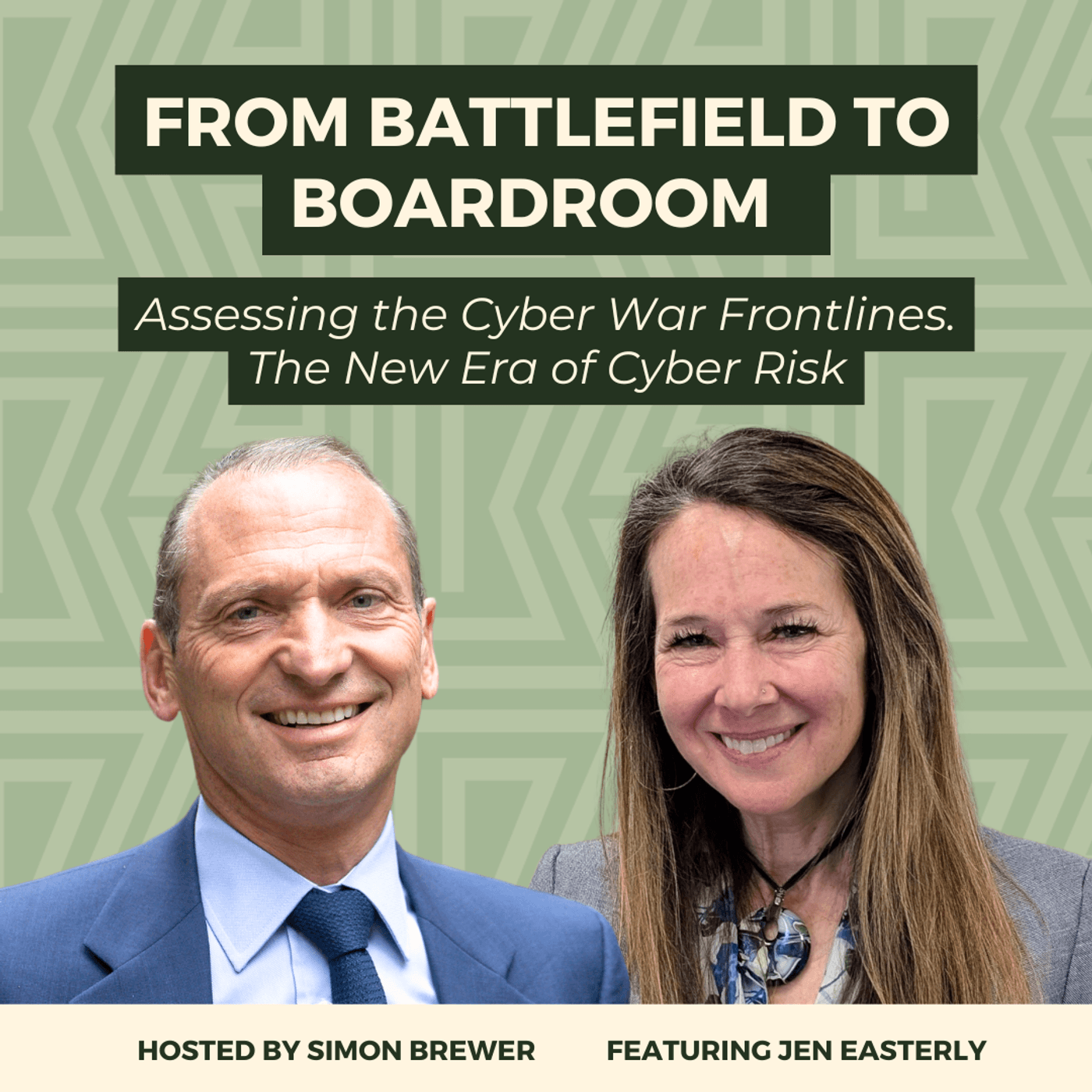
195: From Battlefield to Boardroom: Assessing the Cyber War Frontlines - Jen Easterly on the New Era of Cyber Risk
Episode Description
This episode features Jen Easterly, a distinguished guest with a diverse background, including being a Rhodes Scholar, US Army Colonel, cybersecurity expert, and CEO at RSAC. The discussion centers around her journey and insights into the current cyber threat landscape, adversaries in cyberspace, and the critical importance of collaboration between the public and private sectors in defending against cyber risks.
---
Key Themes and Discussions
- Background of Jen Easterly
- Diverse experiences: Rhodes Scholar, US Army Colonel, and cybersecurity expert.
- Involvement in national security, including leading the US’s Cyber Intelligence Defense Agency.
- Transition from military to private sector roles (e.g., Morgan Stanley) and government positions (CISA).
- Cyber Threat Landscape
- Discussed the increase in cyber threats and their significant impact on various industries.
- Identified adversaries: State-sponsored actors like China, Russia, and cybercriminal gangs.
- Highlighted the staggering costs of cybercrime, equating it to the GDP of the third largest economy globally.
- Importance of Collaboration
- Emphasized the need for collaboration between government and private sectors to mitigate cyber risks.
- Described the private sector as being on the front lines of cyber battles due to their control over critical infrastructure.
- Role of AI in Cybersecurity
- Asserted that AI will be transformative in detecting and preventing cyber attacks.
- Mentioned both the potential benefits of AI in enhancing cybersecurity and the risks associated with its misuse by cybercriminals.
- Cybersecurity as a Strategic Business Risk
- Stressed that boards and executives need to view cyber risk as a strategic issue rather than a mere IT concern.
- Encouraged companies to adopt a culture of corporate cyber responsibility.
- Software Quality Problem
- Criticized current practices in software development that prioritize speed and features over security, leading to vulnerabilities.
- Proposed that solving the software quality problem is crucial for enhancing cybersecurity.
- Geopolitical Cybersecurity
- Analyzed the implications of geopolitical tensions on cybersecurity, particularly regarding Chinese cyber activities.
- Called for proactive measures in the face of potential disruptions caused by state-sponsored cyber activities.
- Preparedness and Resilience
- Advocated for resilience in organizations rather than solely focusing on prevention of disruption.
- Recommended conducting tabletop exercises to prepare for potential cyber threats and incidents.
---
Key Takeaways
- Cybersecurity is a Business Imperative: Organizations must integrate cybersecurity into their governance frameworks, recognizing it as a critical component of overall business strategy.
- The Role of AI: AI technology is crucial in enhancing cybersecurity measures and can significantly improve the ability to detect vulnerabilities and threats.
- Urgency for Action: There is a pressing need for businesses to act on cyber risks, especially with the rising tide of cybercrime and geopolitical threats.
- Collaboration is Key: Strong partnerships between public and private sectors are essential to effectively combat cyber threats and ensure national resilience.
---
Conclusion This episode emphasizes the importance of addressing cybersecurity not just as a technical issue but as a strategic business concern that requires collaboration, innovation, and a proactive approach to managing risks in an increasingly complex digital landscape. Jen Easterly's insights reflect a deep understanding of the challenges we face in the realm of cybersecurity and the importance of adapting to an ever-evolving threat environment.
Written by AI. May contain mistakes. Listen to the episode to check what was said.
Chapters
Tap a time to open that second in VOThe Importance of the Private Sector in Cyber Warfare
0:46 to 4:19
Discussion on the critical role of the private sector in cybersecurity and infrastructure.
“It's water, it's power, it's healthcare, it's finance, it's transportation, it's communications, it's what drives our daily life.”
Jen Easterly's Background and Military Influence
4:20 to 8:02
Jen Easterly shares her unconventional upbringing and military inspirations.
“That's what everybody study back in those days.”
Transitioning to Cyber Operations
8:03 to 10:53
Jen discusses her career shift to leading the Army's first cyber operations battalion.
“most powerful intelligence agency of the world in the world and this was in the um mid-2000s So this was after the Iraq war started.”
Leading CISA: The Cybersecurity Challenge
10:54 to 13:14
Jen explains her role in leading CISA and the challenges faced in cybersecurity.
“impact on a very hard technical problem that related to saving lives.”
Building CISA: Challenges and Successes
14:50 to 17:29
Insights into the formation and growth of CISA amidst challenges.
“Just tell us a little bit about how you feel you acquitted yourself in what is, you know, it's a new business essentially, like many of us are facing today with this disintermediation.”
Corporate Cyber Responsibility and Software Quality
17:35 to 21:44
Understanding the shift towards corporate accountability in cybersecurity.
“And the issue is we have not enforced accountability on the makers of software.”
AI's Role in Cybersecurity Enhancement
21:44 to 22:59
Discussing how AI can address software quality issues in cybersecurity.
“So think about the green rain that you see in the Matrix movie.”
The Geopolitical Cyber Threat Landscape
23:00 to 27:25
Exploring the evolving threats of cyber warfare in a digital age.
“Sir Jeremy Fleming, former head of GCHQ intelligence chief, said never seen threats on the scale.”
The Importance of International Cybersecurity Cooperation
28:24 to 29:48
Discussion on the necessity of cooperation in cybersecurity among nations and the risks of politicizing it.
“That's what IFM Investors has built up over 30 years.”
Building Resilience Against Disruption
29:49 to 33:05
Emphasizing the need for companies to prepare for disruptions and build resilience rather than solely focusing on prevention.
“state-sponsored adversaries or gangs of cyber criminals that are, you know, locking hospitals up and forcing them to pay ransoms.”
Show all 25 chapters
Assessing Threats from China and Russia
33:06 to 36:47
An in-depth analysis of cyber threats posed by China and Russia, including strategies for counteraction.
“And we can sort of talk about how I think about China.”
Impact of Cyber Attacks on Critical Infrastructure
36:48 to 39:09
Exploration of the implications of cyber attacks on essential services and financial systems.
“Because again, the private sector owns and operates this critical infrastructure to help them identify, hunt for, and eradicate these hackers from the PLA.”
Learning from Cyber Incidents
39:10 to 42:02
Discussion on how organizations can learn from cyber incidents to improve defenses and preparedness.
“Maybe not, but it's something that will have a significant impact on the lives and livelihoods of the American people.”
Understanding Cyber Threats and Preparedness
42:06 to 43:34
Learn how to extrapolate current cyber threats for future preparedness.
“And that's where this whole idea of imagination comes in.”
Board Responsibilities and Cyber Risk
43:34 to 45:22
Explore how boards are addressing cyber risks as existential threats.
“in the coming months and years, and then doing everything we can working with our partners to prepare for it.”
Transforming Cyber Risks into Business Opportunities
45:22 to 47:25
Understand how to shift the perception of cybersecurity from cost to value.
“And that they should review sort of some of the other stuff that we, even our little organization has learned over the last few years.”
Espionage and Modern Cyber Operations
47:25 to 48:45
Discover the challenges and techniques in espionage with technology's rise.
“So you talked about spycraft and you've been involved in hostage negotiations, cyberterrorism.”
Ransomware Policy and Ethical Considerations
48:45 to 53:25
Delve into the complexities of ransom payments in cyber incidents.
“cyberspace, to critical infrastructure, global security, economic prosperity.”
Offensive Cyber Capabilities and Their Importance
53:25 to 56:00
Learn why offensive cyber operations are crucial in modern defense.
“You know, I talked about those hackers from the PLA, Simon.”
The Rise of Offensive Cyber Capabilities
56:00 to 56:41
Learn about the increasing capabilities in offensive cyber operations and their implications.
“Huge amount of increase in capability and capacity in offensive cyber.”
Investment Strategies in Technology
56:43 to 59:17
Explore the importance of investing in technologies like AI and ensuring safety measures.
“I noticed that you sat on the Morgan Stanley Foundation, which was a portfolio I used to run when I was at Morgan Stanley.”
The Need for Safety in Technology
59:17 to 1:00:20
Understand the critical need for safety measures in rapidly advancing technology.
“Well, I think we have a lot of due diligence in our business when people go and sit in front of managers and entities and cross-examine them.”
Advice for Future Generations
1:00:20 to 1:02:17
Gain insights on mentorship and empowering young women in their careers.
“So thank you for the help in my erudition or at least the impression that I know what I'm talking about.”
Personal Interests and Future Aspirations
1:02:17 to 1:03:30
Hear about personal preferences in music and travel aspirations.
“And they talked about the insertion of music into films and what a great business is.”
Reflecting on Cyber Crime and Its Impact
1:03:30 to 1:04:38
Discuss the economic implications of cyber crime and the need for board-level awareness.
“I mean, we we planned this a couple of months ago and I think I started doing my initial research and I became more and more engrossed in the things that you've done and achieved.”
Transcript
Automatic transcript. May contain errors.0:00Jen Easterly:I am a huge believer in the power of AI to make a very positive difference in the world. And I think we have to stipulate, look, AI will be the most powerful technology of our lifetime. It will change everything, how we live, how we work, certainly how we defend our digital world. AI is going to help create capabilities that can identify and detect a cyber attack before it gets near to making an impact. We talk about domains of warfare, the five domains, airspace, land, sea, and cyberspace. But in the world of cyber, there really is a sixth domain. And in many ways, it's the most important domain, and that's the private sector.
0:39Jen Easterly:The vast majority of critical infrastructure, and when I say critical infrastructure, it's not a technical term, Simon. It's water, it's power, it's healthcare, it's finance, it's transportation, it's communications, it's what drives our daily life. the vast majority is owned and operated by the private sector. So the private sector, more than any entity, is on the front lines of those battles. And frankly, it's why it is absolutely so critical that everything that we do in cyberspace is rooted in catalyzing the right collaboration between the government and the private sector to enable us to reduce risk to that critical infrastructure.
1:23We've had some extremely distinguished guests over the last six years, but we haven't secured one who combined being a Rhodes Scholar, a US Army Colonel, serving two terms at the White House, a counterterrorism expert leading the US's Cyber Intelligence Defense Agency, and one who lectures at Oxford and beyond, whilst also being hired into the private sector and working for Morgan Stanley. But today, armed with her intellect and unusually not with her trademark cowboy boots, we've secured our target and are thrilled to welcome Jen Easterly to our offices. Welcome, Jen.
1:57Jen Easterly:Thank you, Simon. Great to be with you. Well, I need to say, first of all, a big thank you to our mutual friend, Rob Rooney, who was at Morgan Stanley, ended up as CEO of Morgan Stanley International, who made the introduction. And I know you're on your way to Oxford where you lecture and we're going to come back to that later on. But let's just retreat for a moment. Was yours a disciplined, ordered and organized upbringing? No, it was not, which is surprising. My 21 years in the military, but I wouldn't say was particularly disciplined. I grew up in a family that was very focused on, I think, two things.
2:38Jen Easterly:one sort of intellectual pursuits, in particular literature and poetry. My mom was a PhD English literature professor at Bryn Mawr College. My dad was a writer, actually a speech writer, started out as a speech writer for Richard Nixon. Interesting upbringing. But I grew up in a family that memorized poetry and we always had huge debates about what was going on in the world. So that was sort of one piece of it. And the second piece was all about service. You know, my dad was in government. He was a Vietnam veteran. That was really what inspired my military service. And my mom served in government as well after she left teaching at Bryn Mawr.
3:22Jen Easterly:But I was not a particularly disciplined kid. I mean, I did well in school, but I was somebody who would kind of do my own thing. and I think I found school to be a bit easy. So I didn't have to work that terribly hard. So I did other things. I was really into music. I wanted to work because I wanted to make my own money. So, you know, I was a bank teller. Maybe that was sort of foretelling my experience at Morgan Stanley, but went off to Italy where I was an exchange student and then went back my senior year just to kind of hang out. So, you know, I grew up in a family that really encouraged intellectual pursuits, hard work, but, you know, discipline was not the main word that would have come to my mind, actually, probably, sadly.
4:15Okay, well, maybe not. So I was trying to weigh up. You go to Oxford, Pembroke, did you study PPE there?
4:23Jen Easterly:I did, yeah. That's what everybody study back in those days. And you're at West Point, you know, which is, it's more than the UK's equivalent of Santos because it's, I think, a three-year course. It's a four-year course. But, you know, smart, you're thinking about the options. You may have had that history in the family of the army, but what ultimately made you think, yeah, I want to be in the US army? Yeah. I mean, it really was my dad. So his experience, he grew up as interesting. He didn't have a father growing up. He was, you know, illegitimate back in those days. You know, his mom, I think, had him at 18.
4:57Jen Easterly:And then she ended up marrying the town barber, who eventually adopted my dad, but really beat him really, really badly. It was a terrible upbringing. And he ended up dropping out of high school and going off to join the army, and ended up in the early days of the Vietnam conflict. So it was there from 62 to 63 with the Army Security Agency. So early on in those days doing what we would consider now signals intelligence out of Thong Sanhut Air Force Base in Vietnam. And look, he was an intellectually curious, pretty disaffected kid. And it opened the world to him in a way that I think set the course for the rest of his life.
5:44Jen Easterly:You know, he got to learn another culture. He met incredible people. He fell in love. You know, all of these things. That was not my mom, by the way, but all of these things that influenced him. And he used to tell me all these stories when I was a little kid. And they really impacted my desire to serve, to be in the army. And, you know, I don't know when that actually sort of occurred to me that I should go to West Point, but I know I always wanted to be in the Army. I think in my mid-teens, I decided, hey, it'd be great to be an officer, to go to West Point, the premier U.S. military academy.
6:25Jen Easterly:And so I applied early. I got in early. I made the big mistake of never visiting the school before I actually got there. So when I arrived on a very hot morning in July of 1986, I was pretty poorly prepared for the physical rigors, for the mental stresses, for the emotional pressures. And, you know, 1986, women had only been there for 10 years. So there were still a lot of people, a lot of cadets, a lot of professors, a lot of officers, staff who didn't want women there. So it was really a pretty difficult and trying environment. And I remember in the early days wanting to quit many times, but not wanting to go back home and having quit and sort of, you know, I'd never failed anything before.
7:13Jen Easterly:And I didn't want to start with failing at college. But it was a tough environment, you know, throughout that time. And frankly, throughout my life, my dad has kind of been my inspiration. And he's been the person that I've always gone back to to get advice. And, you know, frankly, it's made a huge difference in my life to have somebody that I can always rely upon as a source of advice and inspiration. Fantastic. Fast forward, as you see various theaters of conflict, as you've understood, you end up being asked to run the first US cyber battalion and that's going to start leading us down this path where you've been tell you know how did that come about yeah i mean it's an interesting story so it's a bit of a long story i'll try and make it short but um i ended up in at the national security agency sort of the largest most powerful intelligence agency of the world in the world and this was in the um mid-2000s So this was after the Iraq war started.
8:21Jen Easterly:And in 2006, I was what's called the chief of the cryptologic services group. So in charge of all of our forces on the ground in Iraq that were deployed from NSA, the National Security Agency. And during that time, you'll remember, and I think you've talked to General Petraeus several times. So he had just been put in as the commander of multinational forces, Iraq. And the insurgency was at the apex of its strength, violence at an all-time high. And terrorists were using these crude materials to create homemade bombs. We called them improvised explosive devices or IEDs. And they were having catastrophic impacts, killing thousands of troops, thousands of Iraqi civilians.
9:04Jen Easterly:And so my team and I were tasked with this essentially operationalizing and deploying a new high technology platform. It was called Real Time Regional Gateway. Highly classified, top secret at the time, you know, all since declassified. But the idea was to take all the massive amounts of data we were collecting in theater about these bomb making networks, whether it was from satellites or cell phones or reporting from troops. and then figure out how to integrate it and correlate it and enrich it so we could illuminate those bomb-making networks not in days and weeks when it was useless information, but in hours and minutes and provide that information to the troops on the ground to pursue and disrupt those terrorist networks.
9:47Jen Easterly:And it was probably one of the hardest things that I've ever done. We had this team of coders sitting in a van in the middle of a base in Baghdad. And you can imagine, Simon, it was mortar fire and rocket fire and machine gun fire in the near distance. And, you know, it was incredible at that point in time, because the stakes were so high. And we're team was coding up the system. And it was literally failure after failure after failure after failure. But after about six weeks, we're able to get the system up and running. And it ultimately provided a capability to the forces on the ground, including the special forces commanded by I'm Stan McChrystal at the time, to take thousands and thousands of insurgents off the battlefield and save thousands and thousands of lives.
10:32Jen Easterly:And because of the success of that, that's when I came back from Iraq and was asked by the director of the National Security Agency, a guy called Keith Alexander, who is interestingly the West Point classmate of Dave Petraeus. So these are all go back to my time at West Point and what a fundamental impact that has had on my career. he saw what I was able to do to bring together technology, communications, to really have an impact on a very hard technical problem that related to saving lives. And so that's where he asked me to kind of build and stand up and command the Army's first cyber operations battalion, which was about both how do you defend networks, but also how do you project power in cyberspace and develop a platform to be able to do that effectively.
11:23Right. So, again, we are fast forwarding because we're going to get to the sort of the whole cyber environment in which we operate right now. But the appointment was perhaps then the most seen appointment was when President Biden appoints you to create, run NISA. So just what was the objective?
11:41Jen Easterly:Yeah. So, wow, jumping around. Okay, so we went from Iraq, then we went to, it was actually, you know, as you mentioned, at Morgan Stanley, there as the head of our cyber fusion center, and then head of cyber resilience, having a fantastic time working with our mutual friend, Rob Bruni. and during that time I was asked by a friend of mine to come back and lead cyber policy for the transition team because I'm not a political person. I'm a lifelong independent who worked for President Bush and President Obama but was asked to do specifically on the cyber policy side given my experience. So I was there actually interestingly the transition happened during one of the biggest cyber attacks on US government networks, now known as the SolarWinds attack.
12:33Jen Easterly:It was actually Russia using a supply chain attack, using updating your software to actually put a corrupted update into US government networks. So pretty serious attack. And because of that, I ultimately was asked to be in charge of CISA, which is the Cyber Security and Infrastructure Security Agency, one of the newest agencies in the federal government. And that was really America's cyber defense agency. And so ultimately came back from Morgan Stanley to lead and build a capability to help defend the US and cyberspace and really to work with our partners around the world to help defend collective cyberspace.
13:15Jen Easterly:And then the other piece of that was really focused on the defense and resilience of critical infrastructure. And, you know, frankly, I'd been in government for almost 30 years, but the most important preparation for that particular job was my almost five years at Morgan Stanley, really understanding how a critical infrastructure entity in finance helps to defend itself in a world that is so complex and so vulnerable and so connected. And so that was great preparation for the job at CISA. The Money Makes podcast is proudly sponsored by the London Stock Exchange Group, a global leader in financial markets infrastructure.
13:54LSEG has a rich history of facilitating capital flows, empowering businesses, and connecting investors to opportunities. Today, they provide world-class technology, data, and analytics, playing a critical role in shaping modern finance. From their role in sustainable investing to their contributions to financial innovation, LSEG is helping to build more connected and efficient markets. Visit lseg.com via the link in the show notes to see how they're driving the future of finance. In times of economic and geopolitical volatility, investors will look to gold. Today, as the world navigates uncertainty and heightened risk, investors of all sorts will look to safeguard their wealth.
14:35We're thrilled to welcome the World Gold Council as one of our sponsors. Tap the link in the show notes to learn more or visit goldhub.org on your browser for comprehensive research, insights and analysis on the global gold market. Just tell us a little bit about how you feel you acquitted yourself in what is, you know, it's a new business essentially, like many of us are facing today with this disintermediation.
15:02Jen Easterly:Yeah. So, you know, it was super interesting, right? Because I've stood up organizations throughout my career. This was probably one of the biggest ones. So CISA, which was built in 2018, was very new, but it was sort of built off the back of existing infrastructure, so staff infrastructure. So when I took it over, it was about 2 ,000 people and then a contractor force of about 5 ,000 or 6 ,000. When I left, it was sort of total of about 10 ,000. We ended up hiring almost 2 ,500 people, which was a major challenge because, you know, at the end of the day, people don't come to government to make money.
15:45Jen Easterly:But it was a challenge that I think was underpinned by the imperative of the mission and also the culture we were able to build there where, you know, people really wanted to be collaborative, be innovating and be focused on service to the American people in a very complex threat environment. But, you know, at the end of the day, the things that drove me in that job and what we build, I would, comes down to a couple of things. First, the imperative to be able to collaborate between the public sector and the private sector. And that is all underpinned by trust. And so being able to create trusted relationships across the federal government, across the business sector, across the technology community, across the international community.
16:31Jen Easterly:And we were pretty successful in doing that. One thing that we did that I think was really important was in the aftermath of Russia's invasion of Ukraine, we launched a campaign called Shields Up to really help businesses large and small defend themselves from potential Russian retaliatory cyber attacks in the aftermath of that invasion. That was, again, a real credit to the strong international partnerships that we had catalyzed and that continue to be incredibly important in today's highly dynamic threat environment. We also work very closely with CEOs and boards to advance this concept of corporate cyber responsibility.
17:11Jen Easterly:And that's managing cyber risk as a strategic business risk, not as something you delegate to the IT teams. Right. Not something that's just a compliance issue, but something that actually has to be owned by the CEO and the board and managed as a matter of good governance. So we really advanced that whole idea working with board directors, and that was really important. And the third thing that we did that was also really important was advance this idea that we don't actually have a cybersecurity problem in the world. We have a software quality problem. And the issue is we have not enforced accountability on the makers of software.
17:54Jen Easterly:Rather, we've just blamed companies who've been hacked or individuals who fall victim to phishing. We have not taken enough time to actually enforce accountability on the quality of software. So we launched something called a secure by design campaign, which really working with vendors got them to recognize that they needed to design and develop and test and deliver software that was much more secure and much more resilient. So I'm going to go slightly off terrain because in the last few months, the listed software sector in the US particularly, but globally, has been hammered as people have started to think about why AI will substitute much of that.
18:38Now, to the extent that some of these things are knowable, how might the rapid advancement in AI actually help address some of those limitations in software design?
18:51Jen Easterly:Yeah, I mean, I should say, look, I talked about my experience in Iraq and, you know, being in an environment where you can use technology to truly save lives, frankly. You know, that was the beginning of my love affair with technology and my obsession with the power of data and, frankly, the power of imagination to be able to make a positive impact in the world. And that's why I am so excited about AI. You're going to hear a lot of people talk about how AI is going to, you know, lead to the end of the world. But I am a huge believer in the power of AI to make a very positive difference in the world.
19:30Jen Easterly:And I think we have to stipulate, look, AI will be the most powerful technology of our lifetime. It will change everything, how we live, how we work, certainly how we defend our digital world. And in many ways, it's not just a technology. It is a fundamental shift in how we approach really every single problem, whether it's in finance or whether it's in cybersecurity. In cybersecurity, AI is going to help create capabilities that can identify and detect a cyber attack before it gets near to making an impact, can deploy countermeasures in trilloseconds and learn from every attempt to breach them.
20:10Jen Easterly:But, you know, as you know, technology is not good or bad, right? It's neutral. And, you know, I love this great quote from the French philosopher Paul Virilio, you probably know, and he said, you know, when you invent the ship, you also invent the shipwreck. When you invent the plane, you also invent the plane crash. When you invent electricity, you also invent electrocution. So every technology brings with it negativity that is invented at the exact same time as technical progress. And so even as we look to be able to leverage AI for good, we also have to be very mindful of the risks that can be implicated by AI.
20:51Jen Easterly:And we're already starting to see threat actors use AI to create hyper-personalized, hyper-tailored phishing emails that will be incredibly hard to detect. But I think the thing is, if we are able to create these capabilities to be secure, and that is the big if, Simon, That's the thing that I think everybody is truly grappling with who cares about safety and security is how do we make sure these very powerful capabilities do not destroy massive parts of our economy, have terrible effects on society, but actually serve humanity. I think if we are able, though, to ensure the security of these capabilities, and we can certainly talk more about how we do that, AI can actually solve that software quality problem I talked about.
21:43Jen Easterly:And that's because increasingly powerful AI can actually see the flaws and the defects that exist in software, can see them, can understand them, and then can refactor them. So think about the green rain that you see in the Matrix movie. You can imagine that green rain turning from insecure, flawed products into secure, resilient code in an instantaneous way using these capabilities, again, to address insecure code. I was reading, interestingly, in our old place at Morgan Stanley, one of the things the technology team is doing is using their own bespoke capabilities based on chat GBT to actually rewrite some of the very old code that they've had for years.
22:29Jen Easterly:as you probably know, COBOL is used on mainframes, being able to rewrite that in a way where they can actually make that code much more secure, doing millions and millions of lines of code using AI, saving hundreds of thousands of hours of manpower. So there's some really, really cool things that can be done across critical infrastructure, including the financial services sector using AI. But again, all of this is predicated on making sure that it is built to be secure. Got it. So let's go to the battlefield. Two quotations for you to respond to. Sir Jeremy Fleming, former head of GCHQ intelligence chief, said never seen threats on the scale.
23:12And the new MI6 head with his lovely James Bondy name, Blaise Metrueli, has said that the front line is no longer somewhere else. It's everywhere. How do we think about these, the geopolitical actors and the attendant threats?
23:28Jen Easterly:Yeah. Well, I think first it's important to contextualize where we are in the threat environment, right? When I think back about that time in Iraq in 2007, and we thought we were dealing with these massive, massive amounts of data. Now looking back on it, it's actually a bit ironic and frankly, a little bit quaint because I was in Iraq in 2007, head down, focused on the adversary in these bomb making networks. Back here in Silicon Valley, in the Moscone Center, Steve Jobs was introducing the world to the first iPhone, January of 2007. So just think about that interesting juxtaposition, you know, introducing the world to something that has literally changed the way we work and live.
24:11Jen Easterly:But 2007, also the year that a small micro blogging platform called Twitter began to spin off and scale globally following in the footsteps of Facebook, which had just become available to everybody over the age of 13 with a valid email address. It was also the year that Google released Android and Amazon released Kindle. So that was just 20 years ago, right? So now you think about where we are now, almost, you know, 2026, a world of 8.3 billion people, 6.1 billion now have cell phones, 6 billion on the internet, 5.7 billion people active on social media, right? In this world, in just one minute, you have 22 ,000 videos uploaded to TikTok, 450 ,000 posts on X, over 280 million emails every single minute.
24:59Jen Easterly:And the world, as we all know, has become incredibly digitized. And obviously, that's done a lot of good things, the connectivity, the increase in economic productivity. But as we've added more devices to the internet, we've increased the points of failure and the points of vulnerability. And we've expanded the attack surface for all of that infrastructure. So now you're seeing threat actors, whether it's China, which is really the pacing threat, Russia, Iran, North Korea, and then gangs of cyber criminals, many of whom are given safe haven or sponsored by those state actors, take advantage of all that data and weaponize it.
25:41Jen Easterly:So now there's a cyber attack every 30 seconds. The average data breach costs over$5 million, and global cybercrime damages are expected to cost the world over$10 trillion just this year. So if cybercrime was a country, its gross domestic product would be the third in the world after the US and China. And so that just, when you think about that environment, that is what we're operating in, highly connected, highly vulnerable with threat actors looking to take advantage of this data and weaponize it. And that's why I agree with both what Jeremy and Blaze said about the threat environment. The other thing I'd say with respect to the front line, at the end of the day, the front line is a concept for people in the military, right?
26:31Jen Easterly:We talk about domains of warfare, the five domains, airspace, land, sea, and cyberspace. But in the world of cyber, there really is a sixth domain. And in many ways, it's the most important domain, and that's the private sector. You know, at the end of the day, the vast majority of critical infrastructure, and when I say critical infrastructure, it's not a technical term, Simon. It's water, it's power, it's healthcare, it's finance, it's transportation, it's communications, it's what drives our daily life. the vast majority is owned and operated by the private sector. So the private sector, more than any entity, is on the front lines of those battles.
Read the full transcript
27:11Jen Easterly:And frankly, it's why it is absolutely so critical that everything that we do in cyberspace is rooted in catalyzing the right collaboration between the government and the private sector to enable us to reduce risk to that critical infrastructure. Schroeder's Capital is the private markets division of Schroeder's, combining the experience of specialized local teams with the scale, rigor, and resources of a global institutional platform. Schroeder's Capital provides its clients with global access to differentiated and specialized strategies encompassing all private markets asset classes, from private equity to real estate, infrastructure, and the broad universe of private debt and credit alternatives.
27:57This approach enables Schroder's Capital to access opportunities and investments that are often difficult to find elsewhere, while also having the broad capabilities and perspectives needed to build holistic solutions and deliver tailored outcomes across private markets for both institutional and wealth clients. Discover more at schroderscapital.com. Remember, capital is at risk with investing. ifm investors is a global asset manager founded and owned by pension funds with capabilities in infrastructure equity and debt private equity private credit and listed equities they believe healthy returns depend on healthy economic environmental and social systems and these are evolving on a scale never experienced before to find opportunity build value and meet the needs of future generations, you need scale, skill and expertise.
28:52That's what IFM Investors has built up over 30 years. So all of this, and perhaps some of us are guilty of coming from the post-World War II sort of order, which is being revised under, you know, this administration, it was William Burns, ex-head of the CIA, who said in an interview the other day that the US's network of partners and allies is its advantage over China and Russia. But of course, there is the sense of the burning of bridges. This cooperation and intelligence sharing, how vital is it when we think about the adversarial communities battling in cyber?
29:32Jen Easterly:You know, it's absolutely critical. Look, at the end of the day, cyber must always, cybersecurity must always stay non-political and nonpartisan, defending global cyberspace from the range of threats, you know, whether it is state-sponsored adversaries or gangs of cyber criminals that are, you know, locking hospitals up and forcing them to pay ransoms. That is not a matter of politics. And so when I was in cybersecurity, certainly in the last administration, we worked very, very hard with our international partners to ensure that we were sharing the visibility that we saw all over the world. Ukraine was a great example of this.
30:19Jen Easterly:You know, we developed a terrific partnership with Ukraine's SSSCIP, our equivalent over in Kyiv, working with all of the partners in NATO to make sure that we had a common picture of the threat environment so that we could operate against it and reduce risk to threats to our critical infrastructure. So, you know, ultimately, I think it is to the detriment of any nation to politicize cybersecurity, because we absolutely are going to rely on those close partnerships we have, whether it's with our international partners or frankly, whether it's technology companies or business partners. We have to look at this as a fight for protection of our way of life against very vicious and aggressive adversary nations.
31:09So let's just talk about those competencies that are required, because whilst at one level we, you know, we can take some assurance that, you know, here in the West we have this accumulated knowledge and these deep pockets. But I think the data is basically that China produces 1.4 million engineering graduates a year, which is seven times that of the US. Now, that may not speak to the quality, but it certainly suggests that if the talent pool, which is going to help advance the skills that are required for this new world order, is the West at a disadvantage?
31:45Jen Easterly:Yeah. I'd say two things to that, Simon. First, we need to recognize, and this is really important for CEOs in any business, in this highly connected, highly vulnerable world that we live in, whether you're in the West or whether you're anywhere in the world, it is increasingly impossible to prevent disruption. You know, whether that's a cyber attack or a technology outage or disruption because of a weather event, geopolitical unrest, infectious disease. You know, this was one of the reasons why our friend Rob asked me to actually turn our cyber fusion center into our fusion resilience center with a recognition that frankly, there's so much out there that can disrupt your business.
32:28Jen Easterly:You actually need to assume disruption and build for resilience. And so, you know, yes, we are dealing with very vicious adversaries and some of which invest more people and more capabilities and more resources into them. But we need to make sure that no matter what, we are prepared for disruption. And that's one of the sort of key pieces of advice that I give when I speak to CEOs and boards. It sounds very obvious, but at the end of the day, you know, it is the responsibility of all leaders to be able to leverage the power of imagination without suffering a failure of imagination. That is, you know, one of the canonical lessons from 9-11.
33:10Jen Easterly:And planning, embracing, preparing for that worst case scenario, full range of threats, doing the exercises against it, being able to recover against it is incredibly important when you're dealing with threats like China in particular. And we can sort of talk about how I think about China. But the other thing I'd say is, look, at the end of the day, an autocratic nation like China will never be able to do what we can do in a place like the US. I mean, my most recent job is at the CEO of RSAC, which is essentially the largest, the global cybersecurity community platform. It's rooted in Silicon Valley.
33:52Jen Easterly:And one of the things that we do is we create this innovation startup ecosystem. We've had thousands of startup companies come through 100 acquisitions, 17.8 billions of dollars of investment. And that spirit of innovation, that spirit of experimentation, that spirit of entrepreneurialism, that fast failure in underwriting that failure at the end of the day, I think is what will make the US continue to be incredibly successful and the engine of innovation in the world. and we're seeing it with the AI labs, frankly, and how they're really leading the world. So, you know, yes, China is a very formidable adversary, which is why we need to focus on resilience, not trying to prevent disruption.
34:41Jen Easterly:But I think, you know, we will be driven by a spirit of individual entrepreneurialism and innovation that I think will, you know, continue to drive our economy. And just staying with China, Is it possible to assess the level of competencies and expertise when one is comparing as one might corporations operating in two different theaters? I mean, there's a saying, you know, we think about from a threats perspective, let's leave the criminals aside, although they're a significant portion of things that we need to be concerned about given cybercrime. But you think about the big four, really, it's Russia, China that are the two most sophisticated nation state adversaries.
35:25Jen Easterly:There's a saying that, you know, Russia is the hurricane and China is climate change. So China is really the pacing adversary. I think the thing that's pretty interesting to me, and this was probably the most concerning experience I had when I was the director of CISA, was when we discovered that hackers from the Chinese People's Liberation Army had burrowed deep inside our most sensitive critical infrastructures. So I'm talking about water systems, power grid, transportation, communication. And this is the thing, Simon. it wasn't to steal our data. It wasn't to spy on us. This was not about intellectual property or economic espionage.
36:08Jen Easterly:This was very specifically to be able to launch disruptive attacks in the event of a crisis in the Taiwan Straits. So this is a world where a war in Asia would be accompanied by mass disruption, everything, everywhere, all at once. So water unavailable, power down, rail lines derailed, communication severed, all to incite societal chaos and panic, and to deter our ability to marshal military might and citizen will. So this was the massive challenge that I worked on for the past two years of my time when I was at CISA, to be able to work with the private sector. Because again, the private sector owns and operates this critical infrastructure to help them identify, hunt for, and eradicate these hackers from the PLA.
37:01Jen Easterly:And frankly, we had some good success. But as I testified to Congress, and I've said publicly many times, what we found we thought was just the tip of the iceberg. And that's why at the end of the day, you have to look at what you are doing to deal with disruption. You have to architect your systems, train your people, and recognize that it's all about resilience. So there is, of course, a question here about complacency. The question that came up, are we prepared for a Lehman-style moment, not through credit contagion, but digital infrastructure failure? Well, that's the thing, right? I mean, at the end of the day, you know, I just mentioned water, power, transportation, communication.
37:45Jen Easterly:the finance sector is reliant on all of those other things to power it right you need power you know as as good as the finance sector is and i think finance was the first sector critical infrastructure sector to really take cyber security seriously and this was off the back of if you'll remember in the 2012 time frame there were these what we call distributed denial of service attacks where essentially web pages became unavailable because of their being flooded with data. This was all the Iranian government back then who did that. But it really caused a bit of a wake up call that, wow, we are actually vulnerable to these cyber attacks.
38:26Jen Easterly:So finance started basically investing a lot of resources into shoring up their security and resilience. And that's really why I ended up at Morgan Stanley in 2017. But, you know, finance is dependent upon power. It's dependent upon communications. It's dependent upon, you know, water, ultimately, if you're, you know, in terms of your employee base. And so I think you can think about the type of disruption that I just mentioned, you know, explicitly perpetrated by a nation state adversary, having a real impact across our country and across our world, frankly, because these attacks are not isolated to the US.
39:09Jen Easterly:And so is that something that will ultimately take down specifically the financial services sector? Maybe not, but it's something that will have a significant impact on the lives and livelihoods of the American people. Take, for example, in 2021, there was a ransomware attack against Colonial Pipeline, one of the biggest pipelines in the US. And it shut down for about four days on the East Coast. And it was a massive, huge impact on people, couldn't get to work, couldn't take their kids to school because they didn't have gas, couldn't get to the hospital. And that was a microcosm of the type of thing that we know that China was specifically planning as part of this whole campaign against our critical infrastructure.
39:57Jen Easterly:So that is something that I think we need to take very seriously. But the other thing is really the impact on the information environment and the lack of confidence. Because at the end of the day, as you know, the financial services sector and the economy all runs on confidence. You know, confidence in our data, its integrity, its accuracy, its completeness. completeness. And if you can use the information environment, which can be increasingly clouded, giving some of the things with AI, you know, the line between what is real and what is fake is increasingly blurred. I think attacks against the information environment that lead to a lack of confidence, that can also have a significant impact on how the financial services sector operates.
40:49Jen Easterly:So we need to be very mindful of that as well. And let's take an example. I think it It was back in November. Sla von der Leyen was flying on a European journey. She was crossing near Bulgarian border. Systems are jammed. The pilots have to go to resort to maps and old-style navigation. When something which was, you know, suggested, I don't suppose there's any big surprises operated by, you know, by Russian work, what are the, it's not so much the lessons as what are the practical actions that then follow to recognize the vulnerabilities? because, of course, we've got the CEO of Delta Airlines coming on, Ed Bastian, in a couple of months' time.
41:28We'll be talking about airline vulnerabilities. I mean, what I'm interested in is how those acts are taken and how learnings can be translated into better defence.
41:41Jen Easterly:I mean, that's exactly the right question, right? Because at the end of the day, that's what we were trying to do when I was at SZA. And that's why those partnerships are so incredibly important Because when something like that happens, first of all, you want to understand as much as you can about that incident from a technical perspective, an operational perspective, a legal perspective, ultimately a policy perspective, and then share that information widely, understand the threat, and then understand very specifically what you need to be doing to mitigate that specific threat, but also threats like that, adjacent threats.
42:18Jen Easterly:And that's where this whole idea of imagination comes in. You know, we have seen so many attacks over the, really the last four decades since we saw the first cyber attack, the famously the Morris worm in 1988. And we need to make sure that we are thinking very broadly about what are the types of attacks that we will see in the future, particularly knowing that capabilities like AI can turbo charge some of these attacks. I mentioned earlier, these phishing emails, right? Somebody sends an email that gets you to try and click on it, then you lose all the money in your bank account. You'll remember even a couple years ago, it was very easy to spot those phishing emails, right?
43:02Jen Easterly:And now because of the massive amount of data that's out there, much of the data we've put on social media, threat actors are using that to train systems to create hyper-personalized, hyper-tailored phishing emails that would be very hard to detect and people will click on it. Again, there'll be a lot of financial issues around people losing money or being fooled into giving away money or making certain transfers. So it's really taking what we know from current threats, extrapolating in what we will see in the coming months and years, and then doing everything we can working with our partners to prepare for it.
43:40Jen Easterly:So every threat that is out there, we should think about how that could be 10x'd, and then how we will prepare for it and exercise against that. Some of those tabletop exercises that, you know, are the things that always get pushed and pushed and pushed because there's something else happening in the business. Those are actually really, really important to be able to get everybody in the business together to prepare for something and understand how you're going to ultimately respond and recover to very significant threats to your business. And would it be fair to say that boards are generally complacent?
44:15Jen Easterly:What I've seen over the past several years is boards are increasingly waking up to the fact that cyber risk can be an existential risk, whether it's reputational or whether it just costs you an enormous amount of money that can ultimately, you know, really significant and impact your business model. So increasingly, I think boards get that cyber risk is a business risk that needs to be managed as a matter of good governance. You see, I see a move in many public companies from cyber risk being managed as part of the audit committee to being managed as part of the technology risk or cybersecurity and risk committee.
44:55Jen Easterly:I think that's a very, very good trend. Because again, you know, everything is so connected these days. Everything is so digitized. Everything is so vulnerable. Supply chains are increasingly difficult to be able to secure, just given where we are in the world and the threat environment. And, you know, frankly, if boards are complacent about cyber risk, they are complacent at their peril. And they should be held accountable if there is an incident that actually impacts their business. Well, I mean, I was having a conversation not very long ago with a large financial institution, and I was just talking about, I thought that the way they presented themselves in sort of old-fashioned PowerPoint was, you know, was missing more than one trick.
45:40And that they should review sort of some of the other stuff that we, even our little organization has learned over the last few years. And the answer was yes, but you have to understand is that technology is viewed here as a cost center. And I think that therein lies in many institutions a historic way of operating, which is a problem.
45:58Jen Easterly:Well, so this is the thing. I mean, going back to Morgan Stanley, this was a huge lesson learned to me and one that I've sort of carried through. I was brought there to build something called our Cyber Fusion Center. And this was an ability to essentially understand, detect, and respond to cyber threats. And I think the reason they hired me is when I was at the White House, I just stood up something called the Hostage Recovery Fusion Center. And so fusion centers are very common in the world of counterterrorism because it's all about connecting the dots that were not connected during 9-11. So when I get to Morgan Stanley to stand up this thing, the business was like, how much is this going to cost me?
46:39Jen Easterly:Right? That was the attitude. But what we were able to do was to build something that you could then bring clients into and help clients very importantly understand, here's the threat environment and why you need to be concerned about it. Here are the analytics that we are building to detect those threats against the bank and against your assets. And here's how we're responding to mitigate risk. And so by bringing clients in, both current clients, but very importantly, prospective clients, we were able to actually turn what was a cost center into, frankly, a revenue driver. And that was incredibly important for the business and for the cybersecurity team.
47:25So you talked about spycraft and you've been involved in hostage negotiations, cyberterrorism. You're sitting across all those branches and spycraft as old as man. And so I'm quite intrigued about how the world of espionage is both responding to and taking advantage of the new tools at their disposal. Yeah.
47:47Jen Easterly:Well, it's interesting when you think about the world of espionage. And I was not on the human side, you know, the CIA side, I guess, MI6 side. I was on the NSA side, which is all about collecting foreign intelligence to help inform how policymakers make decisions or how militaries can actually project power and be successful in operations. You know, it's interesting when you think about spy craft and human operations in particular, I think, and, you know, you should talk to the MI6 folks about this or, you know, our friend Dave Petraeus, but increasingly difficult to do human operations in a world where it's very hard to be anonymous, right?
48:33Jen Easterly:You're, you know, in a world where you have biometrics, where you have a lot of surveillance, it is increasingly difficult to be a, you know, a spy, if you were. And that's why at the end of the day, the most important thing is to be able to work with our partners to leverage the power of technology to understand where the threats are and what we can do to drive down risk to global cyberspace, to critical infrastructure, global security, economic prosperity. and so the collection of intelligence is much more technological digital electronic these days than it is about human intelligence so i had two questions which which seem appropriate to ask now one was from general senate carter who was the chief of defense staff he said that uh how should government guidance change uh in terms of negotiating with ransomware criminals as there was for terrorists.
49:34Jen Easterly:Yeah. Well, that's a, it's a, it's another long story. I'll try to make it a short one, but you know, when I was a head of counterterrorism in the white house, this was in the second term of the Obama administration. So I was there from 2013 to 2016. And as you'll recall, that was the period of ISIS, right? ISIS took down Mosul and then we saw terrorist attacks around the world now in 2014 uh in august isis beheaded several american and british journalists and aid workers you'll remember uh jim foley stephen sotloff um david haynes alan henning peter kassig and then kayla mueller and that was you know probably one of the worst moments of my life, because I was actually part of a hostage rescue operation, the planning for it.
50:31Jen Easterly:That was incredibly daring and complex hostage rescue operation in the dead of night in Syria, that sadly failed to actually get the hostages that were being held. But off the back of the beheadings, the just horrific beheadings, President Obama asked my team and I to develop a new hostage policy, one that would allow us to be much more effective in bringing hostages home safely. And as part of that, the Department of Justice actually looked at the policy that was related to ransoms. And at the end of the day, ransoms were considered illegal. And the Justice Department didn't say that they're not illegal, but they basically said that they were not going to prosecute any family that paid a ransom to get their children back from terrorists, which as it was seen at the time was a much more humane policy.
51:35Jen Easterly:So it's interesting because that's the lens through which I see ransoms and ransoms, you know, as in human hostages. On the ransom side of the house in terms of ransomware specifically. I know there's some discussions in this country about outlawing payment for ransomware. I think the thing that we'd have to think about are things like hospitals that are a great target for ransomware criminals. If you prevent hospitals or other certain types of life-saving critical infrastructure from being able to pay a ransom that will have very significant impacts, frankly, on that entity that could lead to lives being lost.
52:22Jen Easterly:So I think it's not a cut and dry thing about whether you pay a ransom or don't pay a ransom. I think you have to really think about what the downside impacts will be. You know, obviously, anything that fuels the ransomware ecosystem, which as I said, is sort of a$10 trillion business model. Anything that fuels that is not a good thing because it allows them to just continue their work. But I don't think that means that we should just say you can no longer pay a ransom. So it's been one of the trickier issues, which is why I don't think, which is why I think the other levers of power are actually going to be more effective against ransomware criminals, whether it's, you know, indictments or using legal process.
53:09Jen Easterly:And there's been many successful international legal operations that have been able to go after some of these criminals. But look, at the end of the day, I think the only way to turn ransomware from a multi-trillion dollar business into a shocking anomaly is to ensure that the software that we rely upon every hour of every day is designed to be much more secure. You know, I talked about those hackers from the PLA, Simon. They were not using exotic cyber weapons as well-resourced, as sophisticated as Chinese hackers are. They were just taking advantage of common flaws and defects in the software that we rely upon every day.
53:52Jen Easterly:And so the problem in many ways is of our own making. We are relying upon flaws and defects that has been allowed to exist in our software for decades because of, you know, from an economic issue, it's a credence good, right? It's consumers don't really understand what they're looking for from software security, so they don't know what to ask for. So businesses are not incentivized or rewarded to provide it. They are incentivized to reward and they are incentivized to provide speed to market features, driving down cost and convenience. And that, frankly, is the original sin. It's what created the cybersecurity aftermarket.
54:33Jen Easterly:And you can't blame vendors because, again, it's economically rational for them not to be prioritizing security in a world that doesn't demand it. The other question that actually came from Rob Rooney was, how should democracies respond when adversaries use cyber operations to stay below the threshold of armed conflict? Well, so that's the question, right? I talked about hackers from the Chinese PLA pre-positioning cyber weapons in our critical infrastructure. Now, you could say because those cyber weapons have not been activated, that's ostensibly below the threshold because it's just holding our critical infrastructure at risk as opposed to necessarily launching attacks.
55:15Jen Easterly:But think about that as sort of bombs sitting inside our water systems, our power systems. Now, in my view, as somebody who commanded the Army's first cyber operations battalion and helped to stand up U.S. Cyber Command, which is specifically focused on allowing us and enabling us to project power in cyberspace, I actually think it's incredibly important that we are using our capabilities in an offensive way to hold our adversaries at risk. So, you know, one of the things I'd give credit to the current administration is I think they have been more forward leaning in terms of using very good cyber capabilities.
55:54Jen Easterly:Think about Cyber Command. We created it in 2009. It's now 2026. Huge amount of increase in capability and capacity in offensive cyber. From what I've been reading publicly, and I'm no longer in the know, but they've used offensive cyber capabilities and recent operations in Venezuela and in Iran in precision ways to be effective and successful. And I think that's actually important for that to be out there publicly because it sends a message to our adversaries that these are capabilities that we have. They are exquisite capabilities that we will use to hold your critical infrastructure at risk and to impose costs on you if you threaten our infrastructure, if you threaten our economy, and if you threaten our way of life.
56:41Right. So I'm going to move towards some closing questions. I noticed that you sat on the Morgan Stanley Foundation, which was a portfolio I used to run when I was at Morgan Stanley. So you are obviously, you allocate, you think about allocating capital. At a very high level, when you think about those decisions confronting, and that's largely our audience on a global basis, where would you prefer to place more of your bets than not?
57:13I mean, at the end of the day, I think, and we're seeing it, right?
57:19Jen Easterly:The technology is driving economic prosperity. You know, it's having a lot of perverse effects as well that I've talked about in terms of the connectivity and the lack of security, but it is driving a huge amount of what is powering our economy around the world. So the incredible investments that are happening specifically with AI, I think are a good place to invest in. But I think we have to be very mindful of how we are investing and who we are investing in. And I'm talking specifically about decisions made with respect to the frontier labs. So when you think about these technologies, I always love to go back to this great quote from biologist E.O.
58:12Jen Easterly:Wilson. You're probably familiar with him. He said, you know, the problem of humanity today is we have paleolithic emotions, medieval institutions, and godlike technology, right? So when you think about the fact that we have this incredibly powerful, incredibly fast-moving technology, we have to make sure that we are putting the right institutions in place to govern it and to secure it. So when we are investing in this technology, specifically in AI and all the things that will enable AI, so data centers, the infrastructure like that, the power for it, we also need to keep in mind that the companies that are working hard to ensure that they are putting their own guardrails in place to reduce risks, the risks of these technologies.
59:04Jen Easterly:I think that's where people should do their homework on understanding which companies are most serious about safety and security of these very powerful capabilities. So I would advise looking towards that. Well, I think we have a lot of due diligence in our business when people go and sit in front of managers and entities and cross-examine them. And it's been a while since I've been in that room, but I suspect the nature of those questions needs to change quite a lot because I think it's more analog than digital, quite frankly. Yeah, well, I mean, at the end of the day, nobody was asking about, you know, software.
59:40Jen Easterly:When software started eating the world, nobody was saying, how safe is your software, right? You know, Ralph Nader's 1965 book, Unsafe at Any Speed, really led to seatbelts and airbags. And what we need is the unsafe at any CPU speed or GPU speed equivalent, which is we are building this, you know, godlike technology that's going to do incredible things for us. But we need to make sure it's serving humanity and not destroying humanity. So the questions to be asked now are what are you doing to secure this technology and ensure that it is as safe as possible to be used by my business? very important from an enterprise level because you know you need to make sure that you're you're taking care of your clients uh but also you know our families and communities are using these technologies so we have to ask those questions at the beginning not at the lag not as a bolt-on i also love the fact that you've had three great quotations today you said to me that i probably know them which i absolutely didn't however they've been written down and will be used again And I love using quotations.
1:00:49So thank you for the help in my erudition or at least the impression that I know what I'm talking about. Proud to serve. Okay. So some concluding general questions. What is the summit or summits for you still to scale?
1:01:05Jen Easterly:You know, I have been very blessed throughout my life to do some amazing things and to serve with some incredible people. And, you know, I'll give you one more quote, because I love learning from people. And that is, you know, Jonas Salk, the inventor of the polio vaccine said, our greatest responsibility is to be good ancestors. So everything in my life is seen through the eyes of my son. and all of the things that I can do to make sure that he is set up for success. So the summits are all about being the example for him to be able to hit his summits as opposed to my own personal summits. We support GAIN, which is Girls Are Investors here in the UK, a really important charity, getting women into the investment business where they're underrepresented and it's a great charity.
1:02:04um advice we often ask this but advice for young women thinking about career choices
1:02:11Jen Easterly:yeah i mean go for it do not let anybody in your life tell you you can't do something right now i know that you you are very keen on your music so i have to ask you either your favorite band or and or your favorite piece of music oh man simon i music is my life like music is my you know and um uh there's a great tv show ted lasso which you probably know which is like football is life for me it's music is life so i can't even give you you know one genre and song but coming over here i was listening to iggy pop um english beat uh eddie vetter doing save it for later you know it's just music gets me music is life We did a great episode with Philip Morris of Cutting Edge Group that has just merged with Warner Brothers Music.
1:03:01And they talked about the insertion of music into films and what a great business is. It's a fascinating business and it's a fascinating conversation. Where's the place you most want to visit?
1:03:15Jen Easterly:I've never been on safari in Africa. If you'd asked me this last week, I would have said Iceland. But I got to go snorkeling in the Silfra, the transcontinental divide. So that was pretty awesome. So Safari. So I'm going to stop there. I mean, we we planned this a couple of months ago and I think I started doing my initial research and I became more and more engrossed in the things that you've done and achieved. An extraordinary journey that seems to me like it's only partially, partially completed. So we'll be watching the future movements. But as I sum up, my goodness me, as I sum up the statement you made that cyber crime, And if it was an economic entity, it would be the third largest economy in the world is something pause for thought.
1:03:59The preparedness or lack thereof at a board level and because boards have operated and they have all of the legacy baggage, the need to revisit that with urgency and alacrity seems perhaps supremely important. And it's impossible to prevent disruption. so accepting that it's all of the things you can do around it because we live in a world where these are all going away um and uh you know imagining that these things aren't going to affect us is you know irresponsible yeah jen what a pleasure to have you here today thank you
1:04:38Jen Easterly:thank you simon great to be with you
From the publisher
We have had some extremely distinguished guests over the last 6 years, but we haven’t secured one who combines, a Rhodes Scholar, US Army Colonel, Counter terrorism expert, leading the US’s cyber intelligence defence agency, and a lecturer at Oxford and beyond, whilst also having worked at Morgan Stanley, and now CEO at RSAC.
Jen plots a journey from Oxford to Westpoint, from Colonel of the US’s first Cyber Battalion to the Whitehouse, working under Condoleezza Rice and then chosen by President Biden to create CISA, The US’s first cyber defense agency.
In a whirlwind, world-wide tour, Jen plots the risks, defines the adversaries, reflects on intelligence, cooperation, and the real and present cyber risks to industries.
She offers advice to boards, the existential risks for businesses who think this is just a “technology issue” and leaves us with a stark observation. If the cost of annual cybercrimes were aggregated into one number, it would be equivalent in GDP terms to being the third largest economy in the world!
The Money Maze Podcast is kindly sponsored by Schroders, IFM Investors, World Gold Council and LSEG.
Sign up to our Newsletter | Follow us on LinkedIn | Watch on YouTube