In short
Money Maze Podcast Episode Notes
Episode Title
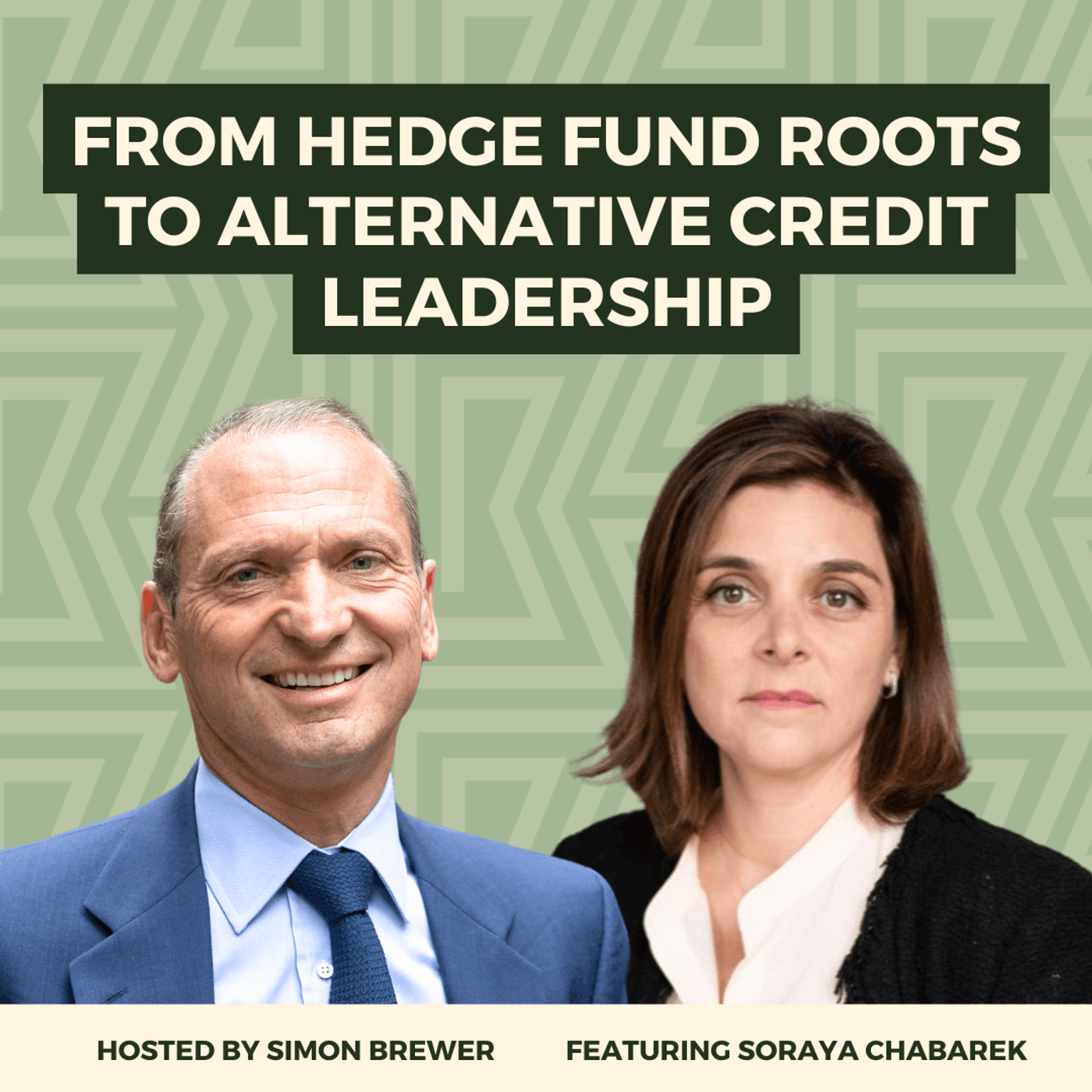
193: From Hedge Fund Roots to Alternative Credit Leadership: Soraya Chabarek, President & CEO, MCQS
Episode Summary
This episode features Soraya Chabarek, the President and CEO of Manulife CQS Investment Management, discussing her journey in the finance industry, the evolution of leadership styles in the alternatives sector, and insights on the current credit market landscape. The conversation touches on themes of gender representation in finance, the process of transitioning a hedge fund into an alternative credit platform, and the importance of grit and humility in leadership.
---
Key Themes and Discussions
- Background and Personal Journey
- Early Years:
- Soraya moved from Syria to the UK at age seven.
- Emphasizes the significance of education instilled by her family.
- Career Path:
- Initially unaware of hedge funds; started at HSBC after internships.
- Transitioned to hedge funds through connections and opportunities.
- Worked at notable firms like GLG and Moore Capital before leading CQS.
- Leadership in Finance
- Changing Landscape for Women in Finance:
- While female leaders in finance are becoming more common, the alternative finance sector lags behind.
- Soraya highlights her unique position and responsibilities as one of the few female CEOs in the industry.
- Characteristics of Successful Leaders:
- Importance of "grit" and resilience.
- Focus on creating a culture of meritocracy and skill development.
- Transitioning from Hedge Fund to Alternative Credit
- Repositioning CQS:
- Shifted from a hedge fund manager to a diversified alternative credit platform.
- Developed the Multi-Asset Credit Fund to address market needs during low-interest environments.
- Key Strategies:
- Focused on maintaining liquidity and emphasizing the importance of understanding client needs.
- Emphasized the combination of credit analysis with a human element in investment decisions.
- Current Credit Market Insights
- Opportunities and Risks:
- Discussed the importance of liquidity and the challenges in identifying good long-term investments in an uncertain market.
- Highlighted the potential pitfalls of an influx of capital into the credit space, indicating a cautious approach.
- The Role of AI in Finance
- AI in Research and Distribution:
- Soraya advocates for utilizing AI for data analysis but emphasizes the irreplaceable human element in credit underwriting and client relationships.
- Selling as an Art:
- Stressed the importance of interpersonal skills and building relationships in sales, which she considers a critical component for success.
- Future Aspirations and Advice for Young Professionals
- Advice for Interns and Newcomers:
- Highlights the need for grit, humility, and the ability to connect with others.
- Encourages a focus on personal relationships and understanding all parts of the investment management ecosystem.
- Long-Term Goals:
- Soraya aims to ensure CQS's success under the Manulife platform, prioritizing team health, client satisfaction, and sustainable growth.
---
Key Takeaways
- Grit and Humility: Essential traits for success in finance, particularly in leadership roles.
- Importance of Relationships: Building trust and connections is crucial in the finance industry.
- Adapting to Change: The ability to pivot and adapt business models (such as transitioning to alternative credit) is vital in a rapidly changing market.
- Diversity Matters: While progress is being made, continued efforts are necessary to improve female representation in finance.
---
Conclusion Soraya Chabarek's journey encapsulates the evolving landscape of the finance industry, emphasizing the importance of perseverance, relationship-building, and adaptability in leadership. This episode serves as an insightful reflection for current and aspiring professionals in the finance sector.
Written by AI. May contain mistakes. Listen to the episode to check what was said.
Chapters
Tap a time to open that second in VONavigating the Finance Landscape
0:45 to 2:12
Discussion on the evolution of private assets in finance and personal insights.
“I think liquidity is paramount right now.”
Soraya's Early Years and Family Influence
2:12 to 3:58
Soraya shares her background and how her family shaped her values.
“You were caught in a cab from Trafalgar Square, so I know it took you longer than you otherwise would have liked, but now we're just going to enjoy the setting here because we've got lots to talk about.”
The Impact of Role Models in Finance
3:58 to 5:39
Soraya reflects on the influence of Margaret Thatcher and her own career choices.
“And then I loved running towards the city.”
Early Career and Entry into Hedge Funds
5:39 to 7:47
Soraya discusses her early career and how she entered the hedge fund industry.
“And at the time, you know, you sort of went into a profession.”
Building Relationships in Finance
7:47 to 10:10
Importance of networking and relationship-building in Soraya's career.
“So these are all stories that will tell you about the, you know, I've worked really, really hard, but I've also been very lucky with the sliding door moments that have happened in my career.”
Skills in Distribution and Sales
11:06 to 14:00
Exploration of Soraya's skills in distribution and her strategy in the industry.
“That's what IFM Investors has built up over 30 years.”
Navigating the Hedge Fund Landscape Pre-2008
14:00 to 18:00
Learn about the challenges and learnings from the hedge fund industry before the 2008 crisis.
“You know, we rang the bell, I think, a quarter before 2008.”
Characteristics of Successful Hedge Fund Managers
18:00 to 21:30
Explore the traits that define successful hedge fund managers and their approach to challenges.
“I think it's just, it's obvious for me to say, you know, in alternatives, the majority of the people that I came across have been men and the people that I worked with have been men.”
The Gender Dynamics in Hedge Funds
21:30 to 23:50
Discuss the gender representation in hedge funds and the need for greater inclusivity.
“Mercer, a global consultant name, approached us and we had very good discussions about how we could basically take our hedge fund DNA and investing in credit.”
Cultural Integration after Mergers
25:17 to 28:00
Explore the challenges of merging cultures in organizations and maintaining operational autonomy.
“I'd been CEO at CQS for five years up to that point.”
Show all 20 chapters
Navigating Cultural Integration in Mergers
28:00 to 29:10
Learn how to effectively manage cultural integration during mergers and acquisitions.
“It's not just a challenge of integration.”
Evaluating Business Performance Post-Merger
29:10 to 30:40
Understand the key indicators of success and performance evaluation after a merger.
“But then also really having dialogue with the next generation of CQS.”
The Shifting Landscape of Private Credit
30:40 to 32:50
Explore the current challenges and opportunities in the private credit space.
“that our clients have stayed with us is also the health of the business.”
The Role of AI in Credit Underwriting
32:50 to 36:45
Discover how AI is reshaping research and decision-making in credit underwriting.
“Our business at Manulife CQS, I mean, more than 50 % of what we do is in the liquid credit space.”
Essential Skills for Future Financial Professionals
36:45 to 42:00
Learn the crucial skills and mindset needed for success in financial careers.
Building Resilience in Finance
42:00 to 44:29
Learn how to build resilience in the finance industry through communication and human connections.
“but there's an entire engine around that as well in terms of operations and legal and human resources and compliance that all make up the sum of the parts.”
Investment Opportunities in the Gulf
44:30 to 47:12
Explore the emerging investment opportunities in the Gulf regions and their economic transformations.
“We went back to what we believe in, which is the partnerships that we've made with clients.”
The Mission of CQS and Client Success
47:13 to 48:32
Understand the mission of CQS and the importance of client success for long-term business sustainability.
“And my final question is that what would allow you even modestly to give yourself a pat on the back five years hence?”
Lessons from the Credit Space
48:33 to 49:52
Gain insights from the credit space, including the importance of grit, humility, and connections.
“Well, sorry, it's been super to have you here today and I've taken three specific conclusions.”
The Journey of the Money Maze Podcast
49:53 to 51:25
Discover the evolution and ambitions behind the Money Maze Podcast and its impact on the industry.
“I will say to anybody that I am in the middle of the most fortunate episode in my working life.”
Transcript
Automatic transcript. May contain errors.0:00Soraya Chabarek:They don't really see impossible. They see possible. This is absolutely possible. How can I get it done? You know, without sort of pushing the boundaries out too far. But if you're always in pursuit of the possible, you are evolving, you're getting better and you are creating new revenue streams, new opportunities, etc. The majority of what we do, though, in the private world is very much what we call self-liquidating private assets. So those are assets that are private in nature. They're three to five year lockup. But because they throw off quite a large amount of income on a quarterly basis, they self-amortize.
0:36Soraya Chabarek:I find it quite difficult to say or know how a portfolio manager will look into a crystal ball and be able to work out what company will survive the next 10 years and come good. I think liquidity is paramount right now. You know, some people give you advice. You need to be more well-rounded. You need to know a lot more. I actually believe the opposite. Of course, it would be wonderful to be more well-rounded. I wish I was a lot more clever than I am. I wish I had many more skills than I have. But the reality is, is having a skill and homing that in and being the best at that, focusing on that, I think is a formula to success.
1:14If female leaders in finance are gradually becoming more usual, that cannot be said of most of the alternatives industry. But as the private markets and alternative firms combine and cooperate with the more traditional investment organizations, so their leaders, styles and backgrounds reflect a changing topography. If you've worked alongside some of the most well-known hedge fund owners, helped build their businesses and managed the associated turbulence and egos, and then become the CEO of a hedge fund that combines with a major financial institution, it's highly probable you've navigated those businesses with skill, dexterity and success.
1:53to understand why, how, and to look into the future combinations and direction of investment management, we welcome Soraya Chabrek, CEO of Manulife CQS Investment Management. Soraya, welcome on this wet November afternoon to our studios in Malibu.
2:08Soraya Chabarek:Thank you so much, Simon. Thanks for having me. I think we should stop the interview now because after that introduction, I think I'm done. I'll leave. Thank you. You were caught in a cab from Trafalgar Square, so I know it took you longer than you otherwise would have liked, but now we're just going to enjoy the setting here because we've got lots to talk about. And you have a very intriguing British-Syrian background. And I wonder when you look back at those very early years, what stays with you? So I arrived in the UK at the age of about seven. My parents brought us over here. I'm one of three girls.
2:44Soraya Chabarek:I'm the eldest. And I have a young brother. I mean, he's young to me. He was 30-something, but there was 16 years between us. So arriving in the UK from Syria was a big deal, you know, even back then. And, you know, my early memories really are of, you know, a brilliant opportunity to be in this very, very exciting capital of one of the best countries that I'd only ever read about. I spoke English because I went to an American school in Syria. so that was easier to integrate but the reality is you know I think some of my early memories are of my own family who really shaped you know where I am today I think and gave me a fantastic start my parents came here for our education and for you know Syrians had a very very forward-thinking attitude about educating their daughters my mother who had never worked in a day you know ever in her life was always honored us you know you must work you must have your own independence regardless of what your husband does etc I think those early sort of signals and and motivations definitely help we were all taught you know you have to work hard regardless I think you know now we all have conversations with our children you know what life choices do you want to make do you think you want to go to university where would you like to go to university etc etc in my family it was very much you're going to university um you know how are you going to get the grades and how can we help you but that was the extent of the conversation I think so it was real sort of um a new beginning in a new uh country where I I loved my school I was never the top student but worked really hard I loved, you know, doing economics and public administration at university.
4:42Soraya Chabarek:And then I loved running towards the city. And one of the things as I've done my research that people have said about you, an adjective that I like and you don't always hear is grit. And we might come back to some of the reasons behind that. So from London University, you go into finance. Now, you know, obviously you moved from, I think, HSBC through to a number of firms that will be dubbed as hedge funds. what was the lure other than potentially the money? To be fair, I mean, the lure was you graduated in the UK back then. And if you think about my generation, you know, we were seeing Margaret Thatcher on TV, you know, for a woman, a young lady, seeing the art of possibility on TV, you know, right in front of you, a woman who was leading, who was saying to the country, It is possible if you try.
5:32Soraya Chabarek:You know, all of those things I think are very, very important. And I think women of her generation have probably done even more than women of our generation are doing. We can come back to that. But I graduated. And at the time, you know, you sort of went into a profession. You either looked at becoming an accountant, a lawyer in advertising, or you go to the city. And I was lucky enough that during university I'd had a few internships at HSBC, which is why even now at Manulife CQS, we really, really value the internships that we give out. And that naturally just led me to get onto the graduate scheme at HSBC.
6:09Soraya Chabarek:And that's really, so it's a really long way of saying it wasn't like I graduated and thought, right, I'm going to go into hedge funds. I didn't even know what hedge funds were. I basically knew that I'd taken a few internships. I'd loved the experiences I'd had. Really what was important about that was very quickly at HSBC, I think I made quite great connections. That ethos of working hard, trying to understand your landscape and how you can do better in it, led me actually to somebody who's still my very good friend. I saw him last night, a gentleman called Omar Khudmani, who was at the time at a hedge fund of funds called Permal, which is today known as Entrust.
6:52Soraya Chabarek:and he and I used to basically help them at HSBC identify the best funds to sell onto our client base and he basically approached me one day and said you know would you like to come and join us I joined Permal so that was really my sliding door moment into the hedge fund world we're talking about some good 25 27 years ago so 27 years ago nobody really knew what a hedge fund was and that was really my best learning ground you know they kept it very simple at permal it was all about education education education to the end client what do we do how do we do it and how can it benefit you and I spent I think a couple of years there absolutely happy feeling very cocooned in this almost family-like environment very driven environment very entrepreneurial environment but it was a hedge fund of funds.
7:46Soraya Chabarek:And one day I get a call. So these are all stories that will tell you about the, you know, I've worked really, really hard, but I've also been very lucky with the sliding door moments that have happened in my career. So I get a call from a headhunter who says, Noam Gotsman wants to speak to you. And Noam Gotsman back then was the G of GLG. You know, everybody knew that. And I went in, you know, I was probably 24 years old. And I went in to speak to Noam Gotsman, who was charming. And I just remember, I saw him recently, I sort of recounted this to him, me saying, you know, why would I leave a wonderful family and come and join here?
8:24Soraya Chabarek:And he said to me, Saraya, the sky's your limit here. And it was impressions like that, that really sort of drew you as a young, you know, person to incredible platforms, which if I look back today to what GLG was, it was really the beginnings of what you see in multi-strat hedge funds today you know obviously not as large or you know as as as developed as places like millennium and citadel etc but we are talking a long time ago now to cut a long story short i went back and i spoke to omar and i said this has happened what shall i do and this is why i hold him very close to my heart he said to me look it's a tremendous opportunity it's where the industry is going you know um join and if it doesn't work out come back that's always stayed with me, you know, and I sometimes use that with great people who sometimes choose to leave Manulife CQS, you know, if they've had a fantastic career with us, and they feel like they need to expand their wings and go on elsewhere, there's no there's no hard feelings.
9:24Soraya Chabarek:And some have come back as a result. I didn't go back, I didn't look back. And I had a fantastic time at GLG. But I'll always be grateful to Noam Gotsman because I think in this industry you have to stop and think, okay, I'm quite good at what I do and I'm getting better and through the experiences I'm having, I'm getting even better. But somebody had to have given me that chance and seen that in me in the first place. And I think tribute to him, he's one of the best, if I say talent spotters, it looks like I'm calling myself a talent, but he was very good at creating an ecosystem, hiring good and passionate and ambitious people.
10:05So before we continue this conversation, we're going to take a short break to have a note from our sponsors. I'm thrilled to share that the Money Maze podcast is sponsored by the World Gold Council. They champion the role gold plays as a strategic asset through expert research, commentary and insights. And it's not just your portfolio that may benefit from gold. Learn how gold mining is supporting female economic empowerment and small businesses via their new documentary series called Gold, The Journey Continues. Tap the link in the show notes to start watching. IFM Investors is a global asset manager, founded and owned by pension funds with capabilities in infrastructure equity and debt, private equity, private credit, and listed equities.
10:49They believe healthy returns depend on healthy economic, environmental, and social systems, and these are evolving on a scale never experienced before. To find opportunity, build value and meet the needs of future generations, you need scale, skill and expertise. That's what IFM Investors has built up over 30 years. One of those skills that was recognised in you, and I'm intrigued about when you recognised it in yourself, was the skill of distribution.
11:19Soraya Chabarek:Selling by another word. You clearly were able to make progress there. And when you became partner, I think, you know, at More Capital, it was, you know, around your responsibility. was around selling and distribution. I wondered kind of, was this just something that came naturally to you or you suddenly became more and more aware that you were able to persuade? I think it's a really good question. I think you have to have some natural ability to understand people and to connect with people. But I also don't think it stops there. I mean, I'll give you a real life example. Again, going back to the Noam story, when he offered me the job, it was to cover the Middle East.
11:57Soraya Chabarek:and it was basically because I spoke Arabic. To be clear, I came here at seven. I'd never really been back to the Middle East in any meaningful way. I understood the culture. I understood the ways, et cetera. But for all intents and purposes, I'd been brought up in the UK. And I was very honest. I said, I have covered the Middle East per mile, but always through intermediaries, you know, the likes of Merrill Lynch and so on that take you to the Middle East. And he said, oh, don't worry, you'll be fine. And I remember picking up the phone, to get appointments. And keep in mind, this was 25 years ago.
12:32Soraya Chabarek:I'm a young woman. I'm going out into the Middle East, which is not the Dubai or Abu Dhabi or Qatar and so on that you see today. Still very progressive and still with lots of ambition, but not where it is today. Picking up the phone saying, hello, I'm calling from GLG Partners. And I think there was at the time a shampoo called GLC. And people would say, sorry, shampoo? This is, you know, to cut a long story short, I learned that if you basically build those relationships I kept going back to them at least for two years often for like three weeks at a go and just really building those partnerships building those dialogues really understanding what their dynamics were and what they were trying to solve for I saw no business for for the for the for two years but then after you basically develop those relationships and the trust it's a fantastic region to do business in they really value people who basically come back, understand their dynamics and have that partnership mentality.
13:29Soraya Chabarek:And so that was the first sort of real thing that I learned. And, you know, to be fair, by the time I left GLG, as you said, you know, I was a tiny junior partner when they went public. So again, amazing to be on a platform in the New York Stock Exchange sort of ringing the bell. And I think you had Manny Roman on the show recently. You know, he was very, very pivotal in what happened there. Again, you know, and who would have known? You know, we rang the bell, I think, a quarter before 2008. So when I had moved on with a gentleman called Greg Coffey onto More Capital, you know, this was the beginnings of what unfolded in 2008.
14:14Soraya Chabarek:so actually rebuilding Greg Coffey's business on More Capital's platform was a real exciting but I would call it a challenge you know if you remember we had sort of Bernie Madoff on on TV the face of distribution was really beginning to change clients were very much demanding transparency you know understanding of exactly what it is that hedge funds are doing and how they're doing it. Why do I tell you the story? Because it ends quite well. You know, we did set up his business within more capital. We were successful in pivoting to different parts of the world, including the US and Europe and kept some of our Middle Eastern clients.
14:57Soraya Chabarek:But it was a real, you know, lesson again in sort of staying the course, you know, making sure that you're always is just educating clients and creating partnerships and dialogue. So it's a really long way of answering your question. Yes, you have to have some natural flair to understand how you can make relationships with people, but you also need to understand your environment, what people are trying to solve for, what clients' needs are versus what you just want their needs to be. So you are close to some of these really celebrated hedge fund managers as they were. I remember when I left Mulmsland and I went to Vantage, I was with such a principal for 14 years.
15:44And the flip side of the unusual investment talent is often extreme awkwardness, brittleness, low on EQ if high on IQ, intolerant, uncompromising, exacting, infuriating. I mean, I had a long list of these. But do you think that those are almost requirements to be the alpha generators that many of those individuals are?
16:06Soraya Chabarek:I think that the list you just mentioned is stereotypical, certainly. And I do think, you know, they think differently to most of us. You know, if you take, you know, who is now Lord Michael Hintze, you know, he's a polymath in terms of his mind. You know, Greg Coffey was the nicest person you could ever, most charming person you could ever meet and genuinely, you know, still a good friend now, but a very aggressive trader and really understood his markets and what moved his markets and the cross correlation between markets. Now you could take advantage of that. the thing I will say is that whilst you see those attributes in them that the best attribute that I used to see and what kept me going and partnering with them and actually doing quite well partnering with them is is the excitement of say that they all have one thing I would say in common they would probably hate that I say they have anything in common but the one thing they have in common is this pursuit of the possible.
17:08Soraya Chabarek:They don't really see impossible. They see possible. This is absolutely possible. How can I get it done? Now, obviously, if you walk back from possible, sometimes you find a situation where actually it isn't possible. But a lot of people start at the impossible to try and solve for the possible. And I think all of the gentlemen that you've mentioned really have this sort of belief in meritocracy. if you're good, then you have a seat at the table. And, you know, is it possible to do this? And, you know, without sort of pushing the boundaries out too far, but if you're always in pursuit of the possible, you are evolving, you're getting better and you are creating new revenue streams, new opportunities, et cetera.
17:52Soraya Chabarek:And that's what I think they all had in common that was very, very exciting for me. Just the art of the possible. And yet the common denominator in all of this and if you just step back and look at the industry and we're going to come to the firm you're leading in a minute but but you know the list from uh george soros uh scott best and stan drunkenmiller lord hints chris hone they're all men and i guess the question is why do you why have there not been enough you know top female leaders to this point do you know it's it's it's a good question. I think it's just, it's obvious for me to say, you know, in alternatives, the majority of the people that I came across have been men and the people that I worked with have been men.
18:39Soraya Chabarek:So on many of these platforms that I've talked to you about, you know, I was one of the few senior women on the platform with the exception of More Capital, to be fair, Elaine Crocker is the CEO of More Capital and has been for many years managing, you know, Lewis Bacon, who is another incredible, you know, gentleman, you know, one of the market wizards of the hedge fund industry. But I think, you know, it's really on us to try and change that. I don't think it's by design in hedge funds or alternative or the alternative industry. I think it's really to do with how we attract women. And I think it's also to do with what I said earlier, you know, So a lot of the gents that you just mentioned, I never felt that they saw gender, if you like.
19:27Soraya Chabarek:It was very much about, you know, are you going to be good at the job? Can you deliver results? So it was very much driven through meritocracy. And I just don't think that we brought in enough, you know, women into the industry. I will make an exception to that. She may not have led her own firm in the end. But, you know, for me, a quiet, unsung, great money manager is Gerald E. Sandstrom, who was at Brevin for many years in emerging markets. You know, having been through, you know, what I just described to you in the hedge fund industry, one thing really stuck with me always. And that was the star culture that the hedge fund industry can create.
20:05Soraya Chabarek:And that's great if you want to build a, you know, a boutique firm, but it's not scalable and it's not repeatable. and that really really stuck with me through that journey that I just described to you so when I arrived at CQS I had you know a meeting of minds with with Michael you know on that at the time he was very much I want to institutionalize my platform I you know I hear from consultants and institutional clients I have to solve for ownership and succession and so on and you know first of all you get quite excited by, well, let me try and solve for succession. But very quickly, you know, my sort of principle came back to, well, I don't think you can find another Michael.
20:46Soraya Chabarek:And even if I thought you could find someone who trades like you, who can have the attributes that you have, that you just described, Simon, et cetera, et cetera. And I found that holy grail. I'm not sure, even if I convinced them to come and sit next to you, that they'd last very long, right? Nobody, it's very difficult to replace a person. So it was very much sort of built on that principle of how can we transform ourselves from one person to people, many people, a platform that works and is institutionally robust and process that's repeatable, that you can go to clients and show them a process that's dependable.
21:26Soraya Chabarek:And to be fair, again, another sliding moment, right? That was the strategy, but we were very, very lucky. Mercer, a global consultant name, approached us and we had very good discussions about how we could basically take our hedge fund DNA and investing in credit. So everything that comes with that, thinking outside the box, not benchmark hugging, really going deeper into the underwriting of credits and being highly selective in what you put in your portfolios. but doing it in an institutional format that was diversified through people and designed for the institutional world. So that was really the birth, if you like, of what you see the platform to be today.
22:10Soraya Chabarek:We created a product called the Multi-Asset Credit Fund, which did all of those things. And it was really, again, answering a client problem. And what was the problem back then for most institutional clients? Rates were at zero and people were hungry for return. So, you know, for us, we created a product at the time that was going to pay cash plus four to five for pension funds. And why do I say the story ends well? You know, today we're managing, you know, of our 18 and a half billion dollars, we're managing 10 billion dollars in multi-asset credit solutions. Right. Which are basically managed by a team of about 40, 50, you know, strong men and women across different asset classes within credit.
22:56Soraya Chabarek:so liquid to semi-liquid credit predominantly in developed markets US, Europe and we then further diversified our platform in areas like issuing our own CLOs, investing in third-party CLOs, you know our structured credit business is very robust and a big part of what we do. Why do I give you all this ramble? Because I'm describing a situation where we went from a founder-led organization with permission from the founder to actually one that is diversified through people, product, and platform that I described. So last April, we did do a transaction with Manulife. Michael, you know, got spun out of the business as part of the transaction.
23:43Soraya Chabarek:And it's really given CQS sort of that next chapter of what a boutique credit specialist could look like on an insurance platform. So before we continue this conversation, we're going to take a short break to have a note from our sponsors. I'm excited to announce that the Money Maze podcast is sponsored by the London Stock Exchange Group, known as LSEG. At the heart of the global economy, LSEG provides data, analytics, and infrastructure that connects investors, businesses, and economies. LSEG is where ideas meet capital, enabling sustainable growth and opportunity, tap the link in the show notes to learn more.
24:23Schroeder's Capital is the private markets division of Schroeder's, combining the experience of specialized local teams with the scale, rigor, and resources of a global institutional platform. Schroeder's Capital provides its clients with global access to differentiated and specialized strategies encompassing all private markets asset classes, from private equity to real estate, infrastructure and the broad universe of private debt and credit alternatives this approach enables schroder's capital to access opportunities and investments that are often difficult to find elsewhere while also having the broad capabilities and perspectives needed to build holistic solutions and deliver tailored outcomes across private markets for both institutional and wealth clients discover more at schroderscapital.com remember capital is at risk with investing so you've touched on answering the next question which is you know cqs today um but i just wanted to pause on that that point which is that you'd end up becoming ceo of the business i think the transaction you did with manu life was with a female ceo as well which is you know not the everyday data i wonder was actually that was just easier dealing female to female
25:39Soraya Chabarek:you know what i have i still have a great relationship christy feinberg she's called She was the CFO of Manulife at the time that we did the transaction. I'd been CEO at CQS for five years up to that point. And it was brilliant, actually, I have to say. You know, sometimes when we would get stuck, I mean, let me just tell you, we had these conversations for a good 17, 18 months. So I think fondly of that time, but it's not something I would readily repeat, you know, dealing with lawyers, bankers, all the rest of it. And it was a process that wasn't just run, you know, with Man U Life. It was a real process of trying to find that sort of perfect suitor, that perfect marriage, which doesn't exist, by the way.
26:22Soraya Chabarek:That's what you find out. You find out that you can find the best marriage that you can find for both sides. But dealing with Christy was brilliant because every time we did get into a situation where, you know, it can sometimes be a bit jarring or, you know, people can see a few shadows, etc. It was so easy to just pick up the phone or even fly over. I remember a wonderful evening together where we just sat as women and sort of hashed out things to move things forward. And I will say, having said, you know, in the alternatives business, you have less women. I've now found quite a deep bench of women who are very senior at Man U Life.
27:05Soraya Chabarek:And it changes your everyday style and working conditions, if you like. Like, you know, our head of retirement is a senior female woman, you know, running some 5 ,000 people across the platform. Christy Feinberg herself went on to become the head of the John Hancock platform that Manulife own, which is a huge retail platform in the US. You know, our head of marketing, our head of privates, et cetera, all women. So it's exactly the comment you started with, Simon, which is, I think alternatives, we still have a bit more to do. but it's definitely more prevalent and much more celebrated and in existence in the corporate world.
27:46And how do you approach that really demanding challenge, which is there are people at CQS who might have joined having left a large organisation. They're then being told they're rejoining or joining another organisation, which culturally may not be what they wanted. So you've got a challenge. It's not just a challenge of integration. It's that cultural fusion. how did you how did you think about how to get that right do you know i think it just goes back
28:12Soraya Chabarek:to exactly you know the same way as you know when you deal with clients really understanding what people's worries are and and how you can solve for them and also being quite transparent about why we were doing this you know we'd we'd we had got to you know a juncture where if you look at what's happening in the industry the larger are getting larger and there was a fear of being sort of stuck in the middle, if you like. And also, although, you know, what was brilliant about this transaction for us and Manulife is that we filled a gap for an asset class they didn't have. And for us, we got to stay true to what we do, which is be, you know, credit investors, specialists in credit.
28:55Soraya Chabarek:So we have absolute autonomy in terms of our investment management, which was really important for me. I didn't want to have to go back out to clients and say, by the way, you used to invest with CQS that looked like this and now it looks like this. So it was being very conscious of the things that Manulife recognized in CQS and keeping those true to themselves. But then also really having dialogue with the next generation of CQS. This is your next, you are the next generation of what will happen to CQS over the next 10, 20 years. I think that was one factor. so being very very very transparent I think is is uh is important I think also um what was important for me is as part of a transaction people do well and you know down to even if you like the receptionist at the front desk we made sure that everyone felt part of this transaction which I think is important and then as you get onto the platform with Manulife it was really about sort of making the right connections with Manulife to make sure that their people are comfortable with our people joining and vice versa.
Read the full transcript
30:05Soraya Chabarek:So a lot of legwork, a lot of sort of conference calls and visits. The 17 months that we dealt with each other had really helped because we sort of fused through that period in terms of culture and how we think and what's important to us and how they could help us maintain that. And then the next, it's coming up to two years now that the transaction has been in place. And when I look back at, you know, how have we done, you know, our performance across the board of our strategies has been in the first and second quartile. So for me, that's important because that's the health of the business. And the fact that our clients have stayed with us is also the health of the business.
30:44Soraya Chabarek:We've grown from 14 billion when we arrived to 18 and a half billion. We kept every single consultant rating. So that was really sort of a tick from our clients that this is a good thing for us and we'll keep going with you in this partnership. And most importantly, I mean, Manulife didn't buy, you know, computers and systems. You buy people, right? And you buy a culture and you buy a belief that this culture has. And, you know, we've touch wood kept the entire senior bench at Manulife CQS as we are today. And we're all still going very strong. And I think it would be remiss of me not to mention that you say to me, how do you do all of that?
31:25I have two partners in this journey,
31:28Soraya Chabarek:a gentleman called Craig Scordellis and Jason Walker. And I'm probably the youngest in this relationship, not just by age and beauty, but I've been there 13 years working with them. And we've built this thing brick by brick, what I just described to you, this platform. And they've worked with each other some 16 years. So that continuity, that history, and that journey that you take together matters, right? To be able to, you know, take people along with you. So you were early, well, CQS was relatively early on this private credit space. A lot of column inches being devoted now to the downsides.
32:08We've had a, you know, quite interesting tussle with Hugh Van Stenis on the subject a little while ago, but you sort of had a ringside seat, which gives you an advantage. Give us your assessment on the pros and cons of where the private credit industry is?
32:25Soraya Chabarek:It's a good question because you're right, Simon. It's very, very, you know, written about at the moment. And, you know, we had a, I think for privates, there was a big darling moment where everybody was writing about the positives and how large the industry was going to grow. And now, you know, the coverage is quite negative. You probably saw the leader of Apollo come out and say, I think it's being overdone in the papers and so on. Our business at Manulife CQS, I mean, more than 50 % of what we do is in the liquid credit space. So our job is really to just go out and identify where the risks are.
33:04Soraya Chabarek:How can we deliver that income, income, income to portfolios? So that's what we're seeking. Just how can we deliver the simplest form of income to pension funds and now we have retail clients and so on. And how do we keep that income? And we do that by avoiding defaults, right? And avoiding bad situations. And how do you do that? Well, if I'm going to lend you money, Simon, I'm going to look into every part of your life. You know, are you good for the money? Do you have the cash flow to pay me back in income? Are you going to be around to give me back my money? And that's basically what we're doing.
33:37Soraya Chabarek:We're underwriting good credits, both by sector, geography, etc. You know, we do have private offerings at CQS. The majority of what we do though in the private world is very much what we call self-liquidating private assets. So those are assets that are private in nature, they're three to five year lockup, or even seven years sometimes. But because they throw off quite a large amount of income on a quarterly basis. They self-amortize. So that's very different to the skill set of private managers, credit managers who have to analyze a company and make a investment that will come good in seven to 10 years time.
34:20Soraya Chabarek:I find it quite difficult to say or know how a portfolio manager will look into a crystal ball and be able to work out how or what company will survive the next 10 years and come good. So where am I going? I'm saying I think liquidity is paramount right now. But I don't want to be an alarmist. I don't want to, you know, there will be people that do very well and continue to do very well. I am just a little bit worried about the vast amounts of AUM that are flowing in that direction. And as you fashion your research process, AI is everywhere, but it's still hazy. How are you thinking about how it will impact the decisions you make around research?
35:08Soraya Chabarek:It's a really good question. And I don't want to be too strict in what I say. But I'm a massive, massive believer in people and people's ability to see differences in markets. And, you know, what we tell our clients is that we have a process that's proven and is built on history and repeatability and know-how. So it would be very remiss of me to say, you know, anything but, you know, of course, AI in the first instance, we're using it in terms of, you know, being able to do the tasks that can be automated in research, you know, sort of gathering the information that you need very quickly, data lakes that you need to put in place very quickly.
35:55Soraya Chabarek:But I don't think that, you know, I'm going to be the first mover in terms of trying to replace how a mind works, in terms of how you underwrite credit. It is about differences that you spot that others might not spot it is the difference between underwriting a bad credit and a good credit so i i i'm reluctant to say that you can um the whole point of of human beings is they have imagination they're able to see things that i think machines can't yet and actually if we take that a step on isn't that even more the case in distribution and selling i think it was cistern who said the selling is the art of persuasion but you know as a successful distributor seller relationship you know person isn't that i want to say the last frontier but isn't it actually you know one of if you're good at it one of the best places to be looking to the future i think you've hit the mark on on the head i mean i you know when i think about what sort of um skills i want to instill in my son the one thing i say to him is it's people you know there is still something about being able to walk into a room shake someone's hand and make that um personal connection and in my own job I mean it has evolved and I wish I could still spend a hundred percent of my time with clients because it's when I light up and when I'm the happiest but I still make sure that I see clients three or four times a week in some form whether it be at lunch or a meeting or not least because actually it's not just about the distribution angle but it's also about what you pick up from the client base and what you pick up from the trends that are happening I think if you as a leader sort of sit in your own four walls you can end up echo chambering your own thoughts and your own people's thoughts so i don't think there's a replacement for um human contact i feel like i already know you just through this interview simon that's fantastic because like springing to much much better for the audience but it actually brings to mind the conversation we had with that gen prosek we both know it's an interview only three or four months ago which had perhaps less to do with investing but most to do with the future and oracy this whole requirement to communicate so you're telling your son about you know you know about about the selling process and communication and listening and you know i'm saying to my children you know it's the language the gift in the west is the language that we have spoken here rather than italian or french although they're beautiful languages etc they're not the languages of finance so you better master those as well yes um i actually in talking to people about you um two other qualities that you know came through one was humor and the other was um apparently your superpower is focus and maybe you don't even know it's a it's a superpower but how would you respond to to to that observation the latter about you did they say anything bad about me i mean actually i've got a couple of pages here No, I will say I think as time has gone by, I was always quite good at this.
38:58Soraya Chabarek:I'm very good at delegating, which is a polite way of saying surrounding myself by really, really good people who can do what I'm not very good at doing, right, or can be done by others. Which just means that I can basically focus on the things. I really believe in focus. So that, you know, some people give you advice. You need to be more well-rounded. You need to know a lot more. I actually believe the opposite. Of course, it would be wonderful to be more well-rounded. I wish I was a lot more clever than I am. I wish I had many more skills than I have. But the reality is, is having a skill and homing that in and being the best at that, focusing on that, I think is a formula to success.
39:39Soraya Chabarek:So that's where I think I get the focus from. I've over time recognized what I'm good at and what I'm not as good at or even what I'm bad at and just focus on the things that I'm good at and had sort of targets and strategies to get there and I think that's helped me personally and helped the business around me I hope. Let's flip it around and now I'm coming in for my final interview at your firm I'm a young person I really want this job what are the one or two things you really want to see in me? So you mentioned the word grit, which I think we are slightly losing. So that that is one, but I'll take a step back.
40:19Soraya Chabarek:I mean, one of the things that was really important to me, speaking about what, you know, sort of women and really encouraging women to come into our industry, I still don't think we have as good a reputation as we like to think, you know, with women. So in the early days, I was one of the few at CQS, you know, sort of wearing that hat, you know, I'm quite proud of the fact that now we're sort of, we're not sort of, we're 30, 70 women to men. And not just in areas of relationship management and, you know, infrastructure, etc. But on the investment management floor as well. And the one way to do that one of the ways to do that is really um that internship program that i spoke to you about we take in 15 interns which for our size is quite large they do overtake our office in the summer we're 140 people and we take in 15 interns and they're wonderful they're the the the noise they create the passion they create and to be fair i think today's generation is a lot cleverer than you and i um simon they're much better educated than we are but the one thing i do is when they arrive, I receive them and I actually say to them, you all come from fantastic universities, you all come with great accolades and great grades, etc.
41:35Soraya Chabarek:What's going to differentiate you? Actually, how you walk into the room, how you receive people, how you connect with people, how you make contacts over time. This is all going to sound very, you know, cliched, but humility, just really understanding other people and how an entire ecosystem works. Sometimes we talk about investment management in terms of sort of distribution and investment management, but there's an entire engine around that as well in terms of operations and legal and human resources and compliance that all make up the sum of the parts. Make sure that you understand all every component because without one component you don't have a full uh you know car that works very well so that's my advice just reach out make connections and you know come at it from a learning angle rather than i've arrived what would you like me to do i'm smiling as we talk about interns because uh colleague celine's in the room and we've had i think 20 interns in the last year and a half, which we are a lot smaller than you.
42:42And there's been a little bit of from the team. Okay, slow down, you know, because we put, you know, we have similar conversations, Will Campion and myself is like, why did you send an email and think somebody's going to reply? When was the last time you picked up the phone? Have you ever written a letter? You know, stand up when I come into the room? Anyway, I went boy. You're so right, though, but it's simple things.
42:59Soraya Chabarek:It's simple things, which people think, you know, you said focus. I'm so focused. There isn't a single email that goes out from me. You'll know it's an email from me because it always starts with something like, I hope you're well. Or the last time we spoke, you said your son wasn't well or you had been traveling. Just some human connection that shows people that you actually care and that you're quite polite. I think there's something about being polite as well. Correct. Well, I'm going to finish with three closing questions, which is through your journey, there will have been periods where it's much harder going.
43:31Tell us a little bit about how you help, How will you manage that required resilience?
43:39Soraya Chabarek:I think that actually our industry builds that resilience in you as well. So, you know, because you're, you know, sometimes things go very, very well. You're shown very quickly that they can go the other way. So I lived through, luckily I was very young, you know, the tech bubble followed by 2008. 2020 wasn't very kind to us at CQS at the time. And really that for me was the one that I remember the most, even though for a lot of our competitors and counterparts, you know, some of them were at home. It was quite nice weather in the UK and working from home. For us, our funds took it, you know, quite hard in some areas.
44:26Soraya Chabarek:And we were, you know, in the office, sometimes five days a week with special permission. And how did we handle it? We went back to what we believe in, which is the partnerships that we've made with clients. I remember calling every single client with myself and my partners to describe what was happening in the portfolios, how we'd scrubbed the portfolios, how we were confident that we had no defaults in our portfolios. And if they were to believe us and they believed in us, then the natural thing to do was to add to their position because credit is a fixed income class that that goes back to par right um and in a six to eight week period we brought in something like three billion dollars by virtue of being in front of clients when i say in front of clients i mean on this new actually you know teams and zoom that's become secondary to us today but it was really sort of um you know understanding that things were very very stressed we were working really really long hours but the the best thing to do is not insulate yourself but reach out and and really communicate and i you know i hope that's come across my i'm not sure my superpower is is is is focus i think my superpower if i do have a superpower is is people i really really love my interaction with people right let me ask you a geopolitical question which i'm sure all our your compliance department will allow you to answer which is you've traveled a lot to the middle east Now with so much change, you know, that might be occurring, how do you reflect on, you know, on the investment possibilities both inward and outward?
46:01Soraya Chabarek:I think that I always believed in the ambition and the will that specifically the Gulf regions had to transform their countries and their economies. And I think we're seeing that today. You know, unfortunately, we're seeing a bit of exodus out of the UK to the UAE. I think that they did it for a long period of time, very specifically, and in partnership, and by looking at what best practice looks like in other areas and improving on it, if you like. So some of our best British schools now exist in the UAE and Saudi and Qatar and so on, which in itself attracts the right people and the right talent.
46:47Soraya Chabarek:If I go back to where I started, my parents came here for our education. There was nothing wrong with our life in Syria at the time, but it was very much sort of seeking new horizons for a better world, a better education for their children. And I think that that's actually going the other way now. You are, you know, there's a depth of market, there's a depth of opportunity and ambition in the region that I don't think should be ignored. Got it. And my final question is that what would allow you even modestly to give yourself a pat on the back five years hence? I think my mission, if you like, or my focus, is to make sure that CQS is a success on Man U Life's platform because I said to you that there's a great cohort of us that have come together a long time ago.
47:40Soraya Chabarek:We've been on this tremendous journey. we've transformed ourselves from a hedge fund to an asset manager that deserves to be on this platform. We've got great opportunity, but it is about the people. It's about the next generation actually being able to see this thing through five, 10, 20 years beyond when I'm, you know, there even. So that's my mission. I think that the first 20 years of CQS, I was there for 13 of it. and I'm proud of those years. You know, we hold sort of ourselves, you know, to a high standard. I think this is the next chapter though with Man U Life and making sure that people are happy and people succeed and people do well for their families and that we do well for clients because ultimately we don't have a business without clients.
48:31Soraya Chabarek:That would make me happy. Great. Well, sorry, it's been super to have you here today and I've taken three specific conclusions. I mean, you've been very honest about the uncertainties surrounding the credit space. Anytime that a lot of capital arrives at an asset class, we know that there is some fallout and we're dealing with maybe some of the early signs of that. But I think the grand statements about how it does unfold will prove to be grand statements often made by, like the great strategic statements made by asset allocators, which don't turn out. Myself, I've been guilty of that as well.
49:02I think that you'd explain some of the interactions of, you know, egos within the hedge funds world, but some of the important principles that have allowed those entities to be so successful. And when it comes to advice for young people, and, you know, we, I think, both share that, you know, that passion is the three things that are not said often enough. Number one, grit. Number two, humility. And number three which was yours today is the vital importance of making connections let me ask you something
49:34Soraya Chabarek:simon before we end you've established money maze it's becoming very popular in our industry i i listen to many of your podcasts and find out so much more about my colleagues that's a real sliding door moment as well in our industry tell us a little bit about it because i love your podcast no that's so nice of you to ask a question i guess this is where i say sorry we're out of time I will say to anybody that I am in the middle of the most fortunate episode in my working life. Having joined the business as a portfolio manager all the way back in 1985 at Citibank, all that time at Morgan Stanley, et cetera, et cetera.
50:12I've been lucky enough to meet so many people. I have a stupendous partner in Will Campion. We started this, particularly myself, not having a clue on the eve of COVID. we beg borrowed still to get you know folks including peter harrison of who's then ceo with a bottle of wine we did this podcast and you know month in month out we're meeting the most extraordinary people we are you know there aren't probably enough hours in the day for the ambitions that certainly my business partner has um but we are you know we are enjoying we have this fantastic unit team selene's one of the team members who are here today but we've got these young people who help us sort of you know analog uh you know old folks stay on the digital sort a playing field and there is such an opportunity and we are you know that you can very kindly came to the money maze allocated summit we've got you know these two channels the curie channel where firms are raising finance and raising availability three they pay us to create interviews the main channel it's becoming you know uh just a pleasure to have so many people we think we have scott besant coming back on we've had two heads of the cia i could go on i won't um and uh it's just so exciting so where we go there is no end point on this destination but you know what henry ford said it's not a destination it's a journey so maybe we'll hopefully carry on for a long time
51:25Soraya Chabarek:congratulations no
From the publisher
While women leaders in finance are gradually becoming more common, that cannot be said the alternatives industry.
But as traditional investment firms increasingly acquire alternatives and private markets firms, their leaders, styles and backgrounds are experiencing a changing topography.
One of those to have been instrumental in helping build some well-known alts firms, from GLG to Moore Capital and now MCQS, is their President and CEO, Soraya Chabarek.
Soraya discusses the characteristics of some of the top hedge fund performers, the egos and enigmas, females in finance, the art of selling, and how she helped reposition CQS from a hedge fund manager into an alternative credit platform.
She gives her view on where the risks and opportunities lie in today’s credit market, how founder-led firms scale beyond star culture, and on resilience, grit, and what she looks for in a hire.
The Money Maze Podcast is kindly sponsored by Schroders, IFM Investors, World Gold Council and LSEG.
Sign up to our Newsletter | Follow us on LinkedIn | Watch on YouTube