In short
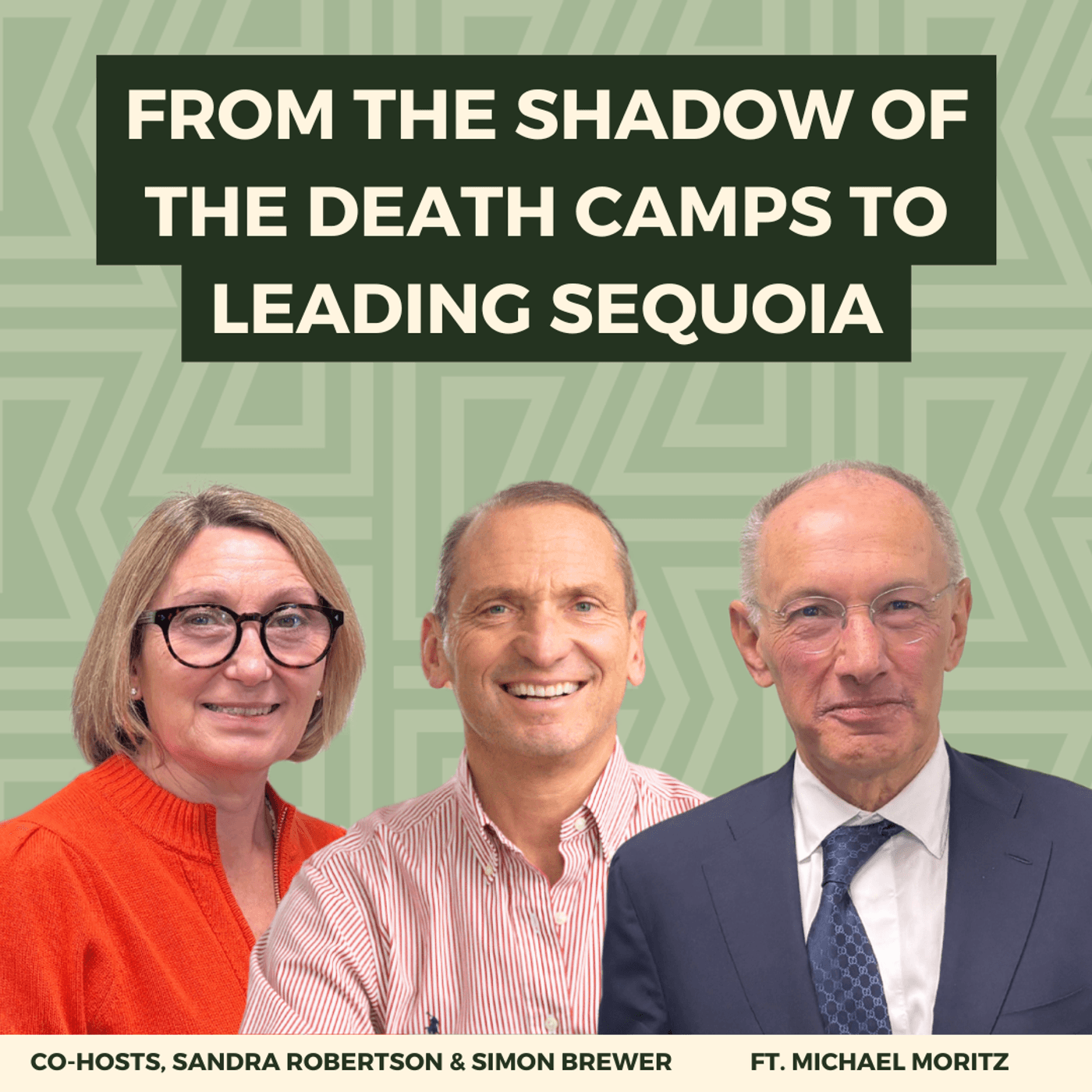
Sir Michael Moritz (Sequoia Capital) discusses venture capital in Europe vs the US/China, his investing philosophy (long-term compounding cash generators), AI-era market concentration, and how his family’s Holocaust-era history shaped his book Auslander and his philanthropy.
Guest backgrounds
Sir Michael Moritz is a Welsh-born journalist-turned-venture capitalist; he joined Sequoia and backed companies including Stripe (Collison brothers) and earlier PayPal. Sandra Robertson is former CIO/CEO of Oxford University Endowment and a Sequoia LP. (Host not named in transcript.)
Key claims
Europe’s VC “Achilles heel” is a non-homogenous market (different consumer/business habits by country), lack of “success builds on success” ecosystem, and weaker board governance. Brilliant entrepreneurs show depth/grasp, clear communication, and hunger/competitiveness. In AI, expect a few “gargantuan” winners (including Google/Facebook) and widespread “wreckage.” Investing should prioritize long-horizon compounding operations and real purchasing-power “currency reference” (he favors the US despite structural issues).
Notable examples
Stripe’s goal to simplify payments and enable e-commerce; Sequoia’s early partners Don Valentine and Pierre Lamond; Oxford Crankstart Scholars; Moritz’s grants (National Gallery, Oxford). Auslander research includes ancestry.com and archival records (Munich roundup manifests, Isle of Man internees; father identified in Tate photo collection).
Written by AI. May contain mistakes. Listen to the episode to check what was said.
Chapters
Tap a time to open that second in VOThe Challenges of European Venture Capital
0:00 to 0:39
Learn about the unique challenges faced by venture capital investing in Europe compared to markets like the US and China.
“What is the Achilles heel of venture capital investing in Europe?”
A Compelling Life Story
0:39 to 1:39
Explore the inspiring journey of Sir Michael Moritz from Wales to leading Sequoia Capital.
“Through your investing lens, why and where might we be surprised in the next decade?”
From Journalism to Venture Capital
1:51 to 4:36
Discover Michael's transition from journalism to venture capital and the decisions that shaped his career.
“And I had tried to get a job in Britain before going to America.”
The Early Days at Sequoia Capital
4:36 to 6:49
Insights into the early environment and dynamics of Sequoia Capital when Michael joined.
“And after I got transferred to San Francisco, I began to learn about Silicon Valley.”
Identifying Brilliant Entrepreneurs
8:17 to 9:50
Discussion on the key traits that make a brilliant entrepreneur, as described by Michael.
“We might talk about some that didn't work out, you know, later on.”
Case Study: Stripe's Founders
9:50 to 14:00
An analysis of the Collison brothers' proposition for Stripe and what set them apart.
“have built formidable companies in California.”
Learning Through Structured Challenges
14:00 to 15:00
Discover how structured challenges in education and journalism can foster adaptability and confidence.
“And then in journalism, it was very similar.”
The Dynamics of Investor-Entrepreneur Relationships
15:00 to 17:45
Understand the essential qualities needed in investor pitches and relationships between entrepreneurs and investors.
“the scrutiny of the lawyers and eventually be published.”
Challenges of Venture Capital in Europe
20:19 to 23:05
Explore the unique challenges faced by venture capital in Europe compared to the U.S. and China.
“What is the Achilles heel of venture capital investing in Europe?”
Investment Strategies for Long-Term Success
23:05 to 26:30
Learn about effective investment strategies focused on long-term compounding and the nature of patience in investing.
“is that the people on their boards have, particularly the ones who've never worked for a technology company or a fast growth company, have no idea what success smells like.”
Show all 28 chapters
Currency Considerations for Global Investors
26:30 to 28:00
Gain insights into currency references and preserving purchasing power in global investments.
“But it has morphed much more closer to that model today, hasn't it?”
Understanding Currency and Investment
28:00 to 29:00
Explore the complexities of currency reference and investment choices in a global context.
“you sure as hell have got a problem with indebtedness and payments thereof.”
The Future of AI and Tech Investments
29:00 to 30:40
Discuss the emergence of tech giants and the future landscape of AI investments.
“And obviously, there are all sorts of major structural issues that need addressing in the United States.”
Philanthropy: Principles and Practices
30:40 to 34:20
Learn how to approach philanthropy, including selection criteria and measurements of impact.
“San Francisco is where we raise our kids.”
The Journey of Writing a Family Memoir
34:20 to 37:10
Discover the personal journey and motivations behind writing about family history and past experiences.
“You know, I was very involved early on at Oxford, setting up the structure of that thing and then got out of the way.”
Reflections on Family Dynamics and Distance
37:10 to 39:30
Consider how distance affects one's perspective on family relationships and emotional connections.
“And the more I dug, the more I got intrigued.”
The Impact of the Holocaust on Identity
39:30 to 41:20
Examine how the Holocaust continues to shape personal identity and the understanding of anti-Semitism.
“How did you find the researchers on the ground in Germany to help you?”
The Persistence of Anti-Semitism
41:20 to 42:05
Investigate the reasons behind the continued existence of anti-Semitism and its implications.
“And far greater wise minds than mine of trying to answer that question.”
Historical Context and Current Fears
42:05 to 43:54
Explore the historical challenges faced by Jews and the current socio-political climate.
“schisms in religion that occurred more than a thousand years ago.”
Family Stories: Grandparents' Divergent Paths
43:54 to 47:02
Learn about the contrasting experiences of the speaker's grandparents during the war.
“One of the things in your book, Mike, that struck me was the patience and tolerance of your grandparents in the situation that they didn't leave.”
Reflections on Writing the Book
47:02 to 49:35
Understand the author's emotional journey and challenges while writing the book.
“We had a question from another friend, Jonathan Glassberg, founder of Drax Honoré.”
Shocking Discoveries in Family History
49:35 to 55:16
Discover unexpected family connections and revelations during research.
“I had some, you know, very trusted, wise readers that I sent the book to for their comments.”
Closing Thoughts and Reflections
55:16 to 56:00
Wrap up the discussion with final reflections on the book and its themes.
“My uncle and my father's brother, like, you shouldn't laugh, but, you know, he was considered danger to Britain.”
Journey to Canada: A Family's Escape
56:00 to 56:49
Learn about the perilous journey of German Jews to Canada during WWII.
“It was the most dangerous of times to be afloat in the North Atlantic in a convoy.”
The Emotional Release of Writing
56:50 to 57:38
Discover the therapeutic benefits of writing and completing a book.
“Is there anything that I haven't asked you that you'd like to have talked about in relation to the book?”
Collaboration with Alex Ferguson
57:39 to 59:46
Explore Sir Michael Moritz's collaboration with the famous football manager.
“At the opening of the book, you revealed that in 2006 you were diagnosed with this rare form of blood cancer.”
The Impact of Art Donations
59:46 to 1:02:38
Understand the significance of Sir Michael's contributions to the National Gallery.
“I think like every small, you know, boy, a young teenager of that era, suddenly George Best and Bobby Charlton and Dennis Law and Paddy Creran and Nobby Stiles.”
Reflections on Generational Optimism
1:02:38 to 1:05:04
Discuss the outlook for future generations and the role of persistence.
“is not just do wonderful things for the National Gallery, but also raise the aspirations, the ambitions of other artistic institutions, not just in London but around the country.”
Transcript
Automatic transcript. May contain errors.0:00What is the Achilles heel of venture capital investing in Europe?
0:04Sir Michael Moritz:It's the challenge of not having a homogenous market. In America and in China, if you start a company, you have a vast market on your back doorstep. In Europe, by contrast, the consumer habits, business habits are very, very different. Success builds on success. And in California in particular, there is a pattern of success that every generation in Silicon Valley is extremely aware of. Through your investing lens, why and where might we be surprised in the next decade? You will have one or two gargantuan companies emerge from this, and a real concentration of value or market capitalisation in a couple of those companies, including, incidentally, the incumbents, Google and Facebook.
1:03Sir Michael Moritz:And the rest will be wreckage and carnage. If you want to find the ingredients for a compelling history, you might take a boy from Wales whose parents had escaped Nazi Germany, plot his academic successes at Oxford and Wharton, observe his journey through journalism to the apex of US venture capital at Sequoia, to learn then of his immense philanthropy before turning full circle and being transplanted to the 1930s, where his book Auslander captures the agonies and trauma of a family's destruction. Written beautifully and infused with humour to sweeten its brutality, I would suggest there is possibly no better person to welcome today than Sir Michael Moritz.
1:49Michael, welcome and thank you for being here.
1:51Sir Michael Moritz:It's a delight to be on George Street. Well, we can also welcome back a former guest someone who is well known to us the former cio and ceo of oxford university endowment sandra robertson sandra knows michael well it's courtesy of your great sort of you know abilities that we have michael here today so thank you sandra there is of course i'm very conscious a scot a welsh and an englishman all in the room at the time when rugby passions are running high so we might just advance quickly through that we can start with journalism and i guess that your success the little kingdom on apple your book about the cries of story all of this pointed to a great flair and ability that's seen in the in the book in the way in which you write why why the leap to venture capital?
2:48Sir Michael Moritz:I didn't have any great plan. I left Britain 50 years ago, actually, this year, and went to America as soon as I graduated from Oxford, not really knowing what the, without any grand plan or anything, but I had known that despite the fact that I went to the Wharton School at the University of Pennsylvania, I wanted to be a journalist. And I had tried to get a job in Britain before going to America. But the union restrictions were very, very tight. And at that time, I wanted to go and work on a broadsheet in London. And they had rules forbidding them from hiring university graduates for fear that it would upset the apple cart for their apprentice schemes of people that they hired who were 16 and 17 years old.
3:52Sir Michael Moritz:And so I went to America knowing that I wanted to be a journalist. And I'd written to a whole bunch of places in America, The Washington Post, New York Times. And then I got lucky with Time magazine. And they told me that as soon as I knew exactly what I wanted to do after I graduated, I should become a journalist. And I enjoyed that. I did that for about four years. And one thing led to another. I started with Time. Actually, my first job was in Detroit and then I got transferred to Los Angeles and then I got transferred to San Francisco. And after I got transferred to San Francisco, I began to learn about Silicon Valley.
4:46Sir Michael Moritz:And it was that that began my voyage towards the venture business. Mike, you didn't just end up in Silicon Valley. You went to Sequoia Capital, arguably the best venture fund, I would say, in the world, but the most successful venture fund, certainly, for its GPs and its LPs. And what was it at that time? What was your most nervous part? I mean, there were formidable partners that hired you. I can see you smiling there. Well, it's a very long time ago. I, you know, I joined Sequoia when I don't think it was, I think Kleiner Perkins at that point was by far and away the best venture firm in Silicon Valley.
5:37Sir Michael Moritz:And it was a very different business. There were, even though there was an element of competition to it, it's nothing like it is today. And it was a very small firm. and we had our holiday party around one table, including everybody, though it was so small. And there were two dominant personalities, the founder of Sequoia, a gentleman called Don Valentine, and then another person called Pierre Lamond, a Frenchman, both of whom had come out of the rough and tumble of the semiconductor industry which and they'd both worked at Fairchild Semiconductor which was the real forebear of everything that came later in Silicon Valley and that was a blunt tough confrontational incredibly competitive business and they took all those attributes.
6:42Sir Michael Moritz:and those were present and alive at Sequoia when I joined. Schroeder's Capital is the private markets division of Schroeder's, combining the experience of specialized local teams with the scale, rigor and resources of a global institutional platform. Schroeder's Capital provides clients with global access to differentiated and specialized strategies encompassing all private markets asset classes, from private equity to real estate, infrastructure and the broad universe of private debt and credit alternatives. This approach enables Schroder's Capital to access opportunities and investments that are often difficult to find elsewhere, while also having the broad capabilities and perspectives needed to build holistic solutions and deliver tailored outcomes across private markets for both institutional and wealth clients.
7:35Discover more at schroderscapital.com. Remember, capital is at risk with investing. IFM Investors is a global asset manager, founded and owned by pension funds with capabilities in infrastructure, equity and debt, private equity, private credit and listed equities. They believe healthy returns depend on healthy economic, environmental and social systems. And these are evolving on a scale never experienced before. To find opportunity, build value and meet the needs of future generations, you need scale, skill and expertise. That's what IFM Investors has built up over 30 years. So the list of companies in which you have invested successfully is long.
8:21We might talk about some that didn't work out, you know, later on. But I suppose that, and I think this might have been Sandra's question, but the question is, what makes a brilliant entrepreneur?
8:32Sir Michael Moritz:A brilliant entrepreneur. For me, the trademarks of someone who potentially might shine, and it's very difficult to tell this when you're talking to somebody who's 19 years old or 20 years old, is that they can educate the investor about something that they know in tremendous depth that few other people really appreciate and understand. and that they have a complete grasp of that subject and that they can communicate very clearly what it is that they want to do. And I think, and that they have an irrepressible hunger to ensure that the product that they want to build becomes a reality. I think those are the three hallmarks.
9:35People tend to complicate all of this stuff,
9:38Sir Michael Moritz:but I think it boils down to those three attributes. And I could very quickly explain how those attributes were apparent and evident with some of the people that are well-known to have sprung from, have built formidable companies in California. So when John and Patrick Collison cycled into your office, what was it about their proposition and them as individuals? Well, it was only, this is, we're talking about the start of a business now known quite around the world, a payment services business called Stripe. And it was Patrick Collison that I first met. And I'd had the good fortune of being involved with the formation of PayPal about a decade earlier, you know, at the end of the 1990s, which is a story in and of itself.
10:43Sir Michael Moritz:And there were two things that I remember from that initial conversation with Patrick. The first was that I remember him saying that he wanted Stripe to take off where PayPal left off, by which he meant that PayPal had got very complicated for new customers to use. and that he and his brother had started this company to simplify the process of opening visa accounts and making payments on the internet and getting rid of a lot of the gobbledygook that had clogged up the works. And the second thing was, and you know, there's always a danger that these one-liners come across, a sounding glib, that they wanted to enable e-commerce, by which he meant they wanted to be the payments mechanism for anyone who wanted to start a business online, irrespective of where they were located.
12:05Sir Michael Moritz:It was those two things. Yeah. And you have a high batting average, as they'd say, in backing entrepreneurs. Do you think, what was about your background, do you think, that sort of made you see differently? Well, I was incredibly lucky that Don, in particular, and Pierre took a risk on me at Sequoia because I had talked to the leaders of four other firms, all of whom rejected me because I didn't have the qualifications that they thought would make for a good venture capitalist, which were some sort of technical degree, a few years of work experience, and a few years of work experience at one of the Silicon Valley companies.
13:06Sir Michael Moritz:I had neither of those. I was a history major and a journalist. And Don said that he really had no clue about the attributes of what made for a successful venture capitalist because some of the people he had seen come into the business and on paper he had expected to succeed had failed. And on the flip side, there were several that he could point to who had unlikely backgrounds, Arthur Rock being the most notable, who had succeeded wildly. And I've always thought that I owe Oxford one thing and journalism another. Both taught me in different ways how to deal with uncertainty and unfamiliarity with a particular topic, by which I mean that Oxford under the tutorial system, system.
14:08Sir Michael Moritz:One was assigned a subject at the beginning of a week about which you didn't know a thing and then dispatched with a list of books and a question to answer and then to return a week later, having purportedly mastered or pretended to master a particular topic and deliver an opinion with some sort of lucid authority and conviction, even though to some extent you were bluffing your way through a lot of it. And then in journalism, it was very similar. If you think about being assigned a story about an unfamiliar subject or an unfamiliar person, again, you have to arm yourself with the facts and be as diligent as possible in in the abbreviated span of time to come up with a story that is going to hold water and survive the scrutiny of the lawyers and eventually be published.
15:14Sir Michael Moritz:But again, you're dealing with uncertainty and not a complete mastery of the facts, but yet to have an opinion. And those two things. I mean, Oxford and journalism, those were the skills that really, I felt gave me an advantage in Silicon Valley, although I didn't really appreciate it at the time, because when I got into the business, I was very much, you know, considered the least likely of the few people who got into that business in that area. I was clearly the least likely to have any degree of success whatsoever but people i found particularly with engineering or scientific degrees and you know they know vastly more than i do about particular subjects they have a very difficult time uh making a judgment about something where they don't feel they have all the facts i've never had never had that debilitating problem.
16:18You said there are three things that you wanted to see when that person was making his pitch, depth, grasp, and hunger. On your side, there has to be presumably a mix of vision, valuation, and imagination. Tell us a little bit about how you weigh those.
16:37Sir Michael Moritz:Oh, I thought, on my side, there was just going to be shallowness. and a very slim grasp and dilettantism.
16:56Sir Michael Moritz:I've, you know, in saner times than the ones that we're living in at the moment,
17:05I've always thought it was fairly simple and that neither side, the people starting the company
17:14Sir Michael Moritz:or the people investing in it, wanted to feel after their shaken hands. I know this isn't the precision of the answer that you're looking for. Neither side wanted to feel like they'd had the enamel taken off their teeth because they were going to have to live together and work together for a very long time. And the arrangement was always going to be slightly imperfect. but you could look each other in the eyes and feel that you're on the same side after the papers have been signed. And perhaps when you said to me, it's not as precise as I wanted, that's the very nature of the business. I mean, I got to ask Sandra, you've sat across the table from Michael and you've wanted to get comfortable that this makes sense as you're allocating capital.
18:04What did you want to see from that venture capitalist?
18:08Sir Michael Moritz:Oh no, Sequoia, you're grateful to be invited. The first time I met Mike, I went to his office in Silicon Valley and my boss at the time was a fantastic man, Ian McGregor, and he had, I think, been to see Mike and then he sort of sent me in. And I think it was the first time that I had ever seen the internet. And what was that thing that used to make all the noise, you used to plug in to the wall? It was called a modem. It was something really weird. Show me that. But yes, so it's different with Sequoia. You're invited in as an LP. And I think it's about the fit and it's about understanding the business and also the institution that you represent.
18:52And there was a certain curating of their investor base.
18:57Sir Michael Moritz:I think that's fair to say, Mike. For sure. There was. Again, you know, times are different today. But we had always looked for investors because where we felt we'd be proud to work for their institutions, they were the customers.
19:54I'm thrilled to share that the Money Maze podcast is sponsored by the World Gold Council. They champion the role gold plays as a strategic asset through expert research, commentary and insights. And it's not just your portfolio that may benefit from gold. Learn how gold mining is supporting female economic empowerment and small businesses via their new documentary series called Gold, The Journey Continues. Tap the link in the show notes to start watching. when we go back to the collinson brothers of strife i was intrigued doing a little bit of reading about the you know the history that they had not been given funding from enterprise ireland and one of the criticisms of europe which i'm going to include you know uk fully into here um is that you know a lack of risk taking a lack of imagination a lack of capital you know are the criticisms fair or sitting on the west coast as you've done what is other than maybe it is the pools of capital.
20:49What is the Achilles heel of venture capital investing in Europe?
20:55Sir Michael Moritz:It's the challenge of not having a homogenous market. And, you know, I know that from, I've had a few experiences with investing in European businesses. And in America and in China, if you start a company, you have a vast market on your backdoor step that even despite the size of America and China have very similar tastes. In Europe, by contrast, as both of you know very well, better than me, Each country, despite the EU and, you know, the federated state of Europe today, the consumer habits, business habits are very, very different. And so you don't have a 300 million population that has, you know, identical or fairly close taste.
22:04Sir Michael Moritz:So that's one very big thing. Second big thing is that success builds on success. And in California in particular, there is a pattern of success that every generation in Silicon Valley is extremely aware of. And if you start a company in Silicon Valley, you are surrounded by people who have experienced success at a massive scale. That's the second thing that's absent in Europe. And the third is the board governments in Europe. It's just terrible compared to America. And I think a large part of the issue, it's got a little better over the last decade, a large part of the issue with young European technology companies is that the people on their boards have, particularly the ones who've never worked for a technology company or a fast growth company, have no idea what success smells like.
23:18Okay, okay, interesting. You say something in the book, which is not related to venture capital, but you say, my slapdash impatient temperament has little tolerance. Now, I thought, that's not what I've expected as somebody who's a successful VC investor. does it have a bearing and what I'm really interested in is when you then went to hire people
23:38Sir Michael Moritz:what did you look for I always thought when we went to hire well there were two different things hiring people for Sequoia and hiring people for portfolio companies at portfolio companies when we were hiring people I always wanted to feel that I would want that person at Sequoia even if you know the role we didn't have a role for them or anything like that um And number one thing at Sequoia was hunger and competitiveness.
24:13Okay. Well, we're going to move a little bit to investing today because obviously we're all investors around the table and you're looking after, you know, I think it's called heritage now, if that's right, sort of the assets that you allocate. And high-level question on allocating assets today. Cross asset classes, what are your priorities and what are your red lines? I have a very big bias for investing in long-term compounding operations that generate increasing amounts of cash.
24:59Sir Michael Moritz:and profits for a very long time, and which rules out, you know, certain things that may be wonderful, opportunistic, short-term investments, but don't give you that flywheel of compounding for 20 years, which is the magical property that makes all the difference. and having a very long time horizon. And don't confuse having a very long time horizon with inexhaustible patience. That isn't the case. But being in a business where, you know, you look at some of the really great technology companies and then there are other companies, industrial companies and companies that fly below the radar that just compound their earnings year in and year out.
25:56Sir Michael Moritz:And they may, you know, go through patchy times, you know, a financial crisis here or recession there. But the underlying trends are in their favor. And if you are able to be an investor in one of those companies and then have a capacity that most investors don't have, which is to do nothing, you should be very well rewarded. With heritage, Mike, it was such a great evolution of the idea of taking something similar to an endowment. But it has morphed much more closer to that model today, hasn't it? It's not a typical multi-asset outsourced investment model. And Keith, a great example of young talent that you backed, Keith and Kevin today run that very small firm but incredibly successful.
26:58Sir Michael Moritz:So can you just talk a little bit about how they invest today because it is very different from something like, say, you would find at Oxford. Well, I'm reluctant to talk about heritage because we try and keep it very quiet, very discreet.
27:23Sir Michael Moritz:But I think if you go back to my previous answer about looking for places where we can compound money for a very long time, that's really all we're trying to do. I'd like to be quite specific about something else, which is currency reference. The goal, having created wealth, is at least in real terms to preserve it, given the forces that are acting against it. The dollar has for large pools of global wealth been the currency of acceptance. Whether you believe or not in US hegemonic decline, you sure as hell have got a problem with indebtedness and payments thereof. For sure. How would you think and do you think about referencing?
Read the full transcript
28:07What would be for a family, asking your advice today, what should be my currency reference? Because it's easy for anybody out listening or watching this to look very smart if you've been measured in Brazilian cruiserers for years as a global investor, but that's not solving the problem of preserving real purchasing power.
28:25Sir Michael Moritz:I'm no currency expert whatsoever. But certainly in the West, believe that the U.S., despite all the issues that you have just correctly remarked upon, probably is the best place to be in a very imperfect. It's an imperfect place to be, but its imperfections, I think are still less than most of the other places that you could choose to invest. And obviously, there are all sorts of major structural issues that need addressing in the United States. But I think those structural issues are more profound in Europe. So before we leave investing, too much wasted narrative in the world around AI, because I think it is the unknown unknowns, but you've sat across the table, you've invested in technology.
29:24Through your investing lens, why and where might we be surprised in the next decade?
29:41Sir Michael Moritz:I think the pattern that we're used to from the last 50 years will repeat itself here, which is that you will have one or two gargantuan companies emerge from this and a real concentration of value or market capitalization in a couple of those companies, including, incidentally, the incumbents, and Google in particular. Google and Facebook in particular and the rest will be wreckage and carnage And do you think one of these companies may come from the east? From the east? China? Well, ByteDance Yeah Its whole future revolves around AI So we'd like to talk about philanthropy Before we get on to the book obviously you have um you have uh signed to the giving pledge half of your wealth i think is going to be given at least the charity your donations are extraordinary 150 million national gallery over to 100 million to oxford um i guess that when we think about philanthropy and we talked with sir chris hone about this you know at the money maze allocated summit which is those two things how do you select and how do you measure and every everybody's criteria are different i'm not pretending that harriet my wife and mine are the right ones we've tried we're you know where both of us are very conscious given where each of us started about you know people who in different areas have got left behind and so that's where uh we've concentrated our efforts and And we've also, you know, I live in San Francisco.
31:38Sir Michael Moritz:San Francisco is where we raise our kids. And it is home. And so about 60 % of what we give is to organizations around the Bay Area. And then occasionally we will go outside of the Bay Area. But it's the... And then as for measurement, we try and keep it very simple with the organizations that we give grants to and ask them usually to provide three measurements that we can readily agree with about their particular goals and see if they meet them. And without asking any of these small organizations, many of the organizations we back are very small. They don't have much infrastructure or anything, so we want to keep it as easy as possible, as easy as possible for them.
32:37Sir Michael Moritz:And at the end of each year, we'll assess progress or lack of progress. Sandra, have you observed any changes in the way philanthropy is operating?
32:50No, not really.
32:51Sir Michael Moritz:I mean, I think Mike has been quite modest. The gift that he gave to Oxford has been phenomenal. and is it 10 % of undergraduates you know? 14 % of undergraduates at Oxford are now Crankstart Scholars which is the name of the scholarship program that we started and that's the result of two things. It's the result of challenge grants that we gave to others and many others rallied to the cause and the second, which always gets overlooked with philanthropy. But it's invariably the first question I ask when we sit down and talk to a larger organization, not one of these smaller service not-for-profits, is how they manage their money.
33:40Because it's a lot easier for an entity like Oxford
33:45Sir Michael Moritz:or another institution like Oxford, it's much easier for them to make money than to raise money. I've got to write that down by the way so you need to ask another question I was just going to ask so when you and Harriet have a disagreement does Harriet win? I've learned
34:08Sir Michael Moritz:I've learned to bow to greater wisdom With smaller organisations Mike do they want some of your time as well as money? I mean is that quite hard to balance? Um, no, because for me, I only want to get involved. You know, I was very involved early on at Oxford, setting up the structure of that thing and then got out of the way. I'm very involved today with the National Gallery. And but it's where we have given sizable, sizable gifts and where we're a sort of keystone donor and need to bring other people along. But you can't do too many of those because you get spread too thin and you wind up not doing any of them well.
34:54So let's talk about Auslander. There's the book. I thought you'd never get it. Good things are worth waiting for. Your editor's here. She's just... Tapping her fingernails there. She's been waiting for this. Right. On the inside cover of the book, you say, For Harriet, Jake and Will, who opened my eyes. How did they do that?
35:19Sir Michael Moritz:I think they helped make me understand why I did certain things and how I reacted to certain circumstances and tempered my rougher edges and I think made me a bit more tolerant and patient. And if you were to condense your primary goal of writing this book, would there be one? Well, I didn't really set off to write a book. I sort of toppled into it. And my main goal was to have, as I got into it, something to do during COVID. because with no commute and no travel, I suddenly had a lot more time on my hands than I'd had before. And that coincided with the fact that my mother died about six weeks before COVID began to spread around the world.
36:33Sir Michael Moritz:And then a couple of months after that, my sister, who lives in London, sent me about four or five cartons of family papers that she had taken from my mother's house and had shipped over to me. And I started digging through those and got extremely curious about what I was uncovering. And that really is what led to the book. I didn't sit down one morning and, or, you know, one morning in 10 years ago and say, oh, I've got to write a book about my family. It was a gradual journey of discovery. And the more I dug, the more I got intrigued. And the deeper I began to investigate everything and poke around, I mean, one of the wonders of the internet is how much you can find on the internet today if you are curious.
37:31Sir Michael Moritz:And it was like this paper chase that I found compelling, painful, and irresistible. And then for about a year or so, I couldn't think about anything else. So what you do, I think, fantastically in this book is you fuse pathos and humor. um i mean it is funny while tragic there are two i just found myself going through on friday a couple of the quotes heartbreaking at the same time i know you say my mother was a specialist in nursing grudges and not forgiving slights not a morsel of bad news escaped her attention and then you say about your father that my father could not even tiptoe near intimacy how difficult was it to strike that balance oh well
38:28Sir Michael Moritz:um i found it very easy because um you know particularly once you have some distance from um from from your parents you're able to see them with greater detachment and um after i moved to America, it wasn't like I saw them every weekend or anything. I mean, I moved to America and it was ML letters once a week. That was the form of communication for probably a good 15, you know, 10, 15 years and an occasional visit here. And so when I came back here, I was far more detached than I was growing up in the house and living under their, you know, living under their thumbs every day. So there was a sort of a distance that made it easier not to get sucked up into the emotional whirlwind and hurricane that inevitably from time to time consumes any family.
39:33Sir Michael Moritz:How did you find the researchers on the ground in Germany to help you? I just sent emails to, I had two in particular. And there's this whole world that opens up as soon as you begin to explore. I mean, my gateway to this was getting a pro or professional subscription to Ancestry.com, where one thing led to another. and so inevitably if you get to ancestry.com you find some source material and then you get a reference at the bottom of the source material about who compiled it you begin to find the experts fairly quickly i mean your childhood as you described is laced with references and memories of the holocaust's impact on your immediate family but i wondered have they assumed a greater significance as you've got older?
40:33Sir Michael Moritz:Oh, certainly. And I think also I've had more time to think about it. You know, I haven't been running Sequoia for quite a long time, and I have had more time to engage and indulge myself in things that, you know, I'm personally interested in. But I think inevitably, as you grow older, most people think about their circumstances and what formed them and how they became who they are and I wasn't immune from that disease. So you say anti-Semitism is a condition of humanity as it has been for thousands of years and you make this point that you know 55 % of all religiously motivated hate crimes committed in America and 78 % of those perpetrated in the country's 21 largest cities are aimed at the 2.4 % of the population that is Jewish.
41:20Why does anti-Semitism persist?
41:24Sir Michael Moritz:I wish I knew the answer to that. And far greater wise minds than mine of trying to answer that question. I think there are all these perceptions of people that...
41:47Sir Michael Moritz:Yeah, it's this... And I think it's partly from being a minority, partly from having elements of a minority that have been successful, partly from the schisms in religion that occurred more than a thousand years ago. where major religions made it very difficult. The leaders of major religions made it very difficult for Jews in their various geographies to practice their own religion, and there was a lack of tolerance there. And so it's just a condition. I'm not complaining about it. It's just a condition of humanity. I don't expect it ever to improve. It's just there. It's in the air, and it always will be.
42:41So a great friend, Stephen Zimmerman, ex-head of Mercury Asset Management, said, is history in danger of repeating itself? And I ally that to your comment in the book, which is, my fears have grown during the dark age of Trump.
42:56Sir Michael Moritz:Well, I think that's also true for people in America. Henry Louis Gates, a professor at Harvard, wrote a beautiful essay last week in the Wall Street Journal about the issues that both blacks and Jews face in America today and how they, in a Trump world dominated by white Christians, both feel endangered in different ways. And I think any time you have a leader like Trump who is capable of stirring up this vile stew and bile in particular individuals and inciting them. And despite protestations to the contrary towards violence, minorities always feel terrified. One of the things in your book, Mike, that struck me was the patience and tolerance of your grandparents in the situation that they didn't leave.
44:09And a comment you made about, you know, my family,
44:13Sir Michael Moritz:despite my family being murdered, I wasn't going to do the same. So I wondered if you were slightly frustrated because they didn't leave when they could. Well, it was two different stories. You know, in the book, I write about my two sets of grandparents.
44:32Sir Michael Moritz:The grandparents that I knew, my mother's parents, escaped. And they escaped, you know, three days before war broke out by the skin of their teeth. They were so lucky. My father's parents stayed in Germany and got murdered along with, you know, And there were a lot of members of both parts of my family who got murdered. And I think there's a real difference between my maternal grandfather and paternal grandfather. My paternal grandfather was a low-level judge in Germany. He had fought in World War I. and, you know, he'd got his Iron Cross and had been a faithful officer, minor functionary in the state government in Munich and in Bavaria and had a great faith, misplaced obviously, in government and in his pension and in the thought that perhaps this blossoming of ugliness would blow over.
45:48Sir Michael Moritz:But he was a deeply ingrained creature of habit, best as I could make out. My maternal grandfather was a very different person. and he had grown up in northwestern Germany and he was sight impaired from childhood, was unable to serve in World War I and had continued his family's small business, which was cattle trading and being a butcher. And he was a small-time entrepreneur and I think he had an entrepreneur's instincts. and a willingness to recognize reality and not deceive himself in the manner in which I think my other grandfather did and realized what was happening. And I think he had greater street smarts than my paternal grandfather.
46:54I think inheriting what you just said is that term cognitive dissonance, which is a failure to accept that maybe things are moving. We had a question from another friend, Jonathan Glassberg, founder of Drax Honoré. He said, do Jews in England know when it's time to get out before it's too late, and where should they go?
47:14Sir Michael Moritz:Well, as I wrote in the book, I applied for German citizenry. And one of the things that I learned from my family tale was that you can never have enough passports. And because you just don't know. Or at least people like us just don't know. And you could, and obviously that prompted people to raise their eyebrows about why Germany. And, you know, I'm not deceiving myself about the AFD and right-wing tendencies in Germany. I mean, obviously, I've read about those, but it is the one country in Europe, and certainly this doesn't occur really all that much in America, where the Shoah is taught about as part in the curriculum of the school system.
48:12Sir Michael Moritz:and maybe wrongly, I take some sort of refuge in the fact that this is part of the curriculum in the education system about something, some incredible dark blot on a nation that should never be repeated. and you contrast that to what happens elsewhere in other countries and in the schooling systems. And, you know, that particular topic is not given all that much attention. And as you finish the last sentence on this book, what was your reaction? How did you react to having written this, which was, We have Selene in the room who's written a book that's being accepted by publishers and it's a story of fiction.
49:08You've written something that is deeply personal, albeit removed by a generation. Right.
49:16Sir Michael Moritz:How did I feel about finishing it? Relief. But I rewrote it. And I actually, you know, you never finish writing a book. I think even once you've published it, you think there are parts that you could improve. I rewrote it four times. I had some, you know, very trusted, wise readers that I sent the book to for their comments. And I read their comments and listened to their commentary very carefully. And I, I threw out at least 35 ,000 words that and for an author who's labored over 35 ,000 words, the very last thing you want to do is to put them in the waste paper basket. But that's what I did.
50:01Sir Michael Moritz:And I think as soon as you put the pen down, there's a certain amount of relief, followed by the immediate sense of fear that now you've got to find a publisher. More self-doubt than venture capital investing.
50:24Sir Michael Moritz:When you were researching it, did you have, you must have come across things that you still found shocking.
50:35Well, there are three items that I can think about. There are all sorts, and there are several things, a whole range of things that I found surprising and or shocking.
50:53Sir Michael Moritz:The first was about my grandfather who survived and who somehow or other still maintained a yearning for his hometown and maintained friendly, close relationships with people in his hometown whom he felt had stood by his side. Don't forget, I grew up in, you know, I grew up here in a certain vintage where anybody who was German or Austrian or Swiss, I mean, they were all Germans if you grew up in Britain in the 1960s and they were all on the wrong side, right? My grandfather was a far, far wiser man. And far more tolerant and far more gracious. And my parents did that as well. They knew the philosopher Martin Heidiger's son, and they were actually quite friendly with him, and that always surprised me and I think was testament to their tolerance.
51:51Sir Michael Moritz:Now, another thing I remember being surprised by I was coming across the Nazis' record of the Jews in Munich whom they'd rounded up and put on, you know, my grandparents had been put on this train, where they were assigned a particular number. And I had the, you know, I got a copy of the manifest where they were listed on the passenger list. So that was another sort of surprising thing. And then I found a photograph of a cousin of my father's who was photographed furtively and secretively and apparently against regulations by a Gestapo officer as she got off a bus to be put on a train to the camps.
52:43Sir Michael Moritz:and that was the last photograph obviously of her and you know under bundles of clothes and carrying a suitcase that you know she was immediately stripped of before they put them on the trains but then the thing that really surprised me was for some reason the Tate Museum has you know everybody associates the Tate with paintings but they have a photograph collection and someone had deposited the photographs of a relative with the Tate and in that trove of photographs was were a whole bunch about the Jewish internees held on the Isle of Man in 1940 after the roundup of the Jews in anybody of German or Italian descent in Britain.
53:56Sir Michael Moritz:And I remember this. I was in San Francisco. It was raining. It was a wintry day. It was dark. And it was a Sunday afternoon. I was just leafing through these photographs, interested in just photographs of these internees, most of whom were young, behind barbed wire in the Isle of May. And then, suddenly, I thought, goodness gracious me, I know who that is. In the back there, with a pint. It's my father. And he never mentioned that? He mentioned that he'd been on the Isle of Man, but he never talked about the experience. And then I came across, I think there were two photographs of him on the Isle of Man.
54:50And it didn't shock me, but it certainly surprised me.
54:59Sir Michael Moritz:And I printed a copy of one of them in the book. and so, you know, those are a few things that pop out of this. And then it was your uncle. Did he get sent to Canada? My uncle and my father's brother, like, you shouldn't laugh, but, you know, he was considered danger to Britain. A 17-year-old high school boy who joined the Boy Scouts was as eager to be as British as possible, but was German and was Jewish and had tried to volunteer to be signed up in the army, but was considered too young. And when the Isle of Man got too, there were too many, it was too crammed. They decided to ship a whole bunch of these detainees to Canada.
56:02Sir Michael Moritz:And they jammed them on a ship. And, of course, this was 1940. It was the most dangerous of times to be afloat in the North Atlantic in a convoy. and so he was shipped off for I think maybe nine months or something to Canada along with a whole bunch of other German Jews of various ages and all of them crammed onto a ship and they were very fortunate in both the journeys, the outward journey to Canada and the return journey that they weren't attacked. We're going to move to some closing questions. Is there anything that I haven't asked you that you'd like to have talked about in relation to the book?
56:56Sir Michael Moritz:Oh, that's kind of you to ask. I don't really think so. I found it actually a relief to be able to... I think it's, you can release a lot of emotion by putting something on paper. And I found that actually was the wonderful gift I was able to give myself from writing and completing the book. It's a lovely book. Thank you. So, yeah, well done. Thank you, thank you. A few closing questions. At the opening of the book, you revealed that in 2006 you were diagnosed with this rare form of blood cancer. 2008, yeah. 2008. You're sitting here, I have to say, looking very well. Now, I hate to sound trivial, but how are you?
57:57Oh, that's nice of you to ask.
57:58Sir Michael Moritz:Well, that's what I ask my hematologist. I say, are you happy? He says, I'm happy. I say, in that case, I'm happy. It's the same routine we go through every time. Okay. Now, in 2015, you collaborated with Alex Ferguson on the book, Learning from Life, leading, you know, about Manchester United. My question was, you know, as you got to know him, if he'd been a venture, if he'd been somebody with whom you might have wanted to have invested, would you have? Well, I'll tell you a story. I'll tell you a story about this. So I gave the book to Arthur Rock, who is now 95, 96. Lives around the corner.
58:36Sir Michael Moritz:And, you know, it was 10 years or so ago. And for people of this generation who don't know Arthur, Arthur was the seminal venture capitalist in Silicon Valley for probably 30 years. He was a loan operator. He operated from an office in San Francisco with an assistant. He had one staff member for a time, but then decided he just preferred doing everything by himself. And he backed Fairchild Semiconductor. He backed Teledyne. He backed scientific data systems. He was the chairman of Intel for many years and provided all the original financing for Intel, and then he financed Apple. So I gave him leading, and he read the book, and he said, you know, I'd back that guy to run any company of mine.
59:32Wow. But I guess the question was, why you're a Welshman supporting Manchester United. What was going on?
59:40Sir Michael Moritz:Well, if you're true. Well, after they won the European Cup, you know, against Benfica, I think like every small, you know, boy, a young teenager of that era, suddenly George Best and Bobby Charlton and Dennis Law and Paddy Creran and Nobby Stiles. They were, you know, these people. I wasn't, I was about to say that they assumed saintly status. I don't think it was saint, but mythic status. And so that was how my allegiance to Manchester United began. I wanted to go back to your immense donation to the National Portrait Gallery. National Gallery. Okay, we'll ask that again. I want to go back. I want to go back.
1:00:27And just ask you again about your immense donation to the National Gallery. Just tell us what is, why it's so important to you.
1:00:38Sir Michael Moritz:Well, Harriet and I have always, you know, for the last 30 plus years, 35 years or so, and, well, I've always been interested in art. I bought my first picture when I was 12, but then didn't have any money for quite a long time. And my motherhood opened my eyes to it. And I didn't realize it at the time, you know, we're tramped around the National Museum in Wales, which is a really lovely museum. And she was always very eager. And it seemed like a chore at the time, but I realized how much it meant to me later. So I suppose in a way you could say it's a bit of a tribute to my parents, but also most of the paintings that we have are European and British.
1:01:25Sir Michael Moritz:and that and so this is an area that we've always been very interested in and then I thought it was preposterous that the National Gallery whose remit is to present a very carefully curated collection of painting in the European tradition since inception it's um its collection really stopped at 1900 and that was all well and good 100 years ago but today that seems like an artificial cutoff and it was and that i thought the gallery would lose its relevance if it didn't continue with this carefully curated collection and then i think the third element is to try and demonstrate here in Britain what is possible if you set your mind to it.
1:02:24Sir Michael Moritz:And this is a very, it's the most ambitious undertaking that any, you know, art museum in Britain has ever undertaken. And it's going to be very successful. And what I hope it will do is not just do wonderful things for the National Gallery, but also raise the aspirations, the ambitions of other artistic institutions, not just in London but around the country. That's the real goal. It's to show people that what they consider impossible is possible. And the importance of art today as the arts are in decline in the UK, certainly from public funding. So I think it's incredible that the UK maintains that.
1:03:16Would you say you're an optimist or a pessimist for the next generation?
1:03:22Sir Michael Moritz:Well, I thought only old people had grandchildren.
1:03:28Sir Michael Moritz:Now I find that I've got to be an optimist. Well, I think there could be many, many more questions. but I wrote to you two years ago after Sandra suggested we did and you very politely declined. And then we had lunch with Sandra and, of course, you'd written this book. But as I tell my children and anybody else who cares to listen, persistence frequently does pay. So we've been really thrilled and honoured that you've come and spoken to us today. Well, it's very nice to be here. I'm flattered that you even thought of inviting me. and the book is an absolute triumph Mike it's beautifully written thank you and I always conclude with a few words but my goodness me we've covered venture capital philanthropy you know football in a second and the book which is the centrepiece you know I think your observations about those to be successful entrepreneurs who exhibit those qualities we described of depth, grasp and hunger you've talked about the imprecision in the whole process because people love to box things in our industry and label it.
1:04:36And then that leads to successful outcomes, which you know is absolute nonsense. You've talked about in your own investing philosophy now, why the flywheel of cash productive companies is so powerful and staying with them. Because as you rightly say, time is so valuable. And it's also something that our industry seems to be not very willing to think about. And finally, I'm just going to re-quote you by this, you know, highlighted by your extraordinary generosity, which is what is possible here in Great Britain. And I think there are thousands of people and maybe many more ahead who will be eternally grateful.
1:05:19Sir Michael Moritz:Well, that's awfully kind of you to say. And it's been fun. I really enjoyed this conversation. Thank you. Thank you, Sandra, as well.
From the publisher
Some lives trace the currents of history; a childhood in Wales, growing up in the shadow of parents who had escaped Nazi Germany, academic distinction at Oxford and Wharton, followed by a career that moved from journalism to the apex of Silicon Valley venture capital and a philanthropic record that speaks quietly, but profoundly.
In this episode, we also welcome co-interviewer, Sandra Robertson, former guest and previous CIO at Oxford University Endowment Management.
In this fascinating conversation Michael starts by discussing what “makes a brilliant entrepreneur”, before reflecting on investing in Stripe, why the US has such an edge in VC, and on weighing, vision valuation and imagination.
He discusses allocating his own personal capital and his priorities, and then on his philanthropy and the process around identifying beneficiaries and assessing the impact of gifts made.
Then we turn to Auslander, where he fuses pathos and humour, and has created a brilliant story of his family’s destruction and part survival, and raised vital questions around antisemitism and where the storm clouds are gathering.
The Money Maze Podcast is kindly sponsored by Schroders, IFM Investors, World Gold Council and LSEG.