In short
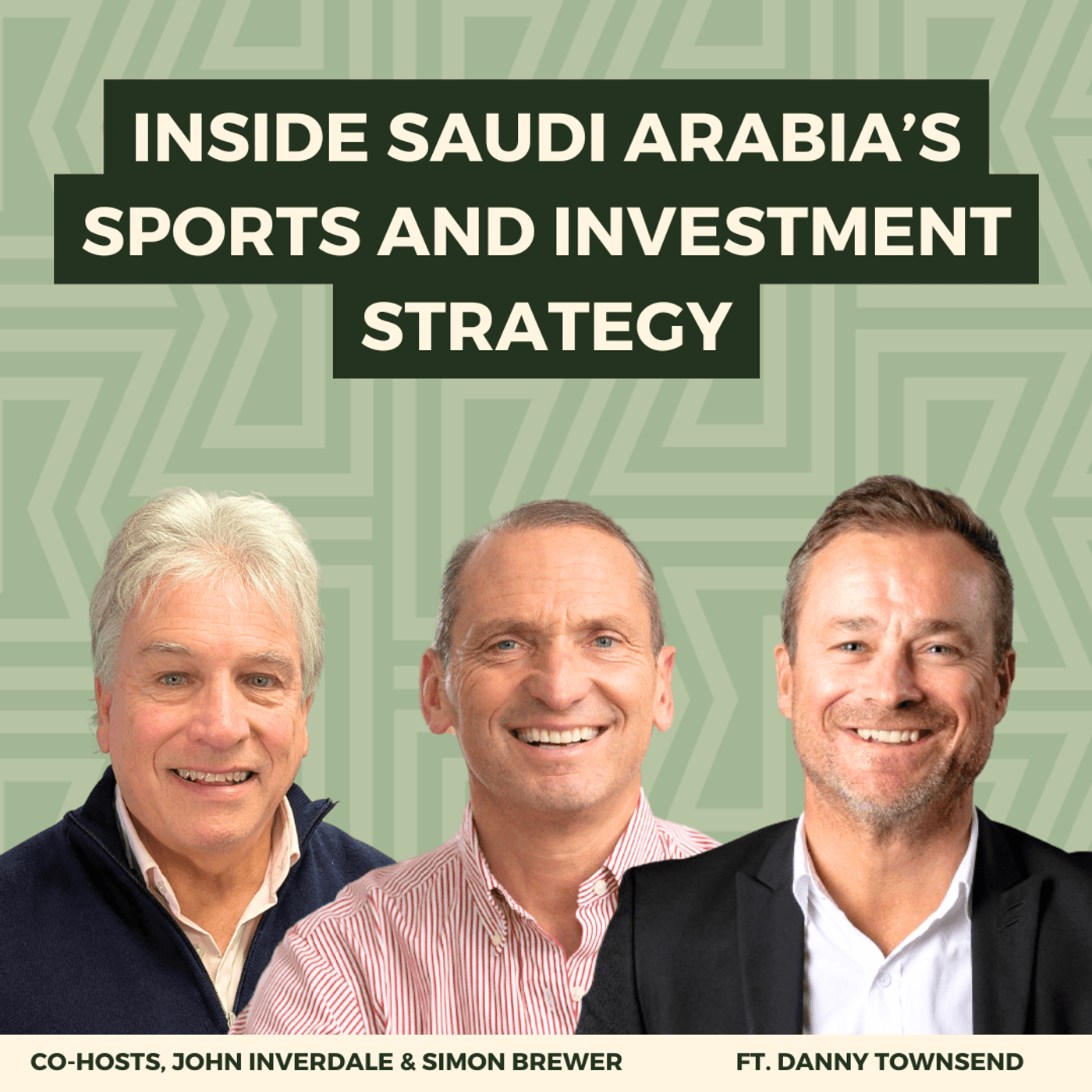
Danny Townsend, CEO of Saudi Arabia’s Surge Sports Investment Company (a wholly owned subsidiary of PIF), explains Saudi Arabia’s sports and investment strategy: why it invests in leagues/tours/series, how it selects assets, and how capital supports the shift from analogue media to digital fan ecosystems. He also discusses risk, valuations, and whether promotion/relegation should exist in modern finance-driven sport.
Guests
Danny Townsend (Australian; former professional footballer; later worked across racing and built an international sports agency; CEO roles including Sydney FC and CEO of the privatised Australian league; now leads Surge). John Inverdale (UK sports broadcaster/commentator; co-interviewer).
Key claims
Sport is “AI-proof” because of human competition and fan loyalty; most sports need money to transition to digital. Saudi’s mandate balances financial returns with Vision 2030 social goals (health, gender equality, youth participation). Surge invests in leagues rather than teams due to stakeholder complexity.
Notable examples
Triathlon World Tour/PTO and “T100” format; MMA via PFL Global and Saudi MENA League featuring Hatan Al Saif; Australian Open as entertainment benchmark; Strava/ Peloton/ Zwift/ community capture; Live Golf disrupting older golf audiences.
Written by AI. May contain mistakes. Listen to the episode to check what was said.
Chapters
Tap a time to open that second in VOUnderstanding the Sports Economy
0:45 to 2:34
Discussion on the dynamics of the sports economy and the potential for investment.
“So capital is required in order for sports to be able to make that transition.”
Danny Townsend's Journey in Sports
2:34 to 4:39
Exploration of Danny Townsend's career path and experiences in sports management.
“So, but I need to go back to Australia, first of all.”
The Business of Sports and Media Rights
4:39 to 7:24
Insights into how different sports operate and the evolving media rights landscape.
“would essentially go home from training and that would be that.”
Saudi Investment in Sports and Cultural Impact
7:24 to 11:18
Discussion on Saudi Arabia's investment strategy and its cultural implications.
“Yeah, I would say, I wouldn't say I bet.”
Demographics and Future of Saudi Arabia
14:37 to 14:47
Overview of Saudi Arabia's population demographics and future projections.
“for comprehensive research, insights and analysis on the global gold market.”
Exploring Saudi Arabia's Unique Sports Landscape
14:47 to 17:36
Discover the dynamics of Saudi Arabia's youthful demographic and the opportunity it presents for sports development.
“So let's just talk about Saudi because it is interesting for a number of reasons.”
Investment Strategies in Sports
17:38 to 20:19
Gain insights into the criteria for investing in sports and the importance of aligning with national strategies.
“But then let's take, talk me through the triathlon, for example.”
Evolution of Media and Sports
20:21 to 22:24
Understand how media companies are adapting to changes in the sports landscape and the impact on investments.
“And I think that's consistent in all the things that we do when we invest.”
Valuation Challenges in Sports Investments
22:25 to 25:06
Explore the complexities of investing in sports franchises versus leagues, and the valuation challenges faced.
“all over the world who would kill for the loyalty sports have from their fans.”
Measuring Success in Sports Investment
26:07 to 28:00
Discover how to balance financial returns with social objectives in sports investments.
“IFM Investors is a global asset manager, founded and owned by pension funds with capabilities in infrastructure, equity and debt, private equity, private credit and listed equities.”
Show all 24 chapters
Saudi Arabia's Strategic Vision for Sports Investment
28:00 to 28:31
Explore Saudi Arabia's long-term sports investment strategy and its challenges.
“we want to have done that, by 2034, that, by 2039, that?”
Challenges in Sports Governance and Investment
28:31 to 29:28
Discuss the challenges faced in investing in certain sports due to governance issues.
“So you're talking about maybe - Could you give us one example of that?”
Disaggregated Nature of Cycling Governance
29:28 to 30:38
Understand the fragmented governance in cycling and its financial implications.
“and if they're not willing to do that then the door's closed you move on to the next next sport Let's just talk about cycling because I am interested in it, you know, but you had mentioned it actually at the summit.”
Evolving Cycling to Attract New Fans
30:38 to 32:26
Learn how cycling can innovate while preserving its heritage to grow its fanbase.
“the hospitality experiences and all that, which normal sports would have.”
The Changing Landscape of Sports Investments
32:26 to 34:06
Discuss how sports are adapting to attract institutional investment amid financial transitions.
“We don't want to compromise the history of a sport.”
Promotion and Relegation in Modern Sports
34:06 to 35:28
Examine the pros and cons of promotion and relegation in the context of financial stability.
“This is a sporty question, but it's got money right at its heart.”
Technology as a Catalyst for Fan Engagement
35:28 to 36:20
Discover how technology enhances fan experiences and the importance of customer journey.
“Because the oldest joke in the world over here about sport is, you know, how do you make a small fortune out of sport?”
Maximizing Fan Engagement Through Authentic Platforms
36:20 to 38:36
Learn about the significance of dedicated sports platforms in enhancing fan loyalty.
“Look, I think I see technology as an enabler for sport.”
Lessons from the Australian Open Experience
38:36 to 41:18
Analyze how the Australian Open has redefined the sports-event experience and monetization.
“Then you own that customer journey in the sport.”
Opportunities in the Chinese Sports Market
41:18 to 42:00
Discuss the potential of the Chinese market in sports investment and its challenges.
“They've gone and seen an enormous cohort of people that cycle and going, well, the pro end of the sport's ignored them, we're going to go in and take them.”
Exploring China's Sports Market Potential
42:00 to 44:12
Learn about the evolving landscape of China's sports market and Saudi Arabia's unique position.
“I'm intrigued that if you are executing as you hope, there are a lot of other countries that are way behind you.”
The Impact of Live Golf on Traditional Golf
44:12 to 47:38
Understand the transformative effects of Live Golf on the traditional golfing landscape.
“But China is that big that even if they do it 10 % as well as we're doing it, they'll have an impact.”
Balancing Tradition and Modernization in Sports
47:38 to 50:56
Discuss the importance of respecting sports history while evolving for future growth.
“But I think what it's done is validated the fact that the thesis was correct.”
Saudi Arabia's Long-Term Sporting Vision
50:56 to 53:34
Explore Saudi Arabia's strategic approach to developing its sports ecosystem for the future.
“Does it matter to Saudi Arabia if in 10, 20 years time, they have performers on the international stage who are winning gold medals, who are competing at the top of the golf circuit, whatever it might look like by then.”
Transcript
Automatic transcript. May contain errors.0:00John Inverdale:The one thing I'll say about the United States, it's an enormous economy, right? And it's an enormous sports economy. So, and having lived there for five years, I watched a lot of really average sports businesses make lots of money because the market is so big. So if I can find sports where lots of people play it, lots of people consume it, they're consuming it at a young age, and the product is lacking aggregation and there's apathy in that product, then that's an opportunity. There are marketing teams and commercial teams in brands all over the world who would kill for the loyalty sports have from their fans.
0:36John Inverdale:The transition from an analogue world to a digital future is expensive. It usually takes time, sophistication and money, and most sports only have one of them, if any. Money buys you time and sophistication. So capital is required in order for sports to be able to make that transition. Do you intrinsically think that the concept, because we're so wedded to it in Britain, of promotion and relegation is fundamentally flawed in the modern sporting environment now because of the financial element? Yes.
1:12Danny Townsend:Sport is one of the world's most powerful convening forces, But the way fans connect and engage is evolving. Technology is offering new experiences, and the investing world increasingly wants a piece of the action and is joining the games. One of the powerful new players is Serge, Saudi Arabia's sports investment arm, and leading their team is Danny Tanzend, the CEO whose career has moved from professional football to leading sports and entertainment businesses. Danny, over from Saudi Arabia, actually via Australia, and sporting a very nice suntan, welcome to the Money Maze podcast. Thanks for having me on.
1:44Danny Townsend:And we'd also like to welcome a co-interviewer, a titan of sports commentary world, a household name and face and voice in the UK for several decades, John Inverdale. Thank you very much for joining us.
1:55John Inverdale:Nice to be here, Simon. And Danny and I have met before. So looking forward to crossing swords again.
2:00Danny Townsend:Well, we held the first Money Maze Allocated Summit in October and we asked John to run a panel titled Investing in Sport, Will the Ball Keep Rolling? You joined remotely and we had Doc O 'Connor from Arctos that have just comfortably sold their business for a billion and a half. And we had Ellie Norman from Formula E in a fascinating conversation. But I think today we specifically wanted to understand more about your business, all these intersections, opportunities, risk, trends, the forces, the priorities, and how you go about building this portfolio of activities. So, but I need to go back to Australia, first of all.
2:37Danny Townsend:You were, you have been a very successful sportsman, but were you in a, were you born to this family that sort of thrived on sport?
2:43John Inverdale:Yeah, absolutely. I think being Australian, first and foremost, sports play such an enormous role in the social fabric of the country. And you can't help but when you grow up in the northern beaches of Sydney, which is where I grew up, you've got sport all around you. Whether it be rugby league, rugby union, cricket, golf, tennis, surfing, which I spend a lot of time doing. and obviously football, it's just all there for you. And I think we're fortunate to grow up in a country where the minute you can walk or in some cases before you can walk, you're thrown into a swimming pool or handed a bat and a ball and told go play.
3:17John Inverdale:I'm going to ask you a rude question because you're not the tallest guy in the world. Does that help in surfing because you're closer to the water? Yes. Yes, it does. It's one of the few sports that it is better. It doesn't say there's not tall surfers, but certainly center of gravity is an asset. I had never thought of that. And now suddenly I just realized. What, that I was not that tall? Well, no, no, no. Because surfing, you know, will be in the Olympics. It is in the Olympic Games. And I haven't really thought of it in those terms. Because you always think about rowing, that you've got to have long levers.
3:47John Inverdale:I hadn't thought that actually in surfing terms, short legs might be quite an advantage. Anyway.
3:52Danny Townsend:We're not going to talk about T20 cricket either, because for the moment, England have the upper hand.
3:57John Inverdale:as Australia head home. Well, we can also talk about the ashes if you like.
4:01Danny Townsend:So you have, in addition to your undergrad degree, I see you went back and you got an MBA and you've worked your way through various parts of the sports industry, I think from racing through to, you know, your last job pre-surge. But what were the, what was the sort of the one or two key lessons those other experiences armed you with prior to your new job?
4:19John Inverdale:Yeah, look, I think it was, you know, having had a sort of a diverse career where I was playing and obviously what you take a lot out of a professional sporting career into business, there's a huge amount of similarities. And I was fortunate enough or unfortunate, depending how you look at it, to know that I wasn't going to have a long career because I had a knee issue, which enabled me to study while I played. So most of my teammates would essentially go home from training and that would be that. I would go to uni. So that sort of enabled me to prepare myself for life after football, albeit prematurely, and then take me on a journey that was the journey that I've been on.
4:55John Inverdale:And I think, you know, that was part of sort of phase one of my sort of career. And then you get into phase two, which is where I was working in racing and more just trying to work out how to operate in an office environment, because it's a very different thing moving from a training ground environment in football into an office environment. And then I was fortunate enough to establish a company with a business partner that took us around the world. And that gave us the opportunity to work in different markets, like lived in Singapore and set up companies in Japan, Korea, India, the Middle East, and then moved to London and did the same thing in Europe.
5:32John Inverdale:And then ultimately ended up in New York. So all of those experiences over that 14 years, we had that agency, I think set me up very well for this business that I'm working in now. I then went back to Australia after we sold that business, Went back to football, went back to Sydney FC where I'd been before and then privatised the league and moved across to be the CEO of the league. So lots and lots of different experiences sort of come together in the role I have now. The ability to be able to shape the direction of sport in Saudi but also shape the deployment of capital from Saudi Arabia into sports IP.
6:13John Inverdale:I take little bits of all of that journey with me every day. Are all sports the same, do you think, in terms of if you had a template for how to run them, how to operate them, how to maximise media rights, whatever it might be? Is there a basic premise on which you operate and then you just insert a horse, a football, a rugby ball, whatever it might be? No, I don't think so. I think they are all very different. And there's certainly a much wider gap in a two-speed economy in sport now, I think, largely because of the fragmentation of media and the way linear media rights deals have changed, particularly for what I would call sort of the tier two sports and below.
6:52John Inverdale:You've got your tier one sports that are always going to continue to garner significant investment from major, whether it be linear cable broadcasters or digital streamers, as it were today. and then the rest are all going to really have to change their business model. And it's a key thesis that I have around how we invest in that diverse portfolio of assets, some that might sit in that tier one area that will be safe and predictable for the next decade and the ones that might not be so and how our capital can be helpful in transforming those sports. Are you a gambler? Yeah, I would say, I wouldn't say I bet.
7:29John Inverdale:No, I don't mean in those terms, but I mean in terms of from, And if somebody said to you, with regard to Saudi investment, if somebody said to you, I tell you what, table tennis, that is where it's at. Are you somebody who'd be inclined to take a punt on that or is your whole premise based on odds on shots more than anything? No, I think it's a balance, right? I went back to my point earlier around a balanced portfolio. Kings League, which is one of our assets that we've invested in, is certainly not a predictable, rusted-on type sport. that's been around for a long time. It's an entertainment-based blended gamification of a version of football, right?
8:08John Inverdale:So, you know, we're very confident that that's going to deliver returns for us, but it's certainly a, let's call it on the higher end of the risk profile compared to some of the other things we do, like an ATP tennis tournament where, you know, for the last 30 years they've continued to appreciate in value and continue to grow in terms of their revenue and EBITDA profile. So, yeah, I think they're all different. I'm a gambler by, I suppose, entrepreneurial, right? And when you're entrepreneurial, you have to have a degree of tolerance for risk. But it's not my money. Well, that's the question I wanted to ask you because, in a sense, who's calling the shots here ultimately?
8:49John Inverdale:Yeah, the PIF, you know, we're a wholly owned subsidiary of the PIF. So the PIF essentially gave me a mandate to go out and deploy PIF capital for two things, a return profile that you'd expect as any investment fund. But on the flip side, what's unique to us is we do have a localization mandate, which is all tied to His Royal Highness, Mum had been summoned, the Crown Prince's Vision 2030, which is about diversifying the economy away from oil and gas and ensuring particularly important sectors like sport and entertainment, which have far reaching impact on the social fabric of the country, that we're getting that right.
9:28John Inverdale:And we're providing opportunities to inspire Saudis to participate in sport. We're hitting mobility metrics that are going to set the country up into the future around a lot of the health challenges that may come if we don't address certain mobility matters. Do you think that message, has got across because there is still a lot of negativity out there at Saudi's involvement in sport looking at it purely in terms if you if you like self-aggrandizement self self uh promote promotion of Saudi Arabia as a nation but that's that secondary objective is not commonly known I don't think the irony of that is that when you talk about sports washing and these things that you know, have been floating around for years, you know, the reputation of any organization is important to them, right?
10:22John Inverdale:So how you manage that, whether you're a country, a brand, you know, a sport, it doesn't matter. You all care about your reputation. I think where we've got and what I've seen is the authenticity of the strategy. And when you see that authenticity of the strategy, then you don't really care because you know you're doing it for the right reasons. And I think actions speak louder than words you know i think what you're going to see over the next decade is a sustained commitment to sport for return reasons for social change reasons for gender equality like there's a long list of reasons why sport is important to saudi arabia and it's interesting when you talk to saudis i don't say they don't care what people think but they're less interested in worrying about it anymore because they just know how authentic the strategy is and i think it's incumbent on someone like myself who lives in Saudi Arabia, fortunate enough to be in the rooms where we talk about this sort of stuff, to be able to tell that story.
11:18John Inverdale:Maybe I'm not telling it as often enough as I should. Well, no, I mean, I'm not sure it's a direct correlation, but I always think, I mean, I was in South Africa in 1995 for the Rugby World Cup, the famous Mandela and Pinar moment. And, you know, it's very hard to remember now how barely 30 years ago how the country was and yet how different it is now. And, you know, the captain of the springboks for the last 10 years has been a black player, which is something you couldn't even have contemplated 30 years ago. So is there a kind of a parallel thought there that changes in Saudi society, which perhaps the rest of us can't see at the moment?
11:58John Inverdale:If you could fast forward 10, 20, 30 years, you'd say, there we are. That was the catalyst for that. I've been there two and a half years. And I'll give you an example. We invest in an MMA competition called the PFL, Professional Fighters League. We have the PFL Global Investment. We also have a MENA League. The reason we have a MENA League is to open up MMA athletes an opportunity to participate in a professional environment. Our biggest star is Hatan Al Saif. She's female, Saudi female. To go back two years, that same Saudi female was completely unknown. She wasn't able to go to the gym. She wasn't training necessarily in an environment that would render her a professional.
12:40John Inverdale:We gave her that platform as Surge Investing in MMA, and now she's probably the most recognizable Saudi female in Saudi Arabia. She may not mean anything to you guys, but to young Saudi females who are aspiring to do all the things that their mother and their grandmother couldn't do can now watch her do that live and go, wow, I'm going to do that. And that's the inspiration that Saudis require. You know, when you talk about this big major event strategy and everyone thinks it's about, oh, making a big noise, it's about inspiration. You don't change your behavior unless there is something that inspires you to do something different.
13:16John Inverdale:So I'm not going to go and, as a 10-year-old young Saudi, go and suddenly wake up one day and say, I want to play tennis. What you're going to do is watch Sinner and Alkaraz in Riyadh playing in a world-class tournament and go, wow, these guys are amazing. I want to go and learn tennis. So that's what these major events do. And I think the narrative around what the rest of the world think is, oh, we're just trying to put Saudi on the map. No, no, no. There are far more deeper reaching reasons why we do what we do.
13:44Danny Townsend:The Moneymates podcast is proudly sponsored by the London Stock Exchange Group, a global leader in financial markets infrastructure. LSAC has a rich history of facilitating capital flows, empowering businesses and connecting investors to opportunities. Today, they provide world-class technology, data and analytics, playing a critical role in shaping modern finance. From their role in sustainable investing to their contributions to financial innovation, LSEG is helping to build more connected and efficient markets. Visit lseg.com via the link in the show notes to see how they're driving the future of finance.
14:20Danny Townsend:In times of economic and geopolitical volatility, investors will look to gold. Today, as the world navigates uncertainty and heightened risk, investors of all sorts will look to safeguard their wealth. We're thrilled to welcome the World Gold Council as one of our sponsors. Tap the link in the show notes to learn more or visit goldhub.org on your browser for comprehensive research, insights and analysis on the global gold market. So let's just talk about Saudi because it is interesting for a number of reasons. 36 million people is one of the youngest populations in the world. I think the median age, male is 32, 27 for females.
14:59Danny Townsend:Population is expected to double by 2100. And you've got this male-female ratio, I think one and a half males to females. How do you think about balancing quite a tricky equation?
15:10John Inverdale:Yeah, I think the beauty of where we're at is that we've got a greenfield opportunity. So you're not dealing with a lot of legacy issues. When I say, you know, if you think about trying to shift the sporting landscape of the United Kingdom. Very, very hard. It's so mature. There's so many institutions that have been here for a long time that will all protect their turf. We don't have that. Australia is the same. The US is the same. I can't have the same, as great a job as I could do in the UK. I would never change the macro profile of sport. So can I ask just on that basis then, all the attempts that cricket is making to break into the USA, would you look at them?
15:49John Inverdale:I was like, guys, don't be silly. That landscape is absolutely set in stone. You're much better off going elsewhere. The one thing I'll say about the United States, it's an enormous economy, right? And it's an enormous sports economy. So, and having lived there for five years, I watched a lot of really average sports businesses make lots of money because the market is so big. So you can't do that in Australia and it's harder to do here in the UK. So I would say, yeah, and the subcontinent diaspora that exists is real, right? And as we all know, Indians love cricket, and just because they moved to the US doesn't mean they don't love cricket anymore.
16:25John Inverdale:So I completely understand the rationale for the strategy. Can they make it work? Yeah, they probably can. But at the end of the day, like I said, the US sports economy is enormous, and you've only got to get it half right, and you'll go okay. So you've got this clean sheet of paper.
16:42Danny Townsend:You have to prioritize. Your investments are in tennis, triathlon, a number of things, but practically how do you get to the decision about those you really want to laser in on?
16:53John Inverdale:Yeah. So one of the other mandates I have is to align to the national sports strategy set out by the Ministry of Sport, which is, again, very rare and different to any – like, Doc at Arctos is not having to worry about the national sports strategy of the United States. Like, it's just there for all to see. So what I have is a mandate whereby the ministry sets what they call their priority sports, national sports strategy, there's 20 priority sports. I essentially, the starting point is look at those 20 sports and look at the ones I think have growth opportunity within them or have suffering from product apathy or would need capital to manage through a situation.
17:30John Inverdale:Are there any sports in there that would surprise us? No. Camel racing is probably not one that would come to mind. But that's one of them. Is it? Right, okay. But if I asked you to write down your stab at the top 20, you'd get 16 of them, right? Right, okay.
17:43Danny Townsend:Yeah. But then let's take, talk me through the triathlon, for example. I've done a few very slowly, but, you know, and I think that combines all sorts of interesting things. I don't know how it works outside of the Olympics as a spectator sport, but tell us a little bit about how you weighed up the variables.
17:59John Inverdale:It probably goes back one step further in terms of our investment thesis around where we think the direction of travel of sport is going. And I think the connectivity between participation and pro sports is going to become more and more important. And the reason for that is the fact that the linear broadcast deals that have been done and been propping up the sports industry for the last 30 years are going to go away from most sports. Not go away entirely, but they're going to need to change their business model. So when the whole shift from linear to cable to streaming, direct to consumer is happening and it's accelerating.
18:31John Inverdale:So what we look for is sports that are played by an enormous amount of people in every major economy in the world and skew young because the customer lifetime value of a 10-year-old is much better than a 50-year-old. So if I can find sports where lots of people play it, lots of people consume it, they're consuming at a young age and the product is lacking aggregation and there's apathy in that product, then that's an opportunity. We saw that in triathlon. And what PTO has done with the Triathlon World Tour is take a Formula One style concept and apply it into a sport that requires running, swimming and cycling.
19:13John Inverdale:The number of people that run, swim and cycle on this planet are enormous. So if you can be a place where you can capture that customer and serve that customer well, whether they run and swim or run and cycle or cycle and swim or run, swim, cycle, they're doing those things. And that's where we believe that T100 and PTO got it right is you can go to a triathlon event and complete in all three or you could just choose to do one. So it's inclusive. There's more and more people getting involved in these things. They're selling out races, not at a pro level. The pro level is what it is. What's interesting to us is the ability to connect with all the people around the world that run Swim and Cycle.
Read the full transcript
19:53John Inverdale:So when you look at all of our investments, we're really thinking about how do we build a digital economy around the sport? Because the old days of getting a media company writing you a check and you're going off and playing football, they're over, right? So you need to find ways to serve your customers in your sport and take a bigger share of the economy around that sport. Not the economy around your IP you own, but the economy around the entire sport. And I think that's consistent in all the things that we do when we invest. How would you describe the relationship then with all the relevant media companies?
20:29John Inverdale:Are you calling the shots or are they calling the shots? Because in days gone by, they called them. Yeah, I think their businesses have evolved dramatically over the last decade, right? And I think when you look at the traditional cable companies and then you look at the emergence of the hyper streamers and all those. We're actually in quite a buoyant market. There's a lot more options for rights owners selling their assets now than they were 10 years ago. The problem is none of them can generate the ARPU out of their customer that they used to. You know,$120 for a cable bundle, you know, those days are over.
21:04John Inverdale:That same person is paying$20. The arbitrage between the$20 and the$120 has got to be felt somewhere and media companies aren't going to feel it. they're going to pass it on to the people that they're paying money for to drive audience. So that's just a fact and that's not going to change. Now, you will still have the Amazons paying the NBA's enormous amounts of money because the NBA is that important. But why would Amazon go and pay another IP enormous amount of money when there's 80 % crossover between their current fan base and the other sport? So you have a diminishing return there. But, you know, I sort of laugh quite a bit about when people say, what do you think about the sports investment market?
21:44John Inverdale:What do you think about valuations? I said, look, if you're in any other industry and you see as many investment memorandums as I do and the number one revenue line is in decline, you'd run a million miles. You really would. You'd go, I'm not touching this thing. The difference is that it's AI proof. it's you're never going to replace the humanity that's required in sport and people care more about sport than any other sector like i i don't know about you guys but i don't really care about my mobile phone provider right i don't really care about the insurance company does anybody no no they don't but if there are there are marketing teams and commercial teams in brands all over the world who would kill for the loyalty sports have from their fans.
22:38John Inverdale:So that is so valuable and will continue to grow in value as things become more fragmented and your time spent. So essentially from a Saudi point of view, if the gas and the oil situation diminishes as the years go by, sport will never diminish. No. And the more you get engaged in it, the more it will increase because there will always be that market. Yeah, but if you IPO any product at the moment or any company at the moment, the first question the street will ask you is what impact are you going to have? First question. Every one I've seen. So sports like, well, no one's paying any money to watch 11 robots play football against 11 robots.
23:17John Inverdale:So all of that, I suppose, tech innovation. Well, when you say that, I mean, you've got in the Olympic Games, you're going to have gaming as Olympic events. You're going to have. But gaming is still you versus me with a gaming console. There's still humanity to that, right? And I think that jeopardy that's created when two people face off in something go back to the days in the Coliseum. Like that's sport. There's a winner and there's a loser. And, you know, I'm one of those believers in the fact that, you know, when young kids these days aren't allowed to play competitive stuff because there's going to be a winner and a loser.
23:53John Inverdale:I was like that is the essence of sport is someone's going to win
23:57Danny Townsend:then someone's going to lose. So I'd written down AI proof and I want to talk about technology. But before I do that, I want to go back to the, you're identifying those criteria, but there's also this large volume of capital that is now finding a home in the world of sports. How do you weigh up too much capital potentially undermining the very sports that you want to support?
24:20John Inverdale:Yeah, I think valuations are getting toppy just in general, But I would say more in the sports franchise space. If you look at where we invest, we don't invest in sports teams. We invest in leagues and tours and series and things that are moving around the world and are at a league level. They're hard businesses because they're complex and the stakeholders involved in sport are far more different than if I'm just investing in a team. Like if I was to invest, want to invest in a football club, there's typically one owner. That football club owner will typically have a price that he or she would be willing to sell their club for.
25:00John Inverdale:I would, if I offer he or she that amount of money, we shake hands, we do a deal. What we're trying to do in our investments is transform sports, which are enormously stakeholder complex. You've got the governing body, the federation, the media companies that are involved, the brands, the fans, the players. It is really, really difficult. And a lot of the traditional investors in sport don't have the patience or the time to try and organize those type of deals.
25:31Danny Townsend:Money Mates podcast is sponsored by JP Morgan Asset Management, Europe's leading active ETF provider by Assets Under Management. With over 40 ETFs powered by active research covering all major equity and fixed income markets, J.P. Morgan's ETF solutions are designed to meet the needs of today's investors, whether you're navigating market volatility, in need of an income upgrade, or targeting long-term capital growth. J.P. Morgan Asset Management is the home of active ETFs. Search J.P. Morgan Active ETF or find out more by tapping the link in the episode description. When you invest, your capital is at risk.
26:09Danny Townsend:IFM Investors is a global asset manager, founded and owned by pension funds with capabilities in infrastructure, equity and debt, private equity, private credit and listed equities. They believe healthy returns depend on healthy economic, environmental and social systems. And these are evolving on a scale never experienced before. To find opportunity, build value and meet the needs of future generations, you need scale, skill and expertise. That's what IFM Investors has built up over 30 years. I mean, we talked to a lot of the pure financial operators, all of whom have been building presences, as you know, in the Gulf and down and are all around the Middle East.
26:53Danny Townsend:But whereas they are focused on an ROI exclusively, you are balancing a series of social objectives. When you review the success of a target, how do you balance the fact you've got two columns?
27:07John Inverdale:Yeah, I think I would say the columns are probably not equal. And I mean that in the sense that Surge Sports Investment Company does what it says on the tin. My number one objective is to provide the PAF with return on capital in the sector. That's my number one priority. But everything I do must also drive some of those other objectives I talk to. Now, this investment could be a great investment with a higher IRR, but have a smaller impact on the Saudi sports economy. That's fine. or it could be a lower IRR investment opportunity, but have a huge impact on the Saudi sport economy. And that's also something that I can do.
27:49John Inverdale:So it's not all the same. I can move the sort of pendulum in different directions depending on what we think is the right investment. If I went into your kitchen and there was a wall chart up there, would it say by 2029, we want to have done that, by 2034, that, by 2039, that? Is there a clear strategy across the next two decades? I think there is a clear strategy for sure. I think the timing and the way in which it executes will come down to the opportunities that present themselves. Like you can only invest in things that are there in front of you, right? You can't make stuff up. So when you're talking about 20 sports, I could eliminate five or six already because you just don't have anything that you can invest in.
28:31John Inverdale:There's nothing there. So you're talking about maybe - Could you give us one example of that? Just structurally, look at cycling at the moment. and I've talked about this quite a bit, is that that sport is right for transformation, but the way it's governed makes it almost impossible for someone to come in and change the dynamic of that sport. Now, I'm not giving up on that because I think it's worth it, but there are sports that are federated that don't have vehicles that you can invest in. You can't invest in FIFA, right? whether you wanted to or not that's a federated model and most sports are federated now some sports have spun out their commercial assets into you know commercial vehicles and sold off some of that that that will continue to happen but some sports just aren't ready to do that or haven't you know been prepared to do that so whether you like it or not you've got to convince them they've got to change their governance framework to allow third-party capital into their sport and if they're not willing to do that then the door's closed you move on to the next next sport
29:35Danny Townsend:Let's just talk about cycling because I am interested in it, you know, but you had mentioned it actually at the summit. I think there was some agreement that cycling is ripe for disruption. Yeah. What is required?
29:51John Inverdale:Look, history is hard to change. And I think the way the sport of cycling has evolved over the years, it's, you know, you've got your grand tours, you've got your monuments, you've got a bunch of other races around the world. and they're all operated by different people, right? The Premier League is operated by one company, the Premier League. So they control all of the economics of that league, whereas in cycling, every race in itself is a league, right? So the Tour de France is run by ASO. That's it. The economics of the Tour de France is run by ASO. Then you go to the Giro d 'Italia. The Giro d 'Italia is operated by RCS Sport.
30:32John Inverdale:So you don't have this governing body, commercial governing body, that controls the aggregation of the TV rights, the sponsorship rights, the hospitality experiences and all that, which normal sports would have. You've just got this series of disaggregated events. And that's leaving an enormous amount of money on the table.
30:53Danny Townsend:And presumably, we talked about T20 before you came here, presumably there's a different format that could bypass the fact The Tour de France will never migrate into anything other than the Tour de France, but there are other ways in which people can love watching the great cyclists.
31:07John Inverdale:Short-form tours or something. Yeah, criterion races in cities. A point-to-point race starts in Milan-San Remo, starts in Milan, ends in San Remo. It's 280 kilometres. The bikes go past once. You can't sell tickets to that. You can't engage cycling fans effectively over a 280-kilometre stretch of road, whereas if you put that in a criterion with 10 loops around the city of Milan, all of a sudden the product changes. However, I do think you don't want to leave behind. This is why I think cricket's done well. They've evolved the product whilst maintaining the heritage of Test Cricket. And being an Aussie, obviously cricket is a passion of mine.
31:50John Inverdale:I would really question where Test Cricket would be today if Kerry Packer hadn't have done Monday cricket and then we hadn't evolved into T20 because we've continued to reinvent the sport whilst keeping the purest form of the game whole. And I think you would do that in cycling. You would not want to compromise the Grand Tours. You would not want to compromise the monuments because the fans like them. But to bring in new fans and to monetise the sport better, you've got to do things differently around that to make it work. And I think that was our plan, and we look at that approach in all the sports.
32:27John Inverdale:We don't want to compromise the history of a sport. Does every sport have its price, though? I think there's a point in time where sports, I'll answer a different way, is that I get asked the question a lot about how come all these institutional investors have suddenly woken up about sport as an asset class. I said, that's not the case. Sport needs money. So sports have gone to institutional investors, organised themselves in a way whereby they're attractive to institutional investors because they need the money. The transition from an analogue world to a digital future is expensive. It usually takes time, sophistication and money, and most sports only have one of them, if any.
33:10John Inverdale:Money buys you time and sophistication. So capital is required in order for sports to be able to make that transition from not worrying about their customer. You know, rewards is an amazing thing, right? Think about how many rewards things are you in, your airlines, your telcos, your everything, your credit cards. Those industries have been rewarding their customers for 30 years. Rewards in sport has emerged in the last two years, yet the loyalty of sports fans to their football club or their whatever it is, F1 team, is undeniable. Yet they've never bothered rewarding you for that loyalty. Now they're realising they've got to own that customer, they'll give that customer more.
33:56John Inverdale:They've got to own more of his wallet in terms of where he or she is spending their time in that sport. And then you've got to reward them and thank them for that and do things for them. But that hasn't been the case. This is a sporty question, but it's got money right at its heart. But do you intrinsically think that the concept, because we're so wedded to it in Britain, of promotion and relegation is fundamentally flawed in the modern sporting environment now because of the financial element? Yes. End of. Well, it's there to see. If you look at the financials of European football clubs compared to franchises in the United States, Granted, they're different markets.
34:38John Inverdale:The one massive difference is the fact that your future is never confirmed at the beginning of a year. And what someone's buying could be materially different based on how 11 players play for 50-odd matches a year. And that doesn't happen in the US. And I think, look, by the way, I'm a fan of promotion and relegation as a football fan because of the jeopardy that's created by the relegation battle and the battle for the title. But as a businessman - As a businessman, I'm taking the US system all day long.
35:13Danny Townsend:And as an investor, what is interesting is the 100-year returns of owning those US franchises, we had it again from Arctos, has been close to 10 % nominal over that period. So it's been an extraordinary, you know, investable, sustainable, and, you know, low volatility
35:29John Inverdale:source of returns. Because the oldest joke in the world over here about sport is, you know, how do you make a small fortune out of sport? Start with a large one, you know, that oldest, oldest joke. But actually in America, how do you make a small fortune out of sport? You invest in it and you make a small fortune. It's diametrically opposite, isn't it? I'm not suggesting there's not money to be made in European sport. There is. If you buy well and you execute well, like Tony Bloom's done a great job with that type of thing. But I think when you look at it, if you're comparing the two, if you had a model to pick, it's the US model all day long.
36:01John Inverdale:And I think that's, yeah, again, it doesn't mean there isn't money to be made in Europe.
36:05Danny Townsend:Let's talk about the fan experience, particularly technology. There's a lot of stuff being talked about, you know, augmented reality. And just tell us what is it going to be like for a fan and the points of interaction that really don't exist today?
36:20John Inverdale:Look, I think I see technology as an enabler for sport. not a replacement mechanism. So it's going to enhance the sporting experience in many, many different ways. And I bifurcate sports technology into two areas. One is fan engagement and how it's going to improve the fan experience and performance. How are you going to use technology to improve performance? I'm not really interested in performance because if I'm going to grow the enterprise value of an asset in sport, it's going to be because I have more customers and those customers spend more money there. so how do I how do I bring them into an environment that is enhanced and and when you take a step back and say well if I've now got to own more of the customer journey of that fan because I'm not getting as much money from the media company over here I want to go all the way down through their experience where they buy their tickets where they register their kids to play you know where they're signing up for extracurricular training where they're buying their shirts tickets I want to clip the ticket on everything because that's the way I'm going to replace that arbitrage between the old analog cable media rights and the digital future.
37:27John Inverdale:So that fan experience, if you can go to one place and it delivers utility to you, and it's probably a good segue to DAZN because DAZN, why we like DAZN is that DAZN is a authentic sports platform. Amazon is not. Netflix is not. You know, Paramount is not. And they never will be because they don't need to be. They're entertainment platforms. It just owns a sport platform. So it is maniacally focused on a sports customer. So if I'm a sports customer and I'm a Munchenglobalch fan in Germany, I go there once a week right now to watch my live match because they have the rights. As soon as they lose the rights, that fan is just going to go somewhere else.
38:11John Inverdale:Wherever the rights go, they'll follow them. But if you can deliver to that fan more than just that live streaming experience and you are part of their everyday life because you go there for, you know, whether it's betting or fantasy or you're buying your ticket there because you've got to buy a ticket to a live match or you're buying merch or news or community where you're bantering with your mates, then you're on to something. Then you own that customer journey in the sport. You don't own the 90 minutes of the week that you're streaming. And that's why when we looked at design and we looked at the roadmap for what design's doing, it sort of fit right into our thesis around how does sports partner with companies that can deliver them revenue through areas they're not currently touching.
39:01John Inverdale:I'm not just saying this because you're an Aussie, but I've just come back from the Aussie Open Tennis. Yeah, brilliant. and I think 1.1 million people went to the Australian Open this year but they say they say I mean I don't know how they work this out but they say that 40 percent of those people actually didn't see a single ball hit during the fortnight but they'd gone for because you went I'm going down the path of entertainment here they'd gone for the event you know the Australian Open tennis to me I think was the most extraordinary example that I've ever seen where food and drinking and music and the event and the whole entertainment entity, which has sport at its heart, I've never seen it so brilliantly crystallized and so monumentally successful financially in terms of, you know, you go to, you arrive in Melbourne and you simply cannot be oblivious to the fact that that tennis tournament is taking place.
39:59John Inverdale:It's an extraordinary success story. Is that, in many ways, is that a great benchmark, do you think, for the way that sport has to be promoted in the future for people's entertainment but also for financial reasons as well? Absolutely. Craig Tully and his team have done an amazing job there. He has optimized that event from an inch of its life. Like everywhere that you can make money, he's found a way to do it. And he's had to because you've got to pay more prize money. And if you think back 20 years, I think McEnroe played four or five Australian Opens. It's a grand slam. And Borg only played once.
40:32John Inverdale:Yeah, because it was irrelevant. And he's made it relevant, well, they've made it relevant, and they deliver a world-class event. And for all the reasons you've just said, they've now made that much money out of that event. It's a not-for-profit. That money goes back into developing tennis in the country. It goes back into players' pockets through prize money. So he's now obviously moved on to the US Open, and probably a lot of that is because he's optimized that tournament so much that the ability to continue to do that is pretty hard. So he'll do a great job in the US and do the same thing there.
41:05John Inverdale:US opens a great event anyway. But I think, you know, if you're not thinking about pockets of consumption in your sport that you've never touched before, I go back to cycling. What is Peloton, Zwift, all of these companies, Strava, what have they gone and done? They've gone and seen an enormous cohort of people that cycle and going, well, the pro end of the sport's ignored them, we're going to go in and take them. And they own the cycling customer right now, and they have no right to. The only right they have is they'll first move and realise that the people that are the top of the sport weren't organised in a way where they could capture them.
41:47Danny Townsend:Yeah, so Mike Horvath, who is the co-founder of Strava, is actually now one of our shareholders, and he's been a guest, and he talks about the fact he had the idea for that community, which was trying to replicate what it had when he was captain of the Harvard boats. And it took 25 years for the technology to catch up with the idea. I'm intrigued that if you are executing as you hope, there are a lot of other countries that are way behind you. And before you came in, John was talking, so I'll steal his point, which was, you know, the Chinese opportunity, because is this one of the great latent sort of sports market?
42:22Danny Townsend:Is there an argument that you are developing an expertise that becomes valuable to others?
42:28John Inverdale:I think certainly, but I'm a believer that the Chinese opportunity will come back. It's too big not to. So it lost its way a bit there. You know, again, going back to my point here, who was trusting China was the market that everyone was looking at 15 years ago, and it lost its way a bit. Why do you think it did? Maybe it was structure, aligned strategy wasn't there. I think it's very hard to mobilize a country, to all push in the same direction. But is it not just political as well? Is it ideological as well? I think it's both. I think it's both. And, you know, the beauty of where Saudi is, is that we have one leader with one vision that he's executing on based on probably being the hardest working person in the kingdom.
43:14John Inverdale:So not just standing there and barking orders. He's literally in everything. and the rest of the country get behind that strategy because that's what they're marked on. If he wasn't there, and he won't be there forever, obviously, is the structure there in place for it to continue after that? Yeah, but look, the Crown Prince, I think he's 39, 40 years old, right? So he will be around, God willing, for the next 40 years, 50 years is the rule of that country, which is unique because a lot of the, if you look back through the history, the king has sat for a fairly limited amount of time and probably taken the throne at an older age.
43:56John Inverdale:So this is a really unique opportunity for someone to have a long-term vision and get everyone, a very young cohort of population behind that vision. I don't think China's ever had that, right? And I think that's why we are unique in what we're doing and how we can do it. But China is that big that even if they do it 10 % as well as we're doing it, they'll have an impact. And I think that will certainly come around.
44:25Danny Townsend:I don't think it sits in your stable, but how do your colleagues view the golf investment that Saudi's made?
44:33John Inverdale:Yeah, I think go back to the principles that I talked about with Serge is that when you look at a sport that is not preparing itself for the future, then there's an opportunity there. And I think, you know, without going back to the history of live golf, I think there was an appetite for the PIF to work with the establishment to help them make that transition from, you know, a traditional sport, which has an older demographic of fan, into a more modern one that would be more appealing to the next generation of potential golfers. And that wasn't accepted. And I think the passion for wanting to make that change was there and they fulfilled that passion.
45:18John Inverdale:So I think the thesis remains the same. It was the willingness for the establishment to work with the people that felt there was an opportunity to change. The classic is my dad, you know, he's 70, what is he, 76 years old. He's been playing golf his entire life. My brother rang me and said, I want to take my dad down to Adelaide for the Live Golf. And I would say my dad, when I speak to him about Live Golf, would be critical. If you're going to go to the spectrum of where he stands, he's on the critical end. Right. He came back. Sorry, why would he be critical? Because he's the old school establishment, PGA Tour, you know, disruption's not good you know respected institutions yeah but he's 76 years old it was just more about the fact that it was disruptive right and it's broken the sport and this player has gone this way and that way and you know all the things that we know has happened so he was a non-believer and he went to it and he came back and he messaged me he said I'm a believer that was like a golf experience like no other why because it was entertaining you know and he went to the Australian Open down in I think where did Rory play down in Kingston Heath or whatever it was.
46:33John Inverdale:Royal Melbourne. Royal Melbourne, yeah, maybe Royal Melbourne. And he just said that wasn't that long ago. He said the comparison, he said the crowd, he goes, I was the oldest person there. He said the number of people in their 20s having a great time, he said, I was shocked. And he said when you compare that to the audience walking the fairways at Royal Melbourne, chalk and cheese, the people walking the fairways in Royal Melbourne won't be alive in 20 years. that group are going to be around golf for the next 40, 50, 60 years. So he just said, I get it. I get what's going on. And if the PGA Tour in five years' time replicated what Live Golf looks like, so actually there was no need for Live Golf, would you regard that as the ultimate vindication?
47:20John Inverdale:Look, that's not for me to say. At the end of the day, I'm not trying to vindicate anything. at the end of the day, that's those that managed to live golf. But I think it's clear now that the sport needed some change. Now, how all that ends up in the end, I don't know. But I think what it's done is validated the fact that the thesis was correct.
47:42Danny Townsend:But I want to go back as somebody who hasn't appreciated how much change, why are people like your father, who I might have identified with, why was it such a revolution? What's happening when you're there? Well, it's interesting. Have you watched must-live golf?
47:59John Inverdale:I mean, I watch a lot of golf, so I watch the bet, but obviously not very closely. But the format where you've got everyone on the same hole in terms of where they are in their round, you've got the team bit on the side, so you've got two leaderboards you're watching all the time, and you've got the atmosphere. Now, PGA Tour, to the credit, the Waste Management Open is probably more on the live end of the sort of entertainment spectrum than the heritage or something like that. But I think he was just compelled by the atmosphere. And sport is all about atmosphere. At a live event, you want the air to stand up on the back of your neck.
48:33John Inverdale:That's what you go to live events for. And he didn't get that at Royal Melbourne, but he got that at Live Golf because the vibe of the fans that were there supporting the golfers and cheering, the noise, the music, he just said. And he is not target market, right? But he left going, I get it. Is there a danger that you use the word heritage and history a lot, that the heritage and history of sport gets lost in the chase for cash, in the chase for the entertainment buck? Or actually, is that attitude really just basically outdated? And we have to look ahead because you had said to somebody in 1976 that sport would look like it does now.
49:17John Inverdale:They would have said, you've got to be joking. So the very nature of progress and change is that you have to adapt to it. I think you're right. I think it's incumbent on those in the industry like myself and others who are fortunate enough to work in it that we've got a responsibility to evolve sport but respect its past and hang on to the things and enhance and preserve the things that have made it great. Because Wimbledon will always be Wimbledon. If you try and disrupt tennis to a point where you diminish the value of Wimbledon, I'd say it's almost impossible. However, when you think back to Formula One, Formula One 10 years ago, you know, there were teams falling off the grid, let alone being sold for multi-billions of dollars.
50:05John Inverdale:And to think that people, fans would talk about getting rid of the Monaco Grand Prix from the calendar, if you said someone 20 years ago to someone in 2025 people were talking about removing the monaco grand prix from the formula one car you go you're mad it's impossible it'll never go but now what are fans want they want good racing and monaco doesn't provide great racing it's important in my opinion i would never i wouldn't drop it from the calendar because you can probably afford a couple of races that might not be like that but there are people saying that and things evolve. So I think it's incumbent on stakeholders in sport to do their best to deal with the opportunity of growth and the need for growth and disruption whilst doing their best to preserve the things that made sport great.
50:55John Inverdale:You can have all the power and the influence because money can buy you a lot of that. Does it matter to Saudi Arabia if in 10, 20 years time, they have performers on the international stage who are winning gold medals, who are competing at the top of the golf circuit, whatever it might look like by then. Does that matter or is that very much a subsidiary to the overall plan? Absolutely matters. That's a big part of it is how do you provide that inspiration that gets the participant playing? And then, you know, I go back to the tennis example. There's no point in me putting on a Masters 1000 in Riyadh and getting a 10-year-old kid there to get inspired if he leaves or she leaves and in the car on the way home says, I want to go play tennis.
51:43John Inverdale:And mum and dad go, well, there's no tennis courts. And then when they find a tennis court, go, well, hang on, I don't know how to play tennis. I need a coach. There's no coaches. So the ecosystem of sport needs to move forward together. So you can't do things in isolation, which is why we have a close relationship with the Ministry of Sport and the federations to ensure that if we're going to go and deploy capital to create that moment of inspiration, that they're ready alongside us to do their bit in driving that participation. Because ultimately, we want in 10, 20, 30, 40, 50 years time, Saudi Arabia to be winning lots of things on the world stage.
52:21John Inverdale:And there's no reason why we can't. because if you go back, my example being Australia, the Institute of Sport in Australia has been, you know, I think was one of the best examples of a country investing in sporting infrastructure to drive elite performance. But it took 20 years for that to kick in. We are now receiving the benefit for that at the moment because I think per capita we probably win more Olympic gold medals than any other country. Maybe the Kiwis claim that but I'm not sure that counts. You've used the phrase Vision 2030 a lot. What's Vision 2040? Well, it's funny you should say that because a lot of the Vision 2030 metrics have already been met.
53:03John Inverdale:The speed at which we're executing on that plan has meant that they've already been reset. So what Vision 2030 looked like two or three years ago has changed because we've been able to accelerate through that by achieving, well, we've achieved not just in sport but more broadly across the economy. um look this is not a 10 year flash in the pan and this is what i keep saying around when people ask me about oh sports watching is it short term it's like no it is a 50 year commitment to changing the country and what we've achieved in the last 10 will continue to evolve and accelerate over the next 40 um because we have leadership that has a long-term vision but is impatient.
53:47John Inverdale:And I think when you combine sort of ambition with impatience, you get activity and there's more activity in Saudi Arabia right now than I think any other country in the world.
53:59Danny Townsend:Well, I'm going to wrap up. It's been great, Danny, because I think nearly all of us who are involved in finance have been observing these large, you know, large allocations that have come relatively recently, or certainly the speed at which they've been and the size has been, you know noticeable and uh you know we're all aware of sports watchers that there's a lot that is changing i like the fact that uh at a geopolitical level you've got these saudi dynamics of youthful population fast growth um and you're trying to do something that is not easy you can argue a clean piece of paper you know gives you optionality which i accept but you're also trying to change or encourage to change a culture that wasn't traditionally associated with the sports unlike, you know, ours around here.
54:40Danny Townsend:You're looking at sports that are played a lot, but played by youth because there's some players, some of us are aging quite rapidly. You're looking at that whole spectrum of how fans are engaged. And I like the way you described the reward programs that exist in other industries that have been absent because haven't been required. So the sources of monetization are absolutely going to change. and that there are, you know, there are further disintermediation of sports, the obvious and the less obvious, which hopefully give people what they want, which is, you know, more choice, more excitement.
55:18Danny Townsend:And as John said on a separate conversation we had the other day, you know, the great ultimate magic of sport is that often you just don't know the outcome.
55:26John Inverdale:Absolutely right. Yeah. Couldn't agree more. I tell you what, I cannot wait to see what cycling looks like in 10 years time. Well, I just need to get my way. We'll see. If not, good luck. Well, John, Danny, thank you so much for being here today. Great to spend some time with you guys. Thanks, mate.
From the publisher
Sport is one the world’s most powerful convening forces, but the way fans connect and engage is evolving, technology is offering new experiences and the investing world increasingly wants a piece of the action.
One of the powerful new players, is SURJ, Saudi Arabia’s sports investment arm, and leading their team is Danny Townsend, CEO, whose career has moved from professional football, to leading sports and entertainment businesses. We also welcome a co-interviewer, a titan of the sports commentary world, John Inverdale.
In today’s discussion, Danny explains how they weigh the state of play. Priorities, opportunities, risks, trends, & forces in sport. He discusses the influence of technology, how the fan experience is changing and why much of it is AI proof. He discusses which sports might be ripe for change, where barriers to evolution lie, and how Saudi’s long term vision blends investment and societal ambitions.
The Money Maze Podcast is kindly sponsored by J.P. Morgan Asset Management, IFM Investors, World Gold Council and LSEG.
During the episode we cite J.P. Morgan Asset Management as Europe’s leading active ETF provider by assets under management. This is sourced from J.P. Morgan Asset management and Bloomberg, data as of 30 March 2026.