In short
Money Maze Podcast - Episode 196 Summary
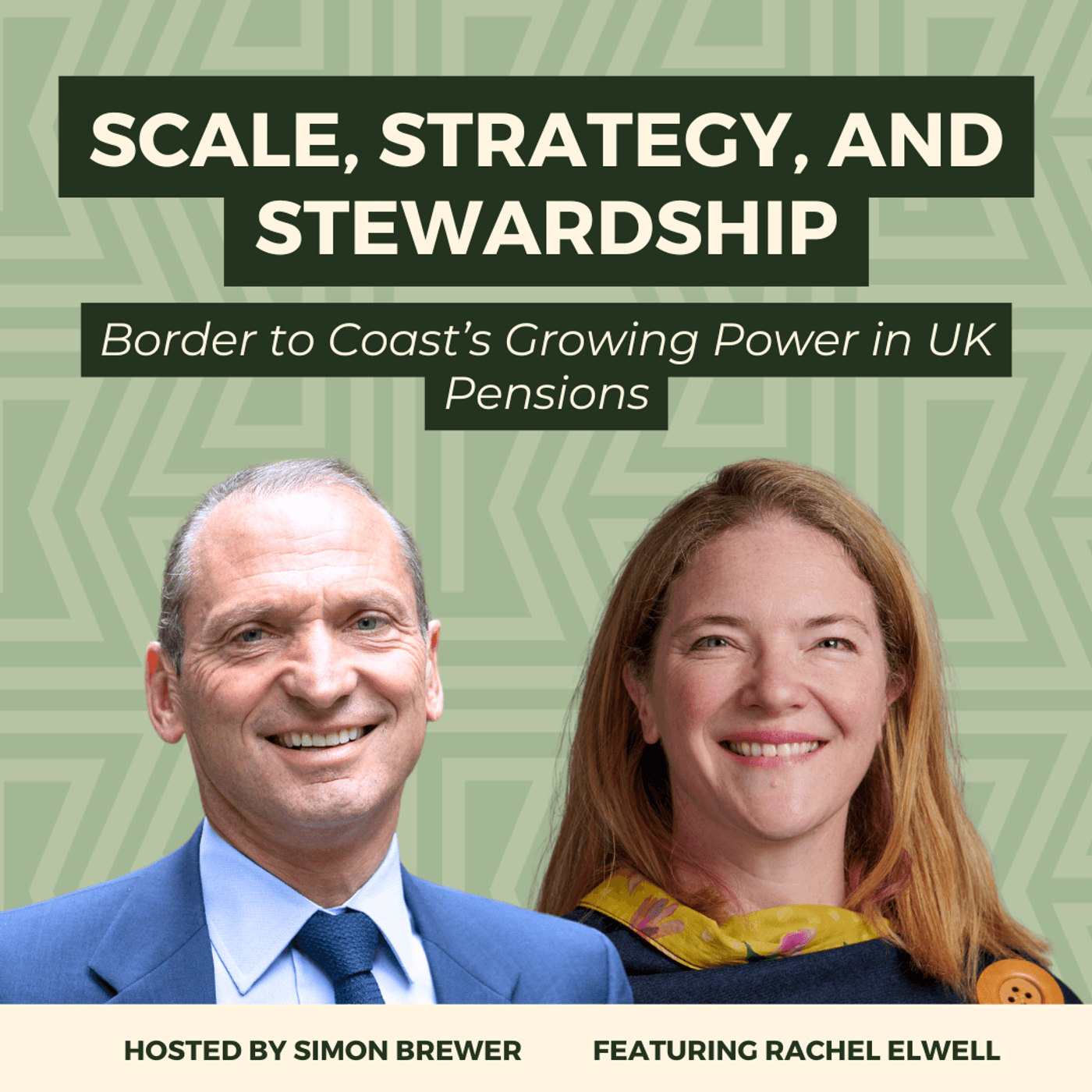
Episode Title: Scale, Strategy, and Stewardship: Rachel Elwell, CEO, on Border to Coast’s Growing Power in UK Pensions
Podcast Description: The Money Maze Podcast delves into the financial world, exploring investment strategies, capital allocation, and insights from industry leaders. This episode features Rachel Elwell, CEO of Border to Coast, discussing the dynamics of UK pensions.
---
Key Topics Discussed
Overview of the UK Pension Landscape
- The consolidation of pension assets into larger pools can provide significant advantages, including:
- Scale and access to diverse investment opportunities.
- Long-term investment prospects as true asset owners, unlocking opportunities that smaller funds may miss.
Introduction to Border to Coast
- Border to Coast is a prominent entity in the UK pension sector, expected to oversee nearly £120 billion in assets by April 2026.
- The organization is pivotal in the ongoing transformation of UK institutional investing.
Discussion with Rachel Elwell
- Background:
- Rachel's academic journey in mathematics and statistics at Cambridge.
- Her professional trajectory includes roles at PwC and Royal London before her current position at Border to Coast.
Investment Approach
- Asset Pooling:
- Background on the Local Government Pension Scheme (LGPS), which is among the largest globally.
- The push for consolidation initiated by former Chancellor George Osborne aimed to harness scale for better investment management.
- Investment Strategy:
- Diversity in investment beliefs and strategies across the 18 partner funds managed by Border to Coast.
- Emphasis on balancing active versus passive management and understanding the risks involved, especially in fixed income.
Key Investment Themes
- Active vs. Passive Management:
- The importance of understanding when to apply active management to manage risks effectively, particularly in fixed income.
- The need for a blended approach combining both active and passive strategies.
- UK vs. Global Investments:
- Discussion about maintaining a significant allocation (about 30%) in UK assets while also seeking global diversification.
- The strategic importance of investing in UK private markets and infrastructure.
Challenges of Pooling Assets
- The difficulty in merging different investment strategies and beliefs from various funds.
- The importance of effective communication and collaboration among partner funds to coalesce around a unified investment strategy.
Talent Acquisition and Retention
- Strategies to attract talent in Leeds, emphasizing the cost of living advantages and the burgeoning financial services sector.
- Initiatives like graduate and apprenticeship programs to foster new talent in the investment industry.
Insights on Infrastructure Investment
- Challenges surrounding infrastructure investments in the UK, including planning permission and the historical performance of public-private partnerships.
- The ongoing dialogue with asset owners on how best to structure investments for long-term success.
---
Key Takeaways
- Purpose and Long-Term Vision:
- The LGPS plays a critical role in providing secure income to members, emphasizing the need for sustainable investment strategies.
- Risk Aversion in Investment:
- An industry-wide risk aversion can hinder growth and investment opportunities.
- The importance of understanding risk management comprehensively, rather than focusing solely on cost efficiency.
- Collaboration and Partnership:
- Successful partnerships between asset owners and managers hinge on mutual understanding, long-term strategy alignment, and effective communication.
- Dynamic Nature of Investing:
- The landscape of investment management is evolving, with increasing emphasis on holistic strategies that consider both performance and costs post-investment.
---
Conclusion Rachel Elwell’s insights reflect a commitment to leveraging scale and strategic vision in managing one of the UK’s largest pension pools. The discussion highlights the intricate balance between risk management, investment strategies, and the need for a long-term perspective in the evolving landscape of pension management.
Listen to the full episode for more in-depth discussions and expert insights! [Money Maze Podcast](https://www.moneymazepodcast.com)
Written by AI. May contain mistakes. Listen to the episode to check what was said.
Chapters
Tap a time to open that second in VOUnderstanding Active Management in Fixed Income
0:00 to 0:45
Learn about the risks and considerations in active fixed income management.
“The value from active management on fixed income comes from really understanding what are your risks when it goes wrong.”
The Role of the LGPS in UK Investments
0:45 to 1:48
Explore the significance of the Local Government Pension Scheme in UK investments.
“We have, over the last few years in particular, started to really work with our partner funds to focus on investing in the UK in private markets.”
Introduction to Rachel Elwell and Her Background
1:48 to 3:39
Get to know Rachel Elwell, her educational journey, and career beginnings.
“Cambridge, maths and statistics, 93 to 97.”
Career Path: From PwC to Border to Coast
3:39 to 6:04
Discover Rachel's transition from PwC to becoming the CEO of Border to Coast.
“So let's look at your career, which at the moment appears to have been in three stages, 15 years at PwC, Royal London for six years and eight years so far, a CEO of Border to Coast.”
The Purpose of Border to Coast
9:48 to 14:01
Understand the purpose and significance of Border to Coast in UK pensions.
“Can we start with the description of why it's been created and what it is today?”
Investment Strategy and Objectives in UK Pensions
14:01 to 17:45
Explore the complexities of investment objectives among UK pension funds and the role of Border to Coast.
“the most difficult question they say are the simplest ones.”
Creating Ownership and Encouraging Voice in Investment
17:46 to 19:38
Learn about the importance of ownership and engagement in investment management decisions.
“to needing to be delivered by April, 2026.”
Challenges in Pooling Investment Strategies
19:39 to 21:44
Understand the challenges and benefits of pooling investment strategies in diverse partnerships.
“So that might sound like a very long-winded answer to, again, what might be a simple question.”
Navigating Private Credit in Asset Allocation
21:45 to 24:54
Gain insights into how to approach private credit allocation and its risks and rewards.
“I was thinking, hang on, do I understand that distinction?”
Active vs Passive Management in Fixed Income
26:09 to 28:00
Discover the debate on active versus passive management in the context of fixed income investing.
“So let's start with active versus passive because it's a really hot topic.”
Show all 24 chapters
Active vs Passive Management in Equity and Fixed Income
28:00 to 29:48
Explore the differences between active and passive management strategies in equity and fixed income markets.
“So if you think about we want to get exposure to a given market, and then what's the right best way of doing that?”
UK vs Global Investment Dynamics
29:48 to 33:09
Discuss the balance between UK and global investments in the LGPS and the implications for local economies.
“especially when we, I think there is generally recognition that what we've had for the last couple of decades for many, many reasons is not necessarily what we're going to be seeing for this next 10 years.”
Strategic Partnerships in Asset Management
33:09 to 35:24
Learn about the importance of strategic partnerships between asset owners and managers in the evolving investment landscape.
“But it's still, I think, quite a nascent industry.”
Talent Acquisition and Development in Yorkshire
35:24 to 38:26
Understand the strategies for attracting and retaining talent in the investment sector outside traditional hubs.
“It requires much more of a partnership approach, thinking about that long term, how do our strategy and the strategy of our partners support each other so that we've got real alignment of interest?”
Balancing Cost and Value in Investment Management
38:26 to 41:24
Examine the balance between cost management and delivering long-term investment performance in pension funds.
“So a really important part of the border to coast ethos is that idea of investing and learning and growing.”
Risk Management in Investment Decisions
41:24 to 42:00
Learn about the comprehensive risk management framework used in making investment decisions in asset management.
“And then you think about the sort of that whole external manager selection process where disappointing periods are as night follows day.”
Managing Investment Risks
42:00 to 43:30
Learn how different types of risks are managed in investment management.
“Risk, we're all, that's what we do, isn't it?”
Learning from Global Practices
43:30 to 45:40
Discover insights from other pension systems and best practices.
“But it's really important that we understand what the drivers of that performance are when we're making those decisions.”
Engaging with the Investment Community
45:40 to 48:50
Understand how to effectively engage with asset managers and investors.
“So, you know, we are really conscious of the role that we can play in supporting the UK in this actually really critical part of the UK economy.”
Investing in UK Infrastructure
48:50 to 50:50
Explore challenges and opportunities in UK infrastructure investment.
“And that's a really important principle and not just spending all of our time in sales meetings.”
Attracting Talent in Leeds
50:50 to 53:14
Learn about the talent landscape and how Leeds is becoming a hub for finance.
“I've had a question from Richard Tomlinson, who's CIO of LPPVI, relating again to Leeds.”
AI in Investment Processes
53:14 to 55:28
Understand how AI supports investment decision-making without replacing human input.
“in-house has enabled us to do is to create an in-house research capability, which is also the way that we are training the future talent and investment managers or portfolio managers of the future.”
The Risk of Risk Aversion
55:28 to 56:05
Discover why risk aversion itself can pose significant dangers to investments.
“People think that passive is less risky because you don't underperform a passive index, unless it's operational risk.”
Key Insights on Risk and Investment Performance
56:05 to 57:12
Learn why risk aversion can be detrimental to pension growth and the importance of performance after costs.
“I mean, I'd love to conclude when we've had these conversations.”
Transcript
Automatic transcript. May contain errors.0:00The value from active management on fixed income comes from really understanding what are your risks when it goes wrong. We've had a very benign credit environment for several decades now and I think sometimes people forget that it's not a free lunch. And so I think passive for fixed income needs a lot more thought. The LGPS is still heavily invested in the UK, so about 30 % of the LGPS is invested in the UK in different asset classes, which given that the LGPS is about 400 billion is quite a lot of money. We invest in UK real estate, some index link gilts, UK equities, UK credit. We have, over the last few years in particular, started to really work with our partner funds to focus on investing in the UK in private markets.
0:56Rachel Elwell:As we learned from our interviews with Ontario Teachers and the Australia Future Fund, the consolidation of pension assets into sizable pools can offer scale, access and reach, as well as much needed capital for the domestic economy. They offer the potential to act with a very long-term horizon as long-term true asset owners and to unlock investment opportunities that individual funds might struggle to access alone. Today in the UK, one of the most consequential organizations in UK pensions is Border to Coast. They sit at the center of one of the most significant shifts in UK institutional investing in a generation and oversee over 100 billion of local authority assets.
1:38Rachel Elwell:To understand the investment approach, the motivation, the challenges and the opportunities such scale bring, we're delighted to welcome Rachel Alwell, CEO of Border to Coast. Rachel, it's taken us nearly a year to pin you down, but you're here. Welcome. Thank you. It's brilliant to be here. I'm really looking forward to it. Great. Well, let's start with you. Cambridge, maths and statistics, 93 to 97. My wife, who studied maths over in Oxford, says that when she mentions this at drinks parties, people tend to move away. Was it a good choice? Oh, brilliant question. I had a fantastic time in Cambridge.
2:13I met some brilliant people who were lifelong friends and got parents to my children. um for me that was uh something i think when i was at the age of three i asked where my dad went to university and he said pembroke college and i um decided that that's where i was going before i even knew anything about cambridge which probably tells you um i'm a bit of a daddy's girl but but also um you know pembroke didn't allow women in until 1986 so they actually had their 10 year anniversary of letting women in. So I was still confidently saying I was going to Pembroke when actually it wasn't even possible.
2:56So maybe that also says something about, I like to set myself a goal and really go for it. I was very fortunate to come from a loving family who believed in the importance of education. My parents were teachers, my grandparents were a combination of teachers and uh managing um or station master for one of the local railway stations uh and i think that really gave me a sense of having had that start how important it was to do something with that um and i think that probably then links on to some of the things that I did in my later career and what I do now.
3:39Rachel Elwell:So let's look at your career, which at the moment appears to have been in three stages, 15 years at PwC, Royal London for six years and eight years so far, a CEO of Border to Coast. Let's just start with PwC because big organization, you tend to get streamed into different things. How early were you assigned to financial services and why? So when I was at sixth form, I did one of those questionnaires, you know, it's like, what should you do? And it came back with engineering, teaching, or being an actuary. And I'm not very good at building things. People don't allow me to do that. So engineering was never going to work.
4:23my parents fairly early on told me that um I probably didn't have the patience to be a good teacher so that left I didn't even know what an actuary was so I um when I was at university I wrote to a number of actuarial firms and said I don't know what an actuary is would you maybe let me have some summer work so I can find out and PwC uh saw something in that letter I was their first actuarial summer student and they were you know fortunate I they offered me a job after that um I guess the great thing about joining well it was PWU at the time was that they were not a traditional actuarial consultancy they were still growing and so one of the first things that I did was working with the then FSA on the pensions review and um looking at how should that be structured.
5:15And that kind of led me then into doing all sorts of different things with PwC across all industries. I worked heavily with transaction services, working with private equity firms. I was a scheme actuary for Tetley Tea. But I think increasingly got involved in doing new things. So when the pensions regulator was brought in, I was very involved in working out how you thought about those moral hazard clauses in doing a deal, for example. I then had some maternity leaves and by this stage, I'd moved back up home to Yorkshire.
5:59And coming back from that, I thought, actually, what do I want to do next? And I'd been there by that stage, if you include my summer student, well, for 17 years. But I'd been through so many different phases of my career, even though I'd been there that long. Every three, four years, I was doing something different. I think probably the highlight of my years at PwC was I was seconded to the Russian government and worked with them on their pension reform. That was just after I'd qualified as an actuary. So I was out there for about eight months. And that was absolutely fascinating. but just really gave me that sense of how you go into a totally alien situation and apply what you know work with the people there and bring that together right and so the royal
6:51Rachel Elwell:lantern which was the stint in between what was it that that you thought was going to give you didn't have uh so part and this maybe is you know another part of the story for me um is the people that you meet as you are working. So the story with Royal London was I was looking about what the next stage of my career would be. And I'd been working with the then FD at Royal London and really enjoyed the relationship that I had with him. And this was at a time when Royal London were very acquisitive and were looking to consolidate the mutual insurance industry. and he invited me to come and help him to do that with the pension schemes.
7:34So I went across to Royal London. I set up their pensions team on the staff pension side. But then that led to other things. So I set up the group treasury function. I established the investment office. And so I was the person at the insurance company who was the biggest client for Roland and asset management business at that time. And I think having people who see something and give you the opportunity and the support to do that has been a really important theme, both for me personally, but then I hope how I want to work with other people.
8:19Rachel Elwell:Schroeder's Capital is the private markets division of Schroeder's, combining the experience of specialized local teams with the scale, rigor and resources of a global institutional platform. Schroeder's Capital provides its clients with global access to differentiated and specialized strategies encompassing all private markets asset classes, from private equity to real estate, infrastructure and the broad universe of private debt and credit alternatives. This approach enables Schroder's Capital to access opportunities and investments that are often difficult to find elsewhere, while also having the broad capabilities and perspectives needed to build holistic solutions and deliver tailored outcomes across private markets for both institutional and wealth clients.
9:06Rachel Elwell:Discover more at schroderscapital.com. Remember, capital is at risk with investing. IFM Investors is a global asset manager, founded and owned by pension funds with capabilities in infrastructure equity and debt, private equity, private credit and listed equities. They believe healthy returns depend on healthy economic, environmental and social systems and these are evolving on a scale never experienced before. To find opportunity, build value and meet the needs of future generations you need scale, skill and expertise. That's what IFM Investors has built up over 30 years. Which brings us to your role as CEO of Border to Coast.
9:51Rachel Elwell:Huge job, huge challenge. Can we start with the description of why it's been created and what it is today? So local government pension scheme, when you think about it as a whole, is one of the largest pension schemes globally. It's in the top 10, and depending on what's happening with market prices, possibly top six. When we think about how it's administered across the whole of the UK, there are over 100 administering authorities, each managing that in small or large individual schemes administering the same benefit structure. But you have from the Isle of Wight, which is under a billion of assets under management sterling, to Greater Manchester Pension Fund, which is over 30 billion.
10:46And so about 12 years ago, then Chancellor George Osborne talked about how can we harness this scale in a different way. So he said to the LGPS in England and Wales, go away and create half a dozen asset pools. At the time, they were referred to as sovereign wealth funds, but clearly they're not. They are pension funds. And their purpose is to make sure that the investments that are needed to support the benefits within the local government pension scheme can be run well. and that we can harness the benefits of scale. Even back then, over 10 years ago, part of that policy intent was how can we work with these large asset owners to invest into infrastructure in the UK?
11:39So that's, I think, always been a thread through the last decade. Obviously, in the last few years, that's become more prominent again, just like it has for the whole of that asset owner in the UK. I think at the heart of this, the local government pension scheme has nearly 7 million members. The average member is a 47-year-old woman working part-time earning£19 ,000. The average pension is about£5 ,000 a year. And I think for the UK, it's serving a number of different policy initiatives. the most important of which is for low earners it's providing a secure income incredibly cost effectively so it costs um less than half of what it would if we were trying to provide this through defined contribution plan partly because you can pull the investment risk and the and the life mortality risk.
12:44And I think that is sometimes we can get wrapped up in, is defined benefit a good thing or a bad thing? But actually, if you look at that in the system in the UK, the LGPS does that very, very well. I think the other bit that we sometimes miss is that income is the difference for these individuals between having provided for their own and contributed to their own retirement versus it being means tested. And there's plenty of information out there about what that means psychologically for people, that they've made their own security. Right, right. So I think for me, going back to when I was growing up and what I found important, the great thing about Border to Coast is that it has that purpose that is really important for the individuals, for local communities, for taxpayers, whilst also being really fascinating intellectually and allowing me to grow and develop and do new things within our industry.
13:57Okay.
13:58Rachel Elwell:So purpose is clear. Economic logic is clear. Let's move to the investment equation. the most difficult question they say are the simplest ones. Is there a single unifying investment objective? So I talked about there being over 100 administrative authorities, and they all have different investment beliefs, risk appetites. They're starting from different places. Some of them are well-funded. Others are still looking for that investment return to be above 100%, although the recent valuation, the LGPS is more than 100 % funded on the whole. And the vast majority of those administering authorities have funds that are more than 100 % funded.
14:46So what that means in reality is we have, or will have from the 1st of April, with the consolidation that we've seen just recently, 18 of these pension funds who we are providing investment services to. And each of those 18 have their own investment beliefs and objectives. Part of our job is to work with them to help make sure that they are clearly articulated and then to provide advice on how they might invest to support their objectives in line with their beliefs.
15:23Rachel Elwell:So in investment parlance, does that make the investment advisor, not the investment manager? Well, we do both. And actually, when I say we do both, we will do both because this is a big part of the recent changes. So historically, when we first started pooling, we had just the investment implementation part of that process. So that meant if we go back to eight years ago, we were working very hard, small team in Leeds, looking to create a regulated asset manager. We went live at the end of June 2018 with the first transition of assets of about 10 billion to manage equities in-house, both UK and overseas developed markets.
16:14And the journey from then has been to build out those capabilities. A couple of years ago, we knew that we were coming towards the end of building those capabilities. So we worked with those partner funds to say, what do you want us to do next? Next, you've built and you've had the vision to build this center of expertise in Leeds with in-house investment management expertise, as well as partnering with external managers. What do you want us to do next? And that ended in our 2030 strategy, which thinks about the funds as being holistic. partner fund pensions committees set the strategy and the risk return appetite border to coast implements that we have investment reporting that enables the funds to oversee but importantly to feed back into how they set the strategy we've got strong oversight and governance in place as you would expect and then making sure that in any system only being as strong as its weakest link that everybody really understands and their role is valued in that system.
17:32And so we agreed this strategy and what we needed to build that was signed off by our shareholders who are our partner funds in August, 2024. And then in November, 2024, the government launched their LGPS fit for the future consultation, which took our 2030 strategy to needing to be delivered by April, 2026. So in April, by April, 2026, the key elements of that system will by and large be in place.
18:06Rachel Elwell:And merging disparate pools of capital is a challenge that investment organizations face, you know, when they go through change, give us some practical illustrations of both the challenges and where you've learned how to do this better. So I think going back to, maybe that comes back to why did I take the job? And I suppose the first one of these, I talked about really enjoying creating things. And this is such a brilliant opportunity to create something that is meaningful in Leeds, which is where I'm from, or at least I should say I'm from Sheffield, which is very important for those people who are from Yorkshire to make that distinction.
18:54But I grew up near Leeds. So being able to contribute to what's already a very strong financial services economy with building an investment manager in Leeds was really intellectually challenging and also close to my heart. But I suppose historically, my leadership roles have probably been more technical. And I think what was really interesting about this role on top of all of the other things I've just talked about is the chance to work with people who don't have to do something and don't necessarily want to do it. And how do you create an environment where people feel ownership of what's being created and feel that they have a really strong voice in what's being created and, I hope, feel proud of what's being created?
19:43So that might sound like a very long-winded answer to, again, what might be a simple question. originally bringing together the 11. They'd already decided that they wanted to work together and that meant that I could come in and talk to them about facilitating that. And I think there's some really important themes when you're pooling. One of those is what's the cost of compromise? So if partners come into that very fixed on what they already have and all of the detail of it it's almost impossible to pull so really working hard on uh how different are you to another partner if we put those things together we can get these benefits of scale and actually the compromise isn't big so we had a I'll give you an example just to bring to life, I hope.
20:48Investment grade credit, an asset class very close to my heart, partly because I'm very good at it. And so I got a brilliant opportunity to work with that team when I was there. We had this really fascinating discussion about whether there is a difference between buy and maintain and low turnover active on investment grade credit. And when you really get down to it, they're not that different. particularly in a vehicle that's pooled where the pension schemes are continuing to put money in. But the terminology of that had really grabbed people's attention. So we had to work on what do we really mean by these things, these phrases that people are using?
21:34And how do you get people to see that actually they're really not that different? Here's the benefit that you get if you come together.
21:40Rachel Elwell:Can you just break those two? because actually, as you said that, and I think I understand the fixed income world quite well, I was thinking, hang on, do I understand that distinction? So help me. Yeah, so people will talk about buy and maintain or buy and hold. It's really a concept in the insurance market when you're backing liabilities that are really not changing and you want to buy fixed income that will really match those liabilities. that's a phrase that people have adopted and brought into the pension world but it's not really insurance and pensions have some similarities but they're not the same and um but i think people who had heard that idea of of buy and maintain or buy and hold had got the idea this is a way of harnessing fixed income um without having to pay the costs sort of continuing to actively manage your portfolio.
22:39Low turnover active is sort of the same thing. You're actively managing a portfolio, but you're not seeking to turn it over. And for investment grade credit, those turnover costs can be quite high. So the people here were really committed to that because they saw that that was a way of managing the portfolio actively, but without a lot of trading costs. and the people in the buy and maintain strategy had definitely heard this is a really low cost way of managing fixed income but they hadn't appreciated that they were basically just
23:14Rachel Elwell:the same phrases for the same portfolio yeah well we're going to talk about some of those investment strands but since we're talking about fixed income investment grade straightforward explosion the last two decades around private credit with its attendant risks and rewards and And some like myself would have been arguing for a while that there's been too much enthusiasm and disappointment is the natural contour in this space. How do you think about that at an asset allocation level? So we have to bear in mind that it's not been the pool's job to decide whether how much funds want to have in private credit.
23:53It's been the pool's job to date to talk. OK, you want to have private credit in your allocation. You've been advised by your consultants or other advisors about the structure to have. How can we most safely deliver that asset in the way that you've envisaged it in your strategy? And so we engaged with our partner funds on what are you looking for? What sort of return do you need to meet your strategic objectives? actually you don't need to go after some of the riskier end of the private credit market you can see that as a diversifier a source of income you are long-term um asset owners so you can bear the liquidity risk and hopefully harness a liquidity premium debatable obviously in private markets, whether that exists.
24:49But trying to make sure that we are working with, in the case of private credit, we do that in partnership with, typically with GPs, to make sure that the way that those portfolios are constructed are managing the risks and are at that less risky end of the market, which I think will serve as well as we see this current phase play out.
25:20Rachel Elwell:I'm thrilled to share that the Money Maze podcast is sponsored by the World Gold Council. They champion the role gold plays as a strategic asset through expert research, commentary and insights. And it's not just your portfolio that may benefit from gold. Learn how gold mining is supporting female economic empowerment and small businesses via their new documentary series called Gold, The Journey Continues. Tap the link in the show notes to start watching. I'm excited to announce that the Money Maze podcast is sponsored by the London Stock Exchange Group, known as LSEG. At the heart of the global economy, LSEG provides data, analytics and infrastructure that connects investors, businesses and economies.
26:01Rachel Elwell:LSEG is where ideas meet capital, enabling sustainable growth and opportunity. Tap the link in the show notes to learn more. which then of course takes us to the the two levels of to insource versus the outsource and to be passive versus active we've had a lot of conversation with you know manny roman at pimco and uh you know various others about just how how active does outperform passive in the world of fixed income but equally there are costs and uh you know these aren't these sound simpler questions than of course they are but just you know just let me understand how you think about approaching those two topics?
26:40So let's start with active versus passive because it's a really hot topic. And I think historically the LGPS has had significant proportions of its assets in public markets. So I think it's important that we think about fundamentally at the heart of it, what are you trying to achieve with your investment strategy over time? and what's the best way of accessing that in the market. So I think when we talk about the active versus passive, we can sometimes get caught into have you under or outperformed a market in the short term. If you are a long-term asset owner, you're actually wanting to manage long-term risks.
27:23There are times when passive management is a really important tool to have in your toolbox. but there are also recognition that being passively managed and not thinking about what's happening with that underlying benchmark can send you on a journey that is increasingly concentrated and we've probably seen a bit of that in the equity markets recently but it's not I don't think it's right to sit here and say active is always better than passive and we can clearly see that over a fairly long period if you look at equity markets. So if you think about we want to get exposure to a given market, and then what's the right best way of doing that?
28:13For equity markets, we still see that there is value in being actively managed, particularly around those long-term risks, or about diversification between countries and geographies. but we also think that there are efficient ways of accessing that and we would want to give our partner funds diversified exposure to it so we would have a blend of working with some specialist managers externally partnering with them i'll come back to when we decide how to do that we have our in-house team that is actively managing great track record slightly more benchmark aware being able to manage those long-term risks.
28:57And then we'll also have some more index strategies, whether that's smart beta or market cap. But if you look at fixed income, I mean, there are ways of constructing indices to avoid this, but it's very basic level. You are investing into the most indebted companies if you do it passively. And I think the value from active management on fixed income comes from really understanding what are your risks when it goes wrong. We've had a very benign credit environment for several decades now. And I think sometimes people forget that it's not a free lunch. And so I think passive for fixed income needs a lot more thought.
29:48especially when we, I think there is generally recognition that what we've had for the last couple of decades for many, many reasons is not necessarily what we're going to be seeing for this next 10 years.
Read the full transcript
30:00Rachel Elwell:So the other thing that intrigued me when I went through the portfolio construction was this UK versus global because we know what's happened to UK weightings in indices and all sorts of the factors that, in other words, might not have driven down the weighting that is represented. But there is a sense that you're also acting as a source of domestic capital as well. And we've now got this US where there's extraordinary overweight in stock markets that if history is any lesson, we know that the next big move will be down, not up, but the US is a percent of the weight. Maybe I'm again revealing my ancient history, but how do you balance what I imagine is a tension?
30:42It's a great question. The LGPS is still heavily invested in the UK. So about 30 % of the LGPS is invested in the UK in different asset classes, which given that the LGPS is about 400 billion is quite a lot of money. um so the i think first of all giving the actuarial answer our liabilities are in sterling we are quite interested in what's happening with home inflation and um you know being able to pay liabilities that are sterling based but we are also a very large investor so we need to be well diversified across all different kinds of risks which is why i think to your point around country diversification when you're a very long-term investor?
31:32Do you need to capture all of the upside if you can give that long-term stable return that will enable the contributions to be stable and affordable? In terms of the UK specifically, we invest in UK real estate, some index link gilts, but not a lot because the LGPS is open and is a seeker of growth. UK equities, UK credit. And we have, over the last few years in particular, started to really work with our partner funds to focus on investing in the UK in private markets. So we launched a fund a couple of years ago, which we call UK Opportunities. There we are looking for things to invest in across the capital stack, but that are additive.
32:27So they're looking to bring in new energy opportunities to do some regeneration of a place, to invest in small and medium enterprises that will create jobs. And that's something that our partner funds are particularly engaged in. If we get that right together, and I don't think this is just about the LGPS or our partner funds, but actually the industry as a whole, then it's possible for us to have a win for members and local tax players and employers in terms of return, a win for the communities. And that means a win for the UK more generally. But it's still, I think, quite a nascent industry.
33:16And so I asked our partner of funds i said look i think this is a 10-year strategy but i would like us to start somewhere and it would be helpful to work with you to be able to engage with the parties in the industry to really start to test and build that and and that's also been a part of the work that i've been doing across the industry through the investment association and through the roles that I've had providing a voice with government about the development of policy over the last four or five years.
33:54Rachel Elwell:Okay, and clearly infrastructure is an important part of the overall asset allocation, very important part of, you know, what the UK needs to do. We both know Luba Licalina from IFM and she did have a question, which was what do you think are the key ingredients for building a successful strategic partnership between an asset owner and an asset manager? Yeah. It's a great question. Thanks, Libra. So I think one of the themes that I think is really important as part of this wider consolidation of the asset owner pensions industry in the UK is that as you create these bigger pools, you can bring in more investment expertise, which means that the partnership that you need with the asset management industry and that you can have with the asset management industry is more peer to peer.
34:48Now, my view is that that leads to a stronger investment in management industry, because you have clients who are able to really challenge you on how to be more innovative and to really think about what you're doing and how that meets the needs of the beneficiaries and the asset owners. That means though that the way that the investment industry is engaging with the asset owner industry, and this is not just for ourselves or the local government pension scheme, but you can look at NEST. You can look at what's happening in the consolidation within defined contribution, many examples of that. It requires much more of a partnership approach, thinking about that long term, how do our strategy and the strategy of our partners support each other so that we've got real alignment of interest?
35:48Rachel Elwell:Which of course brings us to talent and location. You're in Leeds, not Edinburgh or London in terms of its historical financial expertise. How have you gone about attracting human capital, retaining human capital, finding human capital? So I suppose the first thing I would say is Yorkshire is an absolutely brilliant place to live. Right. And, you know, the cost of living, the lifestyle that you can have there is significantly different to being in London. And I know because I've lived in Bacow. And I think it's brilliant that I get people dropping me a note on LinkedIn saying, can I have a job?
36:35I'd like to come home. So I think there is a sense for people about Yorkshire that that's a real thing. Being able to do that for a truly national organization, we're not just investing in Yorkshire, I think has been a real, actually a real privilege. And the reality of this is Leeds is a very strong financial services industry. You know, historically, that's where things like the cooperative movement and the mutual movement were flourishing. It has strong lawyers. It has strong consultants. What it didn't have was an investment manager. But in terms of the skills and understanding of financial services, I think you've seen that there's recognition of that in other announcements that have been made, such as Bank of England, the National Wealth Fund, FCA, HMRC.
37:37There's a lot of places looking to build in that what has now been termed as the Northern Square Mile. Right. So I think from that perspective, very well connected. It's only a couple of hours down to London. It's only a few hours up to Edinburgh. The reality is that I have been blessed with this heritage from our partner funds at South Yorkshire, East Riding, Teesside had investment teams and they transferred into the new organization that was Border to Coast. That gave me a core. I then have, I guess, brought in people into leadership roles and other roles, but they have really bought into helping young people or new people into the industry to develop.
38:32So a really important part of the border to coast ethos is that idea of investing and learning and growing. And one of the first things I did was to create a graduate scheme, probably sooner than anybody would necessarily have thought, given all of the other priorities. But finding people who've got that four to six year experience is tricky when you're not here in a like that real hub. So really early on, bringing on that graduate scheme. And then last year, we also brought in an apprenticeship scheme, which I'm super proud of. And I think as we've grown and people have seen and hear about what a great place it is to work, it attracts more people who want to, absolutely, they want to be doing the investment, but they also really believe in helping the next level of talent come through.
39:31Rachel Elwell:And look, it's got to be better for the UK that we have this expertise, if that's not too grand a word, distributed. One of the criticisms of the sort of, and I'm going to say the local government schemes, but they're not alone, is they've been overly obsessed with costs to the detriment of performance after costs. And that obviously shines a spotlight on sometimes the less liquid areas or the hedge fund areas. Or, you know, I think under the Manchester House of Cords, et cetera, there is a shift in thinking. But just is that a fair criticism? So my partner funds have always thought about value, not about cost.
40:15Now, the lived reality of pooling is that it should deliver cost savings. and it's been important that we've been able to talk about those cost savings particularly because the lgps were investing in creating this center of expertise for themselves so they do want to see some return on that and you know ultimately we will stand or fail by our long-term investment performance not by how much it's cost but in the short term and particularly when we had the lower yields, costs were a driver in that too. So making sure that we are doing this well, efficiently, thoughtfully, we can be answerable to the public about the costs that we generate.
41:06That is important, but it has to be seen in the wider value for money. Are we delivering the long-term investment return.
41:17Rachel Elwell:And when you think about the outsourcing, you have the virtue of being long-term. Our industry is given to talking that story, but acting otherwise. And then you think about the sort of that whole external manager selection process where disappointing periods are as night follows day. How do you talk to your team about those, you know, about what is remains people love to think investing industry is, you know, straightforward is not. It's really hard. Yeah. So you asked me the question earlier and I didn't come back to it. So maybe this is a good time to, I think the first thing is when we're thinking about whether something is insourced or outsourced, it's not just about cost.
42:00It clearly can't be. Risk, we're all, that's what we do, isn't it? Our business is managing risk, but that's not just the investment risk. It's the operational risk. It's the regulatory risk. It's the people risk. And ultimately, investment management is absolutely a people business at the heart of it. So we have a clear framework that we work through when we come to a new mandate or asset class opportunity to think through all of those things to make a recommendation and a decision about whether we want to be internal or external. At the heart of that is this, what are the necessary resources to be able to manage the risk?
42:45And can we find those safely, cost effectively? And so that's been a big driver of our thinking. and not just thinking about the whole of the asset class as a plug and play, but real estate is a really great example. The investment process breaks down into a number of different chunks. You don't have to outsource all of it. There are elements that you can do in-house safely and there are elements that are better to be outsourced. In terms of the inevitable, when we have decided to work with external managers, um no active manager is outperforming all the time if they were then there'd be something yeah i think so so um you know we seek to build long-term relationships with our external managers we are wanting to understand whether they are doing the mandate that we've asked them to do if they are continuing to operate that mandate and it's going through a period where that's not performing against its benchmark, that can be explained.
43:58What's really worrying is when they start to deviate from that or they look like they're chasing to catch up and having that safety that they know that they're keeping on talking to us, we can understand that should mean that we can go through those ups and downs in a way that might be trickery if you're being driven by very short-term oversight. But it's really important that we understand what the drivers of that performance are when we're making those decisions.
44:30Rachel Elwell:And we started this conversation by referencing Canada and Australia's consolidation around those pension assets. And then people do forget the UK is the second largest pension pool in the in the world have you been able to study observe and learn from any of what one might term best practice in those places yeah absolutely so i'm fortunate i've worked in the industry for longer than obviously it looks like i have not as long as me but uh so i i already had a you know really good sense and and network across that peer group but I think the brilliant thing about working in the asset owner industry is that we are not in competition with each other.
45:14We want each other to succeed. So the welcome that we've had from absolutely the Canadians, the Australians, but also the Dutch and the Nordics, they've all got significant experience. So one of the things that we did really early on was we spoke to asset owners across around 10 or 11 different retirement systems. What can we learn from you? What went wrong? What went really well? What should we do? What should we be aware of? and you know if anyone's ever really interested in that there's a report on our website it it really helped to flag some of the things that we embedded into how we work so for example how do you engage with your people how do you tell the story of why what we're doing is really important and a bit different and who would that appeal to how do you work with your stakeholders so that they really understand what you're doing where are the pitfalls when you're creating or changing a system the importance of thinking of the fund holistically and not trying to break it up into different bits and not allow those pieces to learn from each other so i think at the beginning that was really embedded into what we do latterly uh we're getting to this next stage of our development over the next few years we'll be growing from around 55 billion of assets under management to over 110 billion that scale enables us to move into the next stage of the things that we can do the um the resources that we'll have available to us the capabilities so that's when you can really start to look at how have the australians and the canadians thought about how they harness that scale what lessons have they learned from that and how can we not make the same ones
47:21Rachel Elwell:now there'll be a lot of people beating beating the paths to your door this is a large pool of assets etc that's not a new phenomenon but it's you know in a world that's in a world of eager investments talents they are you know they'll want to talk to the consumers of that capital How do you manage just that process of filtering? So, you know, we are really conscious of the role that we can play in supporting the UK in this actually really critical part of the UK economy. So right from the beginning, we've wanted to be very open about how you can work with us, how the sorts of things we're looking for.
48:03Right at the beginning, we had open days. I'm sure we were funding LNER for a while because we were inviting the asset management industry to come up to Leeds and engage with us. And we could say, this is what we're looking for. This is how you work with us. So I think part of managing that is being really clear with the industry how to engage. We can't take meetings with everybody. The team are too busy. So if we can be really clear about the sorts of mandates we have and how you can share your ideas with us, and we can then reach out to those where that's a good fit, that I think is that right balance between open and transparency, which comes from being public sector.
48:54And that's a really important principle and not just spending all of our time in sales meetings.
49:00Rachel Elwell:A couple of outsider questions. One from Will Campion, my business partner, on UK infrastructure, which is so needed. And yet one has the impression because of planning restrictions and all sorts of other obstacles that it sounds more appetizing than it is easy to affect. What's your observation? Well, it's clear that there's a heck of a lot that's needed to be invested in the UK by infrastructure. Anybody who's lived in the north knows just how bad the northern railway network is. So there's obviously a need for the capital. I think the real challenge is how to create the structures and the opportunities that that capital can be deployed into.
49:46And a big discussion over the last few years has been, this is not that the capital doesn't want to invest in the UK, whether it's UK capital, UK asset owners, or indeed international asset owners coming in. so then absolutely things like planning permission might be part of that but we also have the reality that public private partnerships have not always worked well in the uk so there are big brains putting their thinking caps on to how to create those structures that enable asset owners to be able to put their capital to work. We have to really start somewhere. And we've made some great investments into things like life sciences facilities, supporting new companies or companies that need more capital to grow.
50:48But there's definitely more that can be on in this area.
50:52Rachel Elwell:I've had a question from Richard Tomlinson, who's CIO of LPPVI, relating again to Leeds. And he was particularly interested in your ability to identify and retain talent. And what is the talent specifically that you want to attract there? Why do people want to work in Leeds? Because it's a fantastic place to be, really buzzy, lots of investments, lots of new things happening. From a university perspective, there's over 70 ,000 students, six universities just within Leeds, and that's without looking across the wider north and northeast. So brilliant pipeline of talent, a strong financial services sector already existing.
51:39The element that perhaps historically has been missing is the investment side of it. But with ourselves, with the National Wealth Fund, with the recent announcement around the UK investment team, there's a recognition and a growing recognition that Leeds is actually another hub for financial services and investment.
52:04Rachel Elwell:So the world of AI and the words around AI are banded with great ease, but with great, I suspect inaccuracy given the unknown unknowns to quote Donald Rumsfeld. Are there any ways in which you are practically deploying AI where you are seeing it help your investment process? It's a great question. And I think at the heart of the investment process are people making decisions based on many, many different inputs and their experience. so ai can support the people in doing that it can help to create research packs give people starter for 10 help refine the communication of what people are doing but um my my personal view is that certainly the lived experience of ai hallucinating or not being able to see the whole picture.
53:05It definitely is an aid and a support for our teams, but it's not something that I would see as replacing those teams. One of the things that being able to do the investment management in-house has enabled us to do is to create an in-house research capability, which is also the way that we are training the future talent and investment managers or portfolio managers of the future. And so I see them using AI to support their learning and their growth, but it's still a very important part of the process that that is done in partnership.
53:46Rachel Elwell:That's very honest. And we are going to do one episode where I think we're going to take six investment managers and allocators and ask them for very succinct answers you've just given of how is it helping? Is it helping? or actually what is excluded, you know, so more to follow on that. Four closing questions. What's the piece of investment content or research that's your must read every week? So at the risk of sounding a little bit like I'm bigging up my investment team, we have a weekly email where the whole team contributes to one of our investment leaders who does a brilliant job of curating it.
54:22anything that they've seen that really captured their imagination. And that could be a podcast, or it could be an article in The Economist, or it could be some research coming from across the industry. And it's a cracky read.
54:37Rachel Elwell:Okay, well, fantastic. Well, you mentioned podcasts. I'm clearly not going to say anything that reflects self-interest. But one stat that absolutely amazed me is that 1 billion people a month watch, watch podcasts on YouTube. Such is the change in consumption. How do you relax? I listen to the rest is history podcast. Okay. Well, there you go. One more for goal hanger. And what irritates you most about the investment business? So I think one of the irritating things is that we have created an an industry or a society that is so risk averse that we stop seeing the wood for the trees. People think that cash is less risky, but it's not less risky when you've got high inflation.
55:31People think that passive is less risky because you don't underperform a passive index,
55:41Rachel Elwell:unless it's operational risk. Whereas actually, if what you're trying to do is manage long-term risk, passive can lead you down a much more risky route. So people not seeing the bigger picture or the system because they're getting caught in the minutiae, I think that is something that all of us need to work hard on. What a great place to stop. I mean, I'd love to conclude when we've had these conversations. In fact, if I was only going to take one thing, it would be what you've just said. And Dame Julia Hoggart talked about this as well, is the greatest risk is risk aversion. By not taking risk, you actually endanger the very asset pool, pension, small savings that you wish to grow, number one.
56:26Rachel Elwell:Number two, for somebody who said at the beginning that you were no engineer, I would say that you are engineering an enterprise very successfully and putting it together. So maybe you should review that bit of your CV. And I think thirdly is that apart from the importance of this fast pool of capital that is growing to be able to serve the UK and service beneficiaries in a meaningful way, is I think there is also recognition that in the past, costs have perhaps weighed too much of an importance in the investing equation. And it is for us all in the investing business, performance after cost that really matter, particularly in some parts of the portfolio that maybe people will run shy of.
57:11Rachel Elwell:So, Rachel, thank you. It's taken a year, but we've been delighted to have you here today. Thank you, Sam. I've really enjoyed it.
From the publisher
As we learned from our interviews with Ontario Teachers and the Australia Future Fund, the consolidation of pension assets into sizeable pools can offer scale, access, reach, as well and much needed capital for the domestic economy.
Moreover, if executed well, offers the potential to act with a long -term horizon as true asset owners, and to unlock investment opportunities that individual funds might struggle to access alone.
Today in the UK, one of the most consequential organisations in UK pensions, is Border to Coast. They sit at the centre of one of the most significant shifts in UK institutional investing in a generation and as of April 2026, will oversee over nearly £120bn of local authority assets.
Rachel Elwell explains their investment approach, the motivation behind the merged pools and the advantages scale offers. Specifically she discusses insourcing versus outsourcing, passive v active, where and why, UK v Global and the role of private assets, fees, and why Leeds is such a great place to live and work.
The Money Maze Podcast is kindly sponsored by Schroders, IFM Investors, World Gold Council and LSEG.