In short
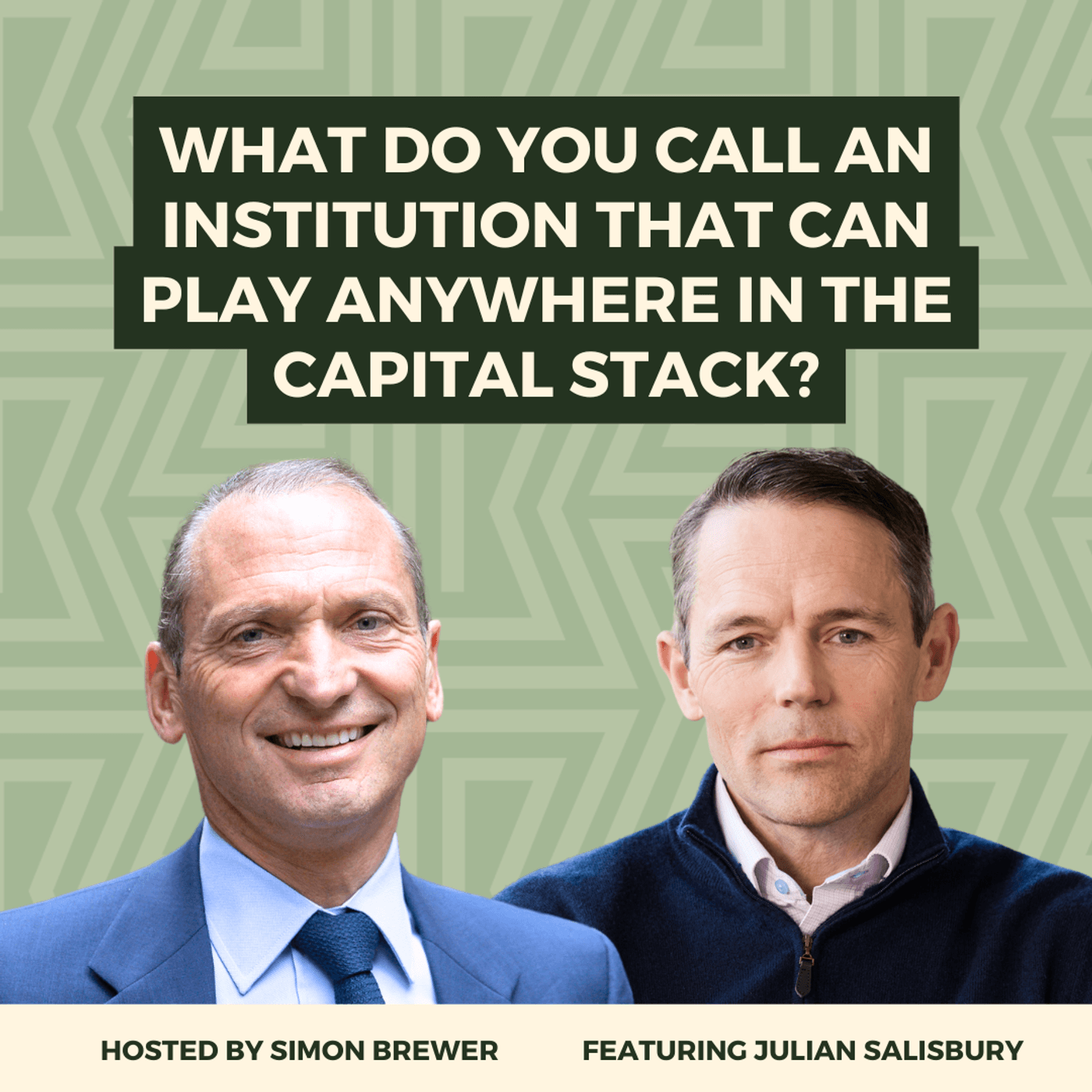
Sixth Street’s approach to being a “multi-asset class” investor that can deploy capital anywhere in the capital stack, quickly and with one integrated team. The episode also covers why private markets are evolving (liquidity/complexity trade-offs), opportunities in Europe vs the US, and why sports is a durable investment theme.
Guest backgrounds
Julian Salisbury is Sixth Street partner, co-president. He studied sports science at Loughborough University, then trained at an accountancy firm (financial services audit). He worked at Goldman Sachs for 25 years, moving from risk controller/high yield research to distressed/special situations, and learned to “connect the dots” across specialized groups.
Key claims
Sixth Street’s “one team” culture enables multi-asset investing rather than siloed teams. They target transitional moments where public markets can’t help (e.g., dislocations, refinancing needs). They can pivot between lending and equity quickly (days/weeks). They expect alpha to compress in commoditized, lower-touch credit, while higher-touch complexity should retain negotiating leverage.
Notable examples
Airbnb (investment turned around in six days post-COVID); a data center platform in Australia (provided construction capital when no equity/subordinated debt was available); UK/Europe direct lending fund; sports deals including Real Madrid stadium refurbishment (revenue share), Barcelona media rights, Boston Celtics, and Bay Area FC (women’s soccer control investment).
Written by AI. May contain mistakes. Listen to the episode to check what was said.
Chapters
Tap a time to open that second in VOIntentional Firm Culture
0:00 to 0:12
Learn about the intentional culture designed for effective communication at the firm.
“I'd say from day one, it was very intentional that the firm was built with this mindset of one team, one group of individuals who were constantly communicating with each other, that would move together.”
Multi-Asset Class Investor Culture
0:12 to 0:26
Explore the importance of culture in being a multi-asset class investor.
Investor Identity in Capital Stack
0:26 to 1:04
Discuss what it means to be indifferent to where to invest in the capital stack.
Julian's Academic Journey
1:14 to 2:26
Julian discusses his academic background and early interests in finance.
“So I need to step back for a minute or two because as we do our research, we look at the journey people have taken.”
Entry into Finance: The Goldman Sachs Path
2:26 to 3:56
Hear about Julian's unexpected journey into finance and his time at Goldman Sachs.
“I pursued that passion for a period of time, which was great as a multidisciplinary kind of degree.”
Lessons from a Non-Linear Career Path
3:56 to 4:32
Julian shares insights on the challenges of following non-linear career paths.
Merchant Banking Landscape
4:32 to 5:32
A discussion on the historical role of merchant bankers and their evolution.
“They provided capital for long-distance trade.”
Impact of Regulation on Investment Banks
5:32 to 6:12
Exploring regulatory impacts on banking and shifts in capital usage.
“Early on, you would get this kind of hybrid model where they would commit a lot of balance sheet model, balance sheet capital alongside of client capital.”
Connecting the Dots in Investment Banking
6:12 to 8:24
Julian reflects on the importance of connecting different areas of banking.
“using client capital, third-party capital to pursue similar opportunity sets.”
Connecting the Dots in Investment Banking
8:36 to 9:02
Julian reflects on the importance of connecting different areas of banking.
“to meet the needs of today's investors, whether you're navigating market volatility, in need of an income upgrade, or targeting long-term capital growth.”
Show all 24 chapters
Sixth Street's Vision and Culture
9:02 to 10:19
Julian outlines the vision and cultural foundations of Sixth Street.
“Although you weren't there at the outset, you're clearly absolutely integral to what is happening today.”
Global Footprint of Sixth Street
10:19 to 11:43
Understanding the global presence and team structure at Sixth Street.
“I'd say from day one, it was very intentional that the firm was built with this mindset of one team, one group of individuals who were constantly communicating with each other that would move together.”
Investment Strategies in Capital Stack
11:43 to 14:00
Discussing Sixth Street's strategic approach to capital stack investments.
“but you will look at any position in the capital stack of a company that is raising capital.”
Transition Capital in Growth Industries
14:00 to 21:29
Explore how investing in transitional capital can support growth industries.
“Do you think that your preference is always to look at the growth industries above the legacy industries or is in fact something else going on?”
Transition Capital in Growth Industries
21:59 to 22:17
Explore how investing in transitional capital can support growth industries.
“At the heart of the global economy, LSEG provides data, analytics, and infrastructure that connects investors, businesses, and economies.”
Comparative Analysis: US vs. Europe in Private Credit
22:17 to 28:00
Discuss the evolving landscape of private credit opportunities in the US and Europe.
“And the comparison I'm interested in is the US versus Europe.”
Market Dynamics and Individual Investor Challenges
28:00 to 30:26
Explores the current state of private markets and the challenges faced by individual investors seeking returns.
“What we've seen is, as those retail flows have moderated, that the people who were investing that capital have just, you know, they're a little bit more willing to negotiate tougher terms on documentation.”
Investment Continuum: Complexity vs. Simplicity
30:26 to 35:13
Discusses the spectrum of investment strategies from simple to complex and the implications for returns.
“But where, as you look around the financing that's going to be required, do you specifically feel that that complexity premium will be rewarded?”
Opportunities in the Sports Investment Sector
35:13 to 39:59
Analyzes the investment landscape in sports, highlighting various opportunities and the value of live events.
“aren't necessarily people buying bonds or loans in the secondary market.”
Flexibility in Investment Structures and Risk Management
39:59 to 42:00
Examines how Sixth Street navigates investment risks with flexible fund structures.
“By the way, interesting fact, I think we had 50 ,000 people show up to a game a few months ago for the Bay Area football club.”
Investment Opportunities in Stuck Private Assets
42:00 to 44:29
Discover where the biggest opportunities are in the capital stack today, especially in stuck private assets.
“Where in the capital stack are you being paid most for complexity today?”
Challenges in Scaling Capital Solutions
44:30 to 47:18
Learn about the challenges firms face in scaling capital solutions while maintaining investment discipline.
“And what's interesting about that space, you know, there's a lot of chatter around ABF and like people trying to reinvent themselves as ABF specialists after the fact.”
Advice for Young Professionals in Finance
47:19 to 50:17
Gain insights on essential qualities and practices for young people starting their careers in finance.
“And our North Star is delivering great outcome for our investors.”
Key Takeaways and Closing Thoughts
50:18 to 52:18
Reflect on the main insights from the discussion, including the evolving nature of investment opportunities.
“Number two is that yesterday's what we call special situations are normally, well, now today, pretty plain vanilla.”
Transcript
Automatic transcript. May contain errors.0:00I'd say from day one, it was very intentional that the firm was built with this mindset of one team, one group of individuals who were constantly communicating with each other, that would move together. And this is what I meant about having the culture to be able to be a true multi-asset class investor, the culture to be able to move from one place to another, rather than having siloed teams of individuals who would occasionally connect the dots at the top of the house.
0:25Julian Salisbury:if as an investing organization you are indifferent to where you invest in the capital stack of a company what type of investor does that make you answers might be a generalist answer number two might be a specialist situation firm and answer three is difficult to define and thus to allocate to as a pension consultant or traditional allocator but if the creators of this investing entity spent much of their lives at goldman sachs and were drawn from the proprietary investing groups there, especially special situations, the answer becomes clearer and might in part explain how they've grown since inception in 2009 to manage$125 billion today.
1:04Julian Salisbury:So to discuss opportunities, priorities, capital deployment and why Sixth Street would argue they're different, I'm pleased to welcome Julian Salisbury, partner, co-president. Julian, welcome. Great to be here. So I need to step back for a minute or two because as we do our research, we look at the journey people have taken. And I saw Loughborough University, undergrad and postgrad. Now, for those watching and listening from abroad, Loughborough is the preeminent sports university in the UK. So I was intrigued as to, and we just interviewed Carl Clark of Beta Technologies, who's running the largest electric aircraft company in the world.
1:40Julian Salisbury:And he was an ice hockey player at the US National before he then became the CEO of this business. Were you playing with options before accountancy and finance? Look, I grew up in a family where finance was a black box. I didn't know anything about investment banking. I'd never heard of Goldman Sachs where I went on to work for 25 years. I didn't know about investing. My mother was a math teacher. My dad was a chemist. I knew what I liked at school. I knew what I was good at. I was pretty numerate. I was good at the harder sciences. And I was passionate about sport. And, you know, as I was approaching university decisions, I applied to three engineering courses and two sports science courses.
2:23And I ended up choosing sports science at Loughborough. I pursued that passion for a period of time, which was great as a multidisciplinary kind of degree. You know, you're doing not just human biology and biomechanics, you're doing psychology and sociology. So it's like a broad based undergraduate degree. And then ultimately, and this was in the mid-90s, early 90s, and my dad had always said, doctor, lawyer, accountant, or engineer, for the four paths you're supposed to pursue. And at that point, accounting seemed like the most open option. So I joined an accountancy firm, spent three years training there, happened to be in the financial services audit department, so got to know a little bit about banks whilst doing that.
3:06And then I'd love to tell you there was some great calling or some great insight. But I was a young kid, and I interviewed with a bunch of banks after I got my exam results at the end of the three-year training period. And by the end of that week, I had three job offers. And I actually didn't know much about Goldman Sachs, but the headhunter said, you're supposed to take the Goldman job. And then it became a little bit more linear after that. But I joined the firm initially as an accountant, risk controller and then ended up getting hired onto the high yield desk as a research analyst and then I was a beneficiary of the TMT bubble bursting so I made a quick pivot from being a publishing high yield analyst into being a distressed analyst and that's how I found my way into the special situations group.
3:58Julian Salisbury:Well I think that's a great you know for our younger listeners who are often intrigued by the journeys of our guests it's just because to show that as you said the non-linear uh pathways you know typically you know what happens in life yeah it's uh look i'd love to say um you could do it today i think it gets harder each year to follow those non-linear paths it's like sports sports becomes more competitive every year and you hear these stories from time to time of people taking things up later in life not playing in all the junior leagues and just uh those are going to be rarer and rarer instances i think it's become more and more competitive to get into these institutions.
4:36Julian Salisbury:So Neil Ferguson, the historian, former guest, wrote in his opus, The Ascent of Money, about the 14th century Florencial bankers, that's the bankers from Florence, like the Medici family, who became the engine of European commercial expansion. They provided capital for long-distance trade. They allowed merchants to share risk and mobilise capital. And we had lots of merchants back in the UK, most of which have been absorbed into larger entities. But before we get to Sixth Street, tell me a little bit about what your perspective is on the merchant banking world, because these investment banks that we all know well, you were Goldman Sachs for 25 years, I was Goldman Sachs for 17 years, you know, do a lot of things.
5:15Julian Salisbury:And there are a lot of competing groups within these entities. Yeah. Yeah. Look, they're typically well-connected organizations that know wealthy, influential people. They know institutions. They know companies. And historically, you know, did a very good job putting those pieces of the puzzles together, identifying opportunities and raising capital around it. Early on, you would get this kind of hybrid model where they would commit a lot of balance sheet model, balance sheet capital alongside of client capital. And that worked for many, many years. I think the industry's evolved and moved on since then.
5:58I think for the banks, some of the regulatory rules that came in post the financial crisis really limited the ability to use the balance sheet in quite the same way. But what many of those institutions have done is really just pivoted and started increasingly using client capital, third-party capital to pursue similar opportunity sets.
6:19Julian Salisbury:So in running GSAM, Goldman Sachs Asset Management, which is a vast entity in the merchant banking activities um i guess what are the one or two specific lessons you took away from your time at goldman's look i there's so many lessons learned over the years um but i think here would be one uh interesting story when you i would find myself going around the firm and you would meet lots of brilliant people who are really, really good at doing a relatively narrow set of things. They'd be really good at investment grade credit. They'd be excellent at equity derivatives. They'd be very good at M &A.
7:03And over time, as the world has become more specialized, because it's become more competitive, which has forced people to traffic in lanes, there were fewer people that really could connect the dots across all of those areas. So what I found, I had the luxury, the opportunity of being able to move around from a number of different areas of the firm. So I learned the nomenclature. I learned the language of these different areas and started to be able to connect the dots. And I think what some of the firms do well, I think what Goldman does particularly well at the top of the house is connect those dots and seize an opportunity in one area of the world, in one industry, in one business.
7:40And rather than leaving it, kind of, you know, finds a way to connect it with another part of the firm that may be able to bring capital to bear or bring advice to bear.
7:50Julian Salisbury:IFM Investors is a global asset manager founded and owned by pension funds with capabilities in infrastructure equity and debt, private equity, private credit and listed equities. They believe healthy returns depend on healthy economic, environmental and social systems and these are evolving on a scale never experienced before. To find opportunity, build value and meet the needs of future generations, you need scale, skill and expertise. That's what IFM Investors has built up over 30 years. Money Made's podcast is sponsored by JP Morgan Asset Management, Europe's leading active ETF provider by Assets Under Management.
8:32Julian Salisbury:With over 40 ETFs powered by active research covering all major equity and fixed income markets, JP Morgan's ETF solutions are designed to meet the needs of today's investors, whether you're navigating market volatility, in need of an income upgrade, or targeting long-term capital growth. JPMorgan Asset Management is the home of active ETFs. Search JPMorgan Active ETF or find out more by tapping the link in the episode description. When you invest, your capital is at risk. So let's talk about Sixth Street. Although you weren't there at the outset, you're clearly absolutely integral to what is happening today.
9:09Julian Salisbury:Just give us a sense of Sixth Street today versus the original vision. The original vision stands today. It's really to have the dedicated team, platforms, capabilities, culture and funding partners to be able to pursue any investment theme, any dislocation, anywhere around the world in a differentiated and prudent way. That's what we did when we were at Goldman. We had this large, incredibly flexible balance sheet that would allow us to do big deals or small deals, long-term investments, short-term investments, equity-type investments, senior debt investments in any industry. Back then, it was also very hard to raise private capital at any kind of pace.
9:57It still is to this day, frankly. So what it enabled us to do is when we saw something, we could move quickly. Within days or weeks, we could be mobilizing resources and moving teams towards a specific opportunity set because we weren't trapped in doing these narrowly defined group of activities. That was the vision day one. I think that's as true today as it was then. I think the other thing that's interesting is from day one, a lot of people talk about culture at firms, and often they're talking about culture later on in their lives when there's a cultural issue or when they're trying to define their culture ahead of some kind of event or for their clients.
10:36I'd say from day one, it was very intentional that the firm was built with this mindset of one team, one group of individuals who were constantly communicating with each other that would move together. And this is what I meant about having the culture to be able to be a true multi-asset class investor, the culture to be able to move from one place to another rather than having siloed teams of individuals who would occasionally connect the dots at the top of the house. So I think the vision has really followed through. And whilst I wasn't there at the beginning, I've known Alan since before that time.
11:09Our friendship goes back to 2002. Two, I knew very much about the decision he was making as he left to join the firm, and we've been in close contact ever since. So I feel like there's a lot of very common DNA and shared philosophy as it relates to investing.
11:26Julian Salisbury:Just remind me where you are, your global footprint. Sixth Street today? Yep. So we have around 700, 750 people at the firm. Our major offices are San Francisco, New York. So staying with this notion that you are maybe indifferent is not exactly the right word, but you will look at any position in the capital stack of a company that is raising capital. How is the prioritization and the thinking around where and when? Yeah, look, this is the secret sauce. I mean, this is the hardest part of what we do. and honestly evolves and changes over time. And it also depends on the market. So, for example, in the U.S., where it's the most competitive market, the most well-broked and intermediated market, and it's also very large.
12:24So what that necessitates is probably a little more specialism, focusing on a niche rather than being. whereas there are parts of the world in certain growth markets where there aren't enough deals in any one asset class or industry to be a specialist, so it forces you to be more of a generalist. And the reason for that is if you join us in a particular sector, let's say your background is healthcare, you can come and join us. And the alternative is you might join a firm where you can just do control buyouts or you can just do minority equity deals or you can just do direct lending deals. And at Sixth Street, that individual can approach a company or a given situation with a very large toolkit and say, how can I be helpful to you?
13:07What are your financing needs? And that's actually more unusual than you would think. It happened here in the UK a year or two ago. Now, there was a business. We initially approached it from a lending situation. That's how it came in the door. We took a look at it. We quite liked the story, but we really liked the equity story. So we just pivoted. The same team just pivoted. And we ended up buying control of the business. And that flexibility is quite appealing to the best investors. Because increasingly, the world is becoming siloed and narrow. So you show up to work. And it's almost like robotic.
13:42I'm going to do another senior secured loan of this sector at this pricing. And I'm competing with five other people. And the price is going to be set by the market. It's actually less exciting and appealing as opposed to this much more multidimensional approach to investors.
13:56Julian Salisbury:When I look at a couple of your transactions, Spotify, Airbnb, and we'll come back to that in a minute, growth industries, growth companies needing more capital. Do you think that your preference is always to look at the growth industries above the legacy industries or is in fact something else going on? I really think of it as we're trying to go into areas where for some reason, and there could be many reasons, there's a it's harder or there's less capital available. And if we do our job right over time, we bring more capital to bear in a given situation or opportunity. Either that sector, the theme, or the company will transition into more traditional forms of capital.
14:37So if you think if a company has open access to the public equity market, open access to the debt capital markets, and the markets are functional and open, there's frankly less for us to do in those situations. So we're finding companies that are, you know, it may be that they're trying to buy an asset in a short time frame. It may be that they're going through some dislocation themselves. It may be that the market's going through some kind of dislocation. It may be that there's some other pressure or story around the situation where we can come in and be a, you know, a transitional capital provider, essentially.
15:19And often, you know, we may live with that company, provide them capital for several years, and then ultimately they may return to the public equity markets or return to the public debt markets. But it's finding kind of transitional moments for companies.
15:33Julian Salisbury:So when we just referenced the Spotify and the Airbnb, these were a while ago. So they were earlier in their trajectory. I looked at them, billion dollar convert finances. My initial reaction was that's plain vanilla, you know. So what was the edge or advantage that you brought? So I'll give you a couple of things. In the case of Airbnb, I think we turned around that investment in six days. And it was a point in time immediately post-COVID where there were a lot of questions about the near-term profitability of that business. The markets were trading off. CLO AAA is trading at 700 over. Equity markets collapsing.
16:08You know, humanity, as we know, and question. and the ability to look through beyond a period of time and evaluate what the longer-term prospects were for that business was important. But I think our ability to quickly mobilize and bring that capital to bear in days rather than a process that could normally take weeks, months, or longer. Another example would be a data center platform. All the rage these days, but when we back this little data center business, down in Australia. They had a couple of leases in hand, a couple of sites they'd started building and not a lot of capital available to do it.
16:50Really, no equity capital, no subordinated debt capital. They managed to raise some construction financing from a bank and we were able to come in and provide all of the capital to facilitate the early stage growth of that business. Now, roll the clock forward, four or five years, the company was more well-established, more built out, there were more in-place revenues and earnings. It was easier to underwrite, and it naturally transitioned to a lower cost of capital.
17:19Julian Salisbury:Right, which, of course, begs the question about timelines. If I'm right, you're not hostage to the typical duration of a fund, a private equity fund. You have flexibility. How do you think about how long you're going to be an investor when you actually commit firm capital, client capital to those areas? Look, this is not about trading or short-term investments. We're generally making medium to longer-term investments. There's a lot of work to find these opportunities, to underwrite these opportunities. We want to be great partners to these companies and help them in their growth. That partnership may be more heavily weighted to just the provision of capital.
18:02In certain instances, we may bring to bear other help and resources to help grow the business. But we generally are in them for the medium to longer term. We have a capital base that allows us to own things for much longer if the company is continuing to compound and grow at a rate of return that justifies owning it. But similarly, we'll do a rebuy analysis with some degree of frequency to see if it still makes sense for us to continue to own the assets or if there's a natural transition moment. You know, I would say typically, you know, we're looking to make minimum multiples of money. You know, so we're typically in things for two, three, four years.
18:40But, you know, on some of the direct lending side, sometimes you can get refinanced out quicker, quicker than you would like in certain instances. In other cases, it warrants longer holding periods.
18:51Julian Salisbury:And is there a sweet spot in terms of the amount of capital you want to deploy? Look, again, we have – so this is really important to understand about Sixth Street. If you think about the way other firms are organized, they'll often start with a strategy, let's say private equity, then they'll build out a credit business, a real estate business, an infrastructure business, and they will scale all of those businesses, raising larger and larger funds. And then maybe once that's all done, they'll raise a fund that is a kind of more of a cap solutions, go anywhere, do anything, fill the gaps kind of capital.
19:30and that's fine while there are gaps but as each of those businesses gets larger and larger the gaps get get smaller with sixth street it's actually the opposite we start with this large generalist pool of capital that's go anywhere do anything that can be mobilized quickly to move into a given situation it can be proof of concept and if we start to see that an opportunity set or theme is enduring enough, i.e. it's not episodic, it's not short term in nature, and it's large enough, and it's both of those things need to be true, enduring and large enough, that it necessitates or it justifies raising a dedicated fund, then we'll raise a dedicated fund to continue to pursue that theme.
20:13But we will then size that fund at a level that means we can invest it prudently and thoughtfully without having too much capital. So a great example would be here in Europe, we have the European direct lending business. You know, we recently closed on our fund there. It was, you know, given the size of that fund, you know, we can be in the market writing a$100 million check, a$200 million check, and then there's a lot more of those transactions in the market. But if that was the only pool of capital we had, when those big, interesting billion-dollar take-private opportunities or bespoke financing opportunities come along, you wouldn't be able to play.
20:54You'd have to phone a friend or phone five friends and that's a difficult way to manage the business. So by having this big generalist pool of capital it provides like peaking capacity so we can always play big and then go back to playing. So it gives you the ability to play at different altitudes. What some people find is they're either stuck doing small deals all the time or they build a cost structure and a fund, a liability structure that forces them to focus on doing big deals all the time and they're not always there. So that's the way, you know, from a liability structure, we've tried to organise the business.
21:27Julian Salisbury:I'm thrilled to share that the Money Maze podcast is sponsored by the World Gold Council. They champion the role gold plays as a strategic asset through expert research, commentary and insights. And it's not just your portfolio that may benefit from gold. Learn how gold mining is supporting female economic empowerment and small businesses via their new documentary series called Gold, The Journey Continues. Tap the link in the show notes to start watching. I'm excited to announce that the Money Maze podcast is sponsored by the London Stock Exchange Group, known as LSEG. At the heart of the global economy, LSEG provides data, analytics, and infrastructure that connects investors, businesses, and economies.
22:09Julian Salisbury:LSEG is where ideas meet capital, enabling sustainable growth and opportunity. Tap the link in the show notes to learn more. Let's just maybe stay on that lending. And the comparison I'm interested in is the US versus Europe. And I think it was Colm Callagher, chair of UBS, who was talking about, you know, the lack of European securitizations and bank lending, etc. Is anything changing? And where are you seeing the opportunities that are enticing? Look, when I look at Europe, I mean, you go back 15, 20 years. I mean, I was around, I was working at Goldman when the high yield market was just emerging.
22:46The high-yield market here was 10, 15 years behind the development of that market in the U.S. And at that time, part of the issue was the banks were just, they were very well-funded banks that were quite aggressive at lending in the market. So there's no real room for the high-yield industry as a whole. It first got led by the emergence of TMT and telecom, where the banks didn't want to lend, and that helped spawn the birth of the high-yield market. But what continued for many years after that, really to a post-financial crisis, was a banking industry that was quite happy to lend to businesses.
23:20They've been lending to these companies for decades or generations. So there was less of a role to play for private credit. Private credit was a very nascent asset class here just 10 or 15 years ago. And then what you started to see was a couple of things. One, banks being more constrained from a capital perspective, banks' risk appetites being limited, leverage lending rules coming in to the U.S., which was impacting U.S. banks playing in the European market. You saw a high-yield market that was there but not always there at times when you needed it, points of dislocation. So you started to see an increasing demand from private equity sponsors for a source of funding that was willing to go deeper than a traditional bank would be willing to do, was more predictable and reliable than relying on a backstopped capital markets execution, had the ability perhaps to underwrite more complex businesses that wouldn't have lent themselves to the public credit markets, businesses that may have been short on earnings and were more of a kind of value or revenue story.
Read the full transcript
24:28Businesses that were going through some kind of tradition, transition or a carve out, for example, from a conglomerate. And that allowed the facilitation of larger funds that emerged to feed the kind of demand for private credit. Big picture, though, when I take a step back, what's attractive to us about Europe is, you know, the fact that you have a less liquid functioning public capital markets and the fact that you have, whilst you have competition here it's a lower level of competition that you have in the u.s and then you add to that just the complexity of what of working across different jurisdictions
25:03Julian Salisbury:and would it be too simple to say that the current blockages in the private asset sort of pipes um is more pronounced when it when you look at the u.s than it is in europe because europe is more nascent um or is that too simple when you say blockages you're talking about like the the noise in the... Well, deals that haven't, you know, come to fruition, you know, funds that are, you know, swapping assets between funds and exits that have been delayed. Yeah, so, I mean, look, in the US, what you've seen, I would say it's more pronounced in the US at least, is this evolution of the retail market and that really changed things.
25:45If you go back, if you think about private credit from its inception, The early backers of this were the endowments. Going back to the 80s, you saw some sovereign wealth start to come in thereafter when they saw the returns that were available to them. But it remained relatively nascent. Then you started to see post-financial crisis as the banks pulled back. Insurance companies start to step in. That was a very natural evolution because bond yields were close to zero. The insurance companies couldn't earn a rate of return on their assets to match against their liabilities. So that started pushing them into private credit to earn some excess return, some liquidity premium.
26:25But then really going back about five, six years ago, you saw this emergence of the retail trend. And if you look at how those vehicles were designed, I mean, they were designed as well as they could be given the regulatory rules. But there was a necessity for these things to provide liquidity to investors. investors were giving the feedback that they didn't necessarily want to invest in a drawdown fund and deal with all these capital calls and the complicated tax reporting associated with doing that they wanted to have a vehicle that they could fully fund up front get you know simple tax reporting and um oh and the semblance of some kind of liquidity and what that resulted in again with bond yields still being relatively low at that time was a was just a rush of money coming into these vehicles.
27:14And the way it works is that once that money comes into those funds, it has to be invested pretty much immediately. Otherwise, it starts acting as a drag on the returns for those funds. So managing, it's the oldest problem in finance, managing asset liability mismatches. And people often talk about the outflow risk on these funds. As big an issue as the inflow. I mean, when you've got just this money coming in every month, every quarter, it has to be put up. That's a challenge. And then that's kind of faced some stresses in recent months and quarters, most pronounced in the US. And I think what you've seen as a result of that is just a pullback.
27:55What's interesting is that the markets have been surprisingly functional. Like, it's not like there's some massive risk repricing, you know, despite a lot of the, you know, sensational headlines. What we've seen is, as those retail flows have moderated, that the people who were investing that capital have just, you know, they're a little bit more willing to negotiate tougher terms on documentation. Their sizes may be a little lower than they would have been, you know, a few months ago. Pricings may be backed up 25, 50 basis points. But it's actually been quite orderly.
28:31Julian Salisbury:Yes. It was Mark Carney who was in front of the parliamentary committee after the Woodford meltdown where he said, you know, these funds are built on a lie and that classic sort of that classic mismatch that you've talked about. Take us far fast forward five to 10 years. What does the private markets universe look like? So today you have a hundred trillion dollars plus of savers, individual savers who want to have access to the excess returns that have been experienced in private markets over the last couple of decades. But those same individual investors want to have a daily mark and they want to have daily liquidity and they want to have like very clean reporting.
29:18And those things are somewhat at odds. Part of the reason you've been able to generate those historic returns is because of that you were getting paid a complexity premium, an illiquidity premium. That's how you generated the return as you scale and um as you scale these investments and you know it's necessarily going to compress and erode that alpha over time it it just it just is um so i i think that individual investors have to think about this from a from a trade-off perspective of course you know do i do i do i want that truly liquid thing or am i willing to actually accept a lower level of liquidity of the fund that I'm investing in, knowing that that will enable the investors of that capital to be able to, A, be more patient when things are too tight, and B, have the ability to confidently lean in when the markets are dislocated.
30:20So I think that this is going to be a constant kind of evolution of the industry. Look, here's what's clear. today you know the most sophisticated family offices are like 50 percent alts allocations you know big institutional investors 25 percent 30 percent alts allocations mass market individual investors less than one percent alts allocation there there is a there's a want and a need and a demand to have this like democratization of alternatives but i think you know people have to understand and expect that there's a trade-off the more liquid and the more plain vanilla the thing they're investing into is the harder it's going to be to generate true excess returns
31:03Julian Salisbury:um so i am intrigued because your expression complexity premium i think is is is well made because we talked about the liquidity premium david swenson articulated so well in pioneering portfolio management and the work that he did at yale now we're seeing yale and other endowments pull back from their private market allocations, courtesy of a number of things. But where, as you look around the financing that's going to be required, do you specifically feel that that complexity premium will be rewarded? Look, there's a spectrum, right? If you look at the investment industry overall, and as a continuum, Anyway, at one end, you have only treasuries, money market funds, core fixed income.
31:51It's a scale game. There's not a lot of, there's operational complexity in delivering that. But in terms of the core product, it's relatively simple. And at the other end, I would say is control, true control private equity where you are driving, It's the most active form of active management where you are driving the earnings creation, the revenue growth of that underlying business. And everything else sits on a continuum in between. And that truly the scaled lower touch stuff is going to get gradually commoditized more and more over time. And it's all going, everything. You know this in the financial services industry.
32:34buying a bank loan in you in europe used to be a special situation like 20 years ago like it was just it was a novel concept that's become so what what was yesterday's special situation becomes like the common thread of the day and then you have to keep evolving and changing but on that continuum you know i think the the higher touch control private equity more opportunistic credit more complicated credit underwritings is where you're going to be able to maintain some, you know, negotiating leverage. And, you know, you think about it in what's happened in equities. You have equity funds now that charge zero and, you know, the firm makes money on the stock borrow.
33:18I mean, and so you can see certain aspects of like plain vanilla, large cap Duran lending, some of the very, very simpler to deliver private IG that you'll see some erosion of alpha over time most quickly there.
33:33Julian Salisbury:And when we talk about these dislocations, Victor Kozler of Strategic Value Partners, who has been on, I think we're going to have him back on because he's sort of licking his lips and saying that some of the opportunities are as great as they were after the great financial crisis already 18 years ago. Do you think that's, Do you see these opportunities growing in numbers or do you think that there's maybe some exuberance that maybe is overstated? So, first of all, the market structure is so different today than it was back then when the financial crisis hit, certainly here in Europe in 2008, where I was based at the time.
34:13The banks were all on their back. The hedge funds were all on their back. many of the private equity firms were just in damage limitation mode. The number of people with available dry powder to go and take advantage of what was going on at that time was very, very limited, very limited. And I think today, every time there's some kind of event, whether it's COVID or Liberation Day, you quickly, within a relatively short period of time, realize that there are reasonably large amounts of pools of dry powder out there to step in when these things emerge. So I think that, you know, and also when I think about distressed situations, you know, I think there will be, there are so many kind of capital solutions, providers that will come in before you actually have like an uncontrolled kind of bankruptcy situation, that the people that will be able to take best advantage of some of those stresses and dislocations aren't necessarily people buying bonds or loans in the secondary market.
35:19It's who can show up and write a large check to fix the capital of the structure in partnership with the company. So I think that will be the more scalable, repeatable opportunity. The best distressed opportunities are typically great big companies that have large over-levered balance sheets. It's a kind of good company, bad balance sheet, and it's scaled. And you can sometimes buy those things, and those can be great investments. But the kind of small company loan-to-own strategies, it's a very high-touch, hard-scale business.
35:57Julian Salisbury:So I want to talk about one specific industry. If we can call it an investing industry, that's sports. We've done a couple of them. We had Arctos. Then at the Money Mays Allocated Summit, we had our whole session on the investment. in sport i mean i read that you know you have investments in sport i think you've done uh you know several um including one alongside michael dell in san antonio spurs however talk to me about what you see as the opportunity set in the sports segment yeah so a couple of things first of all the interest in sports you think about like what do you watch on tv what live tv do you watch today I mean, personally, the only live TV I watch is sports.
36:39I mean, with streaming and increasingly, you know, you can have four people in a family all sitting there on their iPads in four different rooms watching four different stream TV shows. Sports is one of the few real live events that attracts not just individuals but families to get together and sit in front of the screen. So from an advertising value perspective, these things are hugely valuable and increasingly valuable. Second, if you think about, you know, one of the big questions people are asking today as it relates to AI is how is it going to disrupt this business? And you could construct bull cases and bear cases for pretty much any company or industry out there.
37:16You know, there aren't many businesses you can look at them and go, I have a high degree of confidence that business is going to be doing what it is today, more or less, 20 years from now. Right. I mean, you think about the mega cap tech giants. You know, what are the chances that they look like they look like today, 10, 20 years from now? By then, they could have been broken up by regulation. They could have been forced to merge. They could have been, you know, you've seen that interesting chart, right, where you show the cap, the market cap of the, you know, the top 50 companies and how that evolves and changes over time.
37:48So that kind of durability and defensibility is good. So I think as a theme, as an asset class, it's growing. The economics are clear. You look at the growing kind of rights associated with these sports, they just step up every few years. American football being by far the biggest, but that has a trickle-down effect into other professional sports, also college sports. Even youth sports now is becoming a lot of money coming into that space, which isn't always straightforward. would. And then the other thing I would say for these businesses, the way we've approached sports, I think some people are confused and they think, oh, it's just some like crazy rich guy who wants to own a piece of a sports team for the sake of it.
38:32Not so crazy. First of all, these things have been great assets to own over the last few decades. People have understood the long term durability and the long term economic value of them through the increasing media rights. But also when we invest in sports, it's not necessarily just taking a stake in a sports team. that investment could take many different forms. In the case of Real Madrid, you know, our partnership there, we actually provided capital to refurbish the Bernabeu Stadium, which enables them to not only play great football matches, but also move the pitch out and run live events and music in the stadium.
39:08And we have a revenue share of the stadium off the back of it. In the case of Barcelona, you know, they entered into a new media deal for their domestic rights. we bought a share of their rights. So they have a long-term media rights deal and we agreed to upfront pay them for a share of that to enable them to invest in the team. So we're now benefiting from the long-term media value of the Barcelona franchise. In the case of other investments we've made in the US, like the Boston Celtics, and then in the case of Bay Area Football Club, which is, at the time we made it, I think it was the largest ever investment in a professional women's soccer team in the US as an expansion team for the WSL.
39:50That's really a control investment. We own the whole team. So they've taken many different forms depending on where we see the best value. By the way, interesting fact, I think we had 50 ,000 people show up to a game a few months ago for the Bay Area football club.
40:05Julian Salisbury:That's very clearly expressed. And we had John Imadil co-interview the episode on Saudi sports. And as he said, the other great thing we should never forget is that we don't know the end result of these games, which of course is captive. And as you mentioned, And it's only because an ex-colleague of yours from Goldman's, Bobby Valdral, the macro commentator, in the context of these AI companies and the investments, he says, I like his expression, I'm going to say it, AI capex, never have so few spent so much so fast. Right. Dot, dot, dot. Yes. I'm going to move to some variety of quickfire questions.
40:40Julian Salisbury:Yeah. So in Sixth Weeks activities, a lot of what you do isn't constrained by traditional fund structure. I wonder how you think about risk in that context. Yeah, so it's a great question. We're very privileged that our LPs, our capital partners, give us that flexibility. They trust us with that flexibility. We have to make sure we use it well. I would say for all of the funds that we invest out of, we have target rates of returns that we're trying to hit. We have target money multiples that we're trying to hit. They have an expectation about the approximate aggregate kind of level of credit versus more equity type risk that we'll make as we're investing that capital.
41:28So, you know, so we're bearing all of that in mind. But look, for us, it's like, how do we achieve at least a certain rate of return to hit those minimum thresholds whilst taking the least amount of risk? And people throw out this term, good risk-adjusted return, without being disciplined about it. Really saying, okay, what are the benchmarks? What are the public market? If I didn't do this, what would I do? Can I demonstrate on a like-for-like basis that I am earning some kind of premium?
42:00Julian Salisbury:Where in the capital stack are you being paid most for complexity today? I think at this exact moment in time where we're seeing a lot of opportunity is around this theme of stuck private assets. So it's often asset owners, private equity owners, growth equity owners, could be infra or real estate. it applies equally across all of them, I would say, where they have a need to raise some kind of pref equity, subordinated debt, or common equity capital to help them deleverage the business. The reason for this is, there's a whole vintage of assets that were purchased in a period of time when interest rates were very low, when financing was freely available.
42:47People paid reasonably high prices. In some cases, they may have then been hit by earnings during COVID. And if you think about missing out on three, six, nine, 12 months of revenues in that period of time, that was enough to leave a company more leveraged than was probably comfortable. So I would say a lot of both private equity firms and real estate people did a very good job terming out those capital structures when interest rates were very low in 2020 and 2021. So they've had the time. But now as those debt maturities start reaching, in some cases, they still haven't grown the company enough to generate the return they want for their investors.
43:28In some cases, they haven't been able to pay down debt enough in order to be able to refinance in the regular way capital markets. So we're having a lot of very productive conversations with asset owners where we come in and be a solutions provider. and it could be pay down the debt so they can term out the cash pay debt in the capital markets. It could be provide them some DPI because they're all under pressure to return some of the capital to their investors. It could be provide them primary capital to help them grow the business so that they can actually grow back into the capital structure and generate a higher rate of return.
44:05So it's that kind of complexity. Capital solutions providers is a pretty rich theme for us right now. Another area where we've seen a lot of activity is on the ABF side, on the asset-based finance or private IG side of the business, where there's been an increasing amount of both demand from insurance companies in particular looking to earn a liquidity premium or a complexity premium above what they can earn in the public bond markets. And what's interesting about that space, you know, there's a lot of chatter around ABF and like people trying to reinvent themselves as ABF specialists after the fact.
44:51It's actually quite a specialist area. It's one of the more operationally complex areas of investing, right? It's not like buying a bond or buying a QCIP or even making a single investment in a company. It's entering into partnerships with a bank to buy millions of loans on a forward flow basis or buying a portfolio of hundreds of thousands of loans or, you know, tranching up a pool of existing assets into five different flavors in order to sell off to different pools of capital. There's a real kind of operational and complexity barrier to entry. It's a bit of a scale game, frankly, in the ABF market.
45:27So that's another area where we've seen a lot of activity recently.
45:31Julian Salisbury:and finally uh large firms huge explosion in sort of asset gathering you're at the smaller end of these behemoths yeah culture as you grow what do you think is the biggest challenge and what having seen growth successfully executed at Goldman Sachs what have you taken and what do you most want to I suppose, infuse into the culture? There's two things. One, look, I think of it as we're plowing this path of executing on our business where there's a danger if you become ill-disciplined about the type of money you raise that you find yourself under pressure to invest more capital than is prudent and this is going to degrade returns.
46:16Essentially, you become like a factory where you're just churning out product. And I've seen many examples of this in public markets and increasingly now in private markets where organizations are turning from being investment firms to being sales-led organizations. But there were big, important, relevant institutions 10, 15 years ago that have failed to keep pace. They failed to keep pace in terms of the ability to provide scaled capital solutions to companies. They failed in their ability to be of a size relevance to the biggest institutional investors in the world. It's becoming increasingly hard to just get a meeting with the biggest allocators of capital.
46:54So if you're running some little fund, you can forget about getting access. Getting access to insurance company balance sheet, getting access to retail funds for those that want to do that, it all necessitates a certain minimum viable scale, essentially. So you're kind of plowing this, you're kind of traveling this road where there's a danger I get too big and I lose discipline over investing, but there's a danger of relevance. And how do you keep that balance right? And look, and our view on this is the way you keep that balance right is you maintain real clarity around what's your North Star.
47:25And our North Star is delivering great outcome for our investors. If you're sitting inside a six-year, you don't hear people talk about AUM targets. It's just not. I think it's an unhelpful metric. It's something that gets forced upon you by the public markets, sometimes perceived as a leading indicator of management fee growth. We think about it as what capabilities do we need to add? people, platforms, liability structures in order to fulfill our mission of being able to attack any theme or dislocation anywhere in the world. So that's what really drives how we think.
47:59Julian Salisbury:That's a clear summary of how you operate. For closing questions, we ran into a former intern the other week and he said, Simon, you didn't ask the question about advice for youth in your last two interviews. He's like, no, you're absolutely right, I forgot. So I'm going to ask you, you know, lots of youth out there thinking about finance and complexity and AI and all the rest of it. You know, what piece of advice do you give to a young person thinking about a career in finance? Yeah. I mean, look, there's a lot of things that spring to mind. But one, you've got to be a constant learner. I mean, I spend hours every day reading, listening to podcasts and not just in my area of focus at that point in time.
48:42It's the industry is evolving. And if you're doing the same thing today, two years from now, you probably lost. So I think constantly learning, constantly evolving. And especially when you hear things like, oh, that's crazy. I would like, why are people doing that? You hear this term, all these guys are crazy. That makes no sense. No sense. Go and figure out why they did what they did because it often makes more sense than you might think. So this like you have to be a constant lifelong learner. the great news on this today is the resources available to do that have never been better right you want to learn you know you want to create yourself a you can create yourself a podcast using ai now say build me a 30 minute podcast i can listen to on the way home tomorrow to teach me about this niche area within finance done um i'd say the second thing is you got to treat this like a competitive sport it's it's you know people for for those that have ever done high level sport they know their how how hard it is to win the discipline the consistency and that that discipline and consistency in terms of pushing yourself combined with be a constant learner people talk about the power of compounding capital like people should focus on how do they compound themselves they compound themselves through learning consistently but also holding themselves to account measuring their own kind of are you really and it's not about doing a you know crazy hours every single week it's it's but it's like am i making an impact at work am i succeeding and if not how do i make myself better very clear you're giving me a lovely
50:16Julian Salisbury:tee up for on our website is money maze learn and every one of our podcasts is broken down in industry categories it's free as how mark said it's the right price um and uh and you for young people looking at industry segments etc it's it's great we all in our careers have the wind in our face and having to deal with stuff that we wouldn't like to deal with when when you've had episodes like that what advice would you reflect on grit and resilience is is is a hugely valuable trait the best athletes you know i think roger federer only won 52 of his points right so it's it's that resilience and grit to kind of really dig in and um and and and also engage with other people and seek help in terms of how to see a resolution to the problem inaction is not some people get paralyzed when there's a problem and what you have to do is think about you know how do i get from a to b and it can seem like an insurmountable challenge at times an insurmountable challenge and all you can do is put one foot in front of the other well look i'm going to sum up here because um yours is a business i really didn't know anything about until you know we got into conversation and uh and i started to understand it but i'm going to take away three particular things, which is your term, and I like it, is that if you're going to be paid for what maybe was once referred to as the liquidity premium, it's morphing into the complexity premium.
51:41Julian Salisbury:Number two is that yesterday's what we call special situations are normally, well, now today, pretty plain vanilla. So we continue to advance and more is required of us. And that actually of all the sort of the lending and capital provision opportunities, opportunities, good big companies that have poor balance sheets continue to represent, you know, ongoing opportunities. And finally, I'm going to take that great last piece of advice, young people, and not just young people looking at myself, be a learner and continue to be a learner. If not, dot, dot, dot. Julian, it's been lovely having you here today.
52:17Great to be here. Thank you.
From the publisher
In a world where investment classification rules supreme, Sixth Street believes that its flexible architecture, approach, and culture make the firm different.
Sixth Street, founded in 2009, manages more than $130 bn, suggesting flexible capital unlocks opportunities in a world that never stands still.
Sixth Street’s Partner, Co-President & Co-CIO Julian Salisbury is a veteran of 25 years at Goldman Sachs, including former head of its asset management and merchant banking businesses.
Julian discusses how Sixth Street works as One Team with a shared mission to deliver the best investment opportunities for its investors, as well as Sixth Street’s priorities when identifying and sourcing opportunities, industry preferences, timelines, and exits.
He then explores the conundrum of growing assets and preserving alpha and reflects on current obstacles in the private markets.
He also describes “the complexity premium,” changes in the world of direct lending, calibrating risk in an untraditional fund structure and private markets, and more.
The Money Maze Podcast is kindly sponsored by J.P. Morgan Asset Management*, IFM Investors, World Gold Council and LSEG.
*During the episode we cite J.P. Morgan Asset Management as Europe’s leading active ETF provider by assets under management. This is sourced from J.P. Morgan Asset management and Bloomberg, data as of 30 March 2026.