
In short
How to move from listing facts to describing real impact in interviews, using four “story” questions (leadership impact, proactive problem-solving, standards set, and what would be worse without you).
Guest backgrounds
No guests; the host is Ron Thurston (Miami studio), discussing a six-episode arc “The Human Edge in the Job Market.”
Key claims
Employers aren’t only hiring credentials; they’re assessing thinking skills, people skills, judgment, and what becomes possible around you. The World Economic Forum (2025) survey of 1,000+ employers found analytical thinking is the core skill for nearly 7/10 employers.
Notable examples
Mentoring/peers who became clearer; fixing recurring issues nobody assigned; raising team standards within 90 days; imagining outcomes if you weren’t there (failed project, lost customers/people).
Written by AI. May contain mistakes. Listen to the episode to check what was said.
Chapters
Tap a time to open that second in VOIdentifying Your Contributions
0:41 to 2:10
Explore the importance of articulating what you've built in your career.
“So let me stay with that question for a second.”
Skills Employers Value
2:10 to 4:50
Understand the skills that employers prioritize based on recent reports.
“And today I'm going to give you four questions you can use to tell your real story.”
Four Key Questions for Impact
4:50 to 6:40
Learn four pivotal questions to articulate your impact and leadership.
“And that gap between what we've been trained to say and what employers are actually listening for is where a lot of people get stuck.”
Deep Dive into Leadership and Initiative
6:40 to 12:00
Reflect on how to express leadership and initiative through specific examples.
“Question two is how you prove you're proactive, not just reliable.”
Understanding Your Value
12:00 to 13:40
Recognize the importance of seeing and communicating your own value.
“What problem you solved that nobody asked you to?”
Transcript
Automatic transcript. May contain errors.0:02When I ask someone in an interview, what did you build in your last role? there's often a little pause not because they didn't do anything because they don't know how to say it in a way that actually lands welcome back to retail in america i'm ron thurston recording from my studio here in miami this is part three of a six episode arc i'm calling the human edge in the job market and if you're just finding the show i'm really glad that you're here This is a special series for anyone in a career transition in retail, corporate operations, creative, honestly, any industry. And if you want these episodes delivered right to your inbox, you can subscribe at ronthurston.com.
0:47So let me stay with that question for a second. What did you build? Because it's where I see so many smart, capable candidates get stuck. A lot of people will start with the facts, of course, your title, the company, how many people they managed, how many locations they covered, the revenue, and then they'll stop. Like, that's the whole story. But the evidence isn't the thing. The number isn't the thing. What matters is what you actually built around that number. The culture, the capabilities, the pride, the people, the standards. And in an interview, or even just trying to explain yourself, a lot of people don't know how to name that part.
1:33Not because it isn't there. More like no one ever handed them the language for it. No one told you that it actually counts. And this doesn't only show up in a job search. It shows up in performance reviews, in quarterly check-ins, and it definitely shows up at the end of a long week when you're sitting at the kitchen table thinking, did anyone ever actually see what I did? And if you've had that moment where you can't quite name your contribution, even though you know in your gut it really mattered, this episode is for you. Because you built more than you've probably been giving yourself credit for.
2:14And today I'm going to give you four questions you can use to tell your real story. And if you're listening while you're walking or driving, just take these in. But if you're somewhere where you can write, I want you to grab a note or take some notes and pause me anytime you need to. Because these questions will help you name what you built in a way that you can say out loud with confidence. But before we get into the four questions, I want to give you one quick data point because it changes how you hear the rest of this episode. The World Economic Forum puts out a future of jobs report every couple of years.
2:55In the 2025 edition, they surveyed over a thousand employers around the world. And they asked what skills matter most right now and what's going to matter most by 2030. And this list honestly might be very reassuring. Yes, AI and big data show up very high on the list of fastest growing skills. Certainly no surprise there. But alongside the tech skills are the human ones, the ones you've been building your whole career. And as I read these, just notice which one makes you think, oh, I definitely did that. Analytical thinking, resilience, flexibility, and agility. Leadership and social influence.
3:42creative thinking, curiosity and lifelong learning, empathy and active learning. In that report, nearly seven out of 10 employers said analytical thinking is the core skill they need. So just think about that for a second, because a lot of us were taught to market ourselves like a list of credentials. But what employers keep saying they need are thinking skills, people skills, judgment, the things you've been quietly building for years. And you've probably been calling it, oh, you know, that's just me or that's my leadership style. And when I first read the report, I actually went back and read that section twice because it pushes against the story a lot of us learned about what makes us hireable.
4:30We've been trained to lead with what we know and what we did. but the people interviewing you are trying to figure out how you think and what becomes possible around you when you're in the room. In other words, what you built. And that gap between what we've been trained to say and what employers are actually listening for is where a lot of people get stuck. So today I want to help you close that gap with four questions you can come back to anytime. And here's my promise. By the end of these four questions, you'll have language for your value that feels true and actually sounds like you. So let's start with question one.
5:17It's how you talk about leadership without sounding like you're bragging or you're just telling the truth. And the question is, who is better at their job today because of the time they spent with you. So let's read that again slowly because this isn't a resume question. It's an impact question. And I want you to answer it in a wider way than you might be used to. Not just who you trained officially, not who reported to you, who today is genuinely different, more capable, more confident, more clear on who they are as a professional because you were in their life. It might be someone that you mentored or may not have ever even called it mentorship.
6:02It might be a peer who came to you when something was hard and walked away more clearly. It might be someone who started on your team really scared and then left ready for the next thing. I want you to write down their names, even if it's just a first name, and then write down what they would say about you. Because that right there is leadership and social influence. And it's one of the skills employers keep saying they want more of. And you've probably been doing it for years without making a big deal out of it. And I want you to start noticing it and naming it. Okay, that's people. So let's talk about initiative.
6:45And that's question two. Question two is how you prove you're proactive, not just reliable. The question is, what problem did you solve that nobody asked you to solve? So picture a regular day at work, you're moving fast, you're handling your own list, and then you notice the same issue keeps popping up again. Everyone's stepping around it, but you're the one who stops and says, wait, why does this keep happening? This one can be hard to claim because by definition, nobody assigned it to you, which usually means nobody handed you the credit for it either. But you saw it and the thing nobody else was paying attention to.
7:27The process was broken. The customer kept slipping through the cracks. The email chain that never got answered and issues that keep getting, quote, handled tomorrow. The colleague who maybe needed a real conversation that wasn't even in your job description. You noticed, you acted, and something got better. That's analytical thinking and creative problem solving working together, two of the skills that keep showing up on the top of every future of work list. And here's why it matters when you talk about your work. Lots of people can execute what they're told, but not everyone notices what's quietly breaking and then takes responsibility for fixing it.
8:13And if you can think of even one moment like that in your career, and most people who I talk to can think of dozens, once they've let themselves, you have evidence of something rare. So write it down. What was the problem? What you noticed? What you did? And what changed because you did it? That story is one of the most powerful assets in any room. All right. So that's the problems you've solved. And next is something that most people don't realize they're building until it's gone. So question three is, what did the team do differently because of the standard you set? Not the policy, not the procedure.
8:59I mean the standard, the way people showed up, the pride they had in their work, the way they spoke to each other, the way they treated the work and the customer and the moments that didn't go on a scorecard. because somebody set that. And in many cases, that somebody was you. And now I've watched leaders walk into teams that were completely checked out. And within 90 days, the room and the business felt different, not because of a new initiative, because of how that leader showed up every day. I've watched individual contributors who weren't even managing anyone change the tone of an entire department because of who they were and how they worked.
9:44And if that's you, you may not have ever called it leadership. You probably just called it being yourself at work because that's the kind of presence that's hard to teach. And it's even harder to spot on paper by AI. A company can train skills and buy tools. That's not the problem. But the person who walks into a room and quietly raises the bar, that's really rare. And if you've been that person even once, you should be able to name it and describe it. What changed about how the team operated because you were in it? That's your answer to question three. Okay, last one here. This question sounds a little more intense, but it's incredibly clarifying in a job interview.
10:35Question four is the one that helps you speak to impact without hiding behind a title. The question is, what would have been worse if you hadn't been there? And this is the hardest of the four because it asks you to imagine your own absence. But it's also the most clarifying because when you can answer it honestly, when you can say this team would have lost three people or this project would have failed, this customer would have left, the standard would have slipped, you are no longer talking about a job title. You are talking about your impact. And impact is what the person across the table in a job interview is really trying to understand.
11:18Whether it's hiring a leader, an impact is what the person across the table in a job interview is really trying to understand. Because they can read your resume. But what they really want to know is what will be different because you're there. You already know the answer to that question. You just have to learn how to describe it. So here's what I'd love for you to do this week. Take those four questions and write the answers down. Not the polished version, not the version that you would put on a resume or on LinkedIn. the honest version, the version where you let yourself actually see what you built.
12:00Who is better because of you? What problem you solved that nobody asked you to? What standard you set that changed how the team worked? And what would have been worse if you hadn't been there? And then this is the part that most people skip. Practice. Read your answers back to yourself. Practice with a friend or family member. And you'll notice where you start to shrink them. And so I encourage you to don't say things like anyone would have done that. Don't say, wasn't a big deal. Don't say, I was just doing my job. Yes, you were doing your job. And the way you did it mattered because the market is full of people who can fill a role.
12:45What it cannot find enough of are people who show up with a kind of presence, judgment, and genuine investment in other people that you've been bringing into every room you've ever walked into. That's not a soft skill. That's not fluff. That's the entire point. And if any of this is hitting harder than you expected, if you're reading those four questions and realizing nobody has ever asked you to think about your career this way, there's a reason for that. Because most of us have been trained to talk about what we did, but almost none of us have been trained to see what we've built. Now that's exactly why I wrote Human Pride.
13:28The first four chapters are written for the person standing at this exact crossroads, trying to see their own work clearly enough to say it out loud with pride. The book is linked in the show notes if you want to go deeper. Again, I'm Ron Thurston. This is Retail in America. And if this episode helped you see yourself a little more clearly than you did before you pressed play, I want you to share this with someone who needs to hear it. Until next time, know your worth, own your story, and don't let a restructure right your ending.
14:17Thank you.
From the publisher
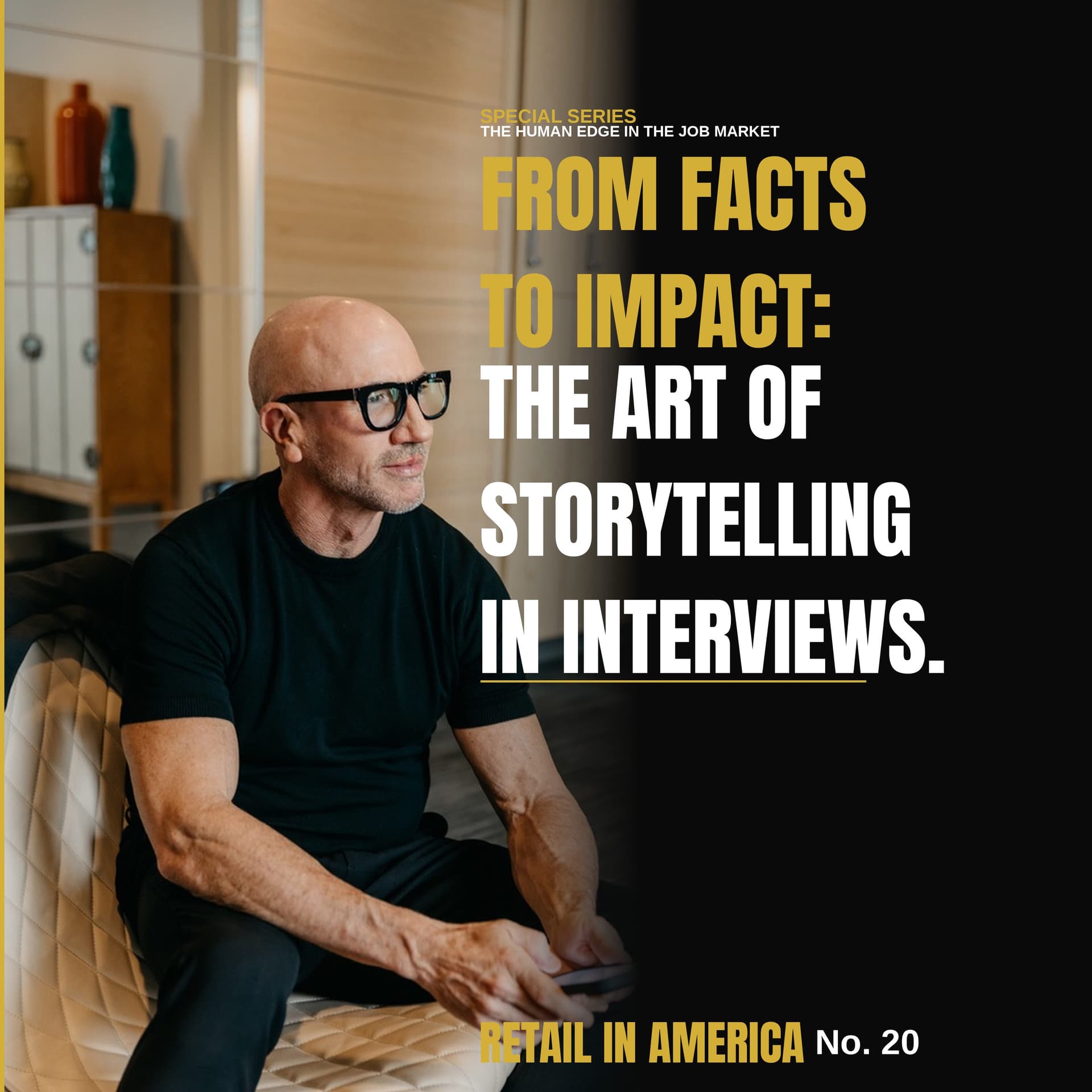
Special Series: The Human Edge in the Job Market (Part 3 of 6)
The World Economic Forum’s Future of Jobs Report 2025 surveyed over a thousand companies and found that 39% of workers’ core skills will change by 2030. But the skills employers say are most essential right now — analytical thinking, resilience, leadership and social influence, creative thinking, empathy and active listening — aren’t the technical credentials on a resume. They’re the things you’ve been quietly building for twenty or thirty years and calling “just what I do.”
In Part 3 of The Human Edge in the Job Market, Ron Thurston walks through four questions designed to turn a vague sense of “I did good work” into something you can actually say out loud.
These four questions were built for interviews — but they work anywhere you need to articulate what you actually contributed: a performance review, a quarterly check-in, or a moment of self-doubt at the kitchen table at the end of a long week. This episode is for anyone in transition. And it’s also for the listener who is currently employed, currently questioning whether their work has been seen.
Question #1 — Who is better at their job today because of time they spent with you? Not who you trained officially. Not who reported to you on an org chart. Who is genuinely more capable, more confident, more clear on who they are as a professional — because you were in their life? That’s leadership and social influence. It’s one of the skills the WEF identified as essential. And most people have been doing it for free, often without anyone noticing.
Question #2 — What problem did you solve that nobody asked you to solve? The hardest one to claim, because by definition nobody assigned it to you. But you saw it. You acted. Something got better. An employer can hire someone to do what they’re told. What they cannot easily hire is someone who notices what nobody else is noticing — and does something about it.
Question #3 — What did the team do differently because of the standard you set? Not the policy. Not the procedure. The standard. The way people showed up, talked to each other, treated the work. Somebody set that. In a lot of cases, that somebody was you.
Question #4 — What would have been worse if you hadn’t been there? The hardest of the four — because it requires you to imagine your own absence. But it’s the most clarifying. When you can answer it honestly, you stop talking about a job title. You start talking about impact. And impact is what every hiring leader is trying to find.
“The market is full of people who can fill a role. What it cannot find enough of are people who show up with the kind of presence, judgment, and genuine investment in other people that you have been bringing to every room you’ve ever walked into. That is not a soft skill. That is the whole thing.”
🎧 Subscribe: ronthurston.com
📚 Ron’s Books:
Retail Pride — amazon.com/dp/1544509456
Human Pride — geni.us/humanpride (the first four chapters are written for the person standing at this exact crossroads — trying to see their own work clearly enough to say it out loud)
🔗 Sources & Stats Referenced:
- World Economic Forum, Future of Jobs Report 2025 — 39% of workers’ core skills will change by 2030; 7 in 10 employers say analytical thinking is essential to their business in 2025; top skills employers say are most essential through 2030 include analytical thinking, resilience/flexibility/agility, leadership and social influence, creative thinking, curiosity and lifelong learning, and empathy and active listening. weforum.org/publications/the-future-of-jobs-report-2025
- WEF Future of Jobs 2025 — Skills Outlook chapter, full data on rising and declining skills 2025–2030. weforum.org/publications/the-future-of-jobs-report-2025/in-full/3-skills-outlook
👤 Follow Ron:
LinkedIn — linkedin.com/in/ron-thurston
Instagram — @retailpride
Website — ronthurston.com
Episodes 18–23 are built for anyone in career transition — retail or otherwise. If you built something, lost a role, or you’re figuring out what’s next, this series is for you.
Next up — Episode 21: Polish Is the New Generic — How to Stand Out in an AI-Flooded Job Market