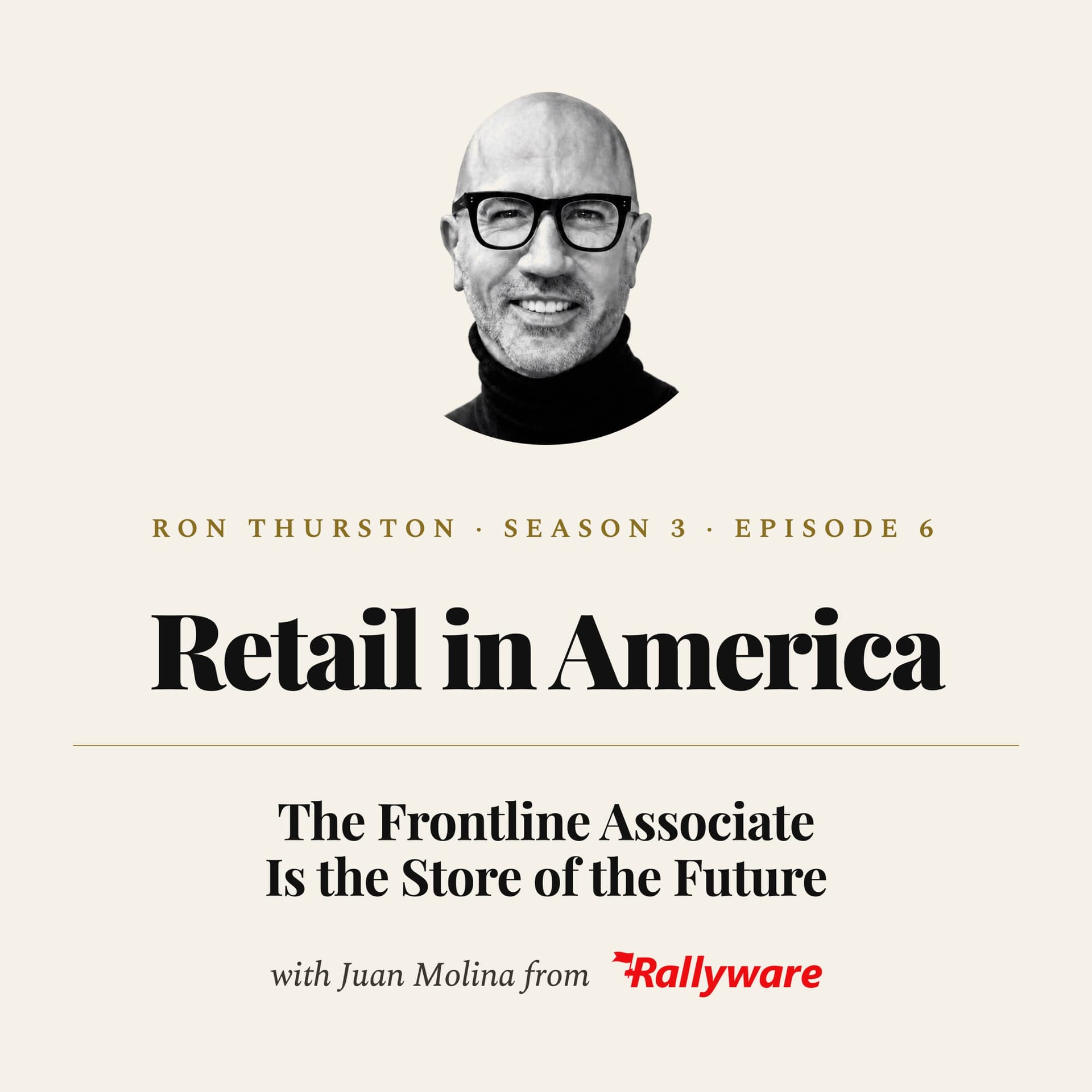

In short
The episode argues retail “middle management” layoffs and flattened org charts created a leadership investment gap, producing silence and distance on the frontline; it claims managers—not dashboards—make strategy real.
Guest backgrounds
No guests are mentioned; the host is Ron Thurston.
Key claims
Middle managers drove many layoffs (Bloomberg, 2023) and 40%+ of companies flattened layers by 2025 (Korn Ferry). Frontline satisfaction depends on manager relationships (McKinsey: 86%). Workers feel directionless without managers (Korn Ferry). Technology can trigger actions but can’t replace human connection.
Notable examples
A former retail manager’s role eliminated; interim coverage misses floor walks and coaching. An AI alert acknowledges breaks but doesn’t create leadership. “Marcus” leaves after his manager is removed and the new manager is too stretched to know him.
Written by AI. May contain mistakes. Listen to the episode to check what was said.
Chapters
Tap a time to open that second in VOThe Leadership Investment Problem
1:49 to 3:06
Exploration of the issues surrounding middle management and layoffs in retail.
“And here's the truth that most organizations don't want to say out loud.”
Human Truths About Leadership
3:06 to 4:25
Discussing the impact of flat organizational structures on frontline employees.
“And from Korn Ferry, that's not efficiency.”
The Role of Technology in Management
4:25 to 5:50
Analyzing how technology fails to replace the human element in leadership.
“So ask the real question of how many people can a leader actually know?”
People Caught in the Middle
5:50 to 7:16
A story highlighting the struggles of retail workers without adequate management.
“So let's go to human truth number three and talk about the people caught in the middle here.”
The Importance of Managers
7:16 to 8:19
Stressing that managers are crucial for organizational success, not a cost center.
“We talked about retail and we talked about technology.”
Transcript
Automatic transcript. May contain errors.0:00Welcome to the new Retail in America podcast studio in Miami. And thanks for listening and staying with me for the real story. Picture this very common scenario. 7.15 in the morning. The store doesn't open for almost two hours. But she's already there. She's walking the floor, checking last night's close, noticing what got missed. She's already thinking about her team. Who needs encouragement? Who needs a harder conversation? And she knows their names. She knows their schedule. and their availability, their ambitions, and she's the reason the store works and the reason the store delivers better results than the rest of the district.
0:45But that role was eliminated seven months ago. Now there's an interim manager just covering two stores, doing her best, but the floor walk doesn't happen. The conversations don't happen. The tone setting moments don't happen. And this used to be leadership, but now it's just coverage and nobody replaced what she actually did. I'm Ron Thurston. This is Retail in America, the show about what's really happening inside retail. Not the press release, not the earnings call, but the space between the strategy and the person expected to execute it. And every episode, I break this down into three human truths about retail, about technology, and about the people caught in between.
1:33Because that's where the real story lives. And as always, every stat I reference is linked in the show notes. And if you want these episodes delivered straight to your inbox twice a week, subscribe at ronthurston.com. So let's get started. And here's the truth that most organizations don't want to say out loud. That retail never had a middle management problem. It had a leadership investment problem. And we solved it the fastest and worst way possible. Because in 2023, middle managers made up one-third of all layoffs. That's directly from Bloomberg. And by 2025, over 40 % of companies had flattened management layers.
2:22And that's from Corn Fairy. And now, AI is positioned to eliminate even more. Gartner's projecting that happening right now this year. But here's what's actually happened. That you didn't remove cost. You created a gap. And that gap shows up exactly where you would expect it. Because 86 % of frontline satisfaction runs through the manager relationship. And that's not an opinion. That's directly from McKinsey. Lack of leadership is now a top reason people leave. Also from McKinsey, more than one-third of workers feel directionless without a manager. And from Korn Ferry, that's not efficiency. That's not a strategy.
3:11That's abandonment. And here's the part that most people miss, that every one of those data points is also a roadmap for change. Because if 86 % of experience runs through that manager, that's where the strategy actually lives. So let's go through our human truths. So human truth number one, let's talk about retail. Picture a district manager that maybe you were yourself like I was or someone you know, 15 years in retail, really good at what she does. And she used to lead eight stores. Now she has 14. Her managers used to lead teams of 30. Now it's 60, maybe 70. And she's sitting in her car outside the store from visit number seven this week.
4:03And she hasn't had a real development conversation in months. Not because she certainly doesn't care, but because there's just no time. She's not neglecting her people. She's drowning. The org chart got flatter. The front line got lonelier. And you didn't create efficiency. You created silence. And silence doesn't mean alignment. It means something is breaking. So ask the real question of how many people can a leader actually know? And then build your business around that number. Not the one that just looked good on the P &L, but in a true cost model. Let's go to truth number two and talk about technology.
4:49So here's another example. System sends an alert, and the associate hasn't taken a break. The manager clicks acknowledge. The associate gets her break. The system worked perfectly, but nothing happened. We didn't replace managers with AI. We replaced judgment with dashboards, and we hoped compliance would feel like leadership. But I can tell you that it doesn't. And technology can track this behavior, but it can't feel it. It can't notice when someone's off. It can't say, hey, I see you. Are you okay? Because managers spend nearly half their time on work that isn't leadership. That's McKinsey's power to the middle research.
5:37They spend their time on admin and scheduling and reporting. That's what technology should solve, not the human relationship. Because when technology replaces connection, you don't get efficiency, you get distance. So let's go to human truth number three and talk about the people caught in the middle here. So I'll give you another story. His name is Marcus, two years in the same store, great with customers, natural instinct that we love, that you can't teach. And he had a manager who saw that, who told him that he had a great future in retail. That manager's role was eliminated eight months ago.
6:20Now there's a new, less senior manager, a really good person, but too stretched. And she doesn't know yet even his last name. And that's the moment he starts to disappear because he's been quietly looking for another job for six weeks. 44 % of retail workers are planning to leave. That's the Business of Fashion and McKenzie reporting. not because of pay, but because of leadership. They're not asking for more money. They're asking to be known, and they're asking to be seen. And so how do you fix this? And there are really three simple ways that I'll share with you. Fix what you measure, fix the span of control, and invest in managers.
7:09It's that simple. That isn't a cost. That's your highest return investment. So let me bring this home. We talked about retail and we talked about technology. We talk about people. And they're all telling you the same thing. The manager is not a cost center. The manager is your competitive advantage. Again, the manager is your competitive advantage. And every organization decides whether to protect that or explain later why it disappeared. because you didn't remove a role. You removed the person who makes the strategy real. And if your managers don't exist, your strategy doesn't exist either because you didn't create efficiency, you created distance.
7:59And this level of connection isn't soft. It's what makes performance possible. And human pride isn't a philosophy. It's a decision, a decision about who you want to invest in, what you measure and what you refuse to eliminate. Because the front line is your bottom line and the manager is the person who makes that true every single day. I'm Ron Thurston. This is Retail in America. This episode gave you something to think about. I encourage you to share it. And both of my books, Retail Pride and Human Pride are linked in the show notes. Until next time, invest in your people because they are your strategy.
From the publisher
Retail didn't have a middle management problem. It had a leadership investment problem — and solved it the fastest and worst way possible. In this episode, Ron breaks down what actually happens when you eliminate the manager: the floor walks stop, the conversations stop, and the people who make your strategy real disappear. Three human truths about retail, technology, and the people caught in between.
Three Human TruthsRetail: Flattening the org chart didn't create efficiency. It created silence. And silence doesn't mean alignment — it means something is breaking.
Technology: We didn't replace managers with AI. We replaced judgment with dashboards — and hoped compliance would feel like leadership. It doesn't.
People: Forty-four percent of retail workers are planning to leave. Not because of pay. Because of leadership. They're not asking for more money — they're asking to be known.
Research & SourcesBloomberg / Live Data Technologies — Middle Manager LayoffsMiddle managers made up one-third of all layoffs in 2023 — up from 20% in 2018. This analysis was conducted by Live Data Technologies for Bloomberg.
Bloomberg: Middle Manager Jobs Make Up 30% of White Collar Layoffs
CNBC: Middle Managers Are Getting Laid Off — But Their Role Is 'More Important Than Ever'
Korn Ferry — Workforce 2025: Power ShiftsKorn Ferry's annual survey of 15,000 professionals worldwide found that 41% of employees say their organization has slashed management layers. 40% of U.S. employees say they feel a lack of direction at work as a result. More than a third feel directionless without a manager.
Korn Ferry Workforce 2025 Report
Korn Ferry Press Release: Workforce 2025 Research
Note: The script references 'over 40% of companies had flattened management layers.' The Korn Ferry Workforce 2025 data shows 41% of employees globally report this, with 44% in the U.S. Both figures are consistent with the script's claim.
Gartner — AI & Middle Management ProjectionGartner projects that through 2026, 20% of organizations will use AI to flatten their organizational structure, eliminating more than half of current middle management positions.
Gartner Top Predictions for IT Organizations and Users in 2025 and Beyond
McKinsey — The Manager Relationship & Frontline SatisfactionRelationships with management account for 86% of workers' satisfaction with their interpersonal ties at work. Managers also spend nearly half their time on work that is not leadership — admin, scheduling, and reporting. That's from McKinsey's Power to the Middle research.
McKinsey: Are You Stuck in the Middle? (Power to the Middle)
McKinsey: The Boss Factor — Making the World a Better Place Through Workplace Relationships
McKinsey / Business of Fashion — Retail Worker AttritionLack of inspiring leadership is now among the top reasons retail workers leave — alongside lack of career development. McKinsey's frontline retail research documents this shift directly.
McKinsey: How Retailers Can Build and Retain a Strong Frontline Workforce in 2024
McKinsey: How Retailers Can Attract and Retain Frontline Talent Amid the Great Attrition
Note: The script references '44% of retail workers are planning to leave' attributed to Business of Fashion and McKinsey. The McKinsey retail attrition research is the primary source for the leadership/manager-as-attrition-driver data. If you have a specific Business of Fashion report with the 44% figure, link it alongside these.
Ron's BooksRetail Pride — Available at ronthurston.com
Human Pride — Available at ronthurston.com
Subscribe & ConnectGet new episodes delivered twice a week: ronthurston.com