Ask ChatGPT


 Shopify Masters
10 Nov 2026 · 34m · 18 chapters
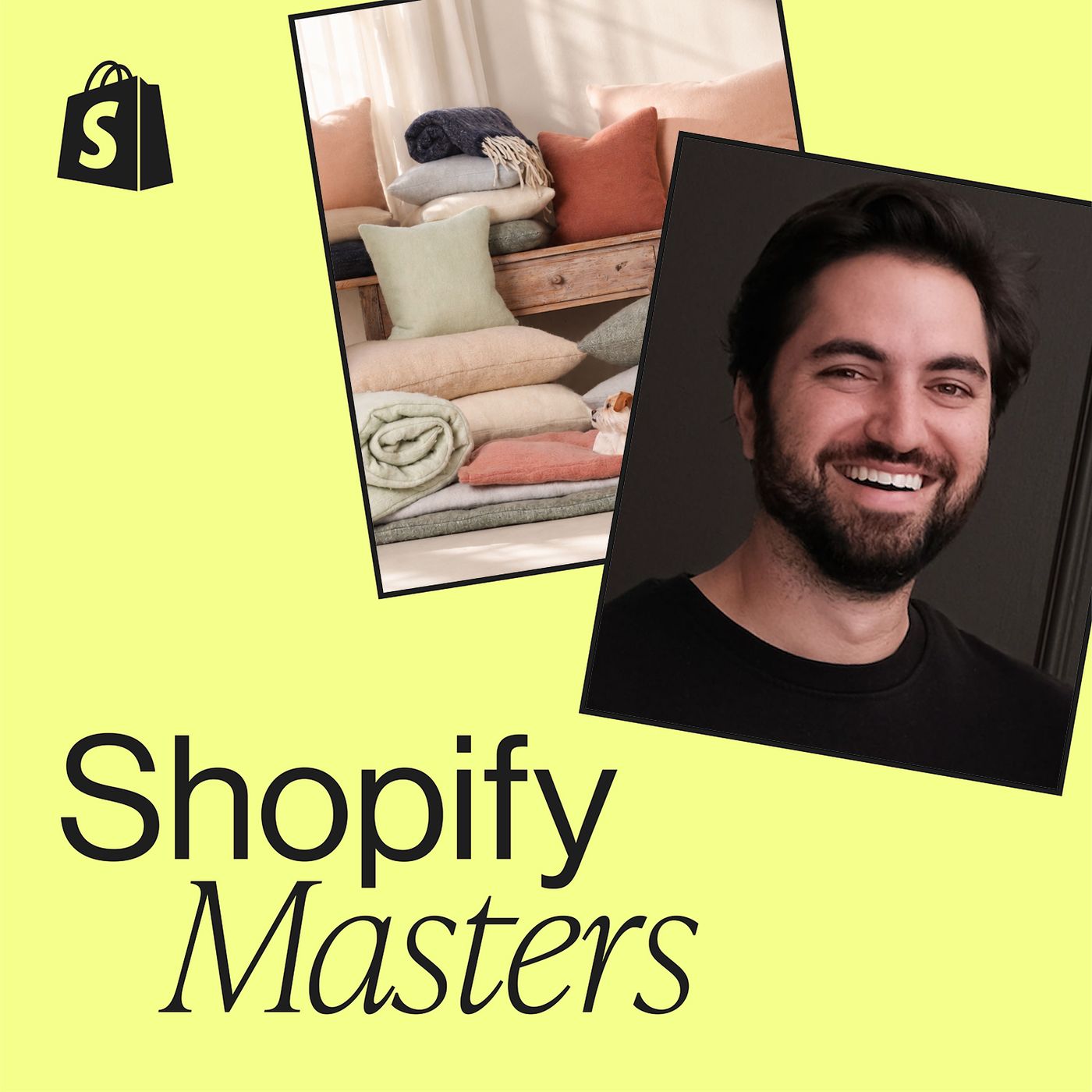
How Pom Pom at Home scaled from vintage shipping-container textiles to a 20-year bedding brand in major retailers, while protecting its “lived-in” linen aesthetic and building the tech/ops to support growth.
Sam Leogat, CEO of Pom Pom at Home. Background: joined at 20 after working in entertainment management (Disney meeting/production company; then another management role). Grew up with parents who ran antique stores in LA and sourced European fabrics for shipping containers.
The brand’s core is “linen-forward” bedding meant to be comfortable and jump-into, not perfectly pressed. Growth came from taking “scary” risks (Neiman Marcus, becoming a standalone showroom brand, later adding inventory/ERP tech). Fear becomes easier after repeated wins.
launched in 2007; Neiman Marcus catalog spread; trade-show showroom shift from multi-brand reps to Pom Pom showrooms; D2C rise to ~30–40%; NetSuite/WMS in 2020; sheets became a top seller after data showed a collection gap.
Written by AI. May contain mistakes.
How Pom Pom at Home began as a solution to fill shipping containers.
“Your parents originally were running antique stores in LA.”
Sam's journey from entertainment aspirations to joining the family business.
“And I looked at these, at that point, I think it was like four or five bedding collections that my mom had created, just these kind of vintage-y inspired bedding collections.”
Defining the 'lived-in' look that differentiates Pom Pom at Home.
“The fact that we didn't iron and press our sheets straight out the wash onto the bed, it was always meant to be lived in, you know, comfortable, not scary.”
How Pom Pom at Home established its market presence against traditional brands.
“It's a very, I mean, we're based in California.”
The process and challenges faced to get Pom Pom at Home into Neiman Marcus.
“So you had this lived-in look that was so core to your identity, but then ultimately to get into Neiman Marcus, you had to recalibrate slightly.”
How the company balanced its identity while growing and expanding into new markets.
“We're a legitimate betting brand and can compete with the others.”
Sam discusses stepping into the CEO position and his feelings of readiness.
“And then for years to be one of the, you know, top selling duvet covers that they were selling was just amazing.”
Learn about the challenges and decisions faced when taking on the CEO title.
“And like you've earned it, like I've earned it.”
Discover the risks and rewards of leaving multi-brand showrooms behind.
“So then I took the role and it actually took pressure off of me because now knowing that I can make the decisions and stand behind them, it was so much easier to run the company like that.”
Understand the immediate impact of the new showroom strategy on sales.
“There's the feather in your cap that you needed as CEO, right?”
Examine the balance between embracing technology and managing team capabilities.
“The trade show rooms has turned out to be a massive success for you.”
Learn how a shift to D2C sales changed the business landscape for the brand.
“And so kind of going back and seeing, okay, what is needed?”
Explore the shift in consumer purchasing behavior towards bedding products.
“You made all these attempts to get the Neiman Marcus buyer to just like come and see and feel the betting in person.”
Discover the importance of modern inventory management for business success.
“What does your mix look like today between wholesale and D2C?”
Hear key recommendations for startups on data management and inventory tracking.
“For somebody starting a business today, what would you recommend they do on day one and not wait until two years in, five years in, ten years in?”
Learn how data analysis shapes product offerings and inventory management.
“The quicker you can implement, NetSuite is a big program, and I don't think that a startup should use NetSuite initially, maybe.”
Discover how responding to customer needs led to successful product line expansions.
“How do you decide what to introduce as a new SKU?”
Explore how facing fears can lead to significant business growth and identity preservation.
“So we'll bring out the necessary stuff that we need to.”

Get the gist, explore an idea or ask about something said.
 Claude
On Shopify Masters, what are the key points of this episode?
Searching your listeningAutomatic transcript. May contain errors.
0:00Sam Leiaghat: You look at the movies and how quick decisions are made in the entertainment world. I wanted to do that for Pom Pom at Home.
0:06Hilde Leiaghat: Damn, is your mom the reason why my bedrooms look the way that they do? Probably.
0:11Sam Leiaghat: Probably, yeah. The bed should look like you want to jump into it right away. You put this picture up of this kind of scary thing, and then once it actually happens, it's not as bad as you think.
0:23Hilde Leiaghat: Trust, openness, candor, honesty.
0:26Sam Leiaghat: Exactly.
0:27Hilde Leiaghat: Big themes.
0:30Hilde Leiaghat: Pom Pom at Home started almost by accident when Hilda Leogat began filling the empty space in her antique shipping containers with vintage European linen. Her son Sam joined at 20 to scale the family business and bring it into major retailers like Neiman Marcus and Nordstrom. I'm Serena Smith and this is Shopify Masters, your companion for starting and scaling a business. Sam, welcome to the show.
0:51Sam Leiaghat: Thank you for having me.
0:52Hilde Leiaghat: Your parents originally were running antique stores in LA. Pom Pom at Home, the bedding line that we're talking about today. Yes. Almost started by accident, right?
1:01Sam Leiaghat: Mm-hmm. So my parents would go on buying trips in Europe and they would fill containers and bring fabrics back.
1:09Hilde Leiaghat: On shipping containers.
1:10Sam Leiaghat: On shipping containers because you wanted to make the most amount of return on the shipping container. And if you just put tables and dressers, there's a lot of empty space still. So we would bring a lot of fabric back.
1:24Hilde Leiaghat: Just sort of shoving into the holes.
1:26Sam Leiaghat: Little hole that you could put fabric in. They were bringing linens and a lot of vintage stuff back. Throughout the years, there was just more and more people coming in asking for more vintage textiles and more vintage fabrics. So she did something scary and started a bedding brand. I started with my mom helping her from the side, not involved in the business, but just the basic things on getting the corporation set up and explaining the steps to starting this new style of business. Meanwhile, my dreams were in entertainment.
2:02Hilde Leiaghat: What did you want to do?
2:03Sam Leiaghat: I wanted to be something in representation, whether agent manager, ended up at a meeting at Disney and with a great production company that was there who had a management side as well, and then went to work there for just over a year, was about to move to another management company. And I had a little two-week break period between those two jobs. And during that period, I got a call from my parents saying that the new company they started, this little bedding company that was doing one little trade show in a temporary booth, and they needed some help. It was kind of love at first sight. And I looked at these, at that point, I think it was like four or five bedding collections that my mom had created, just these kind of vintage-y inspired bedding collections.
2:51Sam Leiaghat: And I looked at them and I said, these are my clients. And these stores are the movies and TV shows I want to get them in. You know, you have this up-and-coming artist right here, this beautiful duvet cover that the world should know about. Wow. And it was so fun. You know, it's such an industry at that point. Now we're about to be 20 years old. It was all these old-school betting brands that had been around for 100-plus years and were amazing betting brands. But the rules were so traditional. and coming from this world of seeing talent agents, you know, you look at the movies and how quick decisions are made and in the entertainment world, it's true when you're in it too, like everything is so fast paced and quick.
3:36Sam Leiaghat: And so coming to this world, I wanted to do that for Pom Pom at Home. And I went to my parents' house and I said, you guys don't need to hire anyone. I want to do this.
3:46Hilde Leiaghat: Pom Pom at Home launched in 2007. This is now almost 20 years ago. And the pom pom look is like lived in. It's linen forward. It's that like California coastal aesthetic that now has become incredibly mainstream. Now it's been the reigning aesthetic for years. But at the time, that wasn't the case, right? We were very unique of a look
4:11Sam Leiaghat: when we got into the business. The idea that we were a linen company, linen was not as, you know, well received as a bedding fabric. The fact that we didn't iron and press our sheets straight out the wash onto the bed, it was always meant to be lived in, you know, comfortable, not scary. And that's really what we saw with some of the other competitors that have been around so long is that the beds were always so perfect that you almost were scared to jump into them. And that was not our look. Our look was the bed should look like you want to jump into it right away. And so that was something that people hadn't really seen yet.
4:55Sam Leiaghat: I mean, our look starting out was not the look that any other bedding brand was doing.
5:00Hilde Leiaghat: And now it is the look.
5:01Sam Leiaghat: And now it's the look. We've been working with the top designers. We've been in Amber Lewis's stores and Shea McGee and all these big designers have come. And even at the trade shows, they'll say hi to my mom. And it's a great interaction between the two of them. So I think that the nice thing is we've never chased the trend. It's always been her vision and her look. And we've been very lucky that it's been received well by everyone. But even if it wasn't, and this would be obviously a talk with my mom and I, she wouldn't change her look. She would say, this is the look of Pom Pom. This is the aesthetic.
5:42Sam Leiaghat: And I think that's helped us stay around for 20 years and hopefully another 20 plus years to be around because we're so committed to keeping this look and keeping this aesthetic and keeping it the way that it's truly a passion project.
5:57Hilde Leiaghat: Dedication to the vision.
5:58Sam Leiaghat: Yes.
5:59Hilde Leiaghat: Super important, especially when there are other things that could very easily pull you in one direction or another.
6:07Sam Leiaghat: Exactly.
6:08Hilde Leiaghat: Damn, is your mom the reason why my bedrooms look the way that they do? Probably.
6:13Sam Leiaghat: Probably, yeah. It's a very, I mean, we're based in California. It's a very coastal California look that's now been accepted by the rest of the country, which is so interesting. and, you know, in the South where it's so used to pressed beds and now seeing pom-pom at home in so many of these homes is something that wasn't the norm before.
6:40Hilde Leiaghat: If you go from having a super polished bedroom with a bed that looks like scary to jump into, right, and you're fearful that you're going to mess it up and get in trouble and all of a sudden your space feels like warm and welcoming, it's like, how does that actually change your day-to-day experience of your home? You know, is it a happier one? Is it a more relaxed one?
7:01Sam Leiaghat: I would say it makes it a happier home, but I think it's dependent on the person, obviously. I think that, you know, you obviously can still press it and create a different look with it, but our look is the lived-in look. Our look is the comfortable look. And when we were starting out, it often was the the main bedroom the primary bedroom went to the other bedding brands and we were the guest bedrooms we were the more casual look and slowly we've made our way and people have become more comfortable with that look making its way into the primary and so you know it's it's been a road to go down but it we've we've taken the little wins that the guest bedroom and then the kids' bedroom and then now into the primary bedroom.
7:47Sam Leiaghat: And we've accepted that it wasn't the norm and the standard style bedding, but pushing our way into it and staying dedicated to it put us in now every room of the house.
7:58Hilde Leiaghat: Slow and steady.
7:59Sam Leiaghat: Oh, yes.
8:00Hilde Leiaghat: So you had this lived-in look that was so core to your identity, but then ultimately to get into Neiman Marcus, you had to recalibrate slightly. You had to let the brand be something other than what it had been. Right.
8:13Sam Leiaghat: The betting brands that were in there were so known and traditional and our look was so relaxed. So we really had to step out of our comfort zone to approach them in a way that our line could also look that way. When we did the trade shows at that time, we could only show our identity there. And so when a customer would buy it, they could make it their own identity. And that is really how it worked with Neiman Marcus is there were a couple of bedding pieces that they found that they thought could really work for them. And when it went into the catalog, we knew what they were looking at and what they were buying, but we didn't know how it was going to be photographed and delivered until we got the magazine.
8:57Hilde Leiaghat: And you don't get to have any say in that?
9:00Sam Leiaghat: No. I mean, we were a small betting brand. Maybe the bigger ones did, but we did not.
9:04Hilde Leiaghat: Right. You were just like, thank you so much.
9:06Sam Leiaghat: We were like, thank you for the order. I can't believe Neiman Marcus bought something from us. This is so exciting. And we got the magazine and it was really eye-opening to see such a huge spread of so much pomp on my home betting in a way that we naturally wouldn't have done it, but it was very formal and romantic on how it was displayed. And it was amazing to see. Getting into Neiman Marcus and to ABC Home at that point was such a big statement and really allowed us to then go out and say, okay, we've made it. We're a legitimate betting brand and can compete with the others.
9:50Hilde Leiaghat: Did you open the catalog altogether?
9:52Sam Leiaghat: I think we saw it when we were in Dallas. And so it was my mom and I who saw it. And the idea of seeing it there after being told so many times, this is not the right place for you. This is not, you know, you're not going to be in Neiman Marcus. You're not going to be in these type of stores. And then to see that catalog and open it and see our bedding as the main bedding on the bed, I think it was just so shocking for us and so exciting. And it really showed that, you know, we saw ourselves as one thing, but we can expand that and really grow into other looks. And as long as we keep that same core aesthetic, that's the main thing that we want to do.
10:31Sam Leiaghat: But, you know, if people say you can't do something, you just if you believe it, you have to go for it.
10:36Hilde Leiaghat: Given all of the pushback that you'd gotten and all these people telling you like, no way it's going to happen. How did you get yourselves into Neiman Marcus?
10:43Sam Leiaghat: When we went into the Dallas showroom, that's where they were based. And our main goal was just contacting the buyers and contacting the reps that worked with those buyers and saying, we need them to see our product. What can we do? Sending samples, whatever day that they were going to be there, just waiting by the bed all day until they would walk by with their buyers. Anything we could do to get in their face. When that happened, it was more natural than we thought it was going to be. We thought it was this scary thing that, you know, I almost get a vision of like Devil Wears Prada.
11:18Hilde Leiaghat: Totally.
11:18Sam Leiaghat: When they walk in and you're just like sweating and you're like, oh my God, what do I say? And then the buyers come in, you're like, wait, they're normal people. They're nice people. This is insane. They're smiling. They're smiling and they're excited about your brand. It was this huge kind of like weight off your shoulder when the meetings actually happened and the conversations actually happened. And then for years to be one of the, you know, top selling duvet covers that they were selling was just amazing. It was such a boost of confidence to a small brand that was starting out. The lesson that we constantly run into with myself and Pom Pom at home is that you put this picture up of this kind of scary thing.
11:58Sam Leiaghat: And then once it actually happens, it's not as bad as you think. And, you know, a lot of it's just mental.
12:04Hilde Leiaghat: Has that made you better at doing the scary thing over time?
12:09Sam Leiaghat: Oh, yes. Oh, yes. I feel like ripping the Band-Aid off has always been, you know, the more times you do it, the easier it gets. I mean, I'm not perfect and I still have my fears of decision making. But once you've seen it work a couple times, I think that the things that you are fearing become a little bit more attainable and attainable.
12:33Hilde Leiaghat: How did you know that betting on betting was the right call to make?
12:40Sam Leiaghat: Betting on betting. I like that. I just think we've always had a good sense of loving textiles and fabrics. I was born in Belgium. My mom was born in Belgium. Linen is such a big thing for us. We had it all around the house. My mom had her linen closet. It was always her passion when they would go shopping to find those textiles to put in the containers when we were shipping them back. And so it wasn't anything forced. It was more of, we've always loved this. We've always done this. And now we're all getting together and moving forward with textile. So it wasn't a very tough decision. It was something that we were all excited about.
13:23Sam Leiaghat: And there was a passion behind it too.
13:26Hilde Leiaghat: You stepped into the CEO role a couple of years ago now. On the one hand, it feels like a natural progression. You've built your entire career at this company with your parents. On the other hand, big shoes to fill. You were taking over for your mom. Did you feel ready or was there some ambivalence?
13:45Sam Leiaghat: I never felt ready. I was always so scared. I have a lot of friends in the industry, not just in betting, but who run their own companies and our CEOs. And I would talk to them and I would say, that special thing hasn't happened yet. Like, I need this big thing to happen to feel like I can be CEO.
14:03Hilde Leiaghat: And like you've earned it, like I've
14:05Sam Leiaghat: earned it. And they said, well, what is it that that you want to feel or that you're expecting to see happen? I don't know. But like, I'll know it when it happens. It's never going to happen. Like, you need to just step into that role. You've been doing this for so many years. And And you're taking over so much of the decision making already. You need to put that title to match what you're doing. And it was, I was very nervous about it. I, again, talked to my parents and said, okay, I want to, you know, look at this. And they said, we've wanted you to be CEO for a long time. We've told you this.
14:41Sam Leiaghat: You keep saying no. And I said, okay, now I'm ready. I'm ready to do it. But before I do it, I want to make sure that we're on the same page about what being a CEO means. And, you know, if there's critical decisions to be made, are you going to be comfortable with me making those decisions? Or do you want to make those decisions? Because that's going to be a fight of power in this role. And they said, absolutely not. We have full trust in you. when it comes to the big decisions. You've proven before that you've made the right decisions to get us to this point. So we're 100 % behind you. And I said, okay.
15:20Sam Leiaghat: So then I took the role and it actually took pressure off of me because now knowing that I can make the decisions and stand behind them, it was so much easier to run the company like that.
15:35Hilde Leiaghat: You step into this role. Now the buck stops with you. you're the lead decision maker, what was something you felt needed to change?
15:45Sam Leiaghat: The first and scariest move I made was leaving the multi-brand showrooms. And these were very known big showrooms at the trade shows.
16:00Hilde Leiaghat: Help explain this to us, to the audience, just a little bit, like how they work.
16:05Sam Leiaghat: I believe for 17 years now, we've been in these multi-brand trade shows and showrooms. So in the trade show, you have either your own space or a space of a reputable rep group that represents a couple different companies. And then their sales reps go out, sell the brand. You don't have to worry about finding good sales reps. They take care of that for you. They kind of help you style, but you're under their umbrella. Moving out of that was a huge risk for us because we've always relied on their expertise to find great salespeople and build the brand outside of the trade shows.
16:50Hilde Leiaghat: Right. There were elements that were just being managed for you.
16:53Sam Leiaghat: Exactly. Leaving them meant bringing sales inside and managing the sales reps in-house. So we still do have sales reps throughout the country, independent sales reps that carry multiple lines, but the showrooms have now become our showrooms. So when you go to Dallas or Las Vegas, Atlanta or High Point, it's a pom-pom showroom. And the first thing we noticed when people walked in was almost a confusion about, wait, you're not like, I thought you were part of this company. And it solidified the fact that we are our own brand. And it was unbelievable. Our clients, we've obviously had them for such a long time and them seeing us the way that we wanted to show them or display ourselves was so well received.
17:46Sam Leiaghat: It immediately, we're so lucky, it immediately worked out and we saw an immediate boost in sales.
17:52Hilde Leiaghat: There's the feather in your cap that you needed as CEO, right? You said you wanted, you needed to earn it. It happened with you in the job. And was the impact pretty immediate? Could you see that it was working right away?
18:03Sam Leiaghat: Yes, it was an immediate return. It was definitely a very tense moment for Pom Pom. It was my first big decision. My parents weren't fully on board with it. But again, they agreed that I could make the decisions. And we kind of like sat there for a while and we're like, is this going to work? Let's see what happens. And I was trying to figure out my like, you know, escape plan. If it didn't, like, how do we recover from this? And then immediately it just, it worked. And our clients were so happy to see us. And we were getting these just customers coming in and placing huge orders because they saw it the way that we always imagined it.
18:46Sam Leiaghat: And, you know, when you're put with other brands, even if you do it your way, you're kind of like blending in with others. And this was us on our own, us on the big stage. And it was very, very cool.
18:56Hilde Leiaghat: How scared were you?
18:58Sam Leiaghat: I was very scared until the first day of the show. I mean, during setup, I was sweating. I was like, oh my gosh, this is going to work. I don't know what to do if it doesn't. Just every part of it was scary. And then the first day we saw from the moment the doors opened till they closed, we were busy the entire time. We ran out of our gift bags that we give out. We didn't have enough people to write orders. We had to tell people for the first time, can we come to you in like 10 minutes? I'm sorry, we're finishing up with this person. We never had that happen before. And it was so shocking to see the excitement of people.
19:37Sam Leiaghat: And then once that happened, the first day I was like, okay, we're good. This is all good. Off to the races.
19:43Hilde Leiaghat: The trade show rooms has turned out to be a massive success for you. Have there been any losses?
19:50Sam Leiaghat: With the tech side, I get very excited about tech. and I want to put too many things in. And it's almost like a kid walking into a toy store with all these shiny things. And now, you know, there's so many apps and there's so many. And for me, I think I tend to get a little distracted with, you know, this company can do this and this can do that and I want it all. Right, and especially with AI,
20:16Hilde Leiaghat: it's like new things entering the landscape every single day.
20:20Sam Leiaghat: And I think one of the main things was I really stressed my team out with adding too much at once. I wanted the online catalog and a regular catalog. I wanted all the bells and whistles for our Shopify site. I wanted all the programs. And while some of it worked and was great for the company, some of it was just so much weight and people getting dedicated to these tasks that were so long and draining and were not producing the way that I initially thought they were. Right.
20:52Hilde Leiaghat: And every time you have to learn a new system, that's time consuming.
20:55Sam Leiaghat: Exactly. What I realized was I made a mistake with that. I brought too much onto the business right away. I had this great one with the showrooms. Now I'm going to bring in all these new fun tech gadgets. It's going to be so fun. And I think a lot of people got overwhelmed and And they told me that. They said this is a lot to bring on at once. And so kind of going back and seeing, okay, what is needed? And maybe we focus on that and then we bring in one or two fun things on the side, not 20 fun things because the team just was getting a bit overwhelmed with that. So that feedback is so important.
21:34Hilde Leiaghat: Trust, openness, candor, honesty.
21:37Sam Leiaghat: Exactly.
21:38Hilde Leiaghat: Big themes. Brands like Parachute and Brooklinen enter the game in 2013, 2014, and all of a sudden, there's this D2C explosion in betting. What impact did that have on your company?
21:52Sam Leiaghat: It was very exciting because betting was not something that was talked about mainstream. And all of a sudden, everyone had an opinion on betting and knew betting and, you know, had their favorite brand that they bought from. So it just brought more awareness to the industry, I think. It was a time when we started focusing more on our website and our brand awareness.
22:17Hilde Leiaghat: Was that in part prompted by these competitors entering the field? Definitely.
22:22Sam Leiaghat: I think that seeing them provide their vision on their looks showed us that we should be doing the same. We were doing it at the trade shows, but with 1600 stores and designers across the country, we couldn't go to every store and see if that same look that we were showing was being shown to their clients at the retail side. So bringing that retail look to our website and really starting to build the website out was such a nice brand awareness. Seeing all these other competitors come to the market, I think just showed that betting is something people take serious. And you need to have your own brand awareness.
23:05Sam Leiaghat: And that's what makes you special.
23:07Hilde Leiaghat: You made all these attempts to get the Neiman Marcus buyer to just like come and see and feel the betting in person. Were you surprised when these brands came into the field that people were suddenly just buying betting sight unseen?
23:21Sam Leiaghat: A hundred percent. From a brand that's been around for now 20 years and our competitors who have been around for a longer time. The whole mindset was you go to trade shows. You show your product. The customers come. if they like the aesthetic, they're going to touch and feel it. Then they're going to take a chance and bring it into their store. And the same thing is going to happen with their customer. They're going to, they like the aesthetic, touch and feel it. And if they like it, they'll take it home. And so I think what people did was a really good job of describing the bedding. And visually, we knew that we had a very nice aesthetic for our customer base.
24:03Sam Leiaghat: And so putting that online was really, you know, taking the time to explain to the customer and educate the customer through videos and through descriptions on what makes our bedding so special. The feel of it. Our bamboo is so soft. Our linen gets so lived in. Wash it a couple times. And the more you wash it, the softer it gets. And all of a sudden, it started clicking for people that, oh, I don't, you know, I can see it there and I can purchase it. So it was definitely an interesting change in the market.
24:39Hilde Leiaghat: What does your mix look like today between wholesale and D2C? Currently, we are about 30 to 40 % D2C.
24:49Sam Leiaghat: The rest is still wholesale. We now sell to Bloomingdale's. We're in store in Bloomingdale's, online and in store. Nordstrom, we've been selling to you for a while. And now we're going in-store in Nordstrom in the next couple of weeks. So that's going to be very exciting. So we're still, you know, heavily on the wholesale side, but the retail has been just exploding. I mean, it was such a small side thing for us when we first started. It was just, you know, let's have a website, let's show our, you know, our customers the aesthetic of the brand. And then it's slowly just been growing and growing.
25:26Hilde Leiaghat: Has that changed the way you're approaching continuing to build the business?
25:31Sam Leiaghat: Yes, I think a lot of it is just the dependence on tech has completely changed. So while the website has been a big driver in this new side of the sales that are coming in, the amount of tech behind it has to be great too. So in 2020, we brought in NetSuite and then we brought in a warehouse management system. And it allowed us to make sure we're not selling things that are out of stock. I mean, that was a huge issue. And really keeping exact numbers because all of a sudden, you know, you have your Nordstrom anniversary sale and you might have things sell out and then people are buying it on your website, but you don't have it anymore.
26:11Sam Leiaghat: So it was a disaster for a while. And then bringing that tech side in really helped out. And I think that's continuing to help grow the business.
26:20Hilde Leiaghat: You said you only brought in an inventory management system in 2020. So what were you doing before?
26:26Sam Leiaghat: A very old school system of someone in the warehouse knew where everything was. And it was at the time we didn't see it as an issue. And when we brought in the warehouse management system, we didn't understand how we survived before. It was absolutely crazy. We did obviously an inventory count a couple times a year, but things get moved around and a box might say there's 40 pillows in it. You open the box, there's 37 pillows. And it was constantly causing issues for us. We didn't realize how big the issues were until we brought in this warehouse management system. Now everything's scanned in and out.
27:06Sam Leiaghat: We know exactly where in the warehouse it is, on what shelf. Before it was, you would ask someone and he would say, I think it's in the back on the right. Literally just one guy. One guy who kind of knew where everything was.
27:22Hilde Leiaghat: What happens if he's out sick?
27:23Sam Leiaghat: It was not good.
27:26Hilde Leiaghat: Looking back, would you have introduced that a lot sooner?
27:30Sam Leiaghat: Oh, my gosh. Yes. I mean, it's just it's so quick. And had we done that five years prior, eight years prior, I mean, it would have been a huge leap at that point because the moment we implemented this, the company just took off.
27:43Hilde Leiaghat: Introducing the tech had a material impact on the success of your business.
27:47Sam Leiaghat: Yes, 100 percent.
27:49Hilde Leiaghat: For somebody starting a business today, what would you recommend they do on day one and not wait until two years in, five years in, ten years in?
28:00Sam Leiaghat: If it's an inventory business, I would immediately look at how to observe and collect data on that inventory. The quicker you can implement, NetSuite is a big program, and I don't think that a startup should use NetSuite initially, maybe. But QuickBooks has these sort of, you know, they've all grown since then. And when you're at the point where you do want to move to a NetSuite or a similar type of company, definitely do that. But it's a large upfront cost that you can probably get away with QuickBooks on. And Shopify has so much more data now than it had when we started. You just have to know your data and see what's going on with your product.
28:41Sam Leiaghat: I mean, for a while, we brought in collections that mentally we thought were doing great. And then we sat down with the numbers and they weren't doing great. I mean, we had rugs for a while. I think it was about two years we had rugs. and it took up a huge portion of our warehouse. And we were like, oh, this is so great. We're getting in the rug business. This is so cool. And then after a while, we started looking at all the numbers and you had bedding collections that took about half a rack of warehousing compared to multiple racks of warehousing. And the bedding collection was outperforming our rugs.
29:20And so at that point,
29:23Sam Leiaghat: we were thinking of expanding the business and really getting into the rugs. We're like, no, look, let's just keep to the core. And the data is showing that we're good at bedding. Let's just focus on that. We don't need to bring any other stuff in. And we've moved forward in that way. I mean, we've always had temptations to get into other things like we did with the rugs. Bath has been a huge thing that we've been tempted for many years, but our goal is really to stick to what we are good at and what we know, and that is bedding. How do you decide what to introduce as a new SKU? This is kind of where we've started to use AI, which has been fun.
30:01Sam Leiaghat: Instead of sitting down and looking at spreadsheets over and over again, I'll just throw it into AI. And I do have a data team as well, which has been really nice to add to the business. But looking at where we're doing well and where we're not doing well. Think about five years ago sheets was just a small portion of our business We had one Collection of sheets. It was a linen collection In white and flax and then everything else was more decorative like the duvets the pillows all that And the sheets just never did well. So we never invested in it And then we were at the trade show once and I saw people come to our booth and get the bedding And then go to competitors and get the sheets And I said, I don't think that our sheets are selling bad.
30:46Sam Leiaghat: I think that we just don't have any collections of sheets for people to purchase. So looking at that data and then building it out, sheets have now become one of our top selling collections. And it was something that we did not take serious five years ago. And now it's every time we're bringing in new sheets. So when we're talking about bringing in new items, it's really looking at our collections. If we're doing bad in a collection, are we lacking in it or are we just not doing good? And with the sheets, it was we were severely lacking in sheets. So we've added multiple types of sheets now. So, you know, understanding what's going on with your current line.
31:24Sam Leiaghat: And then for me, I'm just very lucky that I have a creative director who's my mom, who's so into bringing out her vision. So we'll bring out the necessary stuff that we need to. but then will also bring out more of her vision to keep that growing.
31:44Hilde Leiaghat: You've spoken to it on a number of occasions in the course of this conversation, Neiman Marcus, creating your own branded showrooms, these moments where the fear came up, stepping into the CEO role, these moments where the fear came up and then once you did it, you realized not so scary after all. Do you have a process now for when the fear comes up for working through it so that it doesn't feel like it's in the driver's seat?
32:08Sam Leiaghat: I don't have a process for it. I think that what the change is that when the fear comes, it's almost exciting because you know you're going to do something big and you hope it works out. It might not. But if you don't have that kind of scary feeling every once in a while, I don't think that you're growing. So you need to do things that aren't necessarily comfortable. It won't always work out. But if you don't do it, you're not going to know.
32:37Hilde Leiaghat: What's the next risk you're going to take?
32:39Sam Leiaghat: I think there's still a lot of room for growth. And that's what we're focusing on. And we're looking at the data and seeing how to do that. The scary part is wanting to do a lot that you lose your identity. And we really want to focus on our identity and put ourselves in positions that will be worthwhile. while. We've been expanding with our website and our retail website and trying to bring in new things that will help us there. It's allowing new products to come in, keeping everything in the kind of realm of the pom-pom at home look that we've maintained for 20 years now. But knowing that there's so much more room for growth and we can't get comfortable, I think we have a lot of room to grow on our website, a lot of room to grow.
33:31Sam Leiaghat: We just got into Nordstrom for the first time. It's a very scary thing right now with Nordstrom. If this works out, this could be a huge stepping stone for us, again, on the wholesale side. So we're, you know, really all sitting together, trying to figure out how to make these things work. And, you know, it's all scary, but it's, you know, you just hope that it works out and you can keep going because i think there's a big room for growth in the future sam lovely to chat with
33:59Hilde Leiaghat: you today yeah great chatting with you too and thanks to you all for tuning in be sure to subscribe so you never miss an episode and we'll see you next time
Pom Pom at Home originated when founder Hilde Leiaghat began filling empty space in antique shipping containers with vintage European linens. After customers continually sought out her textiles, she launched the California coastal-inspired bedding line, which her son, Sam, eventually joined to scale through branded trade showrooms and major retail partnerships like Neiman Marcus and Nordstrom. Under Sam’s leadership as CEO, the 20-year-old family business continues to expand its omnichannel presence by integrating warehouse technology, growing direct-to-consumer sales, and staying true to its signature, relaxed aesthetic.
For more on Pom Pom At Home, in show notes, click here.