Ask ChatGPT


 Shopify Masters
20 Oct 2026 · 26m · 11 chapters
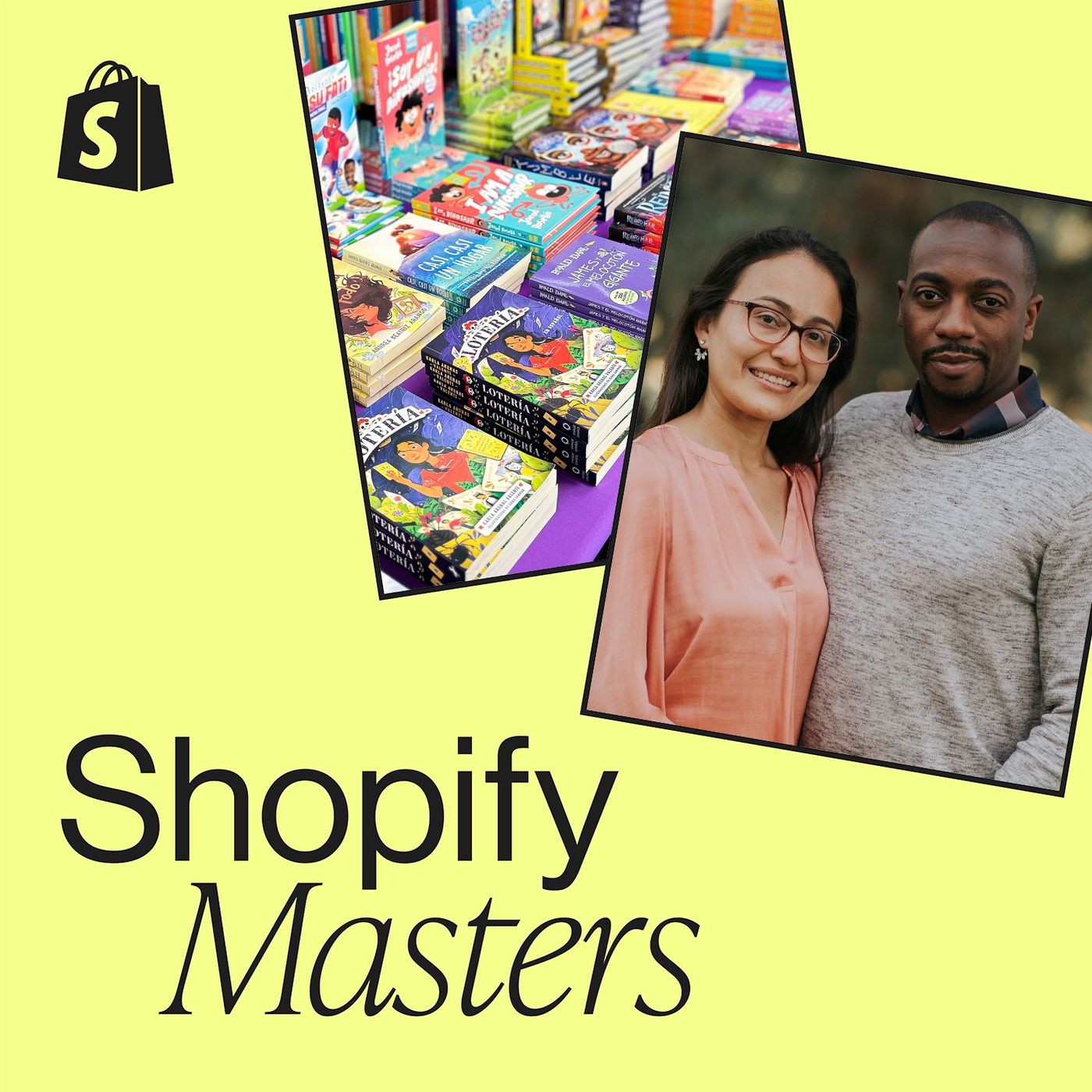
Miha Books (founded by parents) builds a mission-driven children’s book business focused on diverse representation, then scales primarily through school book fairs. The episode covers unit economics, channel mix, AI-enabled marketing/content production, and operational lessons (fulfillment, SKU management, and book-fair selection).
Stephanie Mumar and Muammar Mumar. Stephanie co-founded Miha Books after struggling to find diverse bilingual books for their biracial daughter; she handles operations. Muammar is a practicing lawyer with two offices and ~300 cases; he leads marketing and uses AI tools (OpenAI, Claude, Replit, Canva) to scale content and landing pages.
Book fairs drive 50–60% of revenue; a ~$5,000 average per fair is the profit floor (about 35% margin). D2C Meta CAC must be low enough for $20–30 average book prices to avoid margin loss.
Brick-and-mortar store (Nov 2021–Jan 2023) led to school PTA book fairs; online book fairs have gone national (Jersey, North Carolina, Texas). Schools must sell for ~5 days and often need 450+ enrollment to reach the $5K average.
Written by AI. May contain mistakes.
Stephanie and Muammar share the inspiration behind Miha Books and its focus on diversity.
“We really turned a hobby, a passion of ours as parents into a business, which is now Mija Books, our daughter was turning one at the time.”
The couple discusses how Miha Books transitioned from a resource website to an e-commerce platform.
“I would write reviews about those books and post those on the website.”
Exploration of the couple's strategy to leverage book fairs for sales growth.
“It's been a perfect example, I would say, of product market fit in the state of California.”
Discussion on how Stephanie and Muammar manage roles within their business.
“He's a practicing lawyer as well with two offices.”
Muammar explains how he uses AI tools to enhance productivity and streamline operations.
“And his first question is, how can I get AI to do this instead?”
The couple breaks down the different sales channels and their profitability.
“What is my lifetime value relative to my cost of acquisition?”
Learn how to choose the most effective book fairs and events for sales.
“And then maybe when we send them a newsletter or whatnot, then they're going to buy later from that point.”
Discover the challenges and strategies of managing book fair logistics.
“But then the second biggest one was focusing in on the enrollment number for the schools.”
Understand the complexities of working with fulfillment providers.
“But sticking with the core inventory every single season.”
Explore the importance of pausing for strategic reflection and personal health.
“And my understanding is that you've made a personal decision to sort of reset things a little bit before scaling to the next phase and maybe even scaling back a little bit.”
Learn how to balance growth with inventory management for sustainable success.
“We don't have a lot of work to do to, you know, reacquire.”

Get the gist, explore an idea or ask about something said.
 Claude
On Shopify Masters, what are the key points of this episode?
Searching your listeningAutomatic transcript. May contain errors.
0:00Muammar Reed: If your unit economics are off, your business is going to be crap.
0:07Stephanie Reed: Miha Books has grown to a nearly seven-figure business by staying close to their customers, keeping fulfillment in-house, and showing up in ways the big publishers never did. His first question is, how can I get AI to do this instead? Today, Stephanie and Muammar are giving us the unabridged version of what it takes to build a mission-driven business from the ground up and how they're using AI to reach the next chapter of growth. Stephanie Mumar, welcome to the show. Great to be here. Thank you. So Miha comes from the first name of your daughter and the middle name? Yes. So the first and middle name, Mireya Jamila.
0:43Stephanie Reed: But Miha is also the colloquial word in Spanish for my daughter. So it's a double meaning for us. It's really special. We really turned a hobby, a passion of ours as parents into a business, which is now Mija Books, our daughter was turning one at the time. And we were trying to find diverse books for our daughter's home library, trying to find books that she could see herself in as a biracial child, part Mexican, part Black. We were trying to teach Spanish to being bilingual, somebody with textured hair, you know, trying to find all of those elements in a book. And we couldn't find that in a store.
1:18Stephanie Reed: And so we built the store that we wanted to see for our daughter, for ourselves. And that's how Amiha Books started. What does the first version of the site look like? And how do you decide what SKUs you're going to showcase? Are you buying inventory and reselling it? Yeah, so the first iteration, it was really just a resource website. We weren't selling anything initially. So we took all of the books that I did find that were either authored by Black and brown people that were bilingual, Spanish, you know, what we were looking for. I would write reviews about those books and post those on the website.
1:51Stephanie Reed: And then I had them categorized by really unique groups really that we didn't see at the time, which was characters of color or Black primary characters of color, books with diverse families, books with siblings that are Black and brown, things like that, right? Things that are really unique that you wouldn't necessarily find in traditional bookstore sites or other resource sites. So that's how it started. And then we decided to open up accounts with publishers and actually start selling some of these books that we were promoting. We started curating essentially bundles that we sold through the website.
2:24Stephanie Reed: E-commerce, we started at the end of 2020. 2021, once the COVID restrictions started lifting, we started to do small business markets. And so we essentially had like a mobile bookstore and we did dozens of pop-up markets all throughout about LA County, really. Yeah, just trying to pretty much promote these types of books that we felt didn't get enough promotion and bringing them to the masses, other families that were looking for those types of books, teachers, educators. But it was the end of 2021 where a brick and mortar opportunity arose for us. And so we did operate a brick and mortar bookstore from November 21 through January 23.
3:06Stephanie Reed: And it was actually because of the brick and mortar, One of our customers that walked into the store happened to be part of a PTA from a local school. She brought me to the side and said, would you come to our school? And that had never crossed my mind. I said, sure, why not? We do pop-ups, right? It'd be essentially the same thing, just having it on a school campus. It was for like an open house back to school night, you know, event. And we did really well. We ended up selling more in two hours than we did in about an entire month at the brick and mortar. I mean, this PTA essentially plants the seeds for what is the, I would say, the most profitable acquisition channel for you.
3:45Stephanie Reed: Yes, yes. So, you know, selling just D2C, the average order was between$25 and$30. And when we started the book fairs, we were still trying to figure out logistically how those would be more profitable for us. And in the last year, we've been able to shift a few things around to where now our average book fair makes almost$5 ,000 gross sales. So right between$25,$30 to a$5 ,000 product essentially, right? So that really shifted the mindset for us and said, well, it looks like we're focusing on book fairs now. That was a pretty easy decision to make to start focusing on that channel. It's been a perfect example, I would say, of product market fit in the state of California.
4:31Stephanie Reed: You just had your biggest year yet. So congrats on that. How are you both splitting up roles and responsibilities? Mumara, you're handling marketing and Stephanie's ops. And is there a bigger, broader team also supporting you guys? So we did have a full-time salesperson. She resigned a few months ago. And so we do want to replace her. However, we're learning, we're a very seasonal business with our book fairs. And she was primarily trying to acquire new book fair clients. And she was full time. And that doesn't quite work with our cash flow. And so we will be trying to find another sales rep, but they're really seasonal part time and not full time.
5:13Stephanie Reed: And so that's really the most important role that we need. because, yeah, they're just in Southern California alone. There are 3 ,000 K through 5 schools that could potentially be our target. We've only worked with 6 % of those. And so we just need somebody that's every day, you know, during the prime season to book fairs that's just calling and outreaching as much as possible to those clients because I'm also a mother of two. And so that I cannot spend eight hours a day on sales. So that's the most important position. And then we also have our part-time warehouse staff that will help us during the height of our school book fair season.
5:51Stephanie Reed: Got you. I was going to suggest Mumar for head of sales, except he's a practicing lawyer. He's a practicing lawyer as well with two offices. 300 cases. Yeah. So how are you juggling that element of things? You are moonlighting on the side with we have books or what's going on?
6:09Muammar Reed: Staff and AI for leverage. I would say over the last year or so, it's been a lot easier. And I'm not like a professional developer, web developer coder or anything like that. But I'm a nerd and I've taken many of YouTube university classes, Python. Just, you know, she's like, what are you watching? Python tutorials. I don't know. And just so that I have some more basic knowledge so that if I am using an agent or a coding tool or like I can, I feel like I have a little bit more knowledge. I'm not like a professional, but I know what I want. I can interact with agents a little bit better on the coding side.
6:52And so I've been building lately just different scrap and vibe coding apps.
6:58Muammar Reed: I've been building scripts. I've been using AI to build landing pages to have like congruence with different audiences and whatnot. I've been trying to figure out how to scale our social media, but with like the same piece of content. And so I use Replit. I'm not sure if you're familiar with Replit.
7:17Stephanie Reed: That's an app building tool, right? Yeah.
7:19Muammar Reed: And they just have a Shopify integration, which is what I figured out the other day. I want to redo our website with it, but I will use Replit. Just recently, we will make a video and then I will feed that video to OpenAI to give me a transcript of it, then feed it to Claude, and then Claude will spit out a bulk Canva create like slides, like five of those from one video, a newsletter and a couple of threads posts so that I can get maybe like 10 pieces of content out of one. So I've just been using AI for leverage as much as I can or a weekend here and there. I'll go edit, chop some content because we film all the time.
8:03Stephanie Reed: Well, he's also good about taking problems that either problems of his or problems that his staff comes to him with. And his first question is, how can I get AI to do this instead? You know, it's really practical how he's using it, which I feel like at least for me on the side of being, you know, in the publishing book publishing world. I'm seeing a lot of the AI hate about it stealing artists' work and people trying to publish books using AI, that type of thing. But a lot of people that are not business owners, like the average person is not a business owner, doesn't realize how powerful AI tools can be internally.
8:40Stephanie Reed: You're truly multi-channel today, right? You have the DTC online store, you have book fairs, you're selling direct to school districts in some cases, some pop-ups, some events, some community things that are happening. how do you look at your channel mix and which channels are most profitable and which ones are the least?
8:58Muammar Reed: Going forward, if we're talking about forward thinking and from this last year, our book fairs are probably 50 to 60 percent of our revenue. But our POs, which come through our website, are probably 30 percent. and then maybe another 10 % from online sales, which are also online book fairs too through Shopify's site. So even our Shopify sales that look like individual D2C transactions are actually online school book fairs. Really?
9:37Stephanie Reed: Ideally, with online book fairs, the nice thing with those is that those can go national. And we have had schools in Jersey, North Carolina, Texas that have hosted our online book fairs. because we get a lot of requests to come in person to schools across the country, but we can't logistically do that right now. And so, yeah, it's definitely multi-channel, and we're still trying to figure out which levers to pull for us to really hone in on. So right now we have kind of testing all of these different ones to see which one we want to focus on.
10:07Muammar Reed: I would even say our main goal, too, right now, specifically for our off-season, because we tend to have two busy periods during the season when the school book fairs and schools are in. But the summer hits and it's kind of our slow month. We are trying to come up with some sort of hero skew that is more D to C or that we could do some sort of pre-sale, I don't know, recurring, reoccurring revenue sort of situation so that in our slow months, we can bring in more capital without having to buy a ton of inventory. You've somewhat used that strategy
10:45Stephanie Reed: in terms of like picking out bestsellers that you can showcase at these various fairs that complement the long tail, right? Of independent titles. I mean, you probably have to find the perfect blend of that, right? How do we have those hero SKUs in addition to all these other titles that you want to carry?
11:03Muammar Reed: And for me, it's not even necessarily about that. It's about what the LTV is and then what the CAC is on meta or whatever channel that we're using to try and acquire the customer. And if our average book price is 20 to 30 bucks, it's hard to convert a customer on Meta for less than 20, 30 bucks. And so there goes all your margin. Sure. So it's trying to figure out what is not just the right product mix, but also what is the right price point from a bundle standpoint that makes the economics work.
11:34Stephanie Reed: LTV to CAC, which is lifetime value to customer acquisition cost for those that are watching, listening, don't know those terms. Putting on your marketing hat, you're always considering those two metrics, right? What is my lifetime value relative to my cost of acquisition? I would assume in the DTC space that you're in, to your point, there's not a whole lot of margin there, but you do want to serve those individuals that are coming to your site that want to buy a book, right, for the first time, because that's the front door into the Mihai Books brand. And you never know kind of sort of where it leads.
12:08I mean, how do you think about the D2C channel and the unit economics of the consumer base
12:14Stephanie Reed: or the individual? It's really hard to have a successful business if your LTV to CAC numbers just don't work. You could be working as hard as it's humanly possible to work, but if your unit economics are off, like your business is going to be crap, which is why we focus more on the book
12:41Muammar Reed: fairs. Because if our gross revenue from a book fair on average is 5K, I can spend more to acquire that client. And so if I get a$100 conversion cost on Meta, that still might be profitable. But$100 conversion cost on a$30 item, you're underwater. Right? Your business is going to close. So that's why we've been focusing at least up to like a million on the more profitable channel. The issue is, can we find recurring or reoccurring revenue? Because then I think what you're saying makes more sense. Like getting that first book like on a subscription, when you know they're going to be buying 12 more books throughout the year, that makes more sense to acquire that client in that way.
13:34Muammar Reed: But I feel like our B2B has been our strength. And from our B2B, we're like a wild mix of a B2B, which then leads to D2C at the fairs. Sure. And then when someone is punching in their information at the fair, we get that information or they sign up because a lot of times they'll click our pop-up for the 10 % discount. and then we get their information. And then maybe when we send them a newsletter or whatnot, then they're going to buy later from that point. But then I don't have to acquire them or pay a cost. So that's why recently we have these conversations all the time. We're like, book fairs, POs.
14:14Muammar Reed: Those are our two verticals right now that are working.
14:16Stephanie Reed: You've had a lot of learnings over the years, right? You've chosen certain events or certain fairs that haven't quite paid off. Even though on paper it looked pretty attractive, They were going to be pretty busy from a foot traffic point of view, but they didn't really translate into direct return on investment. So what have you learned about picking and selecting the right fairs, the right pop-ups, the right events to show up at? I mean, it kind of started with the pop-up philosophy because with pop-ups, it's usually a few hours, right? Sometimes for the longer festival types, you're there almost the whole day.
14:53Stephanie Reed: So when we started doing school events, I was just like, oh, it's the same as the pop-up. We're there for a few hours, we leave. So in the beginning, we were only doing sales at schools for essentially a pop-up opportunity. And then we had schools that asked us like, hey, can we sell for one day, two days, three days? And sure, right? I thought that would convert to more sales. What we found, though, is that the sweet spot for us to hit that average now of$5 ,000 per fare, schools have to sell for at least five days straight. And we learned that that's pretty much the standard when schools host school book fairs with our competitors.
15:28Stephanie Reed: They're used to five days of sales. And we've seen from the data, even four days, we don't really hit that mark. It's usually that fifth day for some reason that always helps boost the numbers. That's the first change that we made. But then the second biggest one was focusing in on the enrollment number for the schools. On the low end, the elementary schools we worked with were between 100 students, 100 to 150 students. We learned that schools with enrollment of over 450 students got us closer to that$5 ,000 average. And so now we have different agreements that we send out to schools depending on their enrollment number alone.
16:07Stephanie Reed: And that's, you know, we've had to find that out the hard way by working with as many schools that wanted to work with us initially. But that's informed this 5K floor pricing that you have as part of your core business model. Right, yeah, because of the profit. So we were looking at the cost that it, the labor that goes into packing our book fairs, the delivery costs that we have, and then the inventory costs, right? There's not much control we have over the cost of books because it's what the market, it's the market rate essentially. And so that's one of our, you know, the biggest constraints that we have to be mindful of when we're looking at our profit numbers.
16:45Stephanie Reed: Right now, our last season, our profit margin was around 35 % at that 5K mark. And so, you know, anything below that, we're either breaking even or losing money if we don't hit that mark. And so that's why we're like the numbers just looking at raw data, right? We're like, we have to hit at least an average of$5 ,000 a fare in order for us to at least make a little bit of money here. It took a lot of fine tuning for sure. What does the fulfillment operation look like behind the scenes?
17:14Muammar Reed: There was at one point where the fulfillment was our garage. And I was happy and she was going crazy because we were bursting at the seams. I'm like, great, business is doing well. And we had to get a warehouse.
17:29Stephanie Reed: Yeah, so we currently operate out of a warehouse. I'm still trying to streamline that because essentially for every season, an ideal situation would be that we have one catalog of inventory and every school book fair that we have gets sent the identical inventory. But how we were doing it initially is I was kind of catering each book fair to the school because we let them request special inventory based on their school demographic. So whether that's, you know, some schools are like, oh, we have a population of Filipino students or we have students that are Jewish or, you know, students that speak Korean.
18:04Stephanie Reed: And we would cater to every single school for fulfillment. That's a nightmare. It's a skew-intensive nightmare. Yes, it's a nightmare. And so we learned after a few seasons, I said, OK, we can't keep doing it this way if we do want to grow this business. And so we had to make it more of a cookie cutter model. And anything outside of the packed inventory, we can send, you know, sort of as an extra, as a bonus on the side. But sticking with the core inventory every single season. That would mean that at the beginning of every season, my warehouse staff can literally just pre-pack a few dozen fairs, right, depending on our calendar that season.
18:44Stephanie Reed: And the way it is now is that we're kind of packing a couple of weeks or a week before even the fair goes out based over turnover of our inventory. But that is not an ideal situation if we're trying to increase our capacity for fulfillment. So making it much more cookie cutter, having pre-packed fairs where, you know, if a school calls us last minute and wants to have a fair, we can be like, oh, sure, we have, you know, X amount of pre-packed fairs on the shelf. That's not a problem, right? That is something that we're trying to hone in on this coming season as well. I think there's so many founders that can resonate with the fulfillment challenges.
19:25Stephanie Reed: A lot of founders actually don't know how to navigate fulfillment in general. and there are so many aspects of fulfillment that are complex that are also costly, right? So what have you learned about shopping around for different fulfillment providers, different 3PLs, and what models do you think work for a business of your size?
19:45Muammar Reed: We haven't really shopped around for 3PLs because of our intense SKU count and because we are always changing the way that we're packing fares. And I don't think that we're optimized enough to outsource that yet.
20:04Stephanie Reed: Yeah, it's not ready yet.
20:05Muammar Reed: To be outsourced to someone else. Is that your hypothesis? That's the feedback they're giving you. Well, we haven't specifically spoken to 3PLs, but maybe we should speak to some specific 3PLs. But at least just from my, I would say, limited knowledge, I feel that 3PLs are better for when you have hero SKUs. If I had like a bundle that we knew we were selling thousands of it and could be stocked, shoot, I might go into Amazon too, you know, if that were the case. But I feel like we would need one, two, three, four, five hero products. But we're talking about what? How many SKUs? We had 300?
20:47Stephanie Reed: We send about 300 SKUs for every book fair. And we anticipate processing a return because the schools, not only do they bring back our inventory, they also bring back a lot of the supplies that we give them to put up the book fair. So that I feel like it's not common for 3PLs to have to handle the known return, essentially, right? The reverse logistics. We're using the term 3PL, third-party logistics for those that don't know what we're talking about. This is a very interesting story because you've had your best years we just talked about, but at the same time, you're going through different strategic planning and you're thinking about the business in a different way going forward.
21:27Stephanie Reed: And my understanding is that you've made a personal decision to sort of reset things a little bit before scaling to the next phase and maybe even scaling back a little bit. Right. Because it's been such an intense, fun, but intense ride. Yes. So if you wouldn't mind sharing, what's the thinking behind that? Last year, we kind of broke the business. we had way more demand than we could service at the end of the day which it's a good thing and a bad thing because you know you learn really quickly what is not working well and so I'm taking kind of this year yeah as a reset to take all that feedback that we've gotten from our clients to realize what didn't work and how to make it better and so I needed an opportunity to pause, especially because of last year, it was such a huge growth year for us.
22:17Stephanie Reed: At the same time, I personally was going through a really difficult time with a few different things. Personally, my mental health was the lowest point in my life, really. And so those two things combined was just chaos for me. And so this year, I'm like, I need to slow down. I need to reset so that we can have a better business so that I can have more time for myself and my daughter and my family. So what is that going to look like? And that's kind of what we're in right now is trying to figure that out. The nice thing is that a lot of our clients that have worked with us now for a few years, they just keep coming back to us.
22:54Stephanie Reed: And so repeat customers are great. We don't have a lot of work to do to, you know, reacquire. And then our brand name is really spreading. I speak to some schools when we ask them how they heard about us. Oh, you were at that conference over in the Valley the other day. And I'm like, no, I wasn't at that conference, actually. And they're like, oh, really? Because you were mentioned. And I say, well, somebody else mentioned us on stage then. That's happened a few times. That was Moomar planting AI bot at the field. I do.
23:26Muammar Reed: So there is a little trick that I've been starting to do is if I do go to a conference or a place, it's not hard to just run a Facebook ad and drop a little pin on the place that you're at. and then everyone at the conference is getting your ad.
23:42Stephanie Reed: Yep. But we found it's also multiple touch points. So a lot of teachers and parents follow our social media channels. And so it'll be, you know, the PTA president or the principal is like, our teacher told us about you, the PTA keeps talking about you and I keep getting your ads on Instagram. And then that's when they finally pull the trigger and call us. So yes, this is a bit of a reset year again so that we can really hone in on our product and make it just keep improving upon it. Mumar, so as you go forward, what are you most excited about this year?
24:13Muammar Reed: I think expanding our brand in a safe way. Everyone wants to grow 100%, 200 % a year. But when you have a lot of inventory in your business, especially if your cogs are like around 40 or 50%, 100 % or more growth means that all of your profit is going to go back into inventory and you still need to pay taxes. So your cash flow is going to be hampered. And then it becomes a financing issue. So when you're bootstrapped, 20 % to 30 % growth is great. And you can do that comfortably with good cash flow. if you're going faster than that, you might break the business even though people want your product.
25:04Stephanie Reed: That growth year we had, it was 135 % growth from the previous year. So we broke the business last year. It's intense. It's a really interesting story. I mean, it's been really fun to dive into the mission. And congrats. Thank you. Wishing you all the best. Thank you so much. And thank you for tuning in. Subscribe and tune in every week for brand new episodes. and I'll catch you in the next one.
When Stephanie and Muammar Reed couldn’t find diverse books for their biracial daughter, they built the store they wished existed. MiJa Books has since grown into a nearly seven-figure brand, bringing bilingual and multicultural children’s books to communities that largely had been overlooked by mainstream publishing.
For more on MiJa Books and show notes click here