 Ask ChatGPT

Jeff Tedmore, founder of eFish, explains how he built a seafood distribution business by bypassing inefficient supply chains, pivoting during COVID to direct-to-consumer shipping, and later expanding DTC via live shopping on Whatnot.
Jeff grew up hating grocery-store fish but loving ocean activities (fishing, diving, spear fishing, surfing). He launched eFish in March 2020 after an “aha” moment seeing Boston-caught bluefin flown to Japan then back to NYC. He later used Whatnot while recovering from herniated-disc surgery.
COVID forced behavior change that made seafood shipping viable; live selling reduces customer acquisition costs (no paid media) and builds trust; “fresh” needs to be demonstrated, not just marketed.
one scallop sale to Chef John George’s team before NYC shut down; Google Form and door-to-door oyster/mussel sales in Boston; live seafood auctions from his Costa Mesa shop; Jose Andres order saved after a Delta flight emergency landed in Oklahoma, requiring rapid sourcing and hand-delivery to Augusta.
Written by AI. May contain mistakes.
Discover Jeff's transformation from disliking seafood to embracing it through fishing.
“You're a guy who owns a fish distribution company, and historically, you hated fish.”
Jeff shares the pivotal moment that sparked his desire to disrupt the seafood supply chain.
“There was definitely a light bulb moment for me.”
Learn about the challenges Jeff faced when launching his seafood distribution business during COVID-19.
“We'd got the fishermen out in the water.”
Jeff explains how he pivoted his business model from restaurants to direct-to-consumer sales.
“And I was explaining to her what was going on and how the restaurants were closing down.”
Explore how consumer behavior shifted during the pandemic, impacting seafood delivery.
“this way, you know, we can build a longstanding relationship down the line.”
Jeff discusses the ongoing challenges of maintaining his business after the pandemic.
“And so now we have a thriving business that's built on not just direct consumer customers receiving their packages, but chefs are also way more open-minded.”
Insights on Jeff's current business model mix and the future of E-Fish.
“For me, that's why I was so excited to go back into the restaurant business and the wholesale business because that's where I wanted to be in the first place.”
Jeff shares his experience of overcoming personal health challenges while running a business.
“And a large part of that is because we've recently launched into this live shopping world that has created an entirely new sales channel for us that has really helped bolster up our D2C growth.”
Learn about the personal journey that led to a unique business opportunity.
“It's not being able to operate at your full capacity.”
Discover how live auctions transformed seafood selling practices.
“First off, it's super weird because there's a camera pointing at you and there's like little chat words coming up.”
Understand the development of a community-driven food marketplace.
“We've sold live lobsters, live crabs, fresh truffles, chanterelles, matsutakis, like all sorts of crazy food.”
Explore the pricing strategies and customer relationships in live selling.
“Have you found that the people who buy from you and get the deal initially are then willing to come back and pay full price on your website?”
Learn how entertainment elements can enhance the shopping experience.
“And that's how I find myself filling all of my time now.”
Get insights on starting a live selling business and its advantages.
“And I don't think like most of us think of grocery shopping as fun normally, you know?”
Delve into the challenges of competing in the seafood market.
“You got to try to convince them to do it or you have to run some ads.”
Learn about the complexities of convincing consumers to pay more for higher quality seafood amidst cheaper alternatives.
“If anything, sometimes yours is still more expensive than what people are getting at the grocery store.”
Explore the delicate balance of maintaining business values while educating consumers on premium products.
“Those are the nuances that are really hard to describe to people on your, you know, on your Google ad little section, right?”
Understand how to manage relationships with high-caliber chefs while ensuring product quality.
“I've just stayed so true to what I would want as a consumer.”
Hear an engaging story about a critical seafood delivery to chef Jose Andres and the challenges faced.
“So it always has to be as flawless as I can possibly make it be.”

Get the gist, explore an idea or ask about something said.
 Claude
On Shopify Masters, what are the key points of this episode?
Searching your listeningAutomatic transcript. May contain errors.
0:00Thank you.
0:30and then I had to shut it down. I don't even know if I can do this. You can imagine you're on this app swiping through sneakers and purses and Pokemon cards and then there's me holding up like a filet of black cod.
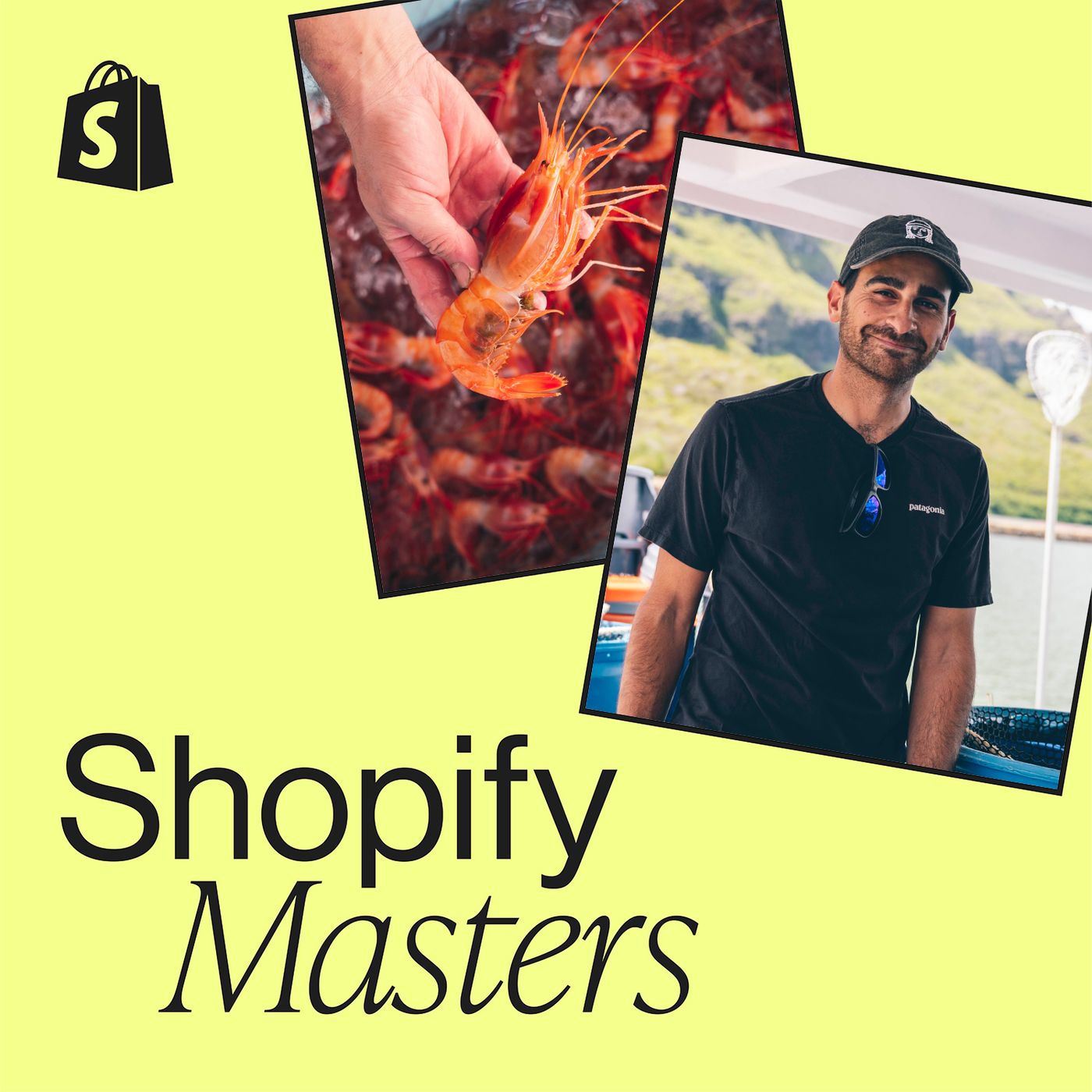
0:45Jeff Tedmori: Jeff Tedmore treats every setback as an opportunity to discover new ways to reach his customers. From DTC shipping to high stakes live selling, his path with eFish proves that true innovation lies in constantly finding new ways to adapt when life changes course. Jeff. Thanks for being here today. Thanks for having me. You're a guy who owns a fish distribution company, and historically, you hated fish. Explain that trajectory to me. I grew up absolutely hating fish, but loved fishing. So I'm an absolute ocean lover. I'm a fisherman, diver, spear fisherman, surfer, sailor. Like, you name it, the ocean's my happy place.
1:23But I also grew up eating grocery store seafood. And like, back in the 90s, this was like fish sticks, right? And I just couldn't stand it. I hated it. It was fishy. Didn't like anything about it. And that would then translate to me going fishing, where I would catch all of this beautiful fish. We would go down to Baja. We'd catch fresh tuna and wahoo and yellowtail. And I would come back from these long fishing trips, and I would just give it all away to my friends and family because I just didn't want anything to do with it. I don't want those fish sticks. Exactly. My parents literally had to sit me down and explain that if I was going to kill these animals, I had to actually respect them and eat them.
2:01And I tried it for the first time. I was probably 10 or 11 years old. And I was like, wow, this is really good. Like, I can get behind this. And so it was experiencing all of these things that I guess eventually came together into me realizing that I could probably do what I love for a living and have that be related to seafood.
2:22Jeff Tedmori: Was there a light bulb moment for you or was it more of a slow dawning of realization? There was definitely a light bulb moment for me. I remember I was fishing in Boston. We caught this 700-pound bluefin. Massive, gorgeous animal. And I learned that that fish was going to get flown to Japan, where it would get auctioned off for chefs to purchase. And it would eventually get flown back to New York City restaurants. And so that was that aha moment where I was like, this supply chain just makes absolutely no sense, right? Why is this fish have like greater frequent flyer miles than anybody else I know when like Boston, New York are right there?
3:03And that's where I just had this instinct in me to find a way to bypass that supply chain and get chefs access to seafood direct from the fishermen.
3:14Jeff Tedmori: Your initial business model when you decided to build this thing was to supply fish to high-end restaurants. Like generally of like the Michelin star James Beard Award winning chef kind of echelon, right? You launch in March 2020. What happens immediately afterwards? All restaurants shut down. At that point, how many sales had you made? So we'd made one sale. So we launched in March of 2020. We had spent a few months working with John George and his team to finally get scallops on their menu supplied from our fishermen in Plymouth, Massachusetts, which is this small little town in Cape Cod. and we'd finally gotten it all lined up.
3:55We'd got the fishermen out in the water. Chef agreed to take everything they caught and the delivery went flawlessly. They got their scallops. They loved it, best scallops they've ever had. And then a week later, all of New York City shut down and literally like business done. Like just everything that we had planned for, everything that we had anticipated for, This was the one thing that never in my mind would I have expected New York City restaurants to shut down. That just wasn't like, and I'm a planner. I plan for everything. And there was no way to plan for that.
4:31Jeff Tedmori: God, all the contingencies in the world. And you're like the one that I would have never wrapped my head around. So what is going through your mind? I remember I was walking with my wife around the Charles River, which is in Boston. And I was explaining to her what was going on and how the restaurants were closing down. And, you know, I'm getting phone calls from my fishermen saying, hey, we're going to pull the boat out of the water. Like, we don't have anybody to buy our product. So we're just going to wait this thing out. And my wife was like, well, just find somebody else to sell it to. Like, it doesn't need to be a restaurant, right?
5:03And I'm like, no, no. Like, I planned, like, this is the plan, right? And this is super early in my entrepreneurial journey where the type A in me was still the most prominent, I would say, aspects of who I am.
5:18Jeff Tedmori: You're like, I got a plan. I have a plan and I'm going to stick to it. I don't want to deviate. And if the plan doesn't work, then like, I guess I just roll over and die. I was like, okay, like I can do that. It's not going to work, but I can do it. And that's what I did. So I launched like a Google form, which I had sent to my classmates through like WhatsApp communications and like different group chats here and there. I would spam just like the, I was going to MIT at the time and I would literally just like go on the MIT's like contact list. I would just spam every class that I could and say, buy fresh scallops, buy fresh oysters.
5:53We'll deliver it to you while you're stuck at home because everybody was just stuck indoors. And in Google, it has like a little tab that shows who's filled it out. And I watched that number just climb from like one to two to 10 to 20 to 40 to 70. And then I had to shut it down because I was like, I don't even know if I can do this, right? This was just me launching something, hoping that it would stick, but I expected some of my friends to do it and that would be it. But it had really taken off. I remember still grabbing a zip car at the time because I'm just a student. And so I drove down to Cape Cod.
6:30I told the fishermen, you know, harvest, you know, a thousand oysters and this many mussels. And I just went door to door and I was just slinging oysters and mussels to my friends all throughout Boston.
6:42Jeff Tedmori: You essentially have just accidentally launched D2C. In that moment, are you like, okay, first of all, my wife is a genius, like eureka, or are you still kind of just in survival mode? It's definitely still survival mode. There was an aha moment of like, okay, this can work, but it was always viewed as a contingency plan and that restaurants would open up any day now. And we don't, we didn't really understand how long this whole thing would, would take place. So I wasn't sure whether to lean into it and build a DTC brand. More than anything, I was trying to support my fishermen. So I wasn't thinking of it with that much of a business mindset because I had seen what this was doing to the fishermen.
7:23We had to move that product. Otherwise, these fishermen were going to have serious financial trouble. And these were people that we were starting to get to know fairly well. And I felt responsible in some way to be the distributor that was going to be there for them. Because I saw a lot of distributors who solely focused on restaurants just completely disappear and they didn't have a solution for them. That's not to blame them because they're running a business and they're trying to figure out how to navigate this. But my business was in its infancy and I had the flexibility to say, like, okay, let's figure out how to make this work for you.
8:02this way, you know, we can build a longstanding relationship down the line. I wasn't thinking about any of the nuances of building a DTC brand really, like fundamentally, because it was so focused on the human element of understanding these people and what they're going through. Fast forward two and a half, three years, it took us a long time to get back to restaurants. And so we ended up fully building a DTC brand and that became like the biggest aspect of her business for a very long time.
8:32Jeff Tedmori: It's really beautiful when there's like these moments of just like really deep like human intention to help other human beings that can then parlay themselves into these really massive successes. I think what I've learned is that a lot of these macroeconomic or just like larger than life changes that exist in the world lead to a lot of these great innovations. And COVID obviously was one of them. And in the moment, it felt like it was one of those, but we didn't really know in what way. But now six years later, we look at it and it's like, my business wouldn't exist if it weren't for COVID. Not purely, not literally necessarily, because like it forced me to ship DTC.
9:18But there was a time when nobody trusted shipping food to your doorstep. Like DTC food businesses existed for sure. definitely not in the proliferation that they are in today, right? Like now there are hundreds of seafood D2C businesses, hundreds of meat businesses. They all exist before there was one or two here or there. And that their biggest barrier was trusting fish in the mail or trusting your beef in the mail.
9:45Jeff Tedmori: Well, I mean, when you say it like that, it does sound crazy. But it is crazy, but that's the world we lived in pre-2020. Post-2020, you had to do it because your grocery store shelves were empty. You wanted to try something different. You needed something unique. You gave it a try and it turned out to be pretty awesome and was way better than what you were finding in your local market. And so it was that shift that forced people to make a behavior change that I think forced an entire wave of food delivery that we see now. You could be facing as a business, this deep uphill battle of trying to convince people that shipping fish in the mail is an okay and safe and actually more locally oriented thing to do than to get it from your grocery store.
10:30Jeff Tedmori: And they say, no, thank you. No, thank you. No, thank you. And then one moment in the world happens and that opposition evaporates overnight. Yep. It's so wild. You're like, oh, well, that's not an issue that I have to deal with anymore. There has to be a forcing mechanism that makes somebody try it. And once they try it, they're more open-minded and willing to change their behavior. And that's exactly what we saw. And so now we have a thriving business that's built on not just direct consumer customers receiving their packages, but chefs are also way more open-minded. Whether you're a chef in Nashville or in New Orleans or in Chicago, in these places that maybe don't have fishermen around the corner from them, they're way more open to receiving these products.
11:13And so we've just seen a complete 180 because of this customer behavior shift.
11:21Jeff Tedmori: In the way that the pandemic as this very singular moment in time, that one of the silver linings was that, you know, it allowed all these businesses to come and into existence. There were also a lot of businesses that were absolutely gangbusters during the COVID era that then kind of ceased to exist once the world resumed like some degree of normalcy. Could you see what was coming? And if so, how did you plan for it to ensure that you would still have a thriving business when whatever degree of the new normal was to come into being? The whole time that I was building the DTC business, my fear was that when this whole COVID thing is done and people are back into restaurants, that business might be done.
12:10Like it's hard to know when something's going to stick and continue to grow versus be a fad and just kind of phase out. For me, that's why I was so excited to go back into the restaurant business and the wholesale business because that's where I wanted to be in the first place. That's where I saw the initial strength in being able to get chefs access to this quality. It took them a really long time to get back to seven days, lunch and dinner, like full service. Once I saw that that was moving in that direction, then we started moving more of our focus onto the wholesale side of the business, selling to restaurants.
12:45That has since shifted back to me focusing on D2C because I've seen that the D2C is here to stay.
12:52Jeff Tedmori: Wow, fascinating. So what is your D2C versus wholesale mix right now? Last year, we were 75 % wholesale, 25 % D2C. This year, we're now 50-50. Whoa. And a large part of that is because we've recently launched into this live shopping world that has created an entirely new sales channel for us that has really helped bolster up our D2C growth. You had a herniated disc. I've had a herniated disc. Yeah, super fun. The best. It really just can sap the absolute life out of you. And you end up having spinal surgery. Are you working through this? I was able to work, but I wasn't able to do all of the things that I needed to do.
13:42Jeff Tedmori: Right. Post-surgery, I was in a neck brace. I was told that I couldn't lift more than a gallon of milk. Like, literally, I had a one-year-old at the time, wasn't able to lift him out of the crib, wasn't able to take him out of his car seat, wasn't able to change his diaper, like, nothing. I was utterly useless at home. I'm in the fish business where we're lifting up heavy boxes, 150-pound tuna, big, long, awkward swordfish. Like none of that I was able to do. It was a really dark time. Naturally. It's not being able to operate at your full capacity. It sucks the life out of you. And so when I had the surgery and I woke up, all pain was gone.
14:24And so I found myself at home depressed, but more optimistic because I saw the light at the end of the tunnel. I was in recovery. My mom had brought me my old Pokemon cards, like literally found my old Pokemon card binder. I don't know. What else am I going to do?
14:39Jeff Tedmori: That's a good mom. And she brought it. And she also brought me some new Pokemon packs. That's a really good mom. In the hospital bed. I was ripping Pokemon packs. It was very fun. And I found my way onto this app called Whatnot, which I had downloaded but hadn't really dove into very much because I didn't have any time to like sit there and buy things. But now I did have an enormous amount of time, especially at night. And so I remember one night I opened up Whatnot and I was just having so much fun. I was engaging with this community. I was meeting new people. Can you briefly explain for the audience like how it functions, what it is?
15:18Okay, so it's basically a live auction platform where there's actual sellers that you can visually see. Like there's full videos and they're showing you whatever they're going to sell you. And you can bid. And if you are the highest bidder, you win it. And then they ship it to you. And it's as simple as that. And I was on there, bought a bunch of Pokemon cards, loved it, spent like six or seven hours on this app, like was just fully engaged. And I remember that night, I literally sent a LinkedIn cold message to the CEO and founder of Whatnot. I didn't know anything about the company. I didn't know the size or anything.
15:54But I sent him a message. I was like, hey, this was the most amazing consumer experience I've ever had. We should sell seafood on it. Like, I'm Jeff. I own a seafood business. And within five minutes, I got a response from the CEO of Whatnot that said, we've been thinking about this. We want to do this right. let's hop on a call tomorrow. And within five days I was live for the first time. And it was literally me.
16:18Jeff Tedmori: In your neck brace? I took the neck brace off, but I walked into the, I walked into our shop for the first time. We have a little, a little seafood shop in Costa Mesa. And I walked in for the first time and everybody was shocked. They're like, what, what's Jeff doing here? Like you're supposed to be at home recovering for like a month. And I walked in with my neck brace. I I like mounted up a little camera. I took it off and I went live. I told the guys at the shop, I was like, get me like, get me some shrimp, get me some steelhead, get me some like fresh tuna. And I just started having fun and just auctioning off because I couldn't lift anything.
16:53But that doesn't mean I couldn't be in front of a camera. It doesn't mean I couldn't try something new. And that's what we did. And it was crazy. It was like the most exhilarating, unique, and engaging experience that I had ever had since launching this company six years ago. First off, it's super weird because there's a camera pointing at you and there's like little chat words coming up. So people are asking you questions the whole time. And you're just like super high energy talking up your brand, talking up the products you're selling. And so it takes a lot of energy. But like a normal conversation, like there's normally reciprocation where like you can see a reaction and whether this is landing or not.
17:33In this world, like there's not. You're just like staring at the backside of your phone and hopefully people like it because you're never going to know if they don't. And so I went live for maybe an hour and a half or so and we sold a lot of fish. Like people were super energized by it. They were open to it. people were totally weirded out by it as well in the beginning because you can imagine you're on this app and you're like swiping through sneakers and purses and Pokemon cards and then there's me holding up like a filet of black cod.
18:05Jeff Tedmori: Yeah, you're like one of these things is not like the other. Okay, like one not taking this a little bit too far thinking they can sell everything. But it's really cool because it's turned into this platform for just small businesses to be able to sell their product. It's that simple. And yes, it started with collectibles, but we're starting to build out a foodie ecosystem on this platform, which I personally am very bullish that this is the future of where people shop for food. So it has paved the way for other food businesses to be on the platform as well. Yeah. So we started as the only one.
18:37So we're the first people to sell fresh seafood. We've sold live lobsters, live crabs, fresh truffles, chanterelles, matsutakis, like all sorts of crazy food. And now there's other sellers. There's people selling Japanese Wagyu. There's people selling like bison from their ranch in Texas. There's people selling blue crabs. Like it's created this little food ecosystem and it's still totally in its infancy. People are getting crazy deals because like brands like mine are investing in the long run of like eventually the customers will be there. And so people love getting good deals, but people, I think more importantly, love engaging with the actual business.
19:15Jeff Tedmori: You're selling high-end seafood. It's not cheap for you to procure. Is there a floor to ensure that you're still making some workable margins? Or are you just willing to lose here for the time being for the sake of the long-term potential? So from a business perspective, there's a few ways to think about it. Remember, there's no paid media spend here. So when I think about acquiring a new customer, normally I'm thinking about Meta. Normally I'm thinking about Google. well, what's my acquisition costs? On here, I'm going in with an acquisition cost of zero. And if my product goes below market by five bucks, okay, my acquisition cost is five bucks.
19:55I now have a new customer. Hopefully they come back next time and buy a full price. So there's a few ways for us to think about it. This is where the super interesting part of this comes because it's merchandising, it's product mix, it's pricing, but it's also the timing of when you decide to run certain auctions. Like maybe we'll do something where it's$15 max shipping. So you buy your first item and it'll cost you$15 for the shipping. And after that's free. So maybe we run a bunch of inexpensive things to start with, let those things go for cheap, let people get the shipping costs out of the way.
20:30This way, when the more expensive stuff comes, they don't have to worry about the shipping cost, right? There's real strategy that comes into becoming a big seller that finds the margin. You don't need to win on every transaction. You can lose on this transaction, win a little bit more on the next one and kind of make up for it and get a blended margin that's in a better place for you as a business. But you have to be super strategic about it.
20:57Jeff Tedmori: Have you found that the people who buy from you and get the deal initially are then willing to come back and pay full price on your website? Not necessarily that they come back to the website, but they'll come back to whatnot. And they've now had that first positive experience. And so they're like, okay, I trust these guys. I'm willing to pay more for it. And as that, as that like community of customers builds up, now you have more people bidding. As you have more people bidding, the price gets closer to the market price. Since this unlock on whatnot, have you found that it's had a positive impact on other parts of the business outside of just that sales channel?
21:39Yeah, I think like with anything else, just like exposure ends up drawing people to all these different places. So we have people walk into our physical store that say, hey, you're the whatnot guy. So we've seen an uptick in definitely in site impressions of people that are coming to our website, people walking through the front door. We've been at it for 10 months now, though. So it's like still early to say what the true impact will be. But for me, I view it as a as like the ultimate marketing channel, because you're able to tell your story directly to people and it's literally coming out of my mouth.
22:15So it just like comes off in a way that's way more authentic than anything that I could put in a meta ad or anywhere else.
22:22Jeff Tedmori: And you're given the space to do it. Endless space. Like literally, you can talk for hours and hours and days and days. And that's how I find myself filling all of my time now. It's very fun. What has it revealed to you about your business that you couldn't see before? People like small quantities. So on a website, I have to plan for every combination or iteration that might make sense. And I need to make sure my margins are right. If somebody buys the two pounds of scallops and only the two pounds of scallops, or somebody comes and buys five pounds of mackerel and only the five pounds of mackerel.
22:56The reality of shipping seafood, you have a very expensive packaging cost. It's like 10 to 15 bucks for every box because it's insulated, comes with frozen gel packs or dry ice if it's a frozen product. And then we're shipping UPS next day air, which is super expensive. So there's just like high entry cost. With whatnot, and specifically with the live auctions, we're able to let people build their boxes however they want to. And so plan around building our margin for every iteration. We can build it for that individual person and we can customize the pricing the way we want to. Because the other interesting nuance is you don't have to auction things.
23:35I could have somebody in the chat say, hey, they're just walking into our fish market. I want a pound of shrimp. I need two pounds of red snapper and I need eight scallops. What's that going to run me? 120 bucks. Cool. Run it. They'll swipe. They get it. We pack the box. They get it the next day.
23:51Jeff Tedmori: Wow. Treating it truly like they're walking up to the fish counter at their grocery store. Exactly. And so there's the fun side of it, which is the auctions. But then there's the other side, which is like, this is just another way for customers to engage with us. And we can meet them wherever they want to. If they want to play the game of the auction, great. If they want to just walk in, grab what they need and walk out, they can do that too. And it sounds like it's fun, not just for you, but also for the customer. And I don't think like most of us think of grocery shopping as fun normally, you know?
24:22Yeah, we try to have more of an entertainment focus to it. So we actually did a stream. We went with one of our fisherman friends out of Marina del Rey. We did a 48-hour live stream. So we live for—
24:34Jeff Tedmori: Uninterrupted? Uninterrupted. We live streamed for 48 hours. Oh, my God. I think it ended up being like 47 hours. We left the dock, and they saw everything. So we walked around with our phone. We had Starlink on the boat and we went offshore. We visited the Channel Islands. We went to Anacapa, went to Santa Cruz. They got to see, we saw sharks. We saw whales. We saw dolphins. And when we would catch a fish, so like trolling rod goes off, we catch a Dorado. That fish comes over the rail. I start running auctions. Like you're literally going to buy a portion of this fish. It's nothing remotely close to shopping at the grocery store.
25:11Jeff Tedmori: I mean, it is theater. Yeah, it's pure, like, this is food network that you can literally consume. You, many moons ago, were a child actor. You've lived many lives since then, but maybe some people at home are going, oh, right, that's where I know that face. Are you, like, turning that old actor performer muscle back on when you're going on camera for these things? I think that it's hard for that muscle not to turn back on. That was never the intention. Yeah. I'm naturally comfortable in front of cameras, and it's easy for me to turn on when a camera's in front of me. You know, when you do something like that for so long, I probably was acting in Hollywood for like eight years, whether it was in TVs or movies, started with musical theater.
25:58Like you just become comfortable doing anything in front of anybody. And so throw me in front of a camera by myself in an office with some fish, like that's easy.
26:09Jeff Tedmori: Easy, easy. Even when you're recovering from spinal surgery. Yeah, you could just jump into it. The show must go on. I got to lose the neck brace for an hour. I love it. For somebody who's considering maybe live selling, what would you tell them that they should be considering to know whether or not it's a viable path for them? Honestly, if you have a business of any kind, just do it. The biggest hangup that people make is that they overthink things and overcalculate it. The reality is you just have to go on and do it and never look back. If you don't have a business and you're contemplating this being the time for you to jump in, if there's anything that you're passionate about, if you have a story to tell about anything that people might want to purchase, like I literally see people walk their local flea market on whatnot.
27:00and they're like buying from the local flea market vendor for a customer on whatnot. Like there's so many different ways that you can approach this where if you have any inkling that you want to be an entrepreneur or that you want to sell anything, there is no easier path than going the live shopping route because it doesn't require an audience to start with. Customers just walk in the front door, which is really unique. When you just like put up a website, you got to drive people there. You got to try to convince them to do it or you have to run some ads. With this, you don't have to do that.
27:35You might not, you're not going to have a lot of people in the room to start with, but it takes time. And word travels and as people buy, people come back and the community starts to share. It's a really, really unique community.
27:47Jeff Tedmori: The sustainability piece is like at the heart of this for you. You wanted to shorten the supply chain because from a logical perspective, it doesn't make sense. but also because it's very wasteful in a lot of ways, right? And your fish will taste better if it doesn't have to get flown to Japan and then back to New York. But shorting the supply chain doesn't necessarily mean a less expensive product in the end. If anything, sometimes yours is still more expensive than what people are getting at the grocery store. How do you convince people that it's worth it? The reality is that in America, the supply chain has largely been optimized for cost rather than for quality.
28:27And over something like 85 % of seafood in America is an imported product. And a lot of those countries are subsidizing the product to be really inexpensive here because this is a huge market. And so that's what we're up against and that's what we're competing with. And so it's again a situation where people have to really try it to understand the difference in what we mean by fresh versus when other people say fresh and it means who knows what. Like there's a lot of words that have become like just marketing adjectives rather than like actual verbs that mean something. Like to me, fresh means never frozen for your grocery store.
29:11They think it's just a descriptor of like, yeah, it's fresh.
29:16Jeff Tedmori: There's no regulation around it. No, there's no regulation around any of these words. When it comes to convincing people that paying a premium for fresh seafood is worth it, like I go back to the live shopping side of things because it's so much easier to show it than to try to describe it. When we describe it, then we're up against everybody else that's using these words that confuse the consumer when I can literally talk to an entire chat group about what I'm doing and I can show them the differences, show them the nuances and explain why this tuna is this color, whereas the tuna you see in the supermarket is bright pink because it's been gassed with carbon monoxide to look that color, even though it's old.
29:55Those are the nuances that are really hard to describe to people on your, you know, on your Google ad little section, right? It is really hard though, trying to convince people to pay a premium for product that is so inexpensive in the grocery store. Like I walk, I always look at the seafood counter in, in, in my local supermarket and the prices are just so egregiously cheap that it makes you question what the people on the boat were experiencing in these places that don't have labor laws that we do in America. Like what did that fish go through? There's so many layers to the product that we're selling that take into account animal welfare, social welfare, in addition to just like sheer quality of what we're selling.
30:41So there's so many different layers to the product we're working with.
30:46Jeff Tedmori: I'm sure you are acutely aware that like nobody wants to be fed spinach or like told what to do. The moment you sound didactic, they're out. You know what I mean? So it's like you have to do this dance so carefully, but it's also tough not to reach because you're passionate about it and You want people to get it. I love what I do. And we do so, we take so much time and care in making sure every product that we sell meets our standards. And that the fishermen that we're supporting care about quality over quantity and that the fish has been cared for from the moment it was caught to the moment it arrives to their door.
31:20Like, these are all things that I care about so deeply and I want my customers to care about it. I can't force them to care about it, but that's kind of the world that I have to live in and the delicate line that I have to balance.
31:33Jeff Tedmori: Do you have any advice for people who do want to have a CPG business that is mission-driven at its core? How to operate it in a way where you can stay true to your values and not alienate people? It's so tricky. I've just stayed so true to what I would want as a consumer. And I have a super, super tight filter on what that is. and it's probably cost me millions of dollars if I'm being totally honest. But it's what gets me out of bed in the morning and makes me happy that I'm doing what I'm doing. We can't force people to buy something that we don't believe in, even if it's what a lot of the times is right financially.
32:21So I don't know if I would tell people to follow into my path with that or not, but that's why my customers also trust me when I say that this product is good.
32:31Jeff Tedmori: You are working with chefs at that level, Michelin star, James Beard award winning. The expectation of quality and their commitment to something that's coming very near to perfection is like unparalleled. Do you have to navigate those relationships differently or how do you navigate those relationships differently than you do your everyday home cook? To be honest, they both receive the exact same product. Come on. Like the same quality product. The service is different, obviously. Like these chefs have my number, you know, they text me and if I can make it happen, I'll make it happen. But it's literally shipped from the same batch of stuff that our D2C customers get.
33:13it's my job to be that like first line of defense to make sure they're getting the quality that is up to their standard because I never know who they're going to be serving it to I never know where it's going there are again countless stories where I find out where my product was consumed I'm like wow like super high caliber either people or places or it ends up with Martha Stewart on TV, I literally have no idea where my product's going or what it's going to do. So it always has to be as flawless as I can possibly make it be.
33:49Jeff Tedmori: Okay. Because he is an absolute idol of mine, you have to tell me the Jose Andres story. Jose Andres, by the way, is one of the most celebrated chefs in the world, also founder of World Central Kitchen, will probably win a Nobel Peace Prize at some point in his life. Yeah. We've had the privilege of sending seafood to Augusta for, I don't know, the last four or five years. So Jose normally does some kind of dinner, whether it's the champion's dinner when Jon Rahm won or whether he's doing just like a big VIP dinner for sponsors at the event. A couple of years back, we built this crazy menu. It took months of planning because Jose wanted very specific sourcing.
34:31He needed lobsters from Morocco, shrimp from Tasmania, turbo from Spain, Persebe barnacles from Portugal. We needed all of these ingredients. And I know that I've spent this whole time talking about American product that's locally sourced. Jose's from Spain. He loves his Mediterranean product, so we give him what he wants. But it takes a lot of time to coordinate all of this. These are international flights. These things are clearing customs, takes a lot of time planning care. We get it stateside. I decided to get this product on a flight to Atlanta. I chose Delta because Delta's got a hub in Atlanta.
35:08Worst case scenario, if anybody can get a plane to Atlanta, it's going to be them. I personally tender the package to LAX, watch the plane fly off. Everything's good. I go to dinner with my wife and I'm actually with my cousin as well. And we're sitting and I've just always on my phone, just tracking the flight because I want to see once it lands. It's in the air. It's fine. Everything's good. And then all of a sudden it updates. And I see like the plane on the tracker do like this loop and it's not in Georgia. And I'm like, what, what is that? And I refresh it. And then it says landed. I'm like, okay, but it landed in Oklahoma city.
35:50It says, okay, see. And I just had, I just remember my heart dropping and my mind starts spinning into all of the different possibilities. What can I do? What can't I do? I know that this product needs to be there tomorrow.
36:04Jeff Tedmori: Oh my God. I've got Delta on hold now, which I was on hold for like three hours. They didn't do anything. And then I look on the news and I see that there's an article that came out that says dealt the flight, blah, blah, blah, and said the flight number. Emergency landed due to illness outbreak. Oh, my God. I'm like, what does that even, what does that mean? Like, I've seen everything when it comes to, like, logistics and ops. I've seen crabs, like, crawling on the conveyor belt and the baggage claim. Like, I've seen it all. I have never seen this before. I call Atlanta. I'm like, cool, like, get that thing resolved.
36:45Get it over to Atlanta. They're like, no, it's going to be a two-day quarantine. Nothing can leave the plane. And I'm like, oh, no. And now I'm looking at the clock. It's like 6 or 7 o 'clock at night. And in my head, I'm quickly realizing that I'm going to need to hop on a plane and go to Atlanta. But the problem is I have to find all of this product because I had some extra that came in, but I had to piece together the rest of everything that was custom ordered. So I literally started phoning every person that I know, including competitors, to help me try to fill this order. And me and my cousin literally drove all throughout LA, picking up different product from different seafood distributors.
37:32I hopped on a red eye from LAX to Atlanta, grabbed a rental car, drove up to Augusta and hand-delivered the product to Jose. Was he the wiser? I didn't tell him that anything happened. He was like, why are you here? He was just confused.
37:47Jeff Tedmori: He was like, wow, this is service. He's like, wow, Jeff really wanted to go to the Masters this year. And I wish that was the last time that anything like that has happened. Are you now in the place where when the stuff hits the fan, you're kind of like, I know there's an opportunity here? I don't necessarily view it as opportunity. I quickly go through the checklist in my head to figure out how I can solve this problem. You kind of, as an entrepreneur, learn to turn off the emotional side of things. And I still see this with a lot of my employees too, where they start to freak out. I'm like, we don't need freaking out right now.
38:21We need solutions. Whether it's realistic or not, the craziest idea, unfortunately, might be the idea we have to go with. I think they turn into opportunities eventually because that customer then sees that we go the extra mile and figuring it out. But in the moment, all I care about is making it right for the customer.
38:39Jeff Tedmori: I could do this with you all day. Thank you so much for being here. Thank you for having me. And thanks to all of you for tuning in. Be sure to subscribe so you never miss an episode and we'll see you next time.
E-Fish turned an unexpected pandemic shutdown into a direct-to-consumer success by bypassing traditional supply chains. By shifting to live video commerce on Whatnot, Founder Jeff Tedmori achieved a $0 acquisition cost model, balancing wholesale revenue with a rapidly growing DTC community.
For more on E-Fish, in show notes, click here.