Ask ChatGPT
 Shopify Masters
27 Oct 2026 · 20m · 9 chapters
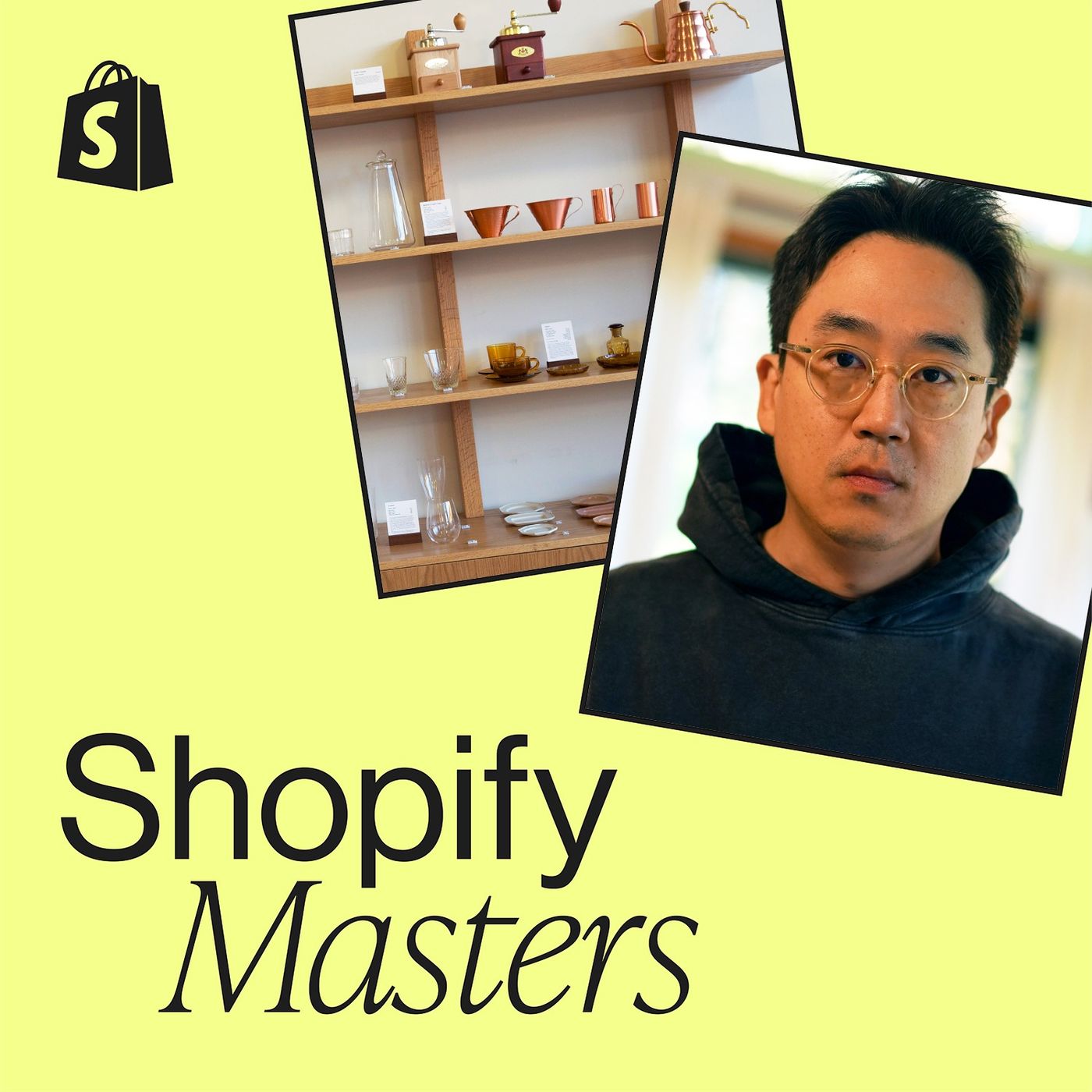
Bert Youn explains how he built The Good Liver, a curated global lifestyle/home goods brand with “zero SEO, zero ads,” relying on craftsmanship, word of mouth, and a physical store experience in Los Angeles’ Arts District.
Bert previously worked in animation; he traveled extensively (including Japan) and became known among friends for sourcing hard-to-find, high-quality everyday goods. He later returned to animation full time while keeping the store as a profitable side business.
SEO and paid marketing weren’t worth it for his niche, low-inventory, made-to-order products; Instagram photo/storytelling didn’t drive sales early. Word of mouth and consistent posting did. Physical retail sells the value better than online.
Japanese crafts (e.g., $300+ wine glasses, $250–$300 pens, $200–$400 tote bags); products chosen for rich manufacturer history and stories; store layout and detailed photos simulate in-person texture and angles.
Written by AI. May contain mistakes.
Discover the origins of Bert's passion for craftsmanship and global artifacts.
“My wife, when we were dating, she was studying in Japan.”
Explore Bert's journey from a comfortable job to launching an online store.
“We looked up the literal meaning of it and it said the good liver.”
Learn how Bert chooses products based on personal value and stories.
“When you get inspired by these shops, do you think to yourself one day I'm actually going to open a physical store?”
Understand how The Good Liver relies on organic growth and word of mouth.
“decide which products you wanted to showcase?”
Examine the importance of in-store experience alongside e-commerce.
“So 10 years have passed since you started the business.”
Discover how The Good Liver attracts a specific customer base that values quality and curation.
“Like they have an appreciation for the quality element, the curation element that you guys have.”
Learn how The Good Liver adapted its sourcing strategy during the COVID pandemic.
“What we had to do was start browsing online.”
Explore the founder's journey of balancing a side hustle with a career in animation.
“My understanding is you've taken a step back into the world of animation now, and you're back in that world full time.”
Understand the founder's vision for creating an engaging and magical retail experience.
“So thanks to her, I'm able to think about that business side a lot more nowadays.”

Get the gist, explore an idea or ask about something said.
 Claude
On Shopify Masters, what are the key points of this episode?
Searching your listeningAutomatic transcript. May contain errors.
0:00Bert Youn: I was not confident that I'd be able to become an entrepreneur. The only way to do it was to start an online store first. Bert Youn launched The Good Liver, a curated lifestyle and home goods brand centered on beautifully crafted global artifacts. I knew nothing about SEO. The only marketing tool that I knew was starting an Instagram account. He's here to share how he built an organic channel and retail business, ultimately running a profitable business. Bert, welcome. Hi, thank you for having me. Thank you for being here. How did the first seeds of Good Liver get planted? I got to travel a lot.
0:41Bert Youn: My wife, when we were dating, she was studying in Japan. Every time I visit her, I would try to check out good restaurants out there. And the amount of care each business or restaurants put in from choosing their chopsticks to cups, they had a very particular way of choosing their products. And I was just mesmerized by the quality of everything out there. The craftsmanship was like a huge thing. So since then, I just started obsessing over collecting everyday goods that was made out in Japan. And I became that guy who knew the best version of these everyday goods. So friends would come to me asking for the best beer glass, where to get it, or if they're looking for a rice cooker, where can I find this?
1:50Bert Youn: Can you get it for me when you're in Japan? That sort of stuff. being able to answer those questions they would encourage me to start a business maybe like start from my e-commerce or whatever and at the time I didn't know anything about starting a shop uh so I kind of just brushed it off but I was getting kind of burnt out working in animation and that's when I started to feel the urge of starting something of my own I heard the French term bon vivant, which means a person who appreciates certain things in life. And it kind of explained who I am. We looked up the literal meaning of it and it said the good liver.
2:39Bert Youn: And at first it was a little confusing because what does the organ have to do with a person who appreciates these things in life and soon realized it meant liver as in a living person. And we laughed about it and thought it was funny. So we ended up using the good liver. So it's one thing to be inspired by craftsmanship. It's another thing to be that influencer to your friends, turning this into an actual business and becoming an entrepreneur yourself, so to speak, and sourcing products that you're then going to resell online, that's a different undertaking, right? That's a much different undertaking.
3:20Bert Youn: So how does that begin? I was very cautious. I was not confident that I'd be able to become an entrepreneur. Working for, you know, major studios is a very reliable job. You're getting paychecks every week. I just couldn't see myself getting out of that comfort zone and starting a business. So the big battle was to really find a way to convince myself. And it took a while. It took years, just taking baby steps from making my own product to, you know, checking out the market, seeing if similar businesses are surviving. and once I was done with my military duty, I started backpacking around Europe for a couple of months with my wife and found a few stores that were awesome, inspiring and saw how they were doing business and from there I had a feeling that I might be able to do it once I moved back to the U.S.
4:33When you get inspired by these shops, do you think to yourself one day I'm actually going to open a physical store? No. Or do you think I'm going to start online and see where it goes?
4:44Bert Youn: Again, I was very cautious. I did not have the funds to immediately open up a physical store. The only way to do it was to start an online store first and see where that goes. It took a pretty long time to put together the website. Again, I didn't have the budget to hire anybody to do anything. So I pretty much did everything myself, photograph all the products, edit them and upload and design the website and all that. So slowly that got put together. At the time, the only marketing tool that I knew was starting an Instagram account. And I thought taking good looking photos and being able to talk about your product in an interesting way would automatically bring in customers.
5:39Bert Youn: But that was not the case, especially the products that we sell are very particular. I don't think people would get the value of it unless you see it in person. hold it in your hand, feel the weight of it, see the detail, see the craftsmanship. I think at the time they would see the products online and have a reaction, what? This for this much? This is ridiculous. But then I was sure if they held it in their hands, they would be able to justify the price. So having no traffic on our website, having less than 500 followers on our Instagram account for over a year made me realize I needed to start a physical store.
6:38I mean, you're not kidding about the price. There are wine glasses that are north of$300 per glass. There are pens in the$250,$300 range. There are tote bags in that same$200 to$400 range. These are very, very high quality curated products. When you first got started, how did you decide which products you wanted to showcase? What categories you wanted to be in? It really was just stuff that I liked.
7:09Bert Youn: Price did matter to a point where if it was ridiculously expensive, then something that I couldn't afford, then obviously we wouldn't carry it. But if it was something that I would want to save up for a few months and purchase it, then I could justify myself to put it on our store. But we didn't start off from having these crazy expensive products. We started with products that came from manufacturers that have a rich history or an interesting story to tell. It may not be the most convenient product to use, but a product that would have an interesting story to think about when you're using it.
8:09Bert Youn: Just something that feels nice to have in your home. You're appreciating the history, the story, the time you put in to use that product. Those are the stuff that we started with and curated a line of products that were interesting and were hard to find. didn't really think about the price that much. But I swear, like when we were starting, there wasn't a whole lot of products that felt like, whoa, I can't afford this. I want to ask you about marketing because you said something interesting, which was that early on, you tested some various product photos and some storytelling with respect to the product on Instagram and that didn't work.
8:5410 years in, something is working in terms of the marketing. I mean, customers are hearing about the good liver somehow, some way, but it feels like this has been pretty organic. Would you say so?
9:05Bert Youn: I would say it's very organic. We were very lucky to have our customer base because everything I believe happened by word of mouth. The people started visiting our store, influenced a lot of like-minded people to come check us out. we had no marketing budget i had no knowledge towards how to market our stuff i knew nothing about seo i still don't know anything about it that's okay it might it might be dead with ai so don't worry about it yeah because that was always on my mind like everybody thought I was stupid for not looking into that. We consulted a few people, actually a lot of people, and always the results of that was, one, we can't spend that money.
10:06Bert Youn: Two, this seems like we're gambling towards a goal that doesn't seem realistic. you're spending you know thousands of dollars every year just hoping for something to blow up and that didn't really make sense for us because the line of products that we carry aren't the products that can you know sell in bulk even if it does blow up yeah we put in orders that are made to order a lot of the products. You're not committing to massive inventory or your pallets of product or whatever. Exactly. So we've experienced a couple of posts on Instagram blowing up and getting inquiries from everywhere. But the problem was something blows up, it immediately sells out in a couple of hours because we had four in stock.
11:09Bert Youn: Sure. So we're not really benefiting from these things that are happening online. So we really didn't see the use of doing any of that. At the same time, I knew the value of being consistent in uploading stuff and just notifying everybody that we're still here and we have a new product here and there. Is this email list? Yeah, newsletters and stories, posts. But again, we heavily relied on our customers just organically advertising for us. So 10 years have passed since you started the business. You're back in the U.S. now. Lots of things have changed. But you have this beautiful store downtown, Los Angeles in the Arts District.
12:07So well done on that. The website, The Good Liver, also curates a ton of your products that you sell in store. What is the role of the physical store versus the online site in terms of showcasing these products?
12:20Bert Youn: The physical store is there to have customers come in, see the products in person, feel it, hold it in your hand, feel the real value, and see the craftsmanship that were put into the products. The online store is there for accessibility for those who cannot come into the store. Luckily, we've been getting a lot of inquiries from customers that don't live in Los Angeles. And it's been very helpful for us to guide them to our online platform to check them out. And the way how we lay out our products is hoping that it simulates the experience in store where they can see the product in multiple different angles.
13:13Bert Youn: And I try to photograph the products in detail where they could see the texture, like they're feeling that texture in their hands. Being able to write down the facts, the interesting story that drew me into the product. The online platform is really there for us to fully tell that story to people. I would assume that the customer that is shopping for your products has a different mindset where storytelling and producer or production history plays such a key role in what is being purchased. So my assumption is that customers that are coming, it's almost like it's a destination for them. They're not sort of everyday browsers.
14:03Like they have an appreciation for the quality element, the curation element that you guys have. Is that how you see it?
14:11Bert Youn: Yeah. Most of the customers, I would say, we're very like-minded people. We get a lot of artists, designers, architects, musicians, and I feel like we're all creators. So they understand the pain and thought process that gets put into a product that they're holding. So I think that's the reason why the customers that we have are able to appreciate the products that we have. You're sourcing globally still. So how are you finding what you want to sell? As mentioned, it started from traveling. We carry a lot of Japanese stuff. It's very Japanese crafts heavy because the origin of the store really came from traveling around Japan.
15:08Bert Youn: We've been traveling a lot to check out the craftsmen that we've found online or read through a magazine and talk to them, tell them about our store and convince them to sell to us so that we could represent them. That's how things were mostly done until 2019. Now, in 2019, two things happened. We had our first kid and COVID happened. So everything shut down. We couldn't travel. What we had to do was start browsing online. But doing that had an issue. Everybody had access to it. the mission for our store is to source products that are not easily found elsewhere. How do you do that? It was a huge challenge.
16:07Bert Youn: So we had to look into different routes. And a lot of the times we would look into magazines that not a lot of people would be able to have access to. So that was one way of being able to look up the products that we source. Well, 10 years in, you're profitable. So congratulations. My understanding is you've taken a step back into the world of animation now, and you're back in that world full time. So The Good Liver is a side hustle for you? It was always a side hustle, unfortunately. When I came back to the US, I started this and the intention to not go back to animation. But when I started the physical store, I had to go back because I just couldn't support ourselves, support the store.
17:05Bert Youn: My mindset towards animation has changed a little bit. And I was able to start working on really interesting projects with friends that I love, really talented people and felt more freedom than before where I regained the passion in the medium. And here I am still working at it. Is there a definition of side hustle that you have in your head? Is it something that pads your household income? And that should be the role of it? Is it a passion project? Is it a hobby? Is it an area of interest? Is it all of the above? I think it's all of the above. Of course, revenue and making a profit has become a very important fact.
17:54Bert Youn: Before, I didn't really think about it that much, to be quite honest, which was an issue. My wife was able to chime in and change that thought, which is why we're more profitable nowadays. She has that business mind that I didn't really have. So thanks to her, I'm able to think about that business side a lot more nowadays. But I still have that bigger picture in mind that I'm hoping to achieve one day. What do you think is the role for the company going forward? The role of the company is to be able to provide useful information, interesting stories, and good products to take back home. and at the same time provide a space where people feel like they're in a theme park almost.
19:00Bert Youn: Not a literal theme park, but the feeling that you get when you were a kid going to a theme park, thinking about going to Disneyland and you're excited about it for days. And once you're there, there's some kind of magic that happens, right? You lose that when you're an adult because you're interested in different things and your dopamine level is like way low. But I'm hoping that our space is able to mimic that feeling that you had back when you were young, get excited about the products that we carry and products that we will carry that aren't there yet. Having that expectation of, oh, what will they bring afterwards?
19:57birds yeah and maybe the little theme park will be something that is the next chapter a little bit more capital intensive right but yeah no very cool story the bon vivant the good liver it's great to talk to you bird thanks for being here thank you for having me and thank you for watching subscribe and tune in every week for brand new episodes
Driven by a passion for global craftsmanship, Bert Youn launched The Good Liver to sell high-end home goods, but found that web photos alone couldn’t convey the value of $300 items. Opening a physical store in Los Angeles allowed customers to hold products in their hands, turning in-person touchpoints and word-of-mouth recommendations into the primary engine for the brand’s growth. Today, the business operates profitably without relying on paid advertising or SEO, using its ecommerce platform mainly to tell product stories and serve out-of-town buyers.
For more on The Good Liver, in show notes, click here