Ask ChatGPT
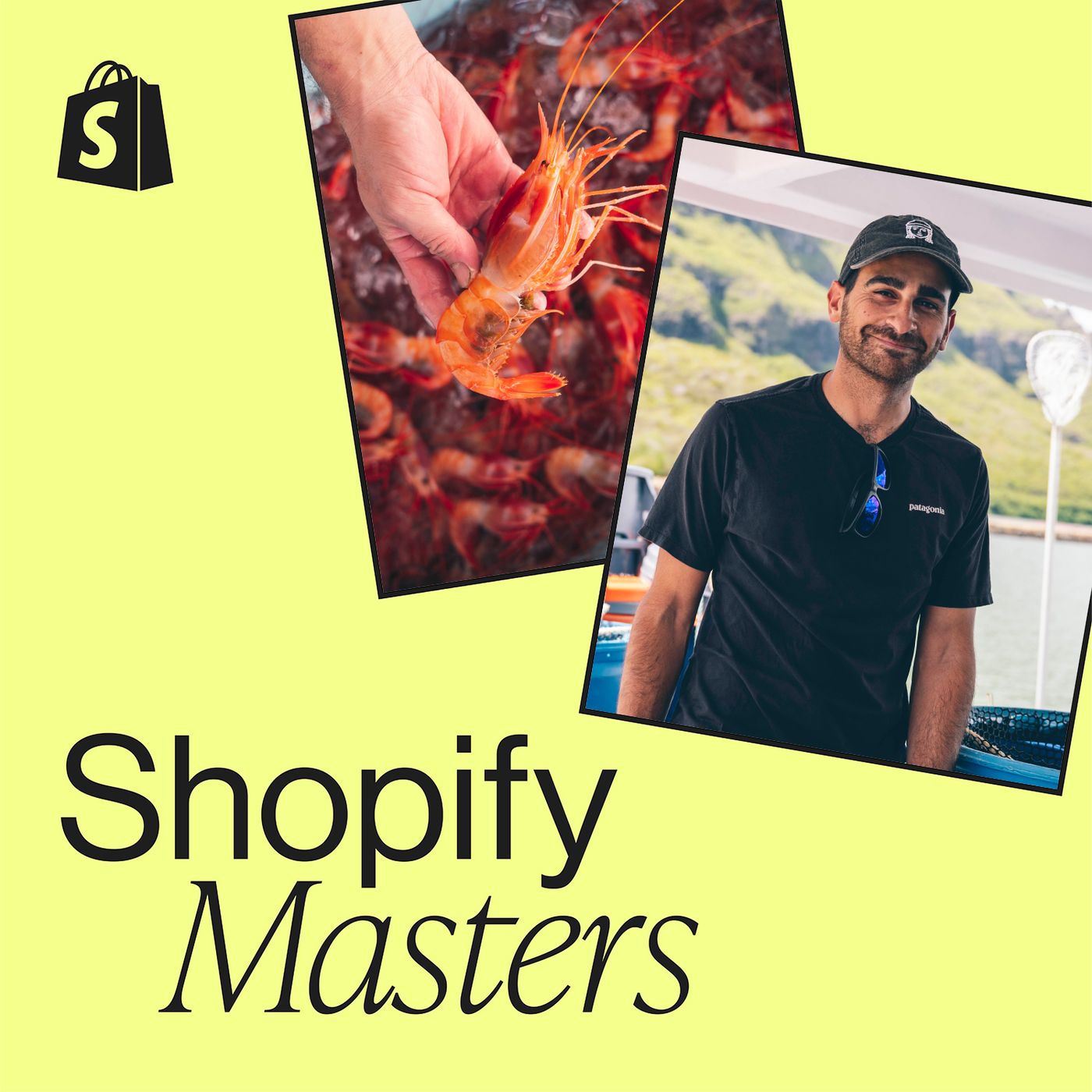
 Shopify Masters
6 Oct 2026 · 31m · 19 chapters
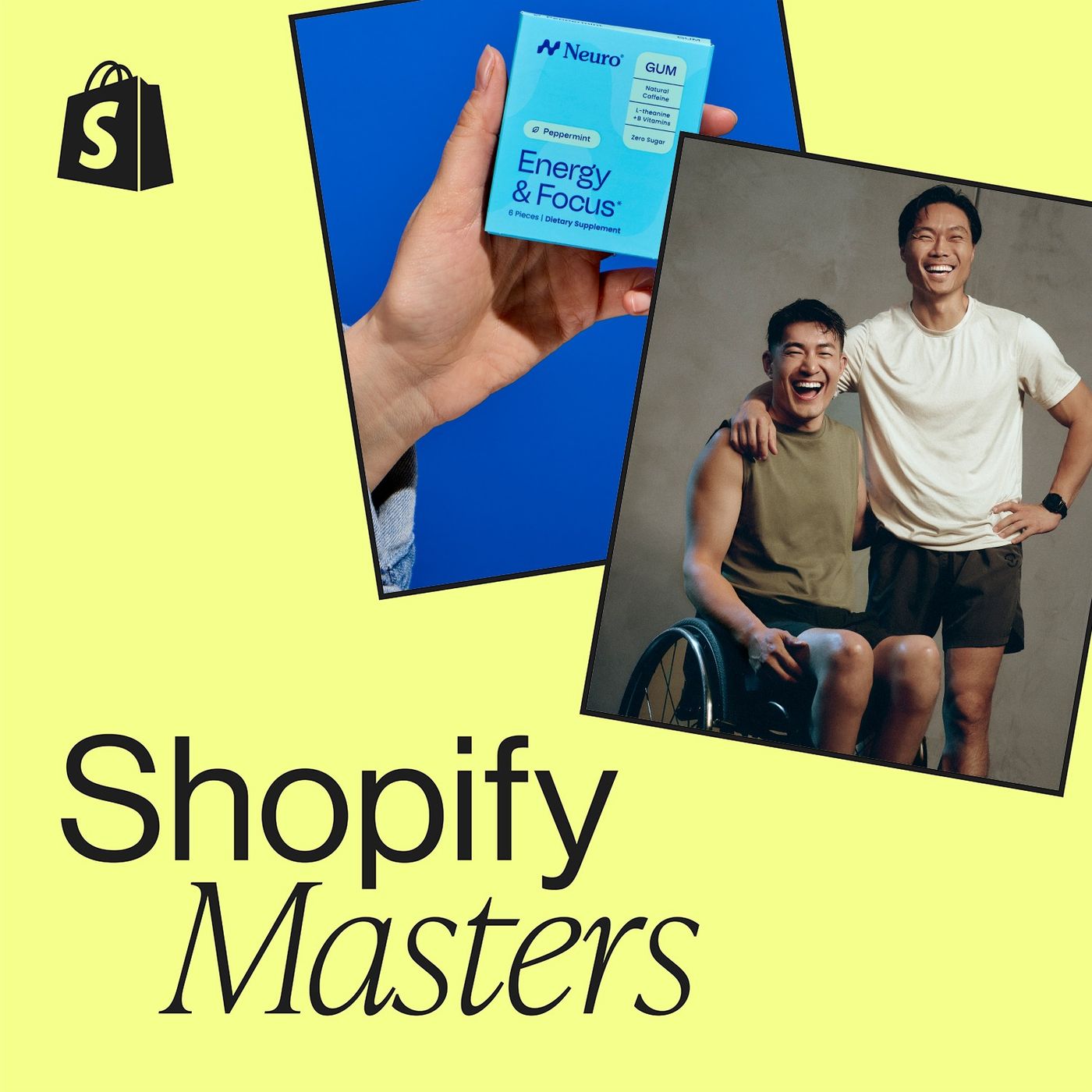
Kent Yoshimura and Ryan Chen explain how NeuroGum (a dorm-room nootropic experiment turned nationwide retail brand) built product-market fit, scaled from e-commerce to omnichannel retail, and landed long-lasting partnerships using “AI with intention.”
Kent studied neuroscience at Sony Music; he mixed supplement powders in college and later handled strategy/CEO planning. Ryan studied chemistry/economics, was a top nootropics Reddit contributor, worked at Hulu, and later focused on business development and partnerships.
They created a “blue ocean” category by turning known nootropic ingredients into gum; they avoid forcing habit changes and instead position NeuroGum as a “staple” that complements coffee. Partnerships succeed when the partner genuinely consumes the product and it’s a two-way value exchange.
Sampling at Hulu/music studios; Indiegogo campaign (goal in 3 days); media like Dr. Oz. Retail milestones: CVS, Whole Foods, Walmart (initially wrong aisle, later pharmacy checkout), Costco (curated SKUs, sampling). Partnerships: Diplo’s Run Club, Chess.com (Danny co-founder; 2-year exclusive renewed), Mr. Beast/Feastables network, Carpe with Mitchell Hooper (250M impressions). They also discuss a federal trademark lawsuit during COVID and using AI for reporting/decision support.
Written by AI. May contain mistakes.
Kent and Ryan share the story of how they created NeuroGum from a personal need.
“So a lot's happened in 10 years since 2015.”
The founders discuss the challenges and feedback process in creating NeuroGum.
“And then, you know, the first couple of samples tasted really, really bad.”
Insights into their crowdfunding success and initial e-commerce strategy.
“there's a community of people that maybe don't care as much about the taste.”
Discussion on changing roles and strategies as the company scales.
“Over the years, the sort of chapters of going from a small scrappy startup to where you are today, which is, you know, north of nine figures.”
How Kent and Ryan approach partnerships with brands and influencers.
“And the two of you, you go from obviously being co-founders and generalists doing everything under the sun to what now?”
Exploration of their unique market position and brand differentiation.
“between all the different partners and how they connect to each other.”
Learn about the difference between red ocean and blue ocean strategies in business.
“Unless you have like a really celebrity founder led company or partnership from the beginning where it feels organic.”
Discover how the founders created a first-of-its-kind product in a new market.
“this is just creating a product for yourselves.”
Explore the challenges and strategies for entering major retail partnerships.
“So it was this whole thing with legal around the fact that you're not swallowing the gum.”
Understand the importance of timing and placement when launching in retail.
“So I think we went from low single-digit U.S.”
Learn what founders need to consider when expanding to physical retail.
“It's a major shift, a mentality shift in the company when that happens, right?”
Discover the strategies to enhance customer lifetime value and loyalty.
“But the benefit of e-commerce is you can get as much learning as possible and apply it in the same way to what you're trying to do in retail.”
Explore how customer referrals can drive growth and reduce acquisition costs.
“whether it's our rewards program, our loyalty program, down to like the discounting on our subscription, we make sure our Shopify customers are treated the best.”
Learn about the experience of turning down offers on Shark Tank and its outcomes.
“Your recommendation from a friend or family member has so much more weight than an online ad or Google search or anything like that.”
Understand how the founders handled trademark issues and legal challenges.
“And we ended up partnering with Daniel Lubezki, the founder of Kind Bar.”
Discuss the role of AI in business and its influence on brand equity.
“AI has knocked the barriers down in just about every area of business, whether we're talking about product or content or really any operational aspect of running e-commerce business.”
Discussing the impact of AI on marketing and media strategies.
“in a business nowadays when you've got AI that can replicate all these other areas.”
Exploring how to integrate AI while maintaining human connections in business.
“more meaningful, whether it's the brand media, brand partnerships, brand activations?”
Sharing experiences of using AI tools to enhance team productivity.
“Our team's been utilizing it great for like reporting and stuff like that.”

Get the gist, explore an idea or ask about something said.
 Claude
On Shopify Masters, what are the key points of this episode?
Searching your listeningAutomatic transcript. May contain errors.
0:00Ryan Chen: They're just like, hey, congratulations, you made it, you're getting sued, which is kind of like, I guess, a milestone for some entrepreneurs.
0:07Kent Yoshimura: In 2015, Kent Yoshimura and Ryan Chen built a category from scratch. A decade later, Nuro is a nine-figure brand on shelves at Walmart, Whole Foods, and Costco with partnerships that stretch from Diplo's Run Club to Chess.com. We are a perfect product. It becomes a staple in your purse, your car. That's when the habits develop. Kent and Ryan are here to talk about landing partnerships that stick, what keeps customers coming back, and using AI with intention. Kent, Ryan, welcome to the show. Thanks for having us. Thanks for having us. So a lot's happened in 10 years since 2015. A decade's a long time.
0:44Kent Yoshimura: I mean, are you surprised yourselves by what you've been able to build? We have no business experience, really, right? I think most entrepreneurs actually don't have business experience, but then you're obsessive about creating something that works for you and want to share it with other people, then there's this natural course that it might take a whole 10 years, but you'll find someone that will love that thing you create as much as you love it. Were you creating this for yourselves or did you actually study the market and say there's a gap here?
1:15Ryan Chen: So I met Kent the first day of college. I was a freshman. Kent was a sophomore. He was studying neuroscience. I was doing chemistry and economics and we just became fast friends bonding over things like video games and athletics and academics. So Kent was mixing your powders in your room, which essentially was version zero of NeuroGum. Like it was just supplements and pill form that we took for years. And then on a scuba diving trip, we realized that taking pills in public is not the most accessible. It's not the most approachable and definitely not the most shareable. So what if we changed it into like a gum format?
1:47Ryan Chen: And that was literally the idea. So it was like a problem that we wanted to solve ourselves, but we realized that other people would probably want to take it too. And then, you know, the first couple of samples tasted really, really bad. But, you know, we knew that we had a product because people said that like they feel the energy, they feel the focus. So we knew that we just had to stay resilient enough to figure out that market fit.
2:07Kent Yoshimura: Who's the product expert? I mean, I was mixing supplements in my room, researching nootropics. Big Redditor. Yeah, I was like one of the top contributors on Reddit, our nootropics during that time. Before it's time, too. Before it's time, yeah, yeah.
2:20Ryan Chen: Nootropics wasn't a big thing.
2:21Kent Yoshimura: All these things were legal, by the way. Maybe I was buying them on sketchy sites, but they were all legal powders. getting mixed into supplement format. And I'd be like, Ryan, take this. It was in a Ziploc bag.
2:29Ryan Chen: Guinea pig 101, you know? Yeah.
2:32Kent Yoshimura: So if you look at the supplement market 20 years ago, it was either energy drinks or it was pre-workouts that had a bunch of ingredients that you had no idea what they would do to you or for you, you know? Clinical research was absolutely terrible. There was no scientific backing. And now supplements have shifted away from that into where we are now. But early on in those days, we were using our backgrounds with chemistry and neuroscience to see what would work for us, how can we mix it ourselves, and what would be most effective for us to actually feel it.
3:02Ryan Chen: We're putting it in our own bodies, right? So you got to make sure that it works, but it's also like, you know, it's good for you.
3:07Kent Yoshimura: But at the same time, you know, our product innovation is, from a format perspective, it's very unique and innovative. But we're not like other supplement companies where we go down the route of using ingredients that no one knows with maybe a few non-double-blind studies behind it, right? The main ingredients in our primary product is natural caffeine, half a cup of coffee's worth in each piece, which everyone knows works like caffeine works. It's like the main ingredient in all these energy drinks also. L-t-anine, which is the main amino acid compound in green tea, which allows you to have that focus.
3:40Kent Yoshimura: And then B vitamins. So we're not trying to necessarily introduce produce new, unique, you know, ingredients that people can't pronounce and promise crazy things. We want to take what works, what has a science and apply it effectively. What does that first go-to-market look like? Do you create samples? Do you hand them out? Do you test this on a cohort of friends or other athletes in your network? How does this turn into a real business? Yeah, I mean, it was two in one. I mean, you were working at Hulu at the time. Yeah.
4:11Ryan Chen: My first job out of college was at Hulu. Kent was at Sony Music as a music producer. And when we got the first batch of samples, it was like sampling people at the music studio or for me at like my coworkers at Hulu. And that's when you get like really honest feedback. Cause like some people are like, dude, this product, yeah, this product really works, but I don't like the taste. Or like, hey, like I, this one has too much caffeine. Cause we had like one version that was 20 milligrams, 40 milligrams, 80, 100. Like we're just trying to figure out that right balance. So the first year was kind of like that trial and error.
4:37Kent Yoshimura: From there was like, okay, there's a community of people that maybe don't care as much about the taste. Although the taste of our gum is absolutely fantastic now. We've gone through over 30 iterations at this point. But early on, it was like, who is that biohacker community before we cross the chasm into a larger demographic that would take our product and want it for its functionality and the benefits that they already know they would get from the caffeine-LT-Ening combination, which is very popular. So we went on Reddit. I made a post. And that post became like one of the top three posts of all time on our nootropics.
5:10Kent Yoshimura: It drove to an Indiegogo. and because Indiegogo and Kickstarter were so big at the time, there was a significant amount of media coverage that came from being on the front page of those sites. Like Time Magazine, Dr. Oz reached out to us and we ended up going on his show. That really just initiated everything. It was a launching pad for everything. Did you do the crowdfunding thing? We reached our goal in three days. Wow.
5:34Ryan Chen: We had it up for 30 days and then we hit our goal in three, but then we built the website on Shopify, right? And then shortly after then got on Amazon And it was like primarily an e-commerce company, even up until like last year. So we're very focused on like knowing who our consumers are, really focusing on that messaging.
5:50Kent Yoshimura: Over the years, the sort of chapters of going from a small scrappy startup to where you are today, which is, you know, north of nine figures. Like, do you feel like you've had to change your approach to running the business as the business has grown? No, absolutely. I mean, when we go through our three-year strategy plan, you typically think about what are the people that are operational leaders within the company at the moment in the first era of your business, right? The people that could get things done, but maybe there's not too much high-level strategy. And then who are the critical hires for specific departments that allow you to enter into the next phase for us, which was retail.
6:26Kent Yoshimura: So we built a pretty intensive retail brand marketing team from there. And then from there, I think it becomes structural. role. So organizational structures, specialty hires, things like that, that continue to grow. And then from there, what's like capability planning as you continue to expand. And so there's that side of things. I mean, also to make a splash, you know, all the things Ryan's doing on the partnerships front, business development front, you know, like financing front, like all those tie in so deeply to make sure it builds into the strategy.
6:56Ryan Chen: I think in the beginning, we're all generalists, right? Like the customer service phone number for NeuroGone was Kent's Cell phone numbers. So like you would get calls from all hours of the day, answering like emails. Like Kent's roommate at the time, Tyler ended up becoming our COO. So it was just like proximity and like just being a generalist. And as we've scaled, like now we can hire specialists. We hire people who are experts at like what they do and then they're way better at that than what we can do. So for us, we're still kind of generally like the strategy and overall kind of leading the brand by example.
7:25Ryan Chen: But now we just have a rockstar team. And I think that's really what helped us get past that nine figure revenue mark.
7:31Kent Yoshimura: And the two of you, you go from obviously being co-founders and generalists doing everything under the sun to what now? Like, what are your respective lanes today? For me, still thinking about like long-term planning, strategy. I don't think a lot of those things have changed. Marketing has, I would say, shifted off my plate a little bit more compared to before. I think from a planning and strategic development standpoint in the business that it just gets bigger and bigger. So for my role as CEO, that hasn't necessarily changed.
8:04Ryan Chen: My role is like CFO because I was finance at Hulu, data science at Hulu. And I was like, just like locked in spreadsheets for many years. And that was for me, like what needed to be done, but not really, I think necessarily my skillset. And then the last couple of years, been really able to focus on like business development, brand partnerships. And it's quite frankly, super fun for me.
8:22Kent Yoshimura: So let's double down on the partnership thing, because that's been a huge aspect of what you guys do. So these partnerships with Diplo Run Club, Chess.com.
8:31Ryan Chen: Mr. Beast.
8:31Kent Yoshimura: Mr. Beast, that's huge. The PDS Health Network.
8:35Ryan Chen: Yeah.
8:35Kent Yoshimura: How do you go about finding the right partnerships? Like, is there a specific filter that makes for a good partner that you have to tick?
8:42Ryan Chen: I think the number one thing is if the partner is a genuine fit. Like, do they like the brand? Do they consume it? That's the easiest. And what I see a lot of brands do is, what can the partner do for me? And then we actually flip the question when we're interviewing the partners. like, hey, what can we do for you? And sometimes they're kind of taken back. They're like, what do you mean? Like, what can you do for us? And a partnership's a two-way street. If it's a one-way, it's very transactional. So we really asked them, what can we do for you? Like, what are your interests beyond, you know, this platform?
9:10Ryan Chen: So, you know, chess.com is a great example. We knew that we over-indexed on gaming. Chess.com is actually one of the biggest gaming platforms in the world. They have almost 300 million users. The co-founder, Danny, is a fan of NeuroGum. They reached out to us and we couldn't offer, you know, a seven figure contract like some energy drink companies can. But we offered the fact that like we are unique. We're a better form factor. And then we've done a two year exclusive partnership and we've renewed it for the foreseeable future. And Ken's actually really getting good at chess too as a chess coach.
9:41Ryan Chen: But we, we. Don't challenge me.
9:45Kent Yoshimura: I'm so bad. We don't want to talk about chess on this episode. I'm on a losing streak.
9:50Ryan Chen: But Danny, the co-founder of chess.com. And then we started partnering with some massive chess influencers, like Anna Kramling, Nemo Chess, Levy. Gotham Chess is the biggest chess influence in the world. And we have all these partnerships now with the platform of chess.com, but with these influencers. And we would ask Levy and Danny, like, who do you guys like? And they were mentioning Andrew Schultz, which happens to be a partner of ours and an investor. And so we're like, well, we could put you on the podcast. And they're like, you could do that. So it's just like, it's like give and take. It's like, how can we help you?
10:19Ryan Chen: and they happened to be in town for the podcast. And we did a charity event for Andrew. So Andrew had a Netflix special about his IVF journey with his wife. And so he's very passionate about BabyQuest, which is a nonprofit for helping families who can't afford IVF treatment to get that. So we did a whole big paddle event with Neuro and Andrew and then chess.com and filmed it live on TikTok Live. And it feels like just hanging out with friends almost. And it's just like, I don't know, like describing partnerships is just like, It's like, how can our worlds collide and how can we help each other and have fun while doing it?
10:53Kent Yoshimura: Well, you guys sit in a room and say, you know, who would be the coolest partner to have on board and create the list yourselves and then go out and approach them? Or are they coming to you and you're asking yourselves, like, would this make a good partner based on what you just said?
11:08Ryan Chen: Both. It comes from inbound and outbound. So like, you know, with chess.com, they reached out to us and they're like, hey, would you be interested in doing this partnership? and at the time, Steve Aoki, you know, Steve loves chess. He's represented by WME. Yeah, the DJ. We were in town and one of the guys from WME had mentioned that they're partners with chess.com. They connected the dots. And then for us, Outbound was like Mr. Beast. We were looking to do more things with philanthropy. You know, I was part of their video with ATF, which is like an adaptive athlete training foundation in Dallas, saw like what they were doing with these nonprofits and we wanted to get more involved.
11:43Ryan Chen: then Jim Murray, who is the co-founder of Feastables with Mr. Beast, became our board member. He connected us with Jimmy and fast forward, we'll be in Ghana again next week. Ken's painting a mural for one of the schools that we donated. And we were just there a couple months ago again with Jimmy. You see what he's doing and I think he trusts us now as a brand and as founders and we have this amazing partnership.
12:06Kent Yoshimura: I mean, Ryan and the partnerships team do such a good job threading the line between all the different partners and how they connect to each other. that there's like a deeper brand foundation that gets developed underneath all of it. Sometimes these brands try to force like a, I don't know, like a Kim Kardashian onto something, right? And be like, all right, Kim's going to post about it and it's going to be great. Well, Kim posted about us. We don't hit her demographic at all. So although we got a pop on our website in terms of traffic, sales didn't change at all, right? So -
12:35Ryan Chen: Or even Katy Perry.
12:36Kent Yoshimura: Oh yeah, Katy Perry.
12:37Ryan Chen: Katy Perry just organically said like, oh, I quit all nicotine two weeks ago. This energy alternative just took a photo of NeurGum, didn't tag us or anything. And then a bunch of people reached out to us and stuff, but it didn't change sales. You have like the Mr. Beast and you have the chess.com and then influencers, but like even brand partnerships. So Carpe, so shout out to Carpe. We were with Mitchell Hooper, who's literally the world's strongest man. He's been the world champion for the last four years. We were shooting something in Walmart for our launch with like the extra strength gum.
13:04Ryan Chen: And then Casper and David, Casper came out, who's the co-founder of Carpe. And they were like, dude, let's just film a quick clip, like 30, 40 minutes. and that 30 40 minutes that we spent just like shooting in the walmart with mitchell in it ended up generating like 250 million impressions and then since then like carpe is now partnered with mitchell so like the way we think about partnerships is like well how can we introduce our network to them and it's just it's wild how like 250 million it's like we get noticed on the street from this like carpet ad this like deodorant company enduro and seemingly it has an overlap because carpe people are very active they like it just fits our demographic funny enough and And now we're just like trying to figure out how to do and how do we replicate that success?
13:42Kent Yoshimura: How early do you think a founder should pursue these types of partnerships? For example, if you've, you know, if you've got a founder listening, who's got a startup that's just crossed the million in top line revenue mark, but they've never had a legitimate partnership.
13:58Ryan Chen: We didn't start partnerships till like, what, three years ago? Really? Unless you have like a really celebrity founder led company or partnership from the beginning where it feels organic. for us, like we built the product for ourselves first and for the community that we thought could benefit from it. And then we started to see which community was benefiting from it. And then we decided like which partnerships make sense.
14:17Kent Yoshimura: If you're looking at, you know, like the difference between like a red ocean and a blue ocean business, like, right. Like if you're looking at a red ocean business and you need to be coming out on top, that seems like a perfect opportunity if there is brand alignment with celebrity to maybe break past that initial layer and stand out. Speaking of red and blue ocean, you guys have essentially created this category, right? Like you are the first mover in the category. Was that intentional? Or like you said earlier, this is just creating a product for yourselves. And by default, you're just the first mover because this idea is so unique.
14:57Kent Yoshimura: I think we realized that we were very blue ocean when we saw how hard it was. Because there's no one else in it.
15:03Ryan Chen: I think when you have to educate 10 out of 10 people about what your product is, then you know it's a very blue ocean, like untouched. But that's the biggest opportunity, right? The advantage that we had was that no one did what we've done, but the disadvantage is that you have to educate everybody. And that's where sampling comes into play. We're the first brand at Target or Whole Foods to be a confectionery brand with a supplement label. And as like novel or as simple as that sounds, it takes like a year plus with legal to get that. They had no idea.
15:29Kent Yoshimura: They were like, what do we do with this? Yeah, because the supplement brand has always been
15:32Ryan Chen: primarily in the pill form or sometimes in gummies, but to do it in confectionery was a very novel idea to have a big checkout counter in a different place in the store. So it took a long time.
15:43Kent Yoshimura: And gum is interesting because you chew it, but you don't swallow it. So it was this whole thing with legal around the fact that you're not swallowing the gum. And the fact that it has a supplement panel, it's like, we got through it. Versus a mint, right? You don't swallow it, but dissolve it. Yeah. Those are fun. You are consuming. But it was one of those things where it's like, come on, legal bike.
16:07Ryan Chen: Who was the first retailer? CVS. We went from literally like two SKUs at CVS. Now we have over 14. Who comes on board after CVS? Then Whole Foods. Whole Foods.
16:15Kent Yoshimura: And then a bunch of regional players. Then Walmart, part one. But they put us in this like bulk candy aisle. And we're expecting us to do crazy velocities. We're like, we're not even anywhere near this category. Yeah. So we pulled ourselves out before they kicked us out. and then re-entered back into Walmart. And then now we're, again, nationwide with them with multiple SKUs and caps.
16:36Ryan Chen: And Costco was just like a little over a month ago.
16:39Kent Yoshimura: Yeah.
16:39Ryan Chen: Pretty recent.
16:40Kent Yoshimura: Do you apply a different filter when you're thinking about retail partners?
16:44Ryan Chen: Costco has always been the dream partner, but we knew that if we got in too early, like we would be eaten alive. Like we didn't have enough brand awareness. We didn't have enough like movement going into the store. But now I think like 2024, we were one of the fastest growing brands on TikTok and 2025 we had like 5 billion views. So I think we went from low single-digit U.S. unaided brand awareness to now like 15%, 16%. So now it's like more people have, oh, I've heard about it, but I haven't tried it. But now it's at Costco. I trust Costco and whatever products that they put on stores. So let me try it now.
17:14Ryan Chen: So that's been the big play for us. What is it about Costco that makes them the ideal partner? Is it that trust piece that you mentioned? I think it's when you look at the number of SKUs when you go into like a Walmart, it's thousands and thousands. But Costco is actually quite a curated list of SKUs. So to be in that amongst like great company, I think it creates a trust factor amongst consumers.
17:34Kent Yoshimura: And the foot traffic. Foot traffic is insane. They're into sampling. And they love their demo programs. But one thing about Costco that's also interesting is, I mean, same with the e-commerce website. You think about your consumer demographic and what's the consumer that you're targeting to come to your website to purchase and the messaging and the positioning and everything. You know, the consumer that shops at Costco is not the consumer that shops at Walmart. So now all of a sudden the narrative around and positioning around how we're driving people to these retailers changes as well.
18:04Ryan Chen: It's like, how do you communicate to your consumers at the end of the day, like the key to any brand that wants to be successful?
18:09Kent Yoshimura: Did you guys get the timing of these retail partnerships right? Like you kept mentioning the fact that we weren't ready for Costco,
18:17Ryan Chen: but looking back with these other retailers, was it the right order of things? Kent brought up a good example. We went into Walmart the first time, but we're in the bulk candy section. So you could be at the right store at the right time, but not in the right location. And we were just like, this is not the right place for us. And then two years or something later, then we came back with Walmart and the right section, like pharmacy checkout, also like checkout lane. And now we're in the right place and the right time.
18:40Kent Yoshimura: And we're like a top five energy product. I do think we could have gone to maybe a year earlier when like brand awareness from TikTok was really at its all time high. But unless you're driving that awareness and doing brand media, and I think most of Those people who start an e-commerce website, the example of like the one million in top line person, that person is probably more focused on performance media and driving efficiencies and getting the analytics right than building an awareness program that's getting people to know about your platform. They need the ROI. Your platform. Yeah. It's a major shift, a mentality shift in the company when that happens, right?
19:15Kent Yoshimura: What do founders need to understand if they're thinking about becoming an omni-channel brand and they're thinking about branching out into physical retail? Like, do they need to understand inventory commitments, you know, listing fees, cash flow impact? All of that. Okay. Yeah. Slotting fees, like promo cycles.
19:36Ryan Chen: Demos are expensive.
19:37Kent Yoshimura: Demos are very expensive at Costco, but are you able to sell through, you know? And also, is there a sell through if you're only in regional to go into national that you need to be hedging your bets on? We talk about you make your backyard pretty first before you try to make the world pretty. And if you are a small startup, how are you maximizing your community first and foremost, that you are the closest with, and then take learnings from that to be able to expand out onto a global stage. And I think that's something that you can only sort of do with e-commerce. But the benefit of e-commerce is you can get as much learning as possible and apply it in the same way to what you're trying to do in retail.
20:19Kent Yoshimura: Speaking of e-commerce, you guys do have a subscription program. Yes. I would imagine this moves the needle on customer lifetime value and building loyalty over time. I think of gum as being a habitual product, but are you intentionally thinking about how do we actually build a habit here? How do we make sure that this is the only SKU that people consume? In the past, we'd be like, oh, screw energy drinks, screw coffee. Like NeuroGum is the way to do it. And you should replace your daily habits with this product. And we realized that forcing people to change their habits in a way versus just making the best product you can that would enhance their life are two different approaches.
21:01Kent Yoshimura: And for us, we chose the latter. And when people realize that we are a perfect product that complements your morning coffee for the rest of your day, it becomes a staple in your purse, your car, things like that. And that's when the habits develop. You try to cash them at the right time to then drive them into subscription from there and everything else. But at the end of the day, we're like an accessible, shareable product. And that's what we stay behind. Those subscribers, that cohort, you have a higher lifetime value, I assume, attached to those than you would the one-time purchasers. And the way we look at channel mix in that sense is our D2C website has our most loyal customers.
21:39Kent Yoshimura: and we make sure that like, whether it's our rewards program, our loyalty program, down to like the discounting on our subscription, we make sure our Shopify customers are treated the best. Do you look at your consumers as potential brand ambassadors themselves? That's the dream. Absolutely. That's the dream. The referral programs. Referral programs.
21:59Ryan Chen: I mean, sampling is important too, because like to your point, it's a very blue ocean. So most people have never tried a brand or a product like Neurogum. So like this year, we'll be sampling more than 3 million people. And then those people who try it in real life then might go and become a Shopify subscriber, Amazon subscriber, whatever. But obviously like on the website, we try to incentivize with gift, with purchase, better discounts.
22:20Kent Yoshimura: I mean, even the events we do, right? Like Robin and Haley from our team, you know, Robin's like a Pilates instructor on the side and she gets her entire Pilates community to become ambassadors for the product. She's throwing events at the Pilates studio. And then from there, it just naturally expands out.
22:37Ryan Chen: along those lines within fitness, like think like the high rocks of the world and that type of thing. Like how do you get people who would be using this product and not chugging down energy drink while you're trying to compete or do a run? Like our product has like this, like perfect use case for it. So just getting people to think about what that use case can be.
22:55Kent Yoshimura: And if those customers refer others by word of mouth, then those customers come in the door with a zero customer acquisition cost. So economically, that is the dream. Who do you trust more than your friend?
23:08Ryan Chen: Right. Your recommendation from a friend or family member has so much more weight than an online ad or Google search or anything like that. And it's true. Your friend that you really trust and you adore is like, yo, you got to try this. This product will really help me. You're going to try it.
23:22Kent Yoshimura: One thing I didn't ask you about is your appearance on Shark Tank, where you turned down all the partnership offers that were on the table. Why? So we felt like we had a duty to our existing investors and the people that helped us build the business. Robert Herjavec came in and he wasn't willing to meet us in the middle. He was really nice, by the way.
23:44Ryan Chen: I really like Robert. Yeah, and he's great,
23:46Kent Yoshimura: but it just didn't make sense for us. And, you know, given that we had a network of investors, people that have helped us, like the equity in our company, it just did not make sense in that moment to devalue ourselves to take that deal.
23:58Ryan Chen: I think know what your worth is, right? I think a lot of people that go into the show, lights, camera, they get in that panic and they accept the deal that they really wouldn't accept behind closed doors. We just had a hard line. It was like, we can't go below this. And then when we just didn't get there, we're like, we're okay with, you know, stepping away. And we were willing to negotiate. That's the thing. And it ended up being the best decision. Cause I think the valuation at the time was like 15 million. And it's like crazy to think about back then that like we were willing to go there. But at the time that was the valuation.
24:25Ryan Chen: That was what the company was worth. And that's what we genuinely believed it was worth. and we had other investors that believed in that number. And we just stuck to our guns and best case scenario. We did an update episode on Shark Tank that came out earlier this year, I think like March. Like where are they at now or whatever? Yeah, and we're the first ever company on Shark Tank to not take a deal on camera and still get an update episode. And we ended up partnering with Daniel Lubezki, the founder of Kind Bar. So shout out Daniel. Oh, nice. He was a legend.
24:50Kent Yoshimura: He was originally out, right?
24:52Ryan Chen: He was originally out, yeah.
24:54Kent Yoshimura: This is a lesson and no doors are ever closed.
24:56Ryan Chen: Yeah. We shot Shark Tank September 2019. So the world was all normal. And then by the time we aired on Shark Tank, it was like six months later, seven months later, April 2020. So the world was in full lockdown. Sales had spiked, obviously, but supply chain was in a crunch. And then two weeks later, we got hit with a federal trademark lawsuit for a trademark confusion. So I was like, wait, how is this possible? I was like, we own Neuro, we own NeuroGum, we own Neuromens, all registered under the USPTO. I was like, this is like, how is this even contestable? Approved. And approved trademarks. But that didn't stop this person from trying to sue us.
25:31Ryan Chen: And long story short, you know, I reached out to all of our investors. A lot of people didn't know really how to help, but they were just like, hey, congratulations, you made it, you're getting sued, which is kind of like, I guess, a milestone for some entrepreneurs. But anyway, we were actually very cash strapped. We had bought all this inventory for COVID, then supply chain and shipping got really expensive. We had signed, I think, a million dollar retainer from a law firm to help defend us on this case. And I was like literally losing sleep. I think I was like losing hair. I was like so stressed.
26:00Ryan Chen: And I remember on the show, Daniel kept saying, he's like, I really like you guys. I feel like we're going to cross paths again. And he just seems so genuine. I don't know what it was. It was just so genuine. I was like, Kent, like we have no choice. Like Hail Mary. I DM Instagram, Daniel Lubetzky, literally just DM, cold DM. And he messages me back. I was like, help your family is good during COVID. And I hope you remember us. I was wondering if I could get your advice on something. And he's like, yeah, of course, like, of course, I remember you guys. Hope you're doing well, too. I told him about the whole lawsuit.
26:30Ryan Chen: And then for the next 18 months, he defended us on this lawsuit. And we ended up like winning and settling the suit. And the whole time I'd been like, you know, Kent and I were like, can we offer you equity? We don't have any cash. We can offer everything. He's like, I just consider you, Ryan, Kent, like, you guys are my friends. I just want to, I don't want to see you guys get bullied. This happened to me when early days in Kind Bar. He was like, I'm getting PTSD from this. And he like literally was on the call with us, with her, their lawyers, our lawyers. He helped mediate the whole situation for 18 months.
26:58Ryan Chen: And during that time, he'd sold Kind Bar for 5.1 billion to Mars Wrigley. And it just showed me what being a kind person really is. And we had never told that story ever publicly. And then we had like a video go viral on TikTok about me talking about it. And then, you know, finally, Daniel came on as an investor and we did an update episode on Shark Tank. So then we became the first company ever to not take a deal on Shark Tank and still get an update episode. So it was such a cool story. And I think it just shows this mentality of paying it forward. He'd always brought up so many stories of how other people helped him.
27:34Ryan Chen: And he literally just did this out of the kindness of his own heart.
27:38Kent Yoshimura: Wow. AI has knocked the barriers down in just about every area of business, whether we're talking about product or content or really any operational aspect of running e-commerce business. The one thing that doesn't seem to be obvious is AI manufacturing trust and brand equity over time. It's almost like brand equity is sort of rising to the forefront of what's important in a business nowadays when you've got AI that can replicate all these other areas. General observation, but what's your commentary on what you've been seeing in the AI world and how are you implementing it? At least on the paid media side, there is a massive saturation of content now and meta reinforces that because they want you to use their meta ads AI.
28:23Kent Yoshimura: It's interesting to see how CPA and CPMs have shifted since AI has become more common within the paid media space. With that being said, how do you effectively pivot away from that and create something that's more meaningful, whether it's the brand media, brand partnerships, brand activations? How do you build like the trust on top of everything that you are putting out there in terms of the content and everything else and showing up all the referrals all the brand ambassadors ship you know create a great product at the end of the day you know a lot of people are become so dependent on ai that they let the machine run them and all their decision making all their ads the way they dictate their business but the reality is human connection is still the most important way that we connect with each other.
29:13Kent Yoshimura: So how do you build off that?
29:14Ryan Chen: How can it be your companion? Like, how can it be a sidekick to what you're doing? So Matt and I, like, you know, because we have this history of all these partnerships and we've seen what works, what doesn't work, then we could start to plug that into AI. And so we have like data points on like what's going to be effective when we're renegotiating something with a different partner or a different platform. For that, I think it's an incredible tool. I mean, I wonder what it would have been like to start NeuroGum like 10 years ago if AI was available then like how different the business could have been but in a lot of ways we started off old school you know like yeah like super old school like you know if
29:49Kent Yoshimura: you're building like an Amazon listing now you could create all your images just based on AI your A plus listings or all your PDP images you don't have to have a crazy photo studio with
29:58Ryan Chen: lighting it's like you could just do that in AI it's crazy pretty wild and I think it'll
30:02Kent Yoshimura: continue allow someone to get you to a certain level right like for sure um and the standard and quality of, I think, what people, like human beings are going to make are hopefully going to just get higher and higher.
30:13Ryan Chen: Our team's been utilizing it great for like reporting and stuff like that. And then like taking some of those insights to make some more actionable decisions based on those insights. So yeah, just empowering the team to encourage them to use it, right? For some reporting.
30:25Kent Yoshimura: One thing I used to always force our EA to do was like organize our calendars. Claude Cowork does all that for me. So I'm pretty sure she's very grateful. that's wild co-workers wild it's amazing it's insane guys thanks for being here thanks for having us really appreciate it and thank you for tuning in if you like what you saw be sure to hit that subscribe button so you never miss an episode
Kent Yoshimura and Ryan Chen started Neuro in a dorm room, mixing nootropic powders into chewing gum and betting that a product nobody had tried before was exactly what people needed. A decade later, that bet paid off. Neuro is a nine-figure brand in major retailers nationwide.
For more on Neuro and show notes click here