Ask ChatGPT

 Shopify Masters
24 Nov 2026 · 32m · 19 chapters
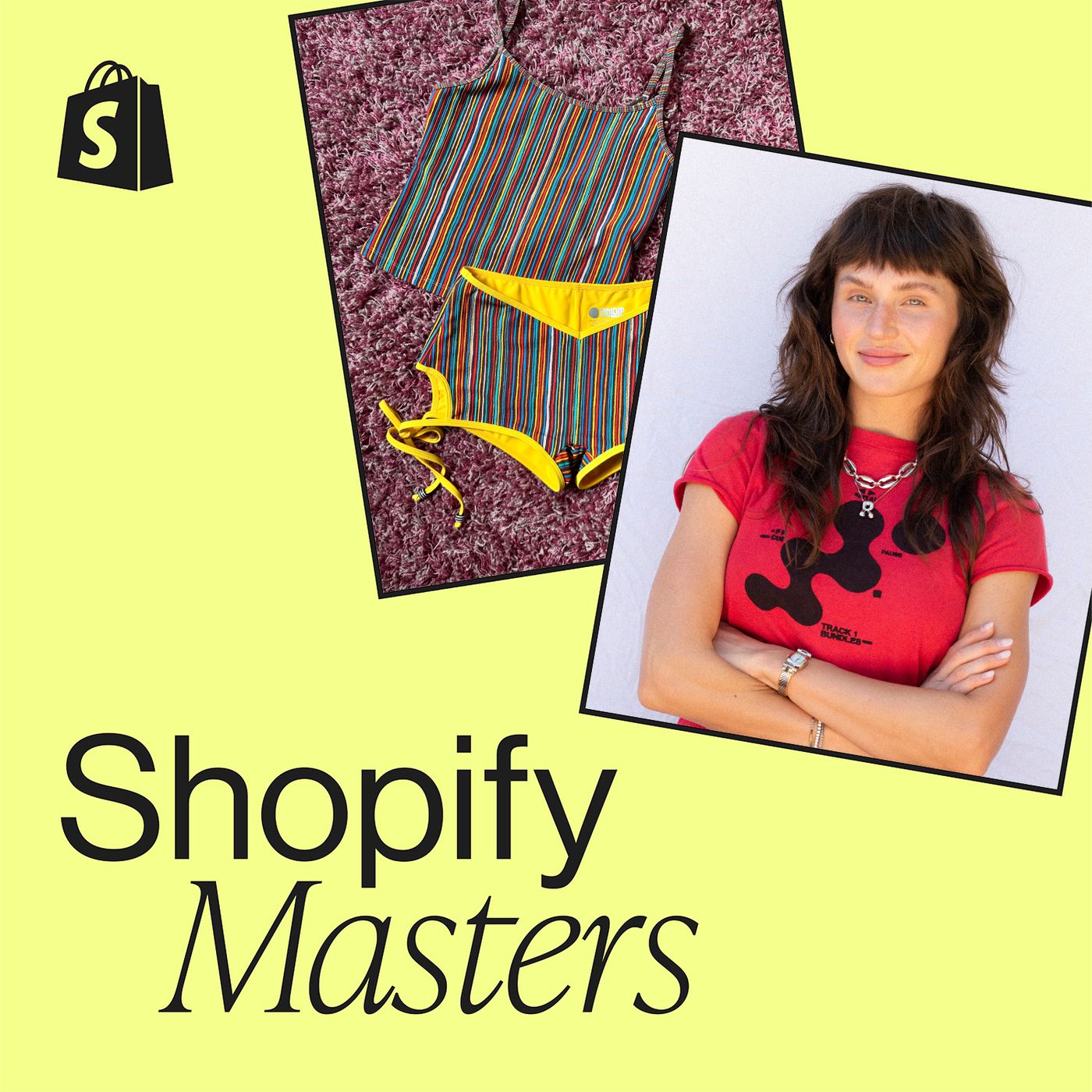
Goldie Swimwear’s founder story—how sisters Rima and Eddie Videla built a bootstrapped swim brand using Florida childhood nostalgia to stand out against social media algorithms, plus lessons on manufacturing, inventory, influencer strategy, and using AI for operations.
Rima Videla (full-time co-founder; operations/warehouse/fulfillment and data analysis). Eddie Videla (co-founder; creative, social, and influencer partnerships). Backgrounds: both grew up in St. Pete Beach, Florida; both worked in fashion (Rima modeled/styled; Eddie modeled and later worked in-house at fashion brands on marketing/creative).
“Delusion/ignorance is bliss” early on; avoid Pinterest/algorithm seeding by using a “North Star” (Florida seaside town memories); stay scrappy with production value; authenticity beats “fancy” pivots; influencer conversion is about engaged, customer-like audiences; use sales velocity/returns data and AI tools for admin, not creativity.
overordered inventory in the first collection; a gifted bikini led to sell-out in hours after Instagram posts; they do 2–3 sample rounds for new styles; they analyze returns for fit/size issues.
Written by AI. May contain mistakes.
Exploring the childhood experiences that shaped the brand's vision.
“Rima and Eddie Videla committed to Goldie full-time, scaling their bootstrapped brand into an operational powerhouse.”
Discussing the decision to commit fully to the business.
“And I think it was just like, okay, I guess that's what we're doing.”
Reflecting on initial challenges and inventory management mishaps.
“All of our cash flow decisions that need to happen in the fall when we're slower definitely are like all that information is like informed from spring and summer.”
Analyzing the need for originality and the impact of social influence.
“Scrappy and still have the production value.”
Discussing how nostalgia drives their brand and influences trends.
“How are you leveraging your industry contacts to get the word out?”
How the founders divided responsibilities to improve efficiency.
“Goldie is this super colorful, fun, vibrant brand.”
Learn how effective role division can enhance productivity in family-run businesses.
“My mom always jokes like, we don't have to like, oh, you're here.”
Explore how childhood relationships shape business partnerships.
“You let her own that and you get to own the other side.”
Discover how family entrepreneurship influences personal aspirations.
“And it's fun because we come from such an entrepreneurial household.”
Understand how information availability has transformed entrepreneurship.
“That's like our brand ethos, basically, of like, if we're feeling stuck in something, we're like, let's pull out the photo albums.”
Learn about the complexities of finding and negotiating with manufacturers.
“before becoming an entrepreneur, it's almost never in manufacturing.”
Understand the importance of discussing timelines and revisions with manufacturers.
“And like, can we even buy that much basically?”
Explore effective strategies for managing inventory in a seasonal business.
“If it's a new style, I would say two to three rounds just because we're crazy about getting our fits right.”
Learn how AI tools can streamline data management and decision-making.
“So an example, I built out a spreadsheet of, I wanted to compare basically our average shipping weights, our average items per order to get a quote from a potential fulfillment partner.”
Discover the benefits of slow growth and bootstrapping in entrepreneurship.
“So like some degree of like deep analysis in the spreadsheets where if you're like, well, I'm not a CFO or a COO or whatever, you know?”
Learn how to communicate brand vision effectively in a small team.
“And because you're the only two full-time employees, like my assumption would be that a lot of it is living inside your brain.”
Learn how Goldie Swimwear develops its brand voice and builds operational systems.
“And we tend to gravitate towards people that get it.”
Discover the importance of seeking feedback and building in public for new brands.
“Is there a specific size that has an issue?”
Understand how success is perceived differently in the entrepreneurial journey.
“I think also building in public is really an interesting concept that wasn't a thing in 2018.”

Get the gist, explore an idea or ask about something said.
 Claude
On Shopify Masters, what are the key points of this episode?
Searching your listeningAutomatic transcript. May contain errors.
0:00Rima Vaidila: I think I was eight years old and I would say I want to be a businesswoman when I grow up.
0:05Eddy Vaidila: Were there certain things about the business that needed to be true for you to feel comfortable doing this? No.
0:11Rima Vaidila: I think part of it is like delusion and like ignorance is bliss. The factory that we loved unfortunately had very high MOQs. Looking back now, that would be my initial conversation with any manufacturer before even sampling.
0:24Eddy Vaidila: It can be very hard to assess what is actually genuinely your point of view versus where like the algorithm has basically seeded your brain. Like, do I really like that thing or have I just seen it 12 times?
0:37Rima Vaidila: We're not scrolling Pinterest for inspiration. I think that's a trap that a lot of business owners can fall into.
0:45Eddy Vaidila: What started as a project between sisters became Goldie Swimwear, a brand with a vision to bring personality to the swim industry. Rima and Eddie Videla committed to Goldie full-time, scaling their bootstrapped brand into an operational powerhouse. Rima, thank you for being here.
1:00Rima Vaidila: Of course. Thank you for having me.
1:02Eddy Vaidila: So let's go back to the beginning. Why swimsuits and why in that moment?
1:07Rima Vaidila: My sister and I grew up in Florida. So our reference, we grew up in St. Pete Beach, Florida. And we were in swimsuits every day, all day, like year-round. In the pool, at the beach, which is like across the street from us. always in swim. And in 2018, when we were both living in LA and looking at like the swim suits that were available to us in stores here, it was either super, super sexy, minimal coverage or hyper niche, like sport focused. So for actual swimmers or surfers, and neither of those really spoke to our swim experience. Like growing up in Florida, we wanted that like fun playfulness that we would get from like the swim that we grew up wearing pretty much.
1:55Eddy Vaidila: You and your sister have been in the trenches together for seven years, largely while maintaining other careers. And pretty recently you made the call to go all in.
2:05Rima Vaidila: Yeah. Earlier this year, we're officially on payroll. It's all happening. The business has really gotten to a point where it just needs our time and attention, like pretty much full time.
2:17Eddy Vaidila: Was there a moment where you two looked at each other and you thought, okay, it's time? It honestly happened pretty naturally.
2:23Rima Vaidila: I think it was a lot of other people also telling us like, hey, it's getting to the point now where like you don't really have the bandwidth to be doing all these other things and also maintaining kind of like the level of growth and just giving the attention that the business needed. And I think it was just like, okay, I guess that's what we're doing. We're going to do it.
2:42Eddy Vaidila: Take me inside your decision-making process a little bit. Were there certain things about the business that needed to be true for you to feel comfortable doing this? No. I think part of it is like delusion and like ignorance is bliss.
2:57Rima Vaidila: And I think a lot of it too is even just with our part-time attention, we were able to grow it and like really enjoy growing the business and like seeing customers respond and seeing our social media accounts, like just seeing people respond to like what we were putting out there. Because we're a relatively seasonal business, it's still scary. In the summer when we're super busy and orders are coming in and it's all hands on deck, it felt more easy and not as stressful. I think going into like the fall when it's like a slower, definitely feels stressful. But I think we're just like, yeah, this feels right.
3:33Eddy Vaidila: In some ways, I feel like you're primed for it because the world of being a freelancer, which is where you come from, is like very feast or famine, right? And it's like, when you're up, you're up. You're like, freeze to everybody at the bar, right? Exactly. And you're down and you're like, oh no. No, totally.
3:46Rima Vaidila: And I think like over the seven years of doing this, we like have finally been like, okay, we need to just relax in the fall. And like, it gives us an opportunity to really get things set up for the following year.
3:56Eddy Vaidila: Has it changed the way you plan?
3:58Rima Vaidila: For sure. Definitely. All of our cash flow decisions that need to happen in the fall when we're slower definitely are like all that information is like informed from spring and summer. So we don't go like crazy in spring and summer. We're like, oh my gosh, we have so many orders. Let's do these massive photo shoots, these massive activations. We still need to be scrappy and keep it lean without going crazy knowing that we need to prepare to pay for inventory for spring in the fall when we're slow. Were there some expensive mistakes that you made in the initial years, not knowing yet that you needed to plan for the seasonal fluctuations of the business?
4:34Rima Vaidila: So we overordered inventory with our first initial order and our initial collection. And that was just, we were, you know, super confident in the styles that we had. And we were really excited about having a wider assortment when we should have probably started a little smaller, which we know now. Delusion. Yes, totally. The delusion. I mean, it's really, it was part of that. And then also feeling the need to have to do these big photo shoots because we're comparing ourselves to massive companies that, you know, have tons of money to spend on photo shoots. And we're a small startup, self-funded, or we shouldn't be spending money on photo shoots like that.
5:14Rima Vaidila: Right.
5:15Eddy Vaidila: And you also both come from the world of fashion where you're probably accustomed to being on pretty large sets with like big footprints. It's like sort of what you know and to some degree love, right?
5:24Rima Vaidila: Yeah. Yeah. I think a part of it too was we thought that's what you have to do, but you don't have to. You can be scrappy.
5:32Eddy Vaidila: Scrappy and still have the production value. Exactly.
5:35Rima Vaidila: Exactly. I mean, I think now it's a lot easier because you can find people on social and you can find teams that are willing to work with you and within your budget. Like we do a mix of non-agency signed models as well that will DM us and be like, oh my gosh, we'd love to shoot with you and we'll look and we're like, you're so cool and you already wear Goldie. Like, great, let's do it.
5:57Eddy Vaidila: Really? They'll reach out to you? All the time. Oh, that's sick.
5:59Rima Vaidila: Yeah, it's really fun. When we started, it was, you know, agencies with models that are super expensive, high rates. And so we spent a lot of money on our first launch campaign shoot when we, looking back now, I'm like, we could have done it better, but it's okay.
6:14Eddy Vaidila: You know what? The path to success as a founder is just like paved with, you know, if we knew then what we know now, you know?
6:21Rima Vaidila: Absolutely. It's a good way to spend a lot of money to see if your ideas are good.
6:26Eddy Vaidila: That's right. I mean, we're like deep in operations talk right now, but you and your sister both come from like hardcore creative backgrounds, right? You were a model and a stylist for a great many years. What is your, what was your sister's role in the industry?
6:42Rima Vaidila: Yeah. So she was model as well. And then she's been in-house at a couple fashion brands as well, like more marketing creative side.
6:48Eddy Vaidila: Got it. Okay. So what, what are the superpowers that those backgrounds allowed you to bring into the business?
6:54Rima Vaidila: I think having our finger on the pulse of like what is kind of up and coming, what colors and trends are going to be happening in the next couple of years. I think we're really good about being on top of those things. And that comes from having a fashion background and just like being able to see, see what's happening.
7:15Eddy Vaidila: How are you leveraging your industry contacts to get the word out?
7:19Rima Vaidila: models I would be gifting or like talk to about shoots or potential shoots or things like that. And it's funny because over the past couple of years, as we've gotten bigger, there'll be jobs where I'm like, the model is like, I own Goldie swimsuits. Like I actually have them and I love them. That's exciting. So it's really fun.
7:38Eddy Vaidila: Were there any moments earlier on where you gifted a bikini to someone that like had an actual impact on the business. They posted about it, whatever. Yes.
7:48Rima Vaidila: Specifically two girls on Instagram that we had gifted just like one bikini and we were like, whatever, if they don't ever even post it, who cares? And they both posted and tagged and had tons of followers, which doesn't always necessarily mean conversion. But one of them really like her post took off. And I think we sold out of that set in maybe a couple hours. Oh my God. It was so exciting. It was like addicting.
8:14Eddy Vaidila: Have you figured out what kind of influencers or any kind of strategy behind like who will convert versus who won't? Or is it just kind of like a gamble that you're taking every time?
8:26Rima Vaidila: It's always kind of a gamble. Swim is kind of tricky because influencers that post a lot of swim, sometimes their audience isn't necessarily, they're not shoppers, they're just viewers. And a lot of times it is significantly male. So we've started like looking in the comment sections of if somebody reaches out and they're like, hey, I'm going on a trip, would love to wear gold. We'll just like look at their page. And it's usually, we're not even necessarily like interested in the biggest following or anything like that. It's like, do you have an engaged audience that looks like our customer?
8:58Eddy Vaidila: Right. That can often be more powerful than just like
9:01Rima Vaidila: A huge audience. We would always rather have someone with an engaged audience that actually would genuinely wear a Goldie. That means way more to us than just someone with tons and tons of followers. We'll scrape their socials to see, like, who's commenting? Who are they commenting on? Who are they following? What's the vibe? And then it's still a gamble, though. There's no guarantees.
9:22Eddy Vaidila: It feels like we're in this era where it can be very hard to assess what is actually genuinely your point of view versus where like the algorithm has basically seeded your brain. I mean, I go through it all the time where I'm like, I really like that. I'm like, do I really like that thing? Or have I just seen it 12 times? You know, like really the value of your brand is having a point of view. How do you protect that originality of thought? We always go back to Florida.
9:51Rima Vaidila: That's like our North star is just our childhood experience and And growing up in a very specific town and like the little gift shops and, you know, the ice cream stand that's shaped like an ice cream cone. Like that's what we always kind of go back to. Like true like seaside town. Yes. Like small town beach vibe. And so we always go back to that because it can be very overwhelming on social. It's like you're getting fed very specific things. And then, yeah, it just influences you to shop specific things that maybe aren't your vibe. Having that North Star for us and staying true to it and just really blocking everything else out has helped us, I think, hone that.
10:33Eddy Vaidila: There's also this really fascinating revolt against what people are calling the beige-ification of our lives that's going on right now. Goldie is this super colorful, fun, vibrant brand. Could you see those tea leaves even in 2018? Honestly, no.
10:52Rima Vaidila: I don't think so. But being like nostalgia driven and really doubling down on that the past five-ish years, I would say, has helped us to just kind of stay focused and in our lane. And I mean, I know nostalgia is like having very much a comeback the past year or two, especially. People are just wanting that fun childhood memory in experiences, in the pieces that they shop, in the brands that they like and follow. so I think that's worked in our favor a lot but we're not scrolling Pinterest for inspiration I think that's a trap that a lot of new business owners can fall into of like comparing yourself to like what's going on right now and what's what are other brands doing and comparison is the thief of joy so it it helps to really have our binders on and just you know we have really fun reference material in our offices they're just like weird Florida books and you know aquarium magazines and really hyper-specific references, I think is super helpful instead of just looking at what other people are doing.
11:58Eddy Vaidila: Comparison is the thief of joy. Oh my God. Is that true? It's like a mantra that I say to myself, I think daily. Totally.
12:05Rima Vaidila: I mean, social has made it horrible.
12:08Eddy Vaidila: It's really hard, even if you think you're somewhat diligent about that practice, to not get pulled into it to some degree. Have there ever been times where you or your sister have gone like, oh, I think we're actually kind of being influenced by something else and we've got to recalibrate.
12:21Rima Vaidila: Absolutely. Yeah. I think after our first collection of just being like, wow, we have a lot of inventory. Maybe we should pivot or do a different direction. And we kind of dabbled in a couple other prints and styles, which performed well, but it just didn't feel like us. The brand just didn't start. It started to feel like something else. We were trying to be this fancy swim brand. And we were like, let's reel it back and really focus and just go all in on our initial concept and our initial idea and just, yeah, put those blinders on.
12:54Eddy Vaidila: Did those sales for the stuff that didn't quite feel like you hit different for you? Like, to me, I feel like you kind of always know in your gut if you're operating with like true authenticity. Oh, totally.
13:07Rima Vaidila: Well, it's funny because it started to feel like work. It wasn't fun anymore. Yeah. Even though it was performing, but it didn't, it was missing that like personality. Yeah.
13:18Eddy Vaidila: Yeah. I mean, obviously some pieces of it are going to feel like work. Yeah, absolutely.
13:24Rima Vaidila: I mean, it's a full-blown business. We are full-time employees.
13:28Eddy Vaidila: We're full-time employees. It's like, but it's amazing.
13:31Rima Vaidila: Yes, very exciting. But sometimes I'm just like, wow, how did I go from a creative career to more of the operation side? Yeah.
13:41Eddy Vaidila: I mean, to that end, you do sound pretty like stoked about the operations in many ways. Did that surprise you?
13:49Rima Vaidila: So I'm very type A and I think I just, that's me naturally. I am the one that has an itinerary for vacations and just, I'm the one that will like get it done. My mom always jokes like, we don't have to like, oh, you're here. Like we don't have to worry about, you know, anything. Like you'll just figure it out. Yeah.
14:08Eddy Vaidila: Always the producer.
14:09Rima Vaidila: Yeah, absolutely. So it just came very naturally. And I think the way that we ended up kind of dividing our roles and defining our roles was just the things that we were naturally really good at instead of trying to do everything together.
14:23Eddy Vaidila: Was there a period of time where you were doing everything together? Oh, for probably five years, we were making every decision together.
14:30Rima Vaidila: And the business just got to a point where we couldn't get everything done at the rate that it needed to get done if we were making every decision together. So we definitely defined our roles and I'm more operations day-to-day, dealing with the warehouse and just like all of those things. And Eddie's handling more of the creative and social and influencers. And that's helped us a lot with also our relationship. Do you respect the division of labor? Yes.
14:57Eddy Vaidila: You let her own that and you get to own the other side.
15:00Rima Vaidila: Yes. And I think that's helped us a lot too, because working with your family and especially a sister can be very tricky to not start to take things personally or make things personal. And so dividing and defining our roles has helped a lot with, okay, this is your lane. You're the expert here. This is my lane. I'm the expert here. And then if we disagree on something, a kind of, we figure it out, looking at it as a business instead of just like a personal argument. Totally.
15:28Eddy Vaidila: Especially where taste is involved.
15:30Rima Vaidila: It's so subjective. Yes. Were the two of you close growing up? We weren't super close because we're four years apart. We have a brother in between us. And four years when you're a kid is a lifetime. Like I was in high school and she felt like a baby. I moved to LA in 2011 and she moved out here four years later. and the two of us being here together and both modeling and both being in fashion, we just became super, super close because we were, you know, having the same shared experience basically. And now we're inseparable. I think our husbands want to die.
16:08Eddy Vaidila: What do your parents think about the fact that you two are building a business together?
16:12Rima Vaidila: They're both so proud. And it's fun because we come from such an entrepreneurial household. You do? Yeah, our dad owned his own business. Our mom also had her own dental practice and owned an office building. So it's always been in the background, been on our radar in general. I think for a while, they were like, not sure what we're doing. But now it's super exciting. Of course, they're so proud and they show everyone that they know.
16:38Eddy Vaidila: The entrepreneurial bug was sort of in your bones. Did you grow up consciously aware, like, I want to do something like that for myself? Or was it more latent?
16:50Rima Vaidila: I think I was eight years old and I would say I want to be a businesswoman when I grow up. Like I specifically remember like saying that in a class and it's hilarious because obviously that like changed over the years. And I was like, I'm going to be a ballerina. I'm going to be, you know, X, Y, Z. But it is funny to think back that like at eight years old, I was like, yes, I'm going to be an entrepreneur and like have my own business.
17:13Eddy Vaidila: God, and you know, there's like a personal development exercise when you feel like you're misaligned. Go back to what you liked doing and what you said you wanted to do when you were seven or eight years old.
17:24Rima Vaidila: Yeah, I mean, you knew. Yeah, and that's also a big part of Goldie. That's like our brand ethos, basically, of like, if we're feeling stuck in something, we're like, let's pull out the photo albums. What interesting inspiration can we find?
17:36Eddy Vaidila: You cannot underestimate the value of play as adults.
17:42Rima Vaidila: We forget. Yeah. I get to play for my job, kind of.
17:46Eddy Vaidila: Seven years ago is not so long ago, but in some ways it feels like a lifetime ago, 2018, the before times. What about launching and building a business that felt hard then? Do you think it's gotten a lot easier now?
18:03Rima Vaidila: I think the access to information has gotten so much easier. For us starting, because we've never made swimsuits before, Like we had no experience outside of being on set and seeing the kind of behind the scenes of shoots and things like that. But just the access to information where I remember like having to just Google search factories and manufacturers and like reaching out via cold email or sending a WhatsApp message and just like trying to figure everything out ourselves where now you can find everything on social media. TikTok, Instagram, all the social channels. I mean, you can do the hashtag manufacturer of insert your product basically and like sift through things.
18:48Rima Vaidila: I think it's just a lot easier to find those things and especially to find also founders or other people that are building their businesses share their stories of like, here's what I negotiated. Here are the MOQs that we were able to get. Here's kind of what these cost. So you can get an idea without having to like do all of the groundwork yourself.
19:07Eddy Vaidila: The manufacturing piece of this is like almost always mystifying to people because I think most often, like no matter what your background was before becoming an entrepreneur, it's almost never in manufacturing. And it's such a core and expensive and sort of complicated piece of the business. Take me inside the process of finding a manufacturer and looking back where you feel like you would have done it differently.
19:32Rima Vaidila: I mean, we hand drew our first collection. Like it was, we didn't have like fancy tech packs or anything. We were sending like, I think it was on like a legal pad or like some scratch paper, like our designs basically. Dramatic. I mean, it kind of is. And it's not far off of like what we still kind of do. So we're sending these to a couple of manufacturers. We're looking at fabric swatches and getting fabric swatches actually in person to feel. And then kind of seeing these different manufacturers' interpretation of our drawings and seeing who understood what we were going for. Because there were a few that we were like, oh, yeah, this isn't right.
20:09Eddy Vaidila: There was a considerable amount of daylight between them. Yes.
20:13Rima Vaidila: Yeah. And just in the subtle things, because fit is pretty much one of the biggest factors in swim is like the rise and even just like the tension of the elasticity, all of those things.
20:24Eddy Vaidila: Is it going to sit on the hip correctly? Exactly.
20:27Rima Vaidila: So the difference between those and then the factory that we loved, unfortunately, had very high MOQs. And looking back now, we probably could have negotiated. MOQ being minimum order quantity. Minimum order quantity. How much you had to get on that first run. Yeah. Looking back now, that would be my initial conversation with any manufacturer before even sampling of like, is this even a road we want to go down? And like, can we even buy that much basically? And I think, yeah, that would have helped us narrow down our manufacturer search.
21:00Eddy Vaidila: Did you have the sense when you got that far into the process with the manufacturer that you ended up going with that maybe you could have negotiated differently elsewhere, but like you were so pot committed at that point that you were like, we're just going to do it?
21:12Rima Vaidila: At that point, factories weren't really willing to do smaller orders, not the way that they are now. And I think it's just there's been a boom in small business and online businesses and factories see that and they can see the potential, especially fashion, apparel. Even cosmetics now, I think, are more willing to do a smaller MOQ just to kind of test it and then with the potential for the growth there.
21:39Eddy Vaidila: What questions do you think are essential for a new CPG founder to ask as they're searching for manufacturing partners?
21:48Rima Vaidila: I would say timeline, sample cost, MOQs, and how many revisions you can kind of get. I think the revisions part is what a lot of people don't think about. And I think that for us, we were like, yeah, we'll sample and it'll be amazing. It'll go from there. Totally. Where it's like, okay, great. Now your 60-day timeline is no longer like what's happening. So I think talking about revisions and like what that timeline actually looks like is helpful so you don't get ahead of yourself of like, yes, we can launch in 60 days where it's really not going to happen.
22:27Eddy Vaidila: How much back and forth was there that initial time? I think we did three rounds of samples before we got it like dialed. And at this stage of the game, has that shortened or is there still a fair amount of back and forth as you're launching new styles?
22:41Rima Vaidila: A lot of our styles that are like our tried and true bestsellers that we keep bringing, those it's usually we're like pretty good to go after the first sample. If it's a new style, I would say two to three rounds just because we're crazy about getting our fits right.
22:59Eddy Vaidila: It's very important. Ordering too much inventory is stressful in any business, but especially in a seasonal one. When you realized that you weren't going to immediately sell through, how did you tackle that? What did it take you to be able to get through that inventory? I'm glad that we're delusional because we just figured it out.
23:27Rima Vaidila: We were like, okay, let's style it in a different way. We'll like do some flat lays. We'll try to show different ways to wear it. It took a while to get through the inventory, but we did finally.
23:40Eddy Vaidila: Are there tools that you use now to help dial in your order quantities?
23:44Rima Vaidila: Yes. There's a lot of AI inventory management systems and tools that are available now that would have been game changer for us then. Especially as you have a track record and you have sales to look back on and like historical data to look back on. It makes it a lot easier to kind of see the sizes and the assortment that is like selling through and at what rate. I think sales velocity is like one of those numbers that I'm looking at constantly on all of our pieces. Like I look at it, I think weekly. So I started using my AI agent to build up spreadsheets and pull data for me, which would have taken me hours of manual work on like either on my own or like having to outsource it.
24:29Rima Vaidila: Now I can look at, like obviously still double check everything, but look at and then make decisions much faster. So an example, I built out a spreadsheet of, I wanted to compare basically our average shipping weights, our average items per order to get a quote from a potential fulfillment partner. And I had my AI agent kind of populate all that information into a spreadsheet so then I could make a decision and kind of talk to this potential partner with specific numbers in mind and then get an accurate quote. And the built-in sidekick on Shopify has been amazing, honestly. I use that all the time for like exporting reports or pulling sales data for sure.
25:11Rima Vaidila: We don't mind an organic plug, you know. It honestly is the best. I love it.
25:16Eddy Vaidila: Are there also pieces of the business that you will not let AI touch?
25:23Rima Vaidila: So creative, absolutely. I mean, my sister and I, it's like we both have loved being on set and have been on set and appreciate freelance workers and artists. And I think that's like a big part that we still want to keep that human touch and the nostalgia side of our business as well of just like that nostalgia driven like ethos, I think, doesn't really lend itself to AI in that way. But the admin and more of kind of the nitty gritty data pulling and kind of the menial tasks, for sure.
26:01Eddy Vaidila: Yeah, I think it can also help you think more smartly about things that don't necessarily come as naturally to you or you don't have like the depth of experience in. So like some degree of like deep analysis in the spreadsheets where if you're like, well, I'm not a CFO or a COO or whatever, you know?
26:21Rima Vaidila: Yeah, absolutely. I mean, I didn't go to school for finance. So being able to like pull all those numbers without having to build a spreadsheet myself is invaluable. And to be able to do that on a weekly, daily, whatever basis and like look at the numbers and be able to use that to make decisions has been a game changer.
26:39Eddy Vaidila: Is there something that the old playbook would say that you need to do in terms of like funding or hiring or bringing on an agency or whatever that you've been able to say no to?
26:52Rima Vaidila: Starting a business, you think like, oh, we need to hire all these people to do all these jobs where I'm a big believer in fake it till you make it and you can just learn as you go and learn on the job. So you don't need to hire a massive C-suite just off the bat. I think hiring slowly is actually the way to go. And that's how we've grown our business. And we're bootstrapped. We've been bootstrapped. We haven't taken funding. So it's been exciting to grow at a slightly slower pace, but make sure it's profitable.
27:28Eddy Vaidila: I can imagine that it being you and your sister, there's almost a kind of telepathy between the two of you. And because you're the only two full-time employees, like my assumption would be that a lot of it is living inside your brain. how do you make sure that when you're working with someone else that like all the stuff that is just naturally up here is communicated or codified in some way so yes we definitely have that like shorthand of the shared childhood experience and then also just brand vision
28:03Rima Vaidila: which is yeah hard to translate to other people but I do think that how like if you look at our Instagram, if you look at our photo shoots, if you look at our campaigns, our brand voice is very, very specific and our point of view is very specific. And we tend to gravitate towards people that get it. Like we'll always do phone calls and things like that. And we tend to lean towards partners that understand like what we're trying to do.
28:30Eddy Vaidila: Were you building systems to codify what's in your brain from jump or was that something that you only figured out that you needed to do later? Or have you still not done it?
28:40Rima Vaidila: Oh, we are figuring it out as we go. That's, I think, that's just how it goes. Like we, again, we don't have fancy MBAs or like backgrounds in having a brand or a business before. So we're just building systems as we go, which is great because now we can build them how we actually need them instead of just having these big systems in place that are just there because that's what you're supposed to do. Totally. But we're still figuring out. Not that everything's finished.
29:11Eddy Vaidila: Is there something you are actively trying to figure out right now?
29:15Rima Vaidila: So we're analyzing basically like returns data. And I'm just curious if, especially with like newer styles, I'm always interested to see the data outside of just the sales. So looking at returns data for like a new style, for example, and pulling the info and seeing, oh, is something running too small? Is there an issue, a fit issue? Is there a specific size that has an issue? And using that data then to like make tweaks to a specific style or even consider like dropping the style and like reworking it. So that's definitely a problem. I'm high on my to-do list.
29:53Eddy Vaidila: you you know had some industry contacts that you were able to leverage you have a bit of a following on instagram i would imagine that came in handy you i mean you guys really built this thing on your own but you did have some places where you could leverage a little bit of clout for somebody a new founder in the cpg world who doesn't have that what's your advice for getting the word out there for their brands and attracting eyeballs?
30:22Rima Vaidila: I would say talk about it, especially if it's, even if you're a pre-launch, I think a lot of brand owners feel a little bit like they want to be secretive and they don't want to talk about things because it's either not ready or they think someone's going to steal the idea. I think talking about it and getting feedback is invaluable. So talking to not just your close friends and family about things, but maybe people that are potential customers and just getting initial feedback, I think is something that going back now, we would have spent a lot more time doing because when it's your own business, you're very much in a vacuum.
31:00Rima Vaidila: You think the idea is amazing and like, great, let's run with it. But like, hey, there might be a perspective that you didn't consider or someone might help you kind of like hone that idea a little bit further. I think also building in public is really an interesting concept that wasn't a thing in 2018. And that's a great way to also see how people feel about a potential idea or a product and get that initial feedback.
31:26Eddy Vaidila: And buy into the story. Totally. Yeah. Has your definition of success changed over these last seven years?
31:33Rima Vaidila: We don't have a metric of like, when we hit this, we'll be successful. It's just, it's exciting to keep building it and growing it and just seeing where it can go. And so the success is just seeing people respond and seeing customers respond and seeing a tagged Instagram post of somebody that just really loves their suit or a DM of like, this is the first time I've worn a bikini in years and I love it. so I think those to us are like little daily successes and daily wins that honestly mean more
32:07Eddy Vaidila: I think than traditional success that's beautiful keeps you very present yes Rima thank you so much for being here thank you and thanks to all of you for tuning in be sure to subscribe so you never miss another episode and we'll catch you next time
Raised on the beaches of Florida, sisters Rima and Eddy Vaidila launched Goldie Swimwear from legal-pad sketches, with zero manufacturing experience. After seven years of bootstrapping the brand alongside their fashion careers—relying on childhood nostalgia, engaged audiences, and AI-driven inventory planning—the duo now runs the profitable company full time.
For more on Goldie Swimwear, in show notes, click here.