In short
Why content marketing demand is exploding (AI, more channels, “consistency” pressure), why quality and accuracy often lag, how to use AI responsibly in content, and how to build a sustainable, ROI-focused content operation (strategy, repurposing, frameworks, test-and-learn, avoiding burnout).
Guest backgrounds
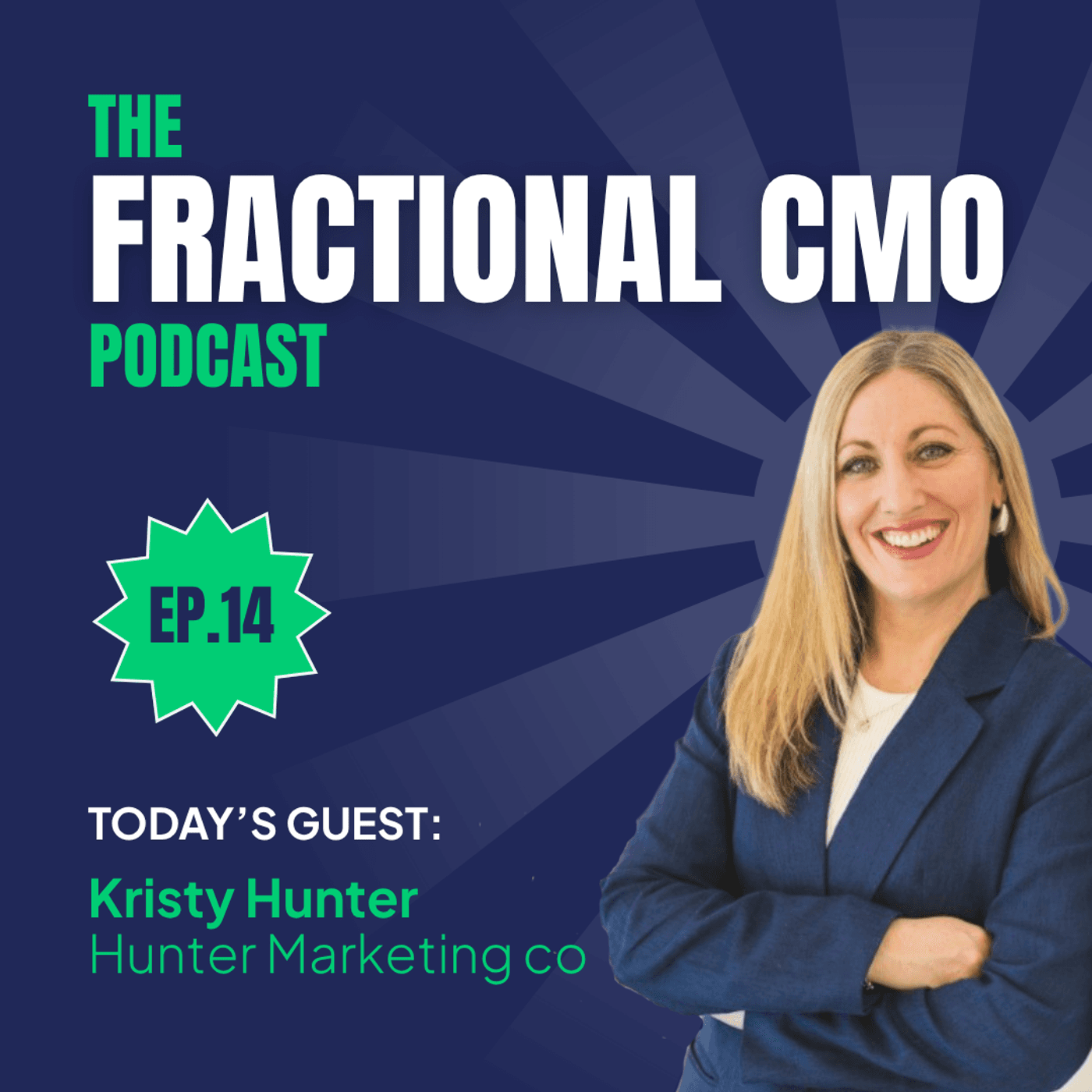
Kristy Hunter founded Hunter Marketing Co (marketing strategy and implementation support). She’s been running it ~8 years and previously led teams in agencies across marketing, branding, advertising, and communications; ~25 years industry experience.
Key claims
AI increases content volume but can produce “AI slop” when used without expertise/strategy. Content should be human-centered, accurate, and intentional (not “content for content’s sake”). Attribution is messy; use channels for social proof and decision-stage research. Sustainable operations require frameworks, repurposing “hero” content, and avoiding shiny-object overload.
Notable examples
AI “Love Island” fruit show; AI-generated blogs from a podcast transcript; Claude correcting grammar (“neither of whom”); Claude suggesting sentence cuts; repurposing one 20-minute podcast into multiple channels; board-game community post driving 25 attendees then 220 WhatsApp members.
Written by AI. May contain mistakes. Listen to the episode to check what was said.
Chapters
Tap a time to open that second in VOGuest Introduction: Christy Hunter
0:45 to 2:39
Simon introduces recurring guest Christy Hunter and her expertise in marketing.
“I would class her now as a recurring guest because she's been on this podcast a number of times.”
Content Marketing Explosion
2:39 to 5:02
Discussion on the recent surge in demand for content marketing and potential reasons behind it.
“Well, maybe we'll get to a few of those today.”
Quality vs. Quantity in Content
5:02 to 6:10
Exploring the balance between high-quality content and the pressure for quantity in marketing.
“Just because, you know, we wrote this blog doesn't necessarily mean it's true.”
AI's Role in Content Creation
6:10 to 8:16
Debate on the implications of AI in generating marketing content and its authenticity.
“I think we're all smart enough to see when AI has written it as well.”
The Gray Area of AI Content
8:16 to 10:40
Discussion on the complexities of AI-generated content and its acceptance in marketing strategies.
“I did a podcast a couple of weeks ago, maybe four weeks ago, where I was talking about a lot about marketing and all these kinds of things.”
Defining Acceptable AI Usage in Marketing
10:40 to 13:00
Determining what constitutes acceptable use of AI in marketing and how to maintain integrity.
“I just think there's a grey area here and I have these…”
AI in Content Creation: Balancing Human Touch and Automation
14:00 to 17:49
Explore the complexities of AI's role in content generation and its implications.
“And I just, that's where I think most people are falling down.”
Navigating the Evolving Landscape of Marketing Channels
17:50 to 20:16
Understand how to prioritize marketing channels in a fragmented digital landscape.
“or is this the marketing manager's idea converted into AI?”
Measuring ROI: The Challenges and Complexities
20:17 to 24:16
Dive into the intricacies of measuring ROI in content marketing and its challenges.
“Snapchat, I feel, still has its own demographic.”
Building Sustainable Content Operations
24:17 to 28:00
Learn about the essentials of creating a sustainable content strategy for marketing teams.
“Use certain channels for when people are going through that decision-making process.”
Show all 18 chapters
Creating Sustainable Marketing Frameworks
28:00 to 29:20
Learn about the importance of establishing sustainable marketing frameworks for businesses.
“You've got to look at current resources and what are their capabilities or skill set, right?”
Identifying Red Flags in Content Strategy
29:20 to 31:35
Understand the indicators that suggest a marketing strategy may be failing.
“Because it's that shiny object syndrome thing, right?”
Repurposing Content for Efficiency
31:35 to 32:50
Discover how to effectively repurpose content across various channels.
“It's what suits you in the particular time and space that you're in at that moment.”
Strategizing Content Execution
32:50 to 35:10
Gain insights into creating an effective content execution plan.
“And I think a lot of businesses don't quite get that yet.”
The Balance Between Planning and Experimentation
35:10 to 41:40
Explore the balance between having a structured plan and allowing for creative experimentation.
“I'm going to argue with you on that as well, right?”
Balancing Creativity and Practicality in Business
42:00 to 43:06
Learn about the dynamic between creative vision and practical execution in business.
“And this is where I have to pull you up from time to time.”
Reflecting on the Conversation
43:06 to 43:23
Hear reflections on the extended discussion and its potential value.
Finding Christy Hunter Online
43:23 to 43:51
Discover where to connect with Christy Hunter for marketing insights.
“So, look, thank you very much for your time.”
Transcript
Automatic transcript. May contain errors.0:07Simon:Welcome to another CEMO marketing podcast. There we go. My name is Simon Dell. I am the CEO of CEMOH.com. We are the largest fractional marketing network in Australia and probably the world. And no one's going to check that even if we aren't. So let's just say the world. If you want to find out more about us, CMO.com, CMOH.com or find me on LinkedIn. Simon Dell, I'm very easy to find. We have with us a recurring guest. I would class her now as a recurring guest because she's been on this podcast a number of times. one of our longest serving consultants, freelancers, contractors, whatever you want to call them.
0:59Simon:Welcome to the show again, Christy Hunter.
1:04Kristy Hunter:Thank you so much, Simon. Love being here. Excited about today's chat.
1:10Simon:First of all, let's tell everyone who don't know who you are, who you are.
1:16Kristy Hunter:Yeah. So my name is Christy Hunter and I founded Hunter Marketing Co, which is a marketing strategy and implementation support consultancy. I've come up to eight years now, I've been running that business. And prior to that, I was in-house leading teams in agencies and I've been across multiple areas of business in that space. So marketing, branding, advertising, and comms. So that's the really short version.
1:49Simon:I think if anyone knows small to medium-sized business marketing better than you, I don't think there's many people out there who would top you in your knowledge and your experience in that space. Is that fair to say?
2:05Kristy Hunter:Well, that's a big claim. I'll take it though. There you go. That's an amazing compliment. Thank you. Look, I think that because I've been doing this or have been in the industry for like 25 years now, I've seen a lot and I've experienced a lot. And yeah, there's not much that I haven't really seen in the business space and also what's worked from a marketing and brand perspective as well. So, yeah, there's always lots of stories I can tell.
2:38Simon:Cool. Well, maybe we'll get to a few of those today. But we're going to talk about, specifically we're going to talk today about this content marketing explosion. And just before we started, you were going to talk about something, an opinion on why this is happening. and just to set the scene, we as a business have had a lot of people, a lot of influx of clients, contacts, whatever it is, looking for that solution, that content marketing solution. It seems to have ramped up. It seems there are more people looking for it. It may just be that more people are coming to us, But I think you feel the same and I think you have an opinion as to why that's happening.
3:28Kristy Hunter:Yeah, look, I think AI has definitely played a massive part in that and the opportunity is huge there. Well, I think a lot of businesses think, oh, this is a huge opportunity for us to become more visible, to put lots and lots more content out there because you can. but that doesn't mean necessarily that you should be pumping it out as much as some people are doing at the moment. So I think also when it comes to marketing and marketing strategy, I think there's a lot of business leaders and CEOs out there. They go, this is an easy thing for us to do. It's less complicated than thinking of a full campaign.
4:16Kristy Hunter:If we're putting out content on a regular basis, surely that's going to help our business.
4:22Simon:Yeah. And I think we've probably, we've made a rod for our back. I think marketers by saying consistency, you know, consistency trumps creativity. So to your point, I think everyone's then going, oh yeah, look, we have to be consistent with content. We have to keep doing this. We have to, It just has to be ongoing. And then subsequently we then get this demand and we just get this volume of content out there. It just seems like it's never-ending, really. Yes, and it's getting to a point where it's becoming unhelpful because for multiple reasons.
5:09Kristy Hunter:You know, what can you believe anymore? Just because, you know, we wrote this blog doesn't necessarily mean it's true. Like, is it backed by, well, firstly, is it backed by strategy, but is it actually accurate? Are you putting out accurate information? So, and, and, you know, for me and what I talk to my clients about, it's around high quality, meaningful content that actually is going to be helpful for your ideal client or existing clients. Yeah.
5:39Simon:There's a scale problem here. What I think we see with every business is as they themselves grow bigger, they become more sophisticated in their marketing. They feel that there is just that means that they should be doing more marketing. And I think to your point, this content demand has exploded, but quality hasn't necessarily kept pace. Do you think that's a fair assessment?
6:08Kristy Hunter:Oh, absolutely. Absolutely. I think we're all smart enough to see when AI has written it as well. And so I certainly am very aware of, you know, great content, crap content, you know, a lot of the stuff that I'm seeing, particularly on LinkedIn at the moment is really poor, you know. I got a lovely compliment by a few people the other day at a networking event and they saw a particular post that I put up and they're like, oh, wow, that was just a really heartfelt piece of content. And I said, yes, because I wrote it.
6:50Simon:It's human-centered. Yeah.
6:52Kristy Hunter:You know, like I, look, I'm, I think some of us, you know, out there, we can write and I'd say the people who feel that they can confidently write, please write it yourself. But I think for those people who wouldn't consider themselves as copywriters or writers, then they're using it as a tool that they're relying on constantly. And I talked about my clients who don't have that skill set necessarily, but I said, if there's mistakes in it, if you're sounding like you, that's going to win ultimately, right? Like if you're not getting your punctuation right or whatever, use the words that you would when you're having a conversation with people.
7:33Simon:Look, okay, I'm going to throw this one at you because I don't necessarily agree with what you've said there.
7:41Kristy Hunter:and i'll okay surprise surprise no no no it's gonna have a different opinion on some things
7:48Simon:that i say we'll take the ai thing now because i think that is the you know content i think your point earlier is that there's been a rise of content you know which is paralleled with this rise of the use of ai yeah so some people are going hey it's easy to make content with ai let's go out there and do that i was reading the article this morning about um someone who's made this tv show who's made a love island version or has made an ai version of love island with fruit or something like that i don't know if you've seen that on tiktok their one minute episode i haven't watched an episode yet but like it's it's reaching millions tens of millions of people it's ai love it's fruit-based love island made by ai and and people are going some people are going there this is just more of this ai slop but a lot of people are going oh my god this is so much fun so yeah so here's my question because i think there is this horrific there's this horrific gray area at the moment where you can't define whether you you're saying if someone's genuinely written something let's put it on a spectrum okay so one end of the spectrum is someone has genuinely written something at the other end of the spectrum, AI has written it for them.
9:05Simon:Okay. I did a podcast a couple of weeks ago, maybe four weeks ago, where I was talking about a lot about marketing and all these kinds of things. And I was on it for, I think, about 45 minutes, right? I then took the transcription of that podcast and I gave that transcription to an AI tool. And I said, I think there's some good blogs to be had out of the conversation that I've had using my knowledge and my experience and my background. And can you please turn this into a blog? Now, we eventually got, I think, four blogs out of that podcast. I didn't write a single word of those blogs. the ai did but all based on what the ai had interpreted out of my podcast now the question then you know okay so it's who wrote who wrote that blog who wrote those blogs did i write those blogs or did i write those blogs well the ai wrote it but it was based it
10:12Kristy Hunter:off your con like your existing content your tone of voice your point of view um and you know your the topics that you obviously talked about.
10:24Simon:So is that AI slop, is that acceptable?
10:29Kristy Hunter:I think it could be AI slop. I'd have to analyze it. Well, it comes back to data, right? Like, I would always go, right, how well is this piece of content performed? And I'd love to see the stats.
10:46Simon:it's funny because that because largely those things go onto our website and then they're sort of shared within our content platform do they go viral no do they do they get picked up in search engines yes maybe they do do they get thousand clicks no but again the thing with us is that potentially they get one click which then convinces somebody to contact us and we can't necessarily, you know, we can't necessarily track that. I just think there's a grey area here and I have these…
11:15Kristy Hunter:But I was just going to say around that though, there's a strategy behind that for you guys, right? Like you have the goal of being shown or being served in the AI summary, right? And that's part of your strategy. Yeah. Yeah. So that's helping that goal.
11:36Simon:you still not really convince me you still not really tell me whether that that's ai's written that or i i've written that because again as you said that's an ai thing
11:49Kristy Hunter:you're not right you're not physical physically writing it but then your point but then your
11:54Simon:point earlier said if you can write it you should be writing it but i'm like i can write it i just yeah i want to write it because there's a better way of me getting my my so i will do that with this blog as well i will sit there and i will go sorry not this blog this podcast what we're recording now i'll take this podcast and i'll sit there and give it to claude and go let's create a blog out of this make sure that you quote christy in it in the blog you know um make sure you you quote me in it, but let's put a blog together that is, that we can share. And again, it boils down to, is that AI?
12:38Kristy Hunter:Yeah. Look, I think, yes, it is, but it's taking, it's taking, you know, it's pulling from a source, which is this, you know, what we're producing here. Right. and what we're saying, let's say everything we're saying is really accurate about marketing and content.
13:00Simon:Yeah, fair point, yeah.
13:02Kristy Hunter:And then it's pulling our, you know, point of view, our discussion points and pulling that into a blog. And I think if it creates something good that you're running your eyes across and you're happy with it and it's accurate according to you, then that's how it should be. That's how I see AI can be used really well. And by doing that, that's scalable.
13:27Simon:So that's an acceptable, we're defining that as an acceptable use of AI in marketing. If it was, if you just said to AI, hey, I need a blog on content creation or influences in 2016, you know, come up with something for me. And it gave you 800 words and you just went, yeah, that looks good. is is that a is that where we perhaps go okay well that's not a legitimate marketing tactic
13:54Kristy Hunter:correct and that is what a lot of people are relying on and that's what i'm talking about when i was discussing you know what's happening on linkedin at the moment people are going because they're not an expert right in that space and they're relying on chatty or cord to just create that content for them and they're going, yeah, that will do, post it. And I just, that's where I think most people are falling down.
14:22Simon:Yeah. It's interesting because for those that have listened to me in the past know that I write science fiction as well. There we go. There's the book. In case nobody's bought that.
14:39Kristy Hunter:Plug.
14:41Simon:um but the interesting thing is there's a big kind of you know there was a there was a book pulled from the new york bestsellers list the other week or something because there'd been accusations that it had been written by ai i have long conversations with claude about the chapters that i write and claude never tells me what to write but claude tells me when a sentence is good or a sentence is bad and it's interesting that i find that very not hard but i go um so i i'll give you one i'll give you one simple example is that i wrote a sentence that says neither of which looked like they were excited okay so that's eight words neither of which looked like they were excited claude reads it and goes no it should actually be neither of whom right so it's asking me to correct it's asking me to correct a grammar mistake instead of which i should be using the word whom um yeah and i go okay so is that is that acceptable in writing to be using because an editor would have picked that up a human editor would have picked that up yes correct yep and i go that's acceptable okay okay so all right so then so so that one's acceptable right so you sit there and go uh let me find it let me find another one because there's a there's a um this is a good one here um it was uh somebody beckoned beckoned her down with a wave nervously flashing a glance towards towards the ECC door as he did so.
16:31Simon:Okay. The Claude turns around and says, you don't need the words as he did so there. He said, it's unnecessary, cut it out. So effectively, Claude is rewriting the sentence, reducing the sentence by four words for me and saying, you don't need those words in there. The sentence scans without that. So again, is that the AI tool writing that or am I writing that?
17:00Kristy Hunter:well you've written it it's just telling you to cut it right so sure and that's and that's where
17:08Simon:that's where you suddenly get into this horrific area of what's what's ai and what isn't ai because those examples can be uh sort of littered through the my conversations with clob where it's telling to maybe restructure a sentence or all those kind of things so you just go at what at At what point does it stop being you and start being the AI tool? And I don't think you and I are going to find an answer to that. And we've kind of gone off on a tangent about that. But when it comes to this content idea, we've got all these companies producing this stuff where you just go, these are really gray areas.
17:45Simon:Is this the content? Is this the company talking to us? Or is this the AI talking to us? or is this the marketing manager's idea converted into AI? There's so much ambiguity in this space at the moment that it's really hard to understand. I agree.
Read the full transcript
18:03Kristy Hunter:I agree totally. I just think that marketers, business leaders who are in charge of content, that it comes back to what are they hoping to achieve? Are they solving a problem? problem um is it meaningful is it human-centered because when those things aren't present it
18:26Simon:doesn't mean much i totally agree so let's ask a couple of other questions because you've talked about roi and i want to i want to talk touch on roi in a minute but before you do that one of the other channels challenges that we've got and i think one of the other reasons for this explosion of content is there are so many channels now competing for attention. And I feel that that's always been a thing. There's always so many channels. But when you look 15 years ago, you were going, oh, it's Instagram and it's Facebook, and that's what you had to worry about. But now you've got this short form videos, you've got podcasts, you've got newsletters, you've got LinkedIn, you've got all the other social media channels, you've got all the streaming services as well.
19:09Simon:How does a marketer decide where they should be actually concentrating their effort?
19:17Kristy Hunter:I always go back to where is your ideal client, you know, and, and there look, there could be across multiple channels, but where do they mostly hang out? Where are they researching? Where are they kind of sitting and consuming content the most? Where's the biggest opportunity for your business. So in any of my strategies, I could say, yeah, you could be all across all these different channels, but ultimately what's going to, you know, if we focus on one or two and go hard on those, you're going to make the most impact, right? Like you can be stretched because, you know, again, it's the type of content, you know, which is it short form?
20:03Kristy Hunter:Is it written? Is it video? You know, what is it? So it's all about making sure that it's manageable also for teams.
20:12Simon:I think the other challenge, I'll throw that one back at you as well now. Not that I'm going to argue with everything you say today, but, you know, it makes for better content anyway. My question to you with this is that I then feel that back in the day, so let's say 10 years ago, 15 years ago, you could really define those channels and those content channels around some level of kind of demographic, right? You'd sit there and go like Snapchat. Snapchat, I feel, still has its own demographic. That's largely teenagers and those kind of things, right? But you look at the channels today and you just go, my God, they are fractured by demographics and they're fractured by content.
20:57Simon:you know content it's it's hugely varied in terms of the content that you find on these channels how do they how do they deal with that because it's it's hard going oh where am I going to find 35 year old men who want to buy a car I mean where the fuck do you find them now it's it's like there is no chat there is no there is no channel for that yeah yeah and I think this is when it
21:24Kristy Hunter:comes back to what's the strategy, what's the message, you know, what is the campaign and being really targeted. And it's the test and learn, optimize that I talk about all the time with my clients as well. Like, you know, there's a starting point. If things aren't working, then we adjust and then we go from there. But it's, you know, is what you're saying or selling compelling to that particular audience and you know creating some uh amazing content um is is
21:59Simon:the starting point is is from a roi perspective is it as simple as going i spent this much money we did this how many views did we get um you know how many my dog's about to bark now just to ruin the entire recording because the postman's rocked up anyway um but is it as simple as counting you know i've sold this many widgets because i did this much thing is there other other ways of
22:30Kristy Hunter:sort of measuring return on these things but isn't that the the biggest thing that you can focus on though because isn't that the point of if you're getting a certain number of sales and you're achieving ROI isn't isn't that the point like why why else are we doing content apart from
22:51Simon:building brand because I find isn't it wouldn't it wouldn't consider it a hard um it's hard to draw a line between hey I posted something on Instagram and it did this I mean that in an ideal world that would be the case but you've got brand awareness you've got lots of other lots of other benefits of being on social media i often turn around to people and say hey social media is often is just social proof like you know you run an advert somewhere you put you put a billboard on a on a or a back end of a bus um someone goes then to your instagram and goes oh wow these guys are really active they then click on the link through to your website they then pick up the phone and fucking call you they've seen you four times all the way through but and then you just turn around and say where did you find out about us and they'll go oh i just called you they don't equate to this hey i saw you on the back of a bus so you've got this attribution problem so how does content how do you solve that question when it comes to when you when you think about attribution it's so kind of it's so muddy yeah i agree it's messy and that's like attribution is the hardest
24:09Kristy Hunter:thing for marketers to you know gather all that data and understand i mean i'm working really closely with one client at the moment and you know we've been working on this for probably 12 to 24 months um and there's systems issues you know there's it's a challenge it's an absolute challenge But if you're looking at the data on a monthly basis, you'll get to understand what is working and what's not across whatever channel you're focusing on, essentially. But I agree with you.
24:42Simon:You have to have that social proof.
24:45Kristy Hunter:Use certain channels for when people are going through that decision-making process. They're going to be checking, well, what are they posting on LinkedIn? And they're going to the website and making a decision. you know so absolutely um but again this i think this is a different conversation around you know where what channels the best for you know growth or what activities are best for specific you know growth goals um but i think there's absolutely importance on having you know a certain um you know using certain channels for content um you know but i think sometimes making some traction across that space is you've got to add an ads campaign on top of that.
25:33Kristy Hunter:You know what I mean? So, yeah, yeah.
25:36Simon:Okay. Look, last question and just for everyone's benefit, these five questions I had here were all done by Claude. So I just, you know, that's from a content perspective.
25:48Kristy Hunter:Hey, I gave you that first idea. That was my, that was me.
25:52Simon:The following five were done by, the other five were done by Claude. Um, you know, so I, and that's, that's, that's to me, my argument is I often go, if I had more time, I would be able to produce what Claude is producing. To me, content is about a reduction of, um, a reduction of time or an increase in efficiencies, however you want to phrase it yeah so i sit there and go the five questions that i came up with or that claude came up with were based on me giving claude a three sentence four sentence brief i could have done those questions right that's no there's no doubt about that but i've saved myself 10 minutes 15 minutes for thinking those up right um so that that that to me is the benefit and that's how i I think we should be looking at content.
26:49Simon:Could have I produced this with, you know, a thousand monkeys at typewriters? Yes, absolutely, right?
26:57Kristy Hunter:But I've done it quicker and more efficiently
26:59Simon:using this large language learning model.
27:04Kristy Hunter:Yeah, I think that there's something to say about, you know, looking at your current workflow and going, right, how can we optimize or, you know, move through these things a lot faster using AI? without a doubt. Again, I talk to my clients about that all the time. You can achieve so much more when you're, you know, looking at it that way without a doubt.
27:25Simon:Yeah. Look, the last question then actually is quite an interesting one based on what we've just said there. It's the sustainability question because keeping up with content demand is, this is Claude's, these are Claude's words, not mine. So judge, judge, however you like. Keeping up with content demand is genuinely exhausting for marketing teams. What does a sustainable content operation actually look like? And what does a burnt out one look like before it collapses?
27:57Okay.
28:00Kristy Hunter:Again, I think it works. You've got to look at current resources and what are their capabilities or skill set, right? Do you have any kind of existing process around your marketing function? If you don't, that is the place to start. You know, when I've delivered a strategy to a new client, I give them those frameworks because they don't know. Yeah. You know, so I think we have to guide, you know, business leaders and marketing teams there to go, right, this is a sustainable framework, you know, like I've got a framework that I use for my business, but also for my client's business. And it's again about doing things smarter, not harder.
28:43Kristy Hunter:So creating one piece of hero content and then repurposing it, pull bits out of it and use that across your socials, the email marketing, whatever it may be. So, so I think that there, it's about creating those frameworks first and foremost to ensure that it is achievable, sustainable for the business. Yep. And that's really what it's about. And also like, oh, sorry, you go.
29:15Simon:No, go on, you go.
29:17Kristy Hunter:Oh, I was just going to say, and just stick to it for God's sake. Yeah. Because it's that shiny object syndrome thing, right? because they'll go, right, we've got this in flow. We can introduce something else now. And sure, you could, but like get some momentum happening, get some results happening before you introduce the next thing.
29:39Simon:Yeah, yeah. What does it look like when it's about to collapse was the second half of that question. What's a red flag, just one red flag that you see where you just go, yeah, this is not sustainable, it's about to fall apart, or, you know, what do you see?
30:00Kristy Hunter:Look, I think when content is falling flat, like, you know, if you're looking at the data and you're going, well, gosh, we're doing a lot here but we don't really, you know, we're not really seeing any results here. And I think the other part is just what I just said, which is, you know, people going, oh, you can do all this. Oh, like surely you can do more, push more onto the marketing team, you know, or whoever's doing the content. So that's kind of what I see.
30:32Simon:Yeah, yeah. I think the interesting thing I think you said there as well is where it's about repurposing content. You don't necessarily, the whole shitty management phrase works smarter, not harder, right? Right. And an example of that will be Wednesday morning. I'm going to do a podcast on my own. Just talk for 20 minutes because I love the sound of my own voice. But I'm going to talk for 20 minutes about how to price yourself. Right. And I could do that with you. I could do that with Tommy. I could do that with Josh. Right. I could do that with different people. But again, I'm going to, I'm just going to sort through my thoughts in terms of all the reasons and ways of pricing yourself as a consultant that I've heard over the years.
31:24Simon:And I've fucking heard a lot of them. Yes. So I'm going to just do that and go, okay, well, there's five different ways of pricing yourself. And here are the five ways. And none of them are right. None of them are wrong. It's what suits you in the particular time and space that you're in at that moment. Right. but i'll record that and that will that will go on to our um that'll go on to our podcast channel it'll then go into youtube i'll share it through linkedin um i will then get it transcribed i'll create a blog for it but also more importantly i will then take it to we've got an ebook about things that you've got to do before you become a um a fractional chief a fractional cmo i will add that as a new section within the ebook and re and re-add the ebook back to the download page so people can have it for free etc etc so just in that what i think is probably going to be a 20 minute of my time 20 minutes of my time we are repurposing maybe seven or eight different things for four or five different channels.
32:36Simon:And that I think is where businesses need to go, okay, we don't need to create that separately for every channel. We just need to do it once and repurpose it.
32:46Kristy Hunter:Absolutely. It's a very smart way of doing it.
32:49Simon:Yeah. And I think a lot of businesses don't quite get that yet.
32:56Kristy Hunter:no because i think they're stuck on well what should we put out and what like what are we putting out why are we putting it out like that's you know it's the yeah they don't they don't know
33:08Simon:how to do a lot of that yeah okay your last last tip for you from today um you know obviously there's there's there's a lot in what you've said today there's a lot of um you know i think everything you said around process, measuring, et cetera, et cetera, all of those really, really good things. Is there anything else that you feel we haven't touched on when it comes to that content side of things? I know we've kind of gone off on a few, uh, a few tangent, but, but that's, we do that every time we have a conversation. So that, that's not to be, that's not to be unexpected. Um, anything else that you feel that there's, there's, you know, something that you can say to other businesses who are sitting staring in the abyss of a content execution plan?
33:59Kristy Hunter:Yeah, look, I think that some businesses just get into a rhythm of just putting stuff out and not having the strategy behind it. Because there's a lot of people going, oh gosh, I don't know what to put out this week or next week or, you know, what's a topic that's going to resonate with my ideal client or audience? But if you have a solid strategy to begin with, that's all in there. The frameworks as well can be put into that. You know, how do we do this? Like what is the content that we're putting out and for what purpose? Who are we speaking to? What are the sort of results do we want to get from this?
34:39Kristy Hunter:So the strategy is like a very solid starting point for your business. And then you can go, right, well, we shouldn't divert from that then. Test that out for at least 90 days. Are you executing it well? Are you, you know, getting the content out at a high standard? It's not content for the sake of content. It's being really intentional about it. So that is where I would just, you know, divert your attention to that.
35:10Simon:I'm going to argue with you on that as well, right? Because.
35:14Kristy Hunter:Of course you are.
35:18Simon:Why? Why? Why must you always argue with everybody? Why must you do this? It's one of those. I've become very much more self-aware in the past 10 years about what a pain in the ass I can be. But it's like, the interesting thing is that doesn't stop me being a pain in the ass. It just means that I'm more aware of me being a pain in the ass. No, no, but this is a serious no. I think there is an, I think everything you've said is absolutely 100 % true and valid and all that. And I don't want anyone to think that what you're saying is not right because it is absolutely right. I'd also, I'd also then, but I would also kind of say to businesses, it's okay just to start doing something without a plan.
36:03Simon:right sure i think if you are sitting there going i just want to do something is spend three months just producing anything and find find your sweet spot find what's good for you find a rhythm find a a channel find a medium if it's blogging it's blogging if it's taking photos it's taking photos if it's doing i tried doing illustrations once for two cents like comic strips like fun comic strips and i was like i like doing these but are they going to get any cut through you know but fuck it let's give it a go and let's let's let's try these things out so i i would say to yes have a plan yes understand your target market yes all those kind of things sometimes just fucking do something you know something that you'll go and let's just experiment with this is it with is that a fair counter argument to what you said?
37:00Kristy Hunter:I suppose. Look, I don't disagree in the sense that if you're feeling creative and you want to put something out there, yeah, do that, but just have a purpose. It has to relate to your business. I've seen so much content put out and I go, what does this business even do? It just doesn't relate. So, be creative, absolutely test it out, put it, yeah, put it out there, but bring it back to, well, why are you doing it? Like,
37:31Simon:make sure there's a purpose behind it. Yeah. It's funny because I go, I, a couple of, six months ago, I was sitting with some friends of mine who I, who I play poker with once every two months, once every three months. Right. And I said to them, I want to play some board games. I want to play some big board games. That's why there's loads of board games on the wall behind me right ones that take three hours whatever and i said let's just put a post somewhere let's see who we can find who else wants to do this um and i and i put a post out there i said hey we all want to go down the pub and play some board games is anyone interested in doing this on a friday night and i i tell this story a lot because i go i thought i might get five or six people i'd have been happy with five or six people right that friday night we had uh 25 people turn up and we're like wow okay shit i then posted all the photos of those 25 people drinking beer and playing ball games at our local pub and i posted them in a facebook group a 4069 group right for my postcode and i said hey if anyone else is interested in doing this again because we had a great time.
38:43Simon:I've got a little WhatsApp group. Join the WhatsApp group. We have 220 people in that WhatsApp group now.
38:52Kristy Hunter:You had purpose and it's human centered.
38:55Simon:Yeah. No. Okay. Okay. All right.
38:58Kristy Hunter:You've countered me with that argument, but my point was, but, but, okay.
39:04Simon:So then I sat there and went and out of that group, then a guy says, Hey, I want you to come and do this in another suburb and i'm like oh jesus christ like i can't he goes i've got a venue that you can use in another suburb and i'm right and i'll give it to you for free so to your point sometimes i think what we're getting at here is when it comes to content purpose and being human centered those those two things there has to be a tick in those two boxes right there has to be a tick in purpose there has to be a tick in human centered strategy long-term objectives fuck that for the minute, right?
39:40Simon:You can work that out as you go, right? But you can. No.
39:45Kristy Hunter:Yes, you can. You can, you can, but don't go on for 12 months like that.
39:53Simon:Okay, okay, okay. All right, we're compromised. I don't know. I think there's some things you could go on for 12 months ago. I still don't know why I'm doing this. I still don't know the long-term objective. Look, in businesses, is it's much more serious you know we've got to talk about you know there's money involved here you yes you know you need you need to make money time there's time there's money there's people involved if if you have got if you have got that flexibility i don't think it's it's i don't think there's you've got if you've got that flexibility you've got a little bit more leeway around time and put you know and and all those kind of things so i just don't want i i do understand everything think you say but i just don't want everyone to get caught up in the thing where they go you know christy says i've got to be planned and we've got to be doing this and this thing unless we do this and and i and and that's unfair me suggesting that that's it's all your fault but oh my god no but my point is i think there is a balance between i think there's a plan balance between actively planning and sometimes just doing something and seeing what happens and seeing how it resonates with your, with your market, with your market and your target market and those things.
41:13Kristy Hunter:Yeah. I just think having that strategy and the plan gives you more confidence ultimately, right? Like it gives you direction. And so, yeah, absolutely. And you can play within that plan you know you can test the waters but just have a structure you know like go right i'm going to post this every month okay have some fun with the type of content absolutely but just because if you you know all over the place with it you're just not gonna ultimately achieve anything
41:47Simon:maybe maybe this is maybe this is intrinsically the different personalities between you and i
41:53Kristy Hunter:I was just going to say that I'm planned and organized mostly and you're a little looser.
42:01Simon:We always joke in the business.
42:03Kristy Hunter:And this is where I have to pull you up from time to time.
42:05Simon:This is where we joke in the business is that we always sort of made the comparison between, like it was the Starship Enterprise, whereas I'm Captain Kirk and Matt was like Scotty in the engine room, right? So Scotty in the engine room was like, no, we can't do that, Captain. it's going to take six hours and all this kind of thing and captain kirk's going let's land on this planet let's meet these aliens let's do all these kind of things and it's that sort of you know some somehow those things work together and uh you know and i think a lot of a lot of good businesses have that balance between somebody who's yeah not necessarily the handbrake but someone who's holding the reins knows when to sort of pull back sometimes but if you don't have a business where someone's going let's do this let's do this let's do this it can be very it can be very slow they can be very very slow to evolve or grow and those kind of things unless there's someone throwing those ridiculous ideas out there every now and again so yeah absolutely i think it's a it's a balance you gotta find the balance anyway that's possible what was supposed to be a 20 minute conversation that turned into a 42 minute conversation so uh i whether anyone will listen to any of this whatsoever, I don't know, but hopefully we'll get some good blog and some snippets out of it as well.
43:24Simon:So, look, thank you very much for your time. Where can people find you if they need to find you other than the CIMO website, which they can obviously find you on that?
43:35Kristy Hunter:Yeah, definitely look me up on LinkedIn, Christy Hunter, fractional marketing officer and marketing advisor. And I'm also at huntermarketing.co on my website.
43:50Simon:Thank you very much for your time. It is always fantastic having an argument with you and appreciate your time.
43:57Kristy Hunter:My pleasure. Thanks. See you later. Bye.
From the publisher
In this episode of The Fractional CMO Podcast, we're joined once again by returning guest Kristy Hunter from Hunter Marketing Co. — one of Cemoh's longest-serving consultants and a true expert in small to medium business marketing.
Simon and Kristy dive into the content demand explosion that's sweeping the marketing world right now, exploring why businesses are producing more content than ever, whether AI is helping or hurting, and why quality and purpose should always trump volume. Expect a lively debate, a few disagreements, and some genuinely practical advice for any business owner trying to figure out their content strategy.
Kristy's LinkedIn — https://www.linkedin.com/in/kristyhunter-marketingspecialist
Hunter Marketing Co. — https://www.huntermarketing.co/
We would love to know what you think, so give us a rating and review on Apple Podcasts and Spotify.
🌟 SUBSCRIBE to our YouTube channel to learn weekly expert marketing tips and ideas. If you think you have a great story for the podcast, contact our producer at podcast@cemoh.com.
🚀 If you need help growing your business, visit cemoh.com to find an experienced marketing consultant to help you.