
 Ask ChatGPT

- Podcasts
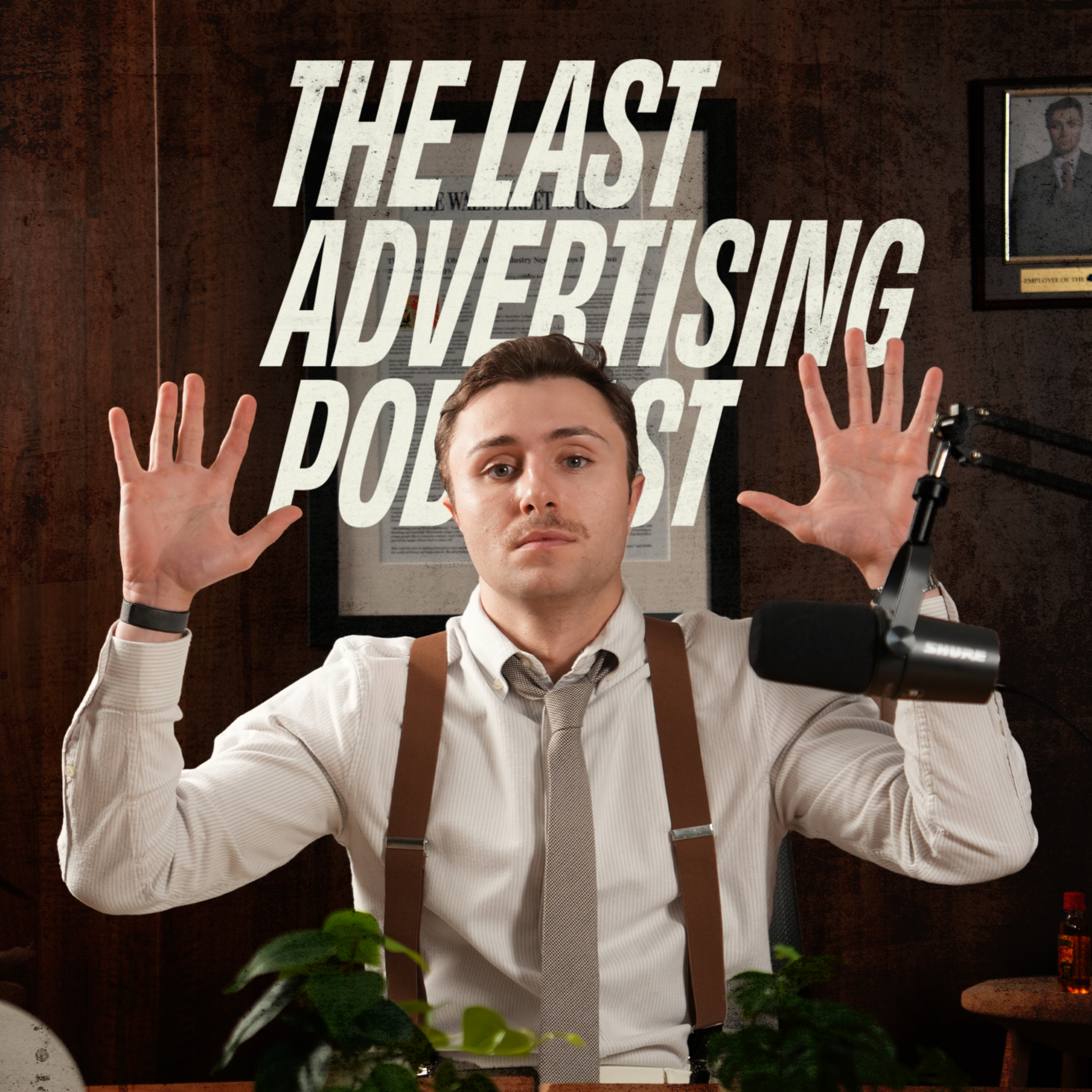
- The Last Advertising Podcast
- Before We Quit, Let’s Build an American Icon
The Last Advertising Podcast26 Aug 2026 · 27m · 12 chapters
Before We Quit, Let’s Build an American Icon | Shinola CMO Kevin Wertz
In short
Shinola’s brand reintroduction and new campaign anchored on its Run Well watch, using storytelling to shift focus from product specs to an emotional relationship with time; includes lessons on value signaling and on agency-to-brand collaboration.
Guest
Kevin Wertz, CMO at Shinola (Detroit, MI). Previously spent ~8 years at an agency (part of Interpublic) rising to VP account director and then CEO; later moved to brand side.
Key claims
Shinola is not anti-digital, but its products are analog and encourage presence (e.g., checking a phone traps you in notifications vs. checking a watch keeps you in the moment). Customers “value signal” (identity/values) rather than “wealth signal.” “Made in Detroit” is a differentiator tied to manufacturing and Detroit’s design/music culture.
Notable examples
A restaurant video starring Nicholas Braun (his first time directing) where the watch is a “supporting hero” for a character’s relationship with time; campaign created with London agency Gentle Forces.
Written by AI. May contain mistakes.
Chapters
0:45
Introducing Kevin Wertz
Kevin Wertz, CMO of Shinola, discusses the brand's new campaign.
“So we started 13 years ago with the ambition of making watches in America and specifically in downtown Detroit.”
2:00
Shinola's Brand Evolution
Exploration of Shinola's brand history and expansion beyond watches.
“I mean, it was the thing that we first made.”
5:00
Emotional Connection with Time
Discussion on the emotional approach to marketing Shinola's products.
“It's about the emotion that people have with their time.”
8:00
Value Signaling vs. Wealth Signaling
Kevin explains the concept of value signaling in branding.
“So I want to get an understanding of, like, what does it mean to be made in the U.S.”
10:00
Manufacturing Watches in America
Insights on the significance of Shinola's American manufacturing roots.
“And we'll get into your advertising agency experience.”
12:00
Hiring for Passion and Curiosity
Kevin shares insights on the skills and qualities he seeks in marketing hires.
“You have a spark in energy at this moment.”
14:02
Lessons in Advertising Success
Learn about the importance of passion and taking initiative in advertising.
“I'm still, I'm still learning, you know, 600 episodes later.”
15:12
Understanding the CMO Perspective
Discover the challenges and perspectives of a CMO working with agencies.
“where if you manage out of mutual respect and a clear future vision, people will exceed your expectations like nine out of ten times.”
17:45
Transitioning from Agency to Brand
Explore the motivations and challenges of moving from agency to client-side marketing.
“I mean, that's such amazing advice, like building the buffer and to talk through.”
20:02
Education for Marketing Transition
Learn how to prepare for a shift from agency to marketing roles.
“I'm like, wow, why are you why are you saying that?”
Show all 12 chapters
21:36
Agency vs. Brand Side Insights
Gain insights into the benefits of working at an agency before moving to brand side.
“Well, easy is probably not the best word, but there was a transition point then.”
24:03
Emotional Connection in Marketing
Understand the importance of emotional engagement in consumer marketing.
“or was there another reason for hesitation on that?”

Ask about this episode
Get the gist, explore an idea or ask about something said.
 Claude
On The Last Advertising Podcast, what are the key points of this episode?
Searching your listeningTranscript
Automatic transcript. May contain errors.
0:00Ladies and gentlemen, you're listening to the last advertising podcast of all time. This is it, our last conversation. It's all done until probably next week. So enjoy this guest. Kevin Wertz, welcome to the last advertising podcast. How are you doing today? I'm well. Thanks for having me on. Of course. You are the CMO at Shinola, a great brand based over in Detroit, Michigan. New campaign came out not too long ago, a new age for the brand. And how are you guys feeling about it? We feel great. It's been really well received. It's Nicholas Braun. He starred in it. It was his first time directing.
0:40So it's just been incredibly well received internally and with our, you know, not only our fans of Shinola, but also we're attracting a bunch of new people to the brand based on this, which is exactly what we're looking to do. I love it. I love it. Well, congrats on that. It looked amazing. and so by the time this is out it'll probably be a couple months from when that launched so i think it's a really interesting question now like where was the brand before this campaign launch and where do you hope it is today the time people are listening to this in a couple months from now how do you want people to think about shinola as they're listening to this episode yeah great question.
1:18So we started 13 years ago with the ambition of making watches in America and specifically in downtown Detroit. And over the years, it's expanded to, I mean, we do leather goods and journals and we hotels. I mean, it's sort of expanded way beyond watches, which is great. And it's a little bit of a story of we did a lot of things really quickly. And as people learned about Shinola, they were a little confused. Like, I'm not sure exactly what that brand is or what you stand for. So when we reintroduced the brand to folks just, you know, in middle of the year of 2026, we wanted to focus on our icon, which is our run well watch that started it all.
2:00I mean, it was the thing that we first made. It's the thing that we're still best known for. So as we made our effort to introduce new people to this great brand, we wanted to anchor it on something that people knew about, which is Shinola. But we wanted to do it in a different way we didn't just want to do it where um we're selling a watch we really wanted people to understand what their relationship with time is and come at it from an emotional angle which is quite different for the category yeah yeah so you're bringing it back back to the roots of the brand and i i think that's so important and i think there's lessons here too of like quickly expanding it's something i'm doing as a founder now it's like we are doing so many different types of content and different offerings for people, keeping the audience's mind in mind as much as possible.
2:45What was like the the the realization point? Like, how did the research or the team come together saying this is the right way to do it? Let's get back to what we're known for, which is the Run Well Watch. Like, what were those conversations like? What was the culminating point to do this? Yeah, we've been circling around this idea of, you know, we're definitely not an anti-digital company. That is definitely not our stance, but everything we make is analog. I mean, we make analog watches. We encourage people to write in their journals versus just type in their computer. We make hotels. I mean, it's like things that we do are about experiencing time in a different way and having people sort of slow down and saying it's not about optimizing your time constantly.
3:30Sometimes it's about being present in that moment. And it's just one of those things that it's like, you know, if we could help people realize that, you know, if I check my, my phone to see what time it is, I'm automatically sucked into the world of, oh, I have 12 text messages and 19 missed emails. And then these three posts on Tik TOK that I missed, you get pulled away from, I just tried to check the time, but I ended up getting trapped in my phone where if I just look at my watch, I can stay present in that moment. And so we just thought it'd be cool for a brand like ours to help people figure out how our products fit into their life in a way that has them appreciate the time they're spending in that moment.
4:08I love this. Did you work with an ad agency on this? Can you remind me? We did. We worked with an agency out of London called Gentle Forces. Great folks. And they helped us sort of go from the idea of what I talked about to how do we bring this to life in storytelling? And that's ultimately where we ended up with that the restaurant video that that we launched with with Nicholas Braun, where, you know, it looks like he's having a conversation or a breakup with with his date. And ultimately, he was just talking about his relationship with time. And our Run Well watch was the object of his sort of like angst in the moment, just as a way to sort of say, like, listen, it's like about, you know, taking back control of your own time.
4:47And the watch was sort of a supporting hero in that. It was more about your emotional connection to time and a lot less about, here's a Chanel Runwell. It's 41 millimeters. It's made this way. It's not about features and benefits. It's about the emotion that people have with their time. Yeah. And looking at the site now, I wasn't aware of all the offerings, like all the leather offerings. This is a pretty holistic brand, as you mentioned at the start of it. What type of person would, you know, if I'm on the street or if I see someone wearing a Shinola watch, what do you think that says about them?
5:24Yeah, it's interesting. We understand that the people that purchase from us traditionally have a decent amount of household income or net worth. And what we find out is that they have the financial means to buy probably almost any brand of watch or leather handbag that they want. but when other people buy you know higher end price point watches they they often do it because they're trying to signal their wealth i've made it i'm rich i'm this i'm that where people that choose to wear their shinola watches or carry our bags are trying to signal what they care about or their values so we call it values signaling worth versus wealth signaling and we tend to find folks that could carry anything, could buy anything.
6:10They're choosing Shinola because it says something about who they are as a person. Yeah, yeah. This type of understanding is so interesting and I think it speaks so clearly in the watch world. I'm not like a watch head myself or whatever the term might be, but the value signaling is such a great lesson here. Do you think like, do you think other marketers and advertising professionals should think about value signaling, even if they're not into the luxury watch game? Like, is this something that everybody should consider? I do. I think it's, you know, to me, great creative and great brand positioning comes from an actual human truth, something that you believe that unifies the people that love your brand.
7:01And if you can find that and stand for something bigger than I make X product or Y product, but this product means or says something about me, you know, lean into that. I mean, and because that's going to likely attract more people that believe that same thing. And to me, that is it's not about luxury or even lifestyle. It's about any product you're selling. It's like people are buying that for a reason. And usually there's no shortage of competition in the marketplace. but you want to try to figure out what is it emotionally or or or at the people's core that gets people to want to buy your brand or buy your product and then and then lean into that in a way that attracts more people that think the same way i love that i love that i just did a quick google google search right now i was asking where are the best watches made and first ones that comes from the Google AI results here.
7:54We see Switzerland, Germany, Japan, and the U.S. here. I, you know, the U.S. to me does not come top of mind here. So I want to get an understanding of, like, what does it mean to be made in the U.S. for this type of watch brand, and more specifically, Detroit? How does that play into the branding and what you all do? Yeah, to me, that's really one of the biggest differentiators about our brand is that when we were founded 13 years ago, the idea was to bring back manufacturing of timepieces to America. I mean, because pre-World War II, the U.S. made a vast majority, I shouldn't say that, I don't know that to be true, a lot of watches compared to other parts of the world.
8:39And the U.S. lost a fair amount of that manufacturing during the war. And so the idea was to bring back manufacturing into America and specifically Detroit, because it just stood for so many things. I mean, it's not only just the automotive capital of the world where we make things like cars. It's also music, like the hub of so many amazing bands and Motown and hip hop and rap and now EDM. It's also a beautiful design city. We're a UNESCO design city, the only one in the U.S. And people don't put those things together. Usually manufacturing and art are very different. They don't coexist in the same place.
9:18And so there's something really cool about Detroit where we can have beautiful design and manufacturing in the same city. And it's just a unique story and one that, you know, we want to make sure people understand. It's not our lead. You know, we're not saying, hey, buy a Shinola because we're made in Detroit. We're saying buy a Shinola because we already talked about your relationship with time or it's a beautiful product or it's a good price or whatever. But it's also because what we stand for and how we're doing things with creating jobs in America. I love it. Kevin, when you're hiring at Shinola on the marketing team or adjacent, like what are the skills today to break into the marketing roles?
10:01And we'll get into your advertising agency experience. Don't get me wrong. But for a brand side at Shinola, what are you looking for in your hires? man i think more than anything we're looking for curiosity and passion i mean so many people that work in marketing advertising came from psychology degrees or environmental studies or whatever else i mean so it's not like a doctor or a lawyer where you need to learn a specific niche skill set to do what you're doing to me it's about people that are interested and passionate and curious of learning and listening and trying new things and hearing feedback.
10:42So it's more about that than any specific tangible skill. Interesting. Interesting. And what might be a question you ask somebody? Like, do you have a go-to one to kind of gauge their curiosity and passion? Yeah. I'm also going to give it away for anybody who interviews with me later, right? You're going to have a little cheat sheet here. So, no, the thing that I love that I ask, and I tell people up front in the interview, I say, when we're all done with this interview, I'm going to ask you, if you could have me ask you any question, what would it be? Because maybe it's something you're proud of, or that is core to who you are as a person or an accomplishment that you had recently that we didn't get to touch on.
11:27But I'm going to ask you in 30 or 40 minutes to have me ask you a question. And you've got to figure out what that question is. And I tell you, over the years, I've had people talk about deeply emotional things about who, how they are and who they were made as people growing up and their relationship with families to, you know, recent campaigns they were, they were proud of that they wanted to talk about. But it's a, it's a question to me that reveals so much about that person. I love that. I love that. I'm just thinking about like, you know, working for Shinola on the marketing side, it could be a, it's a great opportunity because you have, you have a strong brand.
12:03You have a spark in energy at this moment. But there's so many different objects and so many offerings, whether it's jewelry, the leather and bags, the watches, the hotel. Like, it seems like you won't get bored, but you have an anchor. So I applaud you for that. Thank you. Yes, that was the trick, right, is to do all those things, but find, you know, a way to stand for something. And so the exercise we went through was, like, yes, we make all those things. but if we're known for one thing in consumers mind if i told you hey i'm thinking about shinola you're like man they make those unbelievable watches you're like yeah but they also do a bunch of other beautiful things and if we can make watches really beautifully in detroit we could probably make anything exceptionally well but we had to find that anchor first and for a little while we we didn't have that and i think that's during the time where we get a little like oh my gosh i'm not sure who these people are what they're for and but a couple years ago we we re-anchored back on watches and it helped us just find that like this is what we stand for yeah it's it's I love that that note too about the anchor and the relationship with time like all these products like help you kind of like get your time back and like kind of respect your own time so well done well done I do want to ask now your agency experience you're a donor around eight years and you worked your way up to VP account director.
13:28And it's a recurring thing I've done on this show is ask about that transition going from agency side to brand side. I think is Campbell, excuse me, is Campbell, is that an agency as well? Oh, yeah. Yeah. We were part of interpublic group of companies. So 110 year old ad agency was the very first ad agency for General Motors. And we made literally every commercial for Chevrolet from the very first Chevy ever made until, you know, 2008, when, when GM in Detroit, I'm still a financial issue. I'm still, I'm still learning, you know, 600 episodes later. So you then spent 16 years there, worked your way up to CEO.
14:09That's when, then after that, you made your way over to client side. So I guess like the, I guess first question, what is your biggest lesson for anybody to be successful in advertising on the agency side?
14:26Passion. I mean, honestly, it's passion. When I was just starting off on advertising, I would always say, listen, I'll get my work done, but if you can take me to a meeting where you think it'd be helpful for me to hear something or learn how we handle objections or close a sale, I promise I won't speak, I won't mess anything up, but I just want to hear about it, right? And so I would say, I'll get my work done, bring me to a meeting. I'll get my work done and go to that meeting. Now let me take a crack at, you know, writing our first draft of the strategy and just, and it's not about like hustle culture or working harder.
15:03It's about like wanting to learn and being willing to, to lean in and get the work done and hustling and getting the work done. But it accelerated my career, like just exponentially just because I always like said, I can take on more. And then I realized as I took on more responsibility, you figure out how to manage and lead people, you know, where, you know, I've always had a philosophy of if you manage out of fear, you get the minimum required so people don't get in trouble. where if you manage out of mutual respect and a clear future vision, people will exceed your expectations like nine out of ten times.
15:42And I've always realized as I take on more responsibility, I need to have folks that I'm working with take on equal amount of responsibility, and I can't do it for them. I need them to do their jobs beautifully. And you just find out a way to do that, and everyone's different. Yeah, yeah. I guess now, though, like you're on the brand side. You've just worked with an ad agency. So as your CMOs, from your CMO perspective, talking to agency professionals, knowing what you know now, what's one thing that you could tell them about the CMO position on the brand side? The advice that you wish you knew when you were in an agency life, what can you tell them to be better partners to the brand partners that they're with?
16:24Yeah, it's a great question. I always find myself like being sympathetic or empathetic to the agency folks that are pitching because I did it for so much of my career where you're just trying to just give me 10 minutes. I'm going to help you. You know, to me, it's it's it's two things. One is understanding that the client side marketing organization is way, way more than looking at reviewing or approving creative. You know, I used to always lament like what's taking them so long. They've had to work for a week now and we still don't have feedback. What's more important than this? And then you realize like, holy shit, there's a lot more important than this.
17:01Right. And so it's one understanding that the demands and pressures and time constraints of the client side organization is way more than creativity. Right. So that understanding helps because then when you do have a conversation or you get a chance to present to them and you have an hour total, you need to in that hour present your point of view, have plenty of time for question, dialogue, resolve that dialogue, because you might not get an hour with that with the client for a long time after that. And so understanding that time constraint and making sure you use that time wisely is probably the biggest thing.
17:37And so now when folks call and ask for a meeting with me, if they're folks that use their time super efficiently, I'll take the meeting. You know, if it's folks that I'm like, oh, my God, I'm going to be on the call with an hour and then we're still not going to have anything resolved, probably not taking the call. Totally. I mean, that's such amazing advice, like building the buffer and to talk through. Like don't like oversell for the whole time and then get done with your, uh, your, your concept presentation. You have to build in that extra time. Absolutely. And we would always try in the age of society when we, we would always fail.
18:11Not always. We would fail many, many times. You would like, cause people are like, you rehearse and you know, like, you know, you got seven minutes and then you're like, we practice and hit seven minutes. But in the meeting itself, you go 22 minutes. You're like, oh man, now we're screwed. totally totally it's like you know the the technology doesn't work or you or whatever you're trying to read the room and go a little bit longer and make some jokes like yeah i think that's so such great advice here then i'm curious then when did you realize it was time to make the the shift from agency to marketing side what was going on in your head at that moment Yeah, I had been the CEO of this agency.
18:50So we were in New York, Detroit, Los Angeles, hundreds and hundreds and hundreds of people around for a hundred years. Amazing experience. I got to the point where I felt like I wasn't doing marketing or advertising anymore, to be honest. I was a CEO and I was helping prepare financials and do quarterly projections for revenue and, you know, putting people in position to succeed. But the calls I were getting from clients were not about their business challenges anymore, was not about what new ideas we could bring them. It was about how are your kids doing? Where was your vacation last month? There was very relationship based, which, listen, I love.
19:24Don't get me wrong. Like, who wouldn't want to have those conversations? But I just wasn't doing marketing anymore. And I looked at how many years I had left before I wanted to, you know, sort of stop working my nine to five job. And I said, like, I don't think I love what I'm doing anymore. I want to do marketing. And so as opposed to saying like, hey, demote me to, you know, a different role within the agency so I can work on actual client business. I used that moment to say, I think the next move is going client side where I can see much more of the of the picture in terms of how we're going to market with pricing and product and promotion, et cetera.
19:59So that's really what it was. My wife actually one morning woke up and she's like, do you love your job? I'm like, wow, why are you why are you saying that? And she was right. Wow. Did you have to, when you made that shift then to the marketing side, what type of education did you have to implement on yourself? Or did these companies like teach you it along the way? Did you make an effort to study up the four Ps of marketing? Because you've been on the CEO or agency side for so long, which is just one fourth the pie. How did you kind of like level yourself up for that transition? Yeah. I mean, to me, I leaned on the CEO role that I had, which was managing people and financials and understanding P &Ls.
20:47So things like that, that if you just sort of work in advertising, you may not have access to. So I really leaned heavily on the fact that I'm running a profitable business and thinking about pricing our product. In this case, I was pricing our hours and how we're going to make a pitch and what we're going to charge for it and figuring out when you want to have a little bit lower margin to gain a new exposure. I mean, it's all the same things. You just find a way, the analogy of, you know, everyone has a loss leader as a product. I can sell it for a less margin because I want to get you in. Agency has the same thing.
21:19Then I have our premium products where we price at a higher margin. You just sort of find the analogy around we were pricing and selling ours at the agency, and now we're pricing and selling products at the client side. Gotcha. You were already doing it. You just found that connection there, and it was a pretty easy transition. Well, easy is probably not the best word, but there was a transition point then. So then, you know, I'm curious then, knowing what you know now. If you can tell somebody trying to break into marketing today in 2026, would you tell them to go agency side or brand side first?
22:04That's a tough one. Be honest with me. Come on. Yeah.
22:09You know, I would say agency side first. after all this, I was the agency side first, because what, what you experience at an ad agency as a person coming into the business for the first time is you're going to learn many types of categories. You're going to learn many types of brands, consumers, price points. Some of the clients you work on will be international. Some will be regional, some are upper funnel, some are only performance media. Some just do, you know, so you're going to see a wide breadth of ways to go to market of different categories, different regulations, if you work in financial services versus alcohol versus clothing, and you're going to be experienced a lot of different perspectives.
22:54And along the way, you're going to say, I hate this. I like this. And you're going to keep making those observations over the course of a handful of years. And then you're going to go client side if you choose to do that. If you want to go client side, you choose to do that, but you choose to do that with the knowledge and experience of a wide breadth of information. And the thing that I tell folks all the time when they're thinking about moving from agency side to client side is that you have the benefit of insights and perspectives and ideas of a whole bunch of different categories where traditionally, when you go client side, you've got a bit of a insular environment where people like, hey, I'm 30 years in banking.
23:35I'm 27 years in healthcare. I'm 32 years in handbags. And it's great because you need that experience. But what you don't have a lot of is people that are like, what if we applied the same way we thought about breaking down this barrier in healthcare to what we're doing in fashion right now? And you're like, wait, how does that make sense? And then you're like, holy shit, I never saw it before. So you have that perspective by getting that breadth of experienced agency side. Okay. And was the hesitation just to formulate the thinking there, or was there another reason for hesitation on that? No, it's hard because I want to hire smart people to client side.
24:11So I don't want to tell people don't start client side. I mean, I'd love to have you at Shinella, right? It's not a wrong answer for sure. It's just, it was just more about like, yeah, I don't want to make it seem like, boy, starting client side is going to be a career limiter it is definitely not no no i think about like you know like the pepsicos and those huge brands and what they do when the people start client side there it's kind of like an agency and the fact that they like kind of uh rotate people around and like these huge conglomerates there there's there's merit there too i think that's another option for for the marketing folks like those big companies they can give you that experience too yeah you get into like a general Mills or a Procter & Gamble.
24:54They're going to teach everything for sure. Yeah. Yeah. Yeah. Well, Kevin, was there anything I missed kind of doing your interview question that you wish I would have asked you? Wow. Full circle moment, right? I don't, I mean, nothing comes to mind. I mean, I just like to think about what we accomplished here with the campaign launch for Shinola, to me, it's a good learning for folks in other businesses where, you know, as a client-side marketer, now you fall in love with your product and you work with product development and design teams and engineers that tell you all the specs and features that this thing has.
25:38And you sort of get pulled into that. You're like, well, geez, why aren't we talking about the fact that this automatic watch has a higher power reserve than this other one. And, and it's a differentiator in the category. And then you realize that people don't buy on rational thought, they buy on emotion and then they justify their decision with rational thought. And so it just hit the hit us, you know, that we were, we were lacking that emotional connection to the consumer for a little while. And so, um, I would just ask people to think about that. Like if you're, if you're looking to break through and just say, you know, that great line that people We used to always say that when they go to Home Depot and they buy a three-inch drill bit, they don't want to buy a three-inch drill bit.
26:17They want a three-inch hole. So you think about what are we trying to solve for and how do we focus on that end result versus the means to the end. I love it. Well, Kevin, wonderful job. Thank you so much for coming on and sharing the knowledge that you have. I'm sure there's more. I hope people can reach out to you and check out the brand, the website. It's amazing stuff. So wishing you all the best, sir. Thank you. And you as well. Thanks for having me on. Of course.
From the publisher
This is it. The last advertising podcast to ever be made.
But before we quit, we need to talk about time.
Switzerland has centuries of watchmaking history. Shinola is building an American version from a factory in downtown Detroit.
Kevin Wertz, CMO of Shinola, joins Geno Schellenberger to explain how a 13-year-old brand can create a sense of heritage, craftsmanship, and permanence in a category dominated by names that have existed for generations.
Shinola has expanded from watches into leather goods, jewelry, journals, bicycles, and hotels. That growth created a problem: people knew the name, but they did not always know what the brand stood for.
The answer was to return to the Runwell, the watch that started everything.
Kevin explains how Shinola turned that product into the anchor for the entire brand, why Detroit gives the company a story no Swiss watchmaker can copy, and how its latest campaign transformed a watch into a statement about reclaiming your time from your phone.
The conversation also explores the difference between signaling wealth and signaling values, why people choose products that reflect who they are, and what agencies misunderstand about working with a CMO.
Kevin closes the show with the final lesson advertising needed: people buy on emotion and justify it with rational thought.
Time’s up.
The advertising podcast is officially over.
Until next week.
The Last Advertising Podcast is hosted by Geno Schellenberger and powered by Breaking & Entering Media.
Visit www.thelastadvertisingpodcast.com for all the episodes.
More from The Last Advertising Podcast
All episodesWe use cookies.They keep VO running smoothly and help us improve it. Privacy policy