
 Ask ChatGPT

- Podcasts
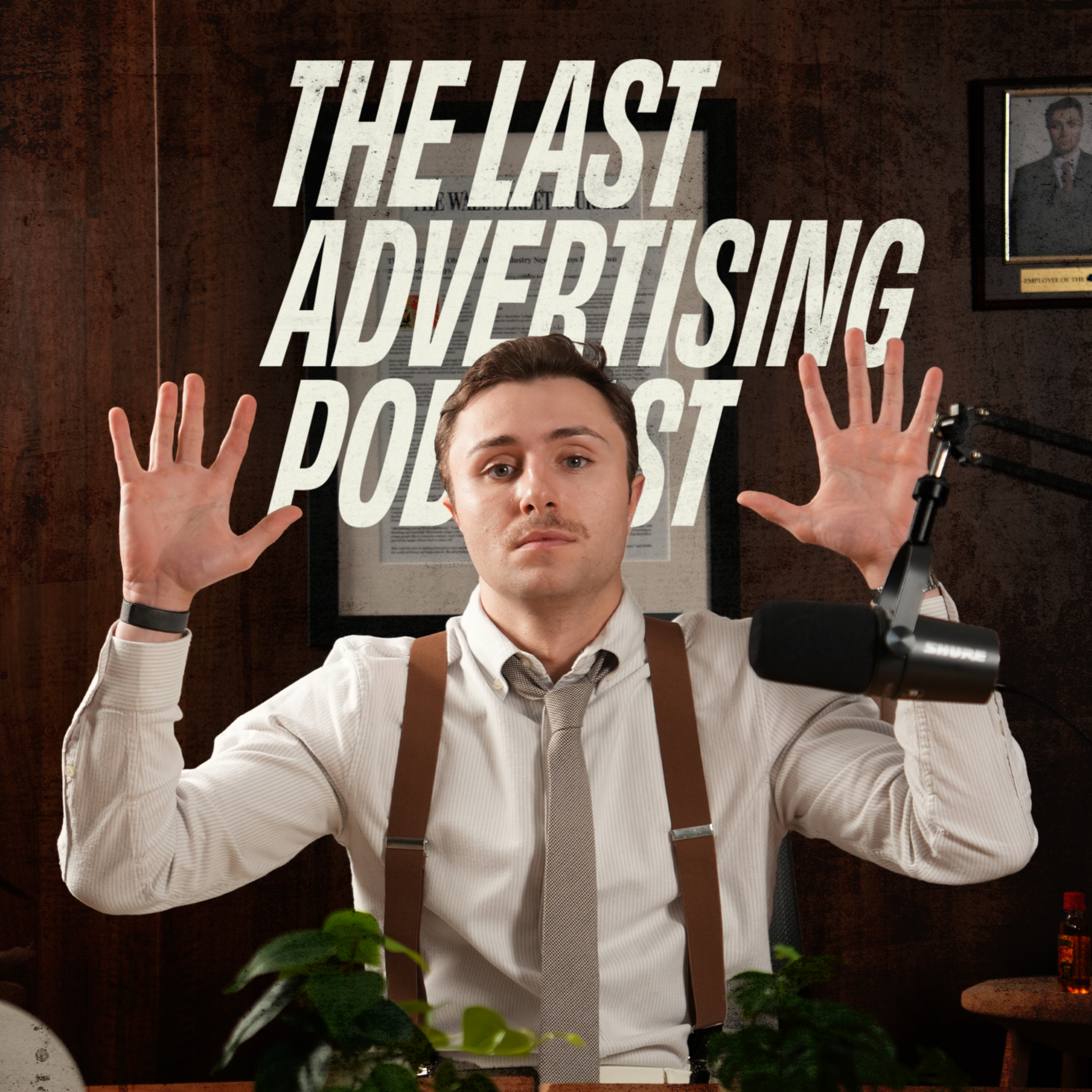
- The Last Advertising Podcast
- Why Ad Legend Keith Cartwright Wants Your Ideas to Scare Him
The Last Advertising Podcast21 Oct 2026 · 29m · 12 chapters
Why Ad Legend Keith Cartwright Wants Your Ideas to Scare Him
In short
Keith Cartwright, ad creative leader and founder of Cartwright, argues that advertising is still a viable career despite industry shrinkage and AI. He emphasizes creativity, taste, and creative problem-solving as human strengths, and advises young creatives to keep building ambition and improving their portfolios.
Guest backgrounds
Keith Cartwright is an “ad legend” with experience at Shia Day, Wieden & Kennedy, Martin Agency, and 72andSunny. He started as a designer/illustrator (fine art painting/illustration at Syracuse) and moved into advertising, becoming a creative director/CCO and later founding Cartwright.
Key claims
AI can’t replace the “algorithm of taste.” Entry-level opportunities may pause, but creative minds remain valuable. Hiring signals come from interviews (60%) plus portfolio (40%). Juniors should generate lots of ideas; leaders help make them sell.
Notable examples
A Wieden & Kennedy campaign for Michael Jordan’s Hall of Fame using Charlie Murphy as “Leroy Smith,” spoofing a real character who allegedly motivated Jordan; dozens of long-form films aimed at social/video virality.
Written by AI. May contain mistakes.
Chapters
0:45
Keith Cartwright's Background
Discussion of Keith's prestigious advertising career and creative origins.
“But today, you are the founder of Cartwright.”
1:51
Transition from Fine Art to Advertising
Keith shares his journey from fine arts to the world of commercial advertising.
“I was interested in painting and illustration.”
3:34
Education and Portfolio Development
Insights into the importance of education and portfolio in advertising careers.
“So did you have to go to like a portfolio school like to make that pivot from fine art to advertising?”
4:48
Creative Problem Solving in Advertising
Keith discusses how creativity remains essential in a shifting industry landscape.
“And there's this initial pause that's happened that is causing the industry to shrink.”
7:18
Skills and Craft in Creativity
Exploration of necessary skills and craft for aspiring creatives in advertising.
“So the justification here to keep going is there.”
9:09
Advice for Aspiring Creatives
Keith offers valuable advice for students and young creatives entering the field.
“So if I'm sitting here now, you know, maybe I'm currently enrolled at Syracuse or what's another – Congratulations.”
11:41
Interview Insights and Hiring Criteria
Discussion on what makes a standout candidate during interviews in advertising.
“and if you've got an ambition to make great things.”
14:00
Creative Insights from an Ad Legend
Learn how unconventional creative decisions can lead to standout talent.
“if they can do both in a way that's interesting, then there's something there.”
18:00
The Art of Idea Generation
Discover the importance of free-thinking in the creative process.
“and you have to reel them in constantly.”
22:00
A Memorable Campaign: Michael Jordan's Hall of Fame
Explore the behind-the-scenes of a creative campaign featuring Michael Jordan.
“I think this will be a fascinating exercise here.”
Show all 12 chapters
28:01
Creating a Safe Space for Ideas
Learn the importance of fostering a creative environment for idea generation.
“your job was to create a safe space for people to just come up with ideas.”
28:36
Connecting with Keith Cartwright
Discover how to reach out and connect with advertising legend Keith Cartwright.
“How can people find out more about you, connect with you?”

Ask about this episode
Get the gist, explore an idea or ask about something said.
 Claude
On The Last Advertising Podcast, what are the key points of this episode?
Searching your listeningTranscript
Automatic transcript. May contain errors.
0:00Keith Cartwright: Ladies and gentlemen, you're listening to the last advertising podcast of all time. This is it. Our last conversation. It's all done until probably next week. So enjoy this guest. Keith Cartwright, welcome to the last advertising podcast ever. So this is it. We're done. There's no more ad podcasts after this. So we have to treat this with a bang here. What an honor. Yes. Yes. I think it's an honor. Absolutely. Absolutely. But that gives us permission to speak freely and make something that people want to hear. How does that sound? I like it. Let's go out with a bang. I love it. You're an ad legend.
0:41Keith Cartwright: I mean, you have a tremendous background here. We're going to get into it, but you've worked at Shia Day, at Wyatt & Kennedy, Martin Agency, 72 & Sonny. But today, you are the founder of Cartwright. Is this correct? That's right. That's right. uh creative background do you did you skew art direction copywriting i know that you were you know creative director you're a cco now but when you first started which which side did you lean on definitely an art director um and you know always an art director i love art directors um no no shade to the writers i love you guys too but i started out as a designer and uh as a graphic designer, to be honest, and, and, um, and move my way into advertising.
1:27Okay.
1:27Keith Cartwright: Do you still have a passion? Like, do you still get in and art and design and art direct? Like, are you still, are you still getting into the work directly, your hands in there? It's a tricky question because I think to some degree, but I think, uh, at a certain level of leadership, you want to be more about inspiring than uh about making you know you want to you want to create a space where people feel like their ideas are coming to light and you're helping build their ideas so uh i you know i i dabble but i i my my creative reward is seeing other people kind of make amazing things um that that came from their minds their brain i mean you started off as a fine artist is this correct Yeah, I did.
2:12I was interested in painting and illustration. That was what I wanted to do. I went to college for that and kind of made my way into the commercial arts and didn't really know much about it, to be honest. But my background in drawing and painting has been immensely helpful because it's the foundation of everything.
2:34Keith Cartwright: Interesting. So then what made this switch then from fine art to – you call it commercial art. Is that advertising? Is that fair just to call it advertising? That was the name. ComArts was the name of our department at Syracuse, so it stuck with me. Oh, the Syracuse. It's one of the strongest undergrad. That explains it all. I mean. Yeah, we go strong. Yeah, so I was just, I was blown away. I kind of went and surveyed it, to be honest with you, because I wasn't sure. and I just had the most incredible professors who really just lit me up and made me really excited about the world of marketing and design, right?
3:19And just didn't really know anything about it. So it was just this exciting ride for three years where I just felt like every day was fun and I I felt like it was kind of what I was put here to do.
3:33Keith Cartwright: Got it. Got it. So did you have to go to like a portfolio school like to make that pivot from fine art to advertising? Tell me about that transition. What happened to you mentally? Like how did you have to like transform into an advertising role? I didn't go to portfolio school and it's no knock on portfolio schools. There's great ones out there. But I was, you know, the four-year program, the three-year program that was in, first year was foundation. We did build a portfolio our junior and senior year. And, you know, again, our department was really, really strong. And kudos to my classmates who were also strong.
4:16We pushed each other. There was a pretty serious weeding out period between sophomore and junior year. So it was almost like band of brothers and sisters is that we made it, survived, and we just kind of grew. And a lot of those folks are very successful now.
4:34Keith Cartwright: Totally, totally. So a strong program, no need for a portfolio school. Not everybody's in that situation, Keith. I think even some people that I know that get their master's at, let's say, like a brand center or they go to a two-year Miami ad school, you know especially in today's job market where entry-level jobs seem to be disappearing yeah what do we do how do you freaking break in the name of the podcast is break entering for a reason yeah like especially for the young art director that might be listening to this if you were breaking in today what would be your path in keith well i i don't know if i wouldn't be discouraged by what's going on today.
5:20I think this is sort of the natural progression of our industry and a lot of industries where because of the shift in the way that the world is consuming content and information and entertainment, because of the onset of AI, all these new tools, and AI is a tool, all these new tools that are popping up, I think the world is trying to figure out how to reset. And there's this initial pause that's happened that is causing the industry to shrink. I think the shrinking of the industry was probably necessary. I don't, I mean, it's hard and it's not, it doesn't feel good, but I think in the end it's going to be great.
6:06And I think creative thinking, creative minds, regardless of your industry, are going to become one of the most valuable commodities, not just in our business, but in all business. Because that's the one thing that I don't think AI is ever going to fully be able to take over. Creativity and the way that people conceive ideas is based in the algorithm of taste. And taste is just, it's not, there's no code or no program because it's input in, right? It's, we create what is tasteful in those moments. So even if that goes into, you know, say the machine, um, tomorrow it's different, right? So I think human experience, um, and human creativity, uh, initiative, um, the ever-changing sort of pulse of what's in and what's out, um, those things move at a, at a, at a pace in a space that is magic.
7:06And I don't know if any machine will ever be able to put together that algorithm without sort of a human mind behind it, sort of deciding and deciphering what it is.
7:18Keith Cartwright: Okay. So the justification here to keep going is there. Yeah. Advertising is still, you would recommend this to a family member, a child, somebody close to you, a loved one. You would tell them eye to eye, You can still pursue advertising and you wouldn't endorse it, Keith. I would say, you know, the interesting thing about my education and background is they taught us how to think creatively. So a lot of people didn't go into design. They went into other creative fields. So I would first think about the education that you're getting and how you're sort of learning about solving problems and learning what creativity is and how those things work together because they're applicable to so many different industries.
8:04Right. So, you know, advertising is a field that, you know, we can recognize now, but it's really for, quote unquote, the creatives that are in it, an endeavor that allows you to sort of use your creativity to solve a problem. So for all those who are going to school and trying to figure out what to do and are looking at an industry and saying, is that industry going to die? I don't know if that's necessarily the right way to look at it. It's what kind of education am I getting as it pertains to creative problem solving, the ability to sort of enhance and develop my own taste, right? And then there's a skill set.
8:43There's a craft to it. Are you learning the craft of whatever it is, creativity? And the craft, you know, deals with understanding space and shape and understanding color and the balance of color and typography. All these things, they're not going anywhere, right? They may evolve to other fields or they may even be called something else. But those are the basis of – that's the basis of creativity.
9:08Keith Cartwright: Absolutely. Absolutely. So if I'm sitting here now, you know, maybe I'm currently enrolled at Syracuse or what's another – Congratulations. hey nothing wrong with that like the great i mean yeah profit i just was at side side bar i was just at the mojo supermarkets manifest off they do like a creative copywriters like uh like competition and like four of the eight contestants were new house a new house i keep seeing this yeah damn syracuse you're doing so well so maybe not the syracuse folks listening here but any undergraduate They're studying advertising or design here. They have the bones of a portfolio, a body of work here.
9:52Keith Cartwright: Whether it's good or not, let's err on the side that it's strong work here. What else could they be doing? Would you tell them just to focus on the portfolio? Would you tell them to pick up a side project like start a damn podcast? asked, what would you tell a student today to break in? You know, that's a hard thing. I'm really, I often struggle with giving people, you know. Tangibles? Tangible, finite advice. I love tangibles though, Keith. I know you do. I know you do. I love tangibles. But I struggle with that because, you know, things change, right? I mean, so you have to be careful with that.
10:41But what I would say to somebody who's trying to figure out like how to be relevant when they graduate or what to do to make sure that when they're out, they're continuing to build on their portfolio or make it so that they're, you know, in a place and space where people want to hire them. I would just say continue to be ambitious and pay attention, right? Continue to build on your own creativity and never rest on what you have in your portfolio. How can you make it better? How can you make it smarter? How can you do more? I think ambition is attached to creativity is the thing I'm always looking for.
11:18You know, I love it when I see books from young creatives that, like you said, they're doing a lot of things. And those things are not just haphazard, right? They have purpose. They have ideas behind it. I'm trying to see your potential, right? I don't expect you coming out of school to be great. I just want to know if you're ambitious, if you're hungry, and if you're a little weird, and if you've got an ambition to make great things. That in and of itself is what I like.
11:48Keith Cartwright: You love that. Yeah. You've been on the record saying craft can be developed, but ambition and curiosity, they're harder to teach. Is it innate? I mean, or a better question is, how do you tell? Like right away when you see a young creative has the ambitious quality and not just fluff or BS, you know, they're over caffeinated. How do you actually kind of suss that out? I mean, it's, for me, it's, it's, uh, 60 % the interview, 40 % your book. right and i put 60 on the interview because i really want to know your background uh kind of where you're from what what gets you going you know what do you do in your spare time um you know those things and even just the general conversation and how it flows you know i i try not to talk about the work in the book because i've already seen it if i have a question i'll ask but I want to learn a little bit about the human being in an interview and just see how they communicate.
12:58Because, you know, we're in a communications business, right? So how do you show up and what is it that, you know, you want to talk to me about? What are your questions? And then when I'm looking at the portfolio, you know, you can see fairly quickly, I'll speak to art directors, where their level of design and craft is at this point, right? Some come in with a very distinct style and it's very good. Or some come in and there's great ideas, but there's not a lot of sort of design attached to it. They're not great designers. They don't really understand, you know, color and space and typography, but they have great ideas.
13:37So you can kind of tell very quickly where they are. You know, there are designers who sometimes struggle conceptually and there are conceptual thinkers who sometimes struggle as designers. And finding that unicorn in the middle that can do both is really hard. That's the gem for me. Even if they're not quite at an A++ level, if they can do both in a way that's interesting, then there's something there.
14:05Keith Cartwright: Yeah. Is there, I mean, this might, you don't have to answer this question, but like do you recall, and you can leave their name out, but like a standout interview, like a slam dunk hire, like maybe some question you asked, or when was the last time you were really blown away by a younger or more inexperienced book or interview that you've had with someone? Is there any stories that you have?
14:36Yeah, there are. You know, there was one that got away that I really, really thought was you know, awesome. They had those qualities I was talking about in their portfolio. They were a great interview. They had all these weird side projects that I just thought were more interesting than their book. You know, they were doing all these weird sort of side projects. They were also interested in photography. Like, they just like to make stuff, right? And ended up that that human being didn't even go into advertising. They went into another field and last I heard kind of got stuck. But that's a story for another day.
15:21But I saw that potential and it was just like, oh my God, this could be it. This person could be really, really special. And then I've taken risks on a few folks who did not have a portfolio at all. Whoa, whoa, whoa. Hold up. No portfolio. None to speak of.
15:44Keith Cartwright: I mean, I think people should know, you are an ad legend. Like your book, what you've made in your career is some of the best of anybody out there today. I put you head to head with anybody. So you have the portfolio. You did it. You've made some of the best ads. you're telling me somebody came to you got to you went through all the rounds of approval interviews and you know you said keith you got to meet this person they don't have a book how do you even take that conversation when i say they didn't have a book they didn't have a book that you and i would call a book they had some stuff okay they had a few things and like objects or just like you know passion projects designy stuff you know just just creative projects let's call them that right um but i was so impressed by the person and by the way i wouldn't recommend this because this is like one in a million i was so impressed by the person yeah and i met them in person which is so rare now and i would i would i would recommend that anyone going on an interview try to meet people in person get down there yeah if you can you know if you're capable of meeting the person, meet the person.
17:00Because there's something about that kinetic energy that, and just seeing how they are next to you, talking to you. I just, I was like, man, I don't know what it is. There's something here. And it ended up working out. It worked out. Yeah, he ended up being very, very good. And, you know, to this day, I'm like, that guy, that guy was special.
17:26Keith Cartwright: So and what's for, I guess, like I'm going to get so many texts and emails. People ask you. Oh, yeah. Oh, yeah. I mean, hey, you give a shout out to this person. I feel like that's a as your PR advisor in this situation. I feel like that's a good. Yeah. Good shout out. But, hey, I'll leave it up to you. But that's so fascinating because the risk there is you got to teach this person the fundamentals. Right. Of advertising, like, you know, insight, idea, execution. and you know it better than I do. And they might not like the process or the process might hinder their creativity and you have to reel them in constantly.
18:03Keith Cartwright: Now with your CCO hat on, how do you make sure that they can fit in the agency environment and be successful? Because it's one thing to have wild ideas all the time, but you have to have ideas that sell at some point. Yeah, I mean, it's a lot easier when you're a junior because the expectations are just like volume. You know, my expectations when you're at that stage is, I want to see a lot of stuff, you know, and don't spend too much time trying to make it perfect. Like, just give me enough of what the idea is and then move on to the next one. You know, when I was in art school, I've told this story before, but my art teacher, my fine art teacher used to tell us when we were working on a project, you know, she'd say the first 1 ,000 sketches don't count.
18:54Keith Cartwright: Right. Oh, my gosh. Yeah. So we would do… Thousand. Yeah. We would do, you know, we would spend a whole day. And you got to remember in art school, studio is like three, four hours. Right. So if we were doing a life drawing, you know, the first day would just be sketches. Right. Just like quick gestural drawings, gesture drawings. And we use like charcoal vine or a light pencil and just like do it, move to the next one, do it, move to the next one. And then you slowly start to slow down, but your brain is just taking a photograph of the idea, which is in this case the person. And then on the next day, your brain has looked at it and studied it so much, it's a lot easier to start the actual rendering of it all.
19:39Right. So in advertising, it's just it applies. Right. Because you have this brief and, you know, a lot of times people are like, I know what it is. And maybe they do. Maybe that's the idea. Maybe the first idea is the idea. And that's happened before. And there have been great ideas that way. But you kind of have to fully explore what it could be. And you've got to go through the process and beat it up before you start to get too myopic. You know, another thing my art teacher would say is you're drawing too close to the page. Right? And that means you're not taking a step back and looking at the entire thing.
20:14When you start drawing very close to the page, that means you're getting into the details. Right? And if you're getting into the details too fast before you know what it is or you don't have the ability to step back and take in the whole thing, it's just not going to be as good.
20:29Keith Cartwright: Right? Because you haven't had time to really look at it and study it. So, again, same with advertising. It's like don't get too tight too fast. Have fun. It's actually, in my opinion, the best part because you can do anything. Totally. Like just come with anything, especially when you're a junior. The expectation is you're supposed to come with these sort of wild ideas, you know, stuff that I could never sell. Make me scared, I would say sometimes to my career. Like scare me. Like don't hold back. This moment, this is a safe space for us to just have fun and think about stuff. We'll get serious later.
21:08We'll call this thing down and we'll figure out what we can do and we'll figure out a way to sell it. But right now, just enjoy the process.
21:15Keith Cartwright: Yeah. Isn't that what the ACD or the CD, their job would be to like, is there a nugget somewhere? Or maybe we can find something in one of these crazy, you know, you send 100 ideas or 20, whatever the amount is. and the you know to pull out something there it's not the junior's job right no no your job is just go crazy that's i mean that for everybody listening i mean that that should apply to spec work too like what's the some wild ideas because this is the only time now where you're not going to have clients you're not going to have cds where you have to sell stuff you know it can get really crazy in the spec work i think that's so liberating in a way so it's good to note there but I do want to slightly pivot.
22:02Keith Cartwright: I want to ask you a question. I think this will be a fascinating exercise here. Just for the purpose of this conversation, can you tell me a campaign, an ad that you made, maybe you're most proud of, or the prompt, the brief would be that you think was the most technically best ad that you've made or that you're most proud of? However you want to interpret this question, I just need you to pick an ad or a campaign that you worked on that we can talk about for the next question. I don't know if it was technically the best, but it was certainly the most fun and the most ambitious because I don't know if I would want to grade great work on it being technical.
22:50Keith Cartwright: Okay, so the most ambitious then is the parameter? Ambitious, yeah. Okay, what was that campaign in your mind? We did a campaign. This was a long time ago. And shout out to all the folks who worked on it at Wieden with me. It was Michael Jordan's Hall of Fame speech that was coming up. And we were tasked with coming up with an idea for his, you know, sort of Hall of Fame journey that was obviously going to happen. Right. Right. And we came up with this idea using Charlie Murphy, Eddie Murphy's brother. Yep. R.I.P. Who was portraying or spoofing a real life person by the name of Leroy Smith. Leroy Smith was this character who, in real, this is a true story.
23:42He was the person who took Michael Jordan's spot on the varsity team. Michael Jordan famously got cut. and the person who took his spot, his name was Leroy Smith. And Michael being Michael, he never let it go.
23:55Keith Cartwright: No. And Michael Jordan would literally like check into hotels and write Leroy Smith is the name in hotels when he checks in. He held onto it. So we presented this idea to Nike and we're like, we want to do, we don't, you know, not for TV. And this was early days when social media was just popping off. We want to create this character and we want to create, I mean, we created dozens of films and it was basically Charlie Murphy pretending to be Leroy Smith saying that he was the person who motivated Michael Jordan to be Michael Jordan. Like, where's my credit? Like, yeah. And did it sell through?
24:31I think it's still floating around on the internet somewhere, but it's very good, very funny. And I mean, they're long too, man. They're like three, four minutes. They're like little movies. And Charlie Murphy was awesome. This is perfect. It was directed by Tom Koontz as well, and he was awesome. It's just a great time.
24:48Keith Cartwright: This is perfect because my next question is, I want to be in that room. Take me back, Wyatt and Kennedy, in the halls there or in the conference room or maybe it was at a bar somewhere in Portland. I don't know. Paint me the picture of when this idea was born. Who was in the room, if you remember? How did it go? Was it a standard meeting? I think that this is going to be the most helpful part of the conversation for everybody to understand what the creative environment looks like to just be silly and come up with an idea like this.
25:29the three creatives who worked on it Ricardo, Andy and Josh who were kind of the Jordan team to be honest with you came to me with this idea and said we want to spoof Leroy Smith and we want to create this character who is off making these motivational VHS tapes that he sells and their motivational tapes on how to be a better basketball player. And he quotes himself as the man who motivated Michael Jordan. And I was in. I was like, okay.
26:07Keith Cartwright: So what was your role? Creative director? I was creative director. Yeah, I was creative director. Okay, so you're creative director. Are you sitting in like your office? Is this a creative review? Is this an internal review? Was it like a strict deadline? Was it stressful? I mean, there was multiple paths. I mean, it was such a big moment for the Jordan brand that we, you know, we produced some big TV as well. And we did a lot of work around his retirement. And this was honestly an aside, you know. And shout out to Alex Lopez, our client, who had to push this through because it wasn't in budget.
26:44You know what I mean? It wasn't something that we were supposed to be making. And we found a way to do it. And it was worth it.
26:51Keith Cartwright: it was worth it and what did you have to say to the client knowing it wasn't in budget like how do you now your job as a creative director is to sell it i would imagine right yeah yeah it was we sold it as this sort of off in sort of a perimeter campaign that would light up social media and light up YouTube and create, you know, this sort of outside fire. It wasn't going to be connected back to the main campaign. And everybody thought, okay, this is going to be great. And so it didn't feel like it had the pressure of the other, the other work. You know, we spent some money on it, but it wasn't, you know, there was a, there was a bigger campaign, but then it ended up taking over and becoming sort of the main thing to to where Charlie Murphy spoke at Michael Jordan's Hall of Fame speech.
27:50Keith Cartwright: Oh, my goodness. Yeah, it's pretty funny. It's pretty funny. Well, Keith, I know we are at time here, but it's been a pleasure. I think what I've learned here is, like, as a creative director, your job was to create a safe space for people to just come up with ideas. You'll figure out how to sell it. So for the juniors out there that are pursuing art direction or copywriting, one this is still a good industry to go into move forward that ambition is what's going to take you further don't give up on your creative ideas keep refining that portfolio and then once you're in don't worry about how something's going to get sold don't get too close myopic i think is the word i don't know what that means however like you know just come up with a lot of ideas that are absolutely insane and a great CCO, great CD, we'll figure out a way to sell it in.
28:41Hopefully so.
28:43Keith Cartwright: Incredible. How can people find out more about you, connect with you? Where should they go, Keith? Yeah, I'm on LinkedIn, man. I'm right here. So I'm everywhere that anyone can be contacted. Hit me up on LinkedIn. I'm available. I generally respond if I can get over there. Perfect. Yeah. But congratulations to you, Gino. You guys have done an incredible job. I can't believe this is the last one. I hope whatever is next is bigger and better. I'm sure it is. Thank you, sir. I appreciate it. It means the world coming from you. All right. Thank you.
From the publisher
Why does advertising legend Keith Cartwright want young creatives to bring him ideas that scare him?
Keith Cartwright, Founder and Chief Creative Officer of CARTWRIGHT, joins The Last Advertising Podcast Ever to share lessons from a career spanning Wieden+Kennedy, 72andSunny, The Martin Agency, and some of the most celebrated creative work in advertising.
Keith reveals what he looks for when hiring art directors and copywriters, why he weighs the interview more heavily than the portfolio, and why ambition, curiosity, and creative taste are essential to making great work.
We also discuss how to break into advertising in the age of AI, why the first 1,000 sketches don't count, and how great creative directors encourage their teams to develop ambitious ideas.
Plus, Keith takes us behind the scenes of his Michael Jordan campaign featuring Charlie Murphy as Leroy Smith, explaining how an idea outside the original budget became one of his most memorable projects.
Whether you're an aspiring creative, advertising student, art director, copywriter, or creative director, this conversation is packed with practical advice for building a career in advertising.
Watch the 500+ other last interviews at https://thelastadvertisingpodcast.com/
More from The Last Advertising Podcast
All episodesWe use cookies.They keep VO running smoothly and help us improve it. Privacy policy