
 Ask ChatGPT

- Podcasts
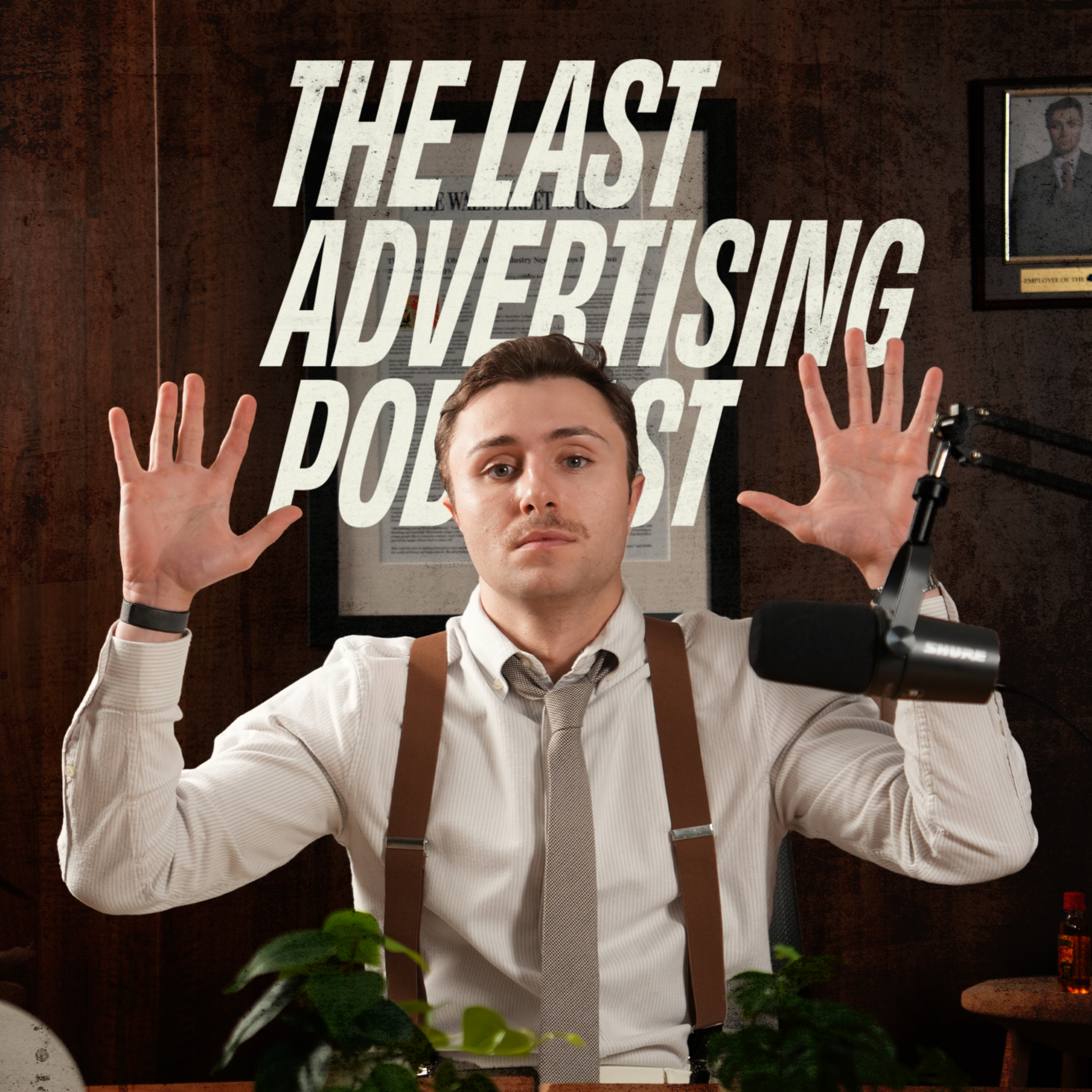
- The Last Advertising Podcast
- The Mother Sea Turtle Theory of Creativity with Joanna D’Avanzo
The Last Advertising Podcast7 Oct 2026 · 29m · 13 chapters
The Mother Sea Turtle Theory of Creativity with Joanna D’Avanzo
In short
Joanna D’Avanzo, senior professional lecturer of advertising at Marist, discusses her “know a little about a lot” creativity philosophy, how AI changes (but doesn’t replace) creative thinking, and how she teaches students to write, observe, and stay coachable under feedback. She uses a “mother sea turtle” metaphor to explain why ideas aren’t personal and why students should detach from rejection.
Guest background
Joanna D’Avanzo has taught advertising for 12 years at Marist; she prepares students for Crowbar Awards and has coached winners. She previously worked in Manhattan advertising in the early 1990s.
Key claims
Generalist curiosity beats one-note specialization; AI requires strong human knowledge to avoid generic “drivel”; students must improve writing craft; feedback should be treated as work-improvement; creativity needs fearlessness and one-sentence idea clarity.
Notable examples
MoMA and museum visits; Strand/Coliseum Books and magazines for inspiration; Nike women-focused early-90s campaigns (Janet Champ copy); “morning pages”/daydreaming; weekly “try something new” exercises; “mother sea turtle” idea metaphor; “A Technique for Producing Ideas” by James Webb Young; New York as a must-visit city; art history as a non-ad subject.
Written by AI. May contain mistakes.
Chapters
0:45
The Philosophy of Knowing a Little About a Lot
Joanna D'Avanzo discusses her philosophy on creativity in advertising and its evolution over time.
“You know, the theme of this episode, I don't know if you agreed to it or not, but it actually caught my attention when I was doing my homework on you.”
2:46
The Importance of Broad Interests
The conversation emphasizes the need for advertising creatives to have diverse interests outside of advertising itself.
“You know, I for me, I would have disagreed with this.”
4:52
Expanding Creativity through Experience
Joanna advises listeners on how to broaden their horizons to enhance creativity, including suggestions for reading and visiting museums.
“My biggest issue, and I have some ad nerd friends that are in the industry, and their biggest issue too is that they only study advertising and they're not looking outside a culture like myself.”
8:18
Balancing Exploration and Execution
Discussion on how students can balance exploration of creativity with the demands of their studies and internships.
“And I realized that I did a semester in London when I was in college and it just got me out of, and look, I was in New York City, right?”
11:40
Characteristics of Successful Advertising Students
Joanna reflects on the qualities that set successful advertising students apart, including passion, work ethic, and response to feedback.
“I think that's a really good niche too if you want to do your own content creation, like posting a brief for everybody of expanding their creative horizons once a week or once a month.”
14:00
The Importance of Feedback in Creativity
Learn how to effectively receive and give feedback to enhance creativity.
“But so, you know, again, I feel like it's, some of it is, it's, it's a level of commitment too, because that commitment, if you don't have that, you're not going to get to something really good.”
16:46
Mother Sea Turtle Theory of Ideas
Discover the metaphor of the mother sea turtle for cultivating creativity and resilience.
“So and that's what matters at the end, right, is the work that's being put out there.”
18:50
Navigating Creative Discussions
Understand how to engage in constructive dialogues about creative ideas.
“I mean, I used to do that when I was in industry all the time.”
22:30
The Joanna Curriculum for Creatives
Explore essential tools and insights every creative should embrace.
“then it might not necessarily be an idea.”
24:37
Art History and Creative Foundations
Learn why art history is crucial for understanding creativity in advertising.
“A city, every creative should visit once in their life.”
Show all 13 chapters
27:39
Concluding Thoughts and Contact
Wrap-up insights and how to connect with Joanna D’Avanzo.
“I'm going to say learn the foundations and don't take shortcuts.”
28:00
Connecting and Collaborating on Future Trips
Learn about the potential for future trips to Kenya and connections via LinkedIn.
“We can have another conversation at another time.”
28:30
Gratitude and Acknowledgments
Hear expressions of gratitude and recognition for achievements and support.

Ask about this episode
Get the gist, explore an idea or ask about something said.
 Claude
On The Last Advertising Podcast, what are the key points of this episode?
Searching your listeningTranscript
Automatic transcript. May contain errors.
0:00Joanna D’Avanzo: Ladies and gentlemen, you're listening to The Last Advertising Podcast of all time. This is it, our last conversation. It's all done until probably next week, so enjoy this guest. Joanna D 'Avanzo, welcome to The Last Advertising Podcast. This is going to be a fun conversation. You have been preparing your students so well, submitting to the Crowbar Awards, had some gold Crowbar winners in the past, maybe some blues as well, the best in the show. Yep. Yep. So Marist, you are a senior professional lecturer of advertising at Marist. So I treat these as the last conversation about advertising I'll ever have.
0:38Joanna D’Avanzo: So we're going to go out with a bang here. Is that okay with you, Joanna? That sounds good. I like going out with a bang. Uh-huh. Wonderful. You know, the theme of this episode, I don't know if you agreed to it or not, but it actually caught my attention when I was doing my homework on you. you have this philosophy of know a little about a lot. And I want to hear in your words, what does this philosophy mean to you? And how are you teaching your students that are studying advertising to know a little about a lot? So what it means to me, I mean, it goes back to when I was in industry. And in order for me to come up with ideas, I felt like I had to know a little bit about a lot.
1:25And I don't think I realized that at that moment. I lived in Manhattan. I worked in Manhattan. It was in the early 90s. So Manhattan was definitely a different place. But I just felt like it was a place where you could learn a lot just by walking around and experiencing everything the city had to offer. I remember going down to the Virgin Music, store, right, and buying like CDs or going down to the Angelica and seeing independent films and just, you know, subscribing to tons of magazines and looking through books. You know, if you needed, when you were creating ads at that time, if you needed a photo or a picture, you had to go to like the bookstore, right?
2:11So we'd go to like Coliseum Books or The Strand. And it just, you know, you, I just started, you know, amassing more and more and more. And I just felt as if for me to be successful in advertising, I did need to know a little bit about a lot because you work on tons of different brands that are, you know, speaking to many different consumers. And in order to come up with ideas, you just needed to know little things that you could sort of bring together and see how it was going to work out. So that's kind of how that came about. You know, I for me, I would have disagreed with this.
2:50Joanna D’Avanzo: in like 2020, maybe like 2019, 2020, like before the pandemic and before AI, like I thought my philosophy was like specialize. Like why, like, and I made a LinkedIn post about this too. Like I was so set on account management at a big agency, big Superbowl creative agency. So I did everything in my undergrad to be just good at that specific thing with a little bit of an understanding here and there. But really it was like internship focus, like what extracurriculars can I do? in that specific area. And that really helped me out for that time because the world was completely different. But now I think we're swinging back to this know a little bit about a lot where generalists are going to be more in the swing here.
3:36Joanna D’Avanzo: It seems like this is the right way to go. And it doesn't seem to be changing anytime in the future with AI here that you can actually execute on these things. Do you kind of like, do you agree with that? Do you see like this becoming more important over the next one to two years? Oh, 100%. You know, I also think about it in terms of that, just any creatives in advertising also have a lot of other things that they're interested in, right? If you're only interested in advertising, then you're kind of like a one note, I feel, right? But when you have a lot of interests outside of it, I mean, you're always working with people that are like writing scripts or like they're photographers or they're like crocheting, you know, there's so many interesting people, right?
4:16And to be interesting, I feel like you have to have a lot of different things that you're interested in. So but I do feel that like moving forward. Yeah, I think it's even more important because I do think AI is kind of one note. Right. And I mean, I use it. My students use it. And I think there's a time and a place and a certain way to use it. But you still have to have the knowledge to be able to feed it to be able to get something back that isn't going to be like all the other drivel that is out there in the advertising world because there's a lot of drivel out there in the advertising world.
4:51Joanna D’Avanzo: Okay. Totally. My biggest issue, and I have some ad nerd friends that are in the industry, and their biggest issue too is that they only study advertising and they're not looking outside a culture like myself. Like, honestly, if you were to drop me into an ad agency today, being two years full-time at breaking and entering media, I'd probably be trash because I'd just be referencing other ads and not really getting inspiration from the outside world. So my question to you, Joanna, for the 20-year-old who's listening to this, what should they be reading, watching, studying, visiting, paying attention to to kind of broaden their baseline?
5:34Um, it's going to sound kind of like everything and anything in all seriousness, right? Like visit museums, go to MoMA, right? Like if you're studying advertising, design, anything like that, and you haven't been to MoMA, like why not, right? Take little things in like that. Great writing. Like one thing that I tend to see is that students really don't know how to write. And they're also losing. So I think craft is really important. They're losing the ability to write. And that's definitely from AI, but also they're losing the ability to write because texting is so, you just write in text, right?
6:12But also when it comes to design, so you have things like Canva, you have things where all sorts of design becomes like automated now. But to me, like the most fun things ever was when I sat down as an art director and I was designing something and where would I go for inspiration for that? Yes, I'd look at other ads And I'd go through like communication arts annuals and, you know, Lurza's Archive and one show annuals and D &AD, you know, all those, you know, typical kind of, you know, advertising. Now we can put Crowbar in there too, right? People can look through Crowbar stuff. But, you know, studying design in general.
6:49So looking at – I used to look at magazine editorial all the time because I didn't want to do advertising that looked like other ads, right? Like I wanted the stuff that I was going to do to kind of stand out. So I would send students to do things like that. You know, first of all, study old advertising. OK, because I feel like you need to understand what that foundation is in order to do things, in order to better yourself, because then you have a larger frame of reference. Right. Like you if you don't know what's good, if the only thing you're you're used to seeing is what you're seeing on your feed or or however you're consuming media, media, you're not seeing all the stuff that's been done and all the stuff that's really out there.
7:29So, you know, great writing. And I just don't mean great advertising writing. I just mean good writing in general. So reading. Listening to podcasts, I think, is so great, too, because it's such a good way to get information into your brain. And I feel that listening is a really helpful way of doing it. And I would also always urge people to listen or read up on something that you think you have no interest in whatsoever because you just don't know. And even my son, like the other night, had me watch it. We were watching a movie. I was like, I don't think I want to watch that. And I did. And I was like, oh, I really like that, right?
8:04So I also feel like you have to get out of your comfort zone with certain things. So I think experience is one of the best things to help you with your creativity, the more you experience. And that probably happened for me. And I realized that I did a semester in London when I was in college and it just got me out of, and look, I was in New York City, right? Like one of the greatest cities in the world. And I go over to London and I just experienced so much more and my world opened up a little bit more too. So I feel that, you know, as a college student opening up your world, and it's the best way you can do that is you can do that easier now than I was able to do it in the nineties, right?
8:44Because you have so much at your fingertips, but I think opening up your world more than what it is, is such an important way to feed your creativity and be better at, you know, connecting with other humans. Okay.
8:57Joanna D’Avanzo: So how do we balance this out? Because yes, like you're, you're saying like leave room to explore, like to write, you know, one tool for that is like the morning pages, three pages in the morning, like type or writing it out. That's actually worked wonders for me. I've also have the luxury of working on my own schedule of having a job where I can, you know, find like really good books and read them or listen to podcasts. I have the luxury now of being in the workforce. However, when we, when we think about the students, they have their assignments, they have, you know, their college assignments, which are really difficult.
9:34Joanna D’Avanzo: They might be working a part-time job. They might be worried about getting an internship this summer and all of that in the background, while they have to build a portfolio in order to, you know, break into the industry by the time that they graduate, building the portfolio is a lot of work itself. So how do we balance out the time to explore versus the time to lock in and actually execute so they can get a job by the time they graduate? How do you navigate that with your students? Yeah. So one thing I would say, so for my students, I build some of that stuff into my classes, right? So in one of my classes called Creative Problem Solving, I have them do a little exercise every week that, let's say, broadens their horizons.
10:19And it's simple things like cook something you've never cooked before, watch something you've never watched before, just, you know, a little something each day. It's like, you know, like 30 days of trying something new. Because I think we all get caught into like our own rut, right? And I mean, I'm a creature of that too. The same thing happens to me. So, so, so that's what, what I would say. It's, I don't think it has to be something massive all the time. It could be something that's really sort of simple and taking a new, walking home in a different way that you haven't walked home before, right?
10:53Like looking up, like, you know, if you're in Manhattan or wherever you are, actually sort of be present where you are versus being on your phone or, you know, even like sitting on the subway, you know and you know being on your phone having headphones in take them off you know listen to what people are saying i just think it opens it up you just become um more aware of what's going on around you and i think being observant is really important in being able to communicate with other humans because you're actually seeing how people actually live their life every day
11:28Joanna D’Avanzo: right i love it you should send me some of those assignments i would love to the fun ones the the creative challenges like that. I think that's a really good niche too if you want to do your own content creation, like posting a brief for everybody of expanding their creative horizons once a week or once a month. That could be really, really interesting. And then people could submit what they've done. I like that idea. Yeah, I like that idea. Okay. Yeah, okay. And that's something I would do. All right, so my understanding here, you are a creative professor. You talked about the basics here of understanding the classic ads, some of the best of all time.
12:15Joanna D’Avanzo: lovetheworkmore.com is free for everybody. Some of the stuff that we cover on Break Entering should be inspiration as well, at least that's what we aim for. You talk about focus on good writing, listening to podcasts, knowing the basics, but then also leaving room to be observant and to go to museums, expanding your horizon, and reading good books as well here. I think those are the fundamentals of what we've talked about so far. But now I want to really understand, you've been teaching now, I believe, at Mares for how long? Five plus years, six years-ish? 12, this is my 12th year. I can't even believe.
12:51Joanna D’Avanzo: 12th year, my apologies, got way off. Yes, 12 years, yes, a long time, uh-huh. So of the 12 years of you doing this and preparing some of the best aspiring advertising professionals, what's the difference? What do you see that separates your best students?
13:11So I think what separates students is some of it is just it's the passion and the curiosity, right? Like I can usually tell when a student is really good, is going to be really successful in advertising, right? And I can tell from a couple of different things. I can tell sometimes by their work ethic, right? Because you need to have a really strong work ethic to be able to do this kind of stuff or actually be able to do it good. Look, anyone can create an ad, right? It's just not necessarily going to be a good ad, right? So I think it depends on their want and their hunger is one thing. I also think it depends.
13:51How else I can tell usually is by how they respond to feedback and how they give feedback. I think that's really important because you see what they understand and what they don't understand, you know, how they apply the feedback to work. And that's something that's really, really hard to, I mean, I remember when I was a young creative, I hated when people gave me feedback and I was so defensive about it, but you know, that takes a while to learn and, and, and all that. But so, you know, again, I feel like it's, some of it is, it's, it's a level of commitment too, because that commitment, if you don't have that, you're not going to get to something really good.
14:31Joanna D’Avanzo: Can we hover on the feedback portion of this? I guess my perspective on this is I love feedback. I think the greatest compliment somebody could give me or I would appreciate the most is coachability. I am here to learn and I want to get better. Like I don't take offense from it. I know that my creative work, even like I love it. Great. Those are my babies. Like I'm okay with people like giving me feedback on it. And like, I'm willing to change and adapt because as long as I'm doing what I love and there's some people that I admire and respect that have a good taste, like I'm all ears all the time.
15:17Joanna D’Avanzo: That's something like that I've learned from a very harsh first boss. He taught me like you are not your ideas. You can come up with more ideas. A hundred percent. And that's exactly what I try and teach my students. Okay. So how do you like do you do you have like a tip for them? Like you have a student that's like, oh, why should I listen to you, Joanna? They're not verbalizing that. I know, but they might be thinking it. And like when you detect that, how do you even go about a conversation with them if they're kind of a little bit more stubborn, which most creatives are when they first start because they think they're really good or they're told that they're going into college that they're really creative.
15:56Joanna D’Avanzo: This might be their first time getting some negative feedback. How do you give them tips on this? And many times I think it is their first time, right? It's their first time getting maybe negative feedback on something that's really personal, right? Ideas feel personal to too many people. And just like you said, I try and take that, like, strip that away. And what I want them to understand is that I always say think of yourself like a mother sea turtle, right? You have a mother sea turtle lays all these eggs and not all of them are going to survive. Only a few are going to survive. So the next year she's not going to, like, not go back and lay those eggs again.
16:29So one thing I want them to always understand is you can always come up with another idea. Ideas are just ideas. It doesn't mean that it's you as a human being. So it's not anything that's personal. So it's not easy. Some of them do take offense by it, right? And I try to just get them to understand that if you open your ears to it, I'm only trying to get the work better, okay? So and that's what matters at the end, right, is the work that's being put out there. So being able to be open to what others have to say because you don't always know what's in your mind may not be communicating, right?
17:08because advertising is a communications. You're communicating something. So it may be 100 % apparent to you, but it isn't 100 % apparent to other people. So it is sometimes a struggle. So what I would just have them try and realize too is that everyone's in that same place right now, right? Like we're all right here, you know? And, you know, if you open yourself to it, and I try and give the examples of me when I was in college or even probably when I first started working, that once I understood why I was getting feedback and it wasn't something personal and it was only going to make my work better, right?
17:52And also what tends to be a problem is the way people give feedback. They don't tell you what the problem is. They tell you what they don't like, right? So I don't like the font you chose, okay? Well, why don't you like it? Like I try and get to the root of what the issue is versus making more general statements of something that maybe a student feels more like, you know. But again, if I don't like the font that you chose either, okay, it's just a font. It's not who you are. That's what I would say to them. It has nothing to do with you as a human being, you know. And once students realize that, they're great about it.
18:33You know, they realize, you know, they're so good. So I want them to try and detach themselves from it that they are not their ideas. Ideas are just something that comes out of them. And there's so many more of those. And you know what? If someone doesn't like your idea today, try it again in a couple of years. I mean, I used to do that when I was in industry all the time.
18:53Joanna D’Avanzo: Oh, yeah. Oh, yeah. One way that I try to do it and works with me, instead of saying what you like or what you don't like, it's like a really good framework to say what's working and what's not working like this is this font's not working for me because of xyz or this font this color choice is not working for me because of xyz and then i always like to see like even with ellie and jr two full-time employees it's like well if they feel strongly and they have like they can defend it and we can have that conversation of like why they're defending their decision and they showcase like they they reveal something to me I didn't see right away, we'll talk through it.
19:32Joanna D’Avanzo: And sometimes I could be wrong. So we have that kind of dialogue of why it works or why it doesn't work. I think that could be useful with students when they're peer reviewing and they're like, you know, because they'll be in group projects together. It keeps it a little less like personal, I guess. It doesn't. Well, actually, what you just said, I think is really important too, is that I say to students, look, you don't, if you disagree with me and you want to move forward with what you're doing, go right ahead. I'm telling you, like, if it's feedback from me that they're having an issue with, so I let them go ahead with it because, and sometimes it may work out and sometimes it doesn't.
20:06And then if it doesn't work out, then they realize it, right? Sometimes you have to, like, learn it kind of on your own a little bit too, right? And I always tell them that, you know, it's real, and I understand it's really hard to come in here and talk about your ideas, right? And you feel like it's a part of you, right? So I always say, like, The number one quality you need to have to be creative sometimes is being fearless, right? Because we all know, like, we're programmed to answer a question that we know that has a definitive answer, right? But advertising is not an exact science. So to be able to, so you do kind of have to be fearless, right?
20:43You don't want people to laugh at you. Oh, that's a weird idea. Why would you think of something like that? Or any of those kind of things. So I try and sometimes get them to put out ideas that could be – I'd rather them give me the most inane idea than something that I've seen a million times.
21:02Joanna D’Avanzo: Yes. And that explains why they're so successful in our crowbar word competition. Also, I noticed I had to learn this from my first boss who was very harsh, just pitching ideas. And I'm not even a creative. so uh i had to pitch a a lot of ideas like back to back to back to back to back to back like non-stop like 20 ideas in a row straight shot and i would preface some of my favorite ideas i'd be like okay before this next one i really like this one i'm excited he goes stop just say the idea get it out there and we'll go through all of them and then we'll and then i will go back and we will talk through the ones that he likes.
21:47Joanna D’Avanzo: And that was like, it was a one-on-one every time. And I just learned to not preface an idea before saying it. Just say it's straight-faced or I don't know how you feel about that, but it's something that I noticed too. It's like when they get really emotional and they're prepping an idea, it's just like, I don't love it. I just would rather hear it straight up. And then if it resonates, it resonates. What are your thoughts on this? I agree with that too. And I think you have to be able to say what your idea is, right? and say it in a sentence. That should be the crux of the idea. Then you could get further into it.
22:21But the, you know, the one sentence, I'm a big believer in what's your idea in one sentence. If you can't explain it to me in one sentence, then it might not necessarily be an idea. Perfect. Yeah. Cool.
22:35Joanna D’Avanzo: Okay, so I want to wrap this conversation up with something fun here. And I'm calling this the Joanna curriculum. And I want to get your thoughts on some things that people can take away, the tangible things that they can take away and apply for themselves. So the first thing I want to ask you for your curriculum, what's a book every creative should read? I would say A Technique for Producing Ideas by James Webb Young. Because it's – do you want to know why or do you just want the answer? No, I mean that's a classic, right? Yeah, it's a classic. Okay. And that's why. Because to me, it's about the foundations of creative thinking.
23:20And that doesn't change.
23:22Joanna D’Avanzo: Is that the one where it's like you think about it and then you step away? He does have that in there. Think about it. Yeah, it's a five-step process, right? And it's about gathering. It's that whole preparation, gathering, incubation, right? Right. So it's very much of it goes along with a lot of what I've been saying. Right. Gathering is all that sort of and the preparation is getting all the information that you need first. Right. Yes. Stepping away. Right. Because that's a lot of times when an idea comes to you. So so many times, you know, like you sit there and it's like, OK, this is my time to be creative and to think of ideas.
23:57But they don't always come to you like that. Right. They come to you when you're in the shower or like before you go to bed or when you're driving or something like that, because you've given your brain some time to to rest. And that's one thing I try and give my students too. Like, it's okay to daydream. Like, let your brain rest a little bit and let it do its job. You know, you've fed it all this information. Now give it time to go through that, right? Because otherwise, you know, we're like watching a screen. We're watching two screens at once. We're not giving our brain the time it needs to have an idea come through.
24:32Joanna D’Avanzo: Love it. Yeah, let the subconscious do its work. Yes, yes, that's exactly it. Okay, so we got the book. A city, every creative should visit once in their life. I mean, you know, I would probably go with New York just because it's just, you know, look, New York has, I don't love how gentrified New York has become, but it's still to me like the greatest city like in the world. The fact that you can eat dinner at 1 a.m. or you can – there's so much it still has to offer. So – and I think you can just find so much inspiration there just walking down the street and the people that are there. So I think New York is definitely one of those places.
25:13Joanna D’Avanzo: Got it. A campaign everybody should know. I don't – this is going to come off as cliche at first, but let me explain it. Okay, so in the early 90s, Nike did a bunch of – they did a lot of work geared towards women, right? And it was all – Janet Champ was the copywriter at that point. And the reason why I'm choosing that is because no one ever spoke to women the way they did in those ads, right? And I remember – remember we were talking about writing before. the writing is so good I mean I'm an art director right but good writing is just something that you could just you feel like in your soul and I believe that it just opened up so much more about the way brands started speaking to women so I feel like that was the precursor to things like you know Dove Real Beauty or Aerie or you know any of those any of like you know female driven campaigns.
26:15But when you go back and you read that, it was just the subconscious of what all women were thinking, but no one had ever said before. So the writing is just, it's just fantastic. It's just so wonderful. So I would say that. I love it.
26:29Joanna D’Avanzo: A subject outside of advertising, every aspiring creative should take. I'm going to say art history because I think you and I just mean art history across the the spectrum not just one particular error or anything like that you know I mean when I was in college I did an art history class on you know of like you know Mayan and Aztec civilizations and it's you know just opened my mind to other things but I think art history is really important because I think a lot of our history reflects what was happening at the time that the artists were, you know, doing what they did. And also, it also shows what a lot of times of what they were inspired by.
27:17Like if you look at certain things by Picasso, right? Where was he living when he created that specific thing? So it goes back to the whole thing of how, you know, where you're living or what you're seeing can influence your creativity.
27:35Joanna D’Avanzo: Absolutely. A great answer. And last one here, the final piece of advice someone entering the industry today should know. I'm going to say learn the foundations and don't take shortcuts. Enough said. How can people reach out to you, Joanna? This has been a wonderful conversation. We didn't even get into the Florence side of things where you take your students there. I'm sorry about that. Right. That's okay. I take students to Kenya. We can have another conversation at another time. Absolutely. I'm coming with. What? I'm coming. I'm going to come on one of those trips. Definitely. People get in touch with me.
28:13They can connect with me on LinkedIn. They can reach out to me via my email address at Marist. That's how they can. Joanna.Devanzo at Marist.edu or just connect with me on LinkedIn.
28:25Joanna D’Avanzo: That's fantastic. Marist is doing a great job. You are doing a great job. students are fantastic i'm so glad that we got to talk because once again all the success that your students are having um i wanted to share that with the world you hopefully you get some people to transfer over yeah that would be great exactly cool uh-huh totally well thank you so much for having me like i said congrats to you um and jack with all your success too it's been it's been fun thank you for watching you thank you very much we're trying our very best thanks Thanks for all the support here.
From the publisher
Joanna D’Avanzo teaches young creatives to think like mother sea turtles: produce a lot of ideas, accept that most will not survive, and return ready to make more.
The award-winning Marist University professor and former VP/creative director joins The Last Advertising Podcast to explain why great creatives know a little about a lot, why AI is one-note, and how museums, art history, subway conversations, unfamiliar films, and honest feedback make the work better.
Listen to the other Last Episodes at https://thelastadvertisingpodcast.com/
More from The Last Advertising Podcast
All episodesWe use cookies.They keep VO running smoothly and help us improve it. Privacy policy