
 Ask ChatGPT

- Podcasts
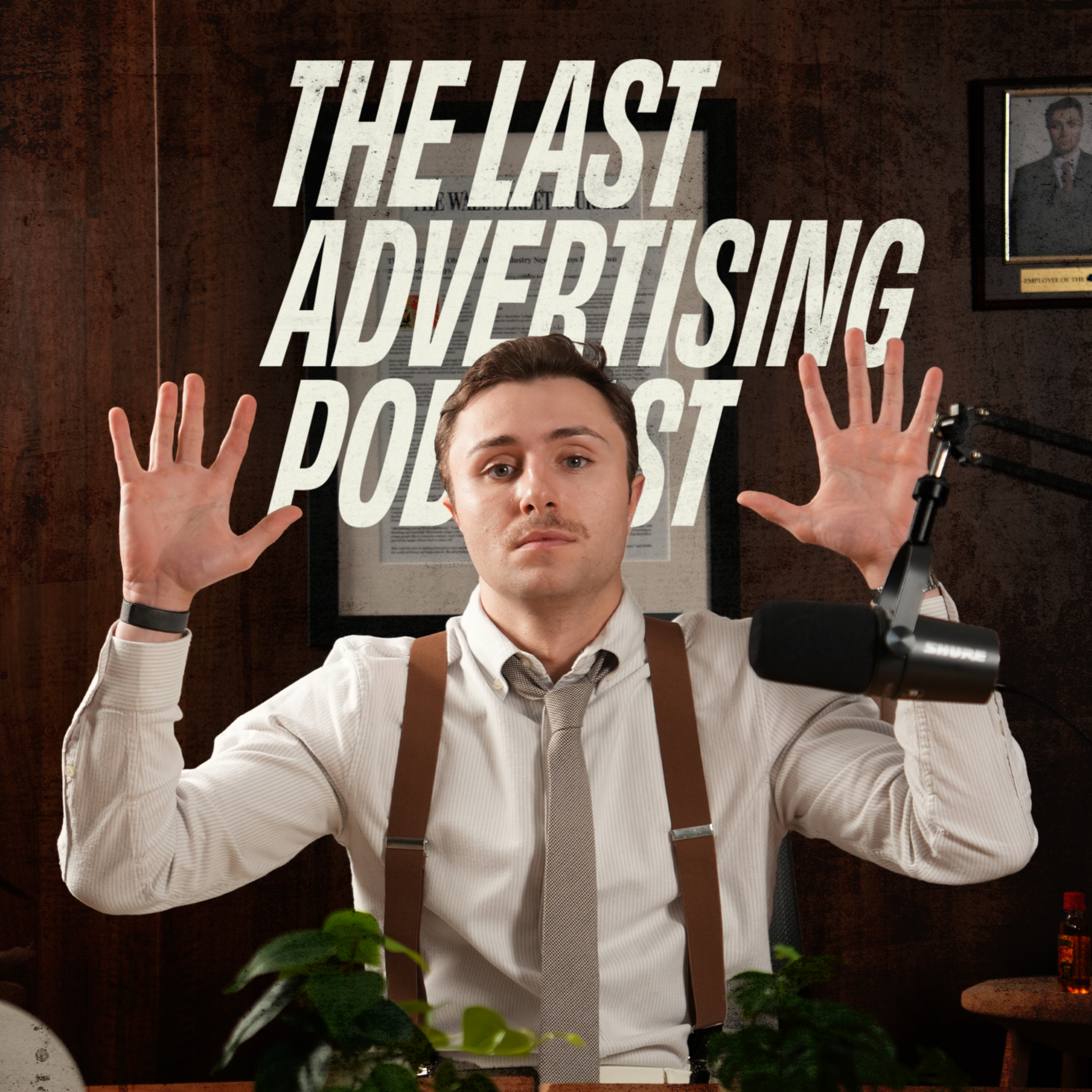
- The Last Advertising Podcast
- How to Get Hired and Build a Creative Career
The Last Advertising Podcast11 Nov 2026 · 35m · 12 chapters
How to Get Hired and Build a Creative Career | Nico Poalillo
In short
Nico Poalillo discusses how to get hired and build a creative career, using his path into advertising and his current role at General Motors. He argues brands need creative decision-making closer to product and implementation, and that “majors and minors” (a core superpower plus additional interests) help creatives stand out. He also emphasizes analog risk-taking: show up in person, pitch ideas, and build real relationships.
Guest
Nico Poalillo. Director of Global Design, Visualization and Environments at General Motors. Career path: started as a PA in Detroit, worked agency-side, then rose to director-level roles across GM touchpoints. Personal influences: Norwegian black metal; he studies lyrics and treats it like “quests.”
Key claims
GM hires outsiders to connect engineering/design/marketing; environments are experiential spaces (dealerships, events, brand launches). Hiring works via multiple “ingress points” like coffee chats and direct outreach.
Notable examples
messaging Vice at 17 (Ben Mayjoy replied), driving to Detroit for breakfast, cold-calling agencies with print-and-mail pitches, and “Venmo request” style applications at High Dive.
Written by AI. May contain mistakes.
Chapters
0:45
Passion for Norwegian Black Metal
Nico discusses his passion for Norwegian black metal and its influence on his creative work.
“and kind of breaking a bit of the mold from just kind of the typical person to go to a story design institution like that.”
4:00
Creative Role at General Motors
Nico explains his role at General Motors and its focus on collaboration in creative decision making.
“I don't care if it is a laptop, a phone, a ketchup bottle, a guitar, a car.”
5:55
Differences in Product and Environment Design
Nico elaborates on the distinctions between product design and the environments that showcase them.
“And I think this is a, you know, an honorable attempt from a massive, massive institution to take a chance with some outsiders and say, hey, look at what we're making.”
8:16
Nico's Journey into Advertising
Nico shares his journey into the advertising world and the impact of fear on creativity.
“but we, you know, interface with how they're designed and what that looks like.”
13:24
Evolving Paths in Creative Careers
Discussion on the changing landscape of creative careers and the balance between specialization and ambiguity.
“Okay, so going to Detroit, you didn't really have a lane, and Benton didn't identify a direct lane and path for you.”
14:00
The Craft of Being a Creative
Explore the shift towards a more hands-on, crafted approach in creativity.
“like you can be a creative and be a maker.”
15:00
Majors and Minors in Career Development
Understand how to leverage your core skills and diverse interests in your career.
“But now we see those people go into brands.”
19:32
Breaking Into the Industry with Risk
Learn how to take unconventional paths and risks to stand out in the job market.
“And sometimes that minor might become more of a major with certain jobs.”
22:48
The Importance of Personal Connections
Discover how personal interactions and relationships can shape your career opportunities.
“They've had to go through the side door a little bit.”
28:01
The Importance of In-Person Connection
Learn why in-person interactions are vital for building relationships in the creative industry.
“So that would be that would be my thing is do the stunts when you need to.”
Show all 12 chapters
29:31
Creative Job Applications: Stunts and Risks
Discover unconventional job application tactics and their varying success in different agency cultures.
“was more recent so let's say like fifty thousand dollars for a junior copywriter and i think it was high dive but the copywriter that was applying venmo requested one of the founders of the agency for$50 ,000.”
30:49
Shifting Perspectives on Work and Collaboration
Explore evolving views on work, the impact of generational shifts, and the role of AI in creativity.

Ask about this episode
Get the gist, explore an idea or ask about something said.
 Claude
On The Last Advertising Podcast, what are the key points of this episode?
Searching your listeningTranscript
Automatic transcript. May contain errors.
0:00Nico Poalillo: Ladies and gentlemen, you're listening to the last advertising podcast of all time. This is it, our last conversation. It's all done until probably next week. So enjoy this guest. Nico Poalillo, welcome to the last advertising podcast of all time. This is it. I've done so many of these episodes, but I want to finish with a bang with you here. So you're the final guest. What are you most passionate about right now? Good morning, Gino. Good to see you, dude. It's a great question. I am having been kind of a pretty career-oriented individual. I'm definitely very passionate about my work, very passionate about this new role going into General Motors as kind of this bit of an outsider with hand tattoos from L.A.
0:48and kind of breaking a bit of the mold from just kind of the typical person to go to a story design institution like that. But I'd say beyond that, I'm pretty, kind of pretty passionate about, you know, music and specifically Norwegian black metal. And, you know, kind of the things that it's, I guess it has kind of taught me as a creative has been kind of an underpinning of my existence lately. But passionate about a lot of stuff. But those two are, those two are kind of up there, my friend.
1:20Nico Poalillo: Yeah, let's go. Let's let's do this. Okay. So how does Norwegian black metal influence your work as a director of global design, visualization and environments at General Motors? That's a great question.
2:02you know, kind of group, this kind of like this team, if you will, and kind of creating a, I guess a bit of cult of personality around these kind of subsects of individuals. And the music, I think, also has been just very inspiring because it's very storied. It's very almost like Lord of the Rings-esque. You know, it's very different than, you know, death metal or traditional heavy metal. So there's a lot of story. There's like a lot of these quests, if that makes sense. And who doesn't love a quest like who doesn't love a quest like i don't care like everybody loves at the end of the day some sort of mission some sort of thing to accomplish and the music is a ridiculous way to listen to people telling you about these like kind of very odd you know quests whether it's like fighting dragons or something like it's like viking viking medals another one you know like crazy shit right so for me it's always been inspiring because i wake up the kraken on i get my day going and I try to kind of dive into the music a little bit every day and listen to it.
3:02And I'm always kind of studying the lyrics. And sometimes, you know, I really take a lot from it. I really do. I take a lot about, again, just what it tells you about kind of, you know, what these individuals are doing along these kind of like very interesting quests. And I think sometimes I turn that into a bit of kind of my creative sermons about, again, you know, how, you know, just what it looks like to work as a team, what it looks like to follow these quests and kind of the honor embedded within that and the work. And the music is a, yeah, just people screaming about it. But I don't know.
3:31It does something for me.
3:33Nico Poalillo: So, yeah. I mean, well done. It's interesting. I mean, just really well done. That connection, that was flawless. And we did not prep. Come on. We don't prep on this show here. No, I'm guessing preset questions. So that's fantastic. I guess the storytelling and the quests, if you will, it's a good pivot for like General Motors. Like if they're on a quest right now, what is it and what do they hire you to do? It's a great question. I mean, I think, you know, the quest that I would argue that them and other brands of not necessarily just that size, but overall of that type of size is, you know, they're I think what they are all kind of looking for is to have creative decision making closer to the design and implementation of the product and understanding the actual value of the product.
4:24I don't care if it is a laptop, a phone, a ketchup bottle, a guitar, a car. They, you know, as a brand, they want people that are a little more embedded to that process from, you know, engineering to design to marketing through what that looks like in regards to kind of, you know, the flight path of implementation. So I went there as somebody that has come from all the ranks. I started out as a PA in my late teens in Detroit, went agency side, and then became a director and was working with General Motors, you know, specifically actually across all of those touch points. So when they reached out and I went in there, it was like, okay, he understands how the product is captured.
5:11He understands the agency relationships and what what we can do to, you know, kind of simplify the communication between those partners to get the best work from everybody globally. And then to also come in and kind of like, for lack of a better term, you know, kind of weaponize the internal creative mechanism of marketers and engineers and designers and say, we're all going to kind of talk a bit more. We're going to talk a bit more and we're going to understand what success actually looks like for these vehicles and the stories around the vehicles. And that's also the stories of the environments.
5:47It's a complex role that I'm still very much unraveling through my black metal escapades every day at five in the morning here in LA. But it is definitely, definitely like, you know, brands and General Motors want creative decision making closer to important product touch points, for lack of a better term. And I think this is a, you know, an honorable attempt from a massive, massive institution to take a chance with some outsiders and say, hey, look at what we're making. It's beautiful. Help us show more people that it's beautiful. And they should they should have a reason to to drive these vehicles, to purchase these vehicles and feel something around them and help our agencies do that work.
6:31You know, obviously faster, but also, you know, more consistently. So it's a very like, it's an honor to be in that position and supporting so many of my peers that have helped me come up in my career.
6:44Nico Poalillo: Incredible. What's the difference with them between like the product design of the car versus the environments? You mentioned that, like, could you explain that a little bit more for me? Yeah, I mean, there's really two. I would argue with anything you buy, there's kind of like a, there's a, you know, somebody could probably, some like really smart person can probably argue that there's more than just like a dual path sensory experience for lack of a better term but if you in new york are going to go buy a car you usually go to a dealership and there's some you know there's some experience that you're looking to have in a dealership whether that's a you know a general motors dealership or some some other you know oem so you know the environments are really the spaces that house the the the vessel that house the nameplate that house the cadillac that house the gmc that house the you know the chevrolet so that is where you know the environments come into it that can be experiential how we show up at monterey car week how we show up at you know f1 in austin to you know what do our dealerships look like when you know we're launching a brand the brand in dubai and how does that how does that also contribute to the story of the vehicle the aesthetic and kind of what we want the customer to feel.
8:00So it's an interesting role and kind of mission within GM design to try to pull all of that a little closer and then allow that to support, you know, what my peers do in marketing. Again, in order to, you know, just create a better kind of customer experience for the design, the product design of the vehicle, which I don't touch, but we, you know, interface with how they're designed and what that looks like. And then, again how they exist in physical space and and i i would just argue it's a sensory sensory experience you go to the apple store it's a sensory experience you go to a cafe to buy a coffee you know gina more often than not you're going to want to go to a cafe that you like the the ambiance just as much as you like you know even a latte dude right for sure yeah for sure no this
8:47Nico Poalillo: makes sense to me i'm so fascinated you seem like one of the most interesting people i've ever interviewed just by your background and your love for Norwegian black metal. It's just a fascinating background. It's, it's fantastic. You, you're an interesting person, Nico. And, and, and I want to know more about you and your background. I guess I want to kick it back. The name of this podcast used to be breaking and entering, uh, advertising. And then we had to shift the branding because the media company, SEO, stuff was crazy. But I want to understand how you broke into all of this. What did you study?
9:28Nico Poalillo: What's your background? How did you get your first job in advertising? Yeah, I mean, it, you know, I was just ranting about it yesterday on LinkedIn, because I was speaking at a conference earlier this week, I was kind of kicking off this creative and operations conference here in LA. And I spoke about fear, had this whole presentation about kind of what fear does to a young individual and kind of how it has been weaponized in the advertising space as a tool for, you know, just that's a whole other tangent about, you know, how, you know, big companies have weaponized it to, you know, just kind of scare their work base to work faster and work harder and thinking that leads to efficiencies.
10:10And my argument is that that just leads to like the cleanest spreadsheet in the graveyard. But to that point, fear, fear is you know i think honestly what kind of led me to it is you know at the end of high school i was like what am i doing like what am i doing i grew up in sunny san diego beautiful childhood and i just i wasn't really driven i was driven to like play video games i was driven to listen to heavy metal i was just like dude like kind of living this like very like blissfully ignorant existence and then one day one day literally i was like okay what am i going to do. And I really liked Vice at the time, the journalistic kind of elements of Vice back in the day.
10:49I think you and I aren't the same age, but we come from a similar time. And they were doing some really interesting stuff, you know, overseas. And I was like, okay, I'm going to make a LinkedIn. I'm going to get a job at Vice. I messaged a shit ton of people at Vice, like a ton of people at Vice. when I was 17, one person replied and that one person was Ben Mayjoy. And yes, our good friend. And, you know, that kind of spoke to, again, that presentation just about fear, about like, I stepped out, I just said, I need to break out and figure that way to kind of enter whatever the frick this guy is doing.
11:30My mom drove me to Culver City and I had breakfast with him. and he was like you should go to Detroit he's like I kind of like what's going on here like I don't really know what you are I he was I think at 72 in Sonny or Deutsch at the time too and writing for Vice and he's like you're not really a copywriter you're not really an art director like I don't know what your deal is but like my homie in Detroit bought a church and is turning it into a music studio and is doing some like filmmaking advertising adjacent work and I was like and he's like it's cheap there and I was like sick so went to Detroit subsequently ended up going to U of M and kind of like manipulated that so I could stay out there and then like through that grapevine of Ben and this lovely individual Garrett Kohler who still runs Assemble Sound they're a sync company they're incredible introduced me to a bunch of really talented people some of which you know now run very very sizable production companies you know a couple really really big directors one of which is over at hungry man um and it was just this incubator of like this renaissance moment in like 2013 2014 in detroit and then dude you know i just was like grinding i i don't i just i just something clicked and i was like okay i'm gonna pa okay i'm gonna like be an assistant editor okay i'm gonna be a post producer and then i just kind of like would walk my resume into McCann would walk my resume into donor would just try to like cold call people from Leo Burnett and I'm like what do you need and then you know they hired makers they hired people that could shoot that could edit and that was just here we are and then it just led to like I do it all um and I don't like calling myself a Swiss army knife but I have tried to have you know a bit of an ambiguous lane and I think just be a good kind of creative contributor and production contributor so yeah
13:24Nico Poalillo: Okay, so going to Detroit, you didn't really have a lane, and Benton didn't identify a direct lane and path for you. When I was breaking in in 2020 in the midst of the pandemic, it seemed like there was a return, and all the advice that I gathered at that time through this podcast, it was a return to specializing. And there was no art director, copywriter, build the portfolio. It's getting harder. The more that you specialize, the better off you will be. But I feel like now with AI and the generative stuff, it's going back to more of this ambiguous, like you can be a creative and be a maker. That's like, it's a return to that 2014 style breaking in.
14:10It's become more analog, right? Like people want to make stuff. People want to feel like there's a bit more craft involved in what they're doing rather than, and I think it's a bit of a double-edged sword. I think is as a, you know, younger creative leader, you have to also, you have to have people that are very skilled at certain things and understand that. But I think we, what we, and you're very right, like, I kind of came into that time when you were probably getting into it. And I was a little lucky that I got in and kind of had this ability to live in this slightly ambiguous way where then my peers who were a little younger were like, you know, had to go the traditional path of like, I'm a copywriting intern.
14:54Now I'm a junior copywriter. Now I'm a copywriter. And it's been difficult to kind of break out of that. But now we see those people go into brands. We see those people go into smaller, more, you know, called the bespoke indie agencies and doing some other things like, well, I can write, but also like I can edit or I can take photos or I'm great at pitching or I have a POV on X, which informs, you know, this type of thinking and i think we've seen to your point like you know these these clients these agencies kind of start to embrace a bit of that more and go like what else is in your portfolio like what else do you like to do you play music you know you like you're a sculptor you whatever like how does that inform you know when i've i've ran some other smaller shops in the past and like we would always work that into the pitch like hey this is pete pete cares about this and this is why it pertains to your brand and your story and you as individuals this is why you should give a shit about what he's going to say now listen to our really mid idea for mazda you know no it's
16:00Nico Poalillo: fantastic i i always kind of internalize it of uh like majors and minors it's like and you you can correct me if it's the wrong type of thinking or if you want to build on it but if i always wanted to be an account executive because it was just what i was drawn to but my minor was in public relations and like understanding what's newsworthy and working with journalists and kind of like you know a journalism minor and that worked out really well for me but maybe one way of how i'm interpreting this because i didn't really have any other interest besides advertising and that's why i cover advertising like i do today so it worked out but but um But like maybe it's like your major could be you're a writer, but your minor could be like to sculpt or you like Norwegian black metal or you're interested in this music subculture.
16:51Nico Poalillo: Is that a decent framework? Would you advise people to think about majors and minors of like what's your core focus and then what else are you interested in as well? Yeah, I mean, I think it's a core focus or it's your superpower. you know um there's there's some great creative leaders that i've that i've come across like jonathan milden hall is one of them over rocket you know i've i you know he's been um a supporter of mine from you know from afar and and there's also another gentleman over there uh peter and then a guy rego who kind of run the creative teams at rocket and they have developed this kind of superpower thinking about like in the center to your to your point you know about the majors and miners like in the center is like, what is that superpower?
17:36You know, Gino's superpower is like, he is that, you know, like killer account supervisor who, you know, account lead, whatever that, you know, the clients are going to keep coming back. He's going to grow the business. He's going to find other ways. And he's going to provide 10 out of 10 service to them, which at the end of the day, this is a service industry. And we have to consider that. And I think that that sometimes goes by the wayside and there has to be some magic there with whatever that core thing, that major or that superpower is. And then I think you need the minor. And I would argue that you could have multiple minors.
18:10I think a lot of people do. You can have a minor in Norwegian black metal and a minor in whatever, you know, as I said, clay sculpting or art history or, Or, you know, some weird thing in history. And I think that we just have expected the career ladder to be so linear of I get in and I do this and I just I rise as such. Like it's I just personally don't think it should be that way. I spend so much time with my peers, those above me in the hierarchical system, and then those that report into me and just like really need to understand what else do they love? what else makes them tick because it informs how I communicate with them and informs how we communicate about the work.
18:57And at the end of the day, the end of the day, the only thing that matters all that is one thing is that we actually make it a really fun process because we understand the best way to sell ourselves, to sell the product and to sell kind of the story of what we're all trying to do. So yeah, I agree. I think majors and minors and being a little less, a little less just like militantly pointed is like, I am just a copywriter. I am just this. And I want to be, you know, everybody wants to be a creative director, but I don't think they understand that that requires you to, to, to be a bit more multifaceted in how you operate too.
19:30So you need majors and minors. And sometimes that minor might become more of a major with certain jobs. So anyway, agreed.
19:37Nico Poalillo: So then Nico, if you were breaking in today, let's say a senior in college, knowing what you know now looking at the landscape ahead like what steps would you take like what would you do right now i think that you know those are peers the people that you know you're interviewing the best of the best in my opinion you know i i'm not going to put myself in that category to be clear but I I think that you you you talked to some really tremendous people and I think that there's there's some consistency with with the individuals that you guys have interviewed and the stories that you're telling is that a lot of people have broken in in semi like unorthodox ways there's obviously the people that have went be you know Miami ad school type type ways but usually there's some there's there's a gap the gap is between I went to school and I got this job what did I do to get this job and stand out a little differently and how did that inform everything I've done since which it which to me boils down to taking risks so if I were 18 19 20 whatever you know or I don't know you know early 20s graduating in any sort of education system I think it would be like okay what's a semi I guess kind of risky way that I can I can find myself and I want to be the best account executive ever great well where can I do that where can I do that is that it you know is that a Crispin?
21:07Is that at Wyden? Is that at, you know, wherever? What does that look like? And how can I find, you know, a bit of a unique way in that isn't just like tossing my resume over the fence? I think people, especially now, given how digital everything is, enjoy a bit of analog nature, as I mentioned earlier. So I think my advice to any of those individuals would be like, print your resume out, write something interesting, mail something interesting, go show up in person, do the extra work, find, you know, a reason, pitch them an idea. You know, that is something that the smaller shops have been at.
21:45Go, who are the brands we want to work with? Who are telling stories we want to tell? Great. Let's just try to cold call them and get in there and just say, this, this is something you should care about. And we're not going to charge you, but this is something you should care about. And I think as a young person, it's like, show up differently, show, show up, come out to, come out to Detroit and try to try to corner us for a coffee and be like, what are you doing? Here's what I can bring to the table. Like, dude, that's sick. Like, that's how, that's how a lot of us got jobs in high school and middle school.
22:13You go, you go down the street to a restaurant, you drop off your resume and go, this is what I can bring to the table. So I think you have, we have to bring back a bit of that, that analog risk taking of like, if you want to do the thing, show up, tell me all the reasons to kind of, you know, fall in love with, with the work that you want to do and who you are as an individual beyond just, I want to be a copywriter and, um, and find, you know, find an, I don't know, find an interesting way to, to kind of break down that door. And I can't say that, that, that obviously won't work for everybody, but I do think that, you know, for a lot of us, and I'm sure you've seen that across the people you've interviewed, they've, they've had to kind of go in through the side door.
22:51They've had to go through the side door a little bit.
22:53Nico Poalillo: And yours was showing up to Detroit and going to assemble sound. Yeah, I mean, it was like, look, I'm incredibly grateful. I'll get emotional if I think about what Ben and Garrett and those guys have done for me, you know, without even knowing it. All they did. All they did. So I think there's two things here. I'll simplify it, I promise. There's, as a young person, take the risk, step into a bit of that fear, for lack of a better term, and try to find a different way in while simultaneously knocking on the door the normal way. You know, you need, I think, multiple points of ingress. secondly for our peers and those that are hiring people and those that are looking for new talents and looking to cultivate it that one coffee you have with somebody that one phone call can change can absolutely change somebody's life because it did for me i i was a 17 year old playing around on the internet talking to strangers and you know my vessel was linkedin not Reddit, not 4chan.
23:56And it led to, you know, the one person that replied gave me an opportunity and I trusted him. I trusted him to go to Detroit, a place I had never been before, no familial connection. And, and I, and then, you know, I just, I said, okay, this is my path and I'm going to figure out a way to make this work one way or another, whether I stay in Detroit or not. So, yeah, I mean, I think, I think that listening and trying to take that time, I mean, I think it can even be 15 minutes with somebody, you know, who's just like, I just, what, what can I do? I don't know. It absolutely changed my life. And I think sometimes we're just moving so quick.
24:31We don't take the time to think about, you know, kind of cultivating that for, for those around us. So, yeah.
24:37Nico Poalillo: It's wild. I mean, you know, a 20, 30 minute conversation with Ben, whatever long it was, it could have been an hour. You decided to pick things up and move to Detroit, it like with somebody you just met like that's insane to me but it worked out no it totally worked out totally worked out and like i i'm all the better for it you know i learned so much from him i still i still kind of do even you know i can't say that we talk that you know probably talk a couple times a month and i it's like you still just you know you hold these individuals in high regard because they they looked out for you so it's it's special incredibly incredibly special because somebody took the time and somebody trusted that they could put a word in for a young individual because I said, I'm here and I want to earn it.
25:24I want to earn it. I want to work. Of course, I want to make money. I want to have a good life, but I care about the creative craft and I want to honor that process. How can you help me find a way in? So, yeah.
25:37Nico Poalillo: Was there, and throughout your career, have you heard some interesting stories? Because I know I have of like somebody, you know, there was a job open at Wyden for, let's say,$30 ,000 back in the day. And somebody mailed Dan Wyden a check for$30 ,000 in a nice box and like heard you're looking, you're hiring. So here's$30 ,000. And he never cashed in the check, obviously, but that got the attention, got him hired. Have you heard of any fun stories like that? In addition to doing the fundamentals, like you said, the basic conversations, the meaningful one-on-ones, I think our audience knows the basics, but it's fun to ideate on some of the extra moments.
26:20Yeah, I've had, I haven't seen, unfortunately, I haven't seen anything that like ridiculous yet. You know, I'm still relatively new to being in a position where I'm hiring and seeing those things come in. But I have heard and I think in the Detroit advertising community, it is really small and was at the time, you know, before, you know, unfortunately, some of these agencies have kind of gone away. Leo Burnett Detroit, unfortunately, doesn't really exist anymore. Commonwealth McCann. But it was such a tight-knit community that really the play there was you would just try to figure out where the CCOs and the ECDs and the GCDs would go eat.
27:04And you would try to kind of sneak out of the agency that you were at and try to run into them. and then it would become this kind of like funny game of like oh they're probably over here this is where they go on fridays to have a beer with the team like how can i show up there because you're also competitors so it's like really weird you know um but that i don't know if that doesn't really fully answer the question but it was always kind of wholesome because there was a lot of the younger guard that were like i gotta go see this guy you know over at commonwealth i gotta to find a way to like talk to him but can't really know that I work on a competitive account but I want to I really would rather work over there but I again I think the like not everything can be a stunt but you know the the example for you know with Dan Wyden is is is amazing because like it's super simple and clever it's super simple and clever it just shows intention it shows and it shows care i think that's the biggest thing that's where i get to like we've become we spend a lot of time talking to each other on screens right like if if you can just you don't get the full vibe i don't know how tall you are i don't know what your you know your vibe is i don't know what your handshakes like i don't i don't know what it feels like to be in the same room as you that's incredibly important even if you're working remote with somebody and you only see them a few times a year so i think it's like if i was doing the dan wyden check thing i would also try to hand deliver it because you want to shake the person's hand you want to see them in person i know i sound like a bit of a boom ski over here but i do think it's important just to be like show up in person with you know and and sure like what i i think i think the stunt element is interesting but it's like as much as i just think in person time is not not as coveted as it should be in this day and age and spent spending that time with you with your peers and with those kind of coming up in the industry because you really can understand somebody's energy and i think the best way to kind of support them.
28:59So that would be that would be my thing is do the stunts when you need to. I've definitely done my fair share of like, showing up to an interview with like a full pitch already. And I have no clue what they're really looking for. And I'm just like, this is what I'm going to do. And sometimes it works. Sometimes they're like, this guy's fucked up, just stupid. We do not need that here. But that's good. It weeds it out. I'm like, okay, maybe that energy isn't the right fit. Right? So anyway, you get it. But no, no crazy. that's it that's the that not heard the check story that's sick that's like i'm jealous that's really good the other one was i think it was at high dive another job posting for let's say it
29:37Nico Poalillo: was more recent so let's say like fifty thousand dollars for a junior copywriter and i think it was high dive but the copywriter that was applying venmo requested one of the founders of the agency for$50 ,000. Like, give me that. So another good little one here. Those are a dime a dozen. I mean, they're hit or miss, right? Yeah, it's hit or miss, but it's like, I think the right places would respect it. Like, Dan Wyden respects it. All the guys, I love all the leadership at High Dive are amazing. They all, like, all of them would, like, they would get that. They would be like, yes. Like, that's their vibe.
30:17They are those people. Like, yes. I can't say it would work with you know every single person at you know every agency I think at a more conservative shop it probably wouldn't but it would work at a high dive in my opinion it would work at a Isle of Inny it would work at a preacher like whatever it would work at places where the vibe is a bit more irreverent and comedic and light hearted and I think that's an important consideration because you also look at those agencies are incredibly successful with really really lovely brands big and small because Because I do think there's a correlation there of like those places that are fun and approachable and people can go into them in a different way tend to also, again, this is like a hot take, but like I think tend to also potentially have some of the more interesting work out there.
31:05you know i can imagine that i could go into isle of any that's the agency right am i tripping yeah yeah i could go into them and probably like a slightly different way and be like here's what i bring to the table and i'm going to bring some clients and i'm i'm showing up in a completely insane way and holding a sign outside of your office with like a you know a flash mob they
31:26Nico Poalillo: would probably mess with that where you know if i did that at one of the larger hold codes it'd be like dude let's like get get them out of here so you know that's but that's that's the fun of it right is they wait everything you know it's that works for some people it doesn't work for other people and that's why that's why they all exist so yeah that's high day of one is sick dude yeah you're gonna get a bunch of venmo requests now for yeah that's my request to work with you dude that is like really i'm curious i gotta hit up the guys over there i'm curious who they who they did that to that's so funny but um but yeah i don't know i don't know if i gave you the best advice gino with some of that stuff but i i do just want to take anything back you want to change any answers last second here i think um no man i i don't know i just like i just i miss you know i think i i really especially working a bit remote now i go to detroit every few weeks and i do have a small team here in la but i spend a lot of time in this in my little you know black metal kind of dungeon here and um you got an in-unit washer dryer too that's awesome so it's like it's a dream i've actually i think i've made it um at this point like you're i could not fathom that living in new york like hey you guys have i know i my sister lived in green point for a long time and i was just like what are these living conditions this is just like gnarly like you gotta walk we're walking to do your laundry yeah it forces you to go outside though yeah it's true that's true i really don't need to leave here which sometimes is is a bit of a bummer but no i just um i don't know i'm i'm really fascinated to see like i'm in my early 30s now and it's changed so much i know you're i think you're you're you know not not in your 30s but still you know late 20s or something mid 20s like it's changed a lot even when okay yes so i think it's changed a lot even you and i are very very similar in age like it's changed a lot from when we both kind of started, right?
33:28And to your point, it started as, it's just, it's very interesting. I guess what I'm getting at is I'm just so, I'm so keen to see what the next generation or even what our peers at our age and even those, you know, in their 40s are doing to kind of augment the shifting sands of all the things. I'm, you know, the AI of it all, the like, the speed and volume of the work while making better work. It's really like, I just hope to tie it all together to the Black Model story that people really enjoy going on these little quests together. I don't care what it is. Some sort of creative quest, no matter how monotonous or how seemingly pointless the work is, whether it goes on the internet or not, that we can enjoy just questing together, if that makes sense.
34:21and sometimes in person. I just think that would be like, that's nice, right? Or is that cheesy? I was just like, that seems nice. It's perfect. Full circle. Yeah. I don't know. It's fun. It should be fun. You should be able to quest with the homies and go make some art and just kind of figure it out together on the road. Some little fellow travelers. Anyway. I love it, Nico. Cheesy closing statement for you, my friend.
34:52Nico Poalillo: So, yeah. It was beautiful. You are fantastic. One of my favorite episodes yet. Nico, thank you for taking the time. Thank you, Gino. Good to see you, my friend.
From the publisher
How do you break into advertising and build a successful creative career?
Nico Poalillo, Director of Global Design, Visualization and Environments at General Motors, shares his unconventional path into the industry and advice for aspiring creatives.
At 17, Nico started reaching out to people in advertising and media on LinkedIn. One person responded, leading him to Detroit, where he began his career in filmmaking, production, and advertising.
Today, Nico helps connect design, creative production, and brand experiences at General Motors.
In this episode of The Last Advertising Podcast, we discuss how to stand out in a competitive industry, why creative careers don't always follow a traditional path, and the value of developing skills and interests beyond your specialty.
We also explore how Norwegian black metal influences Nico's creative thinking, why taking risks matters, and how one conversation can change the direction of your career.
Whether you're a student, aspiring creative, or experienced professional, this episode offers practical advice on navigating a changing industry.
Connect with Nico Poalillo:https://www.linkedin.com/in/nicopoalillo/
Explore The Last Advertising Podcast:https://thelastadvertisingpodcast.com/
#AdvertisingCareers #CreativeCareers #CareerAdvice
More from The Last Advertising Podcast
All episodesWe use cookies.They keep VO running smoothly and help us improve it. Privacy policy