
 Ask ChatGPT

- Podcasts
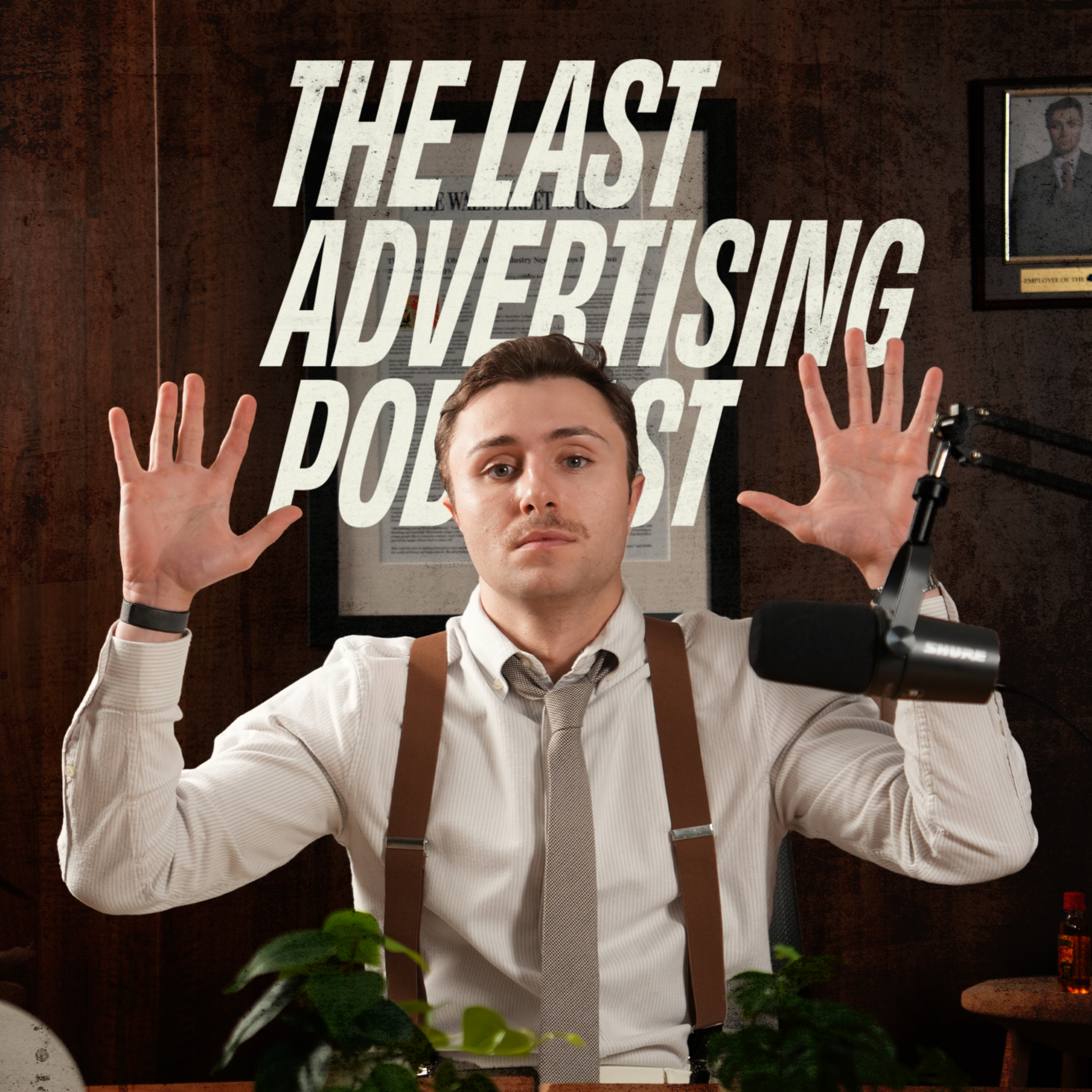
- The Last Advertising Podcast
- How to Make Advertising People Actually Want to Watch
The Last Advertising Podcast28 Oct 2026 · 31m · 13 chapters
How to Make Advertising People Actually Want to Watch | Zac Ryder
In short
The future of advertising as “branded entertainment” that earns attention through audience resonance, not interruption. Zac Ryder argues indie agencies will keep eroding legacy/holding-company systems, enabling bigger creative bets across formats.
Guest backgrounds
Zac Ryder is a leader at Modern Arts, an agency model that combines brand strategy/comms with showrunners, screenwriters, journalists, and stand-up/comedy talent. Modern Arts builds entertainment-first work from briefs, using an agency infrastructure to manage stakeholders and execution.
Key claims
Success should be measured by resonance (audiences want to spend time with it), not reach. Brands should “be the club, not the bouncer,” integrating product authentically rather than relying on logo-only sponsorship. Branded IP should be owned/earned across a multi-asset ecosystem, not rented via ads.
Notable examples
WhatsApp documentary “The Seat” (Mercedes F1 team; Netflix; later expanded into a content ecosystem); WhatsApp World Cup film “The Time Is Now” (Fox/Disney+; Bukayo Saka); “We Are Ayanda” (WhatsApp privacy story; Afghan girls escape via end-to-end encryption; Prime; Cannes Grand Prix-winning film); comic book and gaming convention activations; short-form series for TikTok/YouTube.
Written by AI. May contain mistakes.
Chapters
0:45
Discussing the Future of Advertising
Exploring thoughts on the future of advertising and agency life.
“And I think those things are going to unlock lots of new stuff across lots of different formats, across lots of different media.”
2:14
The Shift from Traditional to Modern Advertising
Contrast between traditional advertising methods and modern approaches focusing on audience engagement.
“I mean, whenever we're seeing consolidation, these mergers happen, layoffs happen.”
4:24
Creating Content that Resonates
How to create advertising content that resonates with audiences instead of interrupting them.
“Like what, I guess, like, what are some of those things that you've created for brands that is the club?”
8:02
Success Stories: Documentaries and Engagement
Examples of successful brand storytelling through documentaries and engaging formats.
“which again, just flips that media model on its ear.”
12:15
The Role of Brands in Storytelling
Explaining how brands can authentically integrate into storytelling without being overtly commercial.
“have the brand play a role in the storytelling really authentically in order for it to work.”
14:00
Story of Afghan Girls' Escape via WhatsApp
Learn how the Afghan girls' soccer team used WhatsApp for their escape story.
“It was the first thing we ever entered as modern arts, which was crazy.”
15:06
Understanding Audience Insights in Advertising
Discover the importance of audience insights in crafting impactful advertising.
“But we use the girls' real messages to each other, right?”
17:52
Exploring New Mediums for Brand Storytelling
Find out about emerging mediums for brands to tell their stories authentically.
“Because that's what agencies have kind of always been taught to do.”
19:38
The Future of Advertising in a Changing Media Landscape
Learn how brands can adapt to a changing media landscape to connect with audiences.
“And those are spaces too where like it's this perfect storm where I think the producers of those kinds of shows and that kind of content, they're looking for new financing partners, right?”
21:05
Building a Modern Advertising Agency
Understand the innovative model behind Modern Arts and its collaborative approach.
“I think, I think we're going to listen to this a year from now.”
Show all 13 chapters
24:10
The Role of Agencies in Creative Projects
Explore the essential role agencies play in ensuring successful creative collaborations.
“We made my partners, Adam and Brooke, to build an agency that's kind of like for this moment, that's set up to be making this kind of stuff from the brief, right?”
28:05
The Importance of Collaboration in Advertising
Learn how teamwork and strategy are essential for successful advertising campaigns.
“it's so important that you guys are in the mix.”
30:00
Connecting with Zac Ryder
Discover how to reach out to Zac Ryder for insights into the ad industry.
“How can people connect with you now that we're done doing podcasts?”

Ask about this episode
Get the gist, explore an idea or ask about something said.
 Claude
On The Last Advertising Podcast, what are the key points of this episode?
Searching your listeningTranscript
Automatic transcript. May contain errors.
0:00The Last Advertising Podcast Hosts: Ladies and gentlemen, you're listening to The Last Advertising Podcast of all time. This is it, our last conversation. It's all done until probably next week, so enjoy this guest. Zac Ryder, welcome to The Last Advertising Podcast of all time. You're giving up podcasting and showing up on podcasts. This will be the last one I'm hosting too. This is it, dude. Let's go out with a bang. All right. What's the theme? What is your life about? What is your agency life about? What are we going to talk about this episode? uh i think this episode we should focus on the future uh we spend a lot of time thinking about the future of all this stuff and where it's all headed so maybe maybe we'll make that the theme that sounds like okay okay the future the end this is the end talking about the future exactly exactly we're gonna burn it all down and then what happens next okay so it'll be like a little time capsule we'll we'll tune in and like how and like it like a year from now perfect and we'll see if if somebody because that is like a year is so much time in agency life like so much change so what do you think the world of advertising is going to look like in a year from now uh august 10th of 2027 um i think a lot of the kind of call them indie agencies that have sort of sprung up in the last couple years are just going to continue to keep chipping away at a lot of the sort of legacy systems and big holding company agencies and people are going to continue to leave those agencies and start new things.
1:36And I think those things are going to unlock lots of new stuff across lots of different formats, across lots of different media. That's sort of the bet of modern arts. It's like we're trying to figure out how to help brands connect with audiences in this crazy new media landscape where the traditional playbook doesn't work anymore. And so what does that look like? And I think you're going to see more and more agencies sort of step into that space and try to kind of take these big swings that, you know, probably aren't possible when you work inside a big kind of holding company infrastructure.
2:14The Last Advertising Podcast Hosts: I like it. I like it. I mean, whenever we're seeing consolidation, these mergers happen, layoffs happen. And when then those creative people create their own things and they break the rules and we'll get into how you're doing that. Can you just find to me though, like, what do you see? Like, it does seem like it's so dynamic right now. Like, what is the quote unquote traditional way? And what is the modern arts way? Yeah, I mean, I think the traditional way sort of says, you know, there's a kind of a playbook to how you reach an audience, right? And you can spend a bunch of media and that'll kind of guarantee you a number of eyeballs.
2:52And then at the end of the project, you're going to kind of look at success based on like the reach, right? How many people you reached, whatever sort of the earned media was attached to that reach. There's lots of kind of, you know, fancy numbers you can kind of slice and dice to get you there. Our approach is really more about resonance and how do we make things that audiences actually want to spend time with and are going to attract an audience. Because I think right now, we all know, right, it's harder than ever to kind of really get in front of people and get them to want to spend time with anything that even smells like advertising.
3:30and so I think it's on it's but it's incumbent on brands to find new ways to show up in that audience's world and give them things that add value to their feed or to their queue or whatever versus sort of interrupting their way into people's hearts and minds like we have this thing we say we say don't be the bouncer be the club right like stop being the thing in front of the thing that audiences want to see, like be the thing, right? Like take a bigger swing, have more ambition. There's all this research that says that like audiences now, you know, they don't care who's making the thing as long as it's interesting to them.
4:10It can be a brand, it can be a creator, it can be a combination of lots of things. And I think the brands that are figuring it out right now are the ones who are really like kind of embracing that mindset and and looking for those kinds of opportunities.
4:23The Last Advertising Podcast Hosts: And what have you guys found? Like what, I guess, like, what are some of those things that you've created for brands that is the club? And I love that analogy too. Yeah. Yeah. The thing I think that everybody kind of points to is we, we made a documentary for WhatsApp last year called the seat, which is on Netflix. It's about what happened inside the Mercedes F1 team after Lewis Hamilton left and the story of this kid they put in his seat, Kimmy Antonelli, who at that point was just a 17-year-old kind of nobody. So we made that doc last year, Netflix acquired it, and then a whole ecosystem of content that lived around it, big activations around it.
5:08It's like a four-month program of storytelling, of which there's this kind of crazy movie in the middle of it that was top 10 in 25 markets on Netflix, right? And fully brand finance thing. We just made another one for WhatsApp for the World Cup about Bukayo Saka, who plays for Arsenal in England. It's called The Time Is Now. And that one was on Fox as part of the World Cup broadcast and then on Disney Plus globally streaming. So, you know, these are things that are really about like tapping into these intense fandoms right around like F1 or around football, especially like with the World Cup.
5:47And so you've got to show up in this really authentic way. You know, those communities are so fickle, right? And if you show up as an advertiser or as a sponsor, they'll kind of sniff that out. But if you can kind of prove to them that like you love the thing as a brand as much as they do as a fan um you can earn all this love um and that's kind of the this resonance thing i mentioned at the top like it's the difference between each and resonance i just want to make this like there's
6:20The Last Advertising Podcast Hosts: this comparison i'm just thinking of right now like what you're doing with whatsapp you're making these things that the audience wants to see or and i don't forgive me if you work on this client i could take it out but like power aid sponsoring the hydration breaks which are basically commercial breaks for the first time ever in the world cup and people were upset with with the hydration breaks naturally because they're new and they're basically commercial breaks yeah and then that i'm assuming that association translated into power aid and that's the bouncer versus you creating the club that's right that that's that's that's a really easy way to think about it it doesn't always have to be that you're making a movie that's going to end up on a streamer.
7:04Like we've made, we made a comic book, um, for a gaming client with the writer of Love, Death and Robots, right. That like the hardcore gaming community lit up for. Um, and we've made series for TikTok and YouTube that are short form, but really like respect the audience and show up in a way that's really like entertainment first. Um, and we just find that like, when you do that, you create a much like deeper connection with the audience. Um, and that, that then translates to like real impact for the brand and like really drives a business. Um, and also like gives the brand, you know, IP that they can own.
7:45Right. And things that, that then the brand has a little bit more control over and that the brand can invest in long-term and think about long-term. Um, so that the, you stop sort of, you know, we say like, stop kind of renting attention, and start earning it or even owning it, which again, just flips that media model on its ear. That definitely requires a client who has ambition and a client who's really forward-thinking. And our WhatsApp clients are that. They're in lockstep with us when it comes to pushing the boundaries of what we can do in all these things. And not every brand has that ambition, nor do they have like the kinds of stories that we can tell with WhatsApp because of the way it's so much a part of our lives and is a part of so many of these kind of like high stakes moments because of the way people use it to communicate.
8:40The Last Advertising Podcast Hosts: Absolutely. So I'm thinking about this now, 2027, August 10th. Like, are we going to see, like, if I'm scrolling through Netflix or on an Amazon Prime and I click on a new movie, do you think there's chances are that it was brand built, a brand funded this sort of thing that I clicked on to watch? I think you'll start to see more of that. I also think you're going to start to see more brands creating ancillary content that can live around those properties on the streaming platforms. You know, right now, especially on a lot of the like ad supported tiers of some of these streamers, like there's opportunity now for brands to show up alongside the storytelling in an interesting way.
9:31You know, our model is unique in that we've been able to make the, we've been able to make the club, right? We've been able to make the thing that, that streamers want to acquire and want to have on their platform. But there's also opportunities now that didn't exist, you know, a year or two ago to show up on that platform in a pretty organic way. Again, the trick is like, if you're going to show up alongside an audience's favorite show, like you have to do it in a way that really like honors it. Right. And like, doesn't, it doesn't put the brand first necessarily. Like it should still have all the strategy baked into it and it should really work to drive the business, but it has to do it in a way that is a bit more of a Trojan horse so that the audience feels like this thing they're spending time with is worth their time and not something they're sort of having jammed down their throats in order to watch this thing that they're there to watch.
10:25The Last Advertising Podcast Hosts: Right, right. And now, okay, so then talk to me like I'm a CMO. It's like a fairly big investment, right? It's like, and I'm not even going to have my logo for the most part on this like the whole time. Like there's no like 30 second ad break in this documentary or this, this YouTube series, let's say like, what value am I getting then if there's not clear call to action for it? Yeah. I mean, I, I think that's one of the things that I think a lot of, it's like one of the big misconceptions, right. Is like that if it's going to be something that's going to live on a streamer, it can't have product in it.
11:02Right. Or it can't, the brand can't show up, but like all of the things that we make for WhatsApp, whether they live on Netflix or Prime or Disney Plus, like they're all, all the stories are told through WhatsApp messages, right? Like we don't, the entire story is sort of mapped out based upon the real WhatsApp messages that are kind of at the heart of the narrative. And so from almost the first frame, like the brand is showing up. It's really a product demonstration if you think about it, right? Like if, if, if the brief is let's talk about privacy, for example, like we made a doc for WhatsApp about the Afghan girls, national soccer teams escape from the Taliban.
11:42Um, that's on prime video. And like, that's a privacy story all about WhatsApp's encryption features. Um, but ultimately like it's this really human story, high, high, super high stakes, life or death, but told through those messages. And so it's an example of like, if you build the thing from the beginning with the brand at the center of it, you can find ways to integrate the brand into the storytelling. It's not an either or. In our experience, you don't have to make that choice. You should actually be able to have the brand play a role in the storytelling really authentically in order for it to work.
12:22And I think that's how we talk about this with CMOs, right? It's not like, hey, you're blindly just slapping a presented by on the front of the thing. Like the app, the storytelling itself is either going to bring the product to life, bring a brand to life organically, or, um, it's gonna, um, reflect the ethos, right. Of the brand, or it's going to reflect some value that you want the brand to stand for. Um, and then everything we make, right. Like I said, it's not like we're just making one movie that's going to live on Netflix. We're going to make dozens and dozens of assets out of that movie, right?
12:58That are going to live up and down the funnel and across every channel you can think of. We're going to activate to premiere it. We're going to do stuff with the local communities to tell the story and get it out in the world. So like, it's a much bigger ecosystem than just like a feature doc, you know, or even the comic book we made, right? Like it's a, it's a comic book, sure, but it's a massive activation with 5 ,000 printed copies in this huge build out we did at a gaming convention to kind of bring it to life. So it's like, once you understand, once you kind of get them to see that you're telling stories across lots of channels and it's a month or two or three or four month program, like it's a much easier conversation to have than just saying, Hey, let's go place a bet on this story that we think could be a cool movie.
13:47The Last Advertising Podcast Hosts: Oh, it absolutely makes sense to me. I'm curious. So the Afghan, tell me more, Like what was the, what was that about again? Yeah. So that, that, that film's called We Are Ayanda. It won the Grand Prix at Cannes a couple of years ago. It was the first thing we ever entered as modern arts, which was crazy. But that came to us as a privacy brief. WhatsApp wanted us to help them tell stories that demonstrate their privacy features. And so our strategists went back and kind of uncovered this really interesting insight that for young women all over the world in really vulnerable situations, like WhatsApp is a lifeline, right?
14:24It's how they find safety. It's how they find community. It's how they escape bad, do tough situations. So that led to a platform called The Power of Sisterhood. And so once we had that platform and we had this sort of underlying idea, we briefed a Peabody winning journalist to go out and find us stories. And she found the story of the Afghan girls national soccer team, this group of teenagers who when the Taliban took over, suddenly had targets on their backs overnight. And through the use of WhatsApp, because it was end-to-end encrypted and it was the only thing the Taliban couldn't hack, they were able to coordinate their escape to Portugal over 30 days.
15:05And so the doc tells that story. But we use the girls' real messages to each other, right? We use their real photos and videos they were sharing on WhatsApp. that is the spine of the story. And then we interviewed a bunch of the girls and their coach and told this amazing story. But that's a good example, right? That's a good example. Incredible.
15:27The Last Advertising Podcast Hosts: Yeah. Just you even explaining like the insight to platform, to briefing the journalist to find the story. I don't know how this journalist found that story. Like I want to, I should talk to this person too. That's so amazing. Yeah. Yeah. I mean, it's funny, like, It's a very old school process, right? Everything we do starts with a brief, right? Everything we do is about what's that insight? What's that truth? What's the audience insight? Everything that all those fundamentals, right, that we grew up learning in the ad agency world apply to what we're doing, except the output is different, right?
16:07The execution is something that maybe we wouldn't have ever thought of in years past. And now that the world's changing, it's becoming more possible. But how we get there is very much familiar to our clients. They know how to work with agencies. And so when they work with us, we speak a language that they speak. We understand internal processes and can help them navigate through stakeholders how to sell these things in. but it's always sort of like born from a brief, right? That gets you to an insight and that unlocks a story. And then however that story comes to life is really dictated by the audience, right?
16:47How does the audience, how does the audience spend time watching stuff? What are they into? How do we tell those stories? So like the F1 doc, the seat, like we knew because of Drive to Survive and a bunch of research we did that audiences of f1 f1 fans they love seeing drivers with their helmets off right they want to actually get away from the track and spend time in these team in these guys these drivers lives and get to know the team like back at the factory away from the track and so like when you start from that understanding and how an audience wants to have these stories told, it's much easier than to figure out what's the format, what's the tone, what's the thing that we're aiming for.
17:33And you kind of build for that. I think one of the things that a lot of brands do in this space, it's kind of a mistake, is like they get a little too clever and they try to like do the thing that's like never been done before or come at the storytelling from some really novel place. Because that's what agencies have kind of always been taught to do. But ultimately, like if you're trying to show up in an entertainment context, you kind of have to show up in a way that feels like it belongs in the world of stuff the audience is already consuming. And so we spend a ton of time understanding like where the audience is, what are they watching?
18:13How are they talking about that thing on Reddit or in any of these fan communities? And once you have that, then you kind of know, okay, here's the course we have to chart to get there. but again it's not about like reinventing the wheel right and trying to figure out what's a newfangled way to tell that story because because now you're into like the entertainment side of
18:34The Last Advertising Podcast Hosts: things and it's like there's uh you know we are trained to be entertained with some of these classic or some of these different like mediums and like i don't want to have to like if i'm relaxing i want to be entertained i don't want to learn a new way to consume it like i know my ritual of scrolling on my phone or throwing on Netflix at nighttime after work or on the weekends. I don't want to be learning a new way to do that. But I am curious, Zach, what is a medium that you guys are excited to try out? So you've done a comic book, you've done documentaries. What do you guys want to do next or maybe that you could talk about with us?
19:14Yeah, I think one of the spaces that's really interesting is the live event space. We've been talking about doing stuff like in a stand up comedy context, right? Doing stuff, live theater, like there's all these spaces where brands really haven't shown up before that I think are really ripe for like interesting storytelling. And those are spaces too where like it's this perfect storm where I think the producers of those kinds of shows and that kind of content, they're looking for new financing partners, right? So they're open to having conversations with brands about coming into these things early.
19:55I think that's a really interesting space to play. I think we're still trying to crack like what's a cool audio book. I think a lot of people spend time with audio books. that's a really overlooked space.
20:08The Last Advertising Podcast Hosts: Damn, I love audiobooks. Yeah, I mean, I think there's so much opportunity. If you just think about how we all spend our time, right? And what are the things that we consume and how do we entertain ourselves? There are still these white spaces that brands can, I think, find authentic ways to show up in. And I think those are the things that interest us. We're doing lots more stuff in the kind of the, call it the traditional entertainment space, right? Scripted things, unscripted things, movies, series, but then also like stuff for TikTok, right? Stuff that's really short form, stuff that's scripted in that space.
20:49So there's all kinds of things happening. And I think it's because the media landscape is like so broken that I think brands are just trying to find any entry point they can where they can really like make a deep connection with their audience.
21:04The Last Advertising Podcast Hosts: Do you think there's any turning back like, you know, a year from now? I think, I think we're going to listen to this a year from now. And I think we're going to feel like, um, there was even crazier stuff that we hadn't even considered that was starting to come out in the world because I just think that's where everything is sort of headed. Like there's so much, there's so much media, there's so many media dollars out there that just aren't working for brands. Right. And I think they're trying to find new ways to make those media dollars work really well. And I think a big part of that is actually rethinking the way you spend media and actually investing in projects that might find their way onto a streaming platform or might find their way onto a Broadway stage or might find their way into a comic book store versus just sort of, again, spending money to interrupt your way into people.
22:04lives.
22:05The Last Advertising Podcast Hosts: I freaking love it. Yeah. Yeah. It's an interesting exercise of like, for people listening, it's like, well, check what you bet. Check the things that you're doing that entertain you. And how could you build like, how could a brand build their way into this organically? Yeah. Like, you know, for me, it's scrolling on my phone for the most part, but like, everybody's got their own routines. Yeah. Yeah. We, so one of the things that we did when we started Modern Arts was we actually built a new kind of agency. It's a new model that combines expertise of showrunners and screenwriters and journalists and stand-up comics and all these different types of creators with all the trappings of an agency, right?
22:51So really good strategists, great comms planners, creative directors, producers, all the things that kind of make brand work go. But by bringing those two things together, we can make stuff that just doesn't feel like advertising, right? Because we're building it with people who don't have all the baggage we all have, having grown up in agencies like I did. We say we love working with people who have no idea like what a can lion is or like what a one show pencil is. They don't have that like context. So like when they come at something and they get in a project with us in a kind of writer's room setting and we're figuring it out, they're much more interested in like what's in it for the audience, right?
23:32And like that's a constant like tension that I love. We're pushing, you know, we're pushing towards ideas that really like have the brand, you know, baked into the idea from the start. And these folks are coming in and they're working on these projects with us and they're saying, yeah, yeah, yeah, I get that. But like how do we pull that back more toward this center point where it's really there's something in it for the audience that still delivers on something for the brand. But without that sort of like tension and without that kind of like beginner's mindset, you know, these people coming into these projects, you end up just making stuff that feels like ads, right?
24:09And so it was a really conscious decision. We made my partners, Adam and Brooke, to build an agency that's kind of like for this moment, that's set up to be making this kind of stuff from the brief, right? So we're going to pull in. We did something a couple of years ago with a writer from The Bear. We brought him in on this WhatsApp project and brought him in at The Brief and had him kind of wrestle with how to tell the story with us. And because of that, it's very different. We've brought in writers from Pixar, Family Guy. We'll bring in people from Sesame Street, put them in the mix with us, with our creatives, with our creative directors, and kind of kick the ball around.
24:52and the thing that comes out at the other end of it usually doesn't feel like advertising. And that's the stuff that really seems to resonate.
25:00The Last Advertising Podcast Hosts: Yeah. I mean, and you're helping out those writers. You're helping create something that's entertaining for the masses and like all the actors that are involved, like you're creating opportunities for the economy too, which I think is really cool too. Yeah. When we were, so before we were at, before we started Modern Arts, my partner Adam and I, we've been partners now for I think 18 years or something crazy. Um, we were at anonymous content. Um, and we were there for like seven years and we built a division there called the lab. Um, and the thing that we learned at anonymous was how to work with screenwriters and show runners and all these directors and all these different types of creative people, um, bringing them into our projects really on.
25:42Cause anonymous, you know, we all know it in the brand world, let's say a commercial production company, but anonymous is a filming TV company. It's a management company, right? It manages a thousand actors, writers, and directors. and so we were able to pull those people in to our projects so when we started modern arts it was like okay let's take what we learned to do there and surround it with like proper agency infrastructure and build an agency with that model in mind um and because we've come at it through that like weird side door um we're able to pull all these interesting people into these projects with us and to your point like they're starving for opportunities right they're looking for new ways to kind of like obviously pay their rent, but also just like use this skill set they have, right?
26:26Of moving audiences and telling stories in a new way. That probably wouldn't have been as likely, you know, five, 10 years ago. Like when Adam and I started making this work, call it 10 years ago, we were still at 180 and then eventually at Anonymous. I think there was a lot of suspicion, right? On the talent side that like, we were just out to make long commercials. And so you would have a hard time convincing a screenwriter or a showrunner or a team of writers to come in on a project. But now that there have been so many wins on the board, stuff we've made, there's so many other awesome agencies and companies doing this kind of work.
27:06It's a lot easier, I think, to win those folks over and to get them to want to jump in on these projects with us. So it's a really interesting time to be doing this kind of work because I think before the writer strikes, right, the math was different. And I think post writer strikes, I think a lot of people are looking for new ways to kind of do what they're good at. And so this kind of work is suddenly now like a real possibility when they think about how they want to spend their days.
27:36The Last Advertising Podcast Hosts: yeah i think it's so important to have like an intermediate intermediary like the agency like a modern arts to make sure it's all smooth that the clients are happy that you're still getting the entertaining like actual good content understanding the audience because they somebody might be listening to this and be like well i work at a brand what's stopping me from just going right to the screenwriters and briefing them myself that's where i feel like it can get really messy and the strategy falls apart you miss like the big thinking and it could be a big mess too so i think it's so important that you guys are in the mix.
28:07Yeah. You definitely have to have all the infrastructure in order to be able to take these big swings. And by that, I mean, like, you've got to have a killer comms plan. You obviously have to have a great strategy. You have to have really smart creative directors who are able to kind of like continue to kind of shape the thing and mold it in a way that's going to meet the objectives of the brand. Right. But it's also going to deliver for the audience. But with we learned the hard way when we were anonymous, like without the, all of that crazy teamwork, right. That, that agencies bring to these kinds of projects, like you can't really, you might do one, right.
28:45You might get one project off the ground, but if it's not effective, the brand's not going to invest in another and another, like we've now made three things for WhatsApp that are on streamers, right. We've made tons of stuff for them that lives on YouTube and Instagram as well. But like, we wouldn't continue to be building more and more ambitious stuff if it wasn't driving their business.
29:07The Last Advertising Podcast Hosts: Right. Right. So like I always point to that. Like, yeah, it's awesome that it was top 10, you know, in 25 markets and that the seat was the number three most watched sports content on Netflix last year, which is crazy, right? Like that's a brand funded thing that did so well. But ultimately, like what matters is that like it created impact for the brand, right? Like really drove business in a really demonstrable way. And so that's why this year we did something even bigger for the World Cup. And it was an even bigger swing. And that one's on Fox and Disney+. But had it not been working, again, they wouldn't continue to want to invest in these kinds of things.
29:46The Last Advertising Podcast Hosts: I'm sold. So the future, one year from now, we'll see a lot more branded entertainment that will be more entertaining and more brands will be involved. Is that the final takeaway here, Zach? I think that's probably our final takeaway. I freaking love it. How can people connect with you now that we're done doing podcasts? I think, yeah, now that the podcast thing's over, go to modernarts.com. You can find us there on LinkedIn, Instagram. You can click through all that to get to us. You can email us there. I love talking to young people about the ad business and getting into the business. I have a crazy, you know, my own story getting into the business is super crazy.
30:32And like, I think I have, I really like, I like spending time with young people who are trying to navigate this space because it's such a tricky world to get into. And so, yeah, please reach out. Happy to chat.
30:48The Last Advertising Podcast Hosts: Amazing. Well, thank you so much for spending the time. Wishing you all the best. Can't wait to see all the fun stuff you guys make, especially those live events. Keep me on the guest list for those. Cool, man. Yes, you're in. Now that you're done podcasting, right? You're going to have some time on your hands. That's right. As long as there's no bouncer there. So cool. All right, dude. Thank you.
From the publisher
How do you create advertising that people actually want to spend time watching?
Zac Ryder, Co-Founder and Co-Chief Creative Officer of Modern Arts and a member of Adweek's 2026 Creative 100, joins The Last Advertising Podcast Ever to explain how brands can turn traditional advertising briefs into movies, documentaries, and entertainment that audiences actively seek out.
Modern Arts has helped WhatsApp create documentaries including The Seat, which reached Netflix's Top 10 in 25 markets, and We Are Ayenda, which tells the story of the Afghan girls' national soccer team's escape from the Taliban through their real WhatsApp messages.
Zac explains how his agency combines traditional advertising strategy with Hollywood screenwriters, showrunners, and journalists to create entertainment that serves both the audience and the brand.
We also discuss how to turn consumer insights into compelling stories, why brands should rethink how they spend their media budgets, and how branded entertainment can drive real business results.
Plus, Zac shares his predictions for the future of advertising, including why brands could soon be funding live theater, stand-up comedy, and audiobooks.
Whether you're an advertising student, creative, strategist, or marketer, this conversation offers practical lessons on creating advertising that people actually want to watch.
Watch the 500+ other last interviews at https://thelastadvertisingpodcast.com/
More from The Last Advertising Podcast
All episodesWe use cookies.They keep VO running smoothly and help us improve it. Privacy policy