
 Ask ChatGPT

- Podcasts
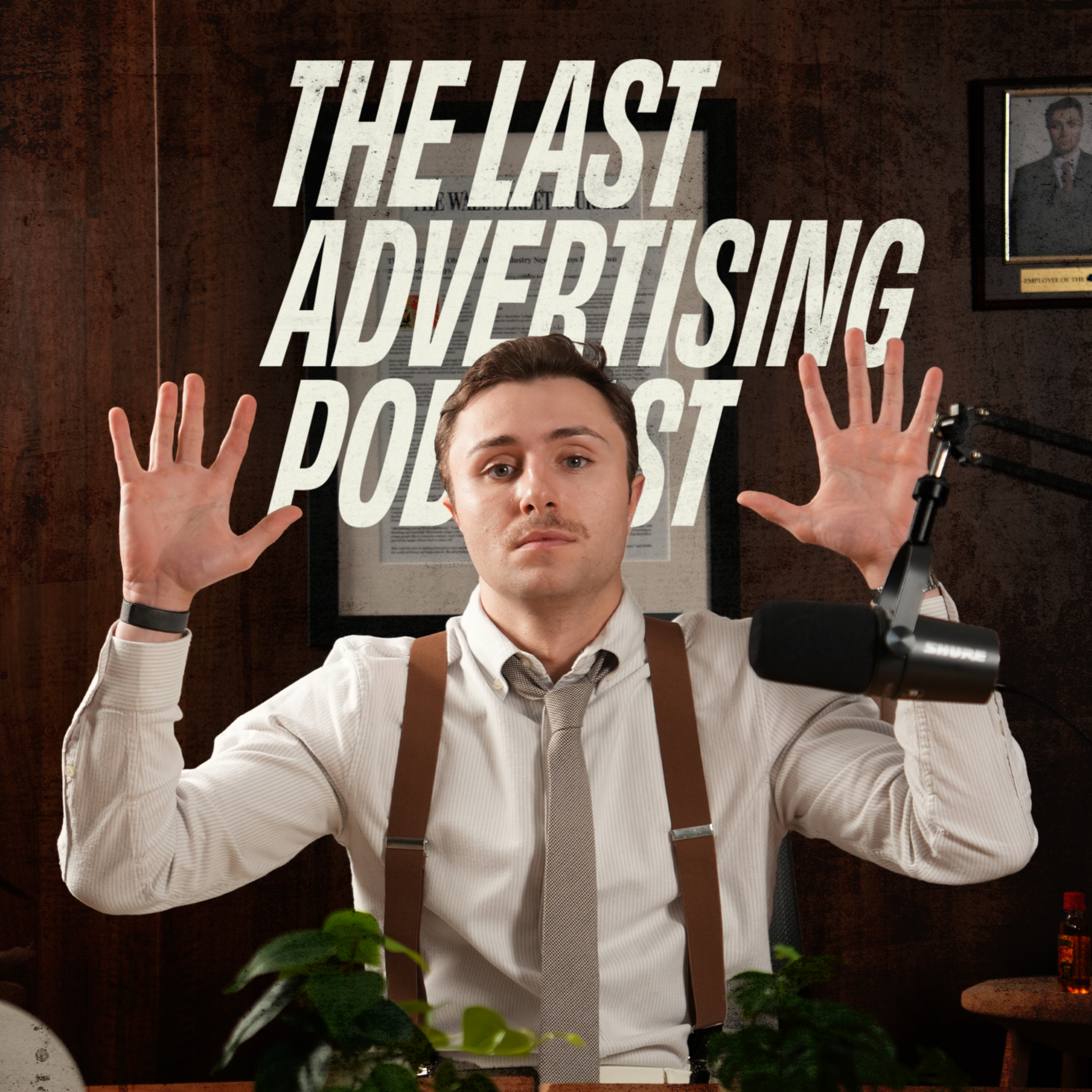
- The Last Advertising Podcast
- What Advertising Schools Should Teach in the Age of AI with Joe Glennon
The Last Advertising Podcast30 Sep 2026 · 30m · 15 chapters
What Advertising Schools Should Teach in the Age of AI with Joe Glennon
In short
What advertising schools should teach in the age of AI—what fundamentals stay constant (brand building, creative fundamentals, iterative concepting) and how to use GenAI without producing “average” work.
Guest backgrounds
Joe Glennon is a professor at Indiana University Bloomington (IU Media School). He’s a senior lecturer and teaches industry-bridge courses like Foundations of Advertising and creative concepting; he emphasizes staying connected to advertising via LinkedIn and industry newsletters.
Key claims
AI can’t be stopped and boosts speed/volume, but it tends to flatten work into formulaic outputs. Schools must teach students to critique, revise, and make work more human. Creativity can be taught mechanically (idea formulas) but must be pushed beyond formulaic sameness through curiosity and taste. Advertising readiness is shown by a collection of artifacts (“identity capital”), not just one finished piece.
Notable examples
Billboard-first teaching (“if you can do it there, you can do it anywhere”); Foundations class energy drink category (Red Bull, Monster, Celsius, Alani Nu) and past categories (Popeyes vs KFC, A&W vs Barq’s/Mug); using AI to generate baseline headlines for a Nike-style pickleball campaign; Uncommon’s merch-drop collaboration as a brand-building example.
Written by AI. May contain mistakes.
Chapters
0:45
Introducing Joe Glennon and his Background
The hosts introduce Joe Glennon, discussing his role at Indiana University and his industry engagement.
“I think the first thing for everybody is just to follow you on LinkedIn if they get nothing from this conversation.”
1:52
Current Challenges in Advertising Education
Joe discusses the rapid changes in the advertising industry and the need for schools to adapt.
“of this episode is like, what should advertising schools, majors, programs teach when the industry is changing like faster than ever?”
3:22
Teaching Brand Fundamentals
Joe emphasizes the importance of teaching brand fundamentals to students as a core element of advertising.
“I mean, you've got my – just I overheard my co-founder, Jack.”
5:02
Practical Exercises in Advertising
Discussion on practical exercises, including billboard ads and brand building strategies taught in Joe's classes.
“in the most basic way before they can start to layer in all the other dynamic storytelling or engagement techniques.”
7:39
Capstone Projects and Real-World Experience
Joe describes the capstone projects at IU that provide students with real-world advertising challenges.
“So I teach a class called Foundations of Advertising.”
10:13
Teaching Creativity in Advertising
The conversation shifts to whether creativity can be taught in advertising and how Joe facilitates this in his classes.
“It comes back, especially if you get a good group.”
12:19
Recommended Resources for Advertising Students
Joe shares essential resources and tools for advertising students to enhance their skills and knowledge.
“to do is get those people, get every student to hit their head on their ceiling.”
14:00
Creative Fundamentals and Content Algorithms
Learn how students can leverage algorithms to enhance their understanding of advertising fundamentals.
“Maybe it's a question of updating typography or photograph style.”
16:29
Integrating AI into Advertising Education
Explore how AI is reshaping advertising education and the need for critical engagement.
“How the heck are you approaching this in the classroom?”
18:36
Motivating Students in a Fast-Paced World
Discuss strategies to encourage students to engage deeply with their creative work despite AI conveniences.
“So I said, all right, let's take the same principle, the same kind of voice and swagger, and let's apply it to pickleball.”
Show all 15 chapters
21:08
Preparing Students for Real-World Advertising
Understand how to prepare students for the demands of the advertising industry.
“um how do you grade something subjective like advertising creative well you find a way and you You standardize as much as possible.”
24:39
The Reward of Teaching and Student Growth
Reflect on the fulfillment of witnessing student growth and readiness for the industry.
“Marinate it, chew, let your subconscious get away from it for a semester.”
28:00
The Joy of Student Development
Discussing the rewarding experience of watching students grow and succeed.
“That's when the world will be able to stop and say, this is the one we want.”
29:10
Connecting and Reaching Out
Joe Glennon shares ways for students and listeners to connect with him.
“How can people reach out to you or if they want to transfer to IU?”
29:50
Innovative Media School Facilities
Exploring the advanced technology and renovations at Franklin Hall.
“So it's all this great limestone with incredible technology.”

Ask about this episode
Get the gist, explore an idea or ask about something said.
 Claude
On The Last Advertising Podcast, what are the key points of this episode?
Searching your listeningTranscript
Automatic transcript. May contain errors.
0:00The Last Advertising Podcast Hosts: Ladies and gentlemen, you're listening to The Last Advertising Podcast of all time. This is it, our last conversation. It's all done until probably next week, so enjoy this guest. Joe Glennon, welcome to The Last Advertising Podcast. You are a professor at the Indiana University at Bloomington. I said the like Ohio State, but nobody does that.
0:23Joe Glennon: Yeah, be careful. Ohio State will come after you just like Disney will. Oh my gosh, yeah.
0:27The Last Advertising Podcast Hosts: Yeah. Well, I went to Illinois. You're teaching at a great Big Ten school as well. IU, really trying to get an understanding on education today. And you're one of my favorite professors out there, at least on social media. It seems like you're active on LinkedIn. You care about sharing opportunities, not just from breaking entering, which I appreciate it, but like any internships, cohorts, programs. I think the first thing for everybody is just to follow you on LinkedIn if they get nothing from this conversation. So thank you for all your hard work there.
1:00Joe Glennon: That's it. If we can't be an entry point for students, I don't know what we're doing here because, you know, the fundamentals are great. Teaching them is great. But also part of my value as, you know, my formal title is senior lecturer, you know, where I don't have that research or writing requirement. I have to stay plugged into the industry just to help our students have that bridge from classroom to career.
1:22The Last Advertising Podcast Hosts: Totally. Every school's got, you know, any school that teaches advertising offers it as a major. I feel like there's a healthy balance between the PhD professors and then those that came from industry, the lecturers here. Great balance of both. I feel like at IU as well as Illinois and like I always, well, to be honest with you, Joe, I would always be closer to the lecturers because I felt like there was like a gateway to the industry. kind of like what you're offering too. But really, I want to get into the subject matter of this episode is like, what should advertising schools, majors, programs teach when the industry is changing like faster than ever?
2:03The Last Advertising Podcast Hosts: And the first thing to set the tone is when I was doing homework for this, I was telling you about this before we got online. In 2017, you had an article from temple where you used to teach uh write about you interview you and you said that in 2017 universities can't keep up with technology obviously that's more true today than ever is that correct in your
2:27Joe Glennon: eyes joe oh it's and just as you said as more than ever before um we see it in every corner of advertising from conducting basic research to figuring out what media planning looks like now And then where do our messages even appear? So as we start to figure out what are those building blocks for a portfolio or for a student's representation of their thinking, what do they even look like these days? Because, you know, in such a content creator, influencer-driven space now where things are up for a day, two days, who knows, poof, it's hard. It's really, really hard to figure out where we need to point assignments, classes, and what are those fundamental elements that will always be there no matter how the sands shift.
3:21The Last Advertising Podcast Hosts: Absolutely. I mean, you've got my – just I overheard my co-founder, Jack. he's going to be speaking to a university and hearing him on a phone call to a professor say if I were trying to break into advertising today I would just make content I would just post videos and content like on my LinkedIn I'm like I don't know like like easier said than done right like there are fundamentals there are things of like coming up with a big idea that are always going to be true. But I want to turn the question to you, Joe. What are those things that you guys can teach that will never become obsolete?
4:03Joe Glennon: Well, it always starts with brand, right? At the center of everything, no matter what the vehicle is that goes out there, you have to understand brand fundamentals and brand building fundamentals. So what is that core brand promise? How does it fit in with the larger marketing story? What does the competitive landscape look like? What does the audience think and feel and fear, you know, those building blocks are essential, no matter what the output is going to be. So whether you're putting together a brand trip for 12 influencers, or if you're putting together a pause screen on Netflix or Prime, right, that great new vehicle that I love, I love the brands that try, I think we're going to interact and do like a trivia question.
4:46Joe Glennon: All right, but you know, the pause screen is there. And everything in between. You know, I'm a sports nut, so I'm watching sports all weekend, and I still see, you know, traditional 30-second TV commercials. So, you know, in short, we have to teach the students how to walk before they could run. We have to teach them how to tell the brand story in the most basic way before they can start to layer in all the other dynamic storytelling or engagement techniques. So, you know, one of the things that my creative class leads into heavily is good old-fashioned billboard. Give me that rectangle. Because if you can do it there, you can do it almost anywhere, right?
5:25Joe Glennon: It's the harshest, most unforgiving environment. Anything else after that is easy. You want me to do a brand video? Great. You want me to plan some sort of interaction thing at that union station? Great. Because I've done it and I know the basics. So that's that tug of war. You know, so as our students get to the end of their time with us. We take that basic building stuff and then they do, here's the billboard, but oh, by the way, here's a collection of really dynamic social content that understands the social first mentality. Here's something that understands how to get some earned media. And here's a way to really tap into that understanding and that insight behind a consumer.
6:04The Last Advertising Podcast Hosts: I love this. And it's hard to explain, especially on a short podcast like this, but the one way that I experienced this was an ad agency, I'll say the name, Uncommon. We went to them and said, can we work with you all on a merch drop? Like break entering never has done a merch drop. So they took their teams, invited us in for a review of the creative work. I'm revealing this all. Hopefully it's out by the time this is coming up. But essentially they understood our brand better than we did. Having a neutral third party perspective, identify that we have access to these creative professionals. You have like this kind of like, your name is breaking out during this like kind of bad boy spirit.
6:48The Last Advertising Podcast Hosts: Like let's leak the most important emails that you have through t-shirts. So the Jeff Goodby's, like we have the phone numbers of Jeff Goodby, David Droga, put it on a t-shirt, make a limited edition run. That's kind of like the spirit of like, we want to grant access to the world. like we want to eliminate barriers for people to reach these people and that's something that i feel like is a great example of like building a brand and you've been doing it for so long that only a really good ad executive can come up with an idea like that is there anything that comes to your mind a brand like building exercises or like just fundamental things that you have your students do beyond the billboard of you know even just like a swot analysis like what are those tried and true things that you go back to every single semester.
7:39Joe Glennon: Absolutely. So I teach a class called Foundations of Advertising. And it's really a microwave version of any sort of challenge that you may get on the agency side. And we pick a category with a clear leader and with some potential challenger brands who might be able to elbow their way up to either number two or number three. And through that process, so this semester we're working with the energy drink category. Red Bull, you know, the OG, can't mess with them. Monsters right on their heels at about 30 % share. So we've got Celsius and Alani Nu, you know, try to shuffle. Man, it's an interesting exercise in not just messaging, but also breaking into a category and trying to recruit new people into that category versus more of a traditional positioning thing.
8:27Joe Glennon: Previous semesters, we've done fast food fried chicken, Popeyes and KFC. I've done root beer, you know, again, where A &W is the kingpin and barks and barks and mug try. So we use those guinea pigs as a way to think about everything from, again, from the competitive landscape to the consumer to. And we do it in that way where it's we divide the class in half. So it forces everyone to really think through decisions that don't normally get considered. I love that.
9:03The Last Advertising Podcast Hosts: No, yeah, those are great. I think the brand basics are so important. It's also the most fun, like to build a brand from scratch. That was what my, how I did breaking and entering. It was all the learnings from undergrad, senior year, like, well, I've learned the concepts and I, you know, I practiced the theories. We did some spec projects here. Can I apply this to something of my own. And that's how I built break entering. I can't stress how fun it is and how difficult it is and how lasting it needs to be. And like the aperture there. So the things that you're doing, I think are great. And usually there's like a capstone.
9:40The Last Advertising Podcast Hosts: Do you guys have a capstone at IU? We do.
9:42Joe Glennon: We have a traditional campaigns class, you know, where we bring in a real world client. They present us with what their challenge is and the students go off and do everything from research through media plan. Yeah, it's a tight 15 weeks, but it's really useful for everyone because our students, you know, they have different focus where some are creative, some are planning, some are media. It brings them all together and they can finally reconnect the dots that they saw earlier in the program and probably, you know, forgot most of it, which is natural. It comes back though.
10:14The Last Advertising Podcast Hosts: It comes back, especially if you get a good group. This is a group sport. It's a team sport advertising.
10:20Joe Glennon: So I'm sorry, but exactly team sport. I call it a circus tent, you know, because there's so many different types of performers under there with the same goal, which is to dazzle an audience.
10:33The Last Advertising Podcast Hosts: Totally, totally. And I think people can get bogged down in research as well. This is another side tangent. Sometimes like minimal research and like a really good gut feeling, a really strong insight, You can then focus on the creative work there, but I'll let you do the teaching in your classes and stuff like that. What I am curious about is through your years, 15 plus years of teaching, do you think that you can teach someone to be more creative? When they take your class, they start with you, they're done with you. Can they be more creative when they're done with a Joe Glennon class? Absolutely.
11:09Joe Glennon: Everyone has a ceiling on where they can get creatively. Most people have a ceiling in terms of the raw craft, whether it's writing or design or, you know, editing or whatever it might be. But the great paradox is creativity can be more mechanical than anyone wants to admit. And we can see a great example of that if, you know, if anyone subscribes to, and they should, any student should subscribe to, the deck of brilliance. you know and where they break down hey here are 45 different formulas that can get you to a really good idea based on once you have an understanding what the need is now the challenge becomes uh yeah we can follow formulas but you can't have the work be formulaic and that's where you have to start to break through and that's where helping students develop their curiosity and develop their taste and their body of prior knowledge.
12:01Joe Glennon: So you put all those together.
12:04The Last Advertising Podcast Hosts: I mean, sometimes it's
12:05Joe Glennon: simple developing that year for alliteration or balance or paradox within a headline. So absolutely. So we can teach anyone to be more creative. We can get them. What I always want to do is get those people, get every student to hit their head on their ceiling.
12:24The Last Advertising Podcast Hosts: I love that. How do you like, so then you said the deck of brilliance, what other like resources and tools like would you recommend that you would make mandatory if you can wave a wand to every ad student or anybody that wants to break into advertising that they would, they would have to make it mandatory for them to subscribe to read, watch, listen to what are some of those things, some of those books, perhaps that you would make mandatory.
12:49Joe Glennon: Yeah, even before we get to the books, just everyone should be opening their email every day. And whether it's Muse from Clio or Ad Age or AAF or those newsletters, Little Black Book, those newsletters should be pouring into every student's inbox every day. And they should be looking at that stuff and then reverse engineering says, where did this stuff come from? You know, on a most basic level, you know, we go back to the cornerstone book. Hey, Whipple, you can't avoid that. So I have, you know, chunks of that that I'll hand out. And, you know, part of it, too, is students say, well, you know, some of it's dated.
13:26But, yeah, yeah, let's figure out what isn't.
13:29Joe Glennon: And let's also be smart enough to see that we can take what's happened before and was successful before and leap forward. Old communication arts. I love taking old-fashioned, you know, those great, you know, full-spread print ads that don't exist anymore that make old guys like me weep. We spent some time in one of my classes where we turned those into Instagram posts just to see humans are humans, brands are brands, the vehicle may have changed. Let's update it. Maybe it's a question of updating typography or photograph style. Maybe it turns into a carousel instead of this thing. But it's all there.
14:08Joe Glennon: So that muscle memory of creativity is there. And then Dan Elkin's great book on the self-help book for copywriters. Even the most word-averse art directing student should read that because it helps them speak the same language as the other side of the aisle and it helps strategists understand. So that's, you know, who else is another great one? Julian Cole, a fantastic strategist. He's all over YouTube. You know, I steal his stuff all the time. I should buy him a beach house for what I've been stealing from him. So really, once students get into that pipeline and let's, you know, thank the algorithm gods for once.
14:51Joe Glennon: Once you start feeding yourself content that's ad and brand related, the algorithms are going to reward that. You just have to be smart enough to pay attention. and when something's really good and juicy, you better have that thick swipe file somewhere on your desktop.
15:05The Last Advertising Podcast Hosts: I love that. I love that. Yeah, the algorithm does a great job. If you want ad news, it'll get served to you. I've talked to so many ad executives doing research and you'd be surprised, a lot of these people are not subscribing to these major ad-grade publications. But what they are doing is they're following on their Instagram. So when they are scrolling, that it'll just pop up natively, just randomly. And that's maybe because they're super busy and they're already broken, so they don't need to be as in-depth. But that's something that every student is already doing with their screen times going up.
15:43The Last Advertising Podcast Hosts: Just get that in there, follow the right accounts, search those things on your algorithm, share the things, all the things that we know to reinforce what you're being fed. I love that. So we're talking about the fundamentals. Building a brand, understanding the basics of copywriting with like, hey, Whipple, and art direction too, and the concepting process, Whipple would say, write 100 lines essentially, think about these different aspects of it, and just get to writing. And your first 20 ideas won't be good necessarily, therefore, maybe your 60th idea or headline will be good. It's that volume approach.
16:22The Last Advertising Podcast Hosts: I believe that would be Whipple's general guidance, unfairly paraphrased. But today now, the main topic of AI, how is it changing the genre of AI where you can have it prompted to come up with 1 ,000 headlines if you give it some parameters here? How the heck are you approaching this in the classroom? Can you stop it? Do you encourage it? How are you teaching with AI now?
16:50Joe Glennon: You can't stop it. And you'd be a fool to try to stop it and you'd be a fool to walk away from it. You cannot beat the speed and the volume of any Gen AI system, whether you're looking for headlines or visuals or all of it, basic brand research. and that's great so let's lean into that but really most of what the output is is it's it's a race to average right and that's the way the whole function so if you want your stuff to be average keep bopping along my mission and how i preach to my classes all right we're going to start here's here's our baseline what's working what isn't how do we make this better how do we make it newer?
17:33Joe Glennon: How do we make it more human? How do we match this up to some of the insights that we may have unearthed? So it's a great place to start. It's necessary to challenge it. It's necessary to revise and review. And then you have to look for that creativity because most of it will be very flat. It goes back to it's using the same formula. I talked earlier about formulas and formulaic. We've got to push past that. But to stick your head in the sand and say it doesn't exist, that's a problem. So let's critique the stuff that it's producing. Let's wonder why everything has that sepia wash on it when it comes out.
18:15Joe Glennon: Just little stuff, then that becomes big stuff too. Why is most of the typography centered, which is not always the easiest thing to read? So we've got to challenge these things. And we'll get there, and it helps the students, help them develop the muscles needed to make new and inventive things in the face of of formulaic
18:35The Last Advertising Podcast Hosts: i'm just thinking how funny it would be if you gave an assignment um let's go back to the billboard the the brand basics and you gave out like a billboard assignment for a mug root beer and then you came on day one of that assignment and you're briefing them you have already all the ai headlines and all like the spec work of what AI has done and you flip through it and like these are the average like this is like I know you might be thinking like this is good to use but to show you that you could use AI too and this is all basic stuff here that would be I'd be blown away
19:12Joe Glennon: if a professor did something like that well welcome to my class last semester Gino because we did a project we were inspired by the fantastic black and red Nike marathon out of home that came last cycle through the marathon season. So I said, all right, let's take the same principle, the same kind of voice and swagger, and let's apply it to pickleball. So I put my creator brief into AI and showed it. I said, convert instead of red and black, we're going to use yellow, you know, the pickleball yellow and black. And, you know, outcome, all the headlines, all about the kitchen, right? Because that's one of the key pieces of pickleball culture.
19:50Joe Glennon: so you know even before the students dove into the brief and dove into their version and their search on ai that was a step ahead just to say to them listen i know where you're going and it's okay to go there but let's have this conversation about how do we get things better different more
20:05The Last Advertising Podcast Hosts: inventive more insight driven yeah yeah so it's like you're kind of like you're you're acknowledging it you're accepting of it but you need to push students further how do you motivate them like when the answers are so easy and even myself, I fall into this sometimes as well of like, I can easily get this in two seconds. I can save that time and do other things as well. I could do more at volume. Like, I guess, how do you encourage a student to really kind of like to, to, to push beyond, even though it's going to take more time and to really care? I think caring is so important now. How do you even begin to have those conversations?
20:47Joe Glennon: that that's the age-old question going back to you know the feet of aristotle uh there are going to be students who are intrinsically motivated they want to do great just for themselves and the desire to be the best version of themselves and produce work they can be outrageously proud of but there are students also motivated by grades and yeah absolutely grading is part of it um how do you grade something subjective like advertising creative well you find a way and you You standardize as much as possible. And then, you know, the reality is there are students who will be just very content. So, listen, I'm going to bop along and I'm going to get to that formulaic level.
21:26Joe Glennon: And you just have to, okay, you have to recognize that and support that. So, you know, part of our job, I think all of us on our side of the podium is to try to get a sense of who our students are, identify the ones that have that spark lit inside them. Again, whether it's they want to do it for themselves or sometimes they're chasing a grade and that's fine. And recognize that there are students who will be content and find that way to dance around, help the students dedicate resources accordingly. We dedicate resources accordingly and we find that spot together.
22:00The Last Advertising Podcast Hosts: Yeah. I guess after teaching for 15 plus years, what would you say separates your best students?
22:09Joe Glennon: It's two things. It's curiosity and work ethic. One of the things that makes the study of advertising hard is the rest of the university is set up against us because you complete one paper, you hand it in, you take one test, you hand it in. Advertising is iterative, right? It's version after version after version after version. So the students that have the work ethic to grind through and get to that third or fourth version, and then the ones that have that curiosity to ask, why isn't this where it needs to be? Or the curiosity that pulls input from the world around them to help inform the work they're doing.
22:44Joe Glennon: Those are the students that are wildly successful. Yeah, I think it's helpful to understand, too, like every assignment that you get could be portfolio worthy.
22:56The Last Advertising Podcast Hosts: and even though it's done and you submitted it and you got a good grade on it most likely if you didn't do a good job like it was kind of a waste of time because like you know you have four years essentially to break into advertising unless you plan on going to a portfolio school if you do a good job on every assignment in theory to the best of your ability and you iterate and you go above and beyond you might have five to six portfolio pieces or things that you can put into a website by the time you're done with school and save you the time and money to then have to go to a portfolio school. You won't have to do that.
23:32The Last Advertising Podcast Hosts: I think that's something that advertising is different. It's a collection. Maybe like in art programs or an MFA, you might have like a gallery of some sort, but advertising does too. And not many majors is a collection. Would you agree?
23:46Joe Glennon: Yeah, it's one three-credit class is equivalent of about a 40-hour work week in terms of classroom time. So if you're going to take that and if you're going to sort of dance your way through it, just like you said, Gino, it's a wasted opportunity. So we have – at IU, we've got a class. It's called Creative Concepting, but it's really Creative 101. It's like this is how you get your feet in there and start to get your hands dirty. And we recognize from day one and we tell the students, when you're done here, you're not going to have those finished portfolio pieces. But you're going to have six to eight to 12 really interesting things, germs of ideas or the start of ideas, so that when you get to our portfolio class, you're not flat-footed and you're not burning jet fuel to get to that first stuff.
24:38Joe Glennon: So my job, because that's one of the classes that I teach is that creative concept being the creative 101, is to tell the students, remind the students, here, it's not a fully formed idea yet. Marinate it, chew, let your subconscious get away from it for a semester. Maybe it's two semesters. But then you hit the ground running and make the most of that time in intense study with the portfolio professors. so when you get, you know, so you're looking at March of your senior year, because if you're doing it around graduation, it's probably too late. March of your senior year, your book is tight enough to show to the world.
25:15The Last Advertising Podcast Hosts: Interesting. Yeah, you're setting the foundation early on. It builds into the curriculum. That's great. I mean, I— Yeah, they get, you know, they get the idea,
25:23Joe Glennon: and then what they do is they go off and their craft gets better, right? So it's—creator concepting is just a total sandbox where art and copy and strategy and management students are in there just wrestling with ideas. And then they go off and they get better at the craft of design, of art direction, of writing, of strategic development. And, you know, with maturity and with the development of craft, they come back to those ideas in the portfolio phase. And it's so much more effective, so much more efficient use of their time with that little separation and the ability to focus more on craft.
25:59The Last Advertising Podcast Hosts: Yeah, there's nothing like walking away from a problem after beating your head on it for hours and hours. That is one of the tried and true ways. So it's like you're building that in there. I think that is fantastic.
26:13Joe Glennon: Yeah, your best creative director is you plus time.
26:19The Last Advertising Podcast Hosts: I've never heard that before. That's fantastic. I'm going to use that. Take it away, Bronwyn. I guess my last question then for you, Joe, it's been a pleasure. Knowing what you know now and also in the foreseeable future, what makes a graduating student genuinely ready for day one at an ad agency or in-house brand team, creative in-house studio? What makes that student ready?
26:55Joe Glennon: They need to be able to clearly project to the recruiter their own readiness. So, I mean, that's not really answering your question, but it is. So they need to have a collection of work, whether it's a traditional portfolio or some other collection of artifacts and entities that demonstrates to the people on the other side of the table how they think, how they feel, their drive, their curiosity, their interest in the industry. So whatever those things might be, right? Again, sometimes it's a traditional portfolio. Other times it's what we like to talk about identity capital, right? And it's this idea of what have you done with your time, whether in class or out, that shows the world who you are, right?
27:41Joe Glennon: Don't tell me you're a comedian, make me laugh. Don't tell me that you have an interesting point of view or you're good with words or you love Photoshop or you want to shoot video. Don't tell me that. I have to be able to feel that when I meet with you. So, you know, you've got to walk the walk. When they're ready to walk the walk, that's when they're ready. That's when the world will be able to stop and say, this is the one we want.
28:05The Last Advertising Podcast Hosts: It's fantastic. It's fantastic. And how does that make you feel when somebody is graduating before they come into your office hours, which, you know, students should do more of, and they show you the final asset, whatever that they have, whether that be a portfolio or an Instagram page or whatever it might be. I guess, how does that make you feel, you know, if you've seen them for four years develop on the professor's side?
28:29Joe Glennon: That's why we get out of bed each day, you know, and put up with all the other, you know, sometimes ad veterans like me, we trade one set of frustrations for another when we start to teach. But at the end of the day, it's the same as any other output. We have passion and frustrations. It's like, all right, this is why. When I'm sitting on the beach last week getting ready for the semester to start, in the back of my head is, you know what, there's going to be another group, and a couple of them are going to be just like, you know, name A, B, and C, and they're going to go off, they're going to leave the nest and come back and tell us stories, and that's what it's all about.
29:08The Last Advertising Podcast Hosts: Fantastic. Joe Glennon, thank you so much for taking the time and all the advice here. How can people reach out to you or if they want to transfer to IU? I mean, the football team is looking pretty good again as well.
29:19Joe Glennon: Come join us in Bloomington. It's the quintessential college town. It's an amazing, safe incubator for thinking. People say Bloomington's not near anything. That's an asset. So come join us. LinkedIn's the best place to find me, or the IU Media School website has my bio, all my contact info. Come on down. I'm here in the basement of Franklin Hall. I'd love to talk to everybody.
29:42The Last Advertising Podcast Hosts: Didn't you guys get renovations of Franklin Hall a couple years ago?
29:46Joe Glennon: Yeah, so we're the original library and burses office is now the media school. So it's all this great limestone with incredible technology. Just the podcast microphones alone in this building makes your head spin. Oh, my goodness. Don't tell me that. I'm going to have to come over there and set up shop. You have an open invitation, Gino, whenever you and Jack want to hop in the Chevy convertible and make a road trip. Amazing. Well, thank you, sir. I wish you all the best and all your students the best, too. Thank you. Thanks, Gino.
From the publisher
Advertising changes faster than universities can rewrite a syllabus, but Joe Glennon believes the fundamentals still win.
The Indiana University senior lecturer and former creative director joins The Last Advertising Podcast to explain why every idea still starts with the brand, how AI creates a race to average, and why curiosity and work ethic separate the students who break in from those who blend in.
Listen to the other Last Episodes at https://thelastadvertisingpodcast.com/
More from The Last Advertising Podcast
All episodesWe use cookies.They keep VO running smoothly and help us improve it. Privacy policy