
 Ask ChatGPT

- Podcasts
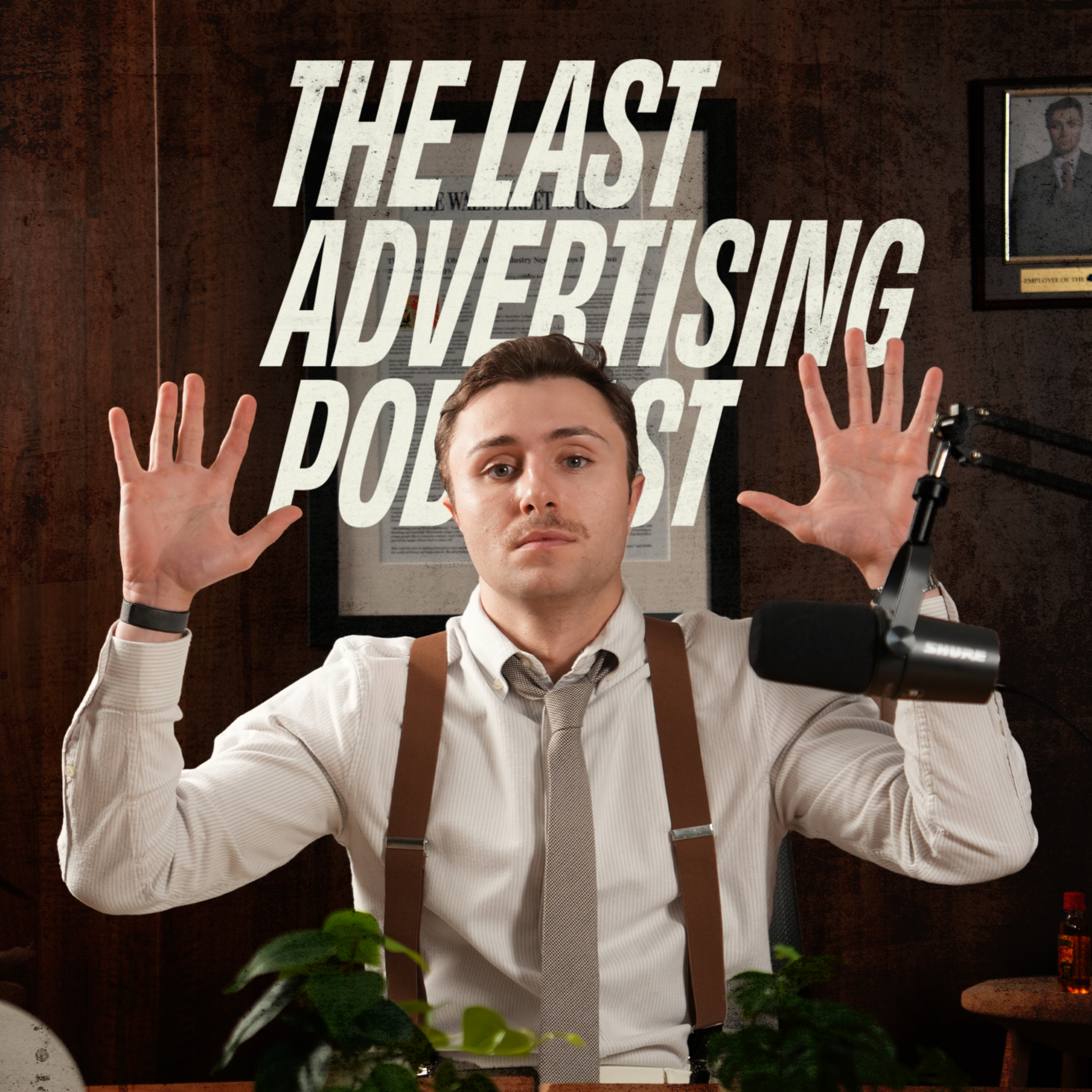
- The Last Advertising Podcast
- Before We Quit, Let’s Finally Break Into Advertising
The Last Advertising Podcast12 Aug 2026 · 33m · 15 chapters
Before We Quit, Let’s Finally Break Into Advertising | Jonathan Ogle
In short
Jonathan Ogle (Infinite Agency founder/principal) discusses breaking into advertising without prior agency experience, hiring and interviewing tactics, using AI as a tool, and how integrated campaigns should be tied to measurable KPIs. He also shares award-winning campaign examples and why clients must define the real problem (not just urgent tasks).
Guest background
Ogle grew up exploring in Roswell, New Mexico; studied at SMU in the early 2000s; pursued music (drummer in an emo/pop-rock band) and toured after a record deal. He later co-founded Infinite Agency with a partner, starting right after graduation and building the agency over ~16–17 years.
Key claims
Specialize in one problem and get “really good” early; respond to rejection; be yourself in interviews and avoid signaling “beginner” (e.g., graduation photo, “Open to Work” banner); AI is another toolset; define KPIs and create integrated strategy across channels.
Notable examples
Six Flags character “killed off”; Primanti Bros “1866 bad wings/sad wings” campaign (self-suing to prove better wings) drove double-digit traffic and p-mix growth in six weeks; Southwest Airlines experiential agency of record; mentions award-winning work with listening/response concepts.
Written by AI. May contain mistakes.
Chapters
0:45
Adventurous Beginnings
Jonathan shares his adventurous spirit and unconventional path into advertising.
“I grew up in the desert in Roswell, New Mexico.”
2:44
Starting from Scratch
Discussion on starting an agency without prior experience and overcoming challenges.
“But so you I graduated in like, you know, the early 2000s.”
4:34
The Music Career Influence
Jonathan discusses his background in music and its impact on his confidence and creativity.
“So it's like when you go into a pitch conversation, it's probably not as scary.”
7:51
Lessons from Rejection
Exploring the theme of rejection in creative industries and how to bounce back.
“It was just like, they were trying to push that, that feeling.”
9:51
Identifying Strengths in Advertising
Advice for breaking into advertising by honing specific skills and strengths.
“I think for young people, you know, you get your book ripped up by a creative director that worked at some big shop or like some, you know, client tells you that like this idea is totally off.”
11:59
Adapting to Change with AI
A discussion on the role of AI in advertising and the importance of adaptability.
“Like if you can't identify that by your senior year, then it happens a lot.”
14:00
Hiring Insights in Advertising
Learn the key qualities to look for when hiring in advertising roles.
“You're two years, you know, AI has been around for a couple of years now.”
16:11
Navigating Job Interviews and Branding
Get practical tips for job interviews and personal branding in advertising.
“I think on the tangible side, I want people to, like, I want to connect with them in a way that makes them feel, like, real.”
20:11
The State of The Infinite Agency
Explore the current landscape and growth of the Infinite Agency.
“I'm getting more in the works with the Infinite Agency.”
22:44
Client Relationships and Problem-Solving
Understand how to effectively define and solve client problems.
“it impact in people's lives for the better.”
Show all 15 chapters
26:29
The Challenges of Consistent Branding
Discuss the importance of maintaining consistency in brand campaigns.
“So you got to work your way back on what are the levers that we can pull to make the biggest impact with the amount of time, the amount of money and the amount of energy that we have to give.”
28:00
The Challenges of Rebranding in Advertising
Discussion on the frequent changes in marketing strategies and the importance of consistency.
“ways versus like completely doing an overhaul.”
29:24
Case Study: The Primanti Bros Campaign
Exploration of a successful ad campaign that addressed product issues with humor and honesty.
“Um, you know, for our campaign in particular, like, uh, Primanti bros was the campaign.”
31:51
The Value of Client Bravery in Advertising
Highlighting the importance of client courage in launching bold campaigns.
“together and you know we got to work with guys like uh uh you know fernando machado who was over at grp at the or gsp at the time and like the fact that he was like you got to make it really believable.”
32:34
Opportunities at The Infinite Agency
Information on internship opportunities and hiring at The Infinite Agency.
“And the consumers probably will too, or it's probably going to upset some people.”

Ask about this episode
Get the gist, explore an idea or ask about something said.
 Claude
On The Last Advertising Podcast, what are the key points of this episode?
Searching your listeningTranscript
Automatic transcript. May contain errors.
0:00Ladies and gentlemen, you're listening to the last advertising podcast of all time. This is it, our last conversation. It's all done until probably next week. So enjoy this guest.
0:14Jonathan Ogle, welcome to the Breaking and Entering Advertising Podcast. Listen, this is going to be a great episode. I saw your agency website. You killed off the Six Flags character. We're going to talk about that and all the great things that you're doing as the founder and principal of the Infinite Agency. How does that sound, sir? Sounds awesome, man. Gino, great to be here. Thank you so much for having me. Of course, of course. So first things first, what do you like to do outside of work? You know, I love to explore. I think of myself as sort of an adventurer at heart. I grew up in the desert in Roswell, New Mexico.
0:48And so we were always trying to explore and find, you know, new places. Like in the desert out there, there's still like old Cold War missile silos. And so we used to go exploring in that. And I still do that today. I love to go drive machines out in the mountains, out in the desert. It's a lot of fun for me. That's sick. That's awesome. I mean, if you were to tell me that as a younger version of yourself, I would guess that you would be a strategist that like uncovering insights, that type of stuff. But I guess it kind of makes sense in advertising holistically. Right now, you're the founder and principal.
1:22Did you ever start in strategy? What did you start? That's a great question. So I have a really unconventional path into advertising. So I never worked anywhere else. I was never in another agency. You know, when I look at like some of the competitors in my space and when I was getting into the space, you know, I saw a lot of the agencies that are about our size now or whatever. They worked at another place. They were a creative director. They were a strategist or their account person. and they basically left, took a client or two, took a couple of team members and then started their own shop.
1:53And we were kids out of school who started with no other agency experience. And so when you say like the word strategy, like there's all of these like things that come to mind that, you know, make up what strategy is. And so we had to find our way to break into this industry. And so I think it's kind of similar to a lot of people today. It's like they're trying to figure out how to break in. And so what we had to ask ourselves is like, how do we stand out and how do we like, you know, find experience and build expertise, even though we didn't have that to begin with. So you're telling me, I see here on your LinkedIn, you have a crazy LinkedIn, by the way.
2:29It's like you have two things on there. Yeah. Two decades, essentially. But you graduated from SMU, which is a great ad program. Shout out to Mark Allen, who's and Willie Baranay, who are working there now. But so you I graduated in like, you know, the early 2000s. And you're telling me you've been working at one agency essentially since then? That's it. We started like literally when I walked off of the stage at SMU and got my diploma. I got into my car and drove to a show that night. I was in music. I was pursuing a music career, which is a fancy way of saying I was at a band at the time in this like, you know, late emo, you know, pop rock days.
3:16Um, but that night, um, we got signed two weeks later, I was touring and traveling and I'd freelanced the whole time. And when I came back home, uh, that kind of started, you know, infinite, uh, me, my, myself and a partner, we sort of had like a failed music career and a failed, you know, theology degree or something. And we started, uh, this agency together with no other agency experience. And I think that was like, maybe at the time it was really intimidating. So like that feeling of imposter syndrome for me has always been standing over my shoulder. But it also, I think, was an advantage because we didn't have to do things the same way that everyone else did.
3:52And some of that we learned the hard way. And then others, I think it created a path for us to move faster than other people had moved. Totally. We had to talk about the music career real quick. What instrument or vocal or what were you? Yeah, I was a drummer. um and we were like in this like you know we i grew up listening to um i don't know like rock music like in in at the time it was like you know pop punk meets you know metal um alternative rock if you will i saw that you like paramore so like this was kind of like in the the latter years of my uh uh music career but like you say you say i like paramore i didn't i i think i read that somewhere that you yeah that's true yeah yeah you did your homework i do like the pair more there's this video with hayley williams with no vocals or there's it's just vocals and everything else is like muted and it's it's it's i'm still into you it's awesome and you kind of got that that like early 2000s like punk rock look with the hair i could see it in your past life there that's probably gives you so much confidence too it's like you performed or like you you performed in front of a lot of people, I'm assuming, on tour, you know, trying to make it.
5:09So it's like when you go into a pitch conversation, it's probably not as scary. Like you have that performance background. I think that I'm not scared of jumping into a stage. You know, the question is like, I always fear is like, is my skill ready for the stage that I'm about to be on? But yeah, like that did shape a lot of like who I was growing up. You said it like brought a lot of confidence. It also like broke a lot of confidence. And it's, you know, real early on, I told this story to my team the other day. But like, you know, we had listened to these bands, you know, back in the day, like there's an energy that comes with that style of music that I feel like is like not around as much anymore.
5:47And it was just pure adrenaline and like, you know, emotion that was just like pumped into our ears at that time, you know. and uh and that was something that like i always like wanted to to evoke in a feeling that i could create with somebody else or creating our music um we had a producer like so we we made this record and at the time you know we were listening to bands like uh you know corn and lit biscuit growing up right this is like heavy metal you know moment and that stuff if you ever watch like that netflix show woodstock 99 you know like when they're like ripping down the stage like that's like this that was the emotion that was created in this music um and anyway like to try to make a long story short you know that's like what like you know that adrenaline was what i was always after but we didn't play that type of music we were more like pop wrong pop pop pop uh pop rock like kind of a little you know alternative uh type of music um but when we put out our record we had a great producer this guy named jim word he produced like some really you know fun stuff like jack's mannequin and something corporate but what was funny was our our um our record producers at the time or whatever or the the label said hey we have this other producer that we want you guys to talk to and so we were like okay we'll do it and it just so happened to be this guy named Ross Robinson and he's the guy who produced like Korn and Limp Bizkit and these other bands now we're not that heavy but I remember they took us to their studio and is like on Venice Beach and we're sitting out looking out at the ocean and he's got like three levels of his house and like the band would like stay on one floor and they would record the drums and the next floor is like they record the the you know the the guitars and whatnot and up in his loft it was like you walk into his room overlooking the ocean and there's like a bed and a giant mixed board just huge right and so we go back into his closet no clothes in the closet and it's where they recorded the vocals and and i'm not I'm not shitting you this is a true story like inside of this room it was completely like all of the drywall had been ripped off the walls it was like broken where like somebody looked like they took in a sledgehammer their fist like punched through the walls there was like you know splats of blood everywhere and and I'm not joking then all that was in the middle of the room was a microphone and if you ever listen to those really early like metal albums like they were just getting dark emotion on tape, just straight up adrenaline into little boys guts.
8:10You know what I'm saying? It was just like, they were trying to push that, that feeling. And I remember, so we, you know, we, we tour his place the next day they were like, Hey, let's, um, uh, you know, let's let you guys, uh, play and do a set for Ross. And he's going to give you some like tips and whatnot. And so we're all pumped up, you know, we're like kids so excited to be, you know, know, in front of our, you know, somebody that we really looked up to this like hero, this creative genius, if you will. And we're like just playing our hearts out. We're like sweating, like in this studio and all of our, you know, our record team was there.
8:46And Ross, he's like a little short, like five, two guy kind of has like a real like scowl on his face. And he walks up really slowly and he looked around after we like hit our last chord and And he looks right at me and he's like, you're not very good. And like, that's, that's, that's what I, that's like, I don't even remember what he said next. And it was like, it shook me because like, you'd worked your whole life to be, you know, honing on your craft. And the truth is we were not the same band that Slipknot was. Like we were playing like pop rock love songs. And, you know, he was used to like coaching people that were like, you know, ripping their heart out on a tape, you know?
9:26And so, but it taught me a lot, like how to be like confident in what we do, you know, or what I do. But it also like gave me this feeling of I've always got this chip on my shoulder or this feeling of like, do I belong in that room or do I belong on that stage? And I think I brought that same energy to like advertising, having never been in another agency. Like, I always wonder, like, what was it like to be on that side of the fence? And so still, I don't even know if I've broken into the advertising industry, but that's kind of given us an advantage. And that same thing is true. I think for young people, you know, you get your book ripped up by a creative director that worked at some big shop or like some, you know, client tells you that like this idea is totally off.
10:03But it's really about how you respond to that. And then, you know, can you use that and put that in your arsenal for another day? Yeah, that's so fascinating. I mean, this industry is full of those moments where your idea is rejected and it's how you bounce back, I guess. So to encapsulate what you're saying then for the juniors out there, the interns or the people trying to break in when they first get their book looked at and that it doesn't get them a job or somebody. I mean, I can't imagine people today saying like, this is trash. You know, I'm sure some people say that, but for the most part, it probably doesn't happen often.
10:40But if it does, what is the next step? I think at some point you have to decide like what you want to be really good at. And I think that a lot of times we're in a business that's trying to please everyone else. and if you don't please yourself and hone in on what you are supernaturally gifted at then you're gonna chase trying to be a pleaser versus somebody that's satisfied with who they are in their own skin and so I think like there's no taking away from like if you want to be great you've got to put in the work um you've got to go further than other people um you've got to in some ways in your 20s you got to work harder than somebody else like you know I started with a pirated version to Photoshop and it gave me an advantage once I finally got into the industry because I'd spent more time in the platform than people my age.
11:32And I think that you have to consistently like get really good at one thing and hone in on one thing. And that's some advice I would give to somebody in advertising like that's trying to break in or that's like just a student trying to get good. It's like hone in on one really specific problem and differentiate yourself with that problem and get good at solving it. And then you always have a place. Yes, I love that advice. I always say like, yeah, it's better to specialize later on, like in your undergraduate career. Like, are you an art director? Are you a copywriter? Are you a strategist? Are you an account person?
12:05Like if you can't identify that by your senior year, then it happens a lot. I talked to a lot of these people. Then you're going to have to spend that time postgrad learning about it and then building the skills there. And it takes a little bit longer for the break in. But I think it's so important to identify what type of role you want to break into first and foremost, and then developing the skills thereafter, which is so crucial that people will say, I'm an account director. They'll say to me, I'm somewhere in between art director and copywriter. And I go, uh-oh. but I guess the only thing that's changing now in this stupid conversation we don't have to get into is AI kind of blends the things where you can kind of get away with some craft in the supplementary skill set.
12:51So if you're an art director, you might be able to craft some words together. But what are your thoughts there? I mean, I think you've constantly got to be honing in on one thing or another. You know, I don't know. I think great creatives, though, like really good ones, understand an idea further than just like copy or design. I think like the concept is really important if you really want to make it as a creative. And I think AI is a tool set that like, frankly, it's just, it's another tool set that I think we'll have to get good at. You know, did you see that there's this like, I think it was like a viral video that just hit recently.
13:24And it's this guy saying like, you know, in the future, I want AI to remember me as one of the nice people, you know, because people are saying things like, you know, please and thank you to their AIs all the time. And then I guess you have other people that are over here like demanding and like, you know, directing and like hit on a couple of insights, just the video itself, which is like, one is like, are they recording everything? Like, is that going to be like remembered about how you are and how you interact with people or the, or the, you know, AI, the, the artificial, you know, gods that are overlording us.
13:52But I think it's funny because like, we're going to have to learn how to utilize these tools. And I think for young people, it gives them an advantage because you're at the same starting line as any CEO of any major, you know, business. You're two years, you know, AI has been around for a couple of years now. You're pretty much the exact same level of everybody else. And so by you spending more time and honing in on more time, you know, what you have as an advantage is more time than the CEO to go play on, you know, figuring out how to like sharpen your skill sets in this territory. Yeah, totally agree.
14:22I'm curious though. So you, You've been running this business for like 16 to 17 years. Is that correct? Yeah. How do you hire? Like, what are you looking for? I saw on your website you're going to hire fun people. But I want to get more into this. Because I would imagine now that I saw that you have a New York and you have a Dallas office, that you're not just hiring for the C-suite anymore, co-founder level. You can have these general conversations. Now you're starting, like you've hired a lot of probably juniors, mid-level people, all up and down the line here. But like, what are some of those tangibles that you're looking for and those intangibles that you're looking for baseline when you're hiring somebody for the infinite agency?
15:07This episode is brought to you by The Shipyard, which is a full service marketing and communications agency, ladies and gentlemen. they engineer brand love as a measurable business force, building brands designed to spark, hold, and scale across culture and channels. From brand strategy and identity to creative development, digital innovation, media, performance marketing, and public relations, the shipyard aligns every discipline to fight apathy and atrophy and create an unshakable presence over time. With coordinated strength across owned, earned, and paid ecosystems, the Shipyard helps brands adapt, endure, and perform under pressure so they are not only seen, but known and returned to.
15:52At The Shipyard, brand love is engineered to last, delivering integrated marketing, advertising, and communications built for long-term impact. If you want to learn more, visit theshipyard.com, where they have coordinated strength and unshakable results. I think on the tangible side, I want people to, like, I want to connect with them in a way that makes them feel, like, real. I think that there's a lot of intimidation when people are interviewing, of course, where they feel like, do I belong in this conversation? Do I know the right things to say? And the advice I'd give is take a deep breath and be yourself.
16:31I think that everyone's got to hone in on their journey. This is a really practical or tactical example. But if you just graduated college and you want to get into advertising, really tactical advice here. Don't put your graduation photo in your LinkedIn profile. Don't put it on your resume because it immediately brands you as a beginner, as like just somebody who's a beginner. Like that's a problem. And I know that sounds so simple and maybe I'm like being prejudiced about it, but I want to see them as like an expert in something, not as a beginner and a starter in something. And I think that when you start to shape who you are and how you come across in that interview, you start to like, you know, actually make a difference and then people will start to see you in a different way.
17:13And you know what? I'm going to take it a step further, more controversial on my part here. get rid of the open to work banner oh yeah even if you are open to work like to me that label just kind of shows like i don't know i don't want to say desperate but like no because i get that people i get that people are trying at all costs to get the job in that scenario you know it's so freaking hard to get a job but to me it's a perception thing when you get rid of that label it shows that you are you know and you know you're more likely to be employed like you are in this position now it shows more confidence potentially i don't know that's just like my gut reaction when i see it it's just i totally agree yeah you agree it's easy 100 it's easier to get a job when you have a job and when you don't have a job act like you got a job and your only job is to get a job and so like i also think like start stuff you know what i what i what's funny is i could reverse that that question on you, like how, how did you get into advertising?
18:16And it was like, start a podcast, like do something cool that people were excited about. Uh, and then all of a sudden that like opens the door. And I think that like, you've got to find projects that you consider work, like, you know, two people make an agency so you can actually start an agency when you don't have a job and you don't need, you don't need revenue to be a successful agency, right? You just need to create cool work that people are excited about. And I think that's a better like springboard to getting into the industry than anything else. Totally, totally. There's like nothing stopping a group of recent grads that, you know, spent four years on like learning the website billing tools or correct copywriting and art direction, graphic design skills, finding a dream team of like three people total.
18:56You know, you can potentially have like an account person, an art director and copywriter, and everybody needs a website. Everybody needs social media help. That is a route to go to just to formalize if that, and in your scenario, you kept it going and you grew it, you know, 16 years later, I'm sure you wouldn't, you probably could not imagine at that time how far you were going to go with this thing. And that's not for everybody, Jonathan. And I think that's fine. Like it could just be a stepping stone until you get that first job. Or if they're entrepreneurial minded, like yourself, they can expand it and grow it into a multi-agency operation.
19:36100%. Yeah, I think that's the right place for people to start is just like building stuff that they're proud of that they can talk about. And I would say like, also like let your own curiosity drive you, right? If you're curious about something, that's what it takes to be an expert, you know? And if you're curious enough just to continue learning and asking those hard questions, then all of a sudden you like can talk about it authentically without trying to find an answer that you think the interviewer wants to hear. Totally, totally. Yeah, having that experience It just changes the whole conversation when you go into those interviews.
20:07Then you can actually have proof points and you have the confidence, like you said. So I want to switch gears, though. I'm getting more in the works with the Infinite Agency. Dallas advertising scene. You have a New York office as well. Tell me about the agency today. What's the state of the union? Who are some of the clients that you guys are working on? What's the positioning? Give me the rundown. Doesn't have to be anything too crazy. we could pick it apart as we go? Well, I'm excited to share about what we're doing. Like over the last few years, we've gotten to like, you know, we've experienced some amazing growth and I just feel blessed that we're still on that path.
20:44I see a lot of negativity in the industry, a lot of fear, a lot of people getting laid off. And while that's happening, we're hiring, we're trying to grow, we're winning new business and, you know, bigger business than we've ever won, which I'm really excited about. And so, you know, we started in this era, 2010, like I said, like 15, 16 years ago. And there's kind of had this premise that like brands can be built in the hands of people. We knew that like phones were going to change the way that brands could be built and that the consumer voice was about like, you know, they're helping build a brand.
21:13It's not just the brand building the brand. And so as at the time, I think the big agencies were like, we don't want to do all that kids content, you know, and the brands were trying to figure it out. And as eyeballs moved from big screens to little screens, we were really well positioned to help brands tell their story in, you know, the new digital era. And so today, like we work with a number of different brands, worked, you know, a lot in the Anheuser-Busch portfolio as we started out. To today, we're working with, you know, Six Flags and Smoothie King, Supercuts, you know, tons of fun brands that have been, you know, part of like, you know, my upbringing, if you will, people that I have like, you know, affection towards, Benny Hanna, which has been really fun.
21:56And so today, like we're continuing to grow. We're trying to position ourselves like, you know, we want to help, you know, people escape the unknown and unseen. Like I think in out there, there's a lot of brands that are like they're they're not well known or they're really well known. But the thing that makes them different is not well known. And so we want to make sure that like we're bringing forward knowledge, insight to show that like we can show up in a place and in a meaningful way. our mission is to create lasting impressions and like a disposable or like an artificial culture and the truth is that like you know you've got two seconds to catch somebody's attention so we've got to be attention grabbers but then we have to make a real impact and i think that our our the impact that we want to create uh is something that like not only bleeds over into our clients but it's also like what what's a part of our culture which is like we really want to make it impact in people's lives for the better.
22:47I love it. I love it. So what is the, like, what's your home run assignment? Like an agent, a brand comes to you and they're like, we need help with this specific task. What, and you, Jonathan, you see that come in, you're like, we could do this, no problem. This is, this is what we're known for. Yeah. I think anybody that's got like multi-unit space, which is like, whether that's restaurant or service or retail right now, I think we do a great job in that space in particular, but not limited to that space. But I think that, you know, when somebody comes in and they have like a defined problem, what my, my dream client is not necessarily a specific category or brand, but it's a mindset of the person on the other side of the table where they want to collaborate together so that we can create work together.
23:34And a lot of times that just starts with like making sure that like that the problem is well-defined. And I think we have to ask enough questions to get our hands around that and our head around that. Because what I find is that there's a ton of invisible priorities out there. And the clients oftentimes, if everything becomes a priority, you don't really know where to spend your time. And then the work becomes kind of like, you just shrug. Like, did we make an impact? I don't really know. We did a lot of stuff. I don't know if it made an impact. And so I wanna define like right KPIs with a client.
24:03So then our work can be measurable and good. Um, but what we like to be integrated. So I want to, I want to build, you know, a strategy with the client that lives on, you know, it starts with a creative and a core creative idea, and then it can touch anywhere. And so like in our agency, we have experiential, uh, that's just, we're, we're Southwest Airlines experiential agency of record. Um, and so we have this idea, like we can bring like real ideas to life. Um, you know, social media, you know, of course there's like six flags, some of these others, you know, we learned about like listening, what the consumers really care about and building campaigns that really make sense to them.
24:34And then, you know, creativity and media have to go inside of that as well, where it's like, how does our media show up in the most disruptive way possible? And so that's the perfect assignment is when we get to touch all of those components in an integrated way. Yeah. Now as a, now I'm, you know, as a business owner myself, it's so fricking hard to identify one problem that's like clear. Cause there's, there's different levers that have to be pulled and like, I guess like, how do you, when you're having those initial conversations or second or third conversations with a brand, like what are some of the questions that you'll ask?
25:09Like, how do you really narrow it down to, so everybody's on the same page where problems can be shifting on the brand side, left and right all the time. Like, how do you get to that one point where like, we're gonna fix this thing? You know, I don't think, I used to think like on the outside looking in at other agencies and asking myself, how do they do that? They must all sit in a room and decide that thing together. And I don't know anymore if that's the truth because I think what happens is they'll give a list, a priority list of things that need to be done. And part of it is just making sure that you give the real estate to the problem that you can actually solve.
25:44And then the other things like have to just get done. And I think that like most clients are under continual assault. Like the average turnover of a client's what, like two to three years of a CMO. It's very fast. They are constantly having to defend the work, defend the media spend, defend their job. And so what they need is a partner that can come in and like solve stuff like that feels like it's a high priority because it's urgent, but it's not gonna have the same business impact. And so we wanna like build our workflows together where we're solving and setting like a good direction for the brand.
26:16So then we can push out the right workflow and then give ourselves the mind share and the real estate to really talk about a problem that's going to move the business forward. And I think at the end of the day, most everybody, it's growth is what they want. And so it's like traffic and sales. So you got to work your way back on what are the levers that we can pull to make the biggest impact with the amount of time, the amount of money and the amount of energy that we have to give. and so getting the client to agree on like okay this is like stuff that needs to get done but it's not the stuff that's necessarily going to move the needle and defining the difference between those two things i think is really helpful well yeah that's fascinating it's so funny it's like yeah two to three year average cmo tenure i'm sure it's getting shorter and like most campaigns like a good campaign should last around two to three years like i know nowadays are like two months, three months, but, and you're just constantly switching up.
27:08But what I've learned from Mark Pritchard, who's been the chief brand officer at Procter and Gamble for like three decades, he, he keeps saying over and over, fall in love and stay in love with brand campaigns. Like keep it running. Like marketers, agency people get tired of their work before the consumers even realize it. Like before the consumers even hear the messaging, they're, they're changing things up constantly and that just find it so fascinating that the that they're gone in the amount of time it takes probably for the campaign to really start resonating long term i agree and it's funny that like most cmos that come in they want to like change the brand campaign or they want to change the tagline or they want to like completely leave whatever was being done prior and i wonder if that's like pressure also from the c-level suite and the board saying whatever we're doing isn't working but sometimes like there's good ideas there they just need to be built on and need to be like stitched and go and like, you know, like turned a couple different ways versus like completely doing an overhaul.
28:06And it's so expensive to do that anyway. Totally. Like a new CMO comes in, they clean house, they're going to get their own staff in there. They're going to probably get a new agency in there. They're going to rebrand or pivot away from the past campaign. That's happening every two to three years. And it just, it doesn't create that consistency that matters uh over time it's a good point it's like just kind of do a little audit of like what's working and what's not working and like really but i get the egos at play too because like you come in you want to make your you want to put your stake in the ground and then that if you if you do a rebrand or new pivot then they'll need you in theory longer but we're just not i don't i don't know if we're seeing that i think that's the case um i feel like with the right type of partners you're able to then you know like i said earlier you've got to be able to sit down with them long enough to get an alignment on like what is the real problem that we can solve um you know this year we just came back from uh the national advertising awards uh you know we got blessed like winning an award this year and one thing that was interesting was like a lot of the the award winners like the golds um you know we were in a good class because I picked up on this insight is probably because one of our campaigns had like a similar component to it but like you know Goodby Silverstein, Leo Burnett, I think that one of them had like the Doritos telethon campaign which was really funny and Tillamook I think that you know another one of these agencies had like they basically were listening and responding and created like a phone number and our campaign was the same it like we basically tapped into this like nostalgic play, I guess, if you will, or like the, the, the real life component of like, what, what happens when you put a phone number on something to people actually call in, you know, and, and all three of those campaigns led to a lot of fun and humor.
29:53Um, you know, for our campaign in particular, like, uh, Primanti bros was the campaign. It's a Pittsburgh brand. It's iconic sandwich brand. And what was so fun about that is like, maybe there's some lore in here, but like they had this problem being known for a sandwich, always selling wings and their wings just got slaughtered online. People hated them. And to make matters worse, they had a GM that got shipped like a, you know, from a vendor, like got shipped like the wrong type of wings. And they were like mini micro wings and they just served them. And so they just got completely roasted online, like heads rolled, you know, new, new, you know, people come in, new C levels come in and they're like, we have to fix this.
30:30And they did the job of like actually fixing the product. And they were like, Hey, you know, we got to put a campaign out there. And, you know, thanks to the bravery and the courage of the people on the other side of the table, they were like, we can't just say this because nobody's going to believe us that we have better wings. And so our thought was like, let's, let's sue ourselves. And so we did. And so we put out like this idea of like one, eight, six, six wings. And let's see if people will call in. And so people called in, of course they could win something, but people just, they were like, you know, they just let us have it.
30:57They were like, your wings are horrible. And like just the worst things possible. And for the brand to have the courage to do that was, was awesome. And then one of our media people got in hold of Morgan and morgan like the world's or the nation's like the largest law firm and they were like they have boards up all over the place where hey can we change your phone number on your billboards to be 1866 bad wings or sad wings and they did and they were like this is funny and so like they allowed us to like kind of they became like our own influencers you know by help letting us take over their boards and you know it's a lot of the the bravery of the client over there saying like this is an objective that we want to meet what's so funny about that is like the impact was the thing that made the most sense is like you know had in six weeks like double digit traffic growth um p mix was double digit growth i mean it's like it actually created you know value for the brand that they could like take home and put in the bank and that's what a great campaign should do but it also takes the bravery of the client to say look this is a risky move but we're going to do it together and you know we got to work with guys like uh uh you know fernando machado who was over at grp at the or gsp at the time and like the fact that he was like you got to make it really believable.
32:03Like don't, don't sugarcoat it, make it feel real. And I think that was a real big insight. It's like having the bravery of the client to do something that was a little bit risky, but it showed a lot of reward. There's my favorite phone calls are from creative leaders at agencies that tell me about work before it launches. And they tell me I'm terrified about this thing. And that's how, you know, it's going to be great. And I'm like, we'll talk about it. Don't worry. If you're scared before it launches, chances are, We're going to love it at break entering media. And the consumers probably will too, or it's probably going to upset some people.
32:39Bring it on. We love it. We want to see that. So Jonathan, amazing here. How can people reach out to you if the Infinite Agency has internships? I know we're in the summer now. If there's any programs for juniors, where can they go to learn more? Yeah, hit us up at theinfiniteagency.com. If you want to work with us or you want to work for us and partner with us, we have two forms on the site. Um, but yeah, we'd love, we're hiring people at all sorts of different levels. You know, if you are somebody who feels like, Hey, I understand social, I'm a creator in this space, or I'm an art director that understands that space.
33:13Um, we'd love to get to know you want to learn more about what, what makes you tick. Frick. Yeah. Well, Jonathan, keep going, keep growing. We're going to be rooting you on. I appreciate it. Gino. Thank you so much for the time, man. Golden.
From the publisher
This is it. The last advertising podcast to ever be made.
But before we quit, we should probably figure out how to break into the industry.
Jonathan Ogle founded Infinite Agency without ever working at another agency. Sixteen years later, his company works with brands including Six Flags, Southwest Airlines, Smoothie King, Supercuts, and Benihana. Jonathan still occasionally wonders whether he has officially broken into advertising.
He joins Geno Schellenberger for one final conversation about creating your own opportunities, recovering from brutal creative feedback, and becoming known for solving one specific problem.
Jonathan also explains why recent graduates should stop presenting themselves as beginners, how personal projects can become legitimate experience, and why two people can start an agency before they have a client.
The conversation later explores building Infinite Agency, identifying the business problem that actually matters, and the courage required to create a campaign in which a restaurant sued itself over its own terrible wings.
The advertising podcast is officially over.
Until next week.
The Last Advertising Podcast is hosted by Geno Schellenberger and powered by Breaking & Entering Media.
For more from B&E, including newsletters, social videos, advertising news and live shows, visit www.breaking-entering.com.
Partner with Breaking and Entering Media[email protected]
More from The Last Advertising Podcast
All episodesWe use cookies.They keep VO running smoothly and help us improve it. Privacy policy