
 Ask ChatGPT

- Podcasts
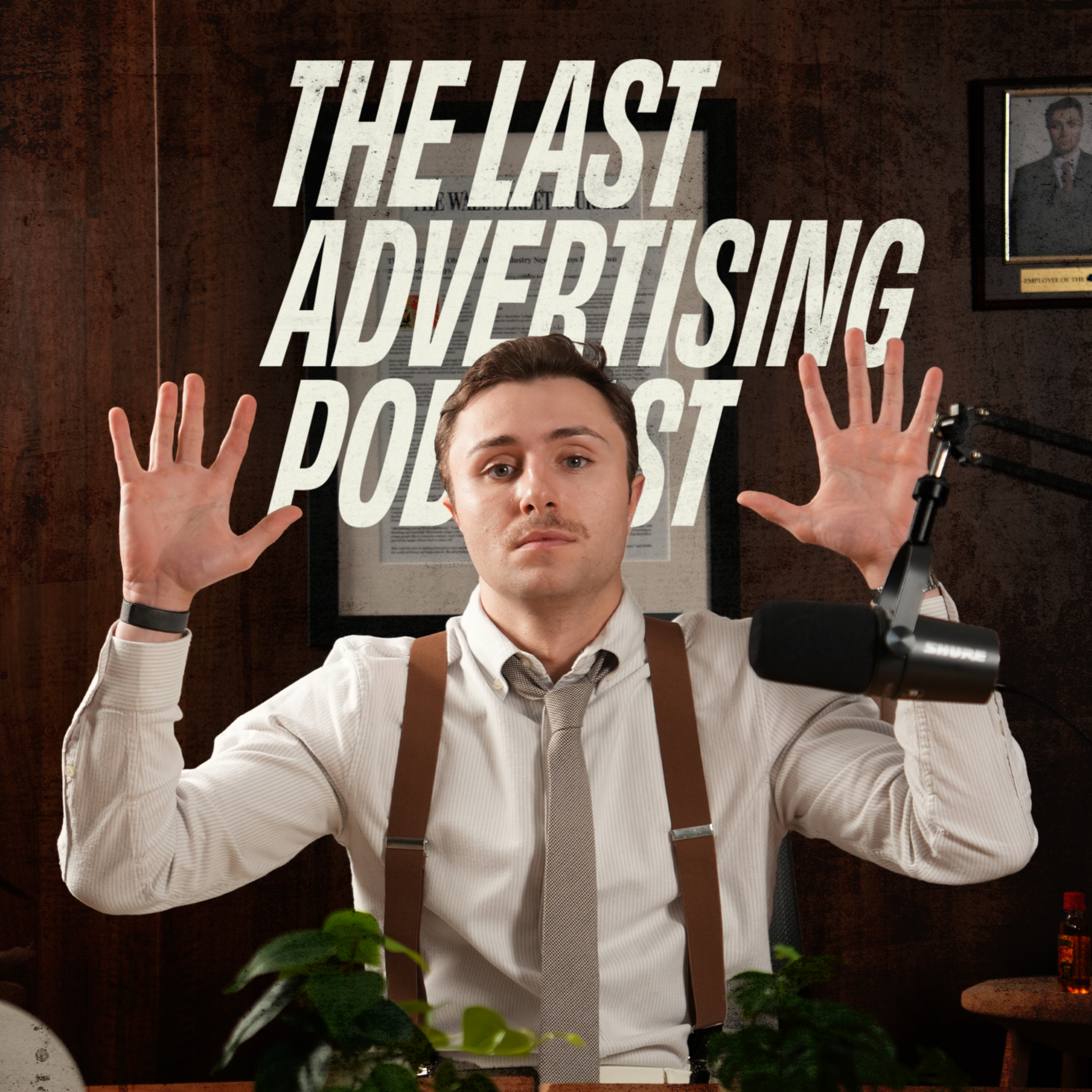
- The Last Advertising Podcast
- How to Advance Your Career When Hard Work Isn’t Enough, With Courtney Williams
The Last Advertising Podcast29 Jul 2026 · 29m · 13 chapters
How to Advance Your Career When Hard Work Isn’t Enough, With Courtney Williams
In short
Courtney Williams, newly Chief Growth Officer and Partner at The Variable (after Martin Agency), discusses how to advance a career in advertising when hard work alone isn’t enough—especially in new business/growth roles. She shares a “five R’s” framework (reputation, relationships, retention, relevance, revenue), argues relationships/networking are “half or more” of the battle, and emphasizes pushing back in pitches by interrogating client motivations. She also addresses internships, ambition, and building a personal point of view.
Guests
Courtney Williams. Background: Former Martin Agency business development leader (business development director → VP/head of business development; ~4.5 years), focused on prospecting, networking, and bringing new revenue. Now at The Variable, working with CEO Courtney Lewis and CCO Matt Cook; also a travel advisor who plans trips and loves Caribbean destinations.
Key claims/examples
Hard work isn’t enough; success requires visibility, influence, and sponsorship (“say your name in rooms you’re not in”). In interviews, don’t just research on LinkedIn—ask what motivates CMOs (fear/ego/collaboration needs). She cites her own path as a Black woman in new business with no role models, and encourages interns to seek real work and build a “scrapbook” of favorite campaigns to articulate the “why.”
Written by AI. May contain mistakes.
Chapters
0:45
Courtney's Passion for Travel
Courtney discusses her love for travel and becoming a travel advisor.
“Well, I loved traveling so much that I actually became a travel advisor on the side.”
2:00
The Martin Agency Experience
Courtney shares her journey at the Martin Agency, focusing on her roles.
“So I started off as a business development director and worked my way to VP head of business development and was at Martin for about four and a half years.”
3:10
Transition to The Variable
Discussion on Courtney's shift to The Variable and motivations behind it.
“Yeah, I mean, if I'm being really honest, there was a couple of plays.”
4:50
Insights into New Business
Courtney defines new business strategies and essential qualities for success.
“And then to think then from there to put on more work for yourself to add on to it does seem a little counterintuitive, but I really liked your rationale there.”
8:00
The Role of Relationships in Business Growth
Courtney emphasizes the importance of relationships and understanding clients' motivations.
“So those are things that we're always doing, especially in a vetting process.”
11:20
Defining The Variable
Courtney discusses her goals for defining the agency's identity and soul.
“And so I need to figure out the exact definition.”
13:00
Encouraging Interns in New Business
Courtney provides advice to interns on pursuing opportunities in new business.
“Because like you said, you have so much access to the full office and capabilities and disciplines, and you are so close to understanding, again, what is the soul of that agency?”
14:00
Maximizing Internship Value
Learn how interns can leverage their projects for real-world experience.
“And I'm hopeful to see more and more talent go that way.”
17:30
Redefining Internship Expectations
Discussion on changing perceptions of internships and their pressures today.
“I mean, when I was in college and an internship, I think I did every internship in the world because I was like, I knew what I didn't want to do.”
22:00
The Importance of Perspective in Advertising
Understanding the significance of personal perspective and advocacy in career growth.
“I want you to, like, you know, I want to try something.”
Show all 13 chapters
25:50
Navigating Career Development Challenges
Exploring the challenges in career advancement, especially for underrepresented groups.
“in interview season, like in the beginning of their career and then it goes away.”
28:00
Understanding Intangibles in Career Advancement
Learn about the importance of intangibles like adaptability and listening in advancing your career.
“So it's how do you think above that and really figure out the intangibles that matter?”
28:39
Connecting with Courtney Williams
Discover how to reach out to Courtney Williams for mentorship and networking.
“How can people reach out to you, whether they're brands or they want to work for you?”

Ask about this episode
Get the gist, explore an idea or ask about something said.
 Claude
On The Last Advertising Podcast, what are the key points of this episode?
Searching your listeningTranscript
Automatic transcript. May contain errors.
0:09Courtney Williams: Courtney Williams, welcome to the Breaking and Entering Advertising Podcast. Pumped to talk with you today. You have a new role as Chief Growth Officer and Partner at The Variable. You come over from Martin Agency. We're going to talk about it, but how are you feeling today? Let's get into it. Thank you so much for having me. I'm excited to be here. But I'm excited. Like I said, I'm excited to talk to you. I'm excited to join the variable. This is a big next chapter. So thanks for having me on the on the show. Wonderful. Before we talk business and advice for the next generation and what you're passionate about, what do you like to do outside of work?
0:44Outside of work. Well, I loved traveling so much that I actually became a travel advisor on the side. And so I was always the person that was planning the trips for friends, family, myself. I'm obsessed with just learning about new destinations. And I'm a full believer that kind of getting Delta SkyMiles should actually be an Olympic sport because it's insane and also just so much fun. So I love to travel. And like I said, I made that a career and something that I could also help friends in and build revenue at the same time. So I love to do that. Okay.
1:15Courtney Williams: Follow-up question. For a burnt out 28-year-old business owner, a quick vacation that doesn't involve hiking, what would you recommend? Where are you based? Is it for you or for give me a hug? No, it's a friend, but the friend obviously is in New York. Honestly, for me, anything, when I need to recharge and get calm, anything by the water. And to be honest, it can be ocean. It can be a lake. I just want to get an answer and recharge. So, I mean, if we're if we're going to stay in, I mean, I let's see. No, I actually love I'm a Caribbean. I love Mexico. I love understanding like St. Martin is probably my favorite place to escape.
1:53Aruba, favorite, favorite, favorite place. Excuse me. So send them there.
1:58Courtney Williams: I like that. We got an answer out. I love it. So let's get to you then. So you were at the Martin Agency. Yeah. And what was your role there? So I started off as a business development director and worked my way to VP head of business development and was at Martin for about four and a half years. Business development. So does this mean new business like pitching, trying to win new clients? Is that what we're talking about? Yeah, we're talking all things growth. So really partnering. Martin has a really strong brand communications team. So really partnering with them on the marketing and PR side.
2:28And my side was really focused on prospecting, networking, building relationships with the new business community, search consultants. And yeah, ultimately bringing in that new revenue for the agency.
2:37Courtney Williams: I love that. Yeah. Martin does a good job of like their comms team is a machine. Yeah. They're really good. Like, and everybody that comes from that, like they're well-trained, like for people that want to do agency comms, I definitely recommend Martin. And then working with the new business team, which should be a separate entity, you know, for the most part, like if it's a large organization, those two working together, I think is a one-two combo. So you're in there and you work your way up Richmond, Virginia, and you recently now have left for the variable. So what was the reason for this shift?
3:12Yeah, I mean, if I'm being really honest, there was a couple of plays. I have always had aspirations to be a chief growth officer. I've worked under some incredible leaders and learned a really great foundation of what leadership means to me and what that means to build. And I've always wanted to continue to grow in new biz. And I've always been a self-proclaimed new biz junkie. So I love the hustle. I love the competition. So I knew that this was the lane I wanted to stay in. And I actually have to give a lot of credit to the Variable CEO, Courtney Lewis. We started off as friends. She also used to lead new business at the Variable.
3:43And so we started building a foundation of just trust and value. And I could go to her and kind of share the fears and also the goals that I wanted that I was kind of afraid to say out loud. And she's listened to me throughout the years in which we've known each other. And we met. She came down to Atlanta one time and was like, I think I have a role for you. And that really started to fuel where I wanted to head. And I knew I wanted to get back close to Indy as I kind of grew up at an Indy as well and really wanted to be able to really make the change, not just influence, but also really have a seat at the table and make those decisions.
4:15And then from a personal note, my husband and I actually just found out that we're about to have our first child. And so I really, to be honest, I know there's so many articles out there that really kind of women are afraid once they find out that they're pregnant to make that next leap. But for me, it really motivated me to really take the step. And I wanted my future child to understand that, like, fear and courage and bravery can really live in the same pocket. And so truly, once I found out, I was kind of like, let's let's take the leap. Let's do it.
4:43Courtney Williams: Yeah, I think that makes that that's kind of counterintuitive, I would imagine. Right. Like, yeah, it's I mean. it's a lot of work to have a child. And then to think then from there to put on more work for yourself to add on to it does seem a little counterintuitive, but I really liked your rationale there. But I think that's what a lot of people will probably think about. A lot of women about to have their first child is like, let's dial it back. Maybe I'll go freelance.
5:12Courtney Williams: But yeah, so that your mentality to add more, you want more, you want to strive more. I mean, That's new business in a nutshell, I feel like, too. Like, that's how you, the same characteristics applies to how to be successful in new business because it is a, it's a grind. And like, it's about building the funnel, the pipeline, doing the outreach, staying top of mind, showcasing the work on the comps perspective, you know, getting invited to pitches and then beating that out just for our listeners to get some context. What else am I missing is involved in the new business world for some of our aspiring advertising professionals.
5:48Yeah, no, for sure. So to oversimplify it in a way, I kind of define new business through the lens of like five R's, right? You've got reputation, relationships, retention, relevance, and revenue, and it's all kind of combined, right? And the thing that people miss, they're so focused just on the process and the pipeline, which obviously are important. But in order to get that filled, the partnership and the relationships and the networking is just, is half the battle, honestly, maybe even more than half the battle, right? And so really making sure that you're in tuned, not just what's happening in the industry.
6:18Of course, that's important. But what are people being motivated by in the industry? So a lot of times when you're talking to CMOs, what are they motivated by? What do they need to win? Are they in a moment where they are trying to completely turn around sales? So they're kind of maybe a little bit motivated by fear, or maybe they just got a new position. So maybe there's a little bit of ego involved where they're like, I need to really impress my boss and really show out that way. Or maybe there's just a moment where they actually need to bring their team together and really spark a lens of what does collaboration motivation mean between my agency and client partner.
6:53And I think that every CMO is motivated by something different. And it really takes instinct and intuition and really understanding, again, kind of the nuances of relationships to really start to be successful in a growth role.
7:05Courtney Williams: What does that look like in practice? Like, what is it like? So you have the the framework, you have the theories, but in application, what like are some of the things that you're always doing? Like every day, this is something that I need to be doing to be successful. Yeah, it's I mean, from a practical standpoint and logistical studying even interviews, like I'll have people come and they say, we have a meeting with a bunch of clients. Here's some background and they just do some LinkedIn. What are they saying in interviews that they care about? What are they articulating that's their vision or, again, what their boss's vision might be?
7:39It also takes a level of kind of pushing back. And sometimes that starts with consultants and not just taking the brief as is, like trying to read between the lines and really seeing, like, what are they not asking or what might be holding them back? And not just kind of, again, taking the brief for what it is or whether it's from a consultant or a client, but really starting to push back and interrogate that why a little bit more. So those are things that we're always doing, especially in a vetting process. And again, not just understanding, yes, what's with business challenge? What's the brand opportunity here?
8:08But again, what's motivating the people? And that cannot go unnoticed or underappreciated when you're starting and setting your team up for success.
8:15Courtney Williams: Love that. That's why that's a good reason for people to listen to this podcast. I guess we interview CMOs too in our freaking live show where we have like CMOs on every day. So a little self-plug there of trying to build relevance. But I guess now for the variable specifically, what are you walking into now? What's the current state of the variable? Independent, we've learned already people are paying close attention. We know it's independent agency. Winston is where it's located. But what else are you walking into? Yeah, well, I think in order to do that story justice, I have to start when it was founded about 15 years ago with Joe and Keith.
8:56they were two founders who really were excited to figure out how can advertising and creativity live outside of the expected hubs. And if I'm being honest, like I had just left, again, the Martin Agency, which is based in Richmond, that had built such a success and legacy off of being outside of those advertising hubs. And so that was one of the things that really excited me about coming to the Rarible and Winston is because there's such an opportunity for clients and talent to recognize how much great creativity can exist outside of those environments, right? And so it starts with that foundation from Joe and Keith.
9:26But I have to give tremendous kudos to what Courtney Lewis and Matt Cook, who are the CEO and the CCO and also my co-partners, have really start to build. And again, they are figuring out how craft and the care of people can coexist and really start to turn around and drive business revenue. So that was something that was really exciting to me as well of kind of what am I walking into? They're also kind of the underdog in a challenger brand. And I love stuff like that. I love opportunities where not everybody has the aspiration to be the biggest agency in the world, right? And I don't think anybody should.
9:57And I think that it's still about knowing exactly who you are. And I think that's the moment I'm coming into at The Variable is really starting to define, like, what is our soul? What really makes The Variable who we are? And why have we attracted clients like Liquid Death or Outdoor Brands or Napa or a lot of these brands that are kind of the underdog or the challengers kind of uprising in their category? categories, there's a lot of similarities in what's kind of making us or what creates our soul. So that was something that was also really exciting that I wanted to be a part of and really help them define so that when people hear the variable's name or they come across the variable, they're doing it with intention and they're doing it.
10:37They're starting to recognize what our point of view is and what our conviction is.
10:40Courtney Williams: Absolutely. So would you say like you're still like defining that in this next chapter right now? That's a huge reason I think why I was brought in is to really help define what that positioning means and then how do we bring that to life. Why is it called the variable? Do you know? That's a really great question, actually. I'm surprised that actually didn't come up. But one of the things that I'm really excited about, I think, with the variable is if you think just at the core of the definition, like it only takes one thing to really make a change, right? And I think that the people here, again, the types of work that we can do with our capabilities, all it takes is one thing to change.
11:15And it's funny, we call our interns vandals because we want somebody to really like break through disruptive thinking. And so I need to figure out the exact definition. I don't know why that didn't come up in my conversations with Keith and Joe. But it truly, I think, is about it can really just be that kind of unexpected change that changes the entire output of everything else.
11:34Courtney Williams: I love that. No, that makes sense to me already. So, no, yeah, it's fascinating because there's so many agencies out there, 15 ,000. And I've heard somebody say 100 ,000 agencies. I don't know if that's true. I mean, that's just absurd. But I wouldn't be surprised if you took in like all the digital like marketing like website agencies too. So it's only growing more and more. It's like so important to have that brand voice, that messaging, the work to back it up. I do not envy you, Courtney. This stuff is hard. And I think for our audience as well, new business is such an interesting career path.
12:12Courtney Williams: for those that are hungry that like just constant change, it seems like just like working on one, like you crush group projects, you can work quickly and you can work well with a team. You get so much visibility if you're a creative or if you're a strategist and you volunteer to work on the new business pitch. Obviously it's extra work for most cases. There's usually like a couple, like full-time new business professionals within the agency, but like it gives you visibility to the CCO, to the CEO, to the CSO, and you can move your career up so much faster if you win and you do well. Agreed. And I think that, I mean, not biased or anything, but I always like to encourage interns that are kind of like, what do I do?
12:59Or I don't know where I want to go in advertising to do new biz. Because like you said, you have so much access to the full office and capabilities and disciplines, and you are so close to understanding, again, what is the soul of that agency? And how does that agency start to tell its own story and its brand narrative? And it really starts to help you define what you want to do. And so I always love to encourage people that whether you're strategic, there's a place in new business. Whether you're more process driven, there's a role in new business. But I think for me, too, as a new business professional, it has the same amount of strategic rigor that any other discipline in the industry.
13:33And that's where I'm really trying to convey. Nobody wrote a playbook for me. I've written every single job description that I've ever had in new business. And my goal as people start to come in is like, I've had a lot of experience. I've gone through a lot of things that I'm hoping the next generation won't have to. So if I can help them kind of write another page, another paragraph, another sentence of just helping define what their new business journey looks like, I really feel a responsibility to doing so because new business is such an incredible, obviously, discipline that I've invested my career in.
14:04And I'm hopeful to see more and more talent go that way.
14:06Courtney Williams: No, absolutely. I'm thinking about the interns now and or anybody that will intern in the future or entry level employees, but especially those interns at these agencies, they'll have like an internship project. And I don't know if this is controversial, but I tell them, screw that. Like, put in, like, if it's for, like, if it's for, like, a pro, like, not pro bono, if it's, like, a spec project that there's not a client tied to, like, I would put in, like, 20 % effort on that and then go volunteer on new business or go actually try to work on a real client's work and, like, integrate into the team's actual workflow.
14:45Courtney Williams: Because sometimes they'll put on these facades for, like, just to make just busy work for the interns. I'm just like, screw that. Get on the new business, bitch. I was going to say, if it's an afterthought by the people who are setting up the internship program, it's a waste of time. But I also think you've got to look at it beyond just the project and beyond just the output of what you're doing. A lot of really internship projects, you're throwing them in to a world that they're unfamiliar with. And what you really want to see is like how resourceful they are. Nobody expects this group of interns to come in and then like solve the world's problems in six weeks or however long.
15:17however long it is. But the thing that really stands out to me are the interns that say, hey, I've kind of outlined this process of how to get to point A to B. I'm a little lost. Can you help point me in the direction of, I know that maybe I need, obviously I need to start with understanding what the business is about and then start to move into the brief, then the creative, and then whatever order that goes in. And the ones who raise their hand to say, I want help and not just, hey, help me fill in the blank for what I need for my brief, but actually help me understand what your day-to-day is like and how this is used.
15:49That's how they come to realize what they want in their career path. I don't expect interns who come in as account managers to want to necessarily be account management all the time. That internship project could actually teach them, you know what, I'm really inquisitive. I'm really curious. Maybe strategy is actually what I want. And if that's what they get out of the project or the internship at the end of the day, like that's a win for me. I guess I interpreted, I'm interpreting internships differently.
16:15Courtney Williams: Uh, the old view on internships and what I, you know, what I, what it used to be, in my opinion, was for exploration. Like your sophomore year, summer, your junior year, summer, like, yeah, we'll hire some interns and the interns are hired to have fun and explore and figure out what they want to do. And that's in theory, like a really good practice. However, a lot of these larger agencies, it seems like their interns are for graduate people that have graduated. and know exactly what they want. They have the perfect portfolio built out. And then it's a job test, essentially. It's essentially a three-month-long interview process for that specific role.
16:57Courtney Williams: And that's what I've been seeing a lot more due to the job market, due to whatever, all the external factors, AI, consolidation, whatever you want to pick any card there. But yeah, the view of the internship to me has changed to this internship interview. Mm-hmm. I mean, I agree with you. And you have to look at the demands of the market. What interns do you know that are like, I'm just down to have some fun and that's it for three months? Most of them are like, I need a job. I need a salary. I need a career. I want to live and I want to be able to start my life. And so I think that to be honest, the trajectory of the internship, I agree with you.
17:32I mean, when I was in college and an internship, I think I did every internship in the world because I was like, I knew what I didn't want to do. I had no idea what I wanted to do. So I was like, free for all, let's try it all. Nowadays, I think it's, there is more of a pressure, I think. And you have more interns who may be like halfway through their internship program or like, Courtney, can I just be blunt? I'm trying to get hired. What do I need to do hired? And what do I need to do? And so, and the only way you can do that is not through happy hours and fun. It's through what is the real output and what are we measuring them against throughout their internship program?
18:03So I think there's a lot more pressure too, not just on the interns, but even on the mentors and the managers who are going through this to really sometimes either teach them how to have a job, sometimes that's half the battle, or teach them what it would be like to have a job at that specific agency. And those are two very different tasks.
18:20Courtney Williams: Absolutely. And I know we talked beforehand about what you're most passionate about right now, and it kind of goes into the junior entry-level conversation, but trickles everywhere. You know, the fact that, you know, advertising is a creative industry. It's focused. You and I both agree the best part of this industry are the people that are behind it, that are in it. So, you know, it pains me to see entry level roles diminishing. It pains me to see people leaving advertising to go into other industries because there's not they don't feel like there's a role for them or they got phased out or laid off due to consolidation or AI here.
18:57Courtney Williams: So I just want to give you a chance on the microphone to talk about your feelings on this subject. Yeah, I think the number one thing that I go back to is that ambition isn't something that should be apologized for. And I know that like Gen Z and this generation get a lot of flack for their egos coming into the mix or just their goals. But I don't think having ambition and goals is something that, again, you should be ashamed of. I go back to my own personal journey. And to be honest, this is why this is my own kind of personal mission at any agency that I attend, but especially now at The Variable.
19:27is when I joined new business in the industry, started as a new business coordinator, worked my way up, there was nobody that looked like me in any of these roles in new business at all. And so for me, even thinking of having a chief title or a partner title to be really transparent was like never in the cards for me. I was like, nobody else has this role that looks like me. I could never do it. And my journey throughout has really been trying to break that and say, even if the table is already full, guess what? Make a bigger table, add more seats. And that includes starting people out from an entry level to show them what's possible.
19:59And as they continue to grow, it's not just about, yes, making sure that there's job security and things there, but how are you really training and mentoring and not just advocating for, but sponsoring people? How are you speaking of them in the rooms that they're not in? So that way they can really start to understand the business, their role, their impact, their value. And that's one of the biggest things for me. And it starts a lot with all the innovation that's coming out. I actually am hoping that we can still remember the craft and the humanity that really, really matters. Because people forget that your perspective is the value that you provide.
20:34And you should be in rooms and be at agencies that champion the ability to have that perspective. And so a lot of new generation or new talent or interns ask me, like, what do I need to do to be successful? And I'm like, learn how to have a point of view. And I don't mean that to be condescending in any way, but a lot of people do just resort to the chat GPTs or this is what so-and-so feels. And they forget how to just start to define how they feel and what their perspective is. And so apologies, this is a long-winded answer. No, I love it. But that's truly what matters to me is having a perspective, being an advocate, finding those people who will also, again, say your name in the rooms that you're not in.
21:12But also, unfortunately, I know a lot of I was told this as a child, just work real hard. You're going to have to work twice as hard as everybody else, especially being a Black woman in this industry. And the harsh reality was sometimes hard work isn't enough. There's a lot more around it, right? There's the networking and the influence and the visibility and all of these things and building a brand for yourself. And so, again, as I see the next generation of talent come in, I just try to remind them of that and to never be afraid to ask the hard questions, especially when they pertain to their own growth and development.
21:43Because there's room for all of us here. And I'm not trying to be a CGO forever. I want to see the next generation, somebody take my spot and be able to own it and make it their own as well. And I can only do that if they're getting the right tools and training and having the right conversations that prepare them early on in their career.
22:01Courtney Williams: I love that. I want you to, like, you know, I want to try something. I want you to think back in your career. Yeah. I mean, to be honest, so many moments. So let me think of one. And I think one post early on in my career, again, there was nobody that looked like me in the industry in the very beginning when I started. And so for me, I was like, that is my value, is that this perspective that I'm bringing is unique, is differentiated, it is something different. And I am also, to be just fair of just who I am, I'm the person that's like, oh, the stove's hot, let me touch it and find out. And so that was a little bit in me, and I know that not everybody is like that.
22:35But for me, it was about the worst thing that people could say if you ask for opportunities or ask for something is not no, it's sometimes not yet. Right. And trying to push for that not yet. Maybe I wasn't ready yet, but there's still things that I could learn. And so I had a really incredible manager at the first independent agency that I worked at, 22 Squared, who really just saw that in me and believed in me. And really, I would I remember when I was young, I'd have an opinion about something and I would text her, hey, I think X, Y, Z about X, Y, Z. And she'd be like, that's great. say it out loud.
23:06And that's something that I try to do now, whether people slack me on the side, text me on the side. I'm like, your instinct's spot on. Say that out loud because that's how you start to help other people build their voice who maybe don't naturally do that. And to be really honest, most recently, as I became chief growth officer and a partner, I knew that I wanted to come into this role with full candor, with full transparency. And I actually told my partners early that I was pregnant. And again, that took a lot of courage. Everything in the industry tells you not to do it. It tells you that it's the biggest mistake you'll ever make, that the offer might change.
23:39And I said, well, if that's the case, then maybe the variable isn't the place for me. Right. And I did it wholeheartedly, 100 percent authentically myself. And they could not have been obviously more gracious. And I'm excited to sit here now. So I think it's something that you continue to work on, whether you're in your first year in this industry or whether you're all the way now in the C-suite. Our partnership is finding your voice and advocating for it.
24:01Courtney Williams: Yeah. And I think to add on that, excuse me, the one thing I wish I did more of, my situation is different because I first was neutral, covering the news. Like, you know, I never really thought of opinions and I haven't built that muscle intentionally. Now we're kind of changing that up, giving our takes. It's really weird for me in my position. So I give myself an out, but not really. What I think would help people is for creatives or anybody in this industry is collect like a scrapbook or Google Doc, something really easy of like your favorite campaigns. Yeah. The work that you really love and a couple like and write like a couple reasons why you like this or build a fake portfolio is from legendary Wyden ECD, Hal Curtis of the fake of the work that you wish you made.
24:53Courtney Williams: And it really is hard to do in the beginning. And just keeping note of who made it and why you like it. And you can build that muscle over time and then post about it on LinkedIn. Because then people that do match your taste, not everybody will, and that's most certainly true. The people that do match your taste will want to work with you, want to hire you. And even better, maybe not even match your taste, but just acknowledge your taste. Because as you see, a lot of agencies, you want to build something different. You don't want a bunch of talent, especially in the creative department, strategy department that looks like you, thinks like you, talks like you, believes the same thing.
25:26So even if you're very clear about your point of view and who you are and the type of work that you champion and want to make, that also helps you stand out, whether they agree with it or it's the same style as them. But you'd be surprised at how hard it is for people when they think about what's your favorite campaign. They're so focused on the what and not necessarily the so what or the why. And just, again, training that muscle to your point is so important to do early.
25:49Courtney Williams: Yeah, I think we, a lot of people will prep for it in interview season, like in the beginning of their career and then it goes away. At least that's what it was for me. Like I made sure I studied up on the specific agencies I was interviewing of like which work I liked and why. And I feel like I've lost that over time. So it's a muscle that you can continuously build and should be building. Yeah, and also one other thing to add that I'm wondering if you ever did it either is, yes, you want to study kind of the historical work of an agency, but also what do you want to help contribute to them building or evolving to?
26:21That's I had an intern once who who gave me that perspective where everybody else was just kind of, to be really honest, you could tell the website was pulled up in the past. They were reading the philosophy. They were reading the work that was on there. But I had somebody who actually was like, I actually and right or wrong didn't matter. It was the fact that it was sparking conversation. It was it was provocative. It was a thought that said, here's what I want to see XYZ agency build toward. And that stood out to me incredibly well. And I think that that's also people are always thinking of what can the agency do for me?
26:52But really, what can you do and build for the agency that helps it evolve? Because I think that's the best agencies do that, right? The best agencies don't rest on their laurels. They don't think that they have nothing to change. They're always constantly looking to see what's next. And honestly, interns, next generation of talent, perfect people to help provide some of that kind of third party outsider opinion.
27:11Courtney Williams: Totally. I find it so fascinating the parallels between finding a job and then also the new business process. There's like so many like similarities between the two of like the research, the homework, you know, prepping yourself and the vision where you want to go. It really does match what an agency does for brands versus what talent does for the agencies. Yeah, I agree. And the other comparison actually is as you think about technical skills. Somebody told me this early in my career that when you're growing in your career, it's all about doing things right. But as you kind of grow in leadership, it's about doing the right things.
27:45And that is something that has stuck with me forever. And I truly believe that in the new business process, too. In the way they talk about technical skills, you can teach someone technical skills all day long. And to be honest, if you look at the agency landscape today, a lot of agencies are saying and doing and showing up in very similar ways. So it's how do you think above that and really figure out the intangibles that matter? And that's what clients are buying. Clients are buying the people where your ability to listen, your ability to take feedback, not just the craft. Obviously, that that has to get you in the door, of course, but there's things that that matter more.
28:17And I think as people and as interns, if you have to think about it in that way to be teachable, be able to be adaptable, learn the technical skills. But at some point, there's this switch where things matter more and doing the right things matters more to people. And that's really how you can start to grow and expand and shape the type of leader that you can become.
28:36Courtney Williams: I love it all, Courtney. Nicely done. Thank you. No notes on my end. How can people reach out to you, whether they're brands or they want to work for you? What's the best way to communicate with you? Well, I am at the variable. I'm very, very active on LinkedIn. So just search Courtney Williams, Chief Growth Officer and partner at The Variable. cwilliamsatthevariable.com. Please reach out. I love to talk. I love to set up one-on-ones. I love to mentor. But please reach out to me. I'm excited to get to know more of this network. Fantastic. Well, I will be watching. I know you guys are going to crush it.
29:13Courtney Williams: So I don't need to wish you any luck. Thank you. Thank you. We're excited. There's a lot of exciting news coming from The Variable. So let's go. Let us know. Wonderful. Well, thank you again, Courtney. Thank you so much. Appreciate it.
From the publisher
Courtney Williams is Chief Growth Officer and Partner at The Variable, where she leads the independent agency’s growth strategy, positioning and business development efforts.
In this episode, Courtney explains why hard work alone does not guarantee career advancement and what ambitious professionals need to do next. She shares how to develop a clear point of view, build meaningful relationships, increase your visibility and find people who will advocate for you in rooms you have not entered yet.
Courtney also breaks down her five drivers of agency growth: reputation, relationships, retention, relevance and revenue. She explains what motivates CMOs, why intuition matters in new business and what separates winning agencies from the competition.
Geno and Courtney also discuss the changing purpose of advertising internships and how becoming a first-time mother inspired Courtney to make the biggest move of her career.
For more from B&E, including newsletters, social videos, advertising news and live shows, visit www.breaking-entering.com. Brands! Partner with Breaking and Entering Media by emailing: [email protected]
More from The Last Advertising Podcast
All episodesWe use cookies.They keep VO running smoothly and help us improve it. Privacy policy