
 Ask ChatGPT

- Podcasts
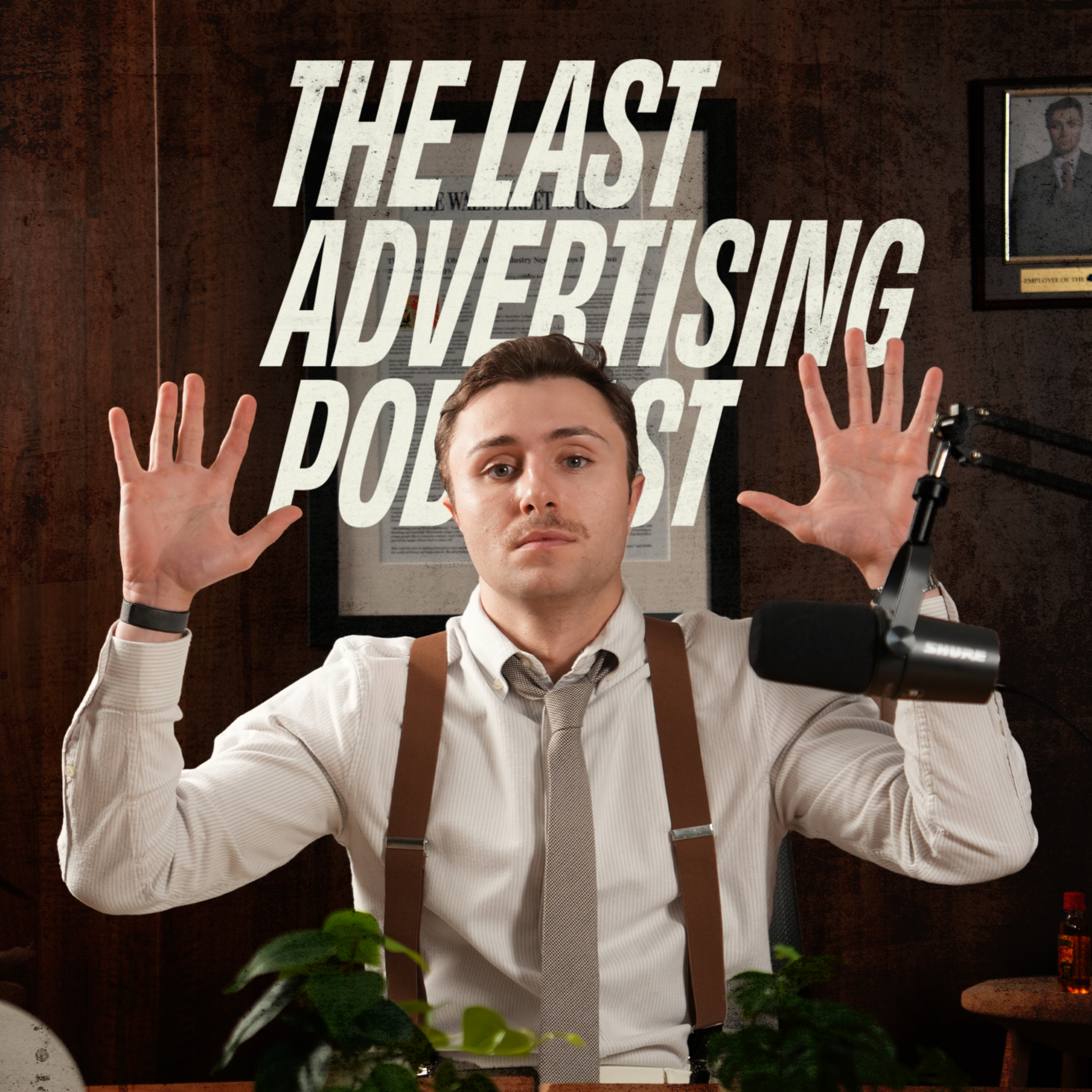
- The Last Advertising Podcast
- If Advertising Wants Creators, It Needs to Understand Them with Maryah Greene
The Last Advertising Podcast9 Sep 2026 · 31m · 14 chapters
If Advertising Wants Creators, It Needs to Understand Them with Maryah Greene
In short
How advertising agencies should work with creators; the need to educate brands/clients on creator marketing, choose the right creator types for campaign goals, and build partnerships with clear briefs and boundaries.
Guest
Mariah Green, influencer and creator partnerships/influencer marketing strategist at Droga 5 (Accenture). Former full-time creator/entrepreneur running a plant education and plant design business; previously taught third grade. Named Adweek Creative 100.
Key claims
Brands often misunderstand social/creator marketing, causing shifting briefs and failed partnerships. Effective creator work requires “meet people where they are” education, quality over follower-count, and community/value alignment. Creators are increasingly better at protecting IP and negotiating terms.
Notable examples
Repotted plants with Michael Strahan on Good Morning America; brand partnerships with New Balance and lifestyle/wellness brands; plant consulting for celebrity and multi-million-dollar homes; advice to learn by “rogue posting” and teaching concepts to others.
Written by AI. May contain mistakes.
Chapters
0:45
Guest Background with Mariah Greene
Mariah Greene shares her journey from teaching to becoming a creator and influencer manager.
“So I'm treating every episode like this is my last one ever.”
3:01
The Evolution of Content Creation
Mariah discusses how her plant-themed content began and grew during the pandemic.
“and like you are at the center of this shift and you're so poised nicely to be at this next chapter of the industry.”
5:05
Transition to Full-Time Creator
Mariah describes her decision to leave teaching for content creation and the opportunities that arose.
“So that was the world that I started to develop this plant world on Instagram.”
7:18
Key Lessons as a Solo Entrepreneur
Discussion on the challenges and advice for aspiring content creators from Mariah's experience.
“The other side was the actual plant design business.”
10:35
Finding a New Direction in Agency Life
Mariah explains her shift from content creation to working in an agency environment.
“It was starting to blur into your personal life.”
14:00
Navigating the Creator Landscape
Learn how to bridge the gap between brands, agencies, and creators.
“I didn't even know there were roles or names for this thing.”
16:40
The Role of Education in Advertising
Understand the importance of educating clients about creator marketing.
“And now today you are the creator partnerships lead.”
19:20
Evolving Creator Relationships
Explore how creator representation and understanding are changing.
“you meet someone where they are and you have to get a baseline level of their understanding of something before you can educate them.”
22:30
Quality Over Quantity in Influencer Marketing
Discover the shift toward niche communities in advertising partnerships.
“industry, like having a manager meant you have at least 500k followers.”
26:00
Advice for Aspiring Advertising Professionals
Gain insights on breaking into the advertising industry and leveraging unique experiences.
“Are you bringing any value or meaning into spaces that you're hoping to advertise in?”
Show all 14 chapters
28:03
Embracing Unique Strengths in Marketing
Learn how perceived weaknesses can transform into strengths in marketing.
28:38
Gaining Experience as a College Student
Explore practical strategies for college students to gain experience in creator partnerships.
“I mean, I'm enabling this to like, what can they do as an undergrad to get experience in creator partnerships?”
29:54
The Value of Networking and Learning from Peers
Understand the importance of networking with peers and continuous learning.
“And I think we think of networking as like up and down.”
30:42
Connecting with Maryah Greene
Learn how to connect with Maryah Greene for advice and mentorship.
“Well, Mariah, how can people reach out to you if they want to connect?”

Ask about this episode
Get the gist, explore an idea or ask about something said.
 Claude
On The Last Advertising Podcast, what are the key points of this episode?
Searching your listeningTranscript
Automatic transcript. May contain errors.
0:00Maryah Greene: Ladies and gentlemen, you're listening to the last advertising podcast of all time. This is it, our last conversation. It's all done until probably next week. So enjoy this guest. Mariah Greene, welcome to the last advertising podcast. I rebranded it, by the way. I was actually working on that before this. Is this an exclusive? Is this new? Is this the first interview you'll be doing saying that? You know, I think this is the second one. It's so weird because I'm like rebranding it today. And like by the time people hear this, the timelines are all weird and stuff. So technically, this is the second one where I'm talking about it out loud, the last advertising podcast, which means because we have to learn together and for the audience that I'm like, I've done so many of these conversations.
0:48Maryah Greene: So I'm treating every episode like this is my last one ever. Like I'm done, but I'm obviously going to be doing it next week. Of course. Which just gives us a space to talk freely about you, your advice for the next generation, what you like, what you don't like about the industry, whatever you want to talk about here. That's like the parameters of this conversation. Got it. I love it. Okay, that sounds fun. Amazing. So this is the last, let's pretend this is the last advertising podcast ever made here. Tell us about who you are, what your role is today, Mariah. Yeah, my name is Mariah Green. I am a influencer and creator manager at Droga 5.
1:27Depending on the day, I lean in as a social strategist as well. But I've been in the industry for almost two years, which to a lot of people doesn't sound like a really long time, but it's felt like a pretty long time in more ways than one, which we'll talk about. But yeah, it's been really cool joining the advertising industry. Before I joined, I was actually a full-time creator and influencer. So I feel like I've been in the marketing world without actually formally being in it. And then previous, before that, I taught third grade. So I've had a few career pivots, but they've ultimately landed me here.
2:01And I'm finding that while they're all seemingly unrelated, they've actually empowered me to be kind of good at marketing. At least I think so.
2:10Maryah Greene: Well, and so does Adweek because they name you a Creative 100. So there's the proof right there for anybody listening. And you're coming on this show where we only talk to the best people. So it makes a lot of sense. So there's a lot to unpack here. First thing I want to say, like, for everybody listening and for you is you know this. The industry is shifting. It's never been so dynamic of like entertainments collapsing into advertising. We're seeing creators come and like, you know, take over can. And like we're seeing budgets now from these big brands put it into social. I mean, Accenture acquires Whaler, which is a huge influencer marketing beast of its own.
2:50Maryah Greene: It was one of the largest creator marketing deals of all time. So you are like the perfect conversation as like I usually talk to like CCOs of like traditional advertising. and like you are at the center of this shift and you're so poised nicely to be at this next chapter of the industry. And so that's why it's so important we're talking with you today. I want to know, Mariah, what type of content did you create? How did you kind of monetize that as well? Yeah. So I, it started with my time as a teacher in the classroom. I had loads of plants in my classroom. My kids absolutely love plants. It was my way to check in on them to ensure that, hey, are you watering your plant?
3:32Are you caring for this loving thing? And if they weren't, it was kind of a signal to me, okay, I need to check in on this person. Fast forward, when I'd come home after teaching, I started an Instagram page, just like taking photos and videos of my plants and how to care for them. And then I had loads of friends and family members asking me, like, how do I keep this plant alive? How do I repot it? So long story short, started this Instagram, made tons of videos to help people. And this is in the days of social or Instagram in particular, where you could post and your friends would actually see your stuff.
4:04And so it kind of rapidly grew into this platform of like, Mariah Green, the plant doctor, let me help you care for your plants. And so it wasn't until COVID when everyone got locked into their homes, really got into houseplants, mindfulness, wellness, I sort of showed up at this time of meeting people with the education of how to care for the plants that they were getting. And also making sure that they were designing their spaces aesthetically or the ways that they wanted, because more often than not, people were committing to plants and didn't know how to keep them alive. So it was really cool.
4:37And it kind of evolved into this like brand partnerships world. So I would hear from brands like New Balance, tons of like wellness or lifestyle brands that wanted to do something within the sustainability space. So I was able to get my first opportunity to do brand partnerships as a creator. So negotiating my own deals, pitching myself, all of those like intricacies, it was my first stab at being a creator and it blew up exponentially. But I feel really lucky that I was able to do it during a time where social and Instagram and TikTok showed you the things that your friends were engaging with and also just showed you your friends' content.
5:14So that was the world that I started to develop this plant world on Instagram.
5:20Maryah Greene: When did you make the shift from teaching to being a full-time content creator? Just before the pandemic, so 2019, the fall of 2019, I was checking my email waiting to see what class I would get assigned to, whether it would be third grade or if I was going to do fifth grade. And I got an email from Good Morning America asking me to come on to help Michael Strahan repot his plants. And while that's really exciting news, my heart sank because it was also the week where there is no exception. You have to be there for teacher training. If you're not, you can't teach that year. So I had to make the decision, do I go on Good Morning America to pot plants and just really lean into this influencer plant thing?
5:59Or do I commit to teaching for another year? And I chose repotting with Michael Strahan and it was a really good time and I'm happy I did because that's what really accelerated my content creation next career.
6:12Maryah Greene: Oh, my goodness. This is insane. And the timing, I mean, it's almost like the world like put the decision and like right in front of you at the right time, not even counting the fact like COVID was coming and like it was going to exponentially grow your content because like you said, everybody's at home. Yeah, that's like I mean, like hard work and luck, like hard work is where I don't know what is opportunity and hard work meet is luck or whatever. Yeah, that's what I always say, too. Preparation meets opportunity. Like the page was there. I had all the community. I had the energy and I just needed to make a black and white decision.
6:52Am I committing or am I teaching third grade? What am I going to do? Yeah.
6:55Maryah Greene: Fascinating. And then you were all in. And I'm assuming like the publicity from that show got you more brand deals or more followers. And how long then then then up until two years ago. So what is it? 2026 now? 2024? You joined Agency Life. Yes. You did it for about five years. Is that correct then? Yeah. Five years. Solo content creator entrepreneur. Exactly. Yeah. So it was partly content creator. creation doing brand partnerships. The other side was the actual plant design business. So I would go into friends' homes, family members' homes, eventually graduated to having real clients and then celebrity clients.
7:36And I would go and just deck out spaces and brand events. So between the brand partnerships and the actual plant consulting, that was my full-time job for that chunk of the four years.
7:47Maryah Greene: Wow. Wow. And then I could see then like the content creation fed the business of the consulting. Exactly. Yeah. Just set up a tripod and go to town in this massive loft in Soho and then go home, wash my hands, get the dirt off of them, go edit the video, rinse, repeat. Okay. And like, this is gonna be a really hard question because I want to get into the pivot of to agency life, but we can't skip over the experience that you have of being the the solo entrepreneur, the consultant, the content creator, like so many people want to do that for a living. I guess like, what are some of those key things that you learn looking back that like, I can probably do this too, like of advice of like how to like do it faster.
8:38Maryah Greene: Cause I also was a creator. Now I'm doing this full time. I can like brainstorm with you, but like, what were some of those things? Like if people are listening today, how can they fast track or like what would you tell them now to be a content creator full-time? Yeah, it's tough because I think you said it beautifully that I was kind of forced to make this decision, right? Like, am I doing this full-time or am I not? I think ultimately making that decision, you're weighing up discipline. Do you have the discipline to put structure around content creation and scaling that thing? For four years, I think that I was really lucky of having that consultative plant side that really supported income, just being able to have content versus just being a lifestyle creator.
9:26It's like, okay, what piece of my world am I going to bring you in today? I don't think my life is very exciting. But when I was going to multi-million dollar homes in Tribeca and all over the world and filming content, that felt really easy to capture and edit because people, I was interested in that content, so I figured other people would be. So in short, I think having the discipline to regularly decide what is worthy and not worthy of content and being able to produce that at scale. In four years, I ultimately made the decision that I didn't want to scale anymore. The line started to become blurred between what was work and what was for consumption.
10:04So I've got trees all over my apartment and sometimes I would repop my plants and I would kind of get this decision paralysis of like, do I capture this? Do I want to edit this video? I'm actually kind of enjoying this and not having it be monetized by IKEA or you know what I mean? And so setting those boundaries and having that separation ultimately became more important to me. And I think that kind of gets into the transition of like, I like this world, but there are some things I kind of want to keep off limits for me, which we'll talk more about in the advertising industry. But discipline is crucial.
10:37Maryah Greene: Okay. Understood. It was growing pretty fast. It was starting to blur into your personal life. Understood there. I guess it's like, I mean, one thing that I think like you might have thought of, like, I'm curious, actually. So did you know, like, this was a chapter? Or, like, when you started, were you like, this is it? Like, this is going to be my whole career? Mm-hmm. When I was in Vogue in the New York Times and all the magazines, I was like, this is it. Like, this is it for me. What else could I possibly want? I'm not going to go back to teaching. How do I go back to teaching after this? I didn't really see an end game with this, so to speak.
11:13I thought I'm going to be the plant doctor in sort of a Martha Stewart type of way. and it wasn't until midway through my career, that portion of my career, those two years, where I thought, I'm actually just really passionate still about education. The through line between every career chapter I've had, whether it was teaching, it was education, potting people's plants, I want to teach people how to keep their plants alive. If it's content, I'm teaching people what plant works in a low light room versus another. And once I found that common thread, I felt like I gave myself permission to transfer into another world or another industry.
11:54And marketing kind of snuck up on me as the answer to what that potential industry could be. But education was at the forefront for me.
12:04Maryah Greene: Okay. So education at the forefront. And then you saw marketing as the next potential step there, which makes sense to me because you've done so many brand deals. You're doing this full time, like you said, Ikea, a new balance. So you've talked to a lot of the influencer marketing, content creator, marketer folks on the brands, I'm assuming agencies as well in the interim of like, you know, the middle people of that. So you had, you had, you've been exposed to that role for years, I'm assuming. So what made you say, all right, I want to get into that? You know, I have to credit my partner to this.
12:41I was crashing out and he was like, look, there are some days where you're absolutely loving it and you feel like you're killing it. And other days you're like, I just want to go back to teaching. This is all BS. I'm tired of negotiating my contracts. I'm tired of waiting for net 60, all the bullshit that comes with content creation. And so he was like, make a list. What are the things you love about your job and the things you hate? And so on that list of things that I love, I love when I get a brief from an agency or a brand and there aren't 50 million freaking hashtags in it and things I have to say in the first 10 seconds of the video.
13:11I love when I get a contract that just says net 30 because who on earth wants to get paid 60 to 90 days later? There were small little bits of what I'd been doing that I loved and felt passionately about. And we just did a ton of research. And I thought, well, normally when I hop on a call and I'm getting briefed by an agency or a brand, I can always tell when someone's made a video before. They're not talking to me like I'm a media buy and that they just need me to make this video, print, repeat, produce, paste, give them all of the insights, and then we're done. We wash our hands. I really built some meaningful, thoughtful relationships with some people at brands and agencies.
13:47And I thought, you know what, I want to be that person that you interact with that actually gets it and understands the craft of what you're producing. and it felt like a natural next step. Let me look into some campaign manager. I didn't even know there were roles or names for this thing. I was like, I just want to be on the brand side and I want to speak the language. I want to be the translator for agencies, brands, and creators because they're all speaking three different languages and we just need an interpreter. And I thought maybe I could do that job.
14:18Maryah Greene: Totally. That makes so much sense then. So then you can go agency route or you can go, So, you know, some of these brands have like their influencer marketing divisions as well. So how did you navigate that search? You said there's all these different roles. What were some titles that you were looking up for this? Any place I was hiring, I was applying. Because again, I didn't understand what roles were. The only time I'd ever applied for a job was to be an elementary school teacher at PS40. So the concept of having a resume, these are my skills. I'm going to interview with you completely foreign to me.
14:54And so I applied to anything that actually I did have a starting point. Who are all the agencies and brands I've worked with? Let me just shoot out some emails to people to be like, hey, remember we did that fun, cool campaign? I'm now I want to be you when I grow up. Can you help me navigate this space? And I looked at my savings, which was almost depleted. And I had a really supportive partner who was like, just take people for coffees and like understand what it is that they do. All those people you've worked with, see what they think you'd be great at. So I met with some of my friends who work for Uniqlo, some friends who work for experiential activation agencies and brands.
15:32And it wasn't until I sat with maybe like 10 people that each gave me 10 to 15 percent of what my resume is now to articulate all the things I inherently knew, to kind of corporatify it, to get me into this world. So just cold applying, taking people for coffees. And long story short, it was a good, my partner's good friend's wife, who started at Droga 5 as the head of social. We met for a coffee, and I think she could sense that I was a bit insecure in selling myself. I'd never done the corporate thing. I didn't feel like I was qualified to go into an agency because at this point I'd gotten 100 rejection letters from agencies or I'd make it to the second round.
16:13And it was the same song and dance. You just don't have agency experience. And so when I was kind of at the lowest, I met this woman, Heather Hosey, who is the head of social at Droga 5. And she ultimately saw what I thought were all my weaknesses and lack of experience. she saw it as you were the perfect person to lead the charge as a head of creator because you speak the language that you do. And there's no one within this corporate space that A, does do that, or B, thinks it's important. So that was the official transition into Droga 5 two years ago.
16:44Maryah Greene: Incredible. And now today you are the creator partnerships lead. That is so amazing. So cool. So she was like, she doesn't want somebody that's going to do the same types of briefs. And like the issues that you've seen that I see every once in a while from brands where it's just like a laundry list of things, the mandatories. She saw within you that you had the experience and the knowledge to basically get rid of all the BS in those briefs. Is that correct? Yeah, exactly. And I thought I didn't have any experience. Like I didn't start at Ogilvy or 72 and Sunny or any of the other agencies that we hold and like see them as these places that people aspire to start their careers at.
17:31I just had a, this is such an annoying thing to say, I had a ton of press partnerships and features. I had potted plants and I used to be a teacher. I'm like, how do I make a story out of these things that make someone want to hire me? ultimately I had to come to the conclusion that I'll fall into the right place and they'll see all of those things that I don't think are experienced they will see those as an asset and I feel like I found that space so I feel really lucky to start my career here yeah it's
18:02Maryah Greene: been a really great start okay and what are you seeing now since that that transition you know the past couple of years at Droga then, like what are brands asking for consistently? Like how are you helping them navigate, generally speaking, like simple translations that you keep finding yourself having to do over and over again? Like, you know, are they starting to understand this stuff more today? Looking for the most politically correct words that I can find, because it can get kind of frustrating sometimes. I will say I was hired to educate both internally and externally. And again, we talked about the through line being education.
18:41So I was like, sign me up. How do we scale this within an agency? And also, how do we make our or get our clients to understand how social works, how to partner with creators, what they're best used for, when to use them, the types of campaigns, so many different factors. When I came in, I couldn't make sense of this at all. But I feel like I approach clients and brands the same way that I do my previous students. And there's this funky term that in my master's program, the Bank Street College of Education, we called it the developmental interaction approach. I hate the term, but what it means is really exciting to me.
19:19And it's, you meet someone where they are and you have to get a baseline level of their understanding of something before you can educate them. So you come into a classroom, you've got a lesson plan set, you expect everyone to master the test after you go through all the lessons. We know that that doesn't work, right? So every student comes into your classroom with a different level of understanding of something. My job is to work out where you are so I can know where to meet you. Same exact thing with clients. And so presently at Droga 5, a lot of our clients come in with various and like vast levels of understanding.
19:54Some understand the difference between a conversion campaign and any of the other types of campaigns. Some of them are excited to do this activation. Let's just like invite a ton of influencers. Some just want to send free packages and also can't figure out why people aren't posting for free because they should be so honored to be working with. But there are a range of different understandings. And so while it's really frustrating sometimes, I feel really excited that I get to figure out what is it that you know and understand? What's the best way for me to meet you? And how can I kind of scale a new level of education and understanding around it before we engage influencers?
20:33That feels critical to me because I can't tell you how many times I've been reached out to by a brand or an agency who's very clearly in the process of figuring it out. And then ultimately it manifests in the content I create because the brief changed 50 times. The hashtags weren't correct. All the things that need to be worked out in advance to ensure that there's a successful partnership between creator, brand, and agency.
20:57Maryah Greene: So fascinating. I feel like there's nothing wrong for a brand to come to you all, you know, as the agency to say, hey, we're not exactly sure. We know we need to be engaging in content creator and influencer marketing. like what should we do and like that would be like one step like now you know like here's some of the options you can walk them through that but i can see the issues like of it changing expectations changing as well maybe getting upset because they weren't sure educated on this thing so it's fascinating like i would imagine this is how like the folks that were involved in social media and like the advent of social media or when the internet first came out and like they there were people that were doing these roles in advertising having to teach brands like this is the way to do it and it's changing all the time here so you're doing like the right stuff but i could see how that could be frustrating at times so what have you what are you seeing now like with the current creator system the economy like anything of note i would imagine like there's more creators coming more dollars are going towards it are you seeing like creators asking for more or like, like, do they truly want to be a part of the ideation process is what I've heard.
22:10Maryah Greene: I, I don't exactly know. Like, what do you, what have you seen? It kind of runs the gambit. And I think given the brands that we work on at Droga 5, of course, we're owned by Accenture. So we've got some more traditional brands in that, um, for lack of a better phrase, but I'm seeing a lot of things. There's a lot more creators with representation. When I first started in the industry, like having a manager meant you have at least 500k followers. You need that management, right? And it made sense to pay someone 15 to 20%, whatever the breakdown is. Now I'm seeing niche creators with managers. I mean, I used to do this thing where before I had management, I had a separate email and it was Alyssa at greenpeace.com.
22:52And that was my manager who would rep me, but it was literally just me from like an email alias. I like to think people are still doing that to advocate for themselves. And I mean, in the age of AI, you can throw your contract into AI and it'll break down, hey, redline this contract for me to protect my IP rights and usage, whatever. In short, I feel like creators are a lot more educated on how to protect themselves. And that to me is really exciting. I think the other thing I'm seeing on the brand side is this new level of understanding that's really exciting of when to use certain types of creators.
23:25So you wouldn't use a person who has a million followers in the same campaign with someone who has maybe 500 consistent, loyal, dedicated followers. Of course, it depends on the type of the campaign. But this movement into niche and community-driven spaces and faces really makes me excited because it's everything that I know as a creator. I potted plants. I had people who followed me because they cared about plants and they just wanted that education. So now when it comes to a conversion campaign, it's more than just getting Alex Earl to hold a can of soda and say, hey, can you go and market this?
24:01And then you don't really know what KPIs you're looking at at the end. I would actually rather send it to Susie down the street who has a barbecue every Sunday. Her neighbors come. They're all capturing this intimate space that they love so near and dearly. And you might actually see some conversion not at the same scale, but it's more about what's the phrase where something's more intentional? Quality over quantity. I think there's a shift in that and it's making me really excited because we're just inundated with content all the time. And the moment that people sniff out that they're being sold to, I think content's dead.
24:41Maryah Greene: Totally. And plus it's so interesting because the algorithms are changing. As we know, like the follower count is no longer as important. like you said when you first started your friends and your community would see your posts but now it's like kind of this interest-based algorithm where you can post something and if it hits the right like if it's if it's addressing the interest it could be fed to so many different people and that are outside your following it's like hitting that sweet spot here so that's also so like a big reason why like some of these people with fewer followers tends to you know less to like 10 to 100 ,000 followers can make a good amount of money because they have representation and they have a specific niche and they know who they're talking to and they can define that audience.
25:29Maryah Greene: That's like exactly what we're doing. And we're seeing that as well with like these specific knowledge creators that have a very specific niche and it's working for them and they're going to grow within that community. And there's brands that want to get attached to that. Yeah, simply put, our job is to spend our money where people spend their time. And so when we are showing up in communities, it's more than just like, okay, where can we see an ad placement? Who can we get to represent this product? Are you actively contributing to the culture that you're hoping to attach yourself to? Are you bringing any value or meaning into spaces that you're hoping to advertise in?
26:05That is a critical thing that I'm constantly asking myself, the brands that we work with, and just our internal teams, because I think that's what makes or breaks a really good partnership from a bad one and whether or not a creator wants to work with you or not.
26:20Maryah Greene: Yeah. So with the last couple of minutes here, I'm curious then, what advice do you have for the people listening or to anybody that wants to break into the advertising agency side of creator partnerships? Yeah, I feel really strongly about like sharing the advice that I wish someone gave me two years ago. And it was, there will be endless, probably even more so now. Endless, what's it called when you get denied from jobs? You won't. Yeah, rejections. You will get endless rejection letters. At some point, I kind of felt like I was back in college, like waiting for the letters to come in. And it's just like it can feel really daunting and discouraging if you're trying to break into this industry, because I found very quickly it is all about who you know, which I that's a whole other conversation strongly, strongly hate.
27:13But a big piece of me wishes someone told me that all of the things you think are the reasons why you won't be successful in this industry or they don't relate to a traditional path in advertising and you didn't study marketing, blah, blah, blah. I think it's really important to assess your understanding of people and what people like, don't like, and how they see themselves. I think being an educator previously, studying sociology, seeing different walks of life, living in New York City, I'm very privileged to live here. It feels really important to me to show up in spaces authentically. And I think that's what sets someone apart from just monetizing any and everything within the advertising space and actually showing up and being a good partner.
28:02So all of the things that make you feel like you are not equipped to be successful in the marketing industry are actually the things that are going to be your superpower.
28:12Maryah Greene: I love that. I love that. And like, if a college student, let's say, is listening to this, let's say they're undergrad, they're going into the school year now, and they're being told, like, you know, account management, you know, copywriting art direction within a large agency are the best paths to go to, something that I preach sometimes as well. like I'm a victim. I mean, I'm enabling this to like, what can they do as an undergrad to get experience in creator partnerships? Can they, should they create their own accounts? Should they, you know, find somebody on their college campus with a lot of followers and try to just like get a deal for them?
28:56Maryah Greene: Like, what are some of these creative solutions where they can actually put on their resume that would help them directly? Those are great ideas. The way that I used to measure understanding and whether or not my students understood something is if they could teach it to someone else. So we would have the lesson, I would explain the new thing that we're learning, and then I would put them in partnerships, and then they would need to teach the lesson to someone else. If you don't understand something, you just simply can't. And the reason I share this example is because the advice I'd give to a college student is to, like, make an account and pretend to just, like, rogue post.
29:32Do all the things you think a creator does. Get to know the algorithm, get to know all the funky features that met us changing every freaking hour and TikTok and all the different platforms. The best way to learn is to actively do the thing. If there's a creator on your campus, spend some time with them and just kind of pick their brains. I, the amount of time, I can't tell you how meaningful and helpful it was to just simply take people to coffee. Some advice that my partner gave me, and it's advice to live by in all facets, but especially here is don't let the next time that you need something from, or don't let the next time that you see someone be because you need something, you know, like stay in touch with people.
30:10And I think we think of networking as like up and down. It can be across or even like below people who are just starting their career or they just started college. You might not think you have anything to learn from them, but it's the people that are kind of in my space and in my world and not in the C-suites, I'm learning so much from these people. And I did in college and all the way through grad school, because I find that you have more in common with these people and your peers can really teach you a lot, not just about the industry, but about yourself and what you're good at.
30:41Maryah Greene: Amazing. Well, Mariah, how can people reach out to you if they want to connect? Yeah, my email is mariahegreen at gmail.com. I truly believe in sending the ladder back down. So you can cold email me all day. It might take me a minute to respond, but I will. And I'm on Instagram at green.peace and I'm on LinkedIn as well. Wonderful. Well, amazing interview. Thank you so much for taking the time. I'm wishing you all the best in your future. Thank you, Gino. You as well. I appreciate it.
From the publisher
If this were the last advertising podcast ever made, Maryah Greene thinks the industry should learn how to actually work with creators.
She would know. Before joining Droga5, Maryah was one.
Her career started as a third-grade teacher before a plant-focused Instagram account turned into a full-time creator career, brand partnerships, a design business, and eventually an entirely new career inside advertising.
Today, Maryah is Creator Partnerships Lead at Droga5, helping brands, agencies, and creators understand one another.
On what we're pretending is the final advertising podcast, Maryah and Geno Schellenberger talk about what brands still misunderstand about creators, why niche communities are becoming more valuable, what five years on the creator side taught her about advertising, and why unconventional experience can become an advantage in this business.
This is The Last Advertising Podcast.
Until maybe next week.View all the last episodes at www.thelastadvertisingpodcast.com
More from The Last Advertising Podcast
All episodesWe use cookies.They keep VO running smoothly and help us improve it. Privacy policy