
 Ask ChatGPT

- Podcasts
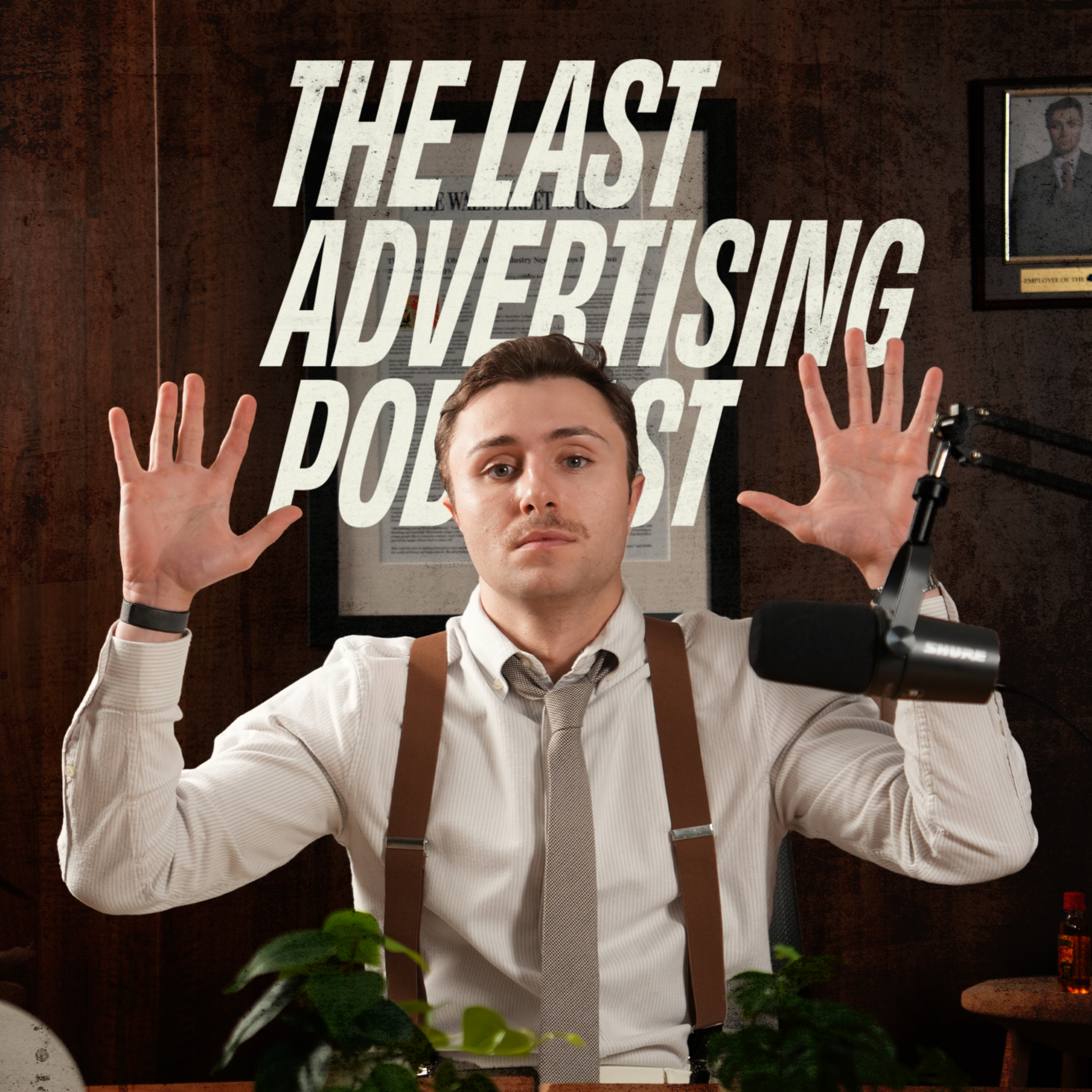
- The Last Advertising Podcast
- Is a Liberal Arts Education the Future of Advertising?
The Last Advertising Podcast2 Sep 2026 · 29m · 18 chapters
Is a Liberal Arts Education the Future of Advertising? | Professor Scott R. Hamula
In short
Whether a liberal arts education is the best path into advertising as generative AI makes idea execution easier; how to balance specialization with broad learning, brand-building, and AI literacy.
Guest
Professor Scott R. Hamula, AAF Distinguished Advertising Educator of the Year; chair of Ithaca College’s Department of Strategic Communication. Background includes studying advertising at the University of Illinois (not a liberal arts major) and teaching/leading integrated marketing communications.
Key claims
Liberal arts helps students “connect dots” across disciplines—valuable for advertising employers. AI increases the need for taste, brand alignment, and critical judgment beyond prompt output. Students should still specialize via a major, then broaden with minors/electives/internships (a “T-shaped” approach). Start portfolios early (LinkedIn and learning portfolios).
Notable examples
Ithaca’s integrated marketing communications major created in 2003 with business and communications deans; students take liberal arts courses (at least half credits). AI micro-credential/AI minor planned (2–3 courses). Students should also learn what they don’t want (e.g., media planning).
Written by AI. May contain mistakes.
Chapters
0:45
The Evolution of Advertising Education
Discussion on the changing landscape of advertising education emphasizing liberal arts.
“I think he won like, didn't you win Educator of the Year Award from the AAF, the American Advertising?”
2:14
Ithaca College's Strategic Communication Curriculum
Insight into the curriculum structure at Ithaca College and its integration with liberal arts.
“We talked a little bit before we got on and we've been messaging back and forth.”
4:36
Integration of Marketing and Communication
Exploration of the collaboration between business and communication schools at Ithaca College.
“And, you know, specifically at Ithaca, all the students have to take at least half of their credits to graduate, have to be have that liberal liberal arts designation to them.”
7:18
Students' Concerns in Today's Market
Discussion about what students are asking for and worried about in the current job market.
“Uh, you know, back in 2003, we had the, you know, the, the right players in place and the chemistry was right.”
10:52
The Role of Holistic Education
The importance of a broad education in helping students find success in advertising.
“And like, like you're there to learn and it's not there.”
12:26
Connecting the Dots with AI
Discussion on the importance of critical thinking and background knowledge in using AI in advertising.
“It's going to be so, so important in the future.”
13:10
Learning from Experience
Emphasis on the value of internships and courses in discovering personal career paths.
“You know, being able to connect dots, you know, you could use it to ideate, you know, different slogans.”
14:00
The Importance of Diverse Learning Experiences
Explore how a broad education can guide students in their career paths.
“So, like you said before, I think, you know, having a broader perspective and choices, you know, in the courses you take and the minors you consider and the different areas.”
15:00
Finding Your Path in Advertising
Discuss the significance of internships and experiences in career clarity.
“that was making the big Super Bowl campaigns.”
16:00
Evolving Roles in Advertising Agencies
Analyze how agency structures are changing and the need for flexibility.
“Granted, it's only a few agencies that I've talked to that implement this structure, but I don't know.”
Show all 18 chapters
17:00
Building a Strong Portfolio
Learn the importance of portfolios for students in advertising and PR.
“Which, you know, shooting and editing, you know, original content, you know, for social media or what have you, or working at the campus radio station or the campus TV station.”
18:00
The Role of Faculty in Career Readiness
Understand how professors can guide students in creating impactful portfolios.
“these ideas of these different roles i have this body of work here like how do you help them how What's like the first step in the coaching conversation there?”
20:00
Integrating AI into Curriculum
Examine how academic programs are adapting to include AI training.
“Everybody should have a portfolio, not just creative people.”
21:40
Micro-Credentials and New Learning Opportunities
Discuss the introduction of micro-credentials and their significance.
“So this will be posted in, I think, like August.”
23:20
The Strength of a Liberal Arts Education
Explore the hypothesis that a liberal arts education is key to advertising careers.
“So they can create a specific path within those discipline buckets, as well as still having a foundation of advertising, PR, and marketing courses that everybody has to take.”
24:40
The Future of Education in Advertising
Reflect on the future needs of advertising education and career paths.
“And your response was, yes, that's true.”
28:00
Discussion on Visiting and College Towns
The hosts discuss potential visits and the charm of college towns.
“You can be there four, four and a half hours right in midtown Manhattan.”
29:00
Closing Remarks and Acknowledgments
The hosts express gratitude and reflect on the insights shared.
“A little state of the industry, a little state of education from your perspective goes a long way.”

Ask about this episode
Get the gist, explore an idea or ask about something said.
 Claude
On The Last Advertising Podcast, what are the key points of this episode?
Searching your listeningTranscript
Automatic transcript. May contain errors.
0:00Ladies and gentlemen, you're listening to the last advertising podcast of all time. This is it, our last conversation. It's all done until probably next week. So enjoy this guest. Professor Scott Hamula, welcome back to the podcast. This is your second go around here. I didn't tell you this, but I'm actually rebranding this to the last advertising podcast. It's no longer the Breaking and Entering Advertising Show. Last time you were on, it was Breaking and Entering. Awesome. Well, hey, thanks for having me back. I really appreciate it. Looking forward to it. Of course. And I think like I kind of want to treat these conversations like this is the last conversation that we're going to have.
0:35I swear, eventually, of course, we're going to have more. So that's like the fun of it. But it kind of relieves the pressure. Well, I was our guest to open up a little bit more. But for folks that don't know you, who they should know you, you're one of my favorite professors out there, an AAF Distinguished Advertising Professor. I think he won like, didn't you win Educator of the Year Award from the AAF, the American Advertising?
0:58Professor Scott R. Hamula: Yeah, that's the Distinguished Advertising Educator of the Year Award that myself and a lot of other amazing faculty across the country, many of which you know, have won that award. Of course, of course. And and yeah, I did not go to Ithaca, but just from my spheres of influence and knowing you, I know how much of an impact you have on that program, the students there and the industry as a result, as a whole. And I really wanted to have this conversation with you. It's been on my mind is this kind of hypothesis that that with the role of generative AI becomes better at helping people execute their ideas come to life.
1:39I'm curious. I have this this idea that liberal a liberal arts education may become one of the strongest ways to break into the industry. And this goes against everything I used to preach. It was like specialize, know your role specifically, art direction, copywriting strategy, become the best of that specific thing and you'll break in. You have much better chances to break in. But now it's kind of like this 180 where you will need this general focus and that will help you come up with the better ideas and become a more holistic creative than you can execute with these tools. So that's this whole episode here.
2:14We talked a little bit before we got on and we've been messaging back and forth. But I want to get your take on that high level here.
2:22Professor Scott R. Hamula: Well, I think, you know, what you've said is a very solid, solid foundation, solid premise, a way to view, you know, liberal arts and a broader education. There's a quote out there and it's on one of my slides about, you know, curiosity about life, you know, is one of the successful characteristics to have in advertising. because there are so many, you know, different views out there that, you know, we're really trying to, you know, connect dots all over the place. And one, you know, one, you know, foundation that helps you do that, I believe is, you know, liberal arts, the liberal arts. You know, you've talked about that, how, you know, the liberal arts, you know, help students to connect dots between different areas that maybe don't seem to go together naturally, but there is actually a connectivity between them, an intersection between them, and especially in advertising.
3:26Professor Scott R. Hamula: And I think a lot of employers are looking for that ability to connect the dots. Absolutely. And I don't have a liberal arts background. I went to the University of Illinois, as you know, I studied advertising. But, you know, these majors at these universities are also kind of just like categories, ways of helping the administration kind of bucket together classes. I mean, we were, you know, in order to get a degree in a lot of schools, a lot of universities, you are required to take general electives and explore outside the majors themselves here. So I guess there is some sort of support there in the general, in the broader sense there.
4:12But like, I want to get your thoughts. I want to learn more about Ithaca College because you're the department of you're the chair for the Department of Strategic Communication here. I guess, can you kind of walk me through what somebody that might end up in your program, like what would their kind of curriculum at a high level, what it might look like across their their four years as an undergrad? Sure.
4:35Professor Scott R. Hamula: And before I'll answer that, I'll say you have had some a liberal arts foundation, you know, that you've taken those other courses. And, you know, specifically at Ithaca, all the students have to take at least half of their credits to graduate, have to be have that liberal liberal arts designation to them. And, you know, pretty much that is having a broad knowledge. Courses that have broad knowledge encourage critical thinking, you know, general academic inquiry, that sort of thing. And, you know, beyond that, looking at, you know, you talked about, you know, you want, you know, you commented on telling students to focus.
5:20Professor Scott R. Hamula: And you're right. I mean, you know, how many times have we talked to, you know, young people and they said, well, I think I want to do creative. And it's like, well, you know, what does that mean to you? And then you got to give them the old, OK, there's like art direction, copywriting, graphic design and, you know, even tangentially like production. I mean, what you've got to do, you've got to specialize. I mean, you do. At the same time, you know, in our program, we know that there is an integrated approach, you know, to brand communications. And it's not just communication, but it's experiences, too, and promotions and that sort of thing.
5:56Professor Scott R. Hamula: So, you know, we give students a broader, broad perspective of advertising, public relations, and, you know, a solid foundation in marketing. Because I always, I mean, you know, for right or wrong, I think advertising really is all about brand building. And that's marketing. And, you know, if you're going to be in front of the client, you should be able to speak marketing. Yeah. Yeah, the brand building, I think, is so essential. I think we had a great guest on our live show, John Doyle, CSO over at Cole McBoy. I'm paraphrasing, but he was basically saying there's two types of companies in the future here with generative AI and the technology.
6:37It's like the brand first and then the non-brand first companies. And the brand first companies will survive and the non-brand companies will die. I think that's so crucial. It's also my favorite part. I'm sure it's your favorite part, too, of this brand building here. And I think that's so important for people to learn. But, you know, I'm curious then. So with Ithaca College specifically, like, which it is a liberal arts college, but you have this kind of sphere that you run as well. I guess, like, how did you guys even get this kind of formulation?
7:16Professor Scott R. Hamula: That's a great question. Um, because it is unusual. Uh, you know, I, I talked to parents and, uh, you know, of incoming students and we talk about maybe, you know, some schools might have silos where a business school doesn't talk to a school of journalism or a communication school. Uh, you know, back in 2003, we had the, you know, the, the right players in place and the chemistry was right. And, you know, the Dean from the business school and our Dean from the Park School of communications and faculty from both got together and we created a integrated marketing communications major. And they were, you know, really happy to have our students in their courses.
7:57Professor Scott R. Hamula: I think, you know, advertising students, PR students, they're different than a pure marketing student in some ways. And they add a nice flavor of diversity to a marketing class. So that's, I mean, that's really how it all came together. I mean, we had, you know, great schools, great players, Everybody wanted to play together and create, you know, an experience, an educational experience that, you know, really we think meets the industry where it's at and where it's going. What are you seeing today then when you're what are students asking for? What are they concerned about? Is it still the job at the end of the day?
8:38Like, is it, you know, it's come the spring semester. Is it finding internships? But I guess like what are you noticing? And has there been a dramatic shift in the past couple of years compared to anything else that you've seen?
8:51Professor Scott R. Hamula: Yeah. You know, I think students have always been, you know, curious and stressed out about, right, you know, getting getting experience beyond the classroom and even in the classroom. Right. Sometimes they'll come to you and say, you know, I've got this major, you know, I've got room for a minor or two. I think that goes back to what you said before, you know, trying to, you know, expand your horizon and your perspective. You've probably heard of a of a of a T in education where, you know, you get a broad experience, maybe in your major, but then you drill down in like psychology. Right. Somebody wants to go into, you know, strat planning.
9:33Professor Scott R. Hamula: say, hey, what about a minor in psychology or sociology or anthropology, something along those lines? Or maybe you have a passion for politics, right? And you want to practice that, you know, after you graduate. So, I mean, that sort of aligns students' fears about am I studying the right thing? Then you go back to, okay, what are students worried about? Internships. I mean, students around the country sometimes are in smaller towns like we are. It's like, I want an internship during the semester. Good side, though, right? For COVID, you know, we've got, you know, remote internships, which, you know, are great experiences.
10:12Hey, during the school year, I would I was I was not interested in that. That's crazy that they want to do an internship during the semester. Go go hang out and have fun and study and do the college life. Like, what are you what are they stressed about during the school year?
10:29Professor Scott R. Hamula: It's a big tent, you know, and there's lots of different students and some, you know, some are in the extracurriculars, which is great, you know, and some have time or, you know, their focus is mainly on academics and education. And they really crave that internship experience. And maybe they didn't get it over the summer. Yeah, that's fair. Yeah, that makes sense. and I guess like I guess like if I'm if I were to talk to my younger self like I was so strategic and surgical and wanting to break into a large ad agency account executive position and I worked my way backwards I did everything right got the internships I was the ad club president for one of my I was a senior I guess like I would just kind of like tell my younger yourself, like immerse yourself in all of what college has to offer.
11:27And like, like you're there to learn and it's not there. You're, I don't think that people, which is hard for me to say, but like, it shouldn't be like, I go to college step one, step two, I get a job right after that. Like, I think it should be more of this holistic education. That's where I'm kind of leaning. What do you think, professor?
11:47Professor Scott R. Hamula: No, I agree. And, you know, there are some mechanisms I think built into a student's education where, you know, they're kind of forced to diversify their education and their background. The humanities, the natural sciences, the creative arts, you know, taking courses in those areas and those disciplines, like you said at the beginning, you know, help us to broaden your perspective and to see where those dots can be connected between, you know, different areas like psychology and law and advertising. Yeah. The connecting of the dots is so fascinating to me. It's going to be so, so important in the future.
12:29Like as, as these tools can just generate, like you can have, you can have conversation and it might come up with ideas. And some people that don't have the taste and the knowledge in the background might come see these generated ideas through an AI and say, this is not bad. I might just go with that. But if you have the background and you're able to connect your dots on your own, you'll come up with much better ideas.
12:53Professor Scott R. Hamula: Yeah, I 100 % agree. And, you know, with AI, you can't have a conversation about education and the industry without talking about AI. And, you know, it's obviously we know how to use it, how we're using it, how to use it, but how to use it effectively. And you're right. You know, being able to connect dots, you know, you could use it to ideate, you know, different slogans. But like what what do you feed into that? And then, like you say, afterwards, through what lens are you looking at the output from AI, you know, to make sure that it's, you know, on brief, you know, that it matches the brands on brand.
13:31Professor Scott R. Hamula: So, yeah, absolutely. Connecting the dots definitely applies to how we effectively use AI. Absolutely. Absolutely. I guess, what are some of the things that the best students will be learning or implementing in this upcoming school year to be successful? Like, what should they be focused on? Huh. You know, what always comes to mind is when you take courses or you take an internship, it's just as important to find out what you don't want to do as what you do.
14:13Professor Scott R. Hamula: So, like you said before, I think, you know, having a broader perspective and choices, you know, in the courses you take and the minors you consider and the different areas. You know, obviously I run into students that believe they want to do advertising or believe they want to do public relations or believe they want to go into nonprofits. profits. I mean, it's really important to, you know, take courses in those areas and to have experiences in those areas to really figure it out. Yeah. Understanding what you don't want to do is so important. For me, that was media planning very early on my first internship.
14:51I was like, there is some strategy, obviously. It's actually very kind of interesting now that I'm a little bit older, but I knew that I wanted to get to be in that creative ad agency, the one that was making the big Super Bowl campaigns. And that was a learning experience, even though in the moment I didn't enjoy it, I still learned and had a great takeaway from it.
15:11Professor Scott R. Hamula: Well, you know what we hear. There's creativity and everything. There's a lot of creativity in media planning. There is. There is, absolutely. I just think it's so fascinating to me, like going back now and thinking about, I'm just kind of restructuring because you said, you know, we kind of talked about like, there's still an importance to specialize, right? To understand the role that you want to break into. I think that still matters today, but I'm afraid maybe not in the next three to five years. Like I'm looking at agencies like SilverSide AI. I'm looking at some of these, like these new studios that do not have the rigidly defined creative roles where they are kind of prompt engineering.
15:57There is a creative director and there's a prompt engineer. Granted, it's only a few agencies that I've talked to that implement this structure, but I don't know. I'm looking at the high touches of the world and the silver side AIs of the world. And there might be a day where specializing in a specific copywriting or art direction role might not matter. And that's what makes me think the investment into a liberal arts college might be beneficial now.
16:27Professor Scott R. Hamula: I think, you know, studying in a focused discipline is still good. But like you said, you've got to broaden. And I think a lot of that can come through, again, like you said, you know, minors, extracurriculars. I've seen so many students, you know, speaking more specifically to like advertising students or PR students who, you know, are doing things extracurricularly that you would think a television or a film student would be doing. Which, you know, shooting and editing, you know, original content, you know, for social media or what have you, or working at the campus radio station or the campus TV station.
17:12Professor Scott R. Hamula: And, you know, they end up going more into, you know, a content creation or maybe even production. So whatever background I think you do get from your chosen major, it's going to be beneficial. But like we're talking about, too, you know, those other areas that are touch points like your internship or your extracurricular can really open you up to different skills and different career paths. yeah and then how do you have these conversations when it's their senior year second semester they're applying for jobs and they show you a resume or a portfolio body of work and they go professor hamula how do i communicate this like what like what's my first step because i have all these ideas of these different roles i have this body of work here like how do you help them how What's like the first step in the coaching conversation there?
18:07Professor Scott R. Hamula: Well, I think you've touched on a super interesting area that I think faculty, your professors are doing you a service by starting that way earlier than your senior year. I know a lot of faculty, including myself, that, you know, in our advertising or entry level, like principles of advertising or PR courses. I mean, we're talking about, you know, portfolios and, you know, creating relics from your classes and talking about the websites that those should be posted on. And LinkedIn's big. I mean, you can post a lot on LinkedIn as well, in addition to, you know, your foundational information. So, I mean, that stuff should really start.
18:52Professor Scott R. Hamula: I mean, I'd love it to start in high school. Yeah. I love it when somebody has a, you know, a student in high school has a LinkedIn account and tries to connect with me more than happy to connect with everybody. And that's just wild. And it's something that even in intro courses, I think a lot of schools are talking about LinkedIn and portfolios. I think many schools, including ours, requires a learning portfolio. So that could be, well, see, that would be artifacts from different classes. I mean, it could be from your psychology, you know, courses, in addition to your communications focused classes.
19:36Professor Scott R. Hamula: You know, you mentioned, you know, media planning. Do you have a media plan that might go into that you did as a project in a course or, you know, some, you know, non-confidential work that you did at your internship? I mean, putting that into your portfolio, your student portfolio. And again, I mentioned how, you know, talking about different websites that could host and different schools where you could look at, you know, different students' portfolios because a lot of students don't know what should go into a portfolio. And everybody, right? Everybody should have a portfolio, not just creative people.
20:13Professor Scott R. Hamula: You know, people want to go into media. People want to go into strategy or account work. You can and should have a portfolio. I love this idea of a learning portfolio. like I had no excuse not to do this like it's lost in Google drives in and somewhere in my account but like even just like that exercise of saving the relics and I love how you call them relics and and putting them onto a website which is very easy to make nowadays like people everybody can make a website but like even just posting that and having that in the background just so you can go back to like oh yeah i did do this and you can actually speak to it pull it up during an interview or send that to a recruiter in addition to if you are an art director or copywriter you might need a more specialized one which there's plenty of episodes to prove that like to still showcase that type of work but like having both those things could be really really interesting sure and and i think there are a number of schools that do have a a formal uh process or requirement to have a student learning portfolio and to examine and, you know, look at it and critically analyze it and connect dots, you know, between your different projects and your internships and your extracurricular activities.
21:31Professor Scott R. Hamula: You know, where was the intersection between those and how did, you know, that intersection make for better decision making? Totally, totally. So this will be posted in, I think, like August. So right around people are getting back to school here. Is there anything that you're doing to prepare for this school year, updating any curriculum, anything that you're thinking about, or the professors within the organization that you're kind of equipping them to look forward to this school year? Sure. Well, coincidentally, we are having our program review, which majors have to go through, I believe it's every seven years, maybe it's nine, something like that.
22:18Professor Scott R. Hamula: So you have to have I mean, you really look with critical eyes at your program in total. What courses are you offering? How do they connect to each other? How many students, faculty outcomes, student learning outcomes, objectives, that sort of thing. But you also have an external evaluator come in as well. So we'll be inviting somebody from a school somewhere in the U.S. to come in, spend a little time sitting on some classes. review our program and write a report. So that's one of the big things that we're preparing for this whole year coming up. Do you anticipate some larger changes? And I don't know how that process works, but what do you think will happen?
23:04Professor Scott R. Hamula: It comes at an interesting time because we made some changes to the major and made it more flexible and giving students different buckets, advertising, public relations, and marketing buckets, and giving them choices within there for those disciplines. So they can create a specific path within those discipline buckets, as well as still having a foundation of advertising, PR, and marketing courses that everybody has to take. Gotcha. So that and AI, how will we continue to address AI? I know that this fall we're onboarding a major and a minor in AI. And it's called a micro-credential. Did you ever hear of that?
23:53No, no, I haven't. A micro-credential, no. Yeah, it's even smaller. See, you got your major, you got your minor, and then you've got this thing called a micro-credential. Got it, got it. I had a certificate. I think they offered a class that gave you, I got a media sales certificate. And so that kind of I'm sure it's like very similar.
24:12Professor Scott R. Hamula: That's their sales certificate. Absolutely. So I one of the things I think we're going to be encouraging is for students to at the very least consider a minor in AI or a micro credential, which is really nice. It's like typically two or three courses. It's not as big as a as a minor. But what also another benefit is it does show up on your transcript as well. Nice. So that, you know, that's very beneficial for, you know, the recruiting for internship jobs. okay yeah no i would definitely consider that for the folks listening and that sounds like a great offering so so recapping here looking at this conversation i started it by thinking this hypothesis that as generative ai becomes better at helping people bring their ideas to life both broadly and within advertising i think a liberal arts education may become one of the strongest ways to break into the industry.
25:11And your response was, yes, that's true. However, it's still important to specialize in the major in like that kind of that core learning pathway. And you can supplement that with your electives that you take with the extracurriculars, the internships that you do. It's still like that T-based kind of approach. Is that your contention there? Absolutely.
25:39Professor Scott R. Hamula: I really think that's the way to be successful in an entry level. And, you know, we've got to keep learning even after we get that first position, that second position and so on. But, you know, specializing is great. We love it. Right. We love the industry. It's nice to see students who, you know, really show their interest, strong interest in the industry by having a major that's, you know, connected to the industry. At the same time, it's like, what else do you bring to the table? Oh, you had a minor in psychology. Oh, you had an internship at this, you know, nonprofit public relations type organization.
26:26Professor Scott R. Hamula: That's interesting. Tell me more about that, too. Mm hmm. I agree with you. I think at where we are at today, as we're recording this in July, and we'll be out in a couple months from now, probably right at the start of the school year for 2026, 2027. I think that's still true and a great pathway. We're going to have to check in, though, in seven years from now, as you're planning the next curriculum and really check in here. lifetime's ticking i'm getting old no you're gonna be there you got all the energy in the world you'll be there working and we'll check in in seven years from now even if you're not working and seeing like is it you know is there you know is there any need for a major should you just go a liberal arts education through and through foley i don't know but we'll check changes A lot of changes in higher ed in education period.
27:23I know. I think I'm still thinking that's the route to go to generalize more as an undergrad, to get as crazy amount of experiences as possible. But I think what you're saying right now is still the best way. Sure. Wonderful. Anything else going on in your world? Ithaca, how many students are in a classroom on average?
27:44Professor Scott R. Hamula: It varies. As you know, the more hands-on creative types, we keep those to about 15. And then the general principles type courses up to 30, 25 to 30. Nice, nice. And it's four hours away from New York City-ish? Yep, yep, yep. Take the bus down. You can be there four, four and a half hours right in midtown Manhattan. So the geographic location is great in terms of being able to be close to the city, but also being in a cool college town. Lots of cool college towns out there. I want to make it a trip out there. I want to come and say hello, sit in a class. So I'm going to make an effort to do that maybe this fall.
28:27Professor Scott R. Hamula: If you love wine, it's Finger Lakes wine country, a lot of good craft beers, and a lot of great food and entertainment. When's the best time to come visit, would you say? I would say spring, summer, fall. Spring, summer, fall. Unless you ski. No, no, no. Fall, I think fall or spring, we'll do it. We'll do a little trip, either when it's football weather or when it's nice and when it's spring. It's beautiful. You tell me when you're out here, we'll get together. Wonderful. Well, Professor, thank you very much for checking in and sharing your knowledge. A little state of the industry, a little state of education from your perspective goes a long way.
29:10one of the best advertising educators in the world right now so thank you again
29:16Professor Scott R. Hamula: Gino you're too kind thank you you're doing great things and thank you very much for your service to the industry of course of course take care
From the publisher
As AI gets better at executing ideas, what should the next generation of advertising talent actually study?
Professor Scott R. Hamula joins The Last Advertising Podcast to discuss the future of advertising education, the value of a liberal arts education, and why specialization still matters. Scott is Professor and Program Director of Advertising, Public Relations, and Marketing Communications at Ithaca College, a recipient of the American Advertising Federation’s Distinguished Advertising Educator Award and its Barton A. Cummings Gold Medal Award, the AAF’s highest honor for volunteer service.
Geno and Scott discuss how AI could change what advertising students need to learn, why curiosity and connecting ideas across disciplines are becoming increasingly valuable, the role of internships and extracurriculars, and why every student should start building a learning portfolio long before graduation.
For more from B&E, including newsletters, social videos, advertising news and live shows, visit www.breaking-entering.com.
Partner with Breaking and Entering Media[email protected]
More from The Last Advertising Podcast
All episodesWe use cookies.They keep VO running smoothly and help us improve it. Privacy policy