
 Ask ChatGPT

- Podcasts
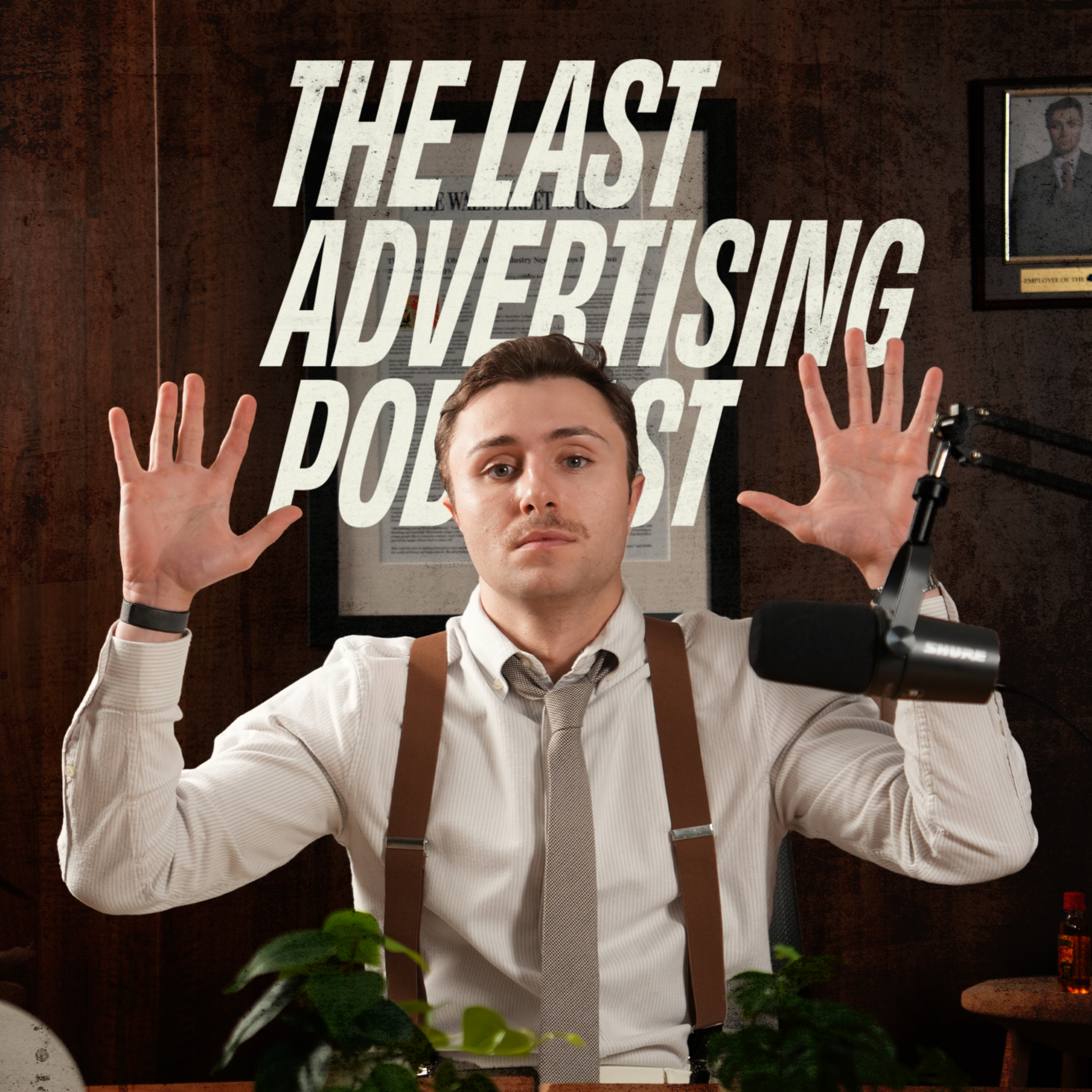
- The Last Advertising Podcast
- Nick Gallo Built Loop Agency Around One Rule
The Last Advertising Podcast16 Sep 2026 · 31m · 19 chapters
Nick Gallo Built Loop Agency Around One Rule
In short
Nick Gallo (Loop Agency) explains how he built Loop around nonstop creation, fast ideation-to-shipping, and making “group chat worthy” work that breaks behavior.
Guest backgrounds
Nick Gallo is a New York–based creative who started as a serious graffiti writer (college classes optimized to keep painting). He later made Vine content daily, then helped build interactive/viral apps and campaigns, including work connected to Vine founders and live interactive formats.
Key claims
The core rule is “make it nonstop” (not just talk). Loop is mentally project-based: idea to execution in about two weeks (example: DoorDash greenlit Monday, cast by Thursday, shot Tuesday, shipping in post). CMOs should aim for what people text/share organically. Culture is built by hiring “doers/brand builders,” using forward-momentum feedback, and pitching many ideas (4-page strategy, 15 ideas) to find the “discomfort zone.”
Notable examples
Vine daily posting; DoorDash campaign; Bears launch of the Salmon Bowl for Kava (18M views); Scary Movie “Subservient Ghostface”; “Cringe Mart”; HQ Trivia (up to 2.3M live peak players); live interactive show platform and 100-day trivia run.
Written by AI. May contain mistakes.
Chapters
0:45
The Drive to Create
Nick shares his passion for creativity and making things.
“Well, well for me, even before my career, what I was making was I was a graffiti writer.”
1:42
From Graffiti to Advertising
Nick discusses his journey from graffiti art to starting Loop Agency.
“You could make a career out of that and like make your own products now, but you're helping brands now.”
2:26
Agency vs. Content Creator
Exploring the differences between running an agency and being a content creator.
“So, so for me, I just, I think it's exciting to work with, uh, exciting brands and entities and even ones that, um, aren't quite exciting yet and figuring out how to kind of push them over to the other side.”
4:32
Dynamic Advertising Landscape
Nick addresses the changing nature of the advertising industry.
6:31
Creating Shareable Content
Nick explains how to create content that resonates and goes viral.
“And I tell everyone that like what you choosing one or the other is a really tough decision to make, but speaking directly to the CMO, what I want to make is the thing that they're going to text their friend.”
7:47
Agency Culture and Hiring
Discussion on Loop Agency's culture and hiring practices.
“I mean, even one can I go into the basement.”
8:44
Interviewing New Talent
Nick shares his approach to interviewing and vetting new hires.
“are constantly thinking of these new outlets?”
10:03
The Importance of New York Energy
Examining how New York's environment shapes creativity and work ethic.
“Either it's a presence and it's this one guy I just spoke to, uh, his fucking website was like a Costco receipt.”
11:28
Navigating Challenges at Work
Nick discusses the feedback culture and working dynamics at Loop Agency.
“But yeah, so there's a couple of tests here.”
14:03
Learning from Experiences
Nick reflects on formative experiences that shaped his approach to feedback and creativity.
“Like are that those are just that's just like a formative moment in my head where I'm like, you fucking idiot.”
Show all 19 chapters
16:17
The Importance of Forward Momentum
Nick discusses the concept of forward momentum feedback in the creative process.
“That doesn't mean it's going to ship at the end of the day.”
18:28
Navigating the Discomfort Zone
Exploring how brands can benefit from operating in the discomfort zone.
“Every company in the world can say surprise, delight, you know, earned, whatever.”
20:57
Aiming for Impactful Campaigns
Nick shares his ambition for creating memorable campaigns, including a Super Bowl spot.
“But like, yeah, I think you want to end on a note of just like, oh, wow, that was crazy.”
22:46
Breaking Behavior Patterns
Discussing the significance of breaking behavior in advertising, exemplified by HQ Trivia.
“growing i'm not like re-xing the team but i feel good and excited about like where we're at That's amazing.”
26:48
Advice for Aspiring Advertisers
Nick offers practical advice for juniors looking to break into advertising.
“And that was the third app that we made together.”
28:00
The Importance of Timelines in Creativity
Learn how setting tight deadlines can enhance your creative output.
“That being said, I don't know what WPP is looking for.”
28:52
The Shift from Long-form to Short-form Content
Discover how short videos helped in overcoming creative blocks and shipping work.
“But if I'm starting this thing again in 2026, I would probably try to do one a day.”
29:50
Highlights of Viral Vine Series
Explore some entertaining and absurd series that gained popularity on Vine.
30:24
Future Aspirations and Motivation
Hear about the excitement for future growth and inspiring others through creativity.
“kind of maybe commentary on corporate life, where like the phone rings, and I would say, yes, sir, right away, sir, and then have to do something extremely dumb after that.”

Ask about this episode
Get the gist, explore an idea or ask about something said.
 Claude
On The Last Advertising Podcast, what are the key points of this episode?
Searching your listeningTranscript
Automatic transcript. May contain errors.
0:00Ladies and gentlemen, you're listening to the last advertising podcast of all time. This is it, our last conversation. It's all done until probably next week, so enjoy this guest. Nick frickin' Gallo, welcome to the last advertising podcast. This is it. I'm done after this. How's that sound? I've been done for years, Doc. Dude, what makes you continue to come back?
0:24Nick Gallo: You know, I just love making shit. And for me, that's the whole reason why I started Loop in the first place, was to like get my hands into things and make it. So, you know, with Loop, I'm able to make a lot of stuff all the time. It does not stop. Yeah. What are, like, I guess like, what are some of those things that like early on in your career, you made something and you're like, oh shit, this is for me. Yeah. I mean, honestly, it really is. Well, well for me, even before my career, what I was making was I was a graffiti writer. So I loved doing graffiti. I loved and I took it really seriously.
1:02Nick Gallo: Like I would when I was in college, I was like, I'm not going away. I'm staying in New York. So I could like New York is like the epicenter of graffiti in my eyes. So let me do that. I jam my classes to two days a week. So and I went to class from 8 a.m. to 10 p.m. So I was able to optimize the amount of nights I could do graffiti and not affect like my life. So, you know, making things, putting things up on the wall and like it like existing in a space and people seeing it and surprising people with its location and its colors. For me, that was like really the start of like, oh, I could like make a thing.
1:39Nick Gallo: It's out in the world and like people react to it. So would you say the most important thing then today, since this is the last advertising conversation, is the main takeaway from this is going to be go out and create something like stop talking about it, stop thinking too much about it and just like make something out in the world? absolutely make it make it nonstop i mean it was graffiti for me and then it was vine and what i did with when the vine app came out was like oh i'm gonna make a vine every day and it was just like non-stop ripping vines posting them and yeah i think it's about those reps for sure yeah i mean what would make you want then to become an ad agency or a creative studio essentially an ad agency.
2:18You could be a content creator. You could make a career out of that and like make your own products now, but you're helping brands now. Why, why that route?
2:28Nick Gallo: Yeah. You know, I mean, like, it's interesting because in some ways you may call it lower stakes that it's not you as the content creator, but in other ways it's way higher stakes because there's a lot of people's livelihoods, money on the line to like, you know, they're investing in the stuff that you're helping them make. So, so for me, I just, I think it's exciting to work with, uh, exciting brands and entities and even ones that, um, aren't quite exciting yet and figuring out how to kind of push them over to the other side. So, you know, I, I, I still feel like a content creator and I think we, I always feel like I'm making stuff and there's always things in my head that I'm like, I know I want to make this thing or I'm going to do this thing.
3:14Nick Gallo: And even like with loop, like I made this like claw machine. Cause like, I was like, cool, we're going to make a claw machine. We're going to live stream it on the thing. I made a video game. And I was like, we're going to like, I'm just going to like figure out how to make a video game and like do that. So like, I definitely like, no matter what, still, I don't feel like an ad agency guy, even though I guess I am. let's talk about that because it's the industry is so dynamic right now it's changing more than we've ever seen with the the mergers the ai tools out there the lack of entry-level jobs um we it seems like you guys are positioned nicely in this next chapter of advertising and marketing what do you think is like the biggest difference between loop and like a traditional hold co-owned ad agency like a traditional big shop for sure i mean although Although we're definitely seeing more sort of AOR structured contracts happening in our lifeline right now, I would still say that mentally, I feel very project based.
4:19Nick Gallo: And why I feel like that is because it's like we come up with an idea, zero to one, and then we just fucking make it. so even though this this grand scheme of just always on throwing shit at the wall figuring it out like there's an eye towards just like here's the thing and we're gonna make it not only are we gonna make it we're gonna make it next week and we're gonna ship it like for example this this door dash project that we're working on right now thrown into a slack channel on a monday greenlit internally by them on a tuesday casted celebrity talent by a thursday and then shot it the following tuesday and now it's in post and it's shipping so this is like an under under two week timeline to just like get this insane thing out this is my perception of you is the ability to like just go from ideation to execution so fast and uh like we've seen it time and time and time again like when you had the bears launch the salmon bowl for kava that got 18 million views i'm sure more than that or with the um the scary movie launch where you did the subservient ghost face and now probably with the door dash that you're talking about i think we just saw it with like the embarrassing items what was that called again it was called cringe mart and just you know i'm talking about it because i'm sure this this interview doesn't launch tomorrow but like come next week the extension of this thing is going to be insane okay interesting i didn't know that this will probably be out in like a month or two from now so you could say whatever you want but um okay so that's where you're at and why does it matter like if a cmo is listening to this or somebody that just wants to understand like the broader landscape it seems like you're cultivating like these punchy executions every month like like like that might probably be ideal and if you were to be a cmo you would want to stand out break through like once a month for a brand not everybody can afford it why is that kind of like a method that that CMOs are now taking over than a long-term consistent brand platform, nice and easy, consistent throughout the year?
6:29Nick Gallo: I don't know if it's one or the other. I think there's a baseline that you need to kind of just have. And I tell everyone that like what you choosing one or the other is a really tough decision to make, but speaking directly to the CMO, what I want to make is the thing that they're going to text their friend. And that's the gut check. And if the CMO is not texting this just organically, like, hey, look what I did with my job this week, then I'd think that we could do better. Okay. So is that kind of how you brand your agency loop itself to when you're having these creds deck meetings, when you're having these conversations with potential clients?
7:07Is that what you say? You want to create the group chat worthy item?
7:12Nick Gallo: I think one of the differences, I think, is sort of how we function as the agency and how others is like, I don't say that. People are coming to us because they're seeing what we're making and they're either getting it texted to them or somebody they're texting it to somebody. The best compliment I get and I never get sick of it is like in a capabilities call, the CMO, the head of marketing or whatever, they're saying, wow, this is like one of the first times an agency walked me through the deck and I've seen a handful of the work. not saying that the work is bad when the other agencies are presenting, but it just falls into the abyss.
7:46Nick Gallo: And like people aren't really seeing a lot of that stuff. I mean, even one can I go into the basement. A lot of it's amazing, but I'm like seeing it for the first time. And like for me, there's a miss if like we're seeing good work for the first time in a basement. Yes, absolutely. Absolutely. I mean, you're making stuff that's built. It seems like to go viral on socials and like to be sent in those chats to share abilities kind of baked in there i'm so curious then like how do you cultivate an agency culture that's constantly meeting that standard i mean you're a madman i mean you're you were you literally paid for tickets like essentially front row of the next game playoffs wearing the loop logo in front of right behind jerry seinfeld and the greatest comeback in NBA playoffs.
8:37I mean, that was a crazy investment. You're a madman. So I can see that you're naturally built this way. But how do you ensure that your employees are constantly thinking of these new outlets?
8:48Nick Gallo: For sure. Well, I think for starters, it's like who you put in the room. And my entire staff has never worked in an agency before. So that's kind of the first start. Of course, now, now that we're like about 20 deep, I'm starting to bring some like, you know, account managers from agencies into the fold or like an AD and a CD from an agency into the fold, just because, you know, we're competing with other agencies at this point. But it was really important for me for like the type of company that I wanted to build was like brand builders and like brand builders are fucked up in the head, right?
9:23Nick Gallo: Like they will not like say no, they will not let go of something. They get in there and they get obsessed with it. So for me, like the doers and the brand builders, putting them in the room and like letting them loose is, has been part of the strategy here. Nick, what, what, what does an interview look like for you when you're vetting new talent? Like what are you, what is going on in your mind? What are you trying to get from these people? What are you asking? Or does it come from like, you've seen their work already. You've seen their social pages. Like how does, how do you operate an interview if you're hiring somebody?
9:57Nick Gallo: Yeah, for sure. I mean, I wouldn't say I, I would probably hire other people to interview other than me, but like, here's my strategy and how I go in one, I'm impressed by the work. Either it's a presence and it's this one guy I just spoke to, uh, his fucking website was like a Costco receipt. And I'm like, hell yeah. Like I'm going to talk to you. Like we're starting somewhere. You know what I mean? So like an interesting website, interesting work. I have a hard time kind of figuring out when somebody's from a big agency, what they did on a project. I'm like, yeah, that project looks cool. I don't really know.
10:29Nick Gallo: So I'm trying to look for like cool personal work or stuff that clearly looks like a person made it and not a group of 30 people. From there, then I get on the call. And honestly, I talk most of the time. I try to overwhelm the shit out of people in the interview. And if you are visibly overwhelmed in what I'm throwing at you and how we function, it's clearly not a fit. But if you start asking the right questions and you're intrigued and excited for me, that's like 80%. And then it's like, cool, let's give this, let's kick the wheels on it. Either we'll know if it's a fit or not, you know? And are you idea, is it like a mini brainstorm session or is it like what's going on currently at, at the shop?
11:10And you're like, you know, this is where we're tackling now. Try to get a gut check on them?
11:14Nick Gallo: Yeah, right now we just started like, you know, we're bringing on some more creative leads. And I'd say like in that case, yes, like there's a couple of ideation tests. We also have a great network of ideators. So like, you know, we could always consider bringing them on full. But yeah, so there's a couple of tests here. But honestly, it's the overwhelming test. And it's like, how are you overwhelmed? Or are you excited? And it says a lot. Would you ever I don't know what stage you're at in the company right now. Like, have you experimented with hiring on interns, junior talent at all? Yeah, I mean, like, yes, I'd say.
11:55Nick Gallo: In the department that I do that most would be the video department, because it's just like a bit more like tangible, I'd say, where it's like we know what good videos look like. Like we also are a really great video company and I have incredible leads on the video side, like an award winning short film director, an award winning documentarian. And they're overseeing the video department. So when we bring for one, kids are hitting us up on like Instagram or LinkedIn. And if they have vibes, I'm like, oh, I know we could get their video skills up there just because it's a bit more tangible. So yeah, we are bringing in junior editors, but watching them climb the ranks extremely quickly based on the talent they're being surrounded with.
12:40Totally. And you're based in New York. There's no shortage of talent, it seems like. So that makes sense.
12:46Nick Gallo: That's what people are saying. It's a kind of a leverage point for us. But I don't know, man. I'm from New York. So I'm like, if you're not at New York speed, then I don't know, you're not probably a fit either. I definitely want to get into your psyche a little bit on the energy that you have. Is that something that growing up in New York kind of forced you to have? Is it genetics? Can someone teach that passion and excitement to themselves? for sure um i think like i have an obsessive uh personality for sure and it went from graffiti and then pivoted to video and and sort of but i will say that i do think new york gets you there in a different way like i i don't know if you've heard you know j-lo's hot subway take of like if you're not a new yorker unless you're born in new york i actually disagree i think what makes you a new yorker is going through junior high school and high school in new york because i I think those are the formative years that like you're getting hit with just like crazy shit left and right.
13:50Nick Gallo: The streets are wild. Like I got my chain robbed on Canal Street when I was in fifth grade when we like snuck onto the ferry and went to Chinatown to get like fake IDs. You know what I mean? Like, I don't know. Like are that those are just that's just like a formative moment in my head where I'm like, you fucking idiot. it like the guy was like you got to take your chain off to go through this metal detector to get your id and i'm like there's no metal detectors in the fucking courtland alley in chinatown but like you know i learned that one and uh yeah anyway so yeah i think there's some street smarts that that are really uh you know just injected into your your brain totally totally And then I guess like – like I think – how do I phrase this?
14:39I think – is it difficult to work for you, Nick?
14:47Nick Gallo: Well, I guess I don't think so. I mean for me, like one thing that I would say, something that I really like – and everyone knows this at the company. I'm a big advocate of forward momentum feedback. so I will never implode anything for better or for worse. I won't implode anything you're working on. I'll always give forward momentum feedback to get it to the best version that I think it could be within their framework. This episode is brought to you by The Shipyard, which is a full service marketing and communications agency, ladies and gentlemen. They engineer brand love as a measurable business force, building brands designed to spark, hold, and scale across culture and channels.
15:29From brand strategy and identity to creative development, digital innovation, media, performance marketing, and public relations, the Shipyard aligns every discipline to fight apathy and atrophy and create an unshakable presence over time. With coordinated strength across owned, earned, and paid ecosystems, the Shipyard helps brands adapt, endure, and perform under pressure so they are not only seen, but known and returned to. At The Shipyard, brand love is engineered to last, delivering integrated marketing, advertising, and communications built for long-term impact. If you want to learn more, visit theshipyard.com where they have coordinated strength and unshakable results.
16:17Nick Gallo: That doesn't mean it's going to ship at the end of the day. It might still be a piece of shit. But forward momentum feedback for me is something that I strongly believe in. And I think it gets people excited. It lets people take ownership. And then we learn from sort of what that final product is on like how it could be better next time. What does that mean? So it's like you're pushing them to continue in the better direction, you know, forward. Instead of saying stop it, start over. Yep. Or just kill it altogether, which could save time. But why the forward momentum mentality? I think you'll always learn from forward momentum feedback.
16:55Nick Gallo: And I also think that the key stakeholder will kill it when they know they're because like it's just it is where it gets where it gets. And then also at the end of the day, we are a services business. Right. So I also push on a versions and B versions where it's like, OK, cool, forward momentum to feedback. Here's the A version. Now, if we were to do this totally differently, here's what it would be. And then the other gut check we have on a lot of our stuff is like at the end of the day is like, is this loop? you know at the you know because for us it's like we can't make every client happy all the time but we at least need to be able to look at this thing and be like is this loop enough for us yeah could you even begin to describe what that means because i get the same question it's like how do you decide what to cover at breaking entering it's just like is it dope like yeah i mean you know a lot of the conversations i had with have with brands and you know listen a lot of we do we're really kooky and crazy and fun, but we also are really good at normal stuff too.
17:54Nick Gallo: People just, you know, you could box us in if we're doing kooky stuff. Now we're a kooky company, right? But I think like how I like to frame it essentially is that where you are as a brand right now is like here. And then there's always going to be little borders on the outside of it that I call the discomfort zone. So essentially, if we could find ourselves in the discomfort zone that still works for the brand, I think we're in a good spot to like surprise and hopefully entertain based on the type of ideas that we put together. And these are buzzwords. Every company in the world can say surprise, delight, you know, earned, whatever.
18:34Nick Gallo: But I do truly believe that like those are the pockets that we try to find internally and we get excited about. And I think it shows in the work. I think the discomfort zone is so important. I think if the CMOs or brand people are listening, it's scary. I basically said I'm quitting podcasting after six years, and I was terrified. I hit post, and I couldn't get anything done when I saw 400 likes on LinkedIn, like 60 comments, knowing I was rage-baiting them to launch the next iteration of it. But I was freaking out the whole time. I was texting Jack. I was texting like, is this going to be okay?
19:13Maybe that's, I'm pretty risk averse, but it does get the most amount of traction in it. And there is that, that risk reward to it. And luckily there wasn't like that many negative comments about the way that we've rebranded this podcast. So how do you coach a CMO that, you know, you have a discomfort zone idea. They're on the fence here. Like you can't be like, just trust me. Right. Or can you, what do you, how do you approach that?
19:38Nick Gallo: I mean, it's part of how we approach the ideation round in general. So when you work with us, you're not going to get an 80 page strategy deck and two ideas. You're going to get like a four page strategy deck and 15 ideas. So because of that, we're able to throw things that a couple of things that we know they won't approve. But like, let's get a chuckle. And let's also have a conversation of like, how crazy it could get. And then there's a couple safe things that they're always like mid on. And then you have the middle stuff, right? And then the middle stuff kind of runs that like threshold of like, okay, this is like safe, but good.
20:13Nick Gallo: And then, you know, you could really probably look at our decks and then just like put them in order of like super safe to crazy. And I think most of the time, the ideas that's getting selected probably fall in that like 20 % of crazy and fun, but you know, a little uncomfortable. Do you by design like pitch the wildest ideas first and like they get normalized to it and then to like the sweet spot? It's so funny, right? When you have so many ideas, we always do this exercise where we're like, okay, it's time to order the deck. And like, no, honestly, for me, I like to have I like to have an idea that they absolutely won't select as the last idea, but it will get selected sometimes.
20:56Nick Gallo: You know what I mean? But like, yeah, I think you want to end on a note of just like, oh, wow, that was crazy. Right. But no, we jump. I jump around. We do we do like safe, crazy, you know. OK. Yeah. So it's kind of just like a roller coaster. People leave that presentation and they're like, that was the most stimulated I've been in months. I bet. I bet. I was just thinking about those old real estate shows, love it or listed or whatever. You show the crazy option, the safe option, whatever. They have a method to it. I feel like real estate has this method of showing properties. That's so fascinating then.
21:40What's next for you guys? You guys have so much momentum right now getting covered in ad age and ad week and the trades and of course breaking entering like yeah how do you want to capture this momentum you said you're making some key hires on the creative leadership front some account folks here what is that all going to like unlock for you yeah i mean
22:02Nick Gallo: i think for me it's always been somewhat of the same goal which is like um better better clients bigger contracts and not big contracts to just be like a ducktail swimming in money is bigger contracts to be like to be able to make bigger things so like I really do want to keep making big campaign videos I we we need a Super Bowl spot we don't have one yet if you roll this one early enough and anyone wants a holler I think like whoever does the first Super Bowl spot with loop will be extremely happy with the results like i'm fucking salivating from the mouth for it so you could just throw that out there but um you know a lot of what we're doing is a lot of the same i'd say a lot of the same it's kind of crazy to say and think but you know we're incrementally growing i'm not like re-xing the team but i feel good and excited about like where we're at That's amazing.
22:59Yeah. The Superbowl, like Matt, why, why does that matter to you? Cause I feel like you can get, I don't know how many views, 120 million people view the Superbowl roughly, uh, every year. I mean, like a couple of big viral hits throughout a calendar year, you can probably amass that audience for sure.
23:25Nick Gallo: We've probably met, we've probably done that already right for me i think like what i'm most excited about when we make things is breaking behavior and i think that you know people are sitting there they're watching these commercials and i'll say one not that i don't say this just because they're a client but like the door dash all the ads spot that broke the behavior of people fucking pausing the commercial and like rewinding it for me, like that's what gets me going. So when I say Superbowl, like, it's not just like, Oh, like, look at this Superbowl commercial. It'd be more like we're universe builders.
24:01Nick Gallo: So I would like to build a universe around a Superbowl campaign and break behavior and surprise people in a way that people are really getting most of the time. Yeah. So yeah. Cause like, it's no longer just the 32nd spot. You play it, people watch it and they don't remember it like you have to do something offline or like like on your phone like something there has to be some sort of next step or something adjacent to it or something beforehand something after to follow up on because they're spending eight to ten millions just on the the ad by itself like you have to do some other stuff what are some of the ones that you like so you said the door dash all the ads where they were giving away was that like every every item advertised in the Super Bowl that year?
24:48Was that like 2024-ish?
24:49Nick Gallo: Yeah, I mean, for me, like, I don't even, like, for me, what I really remember is I paused, rewound, and tried to type in that hashtag. And that's all that matters, right? Like, you don't really remember. Maybe you remember the items, right? Maybe some CMO would like to believe you remember every single item. But for me, it's like that creative was so impactful. As far as, like, other stuff, you know, I kind of blank. I'm like, I don't know. I mean, for me, I think, like, we're so uninfluenced by the world of creative and like we just come up with this stuff so you know i can't even really you know i think was was up was that was that at super bowl the budweiser commercials like like you know yeah that totally um also i mean back to the breaking behavior side of it all too i mean that's essentially what got us really excited about hq trivia you know appointment style viewing on your phone like what that was insane and we like it was a hundred days of just two players i mean we put a facebook ad you could probably find it it's still on my facebook account hey you want to like answer questions and win money and whatever and like two players four players eight players 16 players over the span of like a hundred days we we i think we had a million live players and i you know i had a text to scott before we launched that he's like posted somewhere too where I'm like, bro, I think like we're going to get a million people like watching this thing on the phone.
26:11Nick Gallo: And like, what a weird, crazy thing to say out loud. We had 2.3 million people live at its peak. Oh, I remember. Oh, I remember tuning in. And I remember like my friend's older brother, like, you know, we were in college and he was like stopping what he had to stop. Everything we were doing is like, check this out. And we were like blown away about it. So you were behind that, right? What did you do on that? You produced it. Did you help ideate on that as well? Oh, yeah, I was like kind of the lead creative director, head of production on it. I was essentially we had this company Intermedia Labs.
26:47Nick Gallo: I joined with the founders of Vine. And that was the third app that we made together. The first one was like a live interactive toolkit to put on a show. So I was running like 50 shows on this platform. I was hosting a few myself daily. We learned that the best content that was being made was the stuff that we were creating. And then we kind of were like, oh, let's instead of launching this trivia game in the hype app, let's just launch it as its own like standalone. And then that was it. Incredible. So the theme of this episode is go ahead and just make something and put it out into the world.
27:22I'm assuming can we get a little bit more tangible for the last kind of points here to the juniors that might be listening? the people that want their first job in advertising, what do you say to them specifically so they can get a salary and they can get paid or just to get a job? What do you say to them?
27:44Nick Gallo: Yeah, I would say put something together on a social account. It's not about like I will look at a resume to just make sure it doesn't look generic. That's the only thing I'm looking at from a creative perspective. So if it looks like a lawyer's resume, like I'm like, maybe this is not the vibe, you know, at least for me. That being said, I don't know what WPP is looking for. So maybe make a make a, you know, a legal looking document and give it to WPP and you got a job. I don't know. But like I know if you want standing out as a key here, making stuff is the key. You know, I think like good training is also putting yourself on timelines to make those things.
28:26Nick Gallo: When I was at The Onion on Monday, we would have the writer's room meeting to figure out what the week's art issue was. So I would leave that Monday meeting with about 50 graphics that I needed to ship by Friday in no particular order. So it's really about just giving yourself that tight timeline and then getting those reps in on making stuff. You got to ship it. You got to ship the stuff. Absolutely. Yeah, I mean, when I first started this podcast in 2020 as a pandemic project, it was once a week, I'm going to do an interview. But if I'm starting this thing again in 2026, I would probably try to do one a day.
29:04Yikes. Are you going to do that? Hell no. We got a live show now.
29:09Nick Gallo: I know. Well, you know, the other thing, honestly, Vine was a godsend to me because I was actually filming long form YouTube videos. I didn't really crack like what the concept was. I was just filming and making and going into the edit. I didn't ship anything. I didn't ship it any I just like the timeline stayed half done and I never like made any of those videos and six second videos for me was like the unlock where I'm like I could do this every day so if anything don't stop making things feel too big make it smaller the answer for some folks might not be let me do a 30 minute interview and cut that that's like a lot of work what's the six second video what's the 12 second video make sure it's manageable and try to hit it you know what was your what can i look up to see some of your old vines like oh man there's compilations out there that one of the popular ones was um this makes no sense which was like me and this guy casey james and essentially we would say this makes no sense and then it would cut through all of these insane visual scenes that made no sense like smashing tvs or like a bunch of mouse traps or like underwater and then always had a pineapple on fire for some reason um so that was like a fun little series.
30:18Nick Gallo: I also had a series called Days of the Week, where essentially, you know, it was just kind of maybe commentary on corporate life, where like the phone rings, and I would say, yes, sir, right away, sir, and then have to do something extremely dumb after that. I'm gonna check it out. I'm gonna check it out. Nick Gallo, if he it seems like you were early on to this, like, It seems like you were early on a lot of these things, and now the timing is perfect for Loop. I'm so excited to see you keep growing and all the talent that you have and the passion. Just from this interview, I hope inspires people that are listening.
30:57You get that damn Super Bowl spot. We'll get it eventually, right? Yes, sir. We'll help you out. Thanks, man. Nicely done.
From the publisher
Nick Gallo went from graffiti and six-second Vines to helping build HQ Trivia and founding Loop, the creative studio behind work people actually send to their friends.
He joins The Last Advertising Podcast to talk about moving at New York speed, finding a brand’s discomfort zone, and why every young creative needs to make the idea smaller and ship the damn thing.
Listen to the other Last Episodes at https://thelastadvertisingpodcast.com/
More from The Last Advertising Podcast
All episodesWe use cookies.They keep VO running smoothly and help us improve it. Privacy policy