
 Ask ChatGPT

- Podcasts
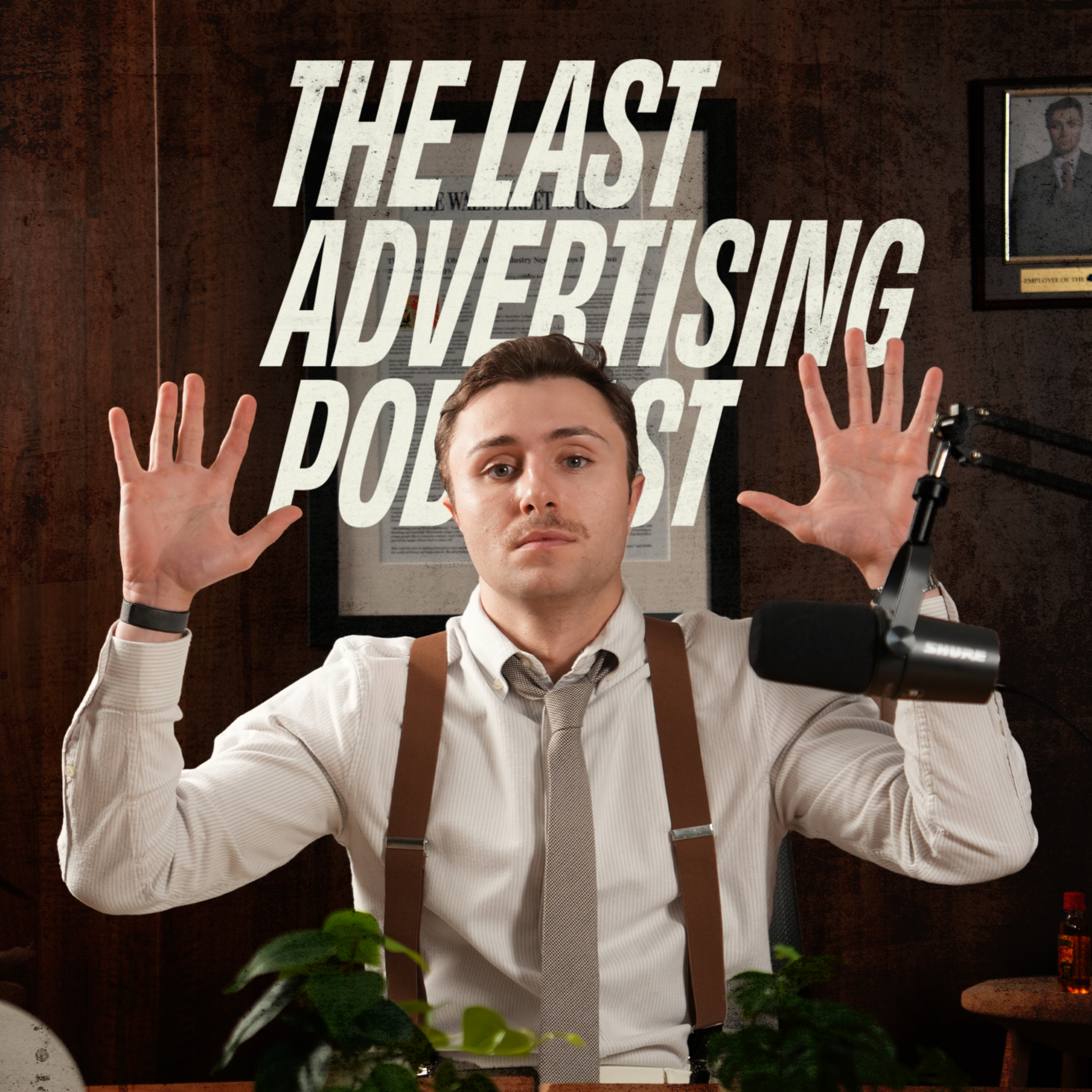
- The Last Advertising Podcast
- We Can’t Quit Before Talking About End Cards
The Last Advertising Podcast5 Aug 2026 · 28m · 14 chapters
We Can’t Quit Before Talking About End Cards | Martins Zelcs
In short
The episode focuses on “end cards” (the last 3–5 seconds of commercials) and why they’re often the most important brand impression. Martin Zelcs argues that expected logo-at-the-end signoffs are forgettable, and that creative twists can regain attention when viewers’ focus drops.
Guest backgrounds
Martin Zelcs is an art director/creative who started as a graphic designer in Latvia, studied at Miami Ad School, and worked at Droga5, BBDO, and Innocean (plus other agency roles). He launched TheArtOfEndCards.com after finding almost no existing resources on end cards.
Key claims
End cards should match the campaign vibe; creativity beats “by-the-book” repetition; clients’ brand guidelines can be worked around (e.g., adapting fonts).
Notable examples
Laphroaig ad with Willem Dafoe (playful “unforgettable” typo); Nike end card forming the logo with Killer Bees; Nike/Wu-Tang Clan sneaker collab; “squeeze one more joke” end-card category.
Written by AI. May contain mistakes.
Chapters
0:27
Introducing Martin Zelcs
Discussion about Martin Zelcs's background and expertise in end cards.
“It's 7 in the morning and yeah, I'm ready to go.”
2:06
The Journey to End Cards
Martin shares his journey and the development of his end card project.
“So it was kind of incredible environment.”
3:56
Defining End Cards
An explanation of what end cards are and their importance in advertising.
5:10
Why End Cards Matter
Discussion on how end cards can influence brand recall and advertising effectiveness.
“Let's say we were back in school on Tuesday and everyone's talking about the birthday party that we went to.”
6:40
Creative Approaches to End Cards
Exploration of creative ways to design impactful end cards.
“Now, interesting, like, because I guess like you probably see a lot of examples where they just slap the logo at the very end.”
8:14
Memorable Ads and Context
Discussion on the context and cultural impact of memorable advertisements.
“And now you give me as an audience, you give me a reason to remember it, right?”
10:04
Standing Out with End Cards
Strategies for making end cards stand out and avoiding common pitfalls.
“You can add a little joke that makes your brand fun that add sense of humor to your brand, why not, right?”
13:32
Customizing End Cards
Discussion on customizing end cards for different ad lengths and campaigns.
“And that's why this website also draws inspiration from the best of the best, it seems like.”
14:01
Understanding End Cards
Learn about the typical structure and customization of end cards in advertising.
“I mean, end card usually would stay the same, like in terms of length and like, I mean, you could, I suppose you could make a couple, and I've seen that done.”
14:50
The Importance of Creative End Cards
Explore how creatively designed end cards can enhance brand recall and engagement.
“Well, look, it all depends on your campaign, right?”
Show all 14 chapters
16:18
Navigating Client Expectations
Discover the challenges creatives face when balancing client expectations with innovative designs.
“Like for us as creatives, we have a lot of battles, right?”
18:12
Changing Landscape of Branding
Discuss how branding and logo design rules are evolving in today's advertising landscape.
“Yeah, well, I think it's also the landscape is changing a bit in terms of when I studied design, logo was something that was sacred.”
21:04
Breaking Into Advertising
Gain insights and practical tips for entering the advertising industry today.
“We got to be more creative and it applies for end cards as well.”
22:58
Staying Updated in Advertising
Learn methods for keeping up with advertising trends and creative end card designs.
“And it kind of is parallel advice to what you're saying.”

Ask about this episode
Get the gist, explore an idea or ask about something said.
 Claude
On The Last Advertising Podcast, what are the key points of this episode?
Searching your listeningTranscript
Automatic transcript. May contain errors.
0:00Martins Zelcs: This is it, the last advertising podcast we ever record. My name is Gino Schellenberger, co-founder of Break Entering Media, and I've recorded over 600 interviews with some of the best professionals in this industry. And I'm an ad sicko. You're an ad sicko. So we're all making a vow to quit listening to advertising podcasts. But you know, and I know that we can't stop. So we'll see you again next week, but enjoy this conversation. All right, Martin Zelk, welcome to the Breaking and Entering Advertising Podcast. How are you doing today? I'm doing good. I'm getting caffeinated. It's 7 in the morning and yeah, I'm ready to go.
0:41Lock and load in.
0:42Martins Zelcs: Good morning to you. Listen, this is a fascinating niche that you've carved out for yourself here. and it's you know Lonnie Elliott recommended you he was the manifesto expert subject matter expert and I was like shout out to Lonnie and I was so obsessed with like these little niches within the industry and he recommended Martin's that yourself here and he said like the art of the end cards is another niche in this industry that you are an expert on so really I want to get to know you what you've built and learning about end cards for everybody in this industry, especially the juniors that are just starting out because you've built a great resource.
1:25Martins Zelcs: How does that sound? That sounds awesome. Yeah, I'm more than happy to share what I have learned. And it's been kind of a crazy journey for the last couple of months to launch this project. And it's been super overwhelming. Like once we launched, we got insane reactions. the numbers were really not what I expected. I honestly, it was a passion project for myself and I assumed it's going to be, I was like, hey, maybe there's a couple of other nerdy art directors who will find this interesting. But it ended up being thousands of people like reaching out and being like getting so much love from creative industry in general.
2:04Martins Zelcs: So yeah, it's been awesome. Well, you know, you build and they will come. So explain to me your background. I see here on your LinkedIn, you spent some time at some great agencies group creative director at inocean droga five your creative director bbdo so some large holding companies here i guess like what was the like your journey very high level always art direction large agencies creative ad agencies is that correct yeah yeah i mean i started as a graphic designer that's that was back in latvia where i'm originally from and then I moved to States went to Miami ad school I try to switch from graphic design to art direction and it's a pretty smooth transition in a way but you know instead of executing ideas I wanted more of like come up with ideas so yeah and from there I was lucky enough to land a job at Droga 5 which at the time was still very boutique shop it was I think it was about 60-70 people.
3:06David Droga was there every day. So it was kind of incredible environment. And that was my first advertising job. At the time, that was like a dream job. So I was really fortunate. And yeah, I mean, that was a great experience. And from there, everything kind of picked up. I picked up a couple of awards, made some campaigns, then moved to BBDO and back to Drogo 5, then at InOcean. So yeah, it's been great building this advertising career, working with extremely talented people. And yeah, it's been a great journey.
3:46Martins Zelcs: Yeah, I guess my question is, on the art direction path, when did you realize that you had a passion for N-Card specifically and before we even define it? honestly it's i mean it's fairly recent um that's fair i it came you know this project came out of necessity it just there was just nothing on end cards whatsoever i don't know particularly why i was looking for it but i remember i was interested like what like is there any literature on it or is there any blogs or just anything like how do you make one what's a good end card what's a bad what are the categories nothing there is literally nothing online about that and even even like uh the advertising bible like hey hey ripple squeeze this by luke sullivan like even even he doesn't specifically touch on end cards and he covers pretty much everything right and uh yeah and um actually fun fact that i did send him uh this project and he he loved it uh looks great you got you got the approval from the author of the industry essentially luke sullivan that's that's fantastic he wrote i mean that's a must-read book for everybody still to this day it's still the bible if you will so okay so define for our audience here what an end card is well end card is those last three to five seconds of every commercial this is where it's i like to call it the last impression this is where your brand signs off it's how you wrap your campaign how you wrap your product and that's the last impression you can leave one person so i would like to argue that that's the most important part of the ad because And I like to compare it to, I have this one kind of example I always say, imagine like a birthday party.
5:43Let's say we were back in school on Tuesday and everyone's talking about the birthday party that we went to. It was awesome. They had ponies and piñatas and cakes and everything. It was great. But no one remembers whose birthday was that. And that's for me, if you fail your end card and people don't remember your brand, that's the same situation. Like you should know it's Timmy's birthday, right? And the same with ads. Like you might have a really awesome joke or maybe really cool punchline or maybe you pulled some emotional string. You did your job. But if people don't remember which brand was that, like it's all for nothing, right?
6:22Because it's not SNL, right? We're not just doing sketch comedy. We have purpose to sell the product and build the brand. And end card is where really brand comes to shine. So yeah, therefore, I would argue it's crucial, if not the most important part of the end.
6:40Martins Zelcs: Now, interesting, like, because I guess like you probably see a lot of examples where they just slap the logo at the very end. And it does, I'm assuming you're going to argue it does take creativity to weave it into the structure of the flow of the ad at the very end in a creative way. Like what are some other arguments for caring about end cards? Yeah, well, look, expected things are rarely remembered. And I see this a lot. It's a safe play, obviously. Every brand has a guideline book and brand book, right? So they built that a while ago. And there's probably a slide where it shows this is how your rent card should look.
7:29It's the logo with this typeface and this size. That's what it is. And it's a safe play to just go with that because you're not going to make anyone angry, right? Like if you're a marketing director, it's a safe play. You go by the book. CCO or CEO is not going to be angry that you did that, right? So it's very safe. But the problem is when you repeat it too many times, it becomes boring, right? It's hard to remember that. And sometimes your campaign is just so creative that the end card could match that vibe much better if you just made... And sometimes it's just a small tweak that you need to do.
8:09And if you do that, it just becomes so much stronger, so much more memorable. And now you give me as an audience, you give me a reason to remember it, right? Because here's the case. Ad comes up towards the end, usually your attention span goes down. And you know the end card's coming, right? Because we all have seen ads and end cards there. You know it's going to be a pack shot with logo and a tagline. So you expect it and you have no reason to really pay attention because you're like, sure, I know what you're going to do. You're going to show me the product. But now, what if instead the product is upside down or there's something odd about the back shot?
8:52And now you win my attention back because I didn't expect that. I'm like, wait, what are you doing here? Why is the product upside down? Right. That tells me like, hey, you're being playful here. You're doing something odd or maybe you're being funny. That adds so much personality to the brand that it's just like you're communicating with me you're showing me something different now i'm interested again and that's yeah i think it's such a uh in a way it's easy way to to get that attention back
9:19Martins Zelcs: i'm looking at the website now and one that i really love is the lafroig uh ad with willem defoe and like how he's grabbing it and it even has a typo like unforgettable and like the same spelling of the brand in the end card copy willem in his weird outfit grabs the bottle at the very end and like yeah that's exactly that's so good yeah yeah yeah it's like uh that for example like stealing the product right from from the end card it's fun little twist i didn't see that coming but it makes it makes the the brand playful that it adds a character and personality to the brand And I think that's the beautiful thing about the website too Because I try to categorize everything So if you click on some of the categories Like one of my favorites is squeezing one more joke And then you would just see a lot of things That agencies and brands have done To make end card just interesting It's like, hey, you have three seconds What are you going to do?
10:28You can add a little joke that makes your brand fun that add sense of humor to your brand, why not, right?
10:35Martins Zelcs: Yes, yes, the squeeze in the one more joke. I love that one because it just helps you remember. It's like nothing worse than like somebody says they love an ad. And then what was that even for? Yes, exactly. I realize that happens a lot when I hang out with people who are not from advertising industry. Because for us, I think that as ad people, we kind of know. We know like, ah, that's sneakers they're going to do. You're not yourself and you're hungry. And we kind of, because we're involved in this. But when you talk to people who like, I guess normal people, right? They don't really pay that much attention.
11:14So they might remember some kind of part. They might be like, oh, remember there was the monkey baby thing. And you, like, I would be like, oh yeah, that's Mountain Dew's monkey puppy baby. maybe. But I'm like, if he doesn't remember that it's off or nothing, right? Because like, the point is that people remember the brand.
11:34Martins Zelcs: Yeah. And you're making the argument that a creative memory, a creative end card was more memorable. But I think also it's like, you know, how many times do you see the ad? Like, did it actually pull through in culture? Was it, what was the media time as well so i think that all that kind of and like also the context too like if it's super bowl i tend to like it's i even struggle if it's super bowl because there's so many good ads all at once and that actually the context itself makes it hard to remember some of them maybe a one or two will stand out i can ask somebody last even right now about you know what was it like six months ago like what their favorite ad they might be able to pull one out of their their brain, unaided recall.
12:20Martins Zelcs: But yeah, I think the context too is there's a lot of the things at play when it comes to recall for these ads. Yeah, yeah, I agree. Well, I would say a simple trick, and this is for, I mean, honestly, juniors and also anyone who works in the industry, what I like to do, especially if I start working on a new account, like honestly, just screen grab every end card from your competition. Like if you're selling a chocolate bar, find all your competitors and screen grab all the end cards, put them on one slide and you're going to see a lot of patterns. You're going to be like, everyone's doing pretty much the same thing.
13:00It's some kind of pack shot of your product, typography, font. And now you have a cheat sheet. Now all you have to do is not do that, right? Like this is what everyone does. If I want my brand to stand out, how can I do that? but different or better. Or maybe if you're like, well, I also want to show the product and pack shot, but maybe there is someone steals the product or maybe the product is upside down. I mean, these are low hanging fruits, but you get the point, right? Like do something different,
13:30Martins Zelcs: break the pattern. To stand out. And that's why this website also draws inspiration from the best of the best, it seems like. Like it's so nice to see it in the way that you have it in like a short video and the thumbnails. Like you actually, they're playing in front of me right now. I don't know how you did that, but this is incredible. I guess, I guess like, does the end card have to change then with the varying amount of times that the spot plays? Like if it's a 60 versus a 30 versus a 15 versus a five, do the fundamentals change at all? I mean, end card usually would stay the same, like in terms of length and like, I mean, you could, I suppose you could make a couple, and I've seen that done.
14:16And the more variety you have, the better chances are like, hey, well, let's entertain people even more and just give them a different...
14:24Martins Zelcs: So they usually build the same, it's always like two or three seconds, and usually most agencies or brands will insert the same end card no matter the length of the spot. Is that correct? That is correct, yeah. And do you agree with that philosophy or do you think if they can customize it or does it need that consistent anchor at the end that's memorable to the brand? Well, look, it all depends on your campaign, right? I love when end card matches the campaign very well. And Apple is very good at that. Nike is very good at that. Like there's one that we have on a website where Nike, it's the one with Riza from Wu-Tang Clan.
15:10And it's like a Nike collab with him for a sneaker. And at the end, camera just pans up and you have killer bees forming the Nike logo. It's so cool. It's so memorable. And honestly, I just remember that part. So that end card is so strong that it's just like engraved in my memory. So I love when brands do something very creative And I know it's very challenging, right? Because most of big brands would have very strict guidelines They'll be like, this is our corporate font This is our logo We usually go with this background So let's just reuse that, right? It's the safest place There are, though, ways around it It's challenging and we have to, as creators We have to push ourselves and find some kind of solutions because it's difficult to even go to clients and propose something different because sometimes you know that client, you know, like they want to see their font.
16:10They want to see the lockup that they always use. So you bringing something else, that's another battle. Like for us as creatives, we have a lot of battles, right? Like when we go with a new campaign, we're trying to sell it. Like you're going to fight for this scene or for this joke and you'll have, it will be a lot of conversation. So doing a different end card, you're adding another battle to your battle. Do you want to fight on that end card and you're arguing you should? Yes, especially if your campaign asks for it. And I'll bring up here one example that I think is a good one. We were working on the brand that just the situation I described, very strict with their fonts, with their lockup.
16:57But the campaign was Western. So cowboys, shootouts, things like that, right? And their corporate font is sans serif, which sans serifs and Westerns are two different worlds, right? And so what we did there is we took their corporate font and made a new, like a version of it that was slab serif. And slab serif is like kind of with those edges at the end. So that fits in the Western world. So basically, if you look up Western posters or movies, you have a lot of slob serif fonts. And we made a version, a slob serif version of that corporate font. Now, with that, we can go to clients and we can be like, hey, I know this looks different, but this is your font.
17:42We just made a version of your font that's a slob serif. Now, I can justify it, right? Now, they can, whoever, right, has to sell it up the ladder, they can justify it because they can be like, hey, guys, don't worry. This is still our font. We just added this little thing, right? Now it's a sub-server version. And boom, right? There you go. It's a Western campaign. You're still using your corporate font, but it fits better. It matches the campaign vibe.
18:08Martins Zelcs: yeah no yeah i can see like a very rigid cmo saying like you know consistency in your brand image matters we cannot change but then also i see the creative ad agency professional making the argument the bespoke the custom thing built for the campaign the same ecosystem and that creative flair will be more memorable too so there it could be a little bit of attention But that was a really nice anecdote to meet in the middle and to win over that CMO in that scenario. So I like that here. This is all making sense to me. Yeah, well, I think it's also the landscape is changing a bit in terms of when I studied design, logo was something that was sacred.
18:58You couldn't touch the negative space around it. It's always a certain background. Do not mess with logo. But these days, I see a lot of brands being super playful with logos. Like even imagine Nike, right? They made sneakers with the logo upside down. Yeah. Or going back to the same Wu-Tang Clan and Nike collab or Killer Bees would form the logo. Or even Apple also, they get playful with their logos too. I've seen them kind of like animate it and turn it into different shapes.
19:35Martins Zelcs: I mean, look at the LA Olympics in 2028. Their whole logo design system is meant to be changed and interpreted by the different elements here. So it's like constantly changing, which I don't know if that works, where it's built on being dynamic. I don't know. I'm not an expert in that world. I just talk about this stuff. But yes, you're absolutely right. We are heading to a less precious logo preservation system, which is, I think, is fun for creatives. It is fun, man. And like, like even like there was like Adidas and Gucci collab where they would bring their boards together. And it's very different aesthetics like Gucci and Adidas, but then they would do a collab together.
20:21And again, back in the day when I studied design, that would be not allowed. Like there's no way. And now I enjoy watching brands getting that playful. You know, it's it's and I think it's because everyone's fighting for attention, right? Like there's there's just so much more these days to like in social media, streaming platforms and everyone's fighting for attention. So if you if you're hitting me with your same old ant cards, I might not find that interesting. I like you are going to I'm going to focus on some other screen, right? Because it's like a lot of people are multitasking and it's really hard to get that attention.
21:00So I think brands are kind of, hey, we have to be more interesting. We got to be more creative and it applies for end cards as well. I love it.
21:09Martins Zelcs: Excuse me. So I want to take the last couple minutes here. You know, you've worked at some amazing agencies. You have a lot of knowledge when it comes to end cards, but I also just want to open it up to you for the audience, those that are looking to break in and thrive into this ad industry, knowing what you know now, knowing the industry, knowing the design principles that we've just been talking about. What advice do you give somebody that is trying to get their first job in advertising? um and this is like in general or a specific general yeah how would you break in today in 2026 with ai building a portfolio you went to miami ad school just more holistic conversation now backing it up how how would you break in today yeah i guess it kind of i touched on this little bit already and and and this is also what i did when i was miami ad school i i it's it's i think it's super important to get the big picture, like find what is the big picture.
22:09And even going back to that example of grabbing screenshots and putting them on one slide and to start seeing patterns, right? And whatever, if you're a junior, if you're trying to get in advertising, let's say you want to build a sneakers campaign, you want to build an Oreo cookies campaign, find what's done in that industry. Like put it all on one board and you're gonna, once you start seeing patterns, you're gonna see what everyone's doing and then it's easy. Then just don't do that. That's your rule. It's like, whatever is on this slide, I see everyone's doing it. How do I do that different?
22:49And that will help that. Your book is gonna stand out so much if you just do that, right? Like advertising is, big part is breaking that pattern.
22:58Martins Zelcs: that that that will stand out right it's simple i mean it sounds simple in theory but it's a really good piece i i heard a story on this show i forgot who it was but when somebody got hired at an ad agency like high level um they went to their desk and printed out all the brands within the agency you know it could be anywhere from like 15 to 20 different brands within an agency and printed out all the brand logos and then also took the screenshots of the past campaigns that the agency worked on and pinned them up on the board and then started concepting new ideas for every single client, which I think is absurd, but makes a lot of sense.
23:41Martins Zelcs: And it kind of is parallel advice to what you're saying. Did you ever do that? I mean, like, so you're a big fan of just laying out what's out there already? Absolutely, absolutely. And because it's always changes too. Right? Like we even talk now, like some of the rules or design principles that applied 20 years ago are completely different these days. And the same goes with advertising, branding, logos, everything. So even if you did it once, it's almost helpful to do it every other year to just be like, okay, let's look at the landscape in our industry in general and see what's happening, what is something that everyone's doing.
24:24So that means there's something that no one's doing
24:26Martins Zelcs: How do you stay up to date? Like you're pulling for all these great ads And the end cards here Your website's very up to date What's your method of staying up to date? Is there a website like Ads of the World that you're checking? LBB? What are you checking for resources? Yeah, we try to keep it fresh And we try to upload end cards every month actually this is the I just recorded we're going to start a new series called Ant Card of the Month so I'm going to have a creative joining me on a zoom call and that creative from advertising industry and he's going to pick he or she's going to pick Ant Card of the Month based on the ones that we submitted this month so that's going to be fun still have to put that video together but it's recorded And yeah, going back to your question I mean, honestly, all of the things you mentioned It's ad weeks and ads of the world And people also can submit That's another thing on the website There's an option that agencies or people can just submit end cards So we use that as well But yeah, we try to look at what is the most creative What's the most innovative What's the most original end cards this month And then, yeah, we try to add them every month.
25:50And so, you know, it keeps fresh. And it's just like for creatives, it's always interesting to come back every week because it's going to be something new there.
25:59Martins Zelcs: Well, I applaud you and all your work here. I'm having a lot of fun scrolling through the site. I know our audience will as well. So theartofncards.com, I highly recommend everyone check it out. Martins, thank you so much. Was there anything that we missed that we were like, oh, we got to mention this thing? I would mention also website has a book. There's a link to a guideline book that I wrote about Ant Cards. There we go. So that one, I think for anyone who's starting in advertising and honestly, also people who already work, as I mentioned, there's really nothing on Ant Cards. So I try to categorize, like find the categories, write up each category, and then find examples for each.
26:48So this is a book. It's available for free. It's sort of like it gives you a very good idea about end cards, how to make them, what are the categories. So that's one version that I have online. It's for free. Anyone can go check it out. Wow. I am working on a Pongro. This is nice. Yeah. Thank you, man. And I'm working on a longer version. I hope to publish that one. So I think it would make a great coffee book table for creative directors with really beautiful visuals, all the best end cards of the industry. Just have that. This is the perfect gift for a creative director. So that's one of the future plans.
27:28Talking to some publishers. So hopefully it comes true. I love it
27:32Martins Zelcs: I love it it looks amazing super seamless process here you I can tell you've got that you got that design art director background you're crushing it so everybody go check it out appreciate you for coming on Martin this was A plus awesome Gino thank you so much for having me I'm a huge fan and yeah I love what you guys are doing so yeah thank you man likewise I'm gonna keep following in
From the publisher
This is it. The last advertising podcast to ever be made.
But before we quit, there is one final part of advertising we need to discuss: the end.
Martins Zelcs is the founder of The Art of End Cards, an archive dedicated to the final three to five seconds of commercials. He has also worked as an art director at Droga5, BBDO, and INNOCEAN.
Martins believes an entertaining advertisement can still fail when nobody remembers the brand behind it. The end card is the brand’s final opportunity to recover the viewer’s attention, reinforce the campaign idea, and leave a memorable last impression.
He joins Geno Schellenberger for one final conversation about why most end cards are forgettable, how strict brand guidelines can limit creativity, and what Nike, Apple, and other great brands understand about ending an ad.
We also discuss Martins’ simple advice for creating distinctive work: collect everything the competition is doing, identify the patterns, and find the thing nobody else is doing.
The advertising podcast is officially over.
Until maybe next week.
The Last Advertising Podcast is hosted by Geno Schellenberger and powered by Breaking & Entering Media.
For more from B&E, including newsletters, social videos, advertising news and live shows, visit www.breaking-entering.com.
Partner with Breaking and Entering Media[email protected]
More from The Last Advertising Podcast
All episodesWe use cookies.They keep VO running smoothly and help us improve it. Privacy policy