In short
The Fractional CMO Podcast - Episode Summary
Episode Title
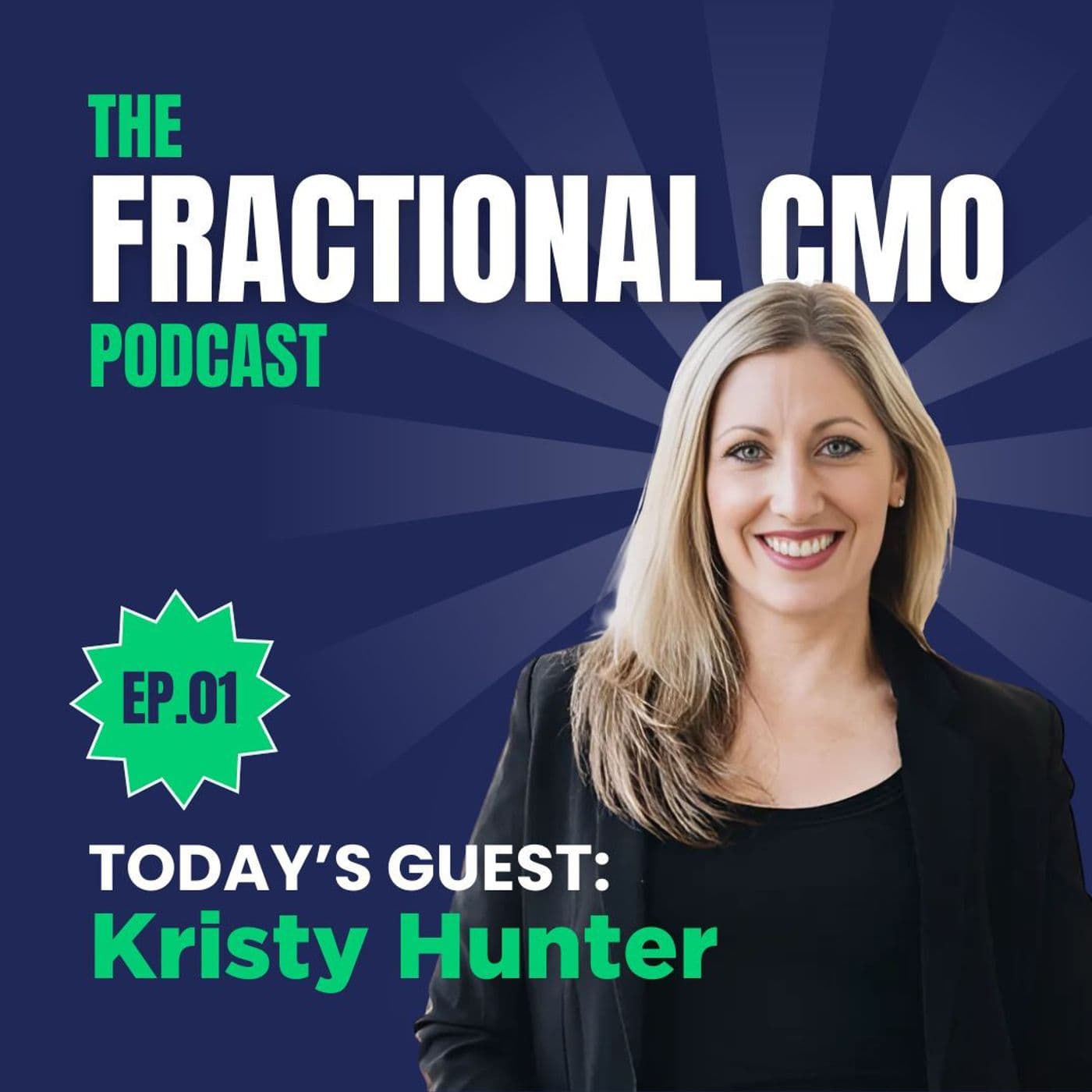
S2 Ep1: Kristy Hunter of Hunter Marketing Co.
Podcast Overview
- Host: Simon Dell of Cemoh
- Focus: The podcast features high-performing Fractional CMOs and marketing leaders discussing their roles and challenges.
- Episode Theme: Introduction to the unique role of a Fractional CMO and how they differ from traditional consultants.
Key Participants
- Simon Dell: Host
- Kristy Hunter: Guest from Hunter Marketing Co.
---
Episode Highlights
Introduction to Fractional CMOs
- Definition: Fractional CMOs (Chief Marketing Officers) provide strategic marketing leadership on a part-time basis, differing significantly from traditional consultants.
- Evolution of the Term: Kristy first encountered the term "fractional" about five years ago during her collaboration with Simon.
Differences Between Fractional CMOs and Consultants
- Engagement Level:
- Fractional CMOs: Highly involved in business operations, often treated like part of the team.
- Consultants: Typically focused on strategy development without ongoing involvement.
- Investment: Fractional CMOs are seen as partners who invest in the business's growth, fostering relationships within the company.
Responsibilities of a Fractional CMO
- Strategy Development:
- Identifying business goals and creating marketing strategies tailored to those goals.
- Engaging with various stakeholders to understand their needs and implementing appropriate strategies.
- Implementation Oversight:
- Ensuring that marketing strategies are executed effectively.
- Setting up systems for project tracking and performance evaluation.
- Mentorship and Training:
- Supporting and upskilling internal marketing teams.
- Providing guidance to non-marketing CEOs and junior marketers within the organization.
Challenges Faced by Fractional CMOs
- Navigating Complex Industries: Particularly challenging working with tech companies where communication can be overly complex.
- Multiple Decision-Makers: Crafting marketing strategies that appeal to diverse stakeholders in a business, such as operational managers and CFOs.
Engagement Models for Clients
- Charging Models:
- Hourly Rates: Defined time allocation, though can lead to disputes over hours worked.
- Day Rates: Fixed fee for specific projects; clear start and end points.
- Monthly Retainers: Preferred due to predictability, allows for smoother budgeting for clients.
- Project-Based Pricing: Focused on deliverables rather than time spent.
Final Thoughts
- Value Proposition: Fractional CMOs offer not just time but their extensive experience and strategic insights.
- Long-Term Role: Even after initial goals are met, a fractional CMO can continue to provide value through periodic check-ins and audits.
Guest Contacts
- Kristy Hunter's LinkedIn: [Kristy Hunter LinkedIn](https://www.linkedin.com/in/kristyhunter-marketingspecialist/)
- Hunter Marketing Co. Website: [Hunter Marketing Co.](https://www.huntermarketing.co/)
---
Conclusion In this episode of The Fractional CMO Podcast, Simon Dell and Kristy Hunter explore the vital role of Fractional CMOs, focusing on their integration into businesses, the strategic insights they provide, and how they foster internal marketing capabilities. This conversation sets the stage for a deeper understanding of the evolving landscape of marketing leadership.
Written by AI. May contain mistakes. Listen to the episode to check what was said.
Transcript
Automatic transcript. May contain errors.0:07So welcome to the very first not the very first CMO podcast but our new podcast which is all about fractional CMOs and joining me is probably the fractional CMO that we've known the longest, Christy Hunter. That's not a particularly fantastic title I've just given you there but welcome to this first podcast. How are you? I'm well thank you. Good good good. Doing well. All right. Awesome. Now, just for everybody's benefit, the idea behind this is that we've adjusted our podcast direction, which was originally a bit broader about marketing. And we're going to specifically talk about fractional CMOs and two fractional CMOs about what they do, the challenges that they face, their clients, and so on and so forth.
1:07It may stray out of that lane every now and again, because it just always does. But what we thought we'd do with this very first episode here is talk about what the hell a fractional CMO is. Because this is my first question to you, Christy. When did you first hear the term fractional? Because that itself is quite a new expression, especially in the Australian marketplace. not so much the American, but when did that sort of, you become aware of that? I think it was when I started working with you guys, to be honest. So that was like, well, I don't know, five or so years ago. But for me, that language just really resonated because, you know, I think it takes, you know, consulting, if people think that, not that consulting is basic but it's so much more than consulting if that makes sense absolutely and it's funny because i i had this conversation last friday friday before that with a guy down in sydney and he said to me he said exactly the same thing he goes he goes i've never realized all these years what i've been doing he said but i've read the term fractional cmo he goes that's what i've been doing absolutely absolutely but it is bigger than the consultancy because I feel consultants, and we do use the term consultants every now and again, but I feel consultants are there, they come in and they leave, and they don't necessarily, they're not necessarily as involved in the business as I think fractional CMOs are.
2:53Would that be your understanding as well? Yeah, I think there's a level of investment. Well, from my perspective, there is anyway. You know, it's like I feel like I'm helping, you know, my business grow alongside theirs and therefore there has to be a level of investment and involvement. And maybe I'm too involved sometimes. But I think that comes back to, you know, building really good relationships ultimately, right? And you do, even though you're not an employee, I think there's sometimes the CEO or the business owner feels like you kind of are, you know? Yeah, that's the difference that I see.
3:34I think a fractional CMO should be treating themselves as part of the team. That's right. And I think consultants are, you know, not necessarily kind of butting heads with the people, but I think it's more, I think fractional CMOs are much more collaborative approach than a consultant, which is still sort of staying very much on the outside because that's kind of what they need to do because they need to be super objective. Yeah, yeah, absolutely, absolutely. And I think for me, the way I kind of do my fractional CMO work, it's not just coming in and, you know, creating the strategy and, you know, collaborating on that strategy and going, here you go.
4:22So it's, you know, making sure that the team they have can implement that really well. And then I'm overseeing that as well to make sure that they're all performing in their roles and the activities that, you know, are in that strategy are performing as well. So I need to make sure that, yeah, all of that is working smoothly and then, you know, processes, procedures and all of that. So consultants don't get into the nitty gritty of that. they're likely just to develop the strategy go yep you got it good okay see you later yeah i mean i've seen i keep thinking about i've worked at an aged care business several years ago and they had consultants from deloitte coming in and and i was i was technically there as a consultant on a digital marketing but i was looking at it now and i go i was more of a fractional digital marketing head because I had my own desk.
5:18I was in all the teams every week. Sorry, I was in all the team meetings every week. I was treated like a member of the business, even though I was there for sort of a day and a half every week. Whereas the Deloitte guys who were doing their project rocked up, sat in a little room, all isolated to themselves, all ate lunch together and and and that felt very distant and I think anyone who wants to be a fractional CMO you're going into this with a view that you're you're becoming part of their team and a really really important part of their team and I it's immersing yourself in there you know it's like building relationships not just to the CEO but I come in and go right how can I build relationships with the marketing people and the sales people and the finance people and and everyone that you know you are you know I guess those touch points in the business that is critical for you to perform well and you're for the marketing side to perform well um it's there's so much more to it you know when you actually get in there yeah yeah absolutely so look I think it's it's nice and clear that it's not we're not consultants I think it's nice and clear that we're not effectively, I mean, I know some people have turned into employees and part-time employees, but I think there's that also balance that we're not an employee because then we do still retain a little bit of objectivity.
6:53Absolutely, absolutely, yeah, yeah. I think that there has to be, like, I see I'm one of the leaders, you know, as, you know, someone that the CEO can rely on to go oh they might come to me go what are you seeing here you know like can you give me your advice you know and so for me I kind of become an advisor sometimes to the CEO yeah during that that period which is you know a good place to be I think yes yeah it's difficult because you're not an employee you're not a consultant there's an advisory role there as well but even And so it's not quite that. Yeah. Which is why when I sort of look at the term fractional CMO and I see the word fractional, I go, okay, I get that.
7:41There's a permanency of the fractional. It's somebody that wants Christy Hunter's skills. They want your brain. They want your advice. But they couldn't largely afford to pay you a full-time role. And probably not only, I think that's the two things, not only could they not afford to pay you a full-time role, they probably don't need you a full-time role. I would imagine most of the people that you work with don't need Christy five days a week. They really don't because once we have, you know, the right people in place, you know, implementing, it's just me going in and going, right, how are we tracking?
8:23Are we, you know, from a strategy point of view, are we nailing that? Do we have to tweak anything? You know, looking at the performance and also from like just being a mentor. I mean, I don't know if all fractional CMOs tend to mentor. I personally do because I think that there's importance in supporting those people in the business, you know, because they're not – the CEO is not a marketer. You know, other people in the business, they're not marketers. So having someone that they can lean on, you know, when I'm there I think is really important because, again, that comes. back to productivity, performance, and how well the team is doing that, you know, relates to revenue, ultimately.
9:03Yeah, yeah. Well, let's look at those things that, you know, from a fractional CMO, what a fractional CMO should be doing. Because I think, you know, whilst you can sit there and go, well, that's, you know, a long list, I think they fit into some really clear buckets. I think the first thing you said, and I would talk about these individually, I think there is three key things. I think number one is building a strategy. Number two is ensuring the implementation of that strategy on an ongoing basis. And the third one, I think, is what you just mentioned there was mentoring. Mentoring, upskilling, training, educating, whatever bundle you want to put into it.
9:44So let's talk about that strategy one. Variably, most of the time, I suspect you walk into these businesses and there is no strategy. and even from a business perspective there doesn't appear to be a strategy not just a not just no marketing strategy oh yeah so sometimes pulling business um information out is really hard like just basic business goals like revenue goals and you know what do they want to be achieving in the next you know two three four five years is somewhat challenging in some businesses that although there are some business owners and leaders out there that know that straight off the bat but they still don't have a strategy so i just that's the starting point what are the goals that has to be it where you start yeah and and building that strategy you know again depending on the business can take i mean look i've done strategies on a piece of paper in about half an hour you know but um you know but i've also been in a situation where i've gone you know what i need a good eight week run at this because i need to talk to some people i need to understand that, you know, the systems in the businesses, the people in the businesses.
10:54But it's a case-by-case basis, isn't it? It really is, yeah. It depends on the size and, yeah, team and, yeah, what their ambition is. Yeah, you know, whether they want to dig in deep into, like, customer research and when that is an activity, then that obviously prolongs that period of when you're, you know, developing that strategy piece. You don't necessarily have to do that every time, but, you know. So it really, yeah, it does depend on the business. Going off on a tangent there from a strategy perspective and all the people that you've worked with in the past, is there a particular industry or a type that you found the hardest that you think is probably the most challenging in terms of walking into and going, shit, I don't know what I'm going to do here?
11:44I think some tech businesses. Yeah. Like because they are obviously super smart people, but for them to articulate, you know, what they do in a simple way is really challenging. So I'm like, you just got to dumb it down, guys. Like you might think that, you know, you are talking in a way that you're like, oh, this is just, you know, super simple and people like are just going to think, oh, you just, you know, yeah, like just. dummy it down too much because I've had, I definitely have had clients, well, our clients are technical, they'll know this. And I'm like, you're still missing the mark here, you know?
12:28So technical businesses for me, I'm just like, oh, it just hurts my brain because then I have to understand what they do. And, you know, unless you spend like a lot of time in the business, there's times where I'm just like, I think I'm just scratching the surface here. yeah yeah i mean i've worked with software businesses no specific software businesses in specific niches and i and i look at it and just go i i i i i don't face it with dread maybe i do maybe i do face it with dread maybe i'm just lying to myself um but i face it i look at it and just go christ i've got to understand what this software does to be able to do create some sort of valid marketing strategy which is why i i generally don't work with clients anymore um but when i do the the one i'm working with at the moment is is a brewery because they go right there's zero complexity here yeah yeah um but you know i i say that but it's it's if you want to develop any good strategy there still takes you know some thinking time and your research and all of that so i don't think anything's super simple um you know the industry you know beer brewery it's it seems simple but like the thinking behind that and making sure that you're going to market with a good strategy it still takes time and effort yeah i'll tell you the ones i find the hardest in the strategy not the hardest i that's the wrong word challenging you know or you know more more complex right would be the ones where you have businesses that you are trying to target multiple different decision makers within the business right so you get let's say you're you're working with a client that is trying to sell something to construction companies but they know that there is a requirement that you know so let's say it's I don't know, health and safety software or whatever it is.
14:36You need to have the people that are implementing the software need to buy into it. The CFO who's going to spend the money needs to buy into it. And the CEO who runs the company needs to buy into it. And their own internal safety people need to. So you've got three to four different decision makers. and your marketing strategy needs to appeal to all of them. Yes, indeed. Yeah. And I did that for a mining company when I worked in-house. Again, it was tech and mining. So it was we had to appeal to the user. So that was, you know, machinery operators, truck drivers that were wearing a headband that measured their fatigue levels, basically.
15:26Right. Okay. And we had to go, this is safe, you don't have it. And they were like, no, it's going to fry our brains. The users were like, no, it can read our brain waves. It was weird. And then, of course, you had procurement within that and, you know, the leaders of the business. But it was a safety product. So we knew that, you know, because safety is so big in mining, if you have an incident on site your whole site's going to shut down and you're going to lose millions of dollars so that's so that's the message to the CEOs and the leaders yeah and then the safety stuff like make sure that you are focusing on the safety of your of your workers because we want them to come home to their families and so you you know so there's there There was different messaging at different levels.
16:21Yeah. Yeah, that's a challenge, especially also when the sales cycle can be really long. When the decision is something they'll go, hey, yes, we want to buy this today. This is something which goes, hey, let's look at this in next year's budgets. And you're just like. Yeah. Yeah. Yeah. So it's such a long process. So strategy aside, so strategy number one part of being a fractional CMO. second thing is then the implementation of that because i think again there's a lot of people that's just sort of go you know i i think the view of a consultant is hey here's your strategy we'll see you later you know and and they let them they let the cut the client try and implement it themselves i feel with a fractional cmo the job is very much about hey now i've worked out what it is you need to do now i'm going to help you execute that how do you how do you how do you do that best so a couple of things um i just assess where they're at currently and and what their appetite is to build out a marketing team or if their preference is to use external suppliers and then have my oversight.
17:38It doesn't matter which option they go with, but I always recommend I need to oversee that to make sure that this is being implemented and done well to get the results that you need. And then I usually just aim to say, look, you know, you can work with me in a couple of different ways. I can come in one day a week or I can check in with you on a Monday for a half an hour phone call and I can come in once a month. It really does depend on, yeah, where they're at, their budget, you know, and do they actually want someone responsible for that marketing function in their business or do they think that they can just deal with that themselves?
18:21Assuming you've done the strategy and they've bought into it and they've gone, yep, Christy, we need to execute all this. Yep. And they're open-minded as to how that needs to happen. which is obviously that's the place you want to be in, how hands-on do you remain as a fractional CMO moving forward? So I would say I set up systems like a weekly whip and we go through all the projects to make sure that things are moving and we're obviously optimising as we're going along. So there's that. And then I'll also do a check-in with the business leader. like a one-on-one phone call or a meeting. Or if I'm in, there's a client that I work, a long-term client that I work with where I, it's every Wednesday, I work with the marketing coordinator on key initiatives.
19:16There's key initiatives that I work on because there's just too much going on. So it's like the top level stuff that I kind of help out. Like, for instance, at the moment, I'm helping trademarking. Right, okay. Yeah, yeah. But the standard stuff is monthly reporting. I'm in there once a month and the coordinator and I pull reports together. We go, right, this is where we're at, this is where we're tracking. So we've set KPIs and we make sure that we're hitting those. So that's the level of involvement on an ongoing long-term basis. That's where we can do some really good work. That's where we can get some great results happening.
19:56and again this that's not that's not a hard and fast rule for a fractional cmo i've seen fractional cmos that are perhaps a bit more standoffish than than the new would be um and i've also seen fractional cmos that are much more immersed than you might be as well yeah so i think it's case by case basis in terms of what what does the client need what is the fractional Or, you know, what is the fractional CMO capable of doing? Exactly. So what your skill set is as well, like I'm lucky in the sense that I can do a lot of things. I'm not, I don't love getting into back ends of websites. I have done it, but do I want to?
20:37I really don't. So I don't want to be creating social media posts. Can I do it? Yes. Can I do emails? Yes, I can. But that is not the best use of my time. It's the strategy. It's digging into the numbers. It's, you know, building those relationships and driving initiatives forward in the business. So we've got building the strategy. We've got implementing the strategy. And I think the third one, which is often very, very overlooked, the third aspect, I think, of a good fractional CMO is this idea that you're there to nurture, train, develop. Whatever phrase you want to use here, your job is to work with people within the business and potentially upskill them in terms of their knowledge of marketing.
21:24And for me, that could be the CEO, which is the obvious one. Because I think, as you said earlier on, you find a lot of CEOs are trade-based CEOs. They've come up through the business, you know, or they've started the business and they understand the operational side of the business, but not so much the rest of it. But I think there's also an opportunity for a lot of fractional CMOs to really put an imprint on some of the junior members of the marketing team. There are internal ones. Absolutely. Have you found yourself doing that a lot or is that something that you could do more of or what's the…
21:59Yeah, yeah. So I've got one currently and the work that I did at PeopleIn that we brought on a marketer, a coordinator. And, yeah, that was, I think, a surprise to the leadership team. They're like, oh, we didn't think that was part of, you know, your offering, but we can see that that's what, you know, where your skill set lies and it's really helpful for us, so thank you. Yeah. Because I just see the need there, right? Like why wouldn't you want to support and help upskill your people? Absolutely. Absolutely. it's it's it's um you know even if it's a if it's not necessarily upskilling them directly but it's also i mean look i i think a lot of fractional cmos might look at it as go well i don't want to upskill them too much because that then puts me out of a job and it can you you're absolutely right but inevitably i think long term doing the right thing by the client is better than you sort of trying to hold on for dear life.
23:05Absolutely, yeah. You don't want to be kind of scraping around going, oh, I've got to prove some, you know, that I'm adding value here. Like, you know, I've come towards like the end of contract sometimes and I'm like, I think this is nearing the end because, you know, there's not much here for me to do now. So, yeah. Well, that's an interesting thing to perhaps like focus on, And make that the next question is how do you know when it's time to go? Well, I think if you have helped build out the marketing team or at least one coordinator in the business and they're performing well and they're super happy and everyone's thriving and you're turning up on a weekly basis and you're going, honestly, I don't think there's anything else here for me to do.
23:54It doesn't happen too often because the current situation with the marketing coordinator with this longer-term client is she doesn't have any ambitions to get to that strategy or marketing manager. She likes just not being told what to do but she's just got a job and she's happy to do it and she likes me as that layer in there where she's like, it's okay, I don't mind dealing with, you know, the leaders of the business but I don't want that responsibility on top of all this as well. So people are happy just to do the do. And that's okay. Not every marketer is ambitious. Yeah, I think, I mean, I would argue that a fractional CMO should never, a contract should never come to an end.
24:48And the point is that I think if you are genuinely, you generally have insight you genuinely you understand the business that even after the strategy's been put in place you've got a good implementation team in there um you know you've upskilled all the internal members of the the team i would argue that there's still a position that you should be going in for an hour two hours a month and just going hey i'm here to stress test everything and i think perhaps that's the that's the the final that's the final boss moment of being a fractional cmo is that you're there as the stress test and to walk in and go are these things being done is this achieving what what we set it out to achieve are the results what you want and and if the client at any point says no you're there then to go well why not and i think that's what we should be focusing on as a long-term position as a fractional CMO.
25:53The only other time where I'd say that they might not want you there anymore is when they go, oh, you've just set up all of our systems and we're rolling nicely. We think it's time to put on a full-time marketing manager. True. No, but I would still argue the stress test is there. Yeah. is, you know, to sit there and say, you know, your car doesn't need to see a mechanic once a month because it's got a great driver. Yeah, yeah. You know, I mean, I know that's a fucking terrible analogy, but there's still an argument there that that's – you're there to poke. Yeah. You're there to poke, you know.
26:40Look, I agree. I just think that not every CEO or business leader necessarily sees it like that, you know. No, and perhaps they don't necessarily want attention drawn to. Yeah, yeah. Because you don't want to be seen to be nitpicking at the marketing manager or whatever. So you kind of have to like let them go, let them thrive. Let them make their own. Yeah. Yeah. It's like children, just let them go once they've just got an age. So, okay. So, look, I think that's a really good overview of what a fractional CMO does. I'd be super interested, if anyone's listening to this later on, to give us your ideas if there's things you think we've missed.
27:26Obviously, I think that's a broader, you know, that's a broader overview. We're not, you know, going into the nitty-gritty and the details today. probably the last question i want to ask you today is um is i think the first half has very much been targeted to people who might be thinking of becoming a fractional cmo uh but even clients who are thinking of bringing a fractional cmo in um but this question is sort of strictly i would say well maybe actually maybe it's for both sides of it as well but how do you charge or how do let's say because i imagine it's different from different clients how do you prefer to charge because in in my understanding there's kind of four different ways by the hour by the day by the outcomes and and then kind of on the side by the project which is also by the outcomes but yeah you know let's say well let's say the third one is by the month then the fourth one is by the outcomes so i charge by the project the deliverable um initially so i will come in because usually they go we need a strategy and i'm like okay well let's start with that right so there's a process with that um i give them an idea of my process the timeline and they just package that up based on my knowledge expertise and all that, right?
28:57And so I present that to them, but I also present the fact that they can still have me there to support them and keep them accountable and, you know, help with that oversight of the implementation on a weekly, monthly basis, and I give them some options around that. And that is usually built around my hourly rate. Okay. Yeah. Okay. So I think the challenges I see with all four of those options, number one, hourly rate. See, there's a time and place for hourly rate. And I know a lot of CMOs that are fractional CMOs who do an hourly rate with a block of hours per month for a client. Because that helps them stay nice and defined with that client.
29:46right, I'm going to do 10 hours with you every month, and this is where we're going to use those hours. So it doesn't bleed into other staff. They then can have the capacity to say, no, we've done all the hours this month. Sorry, you've got to wait till next month. So I think that works well with some people. And there's pros and cons for all of these, right? The challenge with the hourly one is when you get nitpicky clients going, well, you said you did 10 hours this month, but I only know that you did nine hours, right? I'd argue if you ever get into that conversation, you just want to fuck.
30:22Really? Because I, like, even though I calculated off a hourly, I don't tell them that's how I've calculated. No, no, no. So I say your option is you can check in with me for 15 minutes once a week and you get an hour in person or on a call, right? Yeah. And then that's a little price. Yes, yeah. So, I mean, I do say, like, out of scope and if you need me for anything extra, it's$3.50. Yeah, yeah, yeah. And then I think the day rate, some people like doing day rates because that's a start and finish point, you know. Yes. They come in, I'm going to spend the day with you, I'm going to immerse myself in the business, but when I'm gone, that's it.
31:02Yes, yes. I know when you're calling me at 3 o 'clock in the morning on a fucking Thursday or whatever asking me stuff, I'm here to do this on this day. Completely, and I do have one client like that. So I charge a day rate for that client and they know that I'm not going to be checking emails and doing anything out of hours. So that works nicely for me too. The third one I think is my preference now and my preference in terms of people that work with us and how they invoice, right? Yeah, yeah. Is that fixed fee per month. okay and and there's a reason why i think this one works so well is number one the december january challenge right yeah is if you go if you do hours or you do days per month um and you get to december and people go well you're only going to really do half a month and you're like but that's my billing halved and then january some of them don't get back until the last week of January you know all of a sudden you're taking a sometimes a six-week dive in your business all right yes I think when you present it as a monthly rate and you start you start you have the conversation at the start of them at your contract with them yeah and you say to them every month is this fee so let's say seven grand right but you say in December it's going to be three and a half thousand dollars and in January it's going to be three and a half thousand dollars because I'm going to take four weeks off you're going to take four weeks off yeah yeah when you start the conversation like that then they're anticipating it already yes that's when it comes around you don't have to have that awkward conversation about well you know what are you going to do over December correct correct um the other thing I like with the monthly fee is and I had this conversation with another one of our fractional cmos jamie the other day who's who's new to all this i said pick an amount of money now within that give defined some defined time right so you go hey i'm going to charge you this amount of money and included in that is a half a day in the business every week right but also within that i'm going to i'm going to do this this this this so undefined things things with undefined timings if that makes sense right for him it might be um you know any emails you want to send me i'll reply to any emails right so it's not like i'm put a fixed amount of emails or a fixed amount of time on the emails just say i'm non it's it's whenever you email me i'll email you back within 24 hours right with with him and i think with some other cmos it's i will um you'll have access to my network as well so any customers or people that i know in the past that potentially are good customers are yours i will introduce you to them and i think if you have a big network that's it extremely valuable in terms of what you can do for them so you've got to me a fixed monthly fee with tangible and intangible benefits.
34:21Tangible being around the hours, days or whatever, and intangible being about the other bigger things. The last thing I think you've got to consider, and I think this is especially true for someone like yourself, is that you're not just paying for somebody's time, you're paying for your experience. my coach is like you need to share like your process and you know like my business goes how do you like get that information out of your brain about how you work and how you think and i'm like i don't know but it's that famous it's that famous story and i paraphrase you know about the the little guy that comes along and fixes a boat or something you know and he fixes it in five minutes or 10 minutes or something like that but he charges thousands of thousands of dollars yeah and they were like but you were only here for 10 minutes and he goes yeah but there's 20 years of experience in how to fix this boat yes in that 20 minutes that's yes because all the other people that tried to fix it couldn't fix it yes absolutely yeah and i think for you presenting you as as christy you just go you're not just buying my time you're buying my experience Yeah, yeah.
35:35And I think the biggest challenge from any fractional CMO is that message, is making that message resonate with the client. Yeah, absolutely, absolutely. And I do know that, you know, most of my clients do get surprised along that journey because I have worked in agency. I have headed up teams in startups to large organizations, run my own business. So I've been there, done that, seen it all, you know, And in agency land in particular, like you're working on so many different types of clients and you just have to be like, you know, really quick to move and think. And so the fact that I have the ability to provide a solution pretty quickly, we go, oh, shit.
36:24Okay. So, yeah, that's that bonus. Yeah. Okay. Look, you know, you and I can probably talk for hours and we probably will do this again in more detail. Anyone who wants to reach out to you, you're pretty easy to find out there. And I can't. That sounds. I meant that because your marketing is so good. It's huntermarketing.co, isn't it? Yeah, that's the website. Business is called Hunter Marketing Co. But, yeah, that's the website. Awesome. All right. Thank you very much for that. And as I say, anybody that listened in today and has some opinions and some ideas, disagrees with anything we've said, we'd love to hear feedback.
37:20So please send that through to me. SEMO, if you want to find out more about us, www.semo.com. that's spelled c-e-m-o-h.com and I am on simon at simo.com so once again Christy thank you for your time today it's been an absolute pleasure fantastic thanks for your time Simon
From the publisher
Kristy's LinkedIn - https://www.linkedin.com/in/kristyhunter-marketingspecialist/
Hunter Marketing Co. - https://www.huntermarketing.co/
- We love to know what you think so, give us a rating and review on Apple Podcast. Rate Our Podcasts
- Subscribe to our YouTube channel to learn more marketing tips and ideas weekly. CLICK HERE
- If you think you have a great story for the podcast, contact our producer at podcast@cemoh.com.
👇📲Find and Follow our Socials 📲👇
✅TikTok