In short
The Fractional CMO Podcast - Episode Summary
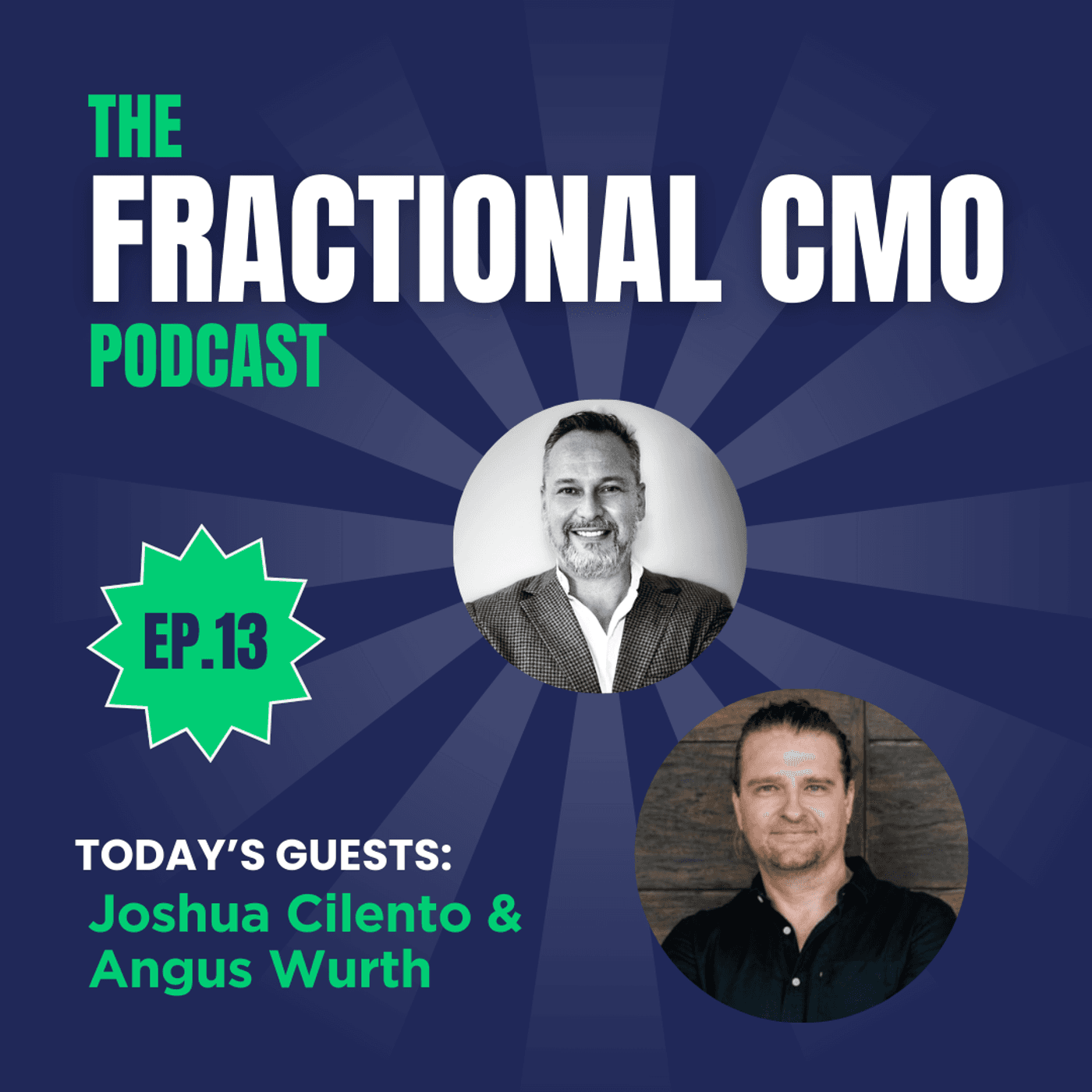
Episode Title S2 Ep13: The Fractional CMO Podcast - Joshua Cilento & Angus Wurth
Episode Description In this episode of The Cemoh Podcast, host Simon Dell engages with fractional CMOs Joshua Cilento and Gus Wurth in a debate about the worst rebrands in airline history, specifically focusing on Qantas and British Airways. They analyze issues of brand trust, leadership decisions, poor research, and the lessons other businesses can learn from these cases.
---
Key Participants
- Simon Dell: Host and CEO of Cemoh
- Joshua Cilento: Fractional CMO with a background in film, television, and problem-solving for businesses
- Angus Wurth: Fractional CMO with experience in running an agency and working in healthcare B2B marketing
---
Key Discussion Points
Format of the Episode
- The episode deviates from the usual interview format to a debate structure.
- Focus on two prominent airline brands and their rebranding failures.
Topics of Debate
- Qantas Rebranding Issues
- Josh Cilento argues that Qantas's rebranding has been a gradual failure, with a significant drop in brand trust from number one to the bottom five trusted brands in Australia.
- He emphasizes that the rebrand lacked real impact and highlighted a chasm between customer experience and brand promises.
- British Airways Rebranding Issues
- Gus Wurth critiques the British Airways rebranding in 1997, which was aimed at transitioning from a national carrier to a global airline.
- The rebrand, which included removing the Union Jack from their planes, failed drastically and was reversed within two years at a substantial financial loss.
Key Arguments and Insights
- Market Research Flaws: Both guests identify poor market research as a critical failure in both rebrands.
- British Airways neglected the preferences of corporate travelers, who valued the British identity.
- Qantas's leadership decisions did not align with customer expectations, specifically during crisis management.
- Financial Impact: The costs associated with both rebrands were immense, through direct expenses and lost brand equity.
- British Airways spent £60 million on their rebranding effort, leading to further losses when they had to revert.
- Qantas's investments in a rebranding approach have been criticized for lacking logical foundation.
Brand Trust and Recovery
- Qantas:
- Josh argues that Qantas's decline was accelerated by the pandemic and leadership missteps, leading to a loss of brand trust that may take years to recover.
- British Airways:
- Gus contends that British Airways has managed to recover some brand recognition despite the disastrous rebranding, but it still faces challenges.
Closing Thoughts
- Both guests conclude that the discussions around rebranding should serve as lessons for businesses considering similar strategies.
- The debate offered valuable insights into the broader implications of branding decisions within the airline industry and beyond.
---
Key Takeaways
- Brand Trust: Critical for maintaining customer loyalty; once lost, it can take a long time to rebuild.
- Importance of Research: Proper market research is essential before embarking on rebranding.
- Leadership Impact: Decisions from the top can significantly affect brand perception and customer trust.
- Operational Costs: Rebranding can lead to hidden and direct costs that impact the overall financial health of the company.
---
Connect With Guests
- Joshua Cilento: [LinkedIn](https://www.linkedin.com/in/joshuacilento/)
- Angus Wurth: [LinkedIn](https://www.linkedin.com/in/angus-wurth-cmo/)
Additional Information
- For more marketing insights, visit [Cemoh](http://cemoh.com).
- Subscribe to the podcast on platforms like Apple Podcasts and Spotify.
Written by AI. May contain mistakes. Listen to the episode to check what was said.
Chapters
Tap a time to open that second in VOIntroducing the Guests
0:46 to 1:12
Introduction of guests Joshua Cilento and Angus Wurth.
“There's another Simon Dell out there who takes nature photos.”
Debate Structure Explained
1:13 to 2:54
Discussion on the debate format and rebranding topic.
“the, the second, uh, the second and third middle aging white men with opinions for this podcast.”
Josh Cilento's Worst Rebrand
2:55 to 5:40
Josh discusses Qantas' unsuccessful rebranding efforts.
“And then what we're hoping to get is some commentary, suggestions, feedback, arguments from people who maybe watch this later on.”
Gus Wurth's Rebranding Case
5:41 to 7:07
Gus presents the problematic rebrand of British Airways.
“Gus, something a little bit further away from Australia for you.”
Debate on Rebranding Strategies
7:08 to 11:40
Discussion on the strategic failures behind the rebrands.
“Well, I'd like to start out by saying I don't think there was a lot of strategic thinking and that's why they ended up in this place in the first place.”
Recovery and Brand Perception
11:41 to 14:00
Exploring whether British Airways has recovered from its rebranding failure.
“That just, that strikes me as end of career stuff for somebody.”
Brand Recovery: Lessons from British Airways
14:00 to 15:00
The discussion focuses on how British Airways has managed brand recovery over time.
“survey and ask travellers, business travellers, who is the British, or if you worded, who is the Union national flag carrier.”
Qantas Trust and Brand Deterioration
15:01 to 16:41
Exploring Qantas's trust levels and the impact of its branding efforts.
“It can't get any better for them at that point.”
Navigating Brand Challenges in a Pandemic
16:42 to 18:36
A conversation on how Qantas faced unique challenges during the COVID-19 pandemic.
“the top, having this kind of warmth and empathy generated was nothing but cold and soulless as the operational profit tried to move the business.”
The Role of Leadership in Brand Decisions
18:37 to 21:38
Examining the influence of CEO decisions on brand perception and value.
“but quantus seem to deal with it particularly badly in my opinion do you think that's the case yeah i i don't think you could have dealt with it worse i mean everybody else is taking punches and taking the hits.”
Show all 15 chapters
Comparing Qantas and British Airways Rebrands
21:39 to 23:06
Analyzing the rebranding efforts of Qantas compared to British Airways.
“What you lose from that, again, like the flags, the down cycle of your planes not doing what they should be doing, two weeks to paint a flag, 15 years until people believe again.”
Experiences as a Reflection of Brand Value
23:07 to 24:52
Personal anecdotes illustrating individual experiences with Qantas and British Airways.
Long-term Impacts of Branding Decisions
24:53 to 27:49
Discussing the long-term implications of branding decisions made by airlines.
“but I think that's to me the difference that I've heard from you guys today.”
Analyzing the British Airways Case
28:00 to 28:33
Learn about the critical mistakes made in the British Airways case study.
“whereas the British Airways case was, I think, fundamentally, as we said at the start of the podcast, just a case of poor planning, poor strategy, and most importantly, poor research.”
Lessons from Rebranding for Businesses
28:33 to 29:06
Discover key lessons for businesses considering a rebranding process.
Transcript
Automatic transcript. May contain errors.0:07Simon Dell:Welcome to the CIMO podcast. We have a very different format today, but before we dive into that, I'm just going to do the usual quick introductions. My name is Simon Dell. I'm the CEO of CIMO. We are the world's largest fractional marketing network. We may not be the world's largest fractional marketing network, but fuck it, who's going to argue with me? So that's what I'm going to claim. If you want to find out more about us, cemo.com, C-E-M-O-H.com, if this is the first time you're hearing us. And if you like this podcast, then please rate and review us on Apple iTunes, Spotify, Deezer, wherever you happen to be listening to this.
0:45Simon Dell:And finally, if you want to get in contact with me, I am on LinkedIn, pretty easy to find. There's another Simon Dell out there who takes nature photos. That is not me. Just don't confuse the two of us. Um, uh, but today we're going to do a slightly different format. So rather than the usual, uh, me asking some questions and somebody answering it, we thought we'd try and, uh, do a bit of a debate. And then before we talk about the subject of the debate, let's introduce the two, uh, the, the second, uh, the second and third middle aging white men with opinions for this podcast. Um, somewhere down in Sydney is Josh Salento.
1:27Simon Dell:Welcome back. Who has been on before? give us a little everyone a little bit of your background josh um started in rock and roll that
1:34Joshua Cilento:became film and film and television production that became agency that became um people calling me and saying i've got a problem with my business i don't know what that is i need you to find it and i need you to fix it and then simon told me that that's what a fractional cmo is i'd never
1:52Simon Dell:forget you turning around saying to me oh that's what i've been doing for all these years there we So he didn't have a label and now he has a label. But up on the, I believe, Sunshine Coast, aren't you, Gus? Yeah, up on the Sunshine Coast, Gus Worth. Gus, tell us the Gus Worth story.
2:09Angus Wurth:The Gus Worth. Well, look, given we're making outlandish claims like you did about CMO, I look, regard myself as the world's best fractional CMO. Wow. Okay. No, look, I started an agency land, so I ran my own agency for 12 years. I sold that in 2016 and since then have worked both client side and agency side, predominantly in healthcare, B2B, around the B2B healthcare space. And then for the last two years have ventured into the wonderful world of fractional CMO. And again, like Josh, really boils down to solving problems. And the same problems seem to be coming up for businesses and solving those seems to be what we're good at.
2:54Simon Dell:cool cool cool cool um now when we decided to do this one of the things that we wanted to create was some sort of like little debate structure and and one of the things that we were all very passionate about and i think all cmos are very passionate about are brands and uh you know everything that's associated in that in the the brand sphere around them so we decided to have a conversation about what we consider to be the worst rebrands of all time and one of the things we discovered is that that's a fucking long list um some of them more recent than others but there has been some doozies over the years and the purpose of this session is for these two gentlemen to talk to us specifically about two rebrands in a particular industry.
3:47Simon Dell:And then what we're hoping to get is some commentary, suggestions, feedback, arguments from people who maybe watch this later on. So without much more of me rambling on, the subject today is airlines. and josh do you want to just give us your opening your opening pitch about your airline and why it's probably deemed in your opinion the worst rebrand ever well now i've just realized that i'm
4:23Joshua Cilento:positioning myself for some serious downgrades and uh getting kicked off the flight as a uh probably 15 years dedicated Qantas flyer, this extensive and trickle rebrand of brand that's been occurring for Qantas over the last however long has been, for me, the most unsuccessful rebrand because it never really occurred. It also occurred, but it never had results, but it also had terrible results. I mean, we're talking about 2019. It went from the number one trusted brand down to in what's however many COVID years, six, seven years, we are at 71. It's gone from the top five trusted brands to the bottom five trusted brands.
5:18Joshua Cilento:Now, if your baseline for your rebrand is that it does not get worse on the gap between your customer experience and what you're trying to tell them and the trust in your brand. If the baseline is that it stays there, that should be a failure. There's no uplift. We're talking about not a fall off, a cliff. Yeah.
5:39Simon Dell:Okay. That's a good opening. That's a good opening pitch. Gus, something a little bit further away from Australia for you. So tell us your opening pitch. That's right.
5:51Angus Wurth:So I'm doing the ill-fated rebrand of British Airways back in 1997. A rebrand that failed so badly It was in fact completely reversed 24 months later The rebrand itself cost£60 million But the subsequent damage that happened through the You can only describe it as botched rebrand Cost hundreds of millions of pounds more And so really, without going into too much detail now This is a rebrand where they said we're no longer a British national carrier. We don't want to be seen as that. We want to be seen as the global carrier. So someone, I'd say a very well-paid creative director, decided that we would remove the Union Jack from the tail fin of the plane and replace it with no less than 34 different designs to represent all the different cultures that they flew to.
6:49Angus Wurth:So easy to remember, snappy across 34 different designs.
6:55Simon Dell:okay yeah i that was uh it was a long time ago but i think those those are in in marketing and have been in marketing a long time will will remember that um okay so that's that's two good opening pitches that's two very well-established and well-known brands across the world um and i guess what we're going to do here now is is i'll probably gonna uh in the nature of a debate my job now is to then ask Gus a few more questions first because Josh got to go first in the opening question um and I'm going to sort of throw those throw those questions at Gus that then gives Josh a bit of time to sit there and prepare his arguments and um and his pitch when I ask those questions so I guess my first question for you Gus you mentioned they wanted to be you know represented as this global carrier why why bother what was was there something that you think was toxic or about being just a British carrier or, you know, what was the thinking, strategic thinking behind that?
7:56Angus Wurth:Well, I'd like to start out by saying I don't think there was a lot of strategic thinking and that's why they ended up in this place in the first place. And really, you know, it comes back to marketing fundamentals. Where was the market research? Why hadn't they identified that the Union Jack was actually well-loved. So the key was, I think where they went wrong is they looked at your holiday travellers where a lot of revenue, and the holiday travellers genuinely did want a global airline, but a huge amount of their revenue was from your corporate travellers flying across the pond, US and back.
8:32Angus Wurth:And it was those corporate travellers that particularly had an adverse reaction to the removal of the Union Jack. So, you know, fundamentally, the fact that they didn't do their market research, didn't understand that the Union Jack was regarded as a position of prestige with business travellers. And by stripping that out, you know, they were losing a lot.
8:59Simon Dell:I'm going to challenge you on that one because I would go, they didn't do their market research. I would, my challenge would be was that somebody sat around a table without some level of market research in front of them to pitch to the BA leadership. And my gut feeling, because I wasn't in this industry back then, was that there was some market research, but maybe they asked the wrong questions and they asked the wrong people. Do you think that's possible as well? I think that's 100 % right.
9:30Angus Wurth:And that's sort of what I was alluding to with perhaps their market research focused too much on the consumer travelers and not the business travelers, your holiday makers, and completely ignored that key and also made very profitable sector in the business travelers.
9:46Simon Dell:And obviously, famously, there was a big competitor at the time that took massive advantage of that. Again, someone with a very strong brand as well. So do you want to sort of you know talk about that as well yeah i mean we all we all know what our cheeky friend
10:04Angus Wurth:richard branson likes to get up to uh and of course you know what would virgin atlantic do when they saw the uh union jack removed they became the british flag national carrier so this was probably the most enduring damage you can talk about the damage of taking the fleet you know out of action to be repainted but when you talk about the fact that they lost that key positioning as the national flag carrier that to me is where where the knife was really stuck in twist and drown on behalf of branson and and that's probably something you just flagged there
10:38Simon Dell:um no no pun intended the um that was terrible yeah it was terrible um the nobody the nobody realizes is that there is a massive operational cost taking a plane out of circulation just to
10:52Angus Wurth:have its tail screen painted absolutely huge so let's talk about the cost for a second uh the cost of the rebrand i mean remember we didn't just design one logo we designed 34 uh so there was that that that rebrand was 64 million pounds remember we're talking about 1997 here uh so there was that cost there was the cost of taking each plane i did the research had to be taken out for approximately two weeks uh so you're talking about tens of millions of pounds in opportunity cost of not having those aircraft in the in the air and then again the the biggest i would argue the biggest expense or cost of all was that lost loss of brand equity across the flag and you know that's the one that's slightly harder to quantify in dollar terms but yeah massive losses massive errors and then those planes all had to be taken back out of service again two years later because when the rebrand was reversed they all had to be repainted again back to what they were so you know the costs were massive it's it's interesting then you get you get two years into this failure what's the what's the conversation where you you you sort of you have to back down
12:06Simon Dell:and go we need to go back to to where where we where we were because i mean obviously that's humiliating, you know, from a leadership perspective, but also whatever agency was involved or whatever brand people were involved. That just, that strikes me as end of career stuff for somebody.
12:24Angus Wurth:Yes. There was a tipping point moment. So there was, I'm not sure the context of, it was some sort of, a bit like a press conference. Margaret Thatcher was there. It wasn't on this subject, but for whatever reason in the room, there was a British Airways model aircraft. And Margaret Thatcher, being the strong nationalist that she was, picked up a handkerchief and just placed it over the tail of the aircraft and said, I don't like that new design. We shouldn't be running with that. And so that was the tipping point. That's when, and you can imagine the tabloid media in the UK and sort of what they did with that.
13:04Angus Wurth:And my understanding is that's when everyone sort of said, right, this has gone too far within BA. We need to reverse this. So I think the decision was made for them. I wouldn't have liked to have been around in the boardroom with some of the conversations that happened.
13:18Simon Dell:Yeah, that doesn't seem, yes, I can absolutely imagine. And I think at that point, I mean, Thatcher was way past her, obviously. She's reaching the sort of ends of her political career, but still such an influence in the commercial space in the UK. Correct. Yeah. um and and i guess my my last question to you in the sort of main section here is do you feel that they've recovered or do you think that that was permanent damage and and again what you so you know we're talking 25 years later where where's where is ba now in terms of that brand yeah look
13:58Angus Wurth:i think they probably had uh have recovered i think if you were to do an unprompted brand uh survey and ask travellers, business travellers, who is the British, or if you worded, who is the Union national flag carrier. Anecdotally, with a sample size of zero, Gus would say most people would probably pick it as British Airways. I know I would. So I think they have recovered from it. You know, the interesting thing is I've been within companies where outside of my control, there has been damage, product issues, whatever issues where it's caused brand damage, it doesn't always reflect badly on revenue.
14:40Angus Wurth:Sometimes it can just create a whole lot of noise. So is there such thing as bad publicity? Absolutely. This was bad publicity. This was expensive. But I think it's worth noting as well that the general noise that can be made around a brand and that people hear around the brand can have a positive impact on revenue as well.
14:56Simon Dell:But to answer your question, yeah, I think they probably have recovered. Yeah. Okay. Josh, Qantas 2019, number one trusted brand in Australia. It can't get any better for them at that point.
15:09Joshua Cilento:Well, I mean, you can consolidate it and you can hold it by doing the right things with your business. But, you know, trying to move through just visual updates and leadership transitions and advertising campaigns to try and talk. But what are you doing when you've got the guy that did the Spirit of Australia publicly demanding the removal of it from the context of the brand? Because the difference between what you're doing and what you're saying you are is now a chasm. So that rebrand, it's not just a logo change. Um, I, I think that hopefully I can stay on, um, BA and get upgrades still after, after this, the only BA flight I've ever taken as a non-co-chair or I've just gone, oh, there's, there's that flight, I think London, New York, LA.
16:12Joshua Cilento:Um, I had an amazing trip and it's right about the time that, that there, the actual service on it, even though I think it was cheap because it was chaos. The service on that BA flight was amazing. I, however, have been on Qantas flights while they're talking about how incredible the service is and how this new world of what they're building and the rebrand and the refresh of that and this hugely singing on beaches with, you know, slash November rain, solo chopper loops around the top, having this kind of warmth and empathy generated was nothing but cold and soulless as the operational profit tried to move the business.
17:01You've got a business that is Jeffstar, which is your budget carrier, which you can rely
17:07Joshua Cilento:on all of the other models around the world, which do that really well. You've got Ryan wanting to have people standing up and pay for the toilet. that's what that airline is. Don't try and make those profits with your premium brand. Yeah. You know, your haute couture and you're ready to wear. Don't get them confused by trying to sell them in a low-priced department store. That's not what they're for. Keep them separate. And then that communication of that, it just got lost. but also the talking about not who they actually were. And I think that that success comes from when an audience believes you and the rate at which the fall has come, I think, is related to a trust in whatever is being said about rebrand, about anything.
18:05Whatever we do, we no longer absorb or accept that,
18:10Joshua Cilento:And that has created a critical mass that continues to go down.
18:15Simon Dell:I can't help feeling that Qantas somehow, in the timeframe that you're talking about, were subjected to a lot of outside forces that maybe have conspired to accelerate the brand fall of those kind of things because of COVID hitting in 2020. um obviously we can talk about covid in a in a in a brand sense for for many different brands but quantus seem to deal with it particularly badly in my opinion do you think that's the case
18:56Joshua Cilento:yeah i i don't think you could have dealt with it worse i mean everybody else is taking punches and taking the hits. It's a global pandemic. It doesn't matter what the external forces, the entire market is feeling those external forces. If you take action by 2023, that's determined that you've illegally fired 1 ,700 of your people, the core, and your brand is the spirit of Australia, you're doing it wrong. Yeah. I get that there is going to be that push for the shareholder. But again, when you say Spirit of Australia, we're all shareholders in that. We might get a financial dividend. And because the entire world is burning and on fire, that dividend might be slightly lower.
19:51Joshua Cilento:But we don't lose the value of our brand. It takes years and years and years to go in the consumer's head from, this is the safest airline in the world. This is the most trusted airline in the world. I believe in this. There's turbulence. I don't even get, you know, that falls off in a heartbeat if you continue to do it wrong. Um, and, uh, my best friend who swears like a sailor, um, uses it more brutally in, you know, it wasn't a bad idea. No, it was done by dumb dumbs. It's a dumb, dumb thing to do. It was dumb. How you handle it, what you did, how you re-handled, how it was handled and reacted to was very top heavy, very CEO driven.
20:46Joshua Cilento:um you know i'm on 20 million dollars but you guys are going to have to suck this one up for me um i think it was canary in the coal mine for what's currently going on now with
20:58Simon Dell:health care and all kinds of different things it's it's interesting that you say there seems to be this uh similar to what happened at british airways that this this is a ceo-led these are CEO-led decisions. These are, you know, presumably smart people in charge of these things. They're smart people.
Read the full transcript
21:20Joshua Cilento:Don't make the mistake of thinking that they are dumb people. They are smart people doing dumb things for more money, which is short-sighted in the loss of the brand value of what they are diminishing and tarnishing returns over time. The only value and variable in there that's not included in that calculation of the smart person is time and loss. What you lose from that, again, like the flags, the down cycle of your planes not doing what they should be doing, two weeks to paint a flag, 15 years until people believe again.
21:59Simon Dell:Yeah. Yeah. Okay. Look, we're going to sort of wrap this one up now. Now, I've kind of got my own thoughts as to which one I think was done the worst or the best. But what I'm going to say is I'm going to ask you both your opinions on the other rebrand. So, Gus, you've heard Josh's comments on Qantas. Why is Qantas's branding, rebranding session not as bad as British Airways was?
22:31Angus Wurth:I think it's been a slow, very slow burn for Qantas over time. It hasn't just fallen off a cliff overnight. But, you know, my personal experience flying Qantas, and this is me wanting to make sure that I continue to be in the running for an upgrade, is that that service level in terms of the hard product and the soft product, so that the aircraft, the seats, the service in the plane hasn't deteriorated hugely for me so i don't discredit what josh has said um around some of the uh the poor handling and treatment of the staff and the contractors and and the legal cases and ir issues that happen there and the degradation on the spirit of australia but the uh distinction for me personally traveling between the hard product the soft product and the brand itself hasn't hasn't overly uh deteriorated and i still sort of know what they stand for whereas British Airways I don't know what they stand for I'm sorry at the time even though I was just getting out of high school I didn't know what they I didn't know what they
23:34Simon Dell:stood for and it was very very costly yeah okay fair point fair point Josh I'll give you that right to reply then why do you think yours was worse than the the Qantas one was worse than the
23:46Joshua Cilento:British Airways one I'm going to help Gus because I think that the rebrand was worse than the BA one I think the BA one was a rebrand done wrong. I think the Qantas one was the bleed through of systemic operational and poor economic decisions from the business coming through a papered over pastiche solution to try and make it look like those cracks weren't occurring in the business. it's not a rebrand it's a fail of hiding what is going on and trying to make it look like something else yeah VA got the got it got it wrong in their brand and their rebrand yeah Qantas couldn't hide with a faux rebrand what was actually occurring yeah look two very
24:48Simon Dell:good arguments and considering this is the first time we've done this I think we sound extremely eloquent and educated uh hopefully we can carry that through to to future episodes um from my perspective um look i wasn't quite as young as uh gus in the time of ba's um ba's rebrand and and obviously being born and bred in the uk it was the the ba brand was you were actually almost proud of that brand um that was there was there was a there was a sense of pride and i suspect the sense of pride was the same with qantas uh you know here in australia as you were growing up um i i you know i remember once getting on a on a flight to australia so this would have been early 2000s uh getting on a flight to australia on christmas day because they were it was the cheapest flight that we could find we wanted to come and see my my wife at the time's family we've gone on this flight and bizarrely we got upgraded to first class so that was still when they had a first class we were we were in coach and I don't know how this had ever happened but we got upgraded to first class just the most amazing experience I'd ever had on a plane and makes you not want to fly any you know any other way ever again um and that's always that's that memory for me has always been there for the past 25 years of that's what British Airways was It's that level of service, that exquisite looking after you.
26:21Simon Dell:You know, that's still in my head. And I, but I also then see from Josh's perspective and your comments that I feel that that the, it's almost, I feel that the Qantas brand was undermined from below, from underneath and underneath up, whereas potentially the BA brand was potentially undermined from top down, which is a very generalized comment. but I think that's to me the difference that I've heard from you guys today. So closing comment, closing a couple of sentences from you, Josh.
26:56Joshua Cilento:One coming from the bottom, one coming from the top. The question is who has taken longer and who will take longer to recover from, regardless of the severity of the rebrand issue, what damage was done and who will take the longest. I love, you know, I feel very, very comfortable on BA. And when I get Qantas at the moment, I think, oh, thank God. And now I connect to Singapore Airlines or one of the other alliance partners for the next leg. And, you know, also it's a long train trip up to the sunny coast to see you, Gus.
27:40Angus Wurth:It really is.
27:42Joshua Cilento:It's going to be a long walk from me.
27:45Angus Wurth:Gus, final comments from you? Yeah, look, they are different cases. I think in the Qantas case, it was, you know, a case of it was that top-down effect. But I think it was also shorter-term thinking. You know, how will this brand play out in three years' time if we're not able to back it up with our actions? whereas the British Airways case was, I think, fundamentally, as we said at the start of the podcast, just a case of poor planning, poor strategy, and most importantly, poor research. So, you know, both disastrous but caused by quite different levers within businesses, which is probably what makes them interesting studies.
28:28Simon Dell:Look, gentlemen, thank you for your comments. Thank you for your research. um what i hope that when people listen to this um yes it's a it's a great study in in rebrand but i think if your business is out there thinking about going through this process i think there's a lot of things that you can learn from you know even these big international brands you can learn from them um and apply some of those learnings to your business so gentlemen thank you very much for your time today and appreciate both of your comments and your effort. Absolutely. Pleasure. Thank you.
From the publisher
In this episode of The Cemoh Podcast, Simon Dell is joined by fractional CMOs Josh Cilento and Gus Wurth for a head-to-head debate on the worst rebrands in airline history.
Qantas vs British Airways.
From brand trust and leadership decisions to poor research and costly reversals, they unpack what really went wrong, and what businesses of any size can learn from it.
Because brand isn’t what you say. It’s what people believe.
Connect with Joshua on LinkedIn
https://www.linkedin.com/in/joshuacilento/
Connect with Angus on LinkedIn
https://www.linkedin.com/in/angus-wurth-cmo/
We’d love to hear what you think, so please leave us a rating and review on Apple Podcasts and Spotify.
🌟 SUBSCRIBE to our YouTube channel for weekly expert marketing insights.
If you think you have a great story for the podcast, contact our producer at podcast@cemoh.com
.
🚀 If you need help growing your business, visit cemoh.com to find an experienced marketing consultant.
#FractionalCMO #MarketingLeadership #GrowthMarketing #MarketingStrategy #BrandGrowth #CMO #BusinessGrowth #CustomerExperience #MarketingConsultant