In short
Content marketing for regulated healthcare brands—how to plan, create, measure, and scale content without wasting effort (including AI pitfalls, SEO structure, and repurposing).
Guest
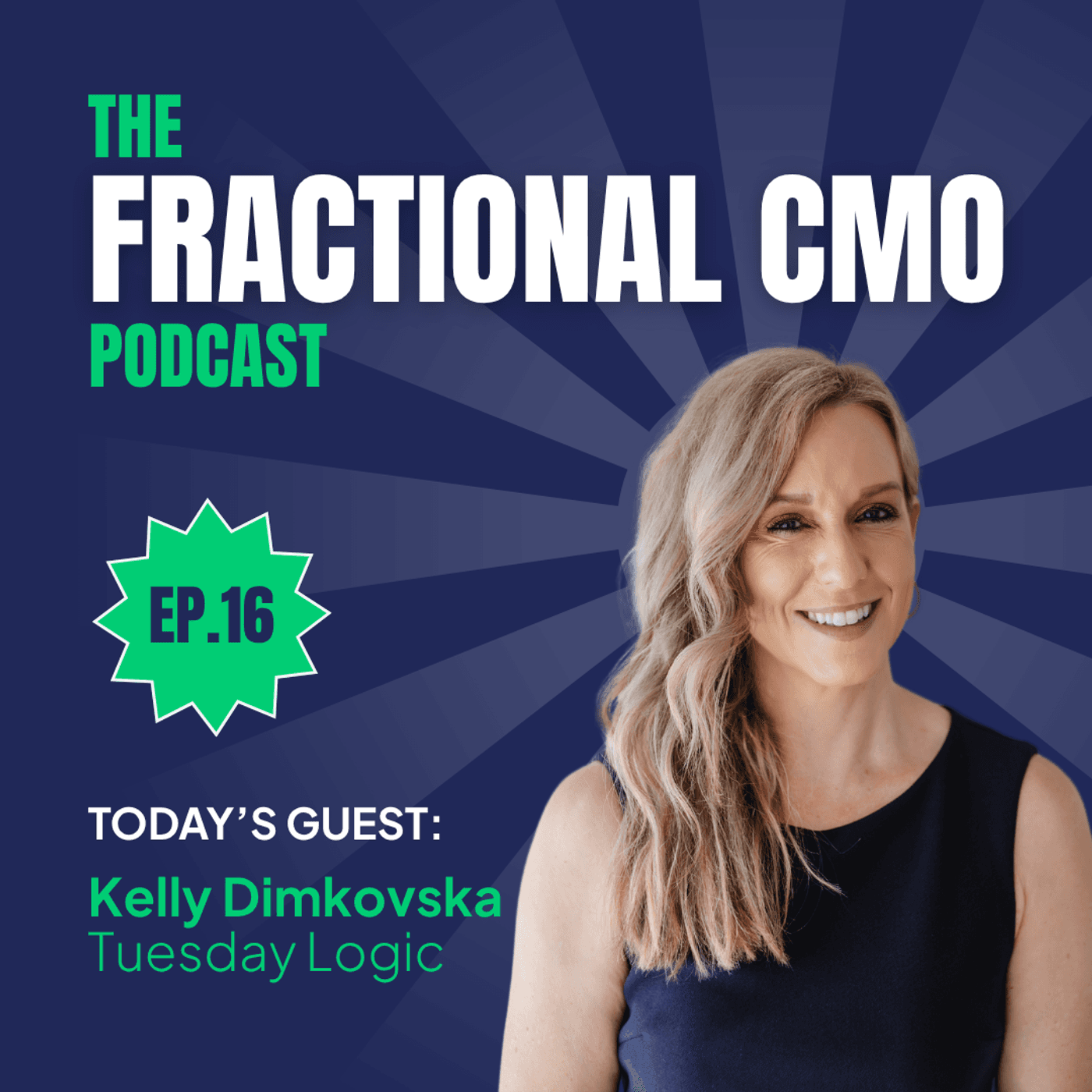
Kelly Dimkovska, digital marketing professional with ~16 years’ experience; 12+ years specializing in healthcare (in-house and agency). In the prior year she launched her own fractional CMO business (Tuesday Logic), focusing on healthcare.
Key claims
Healthcare marketing is highly regulated (e.g., medicinal cannabis can’t be marketed outwardly to B2C; cosmetic surgery has strict rules like before/after and testimonials; pharma/med device must follow compliance). Content should be part of every marketing strategy, but what you produce depends on audience (B2B/B2C) and what the business can realistically create. Avoid “AI-pumped” content lacking human value and SEO best practice. Every piece needs a “why,” a clear CTA/next step, industry/ICP relevance, and a “so what” value factor.
Notable examples
Medicinal cannabis marketing limits; social reach benchmarks (Meta organic ~1–2%, Instagram up to ~7%, LinkedIn company pages ~1–2% vs personal pages ~10–15%); content repurposing (blog to LinkedIn newsletter, multiple posts, infographic, short video). Metrics: organic vanity vs paid conversion benchmarks; organic social as “window dressing” and trust builder, not a direct conversion driver.
Written by AI. May contain mistakes. Listen to the episode to check what was said.
Chapters
Tap a time to open that second in VOGetting to Know Kelly Dimkovska
0:45 to 2:43
An overview of Kelly's career in digital marketing, especially in healthcare.
“So I suppose my very brief overview is I've been in digital marketing now for about 16 years, and just over 12 of that has been specializing in the healthcare sector specifically.”
Challenges of Healthcare Marketing
2:43 to 4:30
Discussion on the regulatory challenges in marketing within the healthcare sector.
“So does, I mean, obviously that, I'd imagine that makes it harder, but then sometimes I guess it doesn't make it harder because, you know, you are sort of really confined into what messaging you can share to a degree.”
The Role of Content in Marketing Strategies
4:30 to 7:02
Exploration of the importance of content in modern marketing strategies.
“well, it probably was at the start was an afterthought.”
Creating Valuable Content
7:02 to 10:59
Understanding what makes content valuable and the importance of clear messaging.
“I mean, that sort of, to me, there's those core questions is what can you produce?”
Integrating Content with Marketing Goals
10:59 to 13:11
Discussion on aligning content with industry goals and audience needs.
“So, you know, one part, as you just said, you know, you've got content.”
Measuring Content Success
13:11 to 14:06
Insights on assessing the effectiveness of content in driving sales.
Evaluating Organic Content and Its Impact on Sales
14:06 to 19:20
Discuss the relationship between content creation and sales effectiveness.
“But in terms of do I think organic, I suppose, social media is going to get you a massive return?”
Measuring Metrics: What Matters for Success
19:20 to 21:45
Explore key performance indicators for tracking content effectiveness.
“grow our brand and grow our awareness and, you know, bring people through the sales funnel, the marketing funnel, whatever you want to call it, right?”
Building a Scalable Content Engine
21:45 to 24:41
Learn how to create a sustainable and efficient content production process.
“We've talked about blogs and short form content and all those kinds of things.”
The Importance of Founder-Led Content
24:41 to 28:03
Discuss the advantages of founder involvement in content creation.
“But also, I understand that some people just don't want to do that, don't want to be in front of the camera.”
Show all 12 chapters
Creating Engaging Content with Confidence
28:03 to 28:34
Learn how to encourage authentic content creation by leveraging team expertise.
Adding Value Through Passion
28:34 to 29:10
Discover the importance of passion and value in effective communication.
“So that's sort of my final note for today.”
Transcript
Automatic transcript. May contain errors.0:07Simon:Welcome to another episode of the CEMO Marketing Podcast. I am your host Simon Dell and I am the CEO of CEMO, spelled C-E-M-O-H dot com if you want to find out more about us. We are Australia's largest fractional marketing network. Something annoyingly is beeping in the background there, which is my smoke alarm. But hopefully we'll stop doing that in a minute. Otherwise, poor Rachel, our editor, is going to be editing out smoke alarm beeps all the way through this episode. So sorry about that, Rachel, for when you're listening to this later. Now, we're going to talk about content today. We're going to talk with one of our CMOs, Kelly Dimkovska.
0:48Simon:Did I get that right? because I know we've tried I've tried that before in episodes and I and I think I got that one right didn't I you did you succeeded well done Simon um ready for that uh yeah it is slowly dulling down up there so well uh we're just just so everyone's very you know I'm not with the house isn't burning down or anything like that so please don't worry about that um Kelly tell us uh tell us a bit about you, your career, your background, and you have a kind of specialist industry knowledge, don't you? Yes, I do. Yes. So I suppose my very brief overview is I've been in digital marketing now for about 16 years, and just over 12 of that has been specializing in the healthcare sector specifically.
1:39So I've worked both in-house and in agencies. And recently, last year, I stepped out and opened my own business, being a fractional chief marketing officer, mainly specializing in the healthcare sector.
1:53Simon:Excellent. Now, we're going to talk about content today. And we've had a few of these conversations in the last couple of months. And I don't think it's fair to say everyone has a different opinion. I think there's some um there's some general opinions around content but i think the interesting thing is there's this kind of nuances depending on industry and things like that um and just to start off your industry from a medical health industry very very i would imagine it's a very regulated business when it comes to marketing a hundred percent yeah you if you're a regulated health service or sort of in the pharma or med device sectors.
2:37And yes, extremely regulated and something that compliance should never be taken lightly, I suppose.
2:44Simon:So does, I mean, obviously that, I'd imagine that makes it harder, but then sometimes I guess it doesn't make it harder because, you know, you are sort of really confined into what messaging you can share to a degree. So I guess that's my first question. Does that make the industry harder to work in or easier to work in? For some industries, it's nearly impossible. So if you're looking at, I suppose, take the example of medicinal cannabis and the marketing of that is you simply cannot market outwardly to a B2C audience. so in some respects it's almost impossible to reach your audience but then there's other industries which are just very highly regulated you've got the cosmetic services anything sort of either non-cosmetic surgery or cosmetic surgery there are a lot of guidelines around before and afters, testimonials all that sort of thing Then you have sort of other sectors within the healthcare sectors, which are sort of a little bit less regulated, but nonetheless you'd have to comply with all of the ARPA guidelines.
4:05So, yeah, I suppose it depends which industry and how heavily under scrutiny it is at the moment.
4:12Simon:One of the things I've noticed in the last 10 years, I think every marketer has noticed, is that back in the early days of social media and those sort of things, content was like just something that most businesses just sort of wanted to plug on to the, to the end of their marketing strategy. It was not necessarily, well, it probably was at the start was an afterthought. But there's an argument now that it's a, it's, it's potentially, it's a key key growth driver and some would argue it should be the center point of a marketing strategy. What are your, what are your thoughts on that? I think it definitely should be part of every marketing strategy.
4:55I think the channels that you decide to invest in, so whether that be Facebook, LinkedIn, Instagram, TikTok, whatever that might be, I think that really comes down to whether you're after a B2B audience or a B2C audience, a mixture of both. But also I think it really comes down to what the client or the business is actually comfortable in creating too, you could be told that short form video is something that you should be doing a lot of. But if you're really bad at it, perhaps you should just be looking at the things you're really strong and passionate about. So I think it all comes down to a few different factors and that's when I'm ever creating a content strategy for clients that is definitely one of the key things we talk about.
5:43Simon:That's a really interesting point because I literally had that conversation last week with a prospect client and they'd said to me what content should we be producing and and I said look you know you can go to the nth degree in content strategies and talk about subject matter and channels and all those kind of things but by and large I think it's very much or largely dictated by what you just said there is what content can you produce it's no point in in in over uh is creating these complex strategies if if there's nobody in the business that's prepared to sit in front of a camera for example a hundred percent and i think also it even comes down to even copywriting and in many ways if you're just going to be i think pumping out content which is really just from ai and it's not really designed or written for humans in mind And then in my mind, it's just wasted time and energy on content.
6:43And I think additional to that, if we are just talking about things, say, like blog articles as well, again, if it's not optimized for answer engines, if it's not optimized for search engines, then I feel like it's just three or four hours you're flushing down the toilet. So I think it's really, really important that if you are going to invest in a content strategy, that you follow best practice and you're not just using AI to pump out a whole lot of content, which is just not going to serve a purpose at all at the end of the day.
7:17Simon:Yeah. I mean, that sort of, to me, there's those core questions is what can you produce? And I think the other big question is why are you producing it? um you know and as you said if it's for if it's for google or search engine or if it's for large language models then that's fine you know but produce it with that in mind if you're doing it to because to become a celebrity on linkedin then then so be it um and a good example of this is that um you know we'll take this content here um and you know transfer it transform it into a blog potentially or use the video itself to put onto your profile on the website so that when people find kelly on the cmo website it's not just a blank wall of text that they're looking at with your achievements they can sit there and go hey you can almost do a 20 20 30 minute interview by watching by watching your um your you know your your podcast so um i think there's that there's some big questions to sort of start at when to start with before you go off and start doing anything.
8:28Simon:What are some of the sort of problems that you've inherited when you've gone into working businesses or you're there for your first few months? What are the sort of content problems that you see? Lots. So, yeah, lots. A lot of it recently has actually been what I touched on earlier, which is literally content creation these days is just so easy. With the use of AI tools, it is literally people just thinking they can put up an article on their website and for some reason it's going to be picked up or it's going to be relevant. So much of it is not. We've got simple things like headings like H1, H2 tags missing, no internal linking, no external linking, no sort of FAQ sections or author sections or table of contents or all of those things that are needed in order to help these days to show up in search.
9:33I think the other thing is not being really clear on actually a point you touched on is but why are they creating this content piece? If you are not sure on why you are creating the content and there's no clear call to action or the next step that a user should take, then you haven't really added value or guided them on to the next step in the stage or the user journey. So even calling out the industry is, I suppose, you know, working with businesses where they say, look, their industry is X. And then you go in and you look at all of their content and not much is that industry mentioned. And yet they're very, very clear on the ICP.
10:19So it's just these little things. People, when they're reading content, they need to know it's for them. And the other big part of it, which I actually talk a lot in my one-on-one mentoring session, is the so what factor. What have you added to someone's life for them investing three to four minutes in reading your content? What have you given them? What have they walked away with? Is it a, I already knew that that's added no value to my life? Or, hey, that one sentence has really changed the way I've thought about something. that's the so what factor and that's something you should always be aiming for with every piece of content you create.
10:59Simon:I love that because there's a graph that I often use and again I used it with a prospect client last week about the difference between saying something in content but then it's like a step you say something and then it's say something that people listen to and you know it's a bit hard to describe for me to describe the actual graph but at the other end of the spectrum is saying something that convinces people to buy. So, you know, one part, as you just said, you know, you've got content. Has it added anything to anybody's life? Or have you just said something for the sake of saying something? Whereas at the other end of the spectrum is saying something that convinces somebody to buy.
11:42Simon:That's powerful. The capacity and the ability as a marketer to convince people to buy by just the content that you're producing or saying or whatever it is that you're saying those are where I think you know the in-demand marketers the good marketers can really make their mark in a business I always when I ever I do a content strategy a large part of that is number one I map out the industry or the target audience or the ICP that they're going after. And then I actually map it with a service. So what service are we actually trying to print? So we've got the blog article, we've got the pillar for who we're targeting, the ICP, and then we've got the, right, what service are we actually promoting through this?
12:35And what internal linking are we then going off to different services pages? So it's connecting it all together to have a broader purpose and I think you know HubSpot you know really does you know talks about the pillar pages and the importance of a pillar page so having your topic and then all the supporting information whether it be blog articles newsletters whatever it might be pointing back to this main topic to create this this pillar page or this topic cluster and that is a lot of work in itself just doing a strategy around that but the payoff massive payoff is massive well let's let's talk
13:17Simon:about that payoff because i guess there's some of the challenges that i also see is is if you're a if you're a ceo and you don't understand marketing or you're not familiar with all the component parts of marketing content marketing all those kind of things there might be a tendency for you to sort of push that all of your all of your content has to be producing leads it has to be converting you know to your point you know it's it's good to say hey this content gave something back or people were were better off once they consume this but i think one of the dangers at the other end is that you know the ceos or the business leaders are too too caught up on content leading to sales do you think they should be do you think we should be sitting there going hey we did all this content look how many sales we've got do you think there is a you can draw a straight line from a you know series of you know short videos to actually making more sales I think over time, I think every piece of content you create, you know, you are, you know, strengthening your organic, I suppose, reach on search results pages.
14:35But in terms of do I think organic, I suppose, social media is going to get you a massive return? I would say no. So reach these days is just so low. Like we're talking about every organic post you're doing on Meta generally. So it's about 1 % to 2 % on Facebook is actually going to see your organic content. And with Instagram, it can go up to sort of around about that 7%. Also LinkedIn. LinkedIn from a company page, a post from a company page is still only 1 % to 2 % in terms of reach, whereas from a personal page, you're seeing more of that 10 % to 15%. So there is definitely value, I think, to creating organic social media posts.
15:35But I always think of them as a little bit like a window dressing. so if somebody is sort of researching or already has already come across your your your content or your brand or whatever you might be be doing they will often go and check out your social media profile and just have a little bit of a flick through are these guys active are they delivering value is there a risk engaging this business and if you have a presence that lowers the risk factor for them is the social proof. So I think I always look at it as a window dressing and I'd always support anything like that with paid campaign to reach out, to burst out of your, I suppose, your organic reach and actually reach new users.
16:24So it's a supporting factor, I think, not a conversion driver.
16:30Simon:Yeah, no, I 100 % agree. And on a sort of side note as well, I can't stress how important it is when you're looking for employees. You know, for a big business that has a switched on social media presence, even a small business, right? When you're trying to recruit, when you want new people to join your team, they go and check these things as well. You know, they want to see who they're working with. Yep, absolutely. And actually, that's something I probably should have mentioned. But yes, from my times of, you know, my years of working in marketing agencies and actually having actually a heavy role in the recruitment of our specialist team, absolutely.
17:16The comments that I'd often get from people going, we've checked out your social media and we feel like, I feel like this is kind of could be a good fit for me. So absolutely, there's huge value in that.
17:29Simon:yeah and i think it's again industry by industry you know um channel by channel um but i often you know from a buying perspective i often think one of the most underrepresented underrepresented represented uh industries who should be doing more on those socials or some of the trades because i think employing someone to work in your house or work in your business being an electrician a plumber a gardener a landscaper whatever it is that actually has a presence beyond just their website and a phone number as you said it's a it's a trust thing isn't it the more content you see the more you trust them the more likely you are potentially to pick up the phone and talk to them exactly um so it's yeah it's unlikely that it will be as we talk about often like first click attribution.
18:29It's not, it's normally, it's normally a part of a bigger, bigger piece. So normally actually years ago, they used to talk about the 10 touch points in order for someone to become a customer or even just, I suppose, engage or reach out to become a lead. These days that's actually increased to about 13. so if you so social media is is one of those touch points um as is an article as is a video as is a website uh as is a google business profile which you should be doing posts on as well so yeah so every all of this adds up uh to to that final outcome which is ideally building that trust to a point where they are ready to engage with your business.
19:18Simon:So from your perspective, if you're sitting there going, well, you know, we're using this as a supportive mechanism to grow our brand and grow our awareness and, you know, bring people through the sales funnel, the marketing funnel, whatever you want to call it, right? What are you measuring from a metrics perspective? What do you, you know, what do you think is valuable? Because we've all been lost in those vanity metrics way too many times, but what is worth actually measuring? Yeah, so I suppose it depends. If we're talking about organic, it is definitely, in my mind, it is still in that vanity metrics area.
20:02So we are looking at reach. We are looking at engagement, although these days, most people are lurkers. that they don't tend to be engages very much. So even that, like you take with a grain of salt these days, it used to be like the thing that you'd always chase is engagement. But yeah, it's just not the way people operate these days with scrollers. And then I'd be looking at the number of, I'm really interested to see how much traffic the social media has actually generated to your website. that's a big one because if you've intrigued them enough to want to click through to your website and actually read more and i'm meaning you know clicking through and then not having a massive like a hundred percent bounce rate doing about clicking through and actually engaging with your website and then eventually converting from that that's that's what i'm looking for um yeah with regards to organic um paid obviously as soon as you you do anything paid then you're definitely looking at those sort of more higher conversion metrics.
21:10And you're definitely looking at the industry benchmarks associated with each of those metrics. So your cost per click, cost per conversion. And if you're not meeting those industry benchmarks, then it's all about optimizing that campaign until you are. But even those, those are very small percentages. So you need a lot. It's a numbers game in many respects. You need a lot of numbers in order for the percentages and everything to pay off. Okay.
21:36Simon:Okay. Well, my last question for today is about building that scalable engine.
21:44Simon:We've talked about video. We've talked about graphics. We've talked about blogs and short form content and all those kinds of things. I think potentially some businesses look at that and go, Christ, that's a lot of work. That's a lot of people. you know what are your tips when it comes to potentially building some sort of you know scalable engine that can you know constantly be sort of constantly be on and constantly be producing appropriate brand-led content sure so number one is you have to be clever content no doubt a doubt, no doubt about it, it is time consuming and the payoff can feel very small at times.
22:32So I always like to do a content strategy. Then for every piece of content that I create, I like to see how many other ways I can repurpose it. And you actually mentioned this earlier before. Can I repurpose this article into a LinkedIn newsletter? Can I repurpose this article into four social media posts? Can I turn it into an infographic? Could I do a short video on it? So I like to look at if you're going to invest in creating content, let's wring every single piece out of it that we can. And then off the back of that, is there a campaign in it? So having a look, you know, did one of your pieces of content just really take off?
23:16And then that's an indicator to you that perhaps you could look at actually investing some money into this. So that would be my biggest tip is to be super clear, number one, on what you're trying to achieve with it. Have a strategy and then utilize every single piece of content the best way you can to get the most value out of it. The other thing about it is you can outsource, obviously, content creation. However, when you do do that, I always recommend you do very, very clear briefing. to whoever you're outsourcing to. Make sure that they know who your ICP is. Make sure they understand what the call to action is.
23:57Make sure they understand the internal linkings. Make sure they know best practice. The hook, like number one, I think the hook of any social media post or any main content piece, you know, it's so important to get that right. You know, it's the 80-20 rule. only 20 % will continue reading after the hook. That's small. You've got to grab them straight away. So being super clear, whoever you're outsourcing to, what your expectations are and having that content plan as a real, I suppose, source of truth or that they can go back to reference it for best practice.
24:40Simon:I was going to say that was going to be the last question, but I did actually think of another one as well because I think it's one of those that are quite quite sensitive in that that sort of small to medium-sized businesses is the idea of this founder-led content right i i tend to find that the companies that have the best social media presences are best social media presence um are where they have a founder a ceo whatever who is very active and happy to be in front of the camera and those kind of things Now, I don't want everyone who listens to this as a founder suddenly go, oh, shit, I'm useless.
25:18Simon:I need to get better at that. Maybe they do. But also, I understand that some people just don't want to do that, don't want to be in front of the camera. And we also see that when you get people like the famous video from a couple of weeks ago of the McDonald's CEO trying to eat a hamburger, right? Some people should just should not be on camera. But if you're a... Sorry? I missed that. go and have a look it's it's the most awkward it's the most awkward ceo video you'll ever watch but it's and anyone who gets a chance go and watch the ceo mcdonald's ceo eating one of his own hamburgers he just manages to make it look like the worst thing in the world that he could possibly be eating anyway um if if you're if you're if you're a ceo and you've got that that enthusiasm for being in front of the camera or writing blogs do you think that perhaps puts you a little bit further ahead of the game yeah and i think um the data points to that too simon like when i was talking earlier you know one to two percent of company posts on linkedin are actually viewed by by um sorry one to two percent reach on company content whereas when you are posting from your personal page and it's found a lead content and it's original it's your face your voice uh your thoughts um people connect with that better and we can see from the data that then jumps up to 10 to 15 percent reach so i think people buy from people and if you are comfortable uh you know getting in front of the the camera um it would always be beneficial to have the face have all the faces they have your team involved too what are you especially you know bringing your specialists and what are their thoughts on the latest, you know, Google, you know, update, you know, getting them talking about that.
27:16So I think just people, I think, these days. But, yeah, certainly the data suggests that that's the way you should be going. And you can balance that up with other content as well. But I think the majority should be of a person at least.
27:33Simon:it's amazing as well um one of our mutual contacts jess or monnier um who works for me she hates hates being on the camera hates it but she just presents so well she just presents so well when there's a camera in front of her she's talking about something that she's passionate about um and i think that's the key i think people will present well when they're talking about something that they have a passion about um if you're asking them to talk about things that they're not confident about um but you put someone in the front like jess and you ask her to talk about design and colors and branding and things like that you get great content so to that to that sort of mind get the people in the business in your business talking about things that they're knowledgeable about that excite them um and and you'll get you'll get much better content you'll get great content you you put them in front of a camera and ask them to be talk about something that they don't know about or they're not confident, you're going to get shit content.
28:34Simon:So that's sort of my final note for today. Your final comment today, any sort of singular last tips that you want to give people out there? Well, I just wanted to tag on the back of yours there, Simon, to get my last word on this. I think it's not so much necessarily where people – it is where they feel that they have the knowledge, but I think the real passion comes when they feel like they can deliver value and offer value to people by speaking about whatever they're speaking about. So I think that's really important for people is to feel like they're adding value. Yeah. Great comment. Look, if anybody's interested in working with Kelly, you can find her on our website.
29:17Simon:There is a little button on there. You can start talking to her straight away if you go to the website. And knowing Kelly, she will respond very quickly as well. So if you do find, uh if you do watch this video jump onto the semo website uh search for kelly you'll find her and there's a contact kelly button on there um click on that and she'll have a conversation with you about how she can help um i she obviously mentions that she's got a strong background in in medical and health and all those kind of things but i think a lot of your skills are very transformed transferable to other industries and things like that as well so um a a wealth of knowledge there so thank you very much for your time today and thank you very much for your insights and um wish you well in the moving forward thanks simon talk to you later
From the publisher
In this episode of The Fractional CMO Podcast, we're joined once again by returning guest Kelly Dimkovska, a digital marketing specialist with 16 years of experience, more than 12 of them working exclusively in the healthcare sector.
Simon and Kelly dive into the realities of content marketing in a heavily regulated industry, exploring why most businesses are producing content that adds no value, how to actually measure what matters, and why founder-led content consistently outperforms company page posts. Expect sharp takes on SEO basics that still get missed, the "so what" factor every piece of content needs, and how to build a scalable content engine without burning out.
Kelly's LinkedIn — /in/kelly-dimkovska-55ba5636
We would love to know what you think, so give us a rating and review on Apple Podcasts and Spotify.
🌟 SUBSCRIBE to our YouTube channel to learn weekly expert marketing tips and ideas. If you think you have a great story for the podcast, contact our producer at podcast@cemoh.com.
🚀 If you need help growing your business, visit cemoh.com to find an experienced marketing consultant to help you.