In short
The Fractional CMO Podcast - Episode Summary
Episode Information
- Podcast Title: The Fractional CMO Podcast
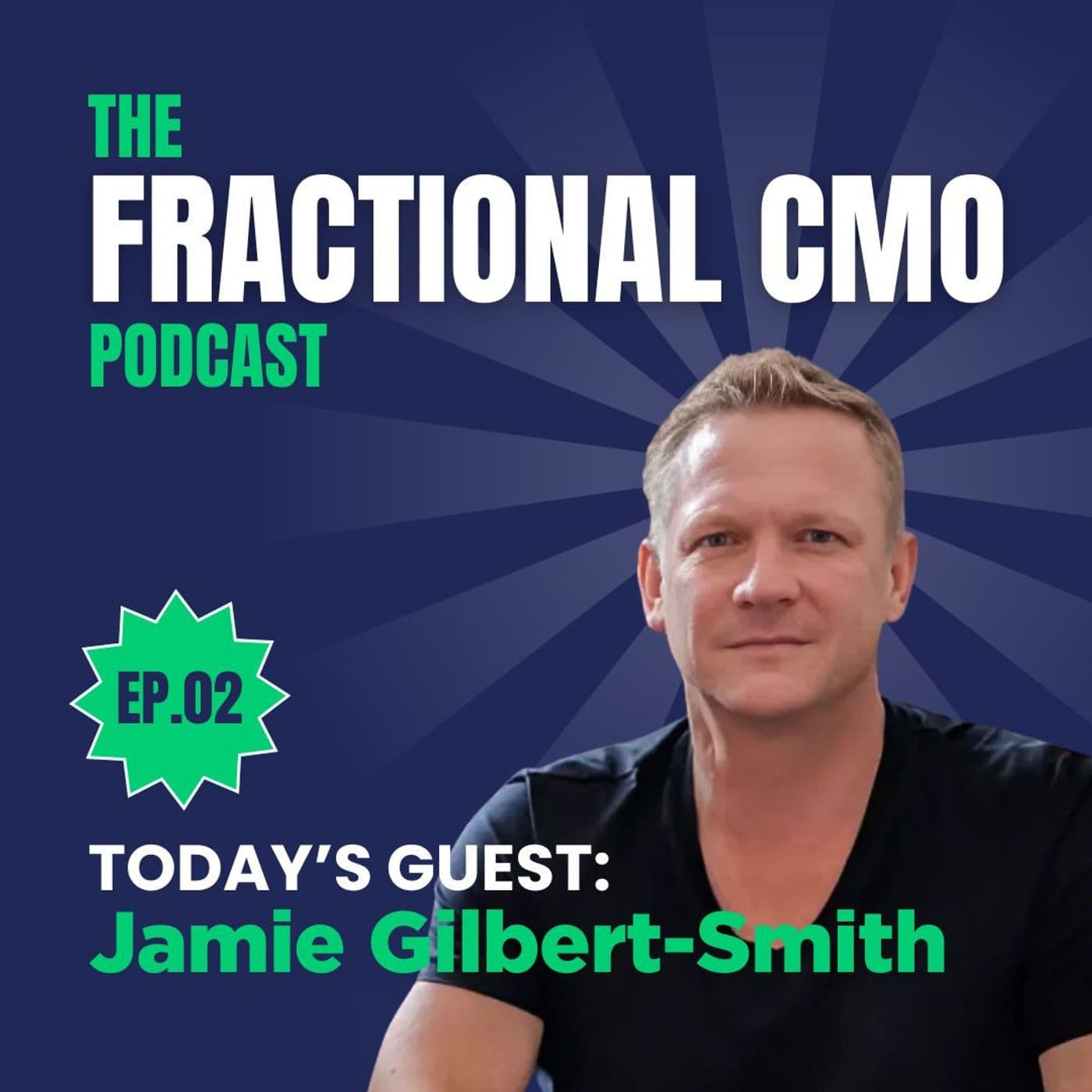
- Episode Title: S2 Ep2: Jamie Gilbert-Smith of Occam Strategy
- Host: Simon Dell
- Guest: Jamie Gilbert-Smith
- Date: [Insert Date]
Overview In this episode, Simon Dell interviews Jamie Gilbert-Smith, a seasoned marketing expert and founder of Occam Strategy. The discussion revolves around Jamie's extensive background in marketing, his transition to fractional CMO work, and insights into effective brand and business strategy.
Key Themes and Discussions
- Jamie's Career Journey
- Experience Overview:
- 25 years in marketing, primarily agency-side.
- Roles included Marketing Director at Nine Entertainment, overseeing B2B marketing and driving revenue through partnerships.
- Managed high-stakes projects such as the annual upfront showcase and commercializing Olympic events.
- Transition to Fractional CMO:
- Shifted from a corporate role to consultancy to work directly with smaller brands and businesses.
- Aimed to create immediate impacts with clients where marketing is closely tied to their livelihoods.
- Effective Marketing Strategies
- Audience-First Approach:
- Emphasized the importance of understanding the audience's needs over the company's own messaging.
- Used the analogy of a Venn diagram to illustrate that successful marketing lies in the overlap of what the audience cares about and what the business offers.
- Simplicity in Marketing:
- Advocated for eliminating noise and focusing on effective communication.
- Highlighted that many businesses struggle to implement this due to legacy structures and behaviors.
- The Fractional Model
- Advantages of Being a Fractional CMO:
- Flexibility to curate teams based on client needs without the overhead of a full-time staff.
- Ability to provide tailored strategic advice for a diverse range of clients.
- Clients can engage senior talent without committing to long-term retainers.
- Market Trends:
- Increasing shift towards fractional roles as companies seek diverse perspectives and cost-effective solutions.
- Potential for continued growth in this model as it allows businesses to navigate financial constraints while accessing expertise.
- Challenges and Learnings
- Initial Challenges of Going Solo:
- Concerns about financial stability and the absence of a regular paycheck.
- Navigating the vulnerability of creating and promoting one's own brand and narrative.
- Personal Development:
- Ongoing learning about new technologies like AI and staying current in the marketing landscape.
- Importance of maintaining curiosity and adaptability as a marketer.
- The Reward of Impact
- Emotional Connection:
- Finding fulfillment in working with smaller companies where the results of marketing efforts are directly visible and impactful.
- The drive to build partnerships and see tangible changes in clients' businesses.
Key Takeaways
- Start with the Audience: Successful marketing begins with understanding your audience's motivations and needs.
- Create Value through Simplicity: Focus on clear and effective communication rather than overcomplicating marketing strategies.
- Leverage the Fractional Model: Using fractional resources allows companies to access high-level expertise without hefty overheads.
- Embrace Vulnerability as Strength: Transitioning to a new venture can be daunting, but it also provides opportunities for personal and professional growth.
Contact Information
- Jamie Gilbert-Smith: [LinkedIn Profile](https://www.linkedin.com/in/jamie-gilbert-smith-b777726)
- Occam Strategy: [Website](https://www.occamstrategy.au/)
- Host Contact: Simon Dell - [Cemoh](http://cemoh.com/)
Conclusion This episode showcases Jamie Gilbert-Smith’s insights into effective marketing strategies and the advantages of the fractional CMO model, emphasizing a focus on audience understanding and impactful communication.
Written by AI. May contain mistakes. Listen to the episode to check what was said.
Transcript
Automatic transcript. May contain errors.0:07So welcome to the CMO fractional marketing fractional CMO podcast. This is our second episode of this series. It makes us sound very professional when we have different series, but we've realigned what we're doing. This podcast now is specifically about fractional CMOs, talking to fractional CMOs, understanding how they work, talking to clients who've used fractional CMOs, and so on and so forth. So if you want to find out a bit more about us, check out our website www.semo.com that's spelled c-e-m-o-h uh if you want to reach out to me uh my name is simon dell i am on linkedin pretty much everywhere else uh you can email me at simon at semo.com and if you enjoy this podcast and think it's pretty cool then it would be really helpful if you could write us a nice review give us five stars on apple podcasts or spotify or wherever else that you are listening to us.
1:13That's pretty much the boring introduction out of the way. And we're going to jump in to the real, I was going to say the meat and bones, but that makes him sound kind of, that's very strange. But welcome to the podcast today. A gentleman by the name of Jamie Gilbert Smith. Thank you for joining us, mate. Pleasure to be here, Simon. Now, you have a, I was going to say colourful history, but colorful is probably the wrong word but a let's say it's interesting uh an interesting history uh of both client side agency side and you are a your fresh meat on the on the the fractional cmo uh on the fractional cmo platter so we're gonna we're gonna talk to you about that but first things first let's get the the sort of the overview about the the jamie story in in sort of you know the edited highlights of the jamie story yeah sure so um god summing up 25 years and that makes me feel very old but um yeah 25 years most of which was agency side but i spent the last marketing director at nine um entertainment company which um is channel nine but also it's uh streaming it's publishing it's audio it's the creative services it's the whole gamut and my remit was to look after all b2b marketing at nine and that involved um really trying you know driving our brand driving our revenue driving yeah partnerships and leveraging um both our internal properties so let's take marion at first sight through to the afr or um partnerships with the olympics and paralympics um so external partners and then taking those to market trying to engage um and educate um the the commercial audience um probably the biggest highlight was i ran our annual upfront which is a annual showcase to the market investors politicians etc um and we'd consume about six months of the year in planning so it's a it's a beast 2 000 people in the room 7 000 8 000 online um so no pressure and um and then also you know commercializing our olympics and paralympics um driving 140 million in um commercial revenue which is above our target and yeah so just to interrupt there when you say commercializing the olympic presumably that means that you're you're sort of responsible of getting on getting in the advertisers and partners that are going to essentially give channel nine money in order to be visible during that that spectacular you know sporting event yeah exactly and there's different ways you can do it right so if you're a brand you can either buy spots and dots or 30 you know your typical 30 second 15 second kind of ad hoc airtime but before that you you were really looking for the big commercial partners who are going to have deep integration within the broadcast beyond just simple advertising.
4:26And those partnerships, you know, they're double digit millions. And the challenge we had is if you think about the last real Olympics that we had, where there was, you know, an audience and not COVID impacted was Rio 2016. And the medium age of a media agency person who's making a lot of the buying decisions is kind of high, yeah, about 28. They were at high school or uni when Rio happened. So we had to bring to life and contextualize the importance of something like the Olympics and Paralympics. We created commercial packages for it, but you've got to go out and engage the market and persuade them to spend significant amounts of money in something that was going to be on largely overnight in Paris.
5:18That can't have been an easy job then. No, so we did about, I think it was 25 different events, and we created podcasts, and we did a lot of content, and did I think three or four different iterations of the commercial pitch to the market as things sold and you then changed what you were packaging up. um so yeah it's pretty interesting and it's what i found really interesting was the shift from being agency side where you're an earner to being yeah um client side where you're a spender but yeah you've what you quickly find is that what you get to spend gets reduced very quickly when you're working for a legacy media company um that's in a declining ad market so um yeah we We got a real focus on our earned media as much as our paid.
6:14And just to touch base with that agency experience, so that was MNC Saatchi. Yeah. And you were there for quite a long time. Was it eight years? Yeah, I was there for eight years, and I headed up MNC Saatchi Sport and Entertainment, which was one of 12 companies at the time under the MNC umbrella, and then I sat on the leadership team as well. Yeah. and what we did was work with the likes of con bank optus woolies the australian olympic committee swimming australia to either look at how to how to commercialize their assets so like swimming australia how do you go to market and attract brands to come on board as a as a commercial partner or the other side of it which was you've got a con bank that is looking to leverage its sponsorship of the cricket and how does it do that right and i don't really like the word sponsorship because it was what we were doing was more than that so what we were focused on was really providing a real life tangible proof point to you know a brand proposition which is lots of marketing jargons but what that basically means is i'm a cynic when it comes to advertising and i don't believe ads necessarily um can do all the heavy lifting on their own because they're one way it's one way communication um and if you start if your starting point is okay i'm gonna start with my customer what they care about and then i'm going to think about what it is i want to be talking about i need to put it into their world in their context because otherwise they're probably not going to listen to me yeah and so if you do things around um yeah things that matter to them like cricket or music or you know you find a passion platform then you find a way to sympathetically bring your brand to life within that environment you can create a much stronger connection with customers than you can with just pure advertising and an example of the proof of that was when we did combat cricket um and they had the royal commission the only thick piece of communication that the bank did that drove positive sentiment in that year was our cricket work right um and you we did work where they were like hang on we've had zero negative comments in our socials it sounds stupid right but you go well if you're a bank and you're you're on social invariably there's somebody going oh you give me a better mortgage or yeah stronger stronger language not not safe for a pg podcast like this yeah no there are plenty of swear words in this so and i'm going to jump right ridiculously far forward here because that that sort of um that sort of relationship is you know i again obviously at a bigger scale we're talking you know millions and millions of dollars in international cricket and you know large-scale banks um but that's something that's probably really important just to the you know the average business that you know the smaller businesses what what what from that would you would you say was a as a was a key learning it sounds like finding that sort of passion seems to be the the cornerstone but if you were talking to a you know a normal smaller business owner today how what how would you translate what you've done on such a massive scale to sort of a smaller business yeah it's really easy it's really easy there's a there's a basic fundamental which is if you've got you've got to start with your audience first um none of this will sound like super smart but not many people are doing it right so you start with the audience think about what they care about yeah and i've said to people you know there's what your audience cares about there's what you want to talk about and if you imagine a venn diagram if you're really really really really lucky those two things might slightly overlap yeah um but invariably they don't and so you've got to start with what they you know what they care about what are their motivations and then work back from that.
10:16So, you know, I had a conversation with, who I wouldn't name, but I had a conversation with a beer company, and they were talking about their products and saying, but we've got the best hops, and we've won all these awards. I'm like, but a customer walking up to a bar doesn't give a crap about that, really. Well, sure, if the beer stinks, then they'll know about that. But what differentiates is not the hops. What differentiates is the story behind the brand. and i will you know prime example we're up here in queensland forex gold used to be the market dominator they used to be my client and see you know some people in cub and head office in melbourne decided to come up with a beer called you know great northern yeah and basically position it as a beer for fishes fishermen hunters etc and now i've had people going you know i ask them why they drink it and they go well it's it's it's a queensland beer it's from here i'm like it's a japanese owned beer that was broke come up with in in a brainstorming victoria yeah and you're buying the brand you're drinking the brand um and so you can apply that thinking to any business right um yeah how do you how do you start with um customer first that that digressing there that was a relatively um that was a master stroke on um cub's point and i and they'd spent many many years trying to get a cut of the the queensland market um by flogging vb and you know and this the queensland market just did not want to drink vb um and you know obviously somewhere in a somewhere in a boardroom somewhere in cub someone made the wise decision that you know creating something that had a perception a perception of origin i guess because i mean i mean it was made down in yatla which is technically queensland but which is queensland but um but as you say none of it none of it is really queensland is it manufactured it's not the heart doesn't belong yeah yeah it's hot you know yeah it's it's a brand it's a story yeah it's funny i mean again digressing off but i used to have those conversations with heineken about you know people would go i'm not going to drink heineken unless it was the heineken that was brewed in amsterdam and and then all of a sudden they start drinking it in sydney and everybody drinks heineken nobody's like nobody's nobody's sort of suddenly coming back to that message later on You know, it's, yeah.
13:02Anyway. But if you wanted to take it even smaller than that, if you think about small choices you make, you know, what real estate agent do you go with? What, you know, it's about mental availability. It's about being present in your mind when you come to the buying decision, right? There's a reason why your local retail agent will sponsor the local football team, the grassroots football team. It's because you've got to remember that only 5 % of your customer is ever in market at any one time for your product. So there's 95 % of them who aren't in market. so you need to be selling into like building that mental availability and that presence in their mind to the point when they are in the decision making um sorry in that purchase moment yeah that you're in your top of mind um and so you can apply you know apply that um to to all these small businesses as well so out of what you've done in the past what do you consider your strengths if you when you know when you stand in front of a you know prospect client and what why why jamie above anybody else um well i think that's partly how i position my consultancy is around simplicity but reducing reducing noise to focus on what's effective right and whether that's um thinking about the audience first whether well i'll go back to thinking about the audience first it's you know whether it was trying to sell the olympics to a media buyer or it's trying to flog beer for 4x gold um it is kind of audience first marketing um but i think what a lot of people get trapped with is they can understand that as a theory but in practice they're so bogged down in their businesses it's you know they've got legacy behaviors or that you know they've got legacy structures they can't see the wood for the trees are freaking out about ai and what i bring is 25 years of experience but really an external perspective to help shine a light on actually what they should be doing and what's going to shift the dial yeah and and so given all that you know i think that's um you know that that's a great answer So where are you, where do you still see yourself developing in terms of, you know, skills or understanding?
15:36Because, well, let's just, I'll end the question there. Where do you, where do you think you've still got opportunities to develop? Well, so, so, I mean, AI, the whole, you know, where, where's that going to fit in? How, you know, and I'm not going to make this about AI for the podcast because you're going to be pushing this out on LinkedIn where everyone's second, every other post is about AI. But it's clearly a thing that's here and we need to learn about it. And, you know, as a senior marketer, which is a nice polite way of saying getting old, you need to stay relevant. And, you know, so I play I play Roblox with my kids and, you know, I hate it and Minecraft.
16:18But I go on to go see what's in their world. Right. And you've got to stay curious and you've got to keep keep learning. So that's probably the big one. And then the shift from being in a company to being my own consultancy is another one where you've got to balance kind of how you scale selectively. How do you turn down a good opportunity to go with a great one? Yeah. And then also how are you on the balcony and the dance floor at the same time? Because you've got to roll up your sleeves and get busy, but at the same time you've got to keep that strategic view and you know it's kind of what i was just talking about in terms of what i offer to businesses as an external edge you know an experienced um external perspective i know that i will be in that point as well where i'll need people around me who give me their external perspective and hold up a mirror yeah um you know you can't do it all on your own yeah so you've had this i was gonna say glittering career um agency side um and obviously working with some huge brands channel nine you've now done the the thing where you're like hey i'm i'm gonna go and do this all on my own now what led you to that decision what was was there a light bulb moment or is that something that had been sort of just brewing over time um i think it's somebody's said to me oh you're of miss working on all these big brands it's not really um and who's to say i won't be working with them anyway but i think working for a big organization i mean it's no secret that nine had a shit show of a cultural review last year um 30 of people interviewed over a thousand people had experienced um sexual harassment 60 had experienced workplace bullying i don't want to be in that environment again um so being being out on my own allows me to some degree pick and choose who i work who i work with and i'm quite motivated by seeing you know working with smaller companies and smaller businesses where you can see the impact of your work more immediately um and you can see it in the human level as well right if you're if you're dealing with a founder or you're dealing with an owner-operator, this isn't just a three-year gig and then they'll move on to something else.
18:51This is their life. And so that becomes a much more powerful motivator than shifting brand preference on Combank. That said, I do love working with Combank. So we did some great work. Is that because you just like going to the cricket? or that was that exactly exactly so it's you know it's not what one is not necessarily better than the other but i just i'm at a point where i want to be able to pick and choose who i work with um both in terms of within my team and also within uh with clients as well yeah which is why i've created the model i've created which is so i've what i'm calling a fractional agency yeah so i'll go in as a consultant but i've got a bench of talent that i can reach out to and go okay i'll curate a team to solve a problem um rather than um i'm going to go hire a bunch of people and then sweat on the fact that i've got to utilize them yes um because a lot of those people aren't necessarily in that old agency model i'll have people that aren't necessarily the right fit for the client's problem but my problem is i need to utilize them so yeah so it's a fractional agency is the idea so instead of having a you know building out a team that you employ that you then have to worry about utilizing i come in as a consultant have a bench of talent that i've built up over you know many years and once i've understood what the client problem is i will curate a team to fit that to solve that problem rather than in an agency model the client's got a problem and i'll go well i've got old mate over here who's at 60 utilization yeah they're perfect for your job and it's like well no i'm solving my problem i'm not solving the client's problem yeah because the client you know that person may not be fit for purpose for the the problem that the client's got also means that i carry the overhead right so i i can come in more cost effectively and also i'm a senior strategist right you don't need me on a full-time basis so i come in and quite often would then hand over to other capabilities and get the hell out the way and you can still be there and check in and but you know you don't need to employ on a full-time basis i it's why i think the fractional model is is works so well and i think the more the more and more people learn about it the more it's going to be you know it's going to be utilized in both sides of the equation.
21:29I think, you know, there's a lot of agencies that are looking at it now going, I don't need to carry a full-time creative. I can just use a fractional, you know, art director or senior creative or graphic designer when I need one. And again, I think that that's always been there, but I just don't think it's potentially
21:53being recognized as an option it was you know i don't think people saw it as a way of building value in their business i think they saw it as a a means to an end um and i think now now people can look at it and go okay this is actually a viable way of building the talent pool that i need without the massive overheads associated with it yeah i think i think so i've interviewed a fair few ex-clients and agency people about the model and it used to be that you know feedback from people is it used to be that you'd want continuity of capability in your resource and so you'd go with the one agency and you'd only stick with those people because they knew your business inside out yeah but actually people are getting more promiscuous because a they haven't got the budgets to afford big retainers and B, they want diversity of thought.
22:47They want different thinking. Yeah. And this allows you to do it. I've also run in-house teams. Yeah, I ran an in-house team at NIME. Yeah. And if you think about it, half the time you don't need to employ those people on a full-time basis, right? At NIME, we did very little marketing in December and January. We had an events team that would have been putting on the Australian Open in February. So they would be working. But in theory, you didn't need to pay me from the kind of 15th of December to the 15th of January. Yeah. And then multiply that across a whole bunch of roles and you're going to save a whole bunch of money.
23:28Yeah. I think there was a couple of years ago, not last Christmas, Christmas before that. I'd sort of, I think I must have sat there for about four or five weeks twiddling my thumbs going, what am I doing? What's happening here over that exact period, that sort of week before Christmas to, you know, middle of January, late January. And I was, you know, it kind of reflected to sort of say, there's a couple of important things to factor into that is that, yes, the client doesn't need you for that time. So taking their money feels a bit disingenuous over that time because, you know, hey, I'm on holiday, I'm on a beach or whatever.
24:07But I think also then as a fractional marketing, as a fractional CMO or any fractional marketing, you probably need to sit there and go, I need to earn 12 months salary in 11 months. you know i need my cost to reflect that when i go and price myself up because i need to sit there and go let's assume that within four weeks five weeks of the year i'm just simply not going to be working i'm not going to be invoicing anybody um but on the flip side i spent 25 years payg paying 50 tax yes yes yes yes so look um in terms of you looking for businesses um is there a type of business that you're looking for i mean obviously you've you've obviously had background in you know sports and sporting properties and media and those kind of things is that where you want to sort of continue to play or you know you think that's where your strength lies i've been asking myself the same question because i've got the diversity of the background but i think um yeah i mean my experience is perfect for a rights holder looking to go to market and think about their commercial offering it's perfect for anyone who's thinking about or is in sponsorship um yeah and then there's also the b2b side of things from from nine and there's not that many of us in the market who are good at me to be marketing um and so i'm having conversations with media owners not mine um but media owners who have got rid of their senior capability have junior people in the role yeah but still need that that strategic capability you know nows to come in on a short-term sprint yeah so there's a few different clients um and then you I just came from an industry event for a totally different sector, but they're all in B2B, and they all have different challenges on how do I engage government or how do I engage wholesalers.
26:18Everyone needs to tell their story, though. Everyone needs to, you know. Yeah, and everyone needs to find that connection. I think, as you said right at the start, everyone needs to find that. i i love the venn diagram example i think that's a that's a great one and i will steal that many times in the future um but you're right is that you you sit there and i know everything about us i think about you know at simo it's put that customer first thing is what is the what are the challenges that the the customer what's the customer passionate about and what are we trying to present and where's the where's the overlap in that little venn diagram um and and you know those questions sort of are swirling around in my head now enough and it's amazing that you know i'm in marketing i've been doing this for a long time but still i ask myself those questions like once a month you know just to sit there and go we are we the are we doing the right thing are we talking about the same thing that the customer's passionate about you know or are we you know do we have this illusion that we've that they have a problem that we can solve that isn't actually the problem so it's it's it's interesting all the things you've said today i think really are are often really tough questions that businesses need to ask themselves more often so i think that's an interesting one for you to consider is who your audience is yeah because you would say a fractional cmo in theory would be you'd go pitch it to a marketing department as an additional capability but actually it's the cfo that's probably the one you want to engage because um cfo is a rule in the world at the moment yeah yeah that's that's yeah that's true that's true so just to sort of finish up here what what are the you know you've gone out on your own or you've decided to go on out on your own what's what's been the toughest the toughest bit so far is it the fact that there's not that you know that the regular paycheck isn't arriving in the bank account uh no i think there'll definitely be those moments um and you know it's difficult to you know when they when there are those moments it's difficult to be in flow and be yourself um but i think the biggest one was was having worked for these big companies let's say mnc saatchi you know i was there for eight years but when i joined you inherit a narrative you inherit the brand you inherit their language around strategy and all those things and it's it's kind of you're ripping off the the safety net of that by going out on your own and creating your own brand and creating your own narrative and your own story sure i'm leaning on all of that experience but when it's you that can be quite a vulnerable position to be in um but probably the biggest learning i've had is like that's okay it's okay to be vulnerable and there's a hell of a lot of really good people out there that will give you the time of day and advice.
29:32And it's daunting, but it's also rewarding. You know, I spoke to a prime example of that. I spoke to somebody I hadn't spoken to in about seven years, who I worked with at NNC just yesterday, and he was talking about, you know, when you're out on your own, the highs are higher, the lows are lower, but they're yours. Yeah. And that's quite a big difference. Yeah. And so, yeah, it's going to be a bit of a journey, but it's surely going to be an interesting one and one that, in theory, I'm in control of. And again, I'll ask you this question. I think you've probably answered it enough times during the session here, but what's that ultimate reward for you out of all of this?
30:23um well i think it's a financial one because i've got three young boys but that's that would be a disingenuous answer because if it was all about money then i'd be going and trying to check get the big job at the big company again um for me it's really that that sense of partnership and seeing the impact of your work on you know where you can actually see it and feeling like that there's a purpose to what you're doing. When you're one cog in a big machine, I've got the 140 million for the Olympics and Paralympics, but that wasn't just me. That was a team of people, obviously.
31:03But that was a rare example where there's a really big tangible result. A lot of it is you're kind of just edging the machine forward. And I think, yeah, the realization of the output of your efforts it's going to be really rewarding yeah it's from my perspective i think you know i'd echo that as well i think i mean i'll give example i'm going to go and see a business tomorrow who's a small catering business that that's um you know turning over a million dollars and um when i first met her she looked drained. She was like, I'm over this. I don't see her. You know, you get this vibe that she was like, how long do I keep doing this for?
31:55And what I hope to inject with her is to sit there and go, okay, here is a plan now. Here is a route for you to achieve what you want to achieve, um you know largely through marketing with a big dose of sales in the top of that operationally i think she's completely she knows what she's doing operationally but she's confused as to how the business grows in the position that she's in at the moment and i think if i can go into that and and say this is these are the things you need to do and then help them through that and go this is meet this person they'll help you do this meet this person and make sure you're you're that sort of conductor in the conductor of the orchestra as it were um it it is it is supremely rewarding and yes there's going to be moments when you're sitting in board meetings in other clients where you want to bash your head against the table and things like that but for me i echo what you what you you know what you've said there is that genuinely and i don't want this to sound wanky or anything but genuinely you can change people's lives and i think that that's a great legacy to to want to leave behind yeah and i think i think within this is the variety as well of where you can pick and choose where you work um and you know i i think that's an un bit of an unspoken benefit for being a fractional if you can you You know, it's interesting.
33:28I've had conversations where I want to, you know, I'm in conversations with a kid's charity, which is really cathartic and a bit of a soul clad from some of the other jobs I've done in 25 years. But on the other hand, I'm talking to a guy about some, you know, tech platforms and taking that to market. And, you know, it's kind of a weird penny drop moment because it's really obvious. But I was just like, oh, I, halfway through the conversation, I can do actually what I want not I'm in the confines of a job description within the one organisation doing the you know I didn't have a shit ton of fun especially in the sponsorship world where you go to cricket and go to music and doing lots of interesting things but there's going to be a sense of autonomy I think Last question then if people want to reach out to you obviously um they can do that through simo but if they want to reach out to you directly um you know you're not you're not hard to find on linkedin but what's the what's the the the new website and the new email address yeah so well linkedin's best but um yeah occam strategy.au is is the website yep um but yeah it's probably best go through linkedin you'll find me you'll find the website um and feel free to reach out on um linkedin messenger as well um whether you want some advice you're starting out in your own thing um you're stuck in corporate world and thinking how do i get out and escape or if you're interested in you know some of my experience and how it might be able to help you then you know give me a shout awesome mate thank you very much for your time today it's going to be extremely enjoyable watching that uh watching the business grow in the uh you know in the next 12 months and being part of that so um thank you for thank you for being on today no thanks for having me
From the publisher
Jamie's LinkedIn - linkedin.com/in/jamie-gilbert-smith-b777726
Occam Strategy - https://www.occamstrategy.au/
- We love to know what you think so, give us a rating and review on Apple Podcast. Rate Our Podcasts
- Subscribe to our YouTube channel to learn more marketing tips and ideas weekly. CLICK HERE
- If you think you have a great story for the podcast, contact our producer at podcast@cemoh.com.
👇📲Find and Follow our Socials 📲👇
✅TikTok