In short
The Fractional CMO Podcast - Episode S2 Ep4 Summary
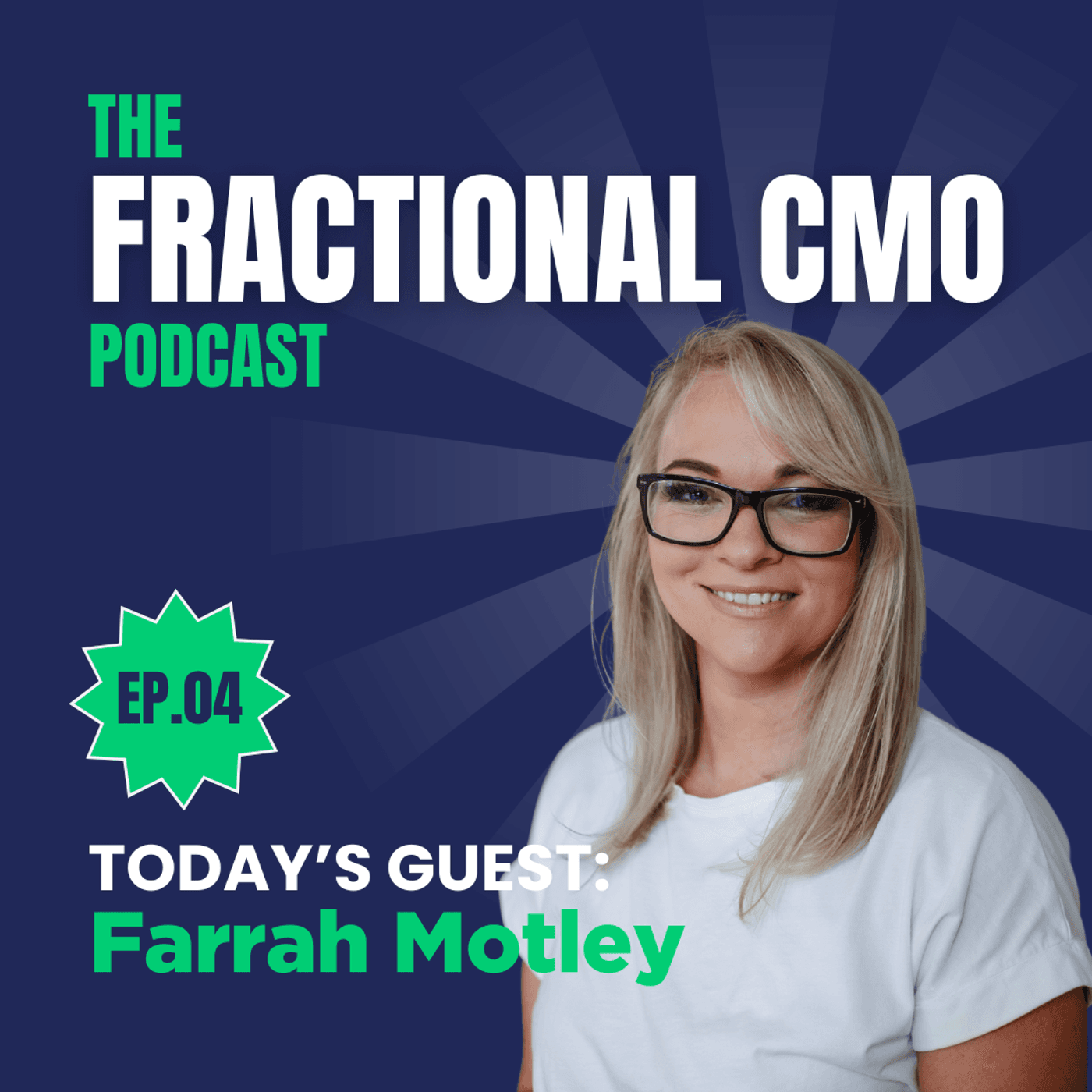
Podcast Overview Title: The Fractional CMO Podcast Host: Simon Dell Guest: Farrah Motley, Director of Prosper Law Episode Focus: Legal considerations for Fractional CMOs and consultants in marketing.
Key Themes and Discussions
Introduction
- The podcast discusses the legal implications of being a Fractional Chief Marketing Officer (CMO) with a focus on various aspects important for consultants.
- Farrah Motley shares her extensive legal background and insights on how fractional CMOs can protect themselves legally.
Duty of Care
- Definition: Consultants owe a legal duty of care to their clients, meaning they must provide sound advice based on their expertise.
- Importance of clear communication about potential risks and outcomes of marketing strategies.
- Example: CMOs should inform clients that not all marketing strategies will yield guaranteed results.
Contracts and Agreements
- Importance of Contracts: Contracts are essential for defining the relationship between the CMO and the client.
- Details on payment structures, deliverables, and responsibilities should be explicitly stated.
- Recommendations:
- Use written agreements to establish the terms of engagement.
- Include clauses for staged payments to mitigate financial risks.
Intellectual Property (IP)
- Ownership and Licensing:
- Discusses the complexities of IP when creating marketing materials.
- Contracts should clarify who owns the creative work produced (e.g., logos, campaigns).
- AI and Content Creation:
- AI-generated content raises questions about IP ownership.
- Emphasizes the need for human intervention to establish ownership rights.
Payment and Collection
- Staged Payments: Suggests the use of staged payments to ensure cash flow and reduce the risk of non-payment.
- Legal Options for Non-Payment: Discusses the process for pursuing unpaid invoices, including sending a letter of demand and issuing statutory demands.
Misleading Claims
- Legal Risks of Misleading Advertising:
- CMOs must be cautious not to make exaggerated claims about products or services.
- Misleading and deceptive conduct is a low legal bar to prove, making it essential for CMOs to ensure accuracy in marketing claims.
Final Insights
- The importance of maintaining open communication with clients to mitigate risks and ensure clarity in expectations.
- Farrah emphasizes that good communication can serve as a protective measure against legal complications.
Key Takeaways
- Legal Awareness: Fractional CMOs should educate themselves about the legal aspects of marketing to protect themselves and their clients.
- Documentation: Keeping written records of agreements and discussions is vital for both legal protection and clear client communication.
- Preventative Measures: Establishing clear contracts and payment terms, along with transparent communication, can minimize legal risks and enhance client relationships.
Conclusion This episode provides valuable insights into the intersection of law and marketing for fractional CMOs. By understanding their legal responsibilities and implementing best practices, CMOs can navigate potential pitfalls in their consulting relationships effectively.
Contact Information
- Farrah Motley's Website: [Prosper Law](https://prosperlaw.com.au)
- Farrah's LinkedIn Profile: [LinkedIn](https://www.linkedin.com/in/farrah-m-0b12623a/)
Call to Action Listeners are encouraged to subscribe for more expert insights and share their thoughts through ratings and reviews on podcast platforms.
Written by AI. May contain mistakes. Listen to the episode to check what was said.
Transcript
Automatic transcript. May contain errors.0:07So welcome to the CMO fractional CMO podcast as we have recently rebranded and changed our name and all those kind of things turn this into a series too. So welcome to that. My name is Simon Dell. I'm the CEO of CEMO. I'm the host of this podcast. If you want to find anything out about CEMO, C-E-M-O-H.com, come and find out what we do. We are Australia's largest fractional marketing network. And you can find me on LinkedIn, all those sorts of places, or email me directly at simonatcemo.com. If you watch this and you like what we do and think we're fantastic, please give us a review on Spotify or iTunes or whatever platform channel you're listening to.
0:59And if you think you would be an excellent guest on the podcast, if you are a fractional CMO or you are connected to the fractional CMO world in some way, again, please drop me a note and we'll see if we can get you on the show. Now, again, full disclosure today, my guest today is a lovely young lady by the name of Farrah Motley, who also happens to be my partner and is also sitting in a room somewhere else in this house. So welcome to the show, Farrah. Thank you. No nepotism there. No, none at all. None whatsoever. um so we've we've spoken online before um because your background is law so do you want to just give us the the sort of two minute far history um and just sort of let everybody know what you do at the moment yeah sure so uh been a lawyer for just over 11 years now so time is flying um i started out in private practice, working for a large law firm.
2:08And I went in-house, which means I was an employed lawyer acting for whoever my employer was at the time. And I've worked for a very large engineering company, an architecture company. One of the ones that's particularly kind of relevant to CMOs is a company that's a large international retailer distributor lots of advertising material all of that sort of stuff and also worked for a superannuation fund and a bank as in-house counsel again reviewing their kind of marketing collateral and it's quite quite regulated in that space so that was interesting I started my own law firm just about four and a half years ago now.
2:56So I'm the director of that. We're online, so we don't have a physical office, but we've got staff all around Australia and we help out lots of different types of clients, B2B space across Australia. They're in lots of different industries. So e-bikes, financial services, builders, architects, you name it. And we do some quite obscure areas of law like publishing and entertainment. but a lot in the marketing space as well, looking at compliance, privacy, all of those sorts of things. Okay. Today, we're going to specifically talk about the implications from a legal perspective of being a fractional CMO.
3:39And there's obviously some challenges around that, multiple challenges around that. But I think probably the first question I wanted to ask you is more of a statement and just sort of get your opinion on this. When you are a consultant in any way, shape or form, be it financial, be it marketing in this case, whatever, you have a certain legal duty of care to a number of different people, don't you? You can't simply go out there and give advice to people without there being an implication of you giving that advice. Yeah, that's right. I mean, you know, there's, I guess for anyone who's doing, and you can correct me if I'm wrong, but for anyone who's doing, you know, fractional CMO, I guess there's a certain level, baseline level of skill and experience that they tend to have, or they might not be a fractional CMO in the first place.
4:39And so clients are coming to them, relying on them for kind of sound advice in order to achieve a certain objective that they want to achieve. Most clients hopefully would be aware that, you know, a marketing campaign or a particular, you know, strategy that's being developed to hopefully achieve a certain outcome, there's lots of variables that play into that. And so if that's not achieved, it's not necessarily the CMO's fault. But there is a line where if there was an obvious risk or something that the CMO should have told their client about just as a means of good practice that the client couldn't be expected to know because they're not the CMO, that really you should be upfront and telling them about that.
5:27So that's that duty of care piece. If there's an obvious risk about something that you should be making sure that you're addressing that with the client. and I'll put my lawyer hat and say, do it in writing. Yeah. Well, I guess probably the big one would be, again, you know, there isn't a huge amount of legal implications in running a marketing campaign. But I guess one of the challenges that a lot of fractional CMOs would face is the fact that they may say to a client, if you spend this money, we expect this kind of result. and I think everyone in marketing has been in one of those positions where they haven't had that result or you know they've had a much worse result than perhaps they predicted where where does your liability as a as advisor sit with something like that yeah so it's it's really about calling that out to the client and I don't even think this is necessarily you know yes it's a legal piece but It's also that common sense, like making sure you're communicating with your client and building a good relationship with them.
6:38You know, if you make them aware that I can't guarantee this outcome. I think that this is going to achieve this outcome, but it might not. Here's some reasons why it might not. Are you knowing the risks that you might, you know, put a significant investment into the strategy that I'm recommending and you still might not achieve that outcome? Are you still happy to go ahead? Yeah. So that if things don't go the way that it's planned, it's not even a legal problem. It's, well, you told the client that they shouldn't expect that the outcome is going to, well, absolutely certain it's not, you know, there's no guarantees around it.
7:17And I guess from a client perspective, the reason for getting a fractional CMO in is that they've had enough experience to be able to predict a result in a relatively healthy, you know, with a relatively healthy margin of error. Um, you know, because that's, that's why they're there because they've presumably done these kinds of things before they've, they anticipate what could possibly go wrong and warn their client, you know, you know, of, of those, of those problems. Yeah. And it definitely does come down and this is, this isn't any space, but it definitely comes down to how sophisticated is your client?
8:00You know, if it's mom and dad business, they want someone to step in and help. They've never done this stuff before. And then, you know, it's, it's kind of a first time for them. There's, there's a level of, you know, you should expect there's going to be a higher level of handholding and saying, Hey, you know, this is that there's some risk associated with this this is what that looks like as opposed to working for an ASX listed company that has a big marketing team and you're stepping in and kind of guiding them I guess there's that in this day and age and you see this quite often is but potentially when a small business and let's use your example that mum and dad business they may do something from a promotional perspective they could be a cafe a restaurant or whatever and they do something and for some reason or other it goes insanely viral and causes them you know it causes them angst causes them anxiety causes them challenges and maybe even causes a huge queue of people outside waiting to to spend money with them um so i guess there's an element where there is there you you are a little bit of a little bit of the sort of the the mercy of fate to a certain degree yes yeah and i i can think of you know a few controversial marketing campaigns like as as an example like some controversial social media post or advert or whatever it was that's gone viral for the wrong reasons.
9:34And it may or may not have had a really good impact on the business. But I think the more towards that controversy, or I'm really not sure how this is going to play out and it's kind of high risk, the more you should be upfront and warning your client that, hey, this could go either way. Because imagine if you make a recommendation on something, it goes terribly and that you basically wipe out their business. Yeah. So that's where as, you know, that common sense approach, hey, here's an idea, but it could go really wrong or it could go really right. It just increases the, you know, the need to be really upfront and transparent and kind of do a bit of a deep dive with the client on all the possibilities that could go right or wrong.
10:28and then at the end of the day, the decision still rests with them. And that goes for, you know, any recommendations that a CMO is making. It's always about, you know, here's some ideas, but the choice on whether and potentially how to implement it is yours and you're going to accept these risks that might be associated with that. You said right at the start that these sort of things should be done in writing, you know, so you have that kind of paper trail. um and and would you sort of recommend so if you're sort of you're sitting in a strategy session with the client you're writing shit on a whiteboard and all this kind of this sort of thing would be to come out of that strategy session and then detail what's been agreed yes um and and send that forward to the client to go hey here's what we've all agreed yeah um in that session and now we have that all in writing yeah or even hey here's my account of you know just just for record keeping here's my account of that discussion we've just had just let me know if you have any comments because the thing about making notes or having something in writing around the time that it occurred is it's really good evidence because people don't write notes thinking oh in six months this particular issue is going to arise and and and you know I should have this ready to go it's usually quite truthful because you're just recollecting it without the benefit of foresight knowing what's going to go wrong.
11:58And I guess probably that's where, obviously, in this day and age, we can be a lot more reliant on certain AI technology and AI tools to keep a track of things that are said in meetings so that we can accurately, you know, look back on those notes and go, okay, here's what we agreed and here's what everyone was, you know, that's probably a an important tool in the cmo's in the cmo's chest these days yeah yeah 100 % definitely yeah so and i was going to say as well you know thinking thinking through it and depending on the kind of role that the cmo is taking on you might have a situation where you know you're you're making recommendations and overseeing a team that's implementing it maybe or, you know, approving whatever goes out the door.
12:49What if, you know, one of those team members is, you know, junior or a little bit incompetent or, you know, they're just grabbing images off of Google and putting them out into content. You know, you've got IP infringement, copyright, all of those sorts of things that could potentially go wrong and you're not the one doing it, but you might be endorsing it and saying, yeah, this is good to go, you know, that's a bit of a risk as well. Are you saying that, you know, you're accepting responsibility for that piece of work because you've had the final say on whatever the outcome is? Yeah. Even though, you know, they're not your employee, they work for your client.
13:32Yeah. You know, all of those issues kind of, you know, this is where they can really be put out explicitly in the contract. or that you know I'm a big believer that you can have what you like in the contract but if you're not kind of raising it at the time and just being transparent in the moment with your client it's not very helpful to have to bring out but you know hopefully you never have to bring out the contract but even just from a client relationship perspective where those things are coming up like hey I've got a team of 20 people you know I'm not sure what tools they're using to locate images and things like that, you know, I assume that you've got protocols in place to make sure they're doing the right thing.
14:15And I'm not going to be looking into that. Yeah. I think when we spoke last time, which was one of the, I mean, there was a lot of interesting things, but one of the really interesting things is where you sort of said, if the client is doing something illegal or something questionable, you have a duty of care. that that that's that's your responsibility it's you know if they're um you know and you and i have had a conversation earlier today about uh pricing in retail and things like that is that certainly there's certain things if we we sort of say um you know if you see your client doing something that you know is wrong yeah what should you do about it yeah i mean i guess i guess it depends on the level of wrong.
15:03And whether it's said or it's in an email and you can't deny that you didn't get it. But yeah, I think, look, CMAs aren't lawyers. That's not what you're supposed to be doing. It's not part of your scope. But if it's pretty obvious to you that this isn't right, put it in writing, say they should go and get some legal advice. And if they're asking you to you know because if you've been made aware of it you should speak up and say this is wrong you should go get maybe get some legal advice but just from my you know experience in the past my understanding this you can't do this and this is why um and if they're insistent you know don't endorse what they're doing you know don't just go oh well I told them that they should get some advice on this and I'm just gonna you know push it ahead anyway um because potentially you could get wrapped up in a misleading and deceptive claim.
16:01Yeah. Okay. So that sort of then sort of brings me to the point around contracts and how important a contract is with your client, because I think this goes for a lot of contractors and freelancers, be they CMOs or be they graphic designers and things like that, is to sort of say, what length should we be going to get some sort of contractual arrangement with our clients prior to commencing work? And how detailed should that contract be? Yeah. So I think, you know, hopefully you never have to bring out the contract, but at a very minimum, it should be in writing just so you can say, well, this is the fee we agreed on.
16:48And this is what I agreed to do in exchange for the fee. Like just from a day to day, I want an invoice and you don't want someone disputing whether they owe you that or not. That's like the first, you know, practical reason why you should have a contract in place. But even going a step further, I think the level of detail of the contract or the things it needs to address, it does, I think it does depend on the engagement itself. If you're doing something that's just really high level, you know, you're just giving them some ideas, it's low risk, you know, maybe something that's just really short and sweet is fine.
17:27But if you're, you know, dealing with something that you think is high risk, and you know, it can go wrong for lots of reasons that might not have anything to do with you. I think that's where it's probably appropriate to have a bit more of an intense contract. And one thing I get consultants, you know, misunderstand, not just in this space, but in the consulting space more generally, is they think, oh, I've got insurance. So if something goes wrong, you know, it's my insurance that's on the hook, but your insurance doesn't cover you for everything. And once your insurance is exhausted, it's gone.
18:05Like if you've got a million PI and something happens that's more than that you know you're you're still on the hook um the again the risk is somewhat lessened if you've got a company and all that set up but you know having if you're dealing with high risk um work then you know you might want to limit your liability so if something goes wrong you don't have to cough too much out of your own pocket but i definitely think there's for the high risk stuff, you know, a little bit more attention to the contracts warranted. Whenever we do a mentoring session or whenever I do a mentoring session for the Queensland government, they always, they always used to start off by saying, saying to the person that was getting the, the mentoring, the mentee, the mentee, yes, the mentee.
18:57They would say, what you're about to get in the next 60 minutes is not advice. It's ideas, it's suggestions, it's guidance they were very very wary about using the word advice as if that all of a sudden that tips you into a different category of of support is is that the case or is that just the government being overly cautious i think it's the government being cautious but that there's a line right like Like, you know, I know if something I'm saying to someone is legal advice or not, this is not, you know, it's pretty obvious. But, you know, if a SEMO is in a position where, you know, they're having to, you know, defend them pushing back on something with a client and they start quoting sections of the Australian consumer law or something, you could just, you know, you're obviously not a lawyer and you're obviously not giving legal advice.
19:56but you could just frame it like this is my view. What do you think? Maybe you should go get some legal advice. Yeah, yeah. I think it was even more about just advising people because, again, in those circumstances, it was like one of the pieces of non-advice I've given over the years is that people sometimes shouldn't be in business alone. Some people are better having a partner and all those kind of things. and often I've said you know for you to grow this business it would probably be a good idea for you to have a look at bringing somebody else on yes um you know my fear is then they go and find somebody and everything goes everything goes pear-shaped and then they turn around and go well that dude in that thing gave me the advice that I should bring someone on like it is it is that an extreme that you know perhaps we shouldn't be worrying about because I I just think sometimes as a CMO, you might make offhand comments and throw out ideas.
20:59And all of a sudden, these people go, hey, that's a good idea. And then act on it without your continued guidance. No. So I've actually, I've got a kind of parallel to this where I had to draft up a contract for a business, a couple of businesses, actually. They did asset advisory. or it was similar stuff where they'd look at an old building, might be convention center or something like that, and they'd look, okay, how could the client repurpose it? And, you know, it almost straddled marketing a little bit in the sense they'd create like these, you know, examples of the types of people that might want to go there and demographics and things like that.
21:43And then they'd look at like the financial business case as to why this repurposing of this building might work and what you could do. But, you know, that's so broad. You can't, whatever they choose to do from there, you can't be responsible for that. This is just an idea. And so it was just, we had like, you know, half a page about how, you know, this is an idea. It's based on limited information. What you choose to do with that information is up to you. You know, we've tried to make sure it's based on, you know, relatively reliable information. But when you're coming up with these ideas and concepts that are kind of out of your head and there's no reference point to it, it's not like, oh, I know that this is going to achieve this because there's another situation over here that's exactly the same and I can control all the variables.
22:36so you know to some you can disclaim that but it's it's just I think it's equally as important to make your client abundantly aware of it in the moment rather than being like refer to page 26 of the contract okay well let's talk about also IP in that sort of intellectual property because again not so much from a strategic perspective but you know with marketing there's kind of a hand in hand, strategic plus creative. And I often see these things where, you know, clients approach a graphic designer and say to the graphic designer, can you create me a logo and a brand? And the graphic designer goes and creates a logo and a brand.
23:20And then does this thing where they give the client the license to use that brand, but they still own the brand and things like that. you know and and then you find that you go well i've put together this campaign sometimes there's this blurred line i feel with consultants and creatives where they still feel that they own some of the ip of what they've created is is that the case or is that yeah is is that hold them holding on to something that isn't theirs yeah so let's i'll give you some scenarios So let's pretend you're my client. I prepare a really terrible logo because that's not my space, but I prepare a logo for you with the new brand's name.
24:05Yeah. And we don't have a contract, but you've paid me and I give it to you. There's an implied license that, you know, you have a right to use this. You know, it might also almost be akin to joint ownership where you and I both own it. I created it, but you paid me for it. So obviously you have to be able to use it. Let's say we do have a contract where the contract should be really explicit about, do I own it? Do you own it? Do I have a right to use it? All of those sorts of things can be very black and white in the contract. But as well, let's say I create it, I give it to you and you go and register it as a trademark.
24:51and as soon as that trademark's accepted, I have no rights anymore. You have all the rights because once you register a trademark and it passes registration, you are the exclusive owner, all bets are off. Yeah. So, you know, it sounds great to go, well, I created it and it's mine, but if you're going to take that position, you're going to need to, you you trademark it and you license it to your client and then i don't know maybe you want to charge royalties or something like that yeah yeah we we we had a good i think there was an interesting conversation you and i had um a couple of months back about this idea that you can ip you can copyright a strategic a strategic plan or a process and and i think that you know again correct me if i'm wrong but the the point that you made was that you know, AI is so sophisticated now, there's no, there's nothing that you can really create from a strategic plan perspective that the AI couldn't arguably come up with in about 30 seconds that would be as good, if not better than something that you could come up with.
26:05Yeah. So you feel that that's, that's the case in terms of trying to IP something that's a process? yeah so that there's they always whenever i talk to you know people in the marketing space um they they're often think everything's ip yeah and it's not like it's just not like the whole point around ip and the kind of rationale for ip law and why we have ip rights is um by allowing people to have the exclusive right to commercialize something, whether it's a trademark or, you know, a piece of a book, for example, subject to copyright or a picture or a painting or whatever it is. Yeah. By giving them the exclusive right to do that, you encourage innovation because they're only going to do that because they're going to get a benefit from it, which is generally to make money.
27:04And so it encourages innovation by allowing people to commercialize something because only they have the right to do that and they can enforce those rights. But, you know, if I, let's say I've got a drawing of a, like an architect's drawing of a house and they've got a door detail, that door, that detail about how to build the door or what the door is going to look like is not IP. It can never be IP because it's not unique. And if you gave someone the exclusive right to use a door detail no one would be able to draw a door detail on you know on the drawings which wouldn't make sense um so yeah just stuff like that not not everything is ip now let's go to the the chat gpt piece um you know there has to be a level of human intervention so you can't let's say i create something from chat gpt i don't interfere with it at all i just use it verbatim what the ai produced and then i get really upset if someone else replicates it there's been no human intervention in that process and so there cannot be intellectual property in that now i can get you know some i've seen this actually before when i've been reviewing manuscripts where people have taken a concept and one of them I think I saw it was like a commonly used um like business um you know business process kind of strategy but it and I googled it because I didn't know what it was and it had been used you know by thousands of people it was on every other website there were lots of books about it it's not that concept the idea is not IP anymore.
28:57It's too commonly used, all of that sort of stuff. So there's a difference between something that's had human intervention is new and unique versus something that's not. Let's go to the pointy end of being a consultant, which is the most important part of the getting paid bit. You've put a contract in place, let's say you've got a contract, and within that contract I would assume you would suggest mostly that there's there's there's terms for payment and things like that would you have that in your in the contract yeah yeah absolutely and as well you know what what that looks like like when you get paid yeah um it depends like if you're if you're doing a set project and piece of work like maybe if you don't know the client very well and you don't know if they're going to pay you, you have low confidence.
29:56Maybe do it at milestones like there's a deposit and then you're going to get the balance of the payment before you give them the actual thing that they're paying for. Yeah. But, you know, what you choose to do there, it really depends on the level of trust between you and your client, you know, your own cash flow as well. Yeah. But, you know, for me, for example, if I don't know the client, I will take I can't take a deposit but I will get half payment when I'm halfway through and then the final before I give the thing over just just so that you hold the the control because you don't want to have to waste your time and spend money trying to recoup a debt after you've done all that hard work and they've got exactly what they wanted or you know they're raising some petty dispute about your work just so that they can avoid paying you I think what one of the things we did which which i think has changed the business um for the better was look at security deposits um and i would suggest this to any consultant irrespective of whatever space you're in would be to um create the idea of having a security deposit which um and again you you you tell me the the legality and the the the benefit of these kind of things but potentially having that security deposit which sits in a separate bank account which is a you know a holding bank account which is very clear to the customer that they get their security deposit back within 30 days of a job finishing or a contract finishing um but also that you can use that security deposit if they fail to pay you yeah um if you sit there and go well you know they didn't pay me for the last 30 days i've terminated the contract i can now claim that security deposit are those kind of things i'm hoping you're going to say all those things are completely legal because if they're not wearing a little trouble but but that's yeah as far as i'm aware yes you know there are professions that are regulated like mine unless i have a particular trust account with a particular setup then i can't take money up front but i'm not aware that cmos would have that kind of arrangement so and look all it comes down to is um who holds the leverage to make sure you get paid you want it to be you and if you do have a security deposit type arrangement are you getting some payment up front before you've done the work and then drawing down um you know maybe it's a red flag if the client has an issue with that and it's not a valid reason because well do they intend to pay you when you do invoice yeah they shouldn't have a concern with it so and if they if they haven't yeah if they haven't got the cash flow in order to pay you as a security deposit you Again, another red flag that perhaps maybe you shouldn't be dealing with them or that there are going to be problems in the future.
32:48Yeah, exactly. If you're in that kind of position, somebody does owe you money, what is the status? What is the process in Australian law in order to get that money back from people? Yeah, so there's a couple of avenues you can go down. So, you know, lots of people send a letter of demand and then sometimes they just get ignored. A really good one. And there is a lot of, like, I'm going to say it as if it's just a really easy thing to do. But if you get it wrong very slightly, you're in a bit of trouble. But you can, if your client's a company, you can issue them a statutory demand. So it's basically, you know, and this can only be done if there's no dispute that the money's owing, let's say you've followed up a few times and they just keep saying, yeah, I'll get it back to you next week, you can issue what's called a statutory demand.
33:44And it's issued under the Corporations Act. And it basically gives your client 21 days to either pay the money or they'd have to apply to court to try and set aside the statutory demand. And if they don't do that, if they miss that 21 days legally they're presumed to be insolvent so whenever i've sent i've done this quite a number of times um with companies that this is basically how they cash flow their business yeah that they just don't pay for as long as they can and then when someone issues a stack demand they pay um so this one i've done it against this same company many times um and they will jump on it as soon as they get that statutory demand they jump on it because there's going to be a whole world of hurt coming down on them particularly for the directors if they keep trading after that 21 day period when they're presumed insolvent that's a problem okay so it's a really good um stick to use is that i mean again my question would be if you're a small trader you're a small consultant is that a how much does that cost in order to yeah so look if If you are really savvy and really confident about your legal skills, you could possibly do it yourself.
35:02It's literally a form. If you Google statutory demand form online, it will pull up the form. And then you attach like a one-page affidavit. And it's basically from you saying, here's the invoice. It's still overdue. It is owing. You know, all of those sorts of things. So it marks its two or three pages. But there are a lot of legal rules around them. And if you don't get them right, you can be in a bit of trouble for, you know, you can't just start issuing statutory demands against people just as you like. There are some rules to it. So you need to tread a bit carefully. So I do recommend getting a lawyer to do that if you're going to.
35:45But look, we do stat demands for like$750. So, you know, depending on the amount of money that's owing to you and the likelihood that they'll jump on it really quickly, it's worthwhile. Yeah. I guess this then sort of lends itself to the question with a lot of small consultants and small jobs. You know, if it's a job for$1 ,000 or$2 ,000 or$3 ,000, you know, you're not necessarily going to go down the road of doing a$750 start, you know, demand. um you know those those are the sort of ones that you're you're asking for a you know a bit more money um i guess probably you know your advice for somebody like this i i think you said it earlier on is that is that is that um staged staged payments yeah i mean i've had that before where it's such a it's such a small amount of money if i start wasting my time trying to chase that, I'm going to be in the hole even more on that.
36:48So, you know, sometimes you're just, I'm just going to write it off because it's not worth my time. But, you know, maybe on principle, you're just going to go, I'm just going to chase it. Well, you know, you can go to QCAT. It doesn't cost very much to lodge a claim there. It's just, it takes a really long time to recover. It does. You can get interest, but it just takes forever. You know, if it were me, I'd go down to their office in person and I'd sit there until they paid my bill but that's just me well I there's there's a person that we know about that owes us some money so maybe I ought to do that and wait till they wait till they have me ejected from the building so um uh so okay so I guess and I and I and I say this this is more of a comment but I say this to those people that are doing those small jobs i think the staged approach is the best it is um which i've learned a lot from a lot of web developers um web developers slightly have a sort of a better grip on things than most people because they can always take someone else's website down which is is the ultimate kind of exactly he who has control yeah absolutely the ultimate punishment oh dear your hosting's failed oh what a shame you know um that sort of thing or even another another way you could do it and i It depends on what you've been asked to do, but you could even give them something in read-only format.
38:11Until I get the money in the account, you can't actually download it. You can't do anything with it. You can see what I've done. Yeah. Yeah. I think to me the best has always been the stage payments do something like 50 % upfront. So you pay for half of my work now, and then halfway through the job, you then pay for the other half. Yeah. um so halfway through the job you've had 100 of the payment and you've completed 50 of the job yeah um and then the and then the client isn't necessarily feeling like they are out of pocket and and that that approach i then think works really well and even if the client sort of objects to that you go hey well why but why don't we do 25 25 25 and 25 you know this job's going to take four weeks you give me 25 of the money at the start of every one of those four weeks by the end of the four weeks i've got fully paid you've got the work that you want um and if at any point you're not happy with it you're you're not you know you can we can sort of stop and and check again so um you know yeah look okay so look i mean there's a lot of good advice there i think there's a lot of there's a lot of challenges from a legal perspective that I don't think many consultants actually consider.
39:32And I think this is probably the big challenge when it comes to being a consultant. Anyone can sit there and go, hey, I'm a marketing consultant tomorrow with no previous experience, which is not quite the same as being a lawyer, where you clearly often have to do a lot of work to get to where you get to. um but what about i guess my last question today would be about those kind of misleading claims i think you know we've all we've all been in marketing long enough to know that some people in marketing tend to bend the truth every now and again yeah um the challenge is about you know saying who you are when you aren't that person yeah so i mean look i've had this conversation with marketing teams before because I've, you know, I've been negotiating a contract.
Read the full transcript
40:24We sent the proposal out, Hunt says yes, and then we're negotiating the contract. And I'm trying to tone the contract down a little bit, not promise so much, and they'll go, but that was in the proposal document that your team sent. So why are you backing out on that now? I'm like, oh, I need to look at the marketing collateral and tone that down as well. But there's a line, right? If you make these wild claims that are not, you can't verify best, you know, best in the world. Like you can't, certain things you just can't verify whether that's true or not. Of course, of course. But there are some, particularly around product pricing and all of that.
41:09And I'm not sure that a CMO would have much involved in that way. But even, you know, you've selected or endorsed a picture of a product that is not an accurate depiction of the product and someone thinks they're getting something for$100 that's far better than they're actually getting. It's a different product. You know, are you on the hook for that? It does depend on a lot of things. But, you know, if you've put your name to it and they've relied on you, you've not warned them about it, you know, you've kind of failed in your duty of care because maybe you should have picked that up. that it's not the product that you've been asked to put a campaign out on.
41:47You know, it's misleading and deceptive conduct. That is such a low bar. Like if I'm planning on suing someone for, you know, promising something that they didn't deliver on, I can go breach of contract, I can go negligence, but the easiest one by far is misleading and deceptive conduct because all you have to prove is that whatever was said or done was not true and accurate. Yeah. So if it's slightly untrue, and it doesn't even have to mislead someone, it just has the possibility of misleading someone. So it's just so easy to prove. And that's why if you jump on ACCC websites, splash all over there.
42:29But that's why I say it's about like that risk analysis is what I'm doing or the thing that I'm involved in for this client, is it high risk? Because maybe I should do some things to protect myself and push it back on the client. You know, even saying, hey, I've actually not reviewed anything to do whether this is legally compliant or not. You're going to have to go and do that. Make sure you do before, you know, you turn it live. Yeah. Just stuff like that can help. It all boils down to good communication. If you're, if you're communicating well with your client, if you're communicating your concerns with your client, that's going to, that sounds like most of the time that's going to cover your, your backside.
43:15Is that, that, that's a fair statement? Yeah, and it is. And as well, I, the, the times where I've seen, or I've had to say to like marketing teams, hey, this is not quite right, is where they not. And the reason they've asked me in the first place is because they know they're trying to be a little bit tricky. Like if you're trying to trick the customer into having a certain perception or whatever, why are you having to trick them or get into that space where it's turning a little bit gray now? If you're staying customer and user focused, you should just be able to put all the cards on the table and hope, trust that they'll come.
43:57yeah but if you're having to try and trick them to do that that's where you're moving into hot water territory look there's an argument i think we've all lived in the you know under the phrase sometimes fake it until you make it um and it's interesting we had an application in for a senior marketing person probably about four or five months ago and i looked at his linkedin profile and just the places that he'd worked just seemed to me to be not entirely accurate it'd been one of those ones where he'd somehow managed to do a fixed amount of time two years he's he's he's two years at i think it was five or six of probably the biggest global brands that I've ever seen all completely not connected in terms of categories or verticals so like I I can't remember what they were but it was something like I did two years at Coca-Cola and then two years at Microsoft and you're like unlikely that that makes that makes no sense so I guess my final point today um which is more of a statement than a question is that there's times when you can perhaps embellish your own achievements and your own experience and you can portray that in a certain way.
45:27Yep. And I will say, on that very thing, there is a provision in the, not the Australian consumer laws in this piece of law, but Competition and Consumer Act. It expressly prohibits being misleading and deceptive on the, you know, I'm trying to be a candidate, go for a job or whatever. Okay. So if you do lie about that, there's a specific provision that deals with that. Right. And I guess, but that would be more, I guess, for candidates for jobs, but I suspect that that could be used in a broader sense. Yeah, it's more broadly than that. Like if you're a fractional CMO and you're, you know, putting a pitch out to a client and telling them all about your experience and it's not correct, but on the basis of the experience they think you have, they hire you.
46:14That's also misleading and deceptive. And then especially if you're doing it to procure, you know, a benefit money. Okay. And then especially if you then fuck up in that role as well, when you've lied to get in. Yeah. Okay. All right. Well, let's not. Nobody do that because that sounds like an extremely bad idea. So, look, thank you very much for your time today. And I think there's some super valuable information there. If a fractional CMO or if somebody on the other side of it is looking to engage a consultant and wants to make sure the contract's correct and that they are doing that, what's the best way for them to reach out and contact you?
46:57Yeah, so our website's www.prosperlaw.com.au. We've got contact form on their phone number and email as well. So there's lots of ways they can get in touch with us. Even if it's just sense checking some marketing collateral, can do that for free over a short phone call. And of course, you're on LinkedIn. There's not that many Farah Motley's out there. So it's not hard to find you. Correct. So thank you very much. thank you very much for your wisdom and uh ideas and suggestions not advice we didn't get any advice today we just got wisdom and ideas but thank you very much for that it's uh very much appreciated and uh and uh have a good rest of your he's saying this with you're in the other room but have a good rest of your day thanks for watching everyone bye
47:56Thank you.
From the publisher
We cover duty of care, contracts, staged payments, IP ownership, AI-created content, and what to do if a client doesn’t pay. Farrah also explains how to avoid misleading claims and why clear communication is the best legal protection.
If you’re a fractional CMO or consultant, this episode is full of practical legal insights to keep you protected while helping clients grow.
Farrah's LinkedIn - / farrah-m-0b12623a
Prosper Law - https://prosperlaw.com.au/
We would love to know what you think so, give us a rating and review on Apple Podcast and Spotify.
🌟SUBSCRIBE to our YouTube channel to learn weekly expert marketing tips and ideas. If you think you have a great story for the podcast, contact our producer at podcast@cemoh.com.
🚀If you need help growing your business, visit cemoh.com to find an experienced marketing consultant to help you.
#FractionalCMO #MarketingStrategy #businesspodcast #cemoh