In short
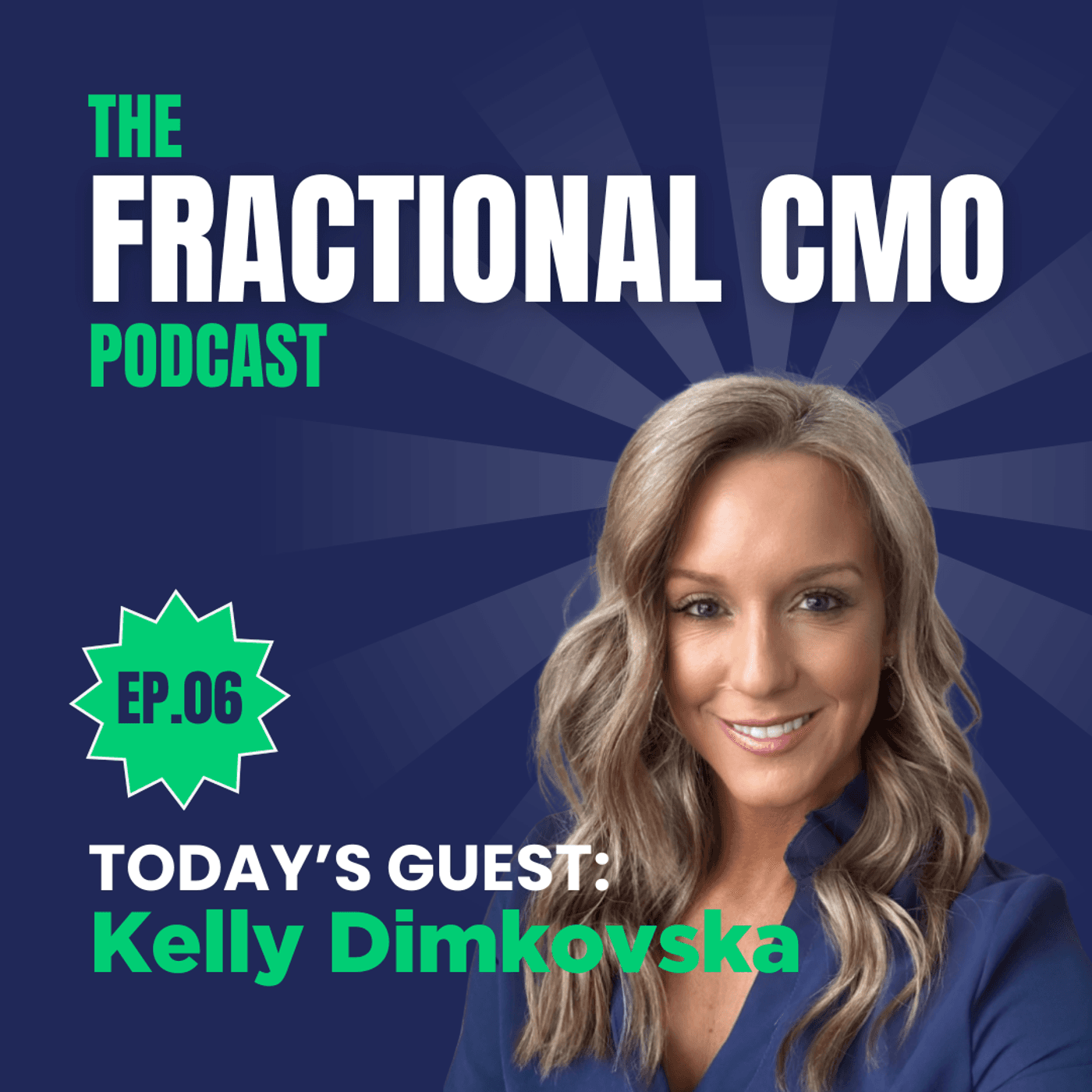
Episode Summary: S2 Ep6 - Kelly Dimkovska of Tuesday Logic
Podcast Overview Podcast Title: The Fractional CMO Podcast Host: Simon Dell, CEO of Cemoh Description: A marketing, entrepreneurship, and business podcast focused on interviewing high-performing Fractional CMOs and marketing leaders.
---
Episode Details Episode Title: S2 Ep6: The Fractional CMO Podcast - Kelly Dimkovska of Tuesday Logic Guest: Kelly Dimkovska, founder of Tuesday Logic Description: Kelly discusses her transition to the fractional CMO space, the challenges businesses face in aligning marketing with commercial goals, and quick wins for transforming client outcomes.
---
Key Themes and Discussions
Kelly's Background
- Early Career: Kelly began her marketing journey in New Zealand, quickly moving up the ranks at a beauty therapy school.
- International Experience: Followed her husband to Africa, where she spent a year without work, before moving to Australia and resuming her marketing career in various roles, primarily in healthcare.
Transition to Fractional CMO
- Decision to Go Fractional: Kelly made the leap to become her own boss due to a midlife realization that it was time for her to pursue her own path after years of working for others.
- Initial Client Experience: She described her first experience as a fractional CMO, focusing on optimizing marketing spend and alignment with commercial goals.
Understanding Marketing Alignment
- Challenges: Many businesses fail to align marketing strategies with commercial goals due to a lack of marketing leadership and direction from the top.
- Key Question: Kelly emphasizes the importance of asking businesses, "Are we getting the most out of our marketing spend?"
- Common Issues: Identified problems included neglecting conversion tracking and having unclear calls to action (CTAs) in marketing campaigns.
The Role of a Fractional CMO
- Bridging Gaps: Fractional CMOs can help bridge the divide between marketing teams and C-suite executives, ensuring everyone understands the marketing function and its value.
- Internal Marketing: Kelly highlighted the role of marketing in supporting HR to improve recruitment and retention by creating a strong internal culture and brand.
Strategic Insights
- Focus on Goals: Establishing what a business wants to achieve and aligning marketing with those commercial goals is essential.
- Importance of Data: Using data to drive decisions and demonstrating ROI to stakeholders, including CEOs and CFOs, can lead to increased marketing budgets and better support for marketing initiatives.
Agency vs. Fractional Models
- Agency Evolution: The conversation touched on the evolving agency model, with many agencies seeking fractional staff to provide expertise without the overhead of full-time salaries.
- Personal Accountability: Unlike agencies that involve multiple layers of management, a fractional CMO offers direct accountability to clients, enhancing trust and collaboration.
Future Aspirations
- Target Clients: Kelly expressed a desire to work primarily with healthcare organizations, particularly multi-practice clinics and those needing strategic marketing direction but unable to afford a full-time CMO.
---
Key Takeaways
- Conversion Tracking: Non-negotiable for effective marketing – must be prioritized.
- Alignment with Commercial Goals: Essential for marketing success and securing necessary budgets.
- Internal Marketing Importance: HR and marketing must collaborate to attract and retain talent effectively.
- Value of Fractional CMOs: Provide personalized service and accountability in marketing strategy implementation.
---
Links and Resources
- Kelly Dimkovska's LinkedIn: [Kelly Dimkovska](https://www.linkedin.com/in/kelly-dimkovska-55ba5636/)
- Tuesday Logic Website: [Tuesday Logic](https://tuesdaylogic.com.au/)
---
Conclusion This episode offers valuable insights into the role of Fractional CMOs, the importance of aligning marketing with business goals, and strategies for improving organizational marketing outcomes. Kelly Dimkovska's expertise in healthcare marketing and her experiences transitioning to a fractional model provide a compelling narrative for those interested in modern marketing practices.
Written by AI. May contain mistakes. Listen to the episode to check what was said.
Transcript
Automatic transcript. May contain errors.0:07Welcome to another edition of the CMO Fractional Marketing Podcast or Fractional CMO Podcast whatever I'm deciding to call it today. I'm making that up as I go along. My name is Simon Dell. I am the CEO of CEMO. If you want to find out a little bit more about us, you can check us out at www.cmo.com. That is spelled C-E-M-O-H. I am the CEO there. I'm also the host of this podcast. We're up to about 100. I've lost count of the amount of episodes we've done. But we have joining us today the wonderful, one of our SEMO exclusives, the wonderful, I'll swallow there for a second, because maybe I'm as nervous as you are, Kelly.
0:56But Kelly Dimkovska. No, you know I'm nervous. It's about getting the surname right. Kelly Dimkovska. Well done. Nailed it. And we were discussing just beforehand, it's a Macedonian surname from your husband. happened um so that i'm sure there's i'm sure there's a long story um behind all of that um but we won't sort of dive into that today um if you are watching this uh live it is uh goes out live on linkedin uh please like us make a comment say hello um whatever you want to do um and if you watch this later on on whatever podcast channel you're watching on um spotify uh youtube Apple Podcasts, please rate and review us as well.
1:44So Kelly, welcome to the show, the episode today. Thank you for being here. You're welcome. Let's start off with your sort of background. Let's do the, I like to call this the sort of, you know, if you're doing a movie trailer about the Kelly Dimkovska life, with all the explosions and the highlights in, what does that movie trailer look like? Oh, it's quite a ride, Simon. So I suppose my journey into sort of marketing leadership or, you know, executive marketing was started actually when I was quite young, working in New Zealand for a beauty therapy school. and it was brought out by an incredible man called Simon Harding who really sort of saw something in me with regards to my marketing skills and my eye for detail.
2:39So I was quickly promoted up into a marketing leadership role there and we quickly grew the school from two campuses to five by the time I left. So that was quite amazing. but in the meantime my husband-to-be got offered a job in Africa, worked at Zambia on a mine site, couldn't live without him so I left my dream job and I followed him over there. I was a lady of leisure for a year living on a mine site and then eventually moved to Australia and started picking up some marketing roles. I was quite literally going out of my mind not being able to work. Like we had no internet, so I couldn't even study.
3:25Oh, gosh. It was an interesting ride. And then so eventually I found myself moving from Perth, which is where we first landed after Africa, and we moved to Brisbane. And I picked up my first agency role shortly after that and happened to be in healthcare marketing. so yeah you've done quite a lot of agency work prior to you've you've gone you went uh agency and then you went in-house is that right yeah i also know i was um in-house uh with therapy scores in-house with a telecommunications provider and then um and then my first step into agency was was in brisbane 11 years ago just over 10 years ago yeah and we'll talk about some of the agency stuff and the healthcare stuff as well.
4:19But again, for everyone's benefit, you've sort of now decided that you want to go into the fractional space. You want to be your own boss. Is this the first time being your own boss? Well, I suppose I've been sort of dipping my toes in it since October 2023, where an organization in the consulting space actually reached out to me. So completely outside of healthcare, funnily enough. But their question to me was, are we getting enough out of our marketing spend? And I love digging around. It's like a treasure hunt for me. So I quickly found that no, they weren't. And I've been working with them to streamline all of their marketing, make sure that we're putting budgets into the right places, help them with their recruitment of an internal marketer, full-time marketer.
5:12yeah so that's kind of where Tuesday logic kind of you know started off in in October 2023 but I've really just taken the launch over the last be about four weeks okay yeah yeah fully having this full concentration on Tuesday logic and my fractional CMI work which I love so let's let's I actually want to ask you a question just dive into this that that client that came to you and are we getting the most out of our marketing spend? And I think that is such a good question that I think all businesses should be asking. I suspect there's many businesses that aren't spending enough and there's some that are spending too much.
5:55Where did you, without revealing too much about the company and the client in question, where did you find they were, not necessarily failing, but what was the core problems that you saw within that, that sort of their current budget spend? Yeah, great. So it wasn't so much budget. I actually kept, I actually utilized a really healthy budget, which was to do. It was more about a repositioning. So this organization, what they were actually marketing wasn't actually, I suppose, achieving their commercial goals. so they were doing very much talk of the funnel marketing and completely leaving out the conversion or the funnel part of their marketing so it was and that was like abundantly clear to me like within the first of half an hour of digging around that that was one of the fundamental problems and that was before I even got into the analytics side of it um so it was a complete repositioning, getting the CEO on board who was amazing.
7:05He trusted me with, you know, all my recommendations. We worked really well together in conjunction with their director of growth. And we were able to implement something they'd never done before. And that was actually capturing people immediately instead of relying on a top of funnel sort of set of campaigns and messaging where people weren't quite sure what the cta was you know what action did um this business want their customers to take how do you how does it how does a business like that because it sounds like it was a fairly well established relatively mature business but how does a business like that get into that kind of situation where things aren't aligned because is that just the ceo was not a marketing person was that that there was too many junior people in the business that weren't able to perhaps provide that strategy and direction you know what what sort of led to that misalignment of what they were doing I think um it's not really a CEO's job to know the ins and outs of marketing like that's honestly what I think it wasn't that they had a whole lot of juniors they had some And they still do have some incredibly switched on people in that organization.
8:29What they are doing is just amazing in that space. I have a very high regard and respect for them. But they just didn't have that marketing leadership direction. And someone who's had, you know, I've had over 15 years in marketing. This is what I do. It's not what they do. And they shouldn't be expected to have that same level of experience. They're running businesses, you know, the CFOs, you know, dealing with all the finances, you know, like those are their roles. It's not a marketing role. So what decided, what made you decide that now was the time to sort of go and do Tuesday Logic properly and go out and be your own boss in that sense?
9:12Was there some sort of trigger or, you know, was it just a general, you know, general gnawing away at something? Look, if I'm going to be brutally honest, it was probably a little bit of a midlife crisis. So I think, you know, I'm turning 43, in fact, this month very shortly. and I'd been growing a marketing agency for someone else for seven and a half years. So you do one day, you just wake up and you look in the mirror and you go, when's my time? Yeah. Yeah, if not now, when? Yeah. And so that was, yeah, what pushed me out. I won't, you know, say it's not scary as hell. Absolutely it is. But I've got an amazing support system and friends and family and, you know, when I love what I do, it kind of flows on and it works anyway.
10:11So I've just got to have faith and trust in that. And, yeah, you know, if it fills my bucket, then I know I'm doing the right thing, yeah. Let's talk about agency life because, I mean, this is perhaps more of a slightly controversial question, but one of the things we've seen happen, and we're recording this on, oh, actually, September the 11th. There you go, September the 11th in 2025. But we've certainly seen in the last six months in Brisbane and no doubt Sydney and Melbourne and places like that, a lot of agencies of all shapes and sizes really suffering going into administration, you know, just some of them just shutting up their doors.
10:59do you feel um do you feel that perhaps the time is over for that agency model and that perhaps this idea of a fractional team members be they cmos be they social media whatever but the idea of perhaps a fractional team is more appealing now than you know agencies with their glossy offices and big budgets and that sort of thing do you think there's a general shift now i am seeing that shift um do i think there's a place for both yes i still actually do um i actually work you know alongside agencies in this role as well so if an organization already has an agency in place that's awesome for me because that's just i've set things up a certain way i go being through some of their things.
11:54And then I can actually help them lift their game as well because I think it's not unusual for agencies to get complacent with their clients sometimes. So having someone come on and go, hey, you know, you're not doing the right thing. You need to tighten this up and you know you do. It kind of, it works well because it works well for my client. The agency then lifts their game and it actually can help the relationship. Yeah. And another example of that actually, recently I jumped on to a call with an agency with one of my clients and it was a fairly new relationship with me and this client. But the agency was showing me sort of the back end of the analytics because he wasn't comfortable in providing access just yet, which I thought was a bit of a red flag to begin with.
12:44But anyway, I digress. But on the screen, he was showing where the traffic was coming from. And I said, can you just scroll a little bit more over to the right? I just need to get an idea of the conversions that are actually on that. Turns out this agency, after running Google Ads and SEO for over five years, hadn't even set up conversion tracking on that website. Boom. I was like, you need to get that sorted, my friend, because you can't optimize a campaign for conversions if you've got no conversion tracker. So these are the sorts of things. And that will all happen within 15 minutes. So immediately, such a quick win for a client, right, to find a hole like that within about 15 minutes of a phone call.
13:33And only because he happened to be sharing a screen, which he probably shouldn't have been doing. And look, to be honest with you, if I'd been in your position, I would have had the agency fired because I would have, you know, I mean, perhaps you're just generally a nicer person than me, Kelly, but I'd have just said to the client, that's completely unacceptable. Well, those sorts of discussions have happened as a result of that, and I think it is something they are considering because I do think when you find a hole that significant, it's really forgivable. Um, but again, I respect my client's relationship with this agency that they've had for all of those years.
14:14And I certainly don't want to be stepping on any, on any toes. It's about providing my recommendations, my insight, and then at the end of the day, they're the owner. So I'll support them whichever way they go and help mentor their agency if that's what it comes down to. Look, I think one of the, one of the things, um, you know, I, I totally agree with you. I think the agency model is not dying, but I think it's evolving and changing. We see a lot of agencies looking for fractional staff now as well. They're like, why hold a full-time person salary on our books when we can pull in good people when we need them?
14:54um so but the thing i like the difference between let's say approaching you and asking for help versus approaching an agency is i think if if i look at kelly and i look at tuesday logic i go i know what i'm getting i can see your experience i can see your background that that's that's what i'm getting and i'm and whatever happens from my initial conversation and my initial engagement with kelly i talk about you in the third person even though you're you're sat there but we talk about that initial engagement with kelly i know i've made a decision based on kelly's experience with agencies i go yeah all right so the agencies have some experience they have reputations they have those kind of things but i find sometimes with agencies that there is a lack of accountability for someone that's saying this is this is me and i'm taking your job forward i get that there's account managers and account directors but there's also creative directors and general managers and all those kind of things working with a fractional person you're working with that fractional person and it's our reputation right absolutely there's a line there's you can't hide behind an agency name or blame any member in your agency team.
16:16Not that I actually approve of that in any way, shape or form. Culture is a big thing for me. But, yeah, when it's you, I'm invested. I'm invested in my clients. Their wins are my wins. And nothing makes me happier than having successful outcomes or finding these, you know, the quick wins especially are super exciting to me because it makes a change immediately. Yeah. Yeah. So that's the, and I think that's really why I love doing what I'm doing now. I have a lot of pride in my work and I have a lot of care for the people I work with. And I love building those beautiful relationships as well. So let's talk about that.
16:58What, you know, you've obviously been heavily invested in the health space. What sort of, is that just sort of, that's just sort of where you ended up or is that something that you were genuinely passionate about and you know that's where you wanted to focus yeah so um actually I think it comes back down to uh when I was you know just out of school and got actually that beauty therapy school uh beauty therapy uh school job uh and when I was promoted into marketing I thought I really need to know what the students are going through um you know what is study like? How hard is it? So I did an international diploma in anatomy and physiology and I got 98 % by the way.
17:45I still know the two questions I've got wrong, which really irks me. But so that's, I suppose, where my, I suppose, my love for the human body kind of came from. And so when I went first for the healthcare marketing agency role in Brisbane, it kind of just felt right and a good fit. I already knew so much and could verify pretty quickly some of the information that might be incorrect and fix it in partnership, obviously, with the specialists. But the other thing I actually really love about it is I love structure. So when we've got, you know, APRA guidelines, TGA guidelines, and things you actually have to abide by I actually kind of like that it narrows down things and it's a little bit more laser focused so compliance has become actually something I really love initially I was like oh my gosh this is super scary like two three million dollar fines for some of these organizations that stuff up but you know like those guidelines are getting clearer and clearer and we've seen a huge shift over the last two years, it just, there's a lot less grey now than what they used to be.
19:02So, yeah, so I suppose the clients, the knowledge of anatomy and physiology and actually just feeling like you're making a difference in that space, you know, improving access to quality health information and I suppose indirectly saving lives in many ways is sort of how the recent agency I worked for sort of phrased it. And actually I really do bought into that and, and love that feeling. Um, and is that the sort of area you want to stay in now, or is there, is, is there other things that you look at and go, you know, other sort of industries that you, that you, that you feel drawn to? Yeah. So I've had a, my dabble obviously with this, um, organization since 2023 in the consulting space.
19:49Um, and that's sort of in that software or ERP consulting space. And I've actually loved digging in and learning about that. So although I suppose I feel most comfortable in the healthcare space and know that's probably where I can make the most significant difference for clients, but also possibly even for agencies who maybe want to engage me, I'm sort of certainly open to learning or adding those sorts of experiences to my experience, I suppose. Yeah. Okay. So aside from the value of conversion tracking, which we all understand now, what's your marketing ethos? Like what is it that you believe?
20:38Because I think everybody who is in marketing approaches marketing in a different way. And, and I say that because yes, there are formal qualifications in marketing, you know, you can go to university and study it and all those kinds of things. But I think a lot of us, certainly the Gen X and the elder millennials sort of fell into marketing because, you know, maybe like me, you weren't good at anything else. You know, but I, what, what's, what are you, when you sort of approach a client, what are you sort of, what are you saying to them is, is, is God, is your, is guiding your beliefs when it comes to marketing?
21:23Um, so for individual organizations, you mean like what, what questions do I ask? Yeah. What questions do you ask them? You know, what's, how do you put a plan together? You know, how do you develop a strategy? What's, what are the things that you look at first? or what are the key and really important things for you to understand? Yeah, sure. So my first thing is what are you wanting to achieve? What is your commercial goals? Because you can be doing sort of a shotgun approach and throwing things up everywhere, but you might not be running the right campaigns. So for me, it's like what do you see marketing doing for you and how does that fit in?
22:06So, and then working with the senior leadership teams to align on that. So essentially, like, there's sort of some data that came out by Gartner in 2024 that says only 34 % of CEOs and CFOs globally are actually aligned with CMOs and how marketing supports their growth. So for me, it's like, right, let's get in the room. That's a big gap. That's two thirds. That's a big gap. Yeah. And so for me, that has been very true for organizations that I've stepped in and supported. And that's the benefit of a fractional CMO, I think, because agencies don't get to go that deep generally. Sometimes, but generally, no.
22:53You're on for a retainer where you're getting, you know, maybe eight social media posts, two hours of SEO, some Google ads. And you might have one or two workshops. but you just don't get that in-depth sort of exposure to a client and work with them on almost a daily basis on achieving that commercial outcome together and helping, I suppose, the CEO, the CFO, COO, yeah, all come aboard and actually believe in that marketing function is there because actually I wrote a recent article about, you know, why, you know, marketing sometimes gets the side eye. And it's because they don't understand it, you know, and simply it's just bringing them along on the journey.
23:43And that's something I've learned through my career is the importance of bringing everybody along on the journey with you. I think that's a very common discussion point that I've had in the fractional CMO podcast we've done is that there are –
24:04there's some core jobs for a fractional CMO, right? And we talk about, you know, developing a strategy for the growth of the company. We think that's one. I think the second one is bridging the gap between often the marketing team and the CEO or the leadership, whoever you want to, whatever you want to call it. And the third thing I always flag is about upskilling the internal people, the junior internal people. But I also always include upskilling the CEO. And I think your question there that you just said at the start of that segment was, what do you see marketing doing for you? Right? I think if you asked a lot of CEOs that question, they would stare at you blankly.
24:49A hundred percent. And that's why it has to be asked. Absolutely. And then I think you then have to go, well, here's what I think, or here's what the general market thinks. um i think probably the the cornerstone of a fractional cmo role is exactly what you've said there is making sure the ceo understands the benefits and comes on the journey with you and i think if you don't you don't do that you're pushing you're pushing a giant rock uphill the whole the whole thing and you know what if you do that you generally get more marketing budget too for my click costs, which is the main thing. I'm like, right, I need more money, so we need to bring them along on the journey for this.
25:35So, yeah, and I think the other thing I've really loved about this sort of efficiency in my work as well is sort of helping the HR because there'll be other people, you know, in the recruitment space. There'll be other people that they kind of don't really get marketing either and nor should they. So when it comes to actually hiring internally or even hiring an agency for that, that's where I can really come in and sort of help them with the interview questions, the job description, interview questions. I can do the interviews for them, provide that sort of all that feedback so that they know whoever they're bringing in-house actually has all those skill sets that we need in order to achieve those goals.
26:22Same with an agency. Working in two agencies and for over 11 years, I can smell a bad one when I chat to them. And I've actually collated a bit of a list of the good agencies that I've worked with previously. So if that does happen, I can be like, hey, guys, it's me again. Can I engage you to sort of provide a proposal or an audit for this client and see if they're going to be a potential match for you? So that's the idea. I think the thing you said there about HR, just going off on a slight tangent here, is I think it's super important that HR understands marketing. And I've often said that even if your business has got, is the marketing is shit hot, right?
27:05Even if you're attracting new clients in every day, all those kind of things. for the HR to get on board with a good marketing strategy, what that I think does is it helps attract better staff and not just marketing staff, right? So whatever your job is, whether you, you know, you're trying to attract forklift drivers or accountants or whatever, if your marketing is on point, people want to work for you. I understand. And I think like some of the larger organizations are really, um, clicking onto that. The event I've seen recently, there's one particular device organization who I just love, but I won't call them out.
27:51But their marketing for, you know, promoting the culture and becoming part of the team and celebrating every new onboarding, you know, like it just does. It helps you attract the right talent because people go, I want to work for them. opens up that talent pool for you. And I think that, again, you know, taking that step further is when HR go, we do want to recruit these positions. I think HR should be knocking on the door of marketing going, we want to run job, we want to job advertising campaigns. And I think, again, a good fractional CMO is going in there and saying to HR, what are your challenges?
28:36you know what what what are the things that are holding us back recruiting you know the top one percent of candidates um you know and working with hr because again just and it all comes back to roi and you know and revenue but if you can show the ceo that you're attracting better candidates and those people that are coming into the business are working harder they're more intelligent they're achieving more they're hitting their kpis again that that's all that's all come from good marketing um we talk a lot about sort of external marketing but there's a lot that sort of a fractional cmo can do for your internal marketing and i i've done a lot of work on this as well for the agency that i worked for um that's all part of it you know what's this what what hr systems or platforms have you got in place to facilitate the onboarding, the learning that they need to do, especially in the compliance space.
29:38That was something I absolutely had to make sure every newbie had gone through the LMS and done all of their training. And then so by the end of week one, they know everybody. They feel they know what their goals are. You know, they feel part of the team sometimes before they've even had their first coffee, you know, and I think that's important. because that all speaks to retention over time. And there's a lot of – I've actually done a recent article on that as well through an All Aboard HR website just recently. And, yeah, there's a lot of stats that really support, you know, obviously making sure that your internal marketing is solid as well.
30:22So that's something that I think. Yeah, I think a lot of businesses don't – it's not that they don't know this but i think they forget this is to say if you've got 20 30 50 staff if you've got 200 staff whatever um your brand is your staff in sometimes the entire interaction that people might have with your uh your brand is the people that work for you and if they are you know if if you know if they have long hair and they haven't shaved properly and they're wearing Hulk T-shirts, that may not be the right image of your brand that you want to give off with your clients, right? But if they present well, if they speak well, if they're wearing a branded polo shirt and all those kind of things, but most of the time people leave that stuff up to HR.
31:21and it's and it's not always it's not just hr's responsibility it's marketing's responsibility as well yeah absolutely it 100 is it all works together to feed that machine look we we've we there's a lot of things i think no doubt you and i could sit and talk about all day um but let's just sort of finish up um let's let's talk about where you're going to next because obviously you know you're in you're in the early stage of that fractional CMO journey although you've obviously had a bit of a bit of background with it before what are you what are you looking for from a client perspective what is it that you want to the sort of businesses that you want to work with um so ideally in in the healthcare space that would nothing would make me happier to be working with um clients in the healthcare space I've worked with a variety of clients so whether that be from, you know, a single chiropractor all the way up to med device companies.
32:25But generally, I find at the point where you need a fractional CMO, you're probably, you know, a clinic, multi-practice clinic generally, or you're sort of one of those larger organizations that perhaps isn't sort of large enough to be able to invest in a full-time CMO, but You certainly are at that stage where you need to be really considering your strategy and making sure you're getting the most out of every dollar you spend on marketing. So that's kind of where it falls. So that's, I suppose, where that part-time fractional benefit really comes in for organizations. Yeah. And look, there's not that many Kelly Dimkovskas on LinkedIn, so you're pretty easy to find there.
33:13um the website is it was it tuesday.logic no uh tuesdaylogic.com.au okay all right and and presumably the uh email address is kelly at no it's not i actually added in the last name simon you'll love that did you what now well that's interesting why did you i mean this is going off on a complete tangent but why did you do that you know the tone of my voice there made that sound like that was really critical but that wasn't meant to be critical it was meant to be like i genuinely find that the shorter that you can make that communication you know what happened simon is i absolutely wanted kelly at tuesdaylogic.com but my husband piped up in the background while i had multiple other things going on it's like no you should put it kelly.dymkovska um and i was like well why and he's like just in case you grow really massive and there's more than one Kelly.
Read the full transcript
34:09I'm like, I just don't have time for this argument. So as I'm doing the domain and I just thought, oh, just anyway. So it was peer pressure. I had multiple things going on and I took the path of least resistance, unfortunately, and that's what happened. I do understand that perspective, but I also go, because again, we have half a dozen people on CMO email addresses and two of them happen to be called Jess, which is, you know, which is extremely frustrating. But I sort of went Simon at CMO.com and I was like, I don't know, if we're a 10 ,000 person organization, I hope nobody's going to send and nobody's sending me emails anymore.
34:50I'm like, I don't want to, you know, I can just be S at CMO.com. One of the things i find is as organizing organizations get bigger the ceo tries to hide their email as much as they can um because you just get as you probably do just get stupid junk email all the time from people wanting to sell you ai lead systems and things like that so uh but anyway okay so there so there we go so now we know the full email address uh yeah if can i can i can i also just This is just go and set up Kelly at TuesdayLogic.com. No, no. And both working at the same time. I know, I know. And have that redirect put in place.
35:37Look, I'm going to have to eventually do it, I think, once I have. But I do love your husband's faith that he has in you. He does. You're going to build such a big organisation that it's going to have two Kellys in it. Yeah, there you go. That's nice to have that. uh that's one of the things i say about you know husband and wives is that you you need to be each other's pit crew right and it's just say because sometimes the husband or the wife is racing around a track at you know 150 miles an hour and every now and again they need to come in someone needs to water them feed them change their tires and send them back out again so uh it sounds like your husband has your back there oh it me 100 does that's awesome hey thank you very much for your time and your ideas and all your suggestions and everything and telling us your story um really really appreciate your um your contribution today thank you thanks simon great speaking with you
From the publisher
We dive into her passion for healthcare marketing, the shift from agencies to fractional models, and how CMOs can bridge the gap between CEOs, CFOs, and marketing teams. Kelly also explains why conversion tracking is non-negotiable, the importance of internal marketing for HR and retention, and how to build strong, accountable client relationships.
Kelly's LinkedIn - https://www.linkedin.com/in/kelly-dimkovska-55ba5636/
Tuesday Logic - https://tuesdaylogic.com.au/