In short
The Fractional CMO Podcast - Episode S2 Ep7 Summary
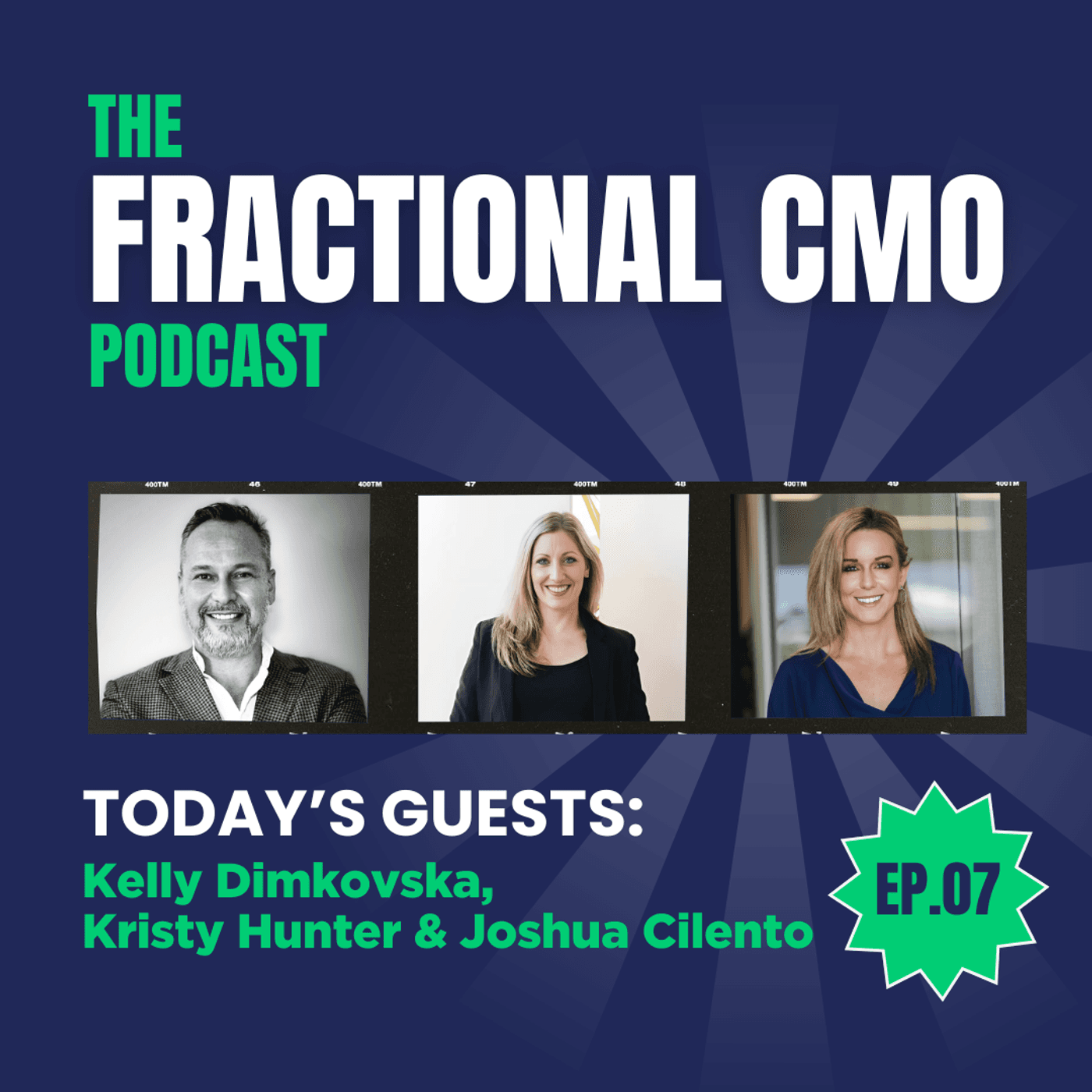
Episode Overview In this episode of *The Fractional CMO Podcast*, host Simon Dell engages in a roundtable discussion with Kristy Hunter, Kelly Dimkovska, and Joshua Cilento, addressing the topic of marketing reporting. The conversation explores whether detailed marketing reports are essential or a waste of time, given that clients often neglect to read them. The guests share insights on how to create meaningful reports that drive accountability and strategic alignment.
Key Discussion Points
The Value of Reporting
- Diverse Opinions:
- Simon Dell: Suggests that detailed reporting is often ignored by clients, questioning its value.
- Kristy Hunter: Believes reporting is important but must be presented effectively, emphasizing alignment between business and marketing goals.
- Joshua Cilento: Agrees that reporting can be critical but must be tailored to the audience (CFOs) and their language to be effective.
- Kelly Dimkovska: Advocates for concise monthly snapshots that track metrics that matter to the business.
Effective Reporting Strategies
- Define Clear KPIs: Establish and agree on key performance indicators (KPIs) that align with business goals.
- Tailored Presentation:
- Use dashboards and visual data representations to engage the audience.
- Provide summary reports that highlight critical numbers rather than overwhelming clients with extensive data.
- Leverage tools like GA4 and Microsoft Clarity to analyze user interactions and conversions effectively.
Balancing Hard Numbers and Brand Impact
- Discusses the challenge of showing value in marketing, especially in complex industries where direct attribution is difficult.
- Importance of merging quantitative data (like conversion rates) with qualitative insights (like brand equity) to present a comprehensive picture.
Understanding the Client’s Perspective
- Communication and Education: Highlighting the need to educate clients on what metrics are important and why they matter.
- Building Relationships: Building rapport with all members of the C-suite, especially CFOs, to ensure alignment and understanding of marketing’s contribution to the business.
Practical Tips for Fractional CMOs
- Start Simple: For those new to reporting, begin with basic analytics and gradually evolve towards more complex metrics.
- Engage Clients: Use meetings to discuss reports to allow for immediate questions and clarifications.
- Focus on Actionable Insights: Showcase metrics that can lead to actionable business decisions rather than just reporting for the sake of it.
Conclusion The episode emphasizes the importance of effective reporting in marketing while acknowledging the challenges of engaging clients with complex data. The guests advocate for tailored communication, focusing on key metrics that drive business value, and fostering relationships to ensure that marketing efforts are seen as integral to business success.
Key Takeaways
- Effective marketing reporting should align with business goals and be presented in a way that resonates with the audience.
- Engage clients through education and tailored reporting, focusing on what truly matters to their business.
- Balancing quantitative data with brand impact is crucial in demonstrating the value of marketing efforts, especially in complex industries.
---
This episode highlights the ongoing challenges in marketing reporting and provides practical tips for fractional CMOs to enhance their strategies and client relationships.
Written by AI. May contain mistakes. Listen to the episode to check what was said.
Transcript
Automatic transcript. May contain errors.0:06So welcome to the CMO fractional CMO marketing podcast. There's lots of words there and I've just thrown them all in randomly. This is a new one and I've scared everybody who's on this broadcast about 10 minutes ago by saying I'm going to do something completely different than what we'd originally planned to do. It isn't actually totally different. But my name is Simon Dell. I'm the CEO of Simo. I have with me Christy, Kelly and Joshua. Christy and Kelly are both in Brisbane. Joshua is in Sydney. If you want to find out more about them, and I stress, definitely go and find out more about them.
0:43because they're all super interesting and wonderful people. All their notes and their links and their emails and everything, all that will be in the notes for the show. But suffice to say, they've all been in the marketing industry for quite a while and they all know a lot about marketing. Now, the premise of these group ones is that we are going to have a discussion about one thing in particular. and that thing is a statement that I am about to make that I am hoping they all have some opinions on probably Kelly won't be first because Kelly's Kelly's quietly panicking in the background
1:29if Kelly's if Kelly's screen goes blank we know she's just like passed down collapsed at the side of the side. That's fine. But the statement I'm going to make is this, is that reporting doing detailed, sorry, here you go. As you can see, I've practiced this. Doing detailed and in-depth reporting on marketing for clients is a waste of time because they never bloody read it. That is my statement. And I'm interested. I can see Christy sitting there going, I want to agree with that. She goes, I want to know what the argument is. I think there's two parts of this question. Number one, is that the case?
2:12And number two is if it is the case, what's the solution? Christy, do you want to go first? Sure. I think it is important. I think it's in how it's presented. Okay. Right. And, you know, I think you've got a good relationship with the business owner or the CEO or whoever you're reporting to that you're aligned on the business goals and the marketing goals. Right. That's the starting point. And so my, you know, how I get in there and get things kind of kicked off is, you know, setting KPIs that you agree on firstly. so I don't want to talk too much I'm sure other people have no no that's fine well let's just let's just go through everyone and see what their initial conversation is because their initial opinion is because I've got some questions on on that right yeah so Josh what do you reckon is it a waste of time is it what's the solution uh it's both it is um absolutely critical and an absolute waste of time unless you are directing it to the CFO in the CFO's language and communication and need state concisely.
3:32You still need to put all that data together and get an overall understanding, but presenting it to everyone as everything, I've never lost more time in trying to get people to understand what they don't care about. Even the bits that they do need to know about, the amount of unopened things that I've seen, you know, 30-page documents. A dashboard that is suited for that person, that team, that department, excellent. We review that. Let's not waste an hour me reading the things off a PowerPoint that you can see as well because you're also in the same room looking at the same PowerPoint. Yeah. Okay.
4:09Kelly, Sweaty Palms, what's Sweaty Palms? That's all right. I actually agree with both Christy and Josh. So for me, what I like to do generally with clients is have just snapshot reporting every month, which doesn't go into a lot of detail. but I really like to go into a lot of detail on the metrics that matter to the business most but in 90-day snapshots and that's just so that there is enough data to actually make some real actionable insights I suppose into what's working what's not what do we need to change so that's generally how I like to do it but it definitely needs to be broken down into a language that they understand and also on a video call or in person so the questions can be asked and answered yeah so what so what are they what do they look so what numbers are you reporting like if i mean we're all we're all in marketing we've all worked with different industries and different clients and things like that what what do you think are the you know if you was if you was asked just give us five give to give us five numbers what would you be what would you be looking at um so for me and And the main things from the analytics, it's sort of broken down into a few different things.
5:28So if you're looking at it from the analytics side of it, so I'd definitely be really honing in on those conversions. And that conversion tracking is really important. So really identifying what those true conversions or events on a website for a business is. So I'm not talking about page visits. I'm not talking about clicks on buttons. I'm talking about, you know, bookings. I'm talking about phone calls that actually terminate to a phone call, sort of that lasts over 30 seconds. So that's the side of it that I'd look from an analytics point of view. And then I'd be drawing that back and really having a look at the, you know, customer acquisition costs, the return on marketing investment and all of those sorts of pieces of data points, which really matter to the business.
6:15Okay. Josh? All right. Look, I absolutely agree with Kelly on there. I think that you get into that conversation where it's the return on marketing investment and the relationship between that data that you get back so that you can put that together. But I think that my biggest question in that area there is how that is viewed. Again, that marketing investment becomes a – the relationship between those values is confused. And again, we're back to language, who we're speaking to and why we're speaking about that. So the specificity of that data, but the actual real hard conversion tracking data and the relationship between the real hard spend, regardless of what you call it.
7:07okay i'm going to assume christy's going to agree with that right but i'm so my next question is there's so much that we do with the two-part question here there's so much that we do with marketing that is that is intangible so you know brand advertising brand marketing right so much of that can be quite intangible you can't sit there and draw a straight line from saying doing this to achieving that right so that's one thing and then the second thing you've got this challenge of attribution is you know as well as i do if you answer the phone to someone and say hey where did you find out about us they say oh your website and you're like that that gives you no help whatsoever no insights whatsoever so in a world or in an industry that we're dealing with so many you know ambiguous things how do you how do you kind of present that as a as value to the client Christy?
8:03Hmm. Ha, ha, ha. There we go. There we go. Now I've got you on that with my intention. Lull you into a full sense of security with easy questions to start with. It's things that I talk about with my clients all of the time. I think that, you know, the clients that I work with understand that there's a bit of ambiguity there. So I'm tracking the attribution of marketing activities and I'm showing what I can track and go, right, this is, you've gotten a lead, you've got a sale from this particular activity. But you're right. I'm working with, closely with sales teams as well and going, hey, can you ask that question that you just asked?
8:46How did you hear about us? And let's report on that. And so it's changing some business practices there. If the business is willing to do that, there's some businesses just go, you know, well, we're too busy for that. Yep. But there are some of my clients currently, a particular CEO that I'm thinking of, he wants to know that data. He's very data focused. So he's all up for me trying to, you know, help the sales teams or the customer service teams ask those questions and get that reporting happening. Josh, the ambiguity of some of what we do. How do you really add value? How do you present that value?
9:26How do you show that value? Well, I mean, when you talk about an RMI, you've got, say you've got a five to one and you're presenting that with what your data is. It's a good benchmark. Say it's 10 to one. Say it's exceptional. And then you're still just talking about numbers and what value are you placing against, um say that campaign finishes and you you're going 60 up 60 up again just on the brand equity that is occurring from various other campaigns whether they are successful or not and you're attributing that data to that campaign or that value you really need to do um uh you've got those data dashboards but a balance between that and a brand equity scorecard showing that yes we are doing these things like short whip meetings and campaigns.
10:21We're doing one of those a month or we're doing one of those per week, depending on the stage of the business. But we're also looking at 90 days and that can be six months in a brand cycle. It can be 12 months in that brand cycle. We're still doing that campaign for the brand as well. Both have attributions and one of them doesn't have a number that whether you ask for the number and you like numbers or not, is going to give you anything that you, what you want. We just need to know that we're working on that and that it is evolving. Kelly? Yeah, I agree with all of that, but I also like to add like there's some other things that I like to look at sort of in the background and what I like to do is really create those GA4 reports in the back end so we can look at that funnel exploration, so going from, you know, landing page to perhaps product page and whether that actually results in a form submission or a booking.
11:12The other things are looking at path explorations, so that, you know, the user's path right the way through to conversion. And then also using things like Microsoft Clarity, which is awesome and free with amazing dashboards where we can really have a look at how users are, you know, interacting with the website and whether those tweaks from an SEO point of view are really paying off. So, you know, are we reducing the number of rage clicks we're having? Everybody hates those rage clicks. You know, right away to how far are they scrolling down the page? Do we need to, you know, reduce the, you know, the banner size?
11:48Where are the drop-offs occurring? So if we can show improvements in that and that kind of visual data, that's pretty awesome too. I'm going to – this is probably a little bit more out of your comfort zone, Kelly, because I think one of the – one of my first loves in marketing has been beer and alcohol. And I've worked with a number of beer and alcohol brands in the past. it's one of those ones where it's so hard to show what marketing dollars do because because there's no there is simply no um there's no straight line from anything you do almost anything you do to the point when you start seeing volumes of beer increasing or sales of beer increasing and the other challenge i think you have with with something like beer or any fmcg good is that it's passing through so many people's hands before it gets to the actual consumer at the end kelly and not this is not a criticism kelly but you know you might be looking at someone that's running an ad for advertising campaign online they're going to a website and they're making a purchase that's really a nice to a degree it's a nice simple linear step by step whereas beer you're sitting there going well it's it's got to be go out through a distributor and then it's got to be sold in and then it depends which shelf it goes into in the bottle shop or whether it's on tap in a pub or and that's and that's even before we've worried about whether the right clients are walking into the pub to actually buy the product or the bottle shop there's so much there's so many challenges around a product like that that you sit there and go at the end of the month what fucking five numbers am i going to show the the boss because you know you're just drawing on, personally, I think a lot of random numbers in order to go, all they want to see is how much beer they've sold.
13:47So how do you solve challenges like that where it's such a complex sales process or such a complex distribution process? Josh, throw that one at you. Well, I had something I would have thrown at our friend Josh Gordry. Yeah, that would have been a yes. I think you put it under the auspice of from cheers to beers. How do we find data between the marketing and the sales? That's where the dark arts becomes part of it. That's where the science meets the art. And it's knowing what those levers do. You might be pulling them behind the velvet curtain, but you know that they do have those effects in that environment on those products, and these are the outcomes that do occur.
14:40It might not be a linear path, and it might be a manufacturer or an unusual path, depending on what your beer product is or just your booze product. But you know what happens underneath that curtain, but it's not something that you can demonstrate. rate. You can say what you are going to do and how you're going to do it, but it doesn't translate into a live dashboard between dollars in and dollars out. Yeah. Christy? Yeah, no, I'd have to agree with that. Yeah. It's complex. And that's why I'm not in that space. No, no, no. And again, I completely understand that. And I guess my thought is with all the the brain's trust of you three and me here is that if someone's listening to this and someone's going, yeah, I do have that problem.
15:33I'm trying to draw a line from one to the other is that, you know, if you're thrown that sort of curveball, what can you do? I think for me, specifically I'd ask whether they're a Scotch brand or not.
15:54but i think for me one of the questions would be um which i which we which i don't think we've discussed here is we've talked about kpis and reporting and things like that but potentially for me it's the length of that report it's about um what's the lag time between hey we did this and we expect to see a result in six months time or we were we you know because again from a beer perspective and that's the challenge is some of these things you have to predict the results from a manufacturing perspective so you have to go back to the company and say hey you need to brew this amount of beer or you need to make this amount of widgets because the marketing department are going to do this and then we think that's going to sell that so there's all these complex moving parts here but i think sometimes you have to go we've got to stop looking at this month by month and start looking at it quarterly or even six months and go let's let's judge our figures on that rather than rather than the month and i think that's a real challenge to have conversation to have with clients and i think it also comes down to what the objective of the campaign is so i've worked with some clients who are absolutely at capacity but they really want to make sure they don't get into this feast and famine kind of situation so they're just really really are about that brand awareness and keeping in touch with the audience.
17:20Whereas then you have other campaigns where the objective is conversions. And so that's kind of where that different discussion happens. You know, click costs increase when you're looking at conversion campaigns, but the output is instead of traffic, you're actually getting those conversions that you're wanting to build on the business. So I think it does come down to the objective of the client as well. Yeah. Josh? I became a scrum master, an agile manager purely from listening to people talk the wrong language, the same words to each other from tech, building a SaaS product. And then when you provide that data, you've got then an exponential on the wrong communication and what you're trying to do.
18:05So I think that there is definitely the data needs to be provided. It needs to be provided to the right people in the right language or the right mode of communication, which they understand, want, and can utilize. The next part about in a fractional CMO role definitely is you are running that campaign. You've created that. You're implementing that. You're doing that. You're demonstrating the data that it goes back to the client and the client says, you know what I'd like to do? I'd like to do this. And it's like, hang on a second. this is going to blow the whole thing out of the water. We need to talk about how that fits into you selling beers, because I know that you really want to sell beers, but this idea is not amazing.
18:50And it doesn't have anything to do with everything else that we are working on that won't reflect in this data, but will reflect in brand value and sales in two, three, six months. Yeah. It's, Look, I use this example because I've faced that challenge, you know, recently. And the conversation that I'd had with the client is they, hey, we want to create a national beer, you know. And I'm like, in Australia, that itself is a massive challenge because you've got such regional, you know, regional compartmentalization when it comes to breweries and beers and brands and all that kind of stuff. And I've sort of, and I'd sort of said, well, you know, what we need to do is build this goodwill from, we need to start at the other end and build this goodwill.
19:32from the from the consumer so that when they walk into the pubs they're looking for a particular product or when they see a rack of products on a shelf or a tap they're looking for a particular one the client kind of had the opposite idea to start with which was like oh let's go and get some taps let's get some distribution let's not worry too much about the marketing and i kind of felt that was the wrong thing to do i think there was a bit of push and pull from both sides of things but inevitably i'm almost quite glad we never sort of went any further with it because i was like it's one of those ones where i felt i could have possibly spent a year investing in brand building activity and consumer building activity and even if i had done there was no there was no guarantee that the the consumer would walk in and actually ask for the product it felt like it was it's there was such a challenge there that i was almost i was almost glad I didn't get I didn't go any further with it so um you know look I understand that's a very a very challenging one but I sort of want to go back right to that that that sort of initial question is that we've all had those clients where you're showing them the numbers but there seems to be they're not necessarily feigning interest but or maybe they are feigning interest but really all they're just interested in is how many times the phone's rung or how many products they're sold how do you how do you get them really engaged in that is is or or as i said right at the start is it just a waste of time and let's let them just look at the top line numbers and let that be the end of it i think it i think it's both i think you show them like you have to have those top line numbers you absolutely must to get to get their buy-in for them to feel like you're listening to them and you're also working towards the commercial outcomes that they're after but then also equally important to show how marketing is actually contributing to that because the moment you don't have that buy-in from top level that's when marketing budgets get cut and that's you know when things can really start going south so really really important that we balance that that that's how I feel about it anyway yeah Christy yeah I think that it just has to be that level of education, you know, for, I mean, there's so many leaders out there that are not qualified marketers.
21:58And so it's our job to educate them on what is important and what are the numbers that they should be looking at. And then, you know, once they understand it, it's, as I said earlier, it's sitting down and agreeing on, you know, what are those numbers that they want to be seeing on a regular basis and making sure that they can see improvement and optimisation along that journey. Yeah. Josh? I absolutely agree. It is about there will be a person that has a certain focus on a few key numbers and they'll understand them or know the relationship between what they do in those numbers. But if you can use, as Christy said, that education process, These are the other numbers in that ecosystem that create that number.
22:48This is what happens when you adjust this, when you do that. Kelly, when you book, what you're doing, talking about the GA4, you know, enormous reports. No one, that's just, it's like, but these are instrumental. These give you that one number that you're looking for. Yeah. Or how this works is an explanation of how this is occurring and what we're doing to get that. So, yeah, it's as much education of the ecosystem of numbers to give you the one number means that you can't just disregard the other numbers, but at least know them. You don't have to ask for them again when we meet. We can meet after lunch again if you want to to ask the numbers again, but know why those numbers are there.
23:33Two final questions then. I think everyone has mentioned, or at least, you know, Josh definitely mentioned the word dashboard. how are you presenting this? And this is probably a tactical thing. How are you presenting those numbers? Are you just going, hey, here is a single piece of paper, bang, here's five numbers, or are you actually showing them the full report with a cover page with perhaps, you know, the key things on there? What's your preference when doing that, Christy? Yeah, look, I've got my own way to present data depends on what the client needs. So it's a little bit different every client but um i present it usually on a powerpoint presentation in a monthly meeting with management for one but they we also have look at studio so again it's that dashboard where we've got that set up um just for the data that they want to see yeah and and kelly yeah i also use a reporting dashboard um where i have two sets of reports so normally i'll have the sort of the 30-day snapshot and I'll have the 90-day full report with all the you know the the key points and annotations and it also allows me to add any any additional pieces of information which I might not be able to pull from digital channels so um that's how I yeah like to present and then also it allows them to toggle on and off sort of their date ranges as well um for things like the 30-day snapshot.
25:01They can look at any period of time. So I find that is normally quite good, but it does still require me taking them through it every 90 days. It is quite complex marketing, and we can't expect them to go through one report meeting and then fully get it. It takes years. Josh? Again, I think it's client-specific. I have one that wants to see it in the driest single block PowerPoint presentation, one key value, one key value, one key value. And with little underneath slightly, you know, reduced opacity, what it was last month. I have other clients that want to see it real time with their login on their dashboard, on their phone to show what that data is and what's streaming out of look, what's coming out of GF4, what that's going.
25:54But, you know, specifically, again, the one or two numbers they want. If you overwhelm them or provide them with too much, they take on nothing and then usually come back to you with their own numbers. And it's like, well, that's not it. so I think I think that the learning out of this is that you know as a as a CMO as a fractional CMO getting your head around the capacity to produce a dashboard or you know understanding those numbers is is is an absolutely key part of the job we can't be too you know we can't be approaching everything with this sort of creative ideas and big ideas we need to sort of um there needs to be a lot of understanding behind the numbers.
26:35And I think that's probably something that good CMOs understand. I think bad CMOs shun away from the numbers. They all want to pick up big ideas and campaigns and where are we going to spend the money and all this kind of thing. I think there needs to be a lot more awareness of the numbers, which leads me to the nice question, the last question, which is a very leading question, is then when you are presenting to the leadership team, who is the most important person to get buy-in from in that room?
27:08Depends on the business. Depends on the business. If it's a larger organization with a finance team, they need to be involved. If it's a slightly less sophisticated business, then it's the CEO. Yeah. And sometimes like the head of sales as well. My question is, do we all need to cozy up to the CFO? Is that really? Yeah. But you should be building relationships with everyone on the C-suite, you know, so. Yeah. And it's really the CEO as well. I think just, and the director of growth is another huge one. That's their job to ensure growth for the business. So you absolutely have to be in alignment and have buy-in with them.
28:01Yeah. I think there's too many battles done in boardrooms between CMOs and CFOs because it's, you know, everyone sits there and CFOs trying to save money and CMOs trying to spend the money. You know, so I think it's really important to try and build that bridge. What's your opinion on that, Josh? The times where you sit down and there's you on one side of the table and the 10 of them. I think the longer that you, again, excellent mentor advice that I've received, the longer that you're quiet, the faster the key people will identify themselves as to who needs to be addressed and what it is they need to be addressed with.
28:40They will present who is who in the zoo, and it may not be under the title that they're there. And especially, yeah, like, you know, Kelly says, you know, that brand growth person will not want, but they'll want to adopt you. They'll want to literally leverage you into their own campaigns that they have created that don't fit with anything else. so you can have a relationship with them but it just needs to be aligned with the person again on the other side of the table who's making the actual decision so getting those that that balance i think is again we're back to dark arts you've got to do it for a long time and you've got to read the room and you've got to see what's going on and you need to know what um tools and weapons you can pull out of your bag to get those jobs done for that particular business yeah i think we often forget that a lot of ceos used to be cfos that's that seems to be quite uh they'll tell you it's like crossfit they will tell you yeah they will yeah yeah that's like that people do crossfit they'll tell you that they do crossfit they'll also tell you how much marketing knowledge they have too yeah yeah yeah yeah well i've got a conviction i am both a marketer and a crossfitter so you busted me yeah i said crossfitters crossfitters that are doing mbas that's the ones you can just they just never keep quiet they're just like all right yeah we get it you're doing an mba and you're into crossfit are you not doing an mba as well kelly are you I actually did consider it a year ago.
30:11I'm the one you're talking about. I'm doing mine now. I'm doing mine now and I've not even mentioned it once. Josh, you've not told us about it. I've not told you about it. But are you doing CrossFit? No, I do vegan CrossFit. It's very special. You probably would be able to do it. If you've seen Josh drinking beer, he's not doing CrossFit. Last comments on this. Just reporting in general. or any sort of last moments of comments of wisdom for anybody out there that's, you know, stepping into a CMO role or feels that they could be doing their fractional CMO role better? So, you know, what's your final tips, Christy, when it comes to reporting?
30:50I just think find, well, obviously align those goals firstly, you know, with the business goals and just set some KPIs up and get some kind of agreement there firstly. and then use some really basic tools. If you haven't been in that space before of, you know, looking at the analytics and, you know, tracking and reporting, I would just start really simple and then just you can evolve over time. Yeah. Kelly? So probably two things for me is just to absolutely make sure that the technical setup for all the tracking on website is accurate it because it can be so complex and you can end up with sort of multiple conversions reporting when you've only had one.
31:39So it can really throw data. So just really making sure that that's all perfect and tested. The other thing was about, I suppose, when you walk in, sometimes you do feel like you're on the other side of the table, but I always like to try to get on their side of the table, sit with them and just let them understand that, hey, we're all working towards the same goal. And I think once that alignment happens, that trust is there, then it's less of a battle. Awesome. Josh, final words from you? I think that you need to absolutely understand deeply and intensely all of this and very clearly and concisely deliver this.
32:25and when they ask where that comes from be know that entire ecosystem how that works what that does why that is what happens when you pull that lever when you twist that dial it does that to that number which affects knock on cause and effect causality and how those things tie together and that's where your dollar went and that's how it's coming back 5x 10x okay well look my final point would be um there's a very famous statistical thing that was done it was a book i read and i really should go back and find out which book it was in about book about bookies about um bookies at race courses and asked if how much data they wanted in order to be able to predict the next winning horse and it's a very long story but the short answer the short version of it is is that um the more the data doesn't necessarily mean the better the prediction or the better the decision what they found was that the most bookies managed to make a fairly decent guess at which horses were going to win just by five data points and they kept giving them more and more 10 20 more data points but the guesses didn't get any better and i think to that my my point my final point would be i think most businesses could be run on the success of just following and analyzing five data points.
33:41I don't think they need, you know, reams and reams of data and numbers and things like that. But the big challenge is, is which five data points that you look at. And I think that's the, that's the trick of, you know, being a fractional CMO. And that's the track, that's the trick of, of when it comes to success is knowing which numbers are the, the levers that you can pull and the ones that, that, you know, the ones that are important for the business. So, um, look, thank you very much for that Kelly that wasn't so bad was it uh and look I think I warmed up to it Simon but I think next time yeah next time I'm going to have a much more contentious contentious point for us all to argue Kelly um so because I think that was a nice easy one to start you off with so thanks time next time it's going to get much more argumentative and um let's go controversial.
34:34We'll go really controversial next time. So, but, so if anyone is listening or anyone here has, has some idea about some controversial, uh, marketing topics, uh, maybe we'll talk about, it's a bit late now, but Jaguar rebrands and things like that. That's, that's the sort of thing we want to get, we want to get in and, and, and have a good argument about. So, but thank you all for that. Um, I think there, there, there is absolutely some super, um, important things that you guys have said today, some suggestions, some tips, and I think they're all very, very helpful. So really appreciate that, putting you on the spot and delivering that for us today.
35:14So thank you very much, guys. Thank you. Thanks. See you. See you later.
From the publisher
Together, the team breaks down how to make reporting meaningful — from setting clear KPIs and speaking the CFO’s language, to using dashboards and data that actually drive decisions. They also explore the balance between hard numbers and brand impact, how to show value in complex industries, and why every CMO needs to become fluent in financial metrics.
Packed with practical tips and real-world stories, this episode dives deep into what great reporting looks like — and how fractional CMOs can prove their worth through data that matters.
Kelly's LinkedIn - / kelly-dimkovska-55ba5636
Tuesday Logic - https://tuesdaylogic.com.au/
Kristy's LinkedIn - / kristyhunter-marketingspecialist
Hunter Marketing Co - https://www.huntermarketing.co/
Joshua's LinkedIn - / joshuacilento
Visual Acoustics - https://www.visualacoustics.com.au/
We would love to know what you think, so give us a rating and review on Apple Podcast and Spotify.
🌟SUBSCRIBE to our YouTube channel to learn weekly expert marketing tips and ideas. If you think you have a great story for the podcast, contact our producer at podcast@cemoh.com.
🚀If you need help growing your business, visit cemoh.com to find an experienced marketing consultant to help you.
#FractionalCMO #MarketingStrategy #businesspodcast #cemoh