In short
The Fractional CMO Podcast - Episode Summary
Episode Title
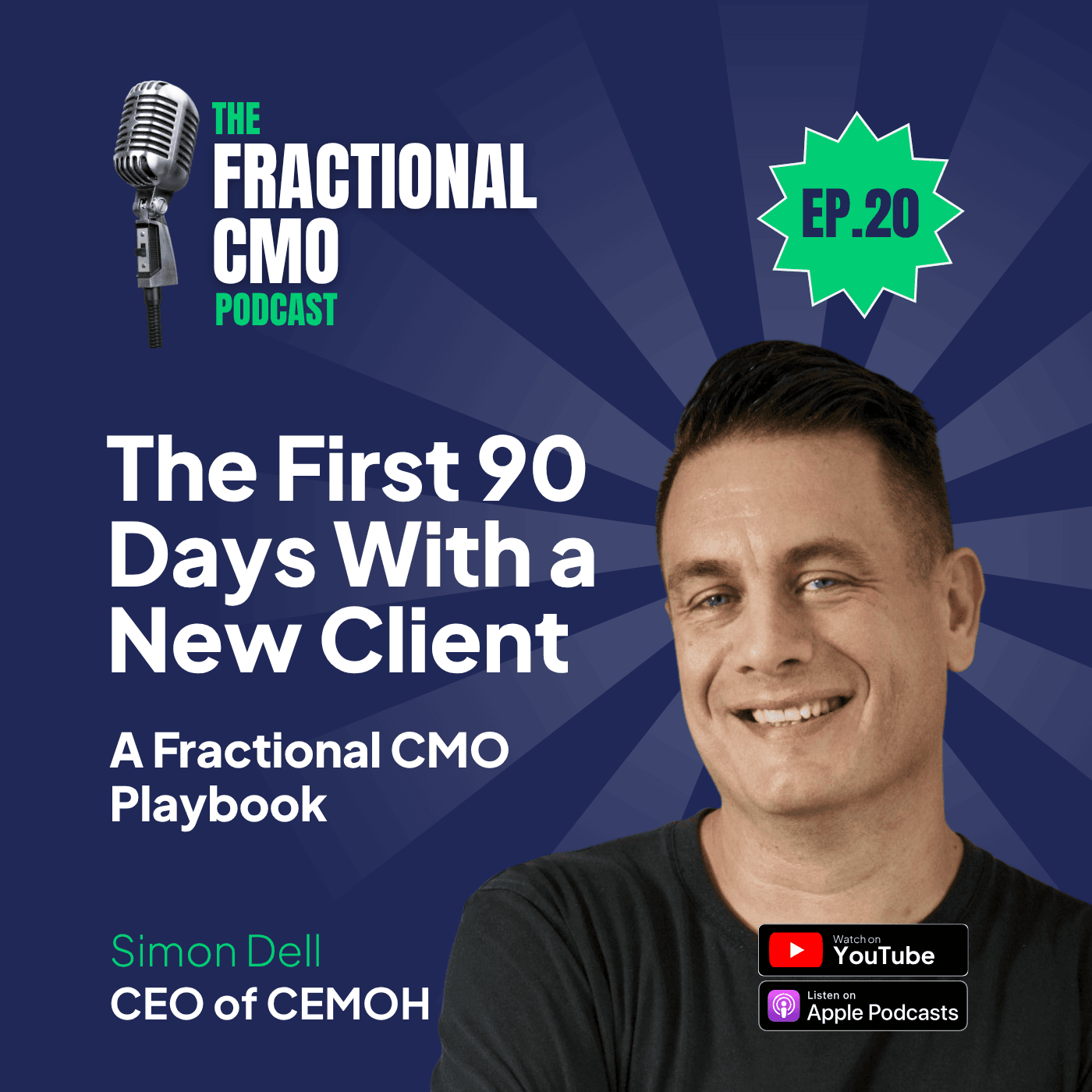
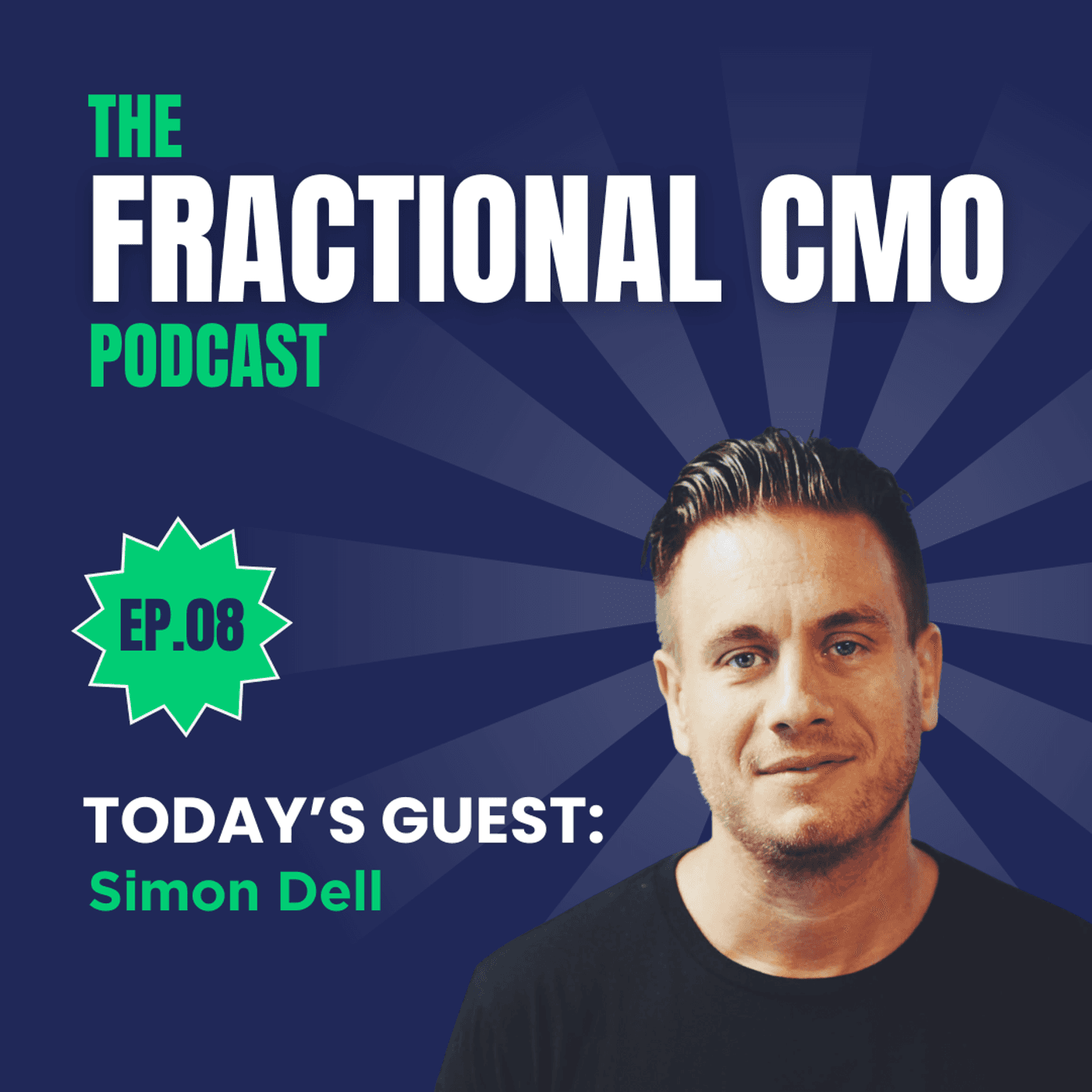
S2 Ep8: The Fractional CMO Podcast - Simon Dell | CEO of CEMOH
Podcast Overview The Fractional CMO Podcast, hosted by Simon Dell of Cemoh, features insights from high-performing Fractional Chief Marketing Officers (CMOs) and marketing leaders. The show discusses marketing, entrepreneurship, and business strategies to help aspiring marketers transition into fractional roles.
Episode Summary In this episode, Simon Dell outlines 10 essential steps for launching a fractional marketing business while still employed in a full-time role. This practical guidance is aimed at individuals considering a transition to becoming a fractional CMO or marketing consultant.
---
Key Steps to Launch a Fractional CMO Business
- Clarify Your Niche and Target Market
- Understand your past experience to define your niche.
- Focus on industry verticals or skill sets where you have expertise.
- Example: Specializing in health and wellness, e-commerce, or geographical markets.
- Define Your Value Proposition and Framework
- Articulate the results you expect to deliver to potential clients.
- Be flexible with your processes to accommodate client needs without compromising your values.
- Build a Strong Personal Brand
- Develop a personal brand that reflects your expertise and values.
- Make your brand visible on platforms like LinkedIn and your website.
- Prepare Cash Reserves
- Save enough money to cover living expenses for three to six months or longer.
- This financial cushion allows for a smoother transition into consulting.
- Create Compelling Case Studies
- Develop case studies that showcase your success stories, including:
- Who was the client?
- What was the problem?
- What solutions did you implement?
- What were the results?
- Client feedback.
- Aim for 800 to 1,000 words, including quantifiable results.
- Set Up Your Business Structure
- Choose between different business structures (e.g., ABN, family trust, PTYLTD).
- Get professional advice to ensure proper setup before leaving your job.
- Establish Pricing and Service Models
- Determine how you will charge clients (daily, monthly, or project-based).
- Be open to flexible pricing to attract and retain clients.
- Build Your Professional Network
- Actively engage in networking events and build relationships on platforms like LinkedIn.
- Develop a network of business best friends (BBFF) who can offer referrals and support.
- Get Your Contracts Right
- Have a clear, concise contract that outlines terms, payment schedules, and deliverables.
- Consider involving a legal professional to ensure it covers essential aspects.
- Land Your First Client Before Transitioning
- Aim to secure a client before leaving your full-time job. This can provide financial security and confidence during the transition.
Bonus Tip
Embrace Hustling and Networking
- Networking is crucial for business growth. Attend events, have coffee with potential clients, and stay active in your field to build connections.
---
Final Thoughts Simon emphasizes the importance of preparation and building a foundation before transitioning to a fractional CMO role. The journey requires careful planning, personal branding, and networking to ensure a successful launch and sustainable growth in the consulting landscape.
For more information, listeners can connect with Simon on LinkedIn or visit [Cemoh](http://cemoh.com).
---
Hashtags FractionalCMO #MarketingConsultant #CMO #MarketingStrategy #BusinessGrowth #Entrepreneurship
Written by AI. May contain mistakes. Listen to the episode to check what was said.
Transcript
Automatic transcript. May contain errors.0:07So, I think that's actually started. There we go. That's how much I was prepared for that because I was still trying to connect it to LinkedIn. Welcome to the CMO Marketing Podcast, the Fractional CMO Podcast. I am your host, Simon Dell. I am just actually doing this entirely myself today because I'm just going to talk about something very specific to people who are moving into the fractional CMO business. um so i want to i want to sort of address a few things there's a this is a bit of a training session for those of you that are thinking of moving into the fractional uh cmo space and i don't want this to sound off-putting but i also want to make sure that when people are um moving into that um that they are prepared um because that is part of what we want to do as CMO and help people grow their fractional CMO business or fractional marketing business.
1:14So that's what today is about. If you want to find out more about us, www.cmo.com. You can find me, Simon Dell on LinkedIn. There are some other Simon Dells, but it should be pretty obvious which one's me. So please come and connect on LinkedIn, no matter where you are in the world, especially if you're overseas, New Zealand, Middle East, North America, Europe, love to connect with you and talk to you about your fractional marketing journey. So I've got 10 points that I'm going to go through today. Probably should take, I'm going to guess 20 minutes or so um but uh for those of you that know me know how I can talk um so it could be a lot longer than that but we'll see um and um and and apologies as well for the ums and ahs that I do through this because my brain works in a way where I'm sort of processing what I'm about to say before I'm going to say it so I do tend to um and ah a bit which I've noticed quite recently doing other videos.
2:32So eliminating ums and ahs is one of my personal goals. But let's get into it. We will start with number one. Now these are in no particular order because they're in no particular order for no other reason than that. So number one, things to do before you become a fractional CMO. Now, when I say before, I'm assuming that currently you're in a full-time job, somebody else is paying a salary, you're sitting there thinking, I don't want to do this anymore, I want to go work for myself, I'm a great marketing person, I've been a CMO before or a marketing director or a senior marketing person, and I want to go out on my own and build my own consultancy in the fractional marketing space so this could be applied to a marketing consultant marketing strategist fractional CMOs whatever you want to call yourself but for argument's sake we're going to work on the basis that it's a fractional CMO so job number one sorry step number one really clarify your niche in your target market and that should necessarily come from your past experience so for example Kelly who was on this show a couple of episodes ago or last episode whenever it was she has a background in health wellness that space that's pretty much all she's done for her entire career she is going to focus as a fractional CMO in that space.
4:12Now, that's really well defined. That's really niche. She knows who she's targeting. She knows what she's doing. And she built a great plan looking at industries, business sizes, potential targets that she wanted to work with. And with that in mind, And we can then support her and help her target those clients. There are different niches for different people. There are, I met one down in Sydney who had a background in hospitality industry. Now, she really wanted to sort of move away or move out the hospitality industry. But my point was it would be a lot easier for her to win potential clients in that industry.
5:02and then think about moving into other industries whilst you have a comfortable income where you're generating revenue so i think do what you know you're good at doing even if you want to potentially expand potentially expand and move into other areas focus primarily on your background yeah you know the ones that the area that you've been operating in and that could be defined by industry verticals that could be defined by skill sets could be e-commerce you could be an expert in e-commerce but across different industries um that could potentially even be geographical um you know if you're an expert you know in in a certain particular geographical area um there's lots of different ways of defining that niche but it's important in the first step to really understand who you're targeting and who that target market is.
6:05And I've said this many, many times in advisory sessions that I've been involved in, the best businesses that I see really operate in a particular niche. And that's why we sat there and went, okay, our niche is fractional CMOs. That's the area that we're going to operate in. And that's what we're focusing on. Anything else that we do will be set aside out of that, right? So that will be in a separate business under a separate brand. But the CMO is about fractional marketing people, specifically CMOs. So think about your niche and your target market. And again, you're in marketing. I'm not going to teach you to suck eggs, but those are things that you should be doing.
6:51You know, first step, that sort of stuff that you should be doing in your sleep. second step is define your define define your value proposition your framework and all your processes now actually what i would say here is what you don't want to necessarily do is go down this giant rabbit hole of processes and things like that um it's very easy to sit there i'm gonna i'm gonna do things like this i'm gonna do this i'm gonna do this what i would say to you is often you get yourself into a position where you have to think on the spot and compromise certainly in the early days in the early days you sit there and go hey this client wants to work with me but doesn't want to work in the same way that I want to work but they're going to be good paying customers that's a good potential revenue it's great to have processes it's great to have systems um but just be aware that if you go too far and you stick too close to your processes and your frameworks sometimes that's not what the customer wants so i think it's important to be flexible um to a degree um not flexible that you're completely compromising what it is that you believe in and what you're going to do but i think you need to be flexible so define your value proposition articulate clearly what results you expect to deliver what you're going to do in the business make all these things very very clear to your potential new clients as you move forward the clearer you can make that the better and and I've I've shared this quote probably a hundred times in the last few years from my business partner and co-founder Matt.
8:48One of the things he always he said was people don't buy the cheapest product they buy the product that they understand the quickest. Now I fully believe that people will buy the product the service the people that they understand the quickest so the quicker they understand you and what you can do for them and the clearer that you can make it the more likely they are to buy from you so that's number two define your value proposition value and process framework and process third one is a strong personal brand now there is a video by a gentleman called Eugene Healy. Now, if you go to LinkedIn and look up Eugene, he talks a lot about, he talks a lot about a lot of things.
9:34And I don't think Eugene's ever made a bad video. But there is a video that he specifically made. And this is, we're talking about this on the end of October. He made this video, I think about two to four weeks ago. So early October, 2025, depending on when you're listening to this, late September, 2025, about the growth of personal brands in businesses. so this is about you growing your personal brand katisha hembrow who was uh on an early episode here she talks about how to use linkedin for that your personal brand is the the gateway for you to grow your business so everything that you do as well you should have already defined that personal brand who is your personal brand what is it what does it stand for all those kind of things but Make sure that that's reflective in your LinkedIn, your website, your portfolio.
10:27Make sure it reflects your experience and your focus. And again, Eugene Healy, go and watch some of his videos. Go and follow him on LinkedIn. But you need to define your personal brand. Number four, completely different to the first three. Prepare some cash reserves. You need to prepare your business to not make any money for the first six months. Now, when I left a role and I went out on my own as a consultant, which would have been 2016, I think.
11:11And my son was due to be born, I think three or four, my first son was due to be born three or four months later. I made the mistake of not having any cash reserves. I hadn't built up a pool of cash that I could sit there and go, hey, if I don't bring any clients on, I've still got this cash to survive in the next six months. I was fairly, I say lucky. I don't believe in, I believe in luck, but I believe you make your own luck. But I was slightly fortuitous in the sense that I'd already had two or three approaches from clients, which we'll talk about in a minute, who wanted me on as a consultant once I'd left the agency environment that I was in.
11:56So I was kind of stepping into roles immediately.
12:04But I would say if you don't have those lined up, and again, as I said, we'll talk about those in a minute, but if you don't have those lined up, you need to have some cash ready to survive for a set amount of period a set period now that might be three months that might be six months that might be 12 months if you can have 12 months worth of cash set up life's good okay um and you have a little bit more flexibility then the clients that you can take and all those kind of things but have a think about building up your cash reserves so if if you've got zero cash in the bank now in october 2025 please please please don't quit and start a new job a consultancy job in january 2026 build up some cash reserves six months save save don't go on holiday put money somewhere and go right i'm now ready to go knowing that potentially the first three months is going to be very lean potentially the first six months it's going to be very lean so that's point number four prepare your cash reserves point number five case studies it is always vital to have some case studies it's actually one of the things that we do particularly poorly and i'm trying to change that and case studies are a five step process um who was the client what was the problem what did you implement what were the results and what was the client's comments at the end so if you didn't hear that or you missed that go back rewind listen to that again right those are your five-step testimonial sorry case studies and you want 800 to a thousand words you want some pictures and and most of all you want some numbers in that okay i did this and i did that and all those kind of things and we achieved this and we achieve that and that's pretty a good point I've had this conversation with somebody I was coaching once who was she was very nervous about talking about her wins and her successes in her roles and I said to her why were you why were you nervous about that and she made the point to say because the wins weren't always about her you know she was part of a team who achieved these things and totally fair point but that's kind of like saying you know somebody like christian cristiano ronaldo or messi you know sit there and don't take the the the plaudits of being you know the best footballers in the world and all those kind of things you can still have success with the team and you can still be very good at what you do those aren't mutually exclusive things You can do both.
14:48So if you want to write a case study, by all means, write it about the success that your team had, but then make it very clear as to how you contributed to that success and why your role was vital and the specifics around those successes, especially in the leadership space. So case studies are absolutely vital. If you can do a video case study, you get the client on board. Absolutely. but just from a text case study. And again, one of the other challenges is that the client may not want you to mention them. So you don't have to still write the case study. You sit there and go, well, a manufacturing company that I was working for that was manufacturing widgets.
15:33Again, we don't have to name what it was that they were manufacturing. We can just say, this was manufacturing company I work for. They manufactured widgets. This was the problem. This was the challenge. this was what I did this was the outcome this was the client's um you know testimonial at the end so get some case studies together everyone I've ever hired from in a role um has come to me with really clear um really clear examples of their success and a case study is exactly that you know You could argue that's what a CV or resume is, but I think some people would be better off doing a resume where you're just listing four case studies or six case studies or whatever.
16:24And again, the lady that I mentioned earlier that I spoke to, I said to her, when someone says to you, what are you looking for in a role or what you're looking for working with a client? Turn around and say to them, I'm looking for my next case study. I think that's hugely powerful. I'm looking for somewhere where I can achieve something that becomes a case study. and i think if you were a client listening to that from a fractional cmo perspective you'd be like i ought to hire this person um so that's number five number six six um set up your business structure um now there's an argument i'm obviously talking about this in australia so different countries different business structures here in australia you've got one of three options okay um number one is a personal abn it literally take you five minutes to do those online easy easy to do um relatively easy at the end of the year to do your tax not particularly costly you know it is what it is it's a personal business abm the second thing is a family trust now i'm not an accountant i'm not here to give financial advice in any way shape or form but there are certain benefits of trusts family trusts that you need to talk to your accountant about and you know and have a conversation with them um and there's obviously various things that you can do with various companies and trusts and etc etc the third third way is to do a PTYLTD so a company and the company requires directors it requires shareholders shareholders agreements etc etc if you're on your own there is often not much point in doing a company unless you envisage maybe four or five years time or even two or three years time that you potentially get a business partner on it is i'm going to not say it's impossible because again this isn't financial advice and i'm not entirely 100 sure in this space if there's any accountants out there happy for happy to be corrected on this but it is impossible to sell a personal abm because it's personal it's nigh on impossible or very very hard to sell a company found a family trust because it belongs to a particular family and has beneficiaries and all those kind of things.
19:06I don't think it's impossible, but I think it's very hard. It's a lot easier to sell or sell parts of a company, PTYLTD. So if you see yourself expanding, growing into other areas, bringing on business partners, doing shareholder agreements for potential staff, you want to have a company. What I would also say is it is quite hard to move from one to the other once a business has been established it's not impossible but you can't turn a personal abn into a company abn doesn't work like that you would have to stop the company personal abn and start a company abn at which point all your trading you need new bank accounts etc etc etc so whatever one of those you decide to start with to go and get some advice from a qualified accountant or a lawyer and work out how you're going to have that set up.
20:02Have that set up before you leave your full-time job. Okay, all of these things I'm saying today should be done before you leave your full-time job. So get the business structure set up, make sure you sort insurance, how are you handling invoicing, contracting, your tax obligations, understand how to do all that. It doesn't take hours, zero does a lot of that for you if you're using zero there are other tools that do a lot of that for you as well okay get that all set up first seventh point establish prices pricing and service models again this sort of comes back to my point number two about devalue defining your framework and processes it's all very well sitting there saying i'm going to be this price per day or i'm going to cost charge this amount per month but again i think in the early stages flexibility is the key flexibility to talk to the clients and go yeah look i'll work to your budgets you can sit there and they say well if you turn around and say hey i'm six thousand dollars a month and that's that's the lowest i'll go and the client goes i've got a budget of four thousand you're going to sit there and go damn i'm not going to get that client or worse still lose it to somebody else.
21:23Right. Your challenge then is to sort of go, okay, well, how can I be a bit more flexible, get my price down to 4 ,000, maybe less, you know, I'll, I won't commit to certain KPIs. I won't commit to certain times working on their business. My, you know, whatever it might be, there's ways and means of, of, of changing those kinds of things to sort of fit within a framework that is acceptable to the client the higher the price and i'm going to say this and this is going to sound entirely obvious as i say it the higher the price you go the more narrow the margin the more narrow the market you have to target sounds the obvious most obvious statement right but if you're going to sit there and say hey uh i'm ten thousand dollars uh well there was a there was a someone i'd someone i know i can't remember his name now off the top of my head but he was like oh, I'm, what did he, he was, look,$2 ,000 a day, something like that, right?
22:27Now, if I'm a client, if I'm hiring someone for$2 ,000 a day, maybe I get them in for a day a month, two days a month, right? And if that's his position, that's what he wants to do, then fine. Maybe I make them come in, they sit in board meetings, they work with the team, that day is a strategy day, they're in there,$2 ,000, they're leading the whole day, right? or i sit there and go well i could price myself a lot less than that and do half days number of half days and be be in the business more often be in the business more frequent affect more change become more of the team become a bit stickier i think it's very easy to sack cancel someone who is two thousand dollars a day and is there once a month i think it's a lot less easy to have to sack someone who is there charging 700 for a half day and is there every week you know those are the things that you need to think about we have a guide on our website simo.com about pricing structures and things like that again if you're in australia it varies between brisbane sydney and melbourne and and all the other outlying cities of Perth and Adelaide and um uh you know Darwin and so on and so forth so you need to think about you know what the market can sustain if you're a retail expert the amount of money that they're going to be paid is a lot lower if you're at software SaaS AI tech you'll be able to charge higher if you're going into government you'll be able to charge higher right so you have to have a think about all of that in context to what you can you know what you can charge so establish your pricing establish whether you want to charge by the day by the hour by the month monthly retainers is our preferred model so x amount a thousand dollars a month and then linking that to KPIs not linking it to time which you may still have to do a bit of that but linking it to KPIs I will do this I will achieve this I will do this I will make sure we do this that's what you are sitting in there now if you can do all that for half a day client doesn't care you're hitting the targets that they want so think about that you may sit there and go i will also commit to two half days in the office or you know video calls whenever you need them etc etc so but think about your pricing and service models um i'd love to say you could do all this from working from home the reality is that that bandwagon is moving back in the other direction now clients want people in the office nothing you can nothing you can do about that and you are going to lose out to somebody who can go into the office especially if you're in industries like manufacturing and retail and stuff where they want you to see what it is that they they do they want you to be in there touching and feeling and being part of that business so think about that uh last three points uh build your professional network i mean this might seem obvious but again do this before you leave your full-time role get onto linkedin build your network go to networking events go to industry events get out have coffee with people it seems laborious and it seems like a painful thing to have to do but i can't i can't stress enough how you need to have a business network of people that will be there to help support you I've used this phrase before and I must do a video on it at some point um we all know what a BFF is best friend best friend forever right and I have this concept of um BBFF which is business best friend forever and the idea being is like a best friend forever it's someone that you meet up with a regular basis, talk to on a regular basis, share anecdotes, share stories, have a beer, have some lunch, have a coffee, whatever it is.
26:57But a business best friend forever is looking out for you, is potentially looking for referrals for you, is wanting to introduce you to clients in the same way that you are then doing that for them as well. So if you could sit there and go, hey maybe i've got 20 bb ffs and you have this little core network of people that work that you know well who are going to refer you introduce you invite you to events invite you to things that perhaps you wouldn't have got invited to in the first instance that is super important you build that network before you leave your full-time role people that will refer you introduce you invite you that is what a good professional network does now i would say that there's 20 people that you want to keep close to you but i would say beyond that you probably want about 100 people in that rolodex now again as as is my way there is a famous story of a financier in New York.
28:03I'm not talking, uh, I'm not talking the man with the island. Um, but there's a famous financier in New York who had a Rolodex who still years recently still had a Rolodex. And in that Rolodex was everybody he'd ever spoken to, but in that Rolodex or important people that he'd ever spoken to people that he felt were essential to his business growth. And in that Rolodex was their name their contact details their birthday their wife husband's name their children's name where they lived etc etc etc he had a little um biography of every person he knew so that when he caught up with them the first thing he would ring up and say how's your husband doing or how's your wife doing all right and he'd use that and he'd use their first name so how's jane doing how's joe doing that's what a professional network is um and i'm going to digress on this one as well because i think this is an important lesson to understand there was a a study done in american high schools a long-term study over i think if i remember right 300 high schools and they went to the high school and they said to everybody who is the most popular person in this high school what they were trying to do was understand popularity in schools and what makes some children more popular than other children and it was a big study and they came up with interestingly a singular conclusive reason for popularity and before i tell you what that is think about that and when i tell you what it is take it to the business world and we're gonna we'll do that afterwards it had nothing to do with sports prowess intellectual capabilities family names nothing like that the most popular kids in american schools were the ones that what that did what i would describe as micro acknowledgements of the other children so they would be walking down the hallway or in the cafeteria or outside or even outside school in the real world and they would be going hey steve how you doing good to see you man simple micro acknowledgements of other people acknowledging that other people existed and that they had been seen by you that was what made kids popular the ones that did that and did that frequently consistently and well were the popular kids so those kids that were just walking down the hallways going hey how you doing nice to see you like your new bag your jacket looks great etc etc compliments acknowledgements awareness and you'll see that all throughout life if you drop your kids at school like i do there is always one parent and i think of one specifically right now who says hello to everybody who stops and has a conversation with everybody everybody knows him everybody likes him right i try and do that to the best of my ability um but this one specific person does it so well so that i know that if anyone if he asked anybody for any help or they would immediately help him out it's the same if you're in an office if you're going to an office walk the floor in the morning that's what everyone suggests walk the floor say hello to everybody meet people greet them say hello ask them how their weekend was talk about a favorite tv show but just you don't have to go into that depth you just go hello hey how you doing um if you can add a little you know a little flare onto the end of it like um all the better but just micro acknowledgements so take that to your fractional cmo career if you do if you do micro acknowledgements of people be that on linkedin face-to-face on email phone calls whatever it is micro acknowledgements see if you can do five micro acknowledgements every day five different people make a list of them start doing micro acknowledgements see how that then starts to benefit your business so my point there build a professional network do that build think about who are the people your bbffs could be accountants specifically let's talk about um fractional cmos So that network could comprise of other fractional CMOs, accountants, business coaches, consultants, people that are talking to the decision-making people that require marketing leadership.
32:51That's your network. Last two things. Get your contract right. Now, if you're working through us, we'll handle that all for you. But if you're not going to work through us, get a contract that you can send to people and you're comfortable that it is watertight. get a lawyer involved farah my partner from prosper law has done one of these recently talk to her get a contract she will help you out something that when you put in front of the client go this is my contract the contract should have um obviously you know at the end of schedule of things that you're going to do um but also terms and how they pay you and how frequently they pay you and how quickly they need to pay you we have a system where we charge a um security fight a security fight security deposit um which sits in a secondary bank account as refunded at the end of the contract that's important okay now you may not be able to do that there may not be something that's that's possible for you to do within the framework of your business um but have a think about those things that's what should all be in the contract so there's no surprises and they don't sit there six weeks in and go i didn't know that that was there make it very very clear you don't want a 10 page contract a three page contract that outlines everything that's going to happen is is all you need again listen to farah you need to talk about intellectual property who's liable if something goes wrong etc etc etc get your contract right the last two things which is number 10 and i actually had a bonus one at the end because i think the last one that i'm going to talk about actually applies across the whole the whole 10 things right but the 10th one is to get your first client before you leave your full-time job now i understand that there are some potential conflicts of interest in that but you need to leave your job and and this is why i talk about you know eliminating cash flows and things like that uh or you know uh protecting your cash flow by building up cash reserves okay because if you can't do this number 10 then you need to make sure you're doing the other one one one or the other right but get your first client before you leave your full-time job now that's hard you potentially squirreling away around behind your client your client yeah sorry your employers back but i would say to you if you can get that first client who goes hey i want to i want to consult i want you to consult to me um when are you ready to start and you go hey i got a four weeks notice with my current employer i can start on this date and they if they're happy with that you know that you're going from one straight into another client that's probably the hardest one I've set I've I've set out these teeth 10 things but if you can do that and and I was lucky enough to do that I was lucky enough to go with two and I think I think one was on a seven thousand dollar a month retainer and one was on a five thousand dollar a month retainer and remember out of that I've got costs insurance superannuation tax etc etc etc um but that at least gave me a really good base to start with and if you can do that it makes that leap so much easier it gives you confidence it gives you um the safety net of not having to stare at your bank account wondering when money's going to arrive so work to that if you've got an employer and you go hey it's my long-term goal to get out of this business but that might take me six months to a year i want to start my own thing plan plan plan plan plan plan start identifying potential clients start doing all the things that i've said okay and i'll quickly whip through them number one clarify your niche in your target market to define your value proposition framework and processes three build a strong brand four prepare cash reserves five get your case studies up and running six get your business structure sorted seven establish pricing and service models eight build your professional network nine get a contract done and ten get your first client before you leave your full-time job and my last bonus one at the end and i fucking hate this word right but it is so applicable to what you're doing as a fractional CMO, you need to hustle, right?
37:52That is the reality of business as a consultant, especially in the first six months, 12 months, maybe even two years, you are hustling. If there is a coffee with somebody, go and have that coffee. If there is a network event, go to that networking event. If there is a lunch, go to the lunch. You might come out of that going for that was a fucking waste of time absolutely it may be a waste of time right i still do it to today i went to something friday there was five people in the room okay i made two good contacts out of that out of that room okay it's it's hustling right it's that gary v horrible you gotta hustle thing but you do and i've advised people on this before I advised an events business and she said I don't want to do that I said but that's business that's business for the first couple of years of your business life just hustling talking to people building relationships building that network growing those connections keeping in contact with those people whether that's phone calls SMS SMS is a hugely powerful tool I think people don't pay attention to a little sms here or there invites to events all those kind of things hustle and again i hate that word but it's probably the best word for this so look that's gone on a lot longer than i anticipated as is my normal way um but i think if you're going to start a fractional cmo business and you're going to go out there that's 40 minutes that i think is worth listening to uh you may disagree you may sit there and go simon that was terrible but i genuinely believe that those are the things that if i was in that position today i would be going to do now i can go through those bits and i probably will go through those bits one by one a little bit more in detail as we move forward but there's 10 steps there before you become a fractional CMO taken to the account start working on those get yourself aligned start building your network start looking at clients when you go come and talk to us obviously we want to help you go from one client to six clients and I say this to everybody from our perspective that's how we make our money we make a small cut of what you take um it is with no interest with us for you being quiet for you having no work right it is absolutely imperative for us that you're busy it's the only way we make money is if you're making money so that's the that's the key thing for us so we want to help support and grow that for you i hope that's useful once again if you want to reach out to me simon at simo.com i'm on linkedin those are probably the best two options to reach out to me um and of course blatant plug of the book at the end here as well um there you go which unfortunately is mirrored now so hopefully that's around the other way um go and buy this please um i'm gonna sound desperate there but it would be good it's a great book i even say that i say that myself i think it's a great book um thank you for tuning in uh much appreciated and um yeah as i say any questions please email me
From the publisher
Learn how to:
✅ Define your niche and target market
✅ Build a strong personal brand and showcase your expertise
✅ Prepare cash reserves and set up your business structure
✅ Create compelling case studies to win clients
✅ Set pricing, service models, and contracts that work
✅ Build a powerful professional network
✅ Land your first client before making the leap
Simon also shares a bonus tip on why hustling and networking is key to growing your fractional CMO business fast.
Whether you’re a marketing director, senior marketer, or ex-CMO, this episode gives practical, actionable advice to start and grow your consultancy with confidence.
🌐 Learn more at www.cemoh.com
🔗 Connect with Simon on LinkedIn: https://www.linkedin.com/in/iamsimondell/
We would love to know what you think so give us a rating and review on Apple Podcast and Spotify.
🌟SUBSCRIBE to our YouTube channel to learn weekly expert marketing tips and ideas. If you think you have a great story for the podcast, contact our producer at podcast@cemoh.com.
🚀If you need help growing your business, visit cemoh.com to find an experienced marketing consultant to help you.
#FractionalCMO #MarketingConsultant #CMO #MarketingStrategy #BusinessGrowth #Entrepreneurship