

129 episodes
The Treatment, page 2
by KCRW · English
The Treatment is a compelling listen to the vital conversations about the catalysts of creative inspiration. Following some of the most interesting, influential, and crossover creators in the world of entertainment, fashion, sports, and the arts, we hear from tastemakers who are the very fabric that forms popular culture.
 Ask in Claude
 Ask in ChatGPT
All episodes, page 2
Damien Hauser’s African Sci-Fi film captures the randomness of life
Damien Hauser’s African sci-fi fantasy romantic comedy-drama Memory of Princess Mumbi (set in the 2090s) explores loss, memory, and generational trauma after war, arguing that tragedy may be constant…
28 Aug 2026 · 24m · 8 chaptersThe Treat: Will Poulter
Will Poulter’s diary-style tour promoting Union County, set in a small Ohio community, where he plays an addict trying to recover.
24 Aug 2026 · 7m · 3 chaptersKent Jones keeps the beat
Kent Jones discusses his short film Late Fame, adapting Arthur Schnitzler, focusing on letting scenes “breathe,” finding rhythm in actors and editing, and using doorways as transitions into different…
21 Aug 2026 · 24m · 7 chaptersThe Treat: Julia Fox
Julia Fox discusses her memoir Down the Drain (2023) and the self-examination she finds in Kat Murnell’s How to Murder Your Life, emphasizing candid, unapologetic honesty about addiction, abuse, and…
17 Aug 2026 · 5m · 2 chaptersTim Robbins doesn’t want to be an expert
Tim Robbins discusses Apple TV’s Silo (third season) and how it explores power, deception, and information control in a post-apocalyptic locked-down society.
14 Aug 2026 · 24m · 8 chapters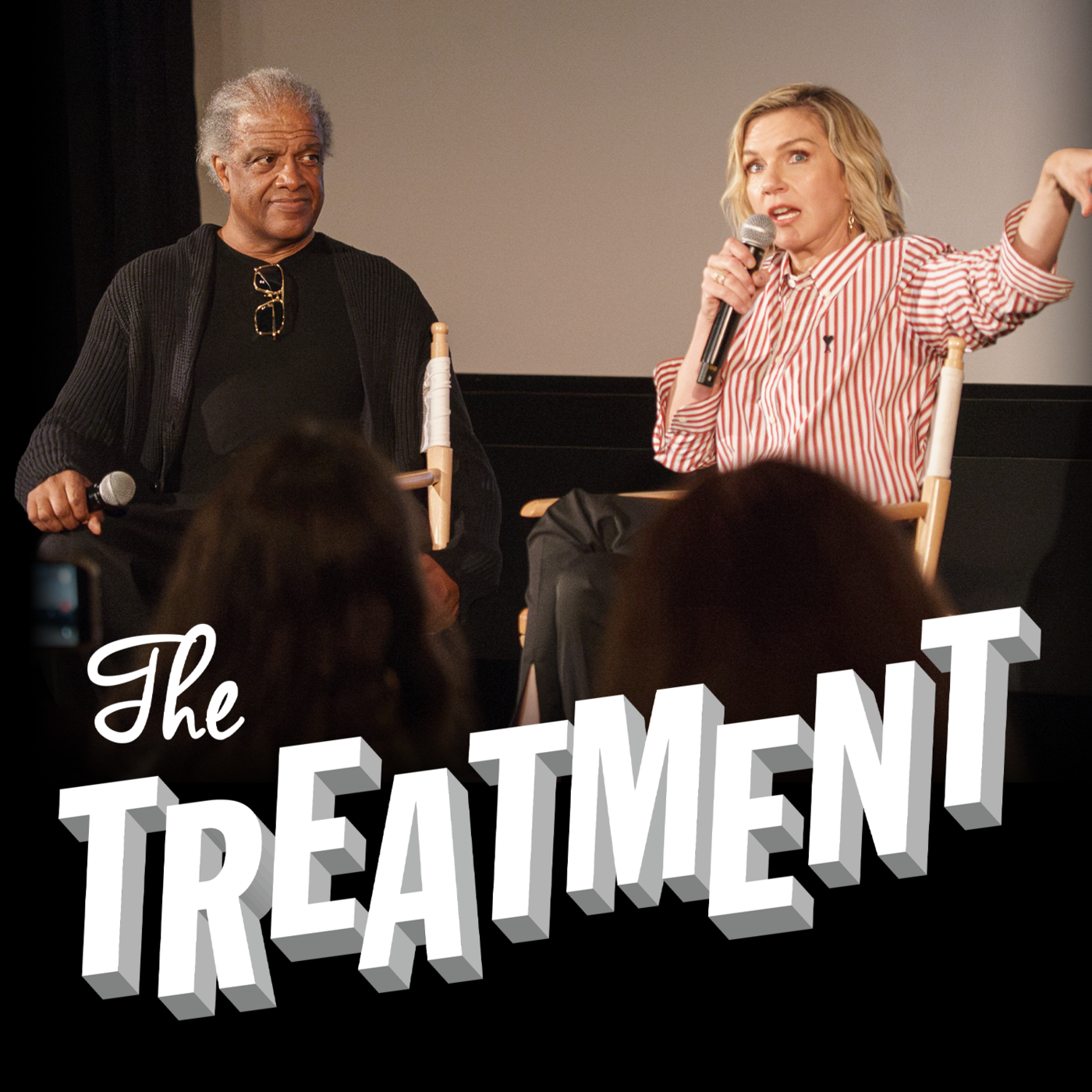
Rhea Seehorn on playing the silences in ‘Pluribus’
Ray Sehorn discusses playing Carol Sterka in Apple TV’s Pluribus, focusing on “silences” (dialogue-free acting), grief, individuality vs hive mind conformity, and how Vince Gilligan writes scenes…
12 Aug 2026 · 33m · 12 chaptersThe Treat: Jerrod Carmichael
Jerrod Carmichael discusses how therapy and self-awareness shaped his comedy, and reviews HBO’s The Sopranos as a “documentary” of truth about an Italian-American family in New Jersey.
10 Aug 2026 · 6m · 2 chaptersMary Beth Barone on her ‘Galaxy Brain’
Mary Beth Barone discusses her Netflix stand-up special Galaxy Brain and her Prime Video series Overcompensating, focusing on deadpan delivery, crafting callbacks, writing/performing anxiety, and how…
7 Aug 2026 · 24m · 13 chaptersThe Treat: Mario Van Peebles
Actor/writer/director Mario Van Peebles discusses how travel shapes his filmmaking and personal growth, and argues that human biology can drive “global tribalism,” which travel can counter by…
3 Aug 2026 · 5m · 3 chaptersRichard Pryor’s daughter grapples with the complexities of a notorious word
Elizabeth Stord Pryor, Richard Pryor’s daughter, examines how the N-word functions as both personal trigger and public ideology, arguing that “mention exception” rules (using the word only in…
31 Jul 2026 · 24m · 13 chaptersThe Treat: Jordan Peele
Jordan Peele discusses inspiration for Nope, focusing on the 1933 film King Kong as a spectacle and as a lens on racist portrayals of Black people.
27 Jul 2026 · 6m · 3 chaptersActress Mariska Hargitay gets personal in ‘My Mom Jayne’
Mariska Hargitay discusses her HBO documentary My Mom, Jane and the personal process of forgiveness—especially forgiving her mother, herself, and reframing family trauma through an objective,…
24 Jul 2026 · 24m · 10 chaptersThe Treat: Richard Gadd
Emmy-winning actor-writer Richard Gadd discusses Laurel and Hardy’s enduring appeal, focusing on how their physical comedy is driven by deep emotional performance and sharp writing.
20 Jul 2026 · 6m · 3 chaptersMario Van Peebles on using action to reveal character
Mario Van Peebles discusses how action and camera movement reveal character, using music and improvisation to keep viewers off-guard.
17 Jul 2026 · 24m · 10 chaptersThe Treat: Chelsea Peretti
Chelsea Peretti discusses Samuel Beckett’s Endgame and how comedy can coexist with darkness, existential dread, and “stakes” in a journey.
13 Jul 2026 · 6m · 3 chaptersHow Wes Anderson uses music to bring his films to life
Wes Anderson discusses how music shapes his films and how a three-night “The Music of Wes Anderson” event at the Hollywood Bowl (July 10–12) curates songs and scores from his movies, mixing original…
9 Jul 2026 · 24m · 6 chaptersThe Treat: Wes Anderson
Wes Anderson discusses architect Richard Rogers’ Richard Rogers Gallery at Château La Coste near Aix-en-Provence, describing its cantilevered, tube-like design and the visceral experience of standing…
6 Jul 2026 · 5m · 2 chaptersHow Martin Scorsese Stays Curious
Rebecca Miller discusses her Apple TV five-hour docuseries Mr. Scorsese and how Martin Scorsese stays curious—through radical listening, long interviews, and a filmmaking philosophy shaped by…
3 Jul 2026 · 24m · 11 chaptersThe Treat: Spike Feresten
Spike Feresten discusses how watching David Letterman’s original Late Night shaped his comedy and career, including his path from music school to TV writing/performing.
29 Jun 2026 · 5m · 3 chaptersEdward Norton on the best date movie of the summer
Edward Norton discusses The Invite as a “double date” movie, linking it to his recurring interest in characters who withhold or extract information, and to classic “comedy of manners” films that…
26 Jun 2026 · 23m · 7 chaptersThe Treat: David Siegel
Writer-director David Siegel reflects on “Brutalism” as both an architectural style and a metaphor for creativity, examining how modernist aspirations can become divisive and class-alienating.
22 Jun 2026 · 5m · 1 chapterRichard Gadd on the duality in his work
Richard Gadd discusses the “duality” in his work—characters who confess yet avoid their real fears, and codependent pairings where one person’s freedom highlights the other’s repression.
19 Jun 2026 · 24m · 8 chaptersThe Treat: Simon Helberg
Simon Helberg discusses Thornton Wilder’s Pulitzer Prize play Our Town, focusing on how its first two acts feel mundane and its final act becomes profoundly moving, especially the theme of realizing…
15 Jun 2026 · 6m · 1 chapterGeoff Bennett on 'The Golden Age' of Black TV
Jeff Bennett discusses his book Black Out Loud: The Revolutionary History of Black Comedy from Vaudeville to 90s Sitcoms, arguing that Black comedy became “in full color and out loud” when Black…
12 Jun 2026 · 24m · 11 chapters