

547 episodes
Harvard Business Review, page 20
by HBR · English
At Harvard Business Review, we believe in management. If the world’s organizations and institutions were run more effectively, if our leaders made better decisions, if people worked more productively, we believe that all of us — employees, bosses, customers, our families, and the people our businesses affect — would be better off. We try to arm our readers with ideas that help them become smarter, more creative, and more courageous in their work. We encourage comments, critiques, and questions. We expect our community to be a safe space for respectful, constructive, and thought-provoking discussion. We reserve the right to remove or turn off comments at our discretion. We do not tolerate bullying, name-calling, or abusive language related to identity, including race, gender, ethnicity, religion, sexuality, age, or region; spam; copyright violation; extreme profanity; or p*rnography.
 Ask in Claude
 Ask in ChatGPT
All episodes, page 20
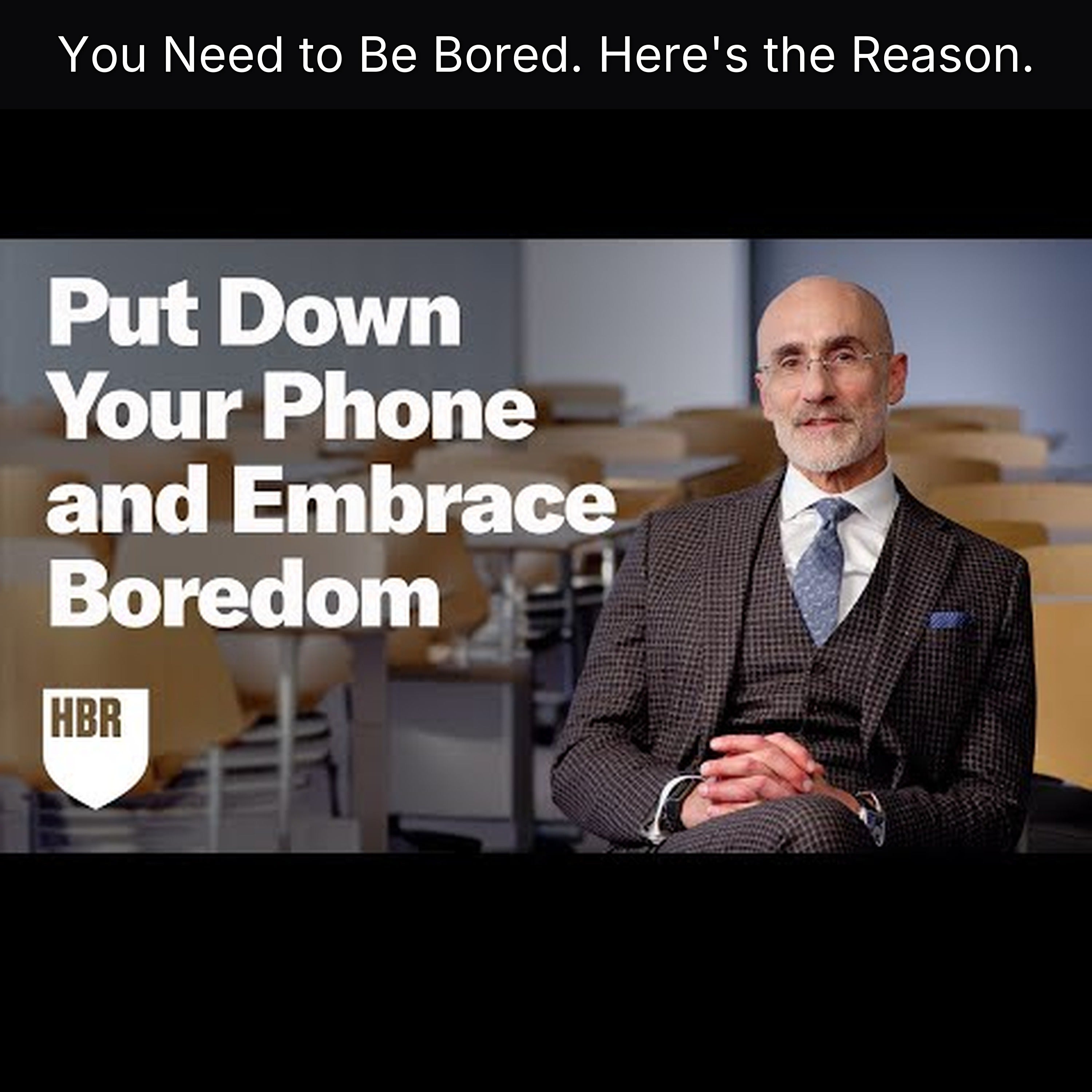
You Need to Be Bored. Here's the Reason.
Why boredom is psychologically important—activating the brain’s default mode network, which can lead to uncomfortable but meaningful existential thinking—and how constant phone use prevents boredom,…
1 Jul 2026 · 8m · 2 chapters
In Uncertain Times, Ask This Question Before You Commit
How leaders should make high-stakes decisions in “perma-crisis” (overlapping, accelerating disruptions) by asking a specific question before committing, shifting from recovery-only thinking to…
1 Jul 2026 · 4m · 1 chapter
How to Find a Mentor Who Can Accelerate Your Career | Christine vs. Work
How to find and secure a career-accelerating mentor, including what to ask for, how to approach potential mentors, and how to make the relationship work (goals, specificity, two-way value,…
1 Jul 2026 · 8m · 4 chapters
Should You Use AI to Generate Work Emails?
Advice on whether to use generative AI to write work emails/IMs/Slack messages, and how it affects trust in virtual communication.
1 Jul 2026 · 3m · 1 chapter
How to Create Trust on Your Virtual Team
How to build and maintain trust on virtual teams, based on research and work with large companies. Guests: No guests are mentioned in the transcript.
1 Jul 2026 · 5m · 1 chapter
Managing Intense Stress at Work
Managing intense work stress using science-backed, desk-friendly interventions.
1 Jul 2026 · 3m · 1 chapter
Why Leadership Teams Fail
Why leadership teams fail and how to fix them, based on interviews with 100+ CEOs and senior executives.
1 Jul 2026 · 3m · 1 chapter
The Secret to Drawing People Back to the Office
How to make office days feel valuable versus remote work by intentionally building social ties and structured in-person interactions.
1 Jul 2026 · 3m · 2 chapters
Develop Slides People Will Remember
How to design slide decks that audiences remember, avoiding “PowerPoint read-alongs.” Guest backgrounds: No guests are mentioned; the host speaks as a presentation-design professional.
1 Jul 2026 · 4m · 1 chapter
During Covid-19 Crisis, Leaders Must Resist Desire to Advance Too Hard, Too Fast
How leaders should respond during the COVID-19 crisis—resist the urge to “advance too hard, too fast,” slow down to assess uncertainty, and maintain effectiveness through rest and team empowerment.
1 Jul 2026 · 6m · 5 chapters
Lean into Your Imposter Syndrome, Don't Yield to It
The episode argues that imposter syndrome is common for ambitious people who can see their own gaps; it’s driven by negativity bias and “visibility” into what they can’t yet do.
1 Jul 2026 · 3m · 1 chapter
Do You Have an Archnemesis?
A leadership Q&A on handling a workplace “archnemesis” peer who competes for raises and best projects, plus brief ad reads.
1 Jul 2026 · 3m · 3 chapters
How Do I Transition from a Corporate Role to Entrepreneurship? | Coaching Real Leaders | Podcast
A one-time executive coaching session on transitioning from a corporate leadership role to entrepreneurship/management consulting.
1 Jul 2026 · 1h 2m · 23 chapters
What to Do If You're Undervalued at Work | Christine Confronts Work
How to respond when you feel undervalued at work, using a step-by-step plan to increase visibility, recognition, and demonstrated impact.
1 Jul 2026 · 12m · 3 chapters
It’ll Feel Weird to Be Around People Again at Work. That’s Fine.
Returning to in-person work after remote work can feel “weird” and socially exhausting; the episode offers strategies to adjust.
1 Jul 2026 · 8m · 2 chapters
How to Lead and Develop Skills in the Age of AI
How AI will transform work in practice, and why reskilling/upskilling (not just hiring tech talent) is central—plus how to design training that employees and managers will actually adopt.
30 Jun 2026 · 41m · 19 chapters
Can Work Bring You Joy? Should It?
Whether work can bring joy, and what conditions make it happen. Guest backgrounds: No guests are mentioned; the host speaks as an economist who has researched labor markets and work characteristics.
30 Jun 2026 · 5m · 3 chapters
How Leaders Can Be More Satisfied
How leaders and employees can become more satisfied by pursuing “happiness” as enjoyment, satisfaction, and meaning—not constant positive emotion.
30 Jun 2026 · 37m · 20 chapters
Executing a Consumer Fintech Startup within Goldman Sachs | Cold Call
The 2014-2020 case “Marcus by Goldman Sachs,” about how Goldman Sachs built a consumer fintech “startup within the firm,” including why it entered consumer banking, how it hired leaders, how it set…
30 Jun 2026 · 31m · 11 chapters
Fighting Workaholism: “You’re More Than a Success Machine”
The episode argues that many “strivers” aren’t primarily workaholics; they’re addicted to success, which can evolve into reducing oneself to a “success machine” and neglecting humanity and…
30 Jun 2026 · 3m · 2 chapters
Don't Bring Your "Whole Self" to Work—Bring Your Strongest Self
Argues leaders should not “bring their whole self” to work; instead they should bring their strongest, most effective self by strategically managing emotions, aligning values, and regulating darker…
30 Jun 2026 · 4m · 1 chapter
How to Quit Your Job with No Regrets | Christine vs. Work
How to quit a job “with no regrets,” including deciding it’s time, exploring alternatives (raise, transfer), and executing the resignation conversation (talk to your manager, don’t gossip or tease on…
30 Jun 2026 · 15m · 5 chapters
If Your Organization Isn't Transforming, It Isn't Growing
Organizational growth requires continuous transformation—widening the “aperture” to view issues holistically, staying willing to pivot, and updating policies as the world changes.
30 Jun 2026 · 3m · 1 chapter
Eurasia Group’s Ian Bremmer: Biggest Threat to World Is Rogue Actors – From Putin to Musk
Ian Bremmer argues the biggest 2023 business risk is “rogue actors” gaining unchecked power and making extreme decisions—especially Vladimir Putin, plus Xi Jinping, Kim Jong-un, and tech-platform…
30 Jun 2026 · 41m · 17 chapters